160. The Wonderful Weirdness of Life

If I were a preacher, I would use the geekiest sermon illustrations Christendom has ever known.

I once joked about using the Millennium Falcon as the basis for a sermon. As a pastor, I probably wouldn’t go that far… but then I might. I’m sure there are parallels between Han Solo’s dilapidated starship and the profound truths of Christianity. I just haven’t found any. At least not yet.

I was recently reminded of a great lesson by Doctor Who. The Doctor has become one of my favorite fictional characters, surpassing even literary greats like Anne Shirley and Bertie Wooster in my esteem.

One of my favorite things about the Doctor is the way he responds to commonplace things—humans, for example—with amazement.

“Look at these people, these human beings,” he exclaims. “Consider their potential! From the day they arrive on the planet, blinking, step into the sun, there is more to see than can ever be seen, more to do than—no, hold on. Sorry, that’s The Lion King.”

Pop culture allusions aside, the point is made: humans are pretty darn awesome.

At one point, the Doctor runs into a research team investigating an unprecedented phenomenon. Their curiosity delights him. “So when it comes right down to it, why did you come here?” he inquires. “Why did you that? Why? I’ll tell you why—because it was there! Brilliant! Excuse me,” he adds, beaming. “Just stand there, because I’m going to hug you.”

In his travels through space and time, the Doctor never fails to appreciate how weird and wonderful they are. Plain old people astound him no less than the greatest marvels of the universe.

Like the Doctor, G.K. Chesterton looked at ordinary things and pronounced them extraordinary. “I do not generally agree with those who find rain depressing,” he wrote. “A shower-bath is not depressing; it is rather startling. And if it is exciting when a man throws a pail of water over you, why should it not also be exciting when the gods throw many pails?”

Michael Card, my favorite songwriter, has this to add: “If you must see a miracle, then just look in the mirror!”

Too often, I live without thinking. I follow a mechanical routine of habits and repetitions without pausing to consider how brilliantly strange my life has been—and is.

With my computer and its microphone, I can carry on conversations with people thousands of miles away. With the flip of a switch or the touch of a button, I can summon light, heat or water instantly to my apartment. With a digital camera, I can create near-perfect images of anything: pictures that are stored securely in a tiny chip of metal and plastic.

My life is weird in ten thousand glorious ways—and I take it for granted. I shouldn’t. Thoughtless repetition leads to ennui, ennui to discontent and discontent to discouragement, ungratefulness and all kinds of nasty things.

How much better it is to appreciate the wonder of simply being alive!

159. TMTF’s Top Ten Reasons to Read The Trials of Lance Eliot

So… I wrote a novel.

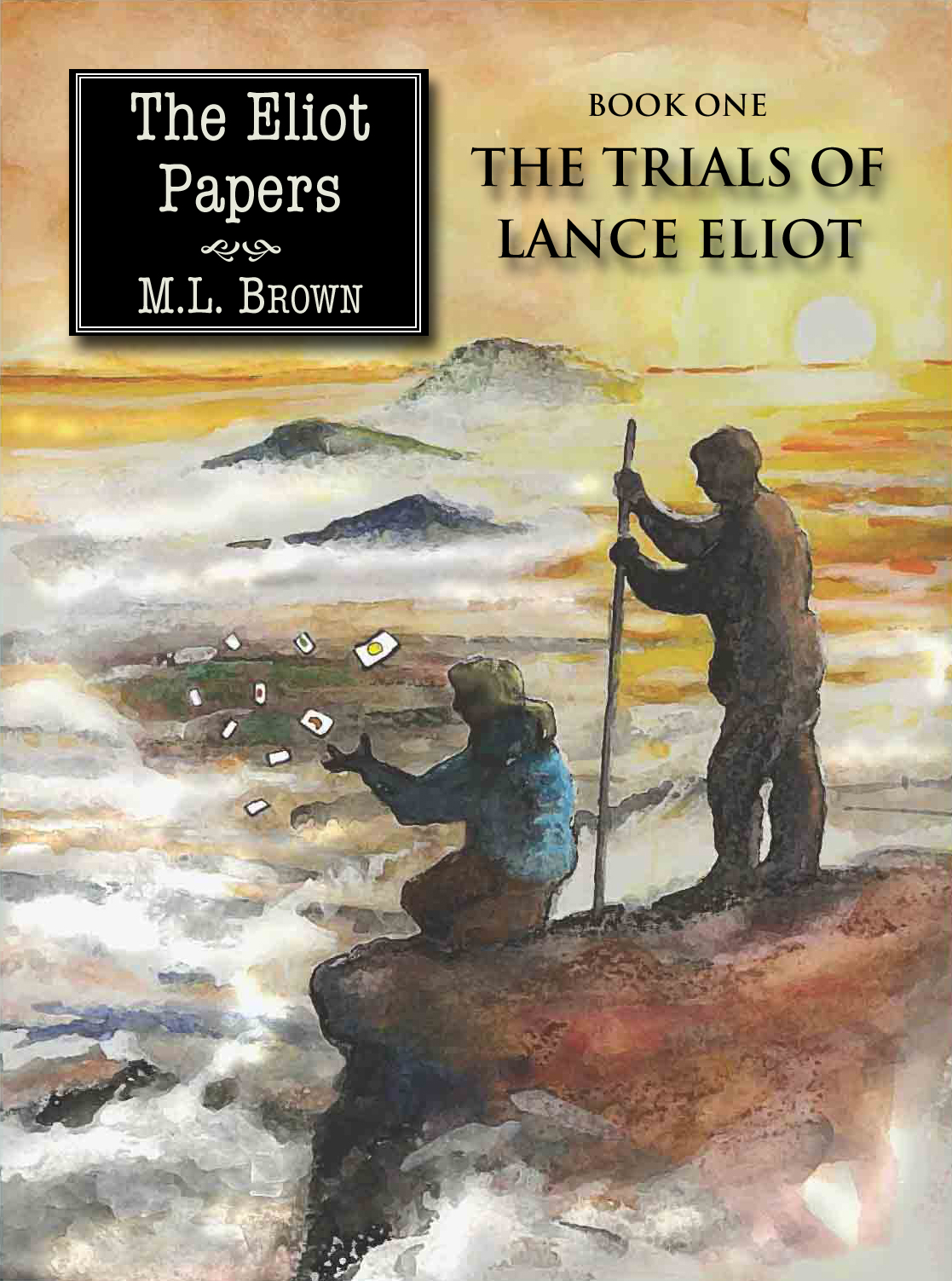
The Trials of Lance Eliot is the story of a college student who is mistaken for Lancelot, the legendary knight of Camelot, and swept off by magic to another world.

As the author of The Trials of Lance Eliot, it’s my solemn duty to make people read it.

The Trials of Lance Eliot

In seriousness, I believe it’s an exciting, funny, meaningful novel. Therefore, I am thrilled to present…

TMTF’s Top Ten Reasons to Read The Trials of Lance Eliot!

10. It has dragons.

Need I say more?

9. The characters are believable.

Upon arriving in an unfamiliar world, Lance Eliot experiences culture shock. His adventures take an emotional toll. Neither he nor his companions shrug off traumatic experiences or personal losses. No character is perfect. No character is invincible. In a story bursting with unbelievable events, characters act believably.

8. The book has literary chops.

The Trials of Lance Eliot is loosely based on Dante’s Inferno, from which it borrows structure and story elements. It also has parallels with Greek mythology and the Old Testament. Understanding these literary underpinnings isn’t necessary to enjoy the story, but some readers may appreciate them anyway.

7. The story takes place in a vast, unique world.

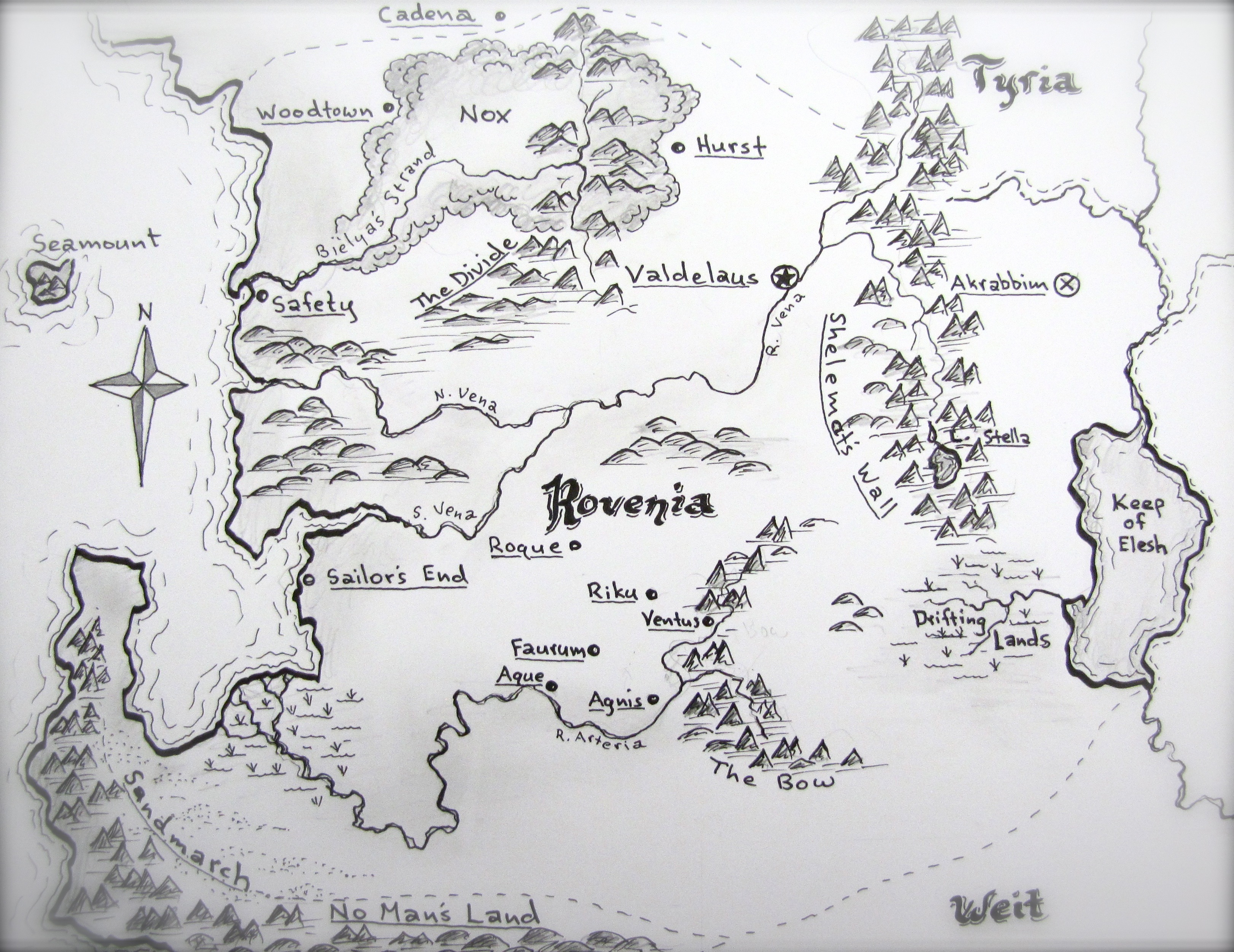
Lance Eliot’s adventures give glimpses of a kingdom with its own geography, history, folklore, culture and religion. They may not boast the exhaustive depth of, say, Tolkien’s Middle Earth, but Rovenia and the world beyond its borders are full of fascinating details.

Behold the kingdom of Rovenia in its monochromatic glory!

Behold the kingdom of Rovenia in its monochromatic glory!

6. A humorous subplot runs throughout the adventure.

At first glance, Lance Eliot’s goal in his adventures seems to be saving the world. A closer look, however, reveals the true purpose of Lance’s quest: working up the courage to face a particularly grouchy professor. Lance is haunted throughout his adventures by fear of his professor, with whom a confrontation is inevitable.

5. Characters face inward conflicts, not just outward ones.

Lance Eliot confronts many dangers, but none are more difficult to overcome than his own faults. Other characters have burdens to carry and sins for which to atone. In the end, these victories are the ones that matter most. Any fool can stand up to an army or a dragon. Only a hero can stand up to himself.

4. The novel is framed by an intriguing story.

You’ve probably noticed, but my name isn’t really M.L. Brown. I chose to publish my novel under that name to lend verisimilitude—the characteristic of seeming real—to its frame story, which states the book is actually the first volume of Lance Eliot’s memoirs. These are published posthumously by his friend Mr. Brown, the book’s “editor,” who discovered an incredible connection between Lance’s stories and a manuscript penned by Lancelot. This frame story gives the novel an element of intrigue.

3. The narrator has a sense of humor.

When I decided to write The Trials of Lance Eliot from Lance’s perspective, I made a resolution: Lance’s voice would give the novel something an impersonal narrator could not. That something turned out to be a wry sense of humor. Lance doesn’t merely tell his story—he comments, jokes, digresses, reflects and reminisces. Lance’s humor is tempered with pathos, and his voice is probably my favorite thing about the novel.

2. The story has meaning.

The Trials of Lance Eliot began as a silly, shallow fantasy about swords and dragons and stuff. Over the years, however, it became something more significant. That’s all I’m going to say about this one—the rest is for the readers of the novel to figure out.

1. Readers like the book!

Responses to The Trials of Lance Eliot have been—to my great relief—overwhelmingly positive: full of phrases like beautiful imagery, sardonic wit, pensive storytelling and gripping narration. Readers of all kinds (high school students, college professors, published authors and more) have praised the novel.

Here’s what readers are saying about the book!

If you’re interested in reading the novel, you can buy it here and support an aspiring writer!

If you’d like to give the novel a boost, please consider sharing this blog post via Facebook or Twitter. Every bit of support helps!

158. A Personal Post

I struggle with two temptations as I write this blog.

The first is to be too vulnerable. I sometimes write about my struggles, mistakes, feelings and hopes, but I try not to overdo it. This blog wouldn’t be much fun to read if it were awkwardly personal. It would be even less fun to write.

The second temptation is to make the opposite error and make this blog impersonal. Being vulnerable is hard. It’s easier to ramble about vampires and cartoons and stuff.

Today is a good day for me to be personal.

After two months of working the overnight shift at my job, I revert to my old schedule today. I’ll be working during the day and sleeping at night like an ordinary person.

Starting today, I’ll no longer work peacefully through the night. I’ll no longer enjoy a structured schedule with straightforward responsibilities. I’ll no longer glance out the windows at starry skies and spectacular sunrises.

Starting today, I’ll be cringing as my coworkers lose their tempers and shout at the gentlemen with whom we work. I’ll be coming home exhausted and stressed from complicated, unpredictable workdays. I’ll be trying to stay awake through dull, dreary afternoons.

Working the overnight shift was wonderful, and it’s hard to return to my old schedule.

This time, however, things are different.

During the two months I worked the overnight shift, God put my life in order. My financial situation became much more stable. I picked up some healthy habits, such as eating more vegetables and spending more time reading. I made great progress on my personal projects—repairing and renovating this blog, for example.

I also learned some invaluable lessons. Well, maybe learned isn’t quite the right word. I finally understood some invaluable lessons.

It’s easy to learn the rules of tennis, but becoming a tennis champion takes experience. In the same way, some lessons are easy to learn but difficult to practice. Understanding such lessons can be hard. My time working the overnight shift made it a little easier.

I’m learning to spend my time intentionally, not aimlessly. I’m praying more consistent, meaningful prayers. I’m not overcommitting myself—at least, not as much.

In the past few years, I’ve struggled with an obsessive-compulsive tendency to overthink and overanalyze everything. I’ve also suffered from depression, anxiety and other dreadful things. My attempts to understand, classify, organize and control my feelings have failed. Depression does not listen to reason.

I won’t go into all the details, but my experiences working the overnight shift helped me to understand—not merely to know, but to understand—something fundamentally important: What matters isn’t how I think or what I feel, but what I do.

Instead of overthinking everything, I can focus on doing whatever needs to be done. Instead of getting tangled up in emotions, moods, impulses and all the rest of that wibbly-wobbly, feely-weely stuff, I can accept that it’s mostly beyond my control.

I’m finally beginning to understand these simple lessons, and they’re making all the difference in the world.

Today will be hard. I know that, but I feel oddly hopeful. God has brought me this far, right?

Now then, I’d better drink more coffee. It’s going to be a long day.

157. I Am Not a Jedi

I am not a Buddhist, Muslim, Hindu, Sikh, Rastafarian, Pastafarian, Shintoist or Jedi.

(Jediism is apparently a minor modern religion. Who knew?)

I feel obliged to reaffirm my faith in Christ because I recently replaced Christianity with Faith in this blog’s tagline. Christianity is a pleasantly specific word. Faith is vague, generic and ambiguous. It can be used to describe almost anything.

Honestly, I rather like Christianity. It’s a splendid word.

Why the change?

Well, Christianity is quite a mouthful. Seriously, it has five syllables. Replacing it with a shorter word like Faith makes for a catchier tagline.

More significantly, I once pointed out that Christianity has taken on some unpleasant connotations. It’s often associated with irritating, vaguely religious stuff. Consider “inspirational” Christian books, which inspire me to sigh and roll my eyes. Think of Christian parodies of commercial logos. Don’t even get me started on Christian video games.

To wit, many people associate Christianity with religious clutter that doesn’t have any meaningful connection to God or faith or grace.

This blog isn’t about vaguely religious stuff.

TMTF is a blog about everything that interests, fascinates, puzzles, amuses and amazes me. It’s how I share my passion for things about which I’m passionate: literature, video games, cartoons, writing—and faith.

I don’t like religious clutter. I don’t consider myself an evangelical Christian, but merely an orthodox one. TMTF isn’t a religious blog, but merely one about God and faith… and a lot of other stuff.

C.S. Lewis described mere Christianity: the Christian faith with all the unnecessary stuff stripped away. During his life on earth, the Lord Jesus had some harsh things to say about the religious traditions that had been tacked on to the teachings God gave Israel. I doubt he’s pleased with some of the things we’ve tacked on to Christianity.

That’s why I’ve changed this blog’s tagline. TMTF won’t change—at any rate, not more than usual. It shall continue to be often silly, sometimes serious, hardly ever religious and always merely Christian.

156. Workplace Conversations

I work in a home for gentlemen with mental and physical disabilities. (I’ve given them false names in this blog post to protect their privacy.) As months have passed, I’ve taken part in many interesting conversations. Some of them make sense. A surprising number do not.

“Mummies,” exclaims Mark Twain, pointing to the cupboard.

I pretend to shiver in fright. “M-M-M-Mummies?”

“You fraid oh mummies?”

“Yes.”

Mark Twain grins. “Why?”

“B-B-B-Because they want to eat my nose.”

This brief dialogue (and variations thereof) occurs, on average, half a dozen times during each of my shifts. I suppose Mark Twain considers it his duty to warn me of the bloodthirsty spooks lurking in my workplace.

Charles Dickens is another gentleman with whom I have strange conversations. I gave him a coloring book for Christmas. Five minutes later, he stomped up to me and held it out.

“See wha I got?” he inquired.

“I see,” I said. “Who gave you that?”

“I dunno,” he replied gravely. “Somebody did.”

Charles Dickens has dementia and tends to talk in circles. Our conversations consist of the same questions and answers repeated endlessly.

Every now and then, however, these predictable dialogues are interrupted by something unexpected.

“You got a girlfriend?” he inquired one morning. It’s one of his usual questions.

“No girlfriend.”

This answer didn’t seem to satisfy him. “How many you got?” he demanded suddenly. “Fourteen?”

I sometimes ask him about animals.

“Tell me, Charlie. What noise does a dog make?”

“Bow wow,” he replies, grinning.

“Very good, Charlie. How about a cat?”

“Meow meow.”

“How about a pig?”

“Oink oink.”

“How about a lobster?”

He beams. “Mau mau,” he says with gusto.

It’s challenging to carry on conversations with some of the gentlemen with whom I work. Jules Verne, who suffers from depression, tries to stay cheerful by talking to himself. “I’m having a good day,” he says tearfully. “Nobody likes a grouch.”

Anton Chekhov doesn’t speak, but occasionally growls and yowls like Chewbacca. (He does a much better Chewbacca impression than I.) Victor Hugo mumbles rapidly in either English or Russian—I’m still not sure which. He’s also rather deaf. We often communicate through simple sign language, such as pantomiming the act of drinking coffee.

Just a few nights ago I had the most unexpected conversation yet. Edgar Allan Poe, an elderly gentleman with dementia, was sitting at the kitchen table as I worked in the kitchen. It was late. Everyone else was in bed.

His dementia sometimes causes him to act aggressively. On several occasions he has hit, kicked or bitten me. (It’s not every day I get bitten by a senior citizen.) He curses and mutters death threats during his aggressive moments. When he’s calm, he hardly speaks. He just sits quietly.

As I worked, I was careful to keep a wary eye on him.

“Easter’s coming,” he observed suddenly, breaking a long silence.

Edgar Allan Poe loves holidays, so his statement wasn’t unusual.

“It sure is,” I said.

“That’s when Jesus rose from the dead.”

I paused a moment in surprise. “That’s right,” I said at last. “Do you know Jesus, Ed?”

He smiled a toothless smile. “Yup.”

“Me too,” I said. “Me too.”

Edgar Allan Poe is on hospice care because of his declining mental and physical condition. The nurses aren’t sure how much longer he has left.

I believe God, who is usually more gracious than we think, is merciful in judging those like Edgar Allan Poe who can’t understand concepts like faith or salvation. All the same, my brief conversation with Edgar Allan Poe left me with an odd sense of peace.

Whether discussing my fear of mummies, the Resurrection of Christ or my (apparently complicated) love life, it’s often delightful to chat with the gentlemen in my workplace.

It’s certainly never boring.

155. Caution: Monkeys at Work

Have you ever seen those signs that announce how many days have passed since the last workplace accident? TMTF has one of those signs, but but we go by minutes instead of days.

Even so, we hardly ever break double digits.

Yes, caution is necessary whenever my typewriter monkeys are at work. We’ve been working behind the scenes for a couple of days, and I’ve been very cautious. I’m alive and injuries have been minimal, so I think we’re doing well.

Besides reworking TMTF’s tags and tagging old posts, we’ve standardized formatting, replaced broken links, made revisions, fixed errors and generally done our best to make this blog beautiful.

TMTF now boasts a Tags feature! Tags classify posts more specifically than categories. Scroll to the bottom of TMTF’s homepage or any post and you’ll find a handy list of tags; clicking one will take you to the posts marked by that tag. It’s a convenient way to navigate this blog’s posts without plodding through the Archive.

We also held board meetings to discuss things like marketing, budgeting and future plans. Since I detest wearing formal clothes and sitting through tedious discussions, these meetings were pretty awful. (I can’t believe I had to dress nicely when my typewriter monkeys didn’t wear anything.) It took many hours and quite a lot of coffee, but we reached some important decisions.

Trying to cope

This photo, snapped during one of our board meetings, sums up my feelings about business stuff.

Last year, TMTF shared a crazy idea called Be Nice to Someone on the Internet Day. The idea was, well, to be nice to someone on the Internet: to leave a sincere, encouraging comment or compliment on someone’s Facebook profile, blog page, YouTube channel, deviantART account, Twitter profile or Tumblr account.

I think it was a great idea, but I was too hasty in springing it on my readers. I’d like to do it properly this year: spreading the word and getting other bloggers involved. Although last year’s Be Nice to Someone on the Internet Day took place in August, we’ve decided to celebrate it on March 4 this year.

Moving on: my younger bro, whose fantastic artwork has previously been featured on TMTF, now has a deviantART page! An online art community, deviantART exhibits work from millions of artists—including my bro, whose beautiful pencil-and-paper reproductions of art and photographs are now on display.

Check out his deviantART page and be amazed!

What are you waiting for? Go check out that deviantART page!

“What are you waiting for? Go check out that deviantART page!”

Well, I suppose I’d better get back to work… cautiously, of course. It’s been twenty-two minutes since our last accident, and I’m expecting another at any moment.

A Thief in the Night: A Creative Sketch

As promised, here’s one final, random piece of creative writing before TMTF reverts to being merely a blog about stuff. Enjoy!

Characters: Thief, Lady, Chief of Police, Officer Thompson, Officer Sharp

Scene: The stage is arranged as a living room. Three doors lead offstage: the front door, the bathroom door and the bedroom door. Two armchairs face each other across a coffee table. A telephone stands on a side table. The walls are hung with paintings.

The curtain rises, revealing a dark living room. The front door opens slowly. A man in black clothes and a ski mask enters, turns on a flashlight and begins rummaging through the objects in the room. A minute goes by. The bedroom room door opens slightly and someone peers out. Then the bedroom door is flung open. Clutching a pistol, a lady in pajamas leaps out and slaps a switch on the wall, flooding the stage with light. The lady points her pistol at the thief.

LADY: Stop or I’ll shoot!

THIEF: Fine, you got me. You can put away the gun, lady. I’m not going anywhere.

LADY: [Sidling toward the telephone] Put your hands up and don’t try anything funny.

THIEF: All right, my hands are up. I’m not going anywhere. Geez. Go ahead and call the police.

LADY: Sit down in that chair where I can see you. [Thief sits down. Lady dials a number and speaks into the phone, keeping the pistol pointed at Thief] Yes, this is an emergency.

THIEF: Ah, such melodrama.

LADY: I caught a thief. I’m pointing a gun at him. He’s sitting in my living room—

THIEF: And cringing at the indignity of being held hostage by a woman in pajamas.

LADY: No, I won’t go near him. I don’t think he’ll try anything while he’s got a gun pointed at him anyway. My name? Christina Elbow. My address is fourteen-fourteen Cherry Road, Goshen. Yes, it’s pretty far from town. Please hurry. I think I’ll be okay, but I’m—I’m—

THIEF: Stammering awkwardly? Verging on hysteria?

LADY: Yes, I’m scared. Come as quickly as you can. No, I’ll be fine. You don’t have to stay on the line. Just hurry. All right. See you soon. [Puts down telephone, slowly moves to the chair across from Thief and points pistol at him with both hands]

THIEF: So I guess it’s just you and me for a while, huh? [Pause] You have a nice place. It was hard to appreciate in the dark, but you’ve done a good job decorating. Except for the pictures. No offense, but they’re kind of ugly. [Pause] Will you put down the gun already?

LADY: Forget it.

THIEF: Don’t tell me you’re going to make me sit and stare at these hideous paintings till the police get here. May I have a magazine?

LADY: Shut up and sit!

THIEF: I need to go to the bathroom.

LADY: Hold it.

THIEF: I really need to go.

LADY: Hold it!

THIEF: You’re cruel, lady.

LADY: Sit still and be quiet or I’ll shoot.

THIEF: People have accidents when they’re nervous, lady. Threatening me with death might not be a good idea.

LADY: Fine. The bathroom is through that door. I’ll let you go on one condition.

THIEF: Anything.

LADY: You keep the door open.

THIEF: That’s disgusting. No way, lady.

LADY: Then you stay right there in that chair.

THIEF: Are you afraid I’ll escape?

LADY: That bathroom has no windows.

THIEF: Then what’s the problem?

LADY: I’m not letting you out of my sight. You might have a knife in your shoe or a derringer up your sleeve—

THIEF: Or a shotgun stuffed down each pant leg? You’ve seen too many police movies, lady. [Empties pockets] My pockets are empty, see? [Takes off ski mask] There’s nothing in my mask, either. Please don’t make me take off the rest of my clothes. That’s not a sight you want to see. [Pause] Come on, lady, do I look like a desperate murderer? Please let me use your bathroom.

LADY: I don’t trust you.

THIEF: Look, you can point your silly gun at the bathroom door till I come out.

LADY: What if you don’t come out?

THIEF: Then the police break into the bathroom when they arrive. I hope that doesn’t happen, though. Getting caught is embarrassing. Getting caught in the bathroom—I’d never live it down.

LADY: Fine. You have five minutes. Then I start shooting through the door.

THIEF: You can stop making threats, lady. Have I threatened you even once? Geez, anyone would think you were the criminal here.

LADY: Just go already. [Thief enters the bathroom and closes the door. Lady points the pistol at the door. After a long pause, she begins talking quietly to herself] What a jerk! He breaks into my house and then whines about everything as if he were the victim. He keeps making fun of me, too. I can’t believe he said my paintings were hideous. He has no appreciation for art. Unless—no, don’t let him get to you, Christina. He’s a criminal with no taste. [As she thinks aloud, Lady gradually lowers the pistol] Maybe he’s right. My paintings won’t sell. Maybe they are hideous. It’s like the story of the emperor’s new clothes. It was rude for that boy to yell, ‘The emperor isn’t wearing anything,’ but it was true. [Thief slowly opens bathroom door as Lady talks to herself] I’ve wanted some blunt criticism. Maybe this is it. Wouldn’t it be ironic if the only honest critique of my paintings came from a criminal? Face it, Christina. You need to get a real job.

THIEF: You should also think about getting a better grip on your gun.

LADY: [Pointing the pistol at Thief] Don’t startle me like that! What took you so long?

THIEF: Are you sure you want to know?

LADY: Sit down and be quiet. [Thief sits down. Lady takes the other chair, keeping the pistol pointed at him]

THIEF: Listen, lady, I’m not a good judge of art.

LADY: What?

THIEF: I have no taste for art, all right? I’ve never liked it. It drove me crazy when my college professors dragged me to art museums and made me look at paintings of acid trips and sculptures of decapitated nudes.

LADY: You went to college?

THIEF: Yup. Graduated summa cum laude.

LADY: You’re lying. What college?

THIEF: Harvard.

LADY: You’re definitely lying. What did you study?

THIEF: Poetry.

LADY: You expect me to believe you studied poetry at Harvard and graduated summa cum laude?

THIEF: I really don’t care what you believe, lady. I just want you to know I don’t have any appreciation for the visual arts. I’m sorry I insulted your paintings.

LADY: Forget it.

THIEF: I can’t say I like your paintings—frankly, I think they’re ugly—but they remind me of the ones I’ve seen in museums. Those museum paintings are the best of the best, so yours can’t be too bad.

LADY: If you’re trying to flatter me, you’re not doing a very good job.

THIEF: Fine, I’ll stop. I just wanted you to know I didn’t mean to insult your work. Don’t give up painting just because one person made a rude remark.

LADY: That’s not it. I wouldn’t quit for something so trivial.

THIEF: Then why?

LADY: Why should I tell you?

THIEF: Do you have anyone else to tell?

LADY: [Pause] I’m nearly broke. I sell my paintings, but I make hardly enough to cover rent and groceries. It’s only a matter of time before something breaks or I get sick, and then I’ll be destitute. What are you smiling about? This isn’t funny.

THIEF: I’m sorry—really. You reminded me of something, that’s all. So you don’t have much of an income?

LADY: I guess you picked the wrong house to rob.

THIEF: You think I broke in to steal your money? No, I was after your underwear.

LADY: [Outraged] What?

THIEF: I’m joking! Joking! Please don’t shoot me. I have no interest in your underclothes, I promise. Your jewelry is another matter. Do you have any?

LADY: None. Why did you choose to rob this house, anyway?

THIEF: It seemed convenient. The nearest town isn’t very near. Your garage was empty, so I assumed nobody was home.

LADY: I park out back.

THIEF: In that creepy grove of trees? No wonder I didn’t see it.

LADY: How did you get into the house?

THIEF: Let me teach you a life lesson, lady. Never hide your key under the doormat.

LADY: May I ask you another question?

THIEF: Sure, on one condition.

LADY: What?

THIEF: You put away the gun.

LADY: I still don’t trust you.

THIEF: Has it occurred to you that I might feel nervous with you pointing that thing at me? I’m afraid you’ll set it off by accident.

LADY: All right, I’ll put it down. But if you make one suspicious move—

THIEF: I got it the first time, lady.

LADY: Now may I ask that question?

THIEF: Ask away.

LADY: If you graduated summa cum laude from Harvard, why are you robbing houses? Shouldn’t you be writing books or something?

THIEF: I tried, lady. [Pause] You know, I’m curious to take a closer look at your paintings. Do you mind?

LADY: Go ahead, but I’m keeping my eyes on you. Damage any of my paintings and you’ll be sorry.

THIEF: [Rising from his chair and examining the nearest painting] What’s this one called?

LADY: Dreams.

THIEF: It looks more like a woman on a flying horse.

LADY: I had a dream in which I was riding a white horse galloping across the sky.

THIEF: That’s weird, lady. You’re lucky I’m not a psychoanalyst. [Moving to the next painting] What about this one? The one of the girl and the mirror?

LADY: That’s Delusions of Grandeur. I have a niece who dresses like a celebrity. I think she looks silly, so I painted a picture of a plain girl whose reflection is fashionable.

THIEF: You know, your paintings are growing on me. I wouldn’t want them in my apartment, but I’m beginning to think you’re on to something good.

LADY: I’m not letting you go, so it’s no use trying to sweet-talk me.

THIEF: I’m being serious, lady. [Returns to his chair and sits down] The police are taking their time, aren’t they?

LADY: I hope they get here soon.

THIEF: And cut short our blossoming friendship? You’re cold, lady.

LADY: May I ask you another question?

THIEF: Sure.

LADY: What happened?

THIEF: You’re going to have to be a lot more specific than that.

LADY: You said you tried writing a book or something. What happened?

THIEF: I really did graduate from Harvard, lady. I wanted to be a poet. I wrote a million poems, but none of them got noticed. To make a very long story short, I tried a number of other jobs and finally settled on housebreaking.

LADY: You were a poet?

THIEF: I wore a beret and everything. Most of my poems are still rattling around in my head. In fact, you reminded me of one a few minutes ago. I called it “The Painter.” It’s not very good, to be honest. I wrote it in fifteen minutes one night after receiving a rejection letter from a publisher.

LADY: Let’s hear it.

THIEF: Right now? Well, I guess I shouldn’t argue with you as long as you’ve got that gun. All right, here goes. [Stands and paces the room, losing himself in his performance] Upon a mountain rising from the earth / a painter lived and labored for his art. / As day by day the shining clouds gave birth / to wind and rain, he sat alone, apart / from all the dust and heat of crowds below. / The markets, gardens, brothels held no charm / for him whose paints were dew and sun and snow, / whose only tools were brush and eye and arm. / But only angels can forever dwell / in heaven’s halls above the dull earth’s strife. / Although he tried, the man could never sell / the paintings into which he poured his life. / At last he perished, hungry and alone, / his paintings lost among the crumbling stone. [Sits in his armchair] Not a masterpiece, but did it ever feel good to write.

LADY: I liked it.

THIEF: Really? I thought you of all people would hate a poem about a painter failing.

LADY: It was inspiring.

THIEF: I hope it didn’t inspire you to quit.

LADY: No, it inspired me to keep trying. I’d rather die on a mountaintop than put up with dull earth’s strife, or whatever you said it was.

THIEF: Not bad, lady. [The front door bangs open. Officers Thompson and Sharp enter cautiously with guns raised. Chief of Police enters behind them] Geez, it’s about time you guys got here. [Thompson and Sharp approach Thief, who raises his hands, and handcuff him]

CHIEF: I’m sorry we took so long, Miss Elbow. I’m glad you’re not hurt. What happened?

LADY: I heard the thief from my bedroom, threatened him with a pistol—

THIEF: And annoyed him with a good deal of unnecessary melodrama.

THOMPSEN: Quiet, you.

LADY: Then I called the police and waited.

CHIEF: You were very brave, Miss Elbow. I know you’ve had a rough night, but I’m afraid you’ll have to come with us to the station. We need to take your statement. [Speaking to Thompson and Sharp] Take him to the car.

LADY: Wait. [Thompson and Sharp freeze. Thief looks up hopefully] Do either of you have a camera?

SHARP: Sure. Why do you ask?

LADY: Could I get a picture with the thief?

THOMPSON/SHARP/THIEF: You’re joking.

LADY: Well?

CHIEF: This isn’t a game, Miss Elbow. He’s a criminal. He could hurt you.

THIEF: In case you haven’t noticed, I’m handcuffed. I don’t mind having a photo taken if the lady insists. I promise not to bite anybody.

CHIEF: Miss Elbow, please be serious.

LADY: I am.

THIEF: I think she is being serious. She’s an artist. Artists think differently from sane, well-adjusted people.

LADY: Please?

CHIEF: Fine. One photo. [Lady poses beside one of her paintings and motions for the others to join her]

THIEF: What painting is this?

LADY: The Artist.

THOMPSON: A man stargazing in the desert. Bleak.

THIEF: Forget the desert, Officer. The artist doesn’t pay attention to the desert. Look where he’s looking. Look up at the sky. Look at those stars. [Pause] It’s perfect, lady.

Chief of Police takes the camera from Sharp. The rest pose in front of the painting. Thief gives the victory sign. Lady smiles. Thompson and Sharp grin sheepishly. Chief of Police takes the photo, then Thompson and Sharp lead Thief from the room, followed closely by Lady and Chief of Police. The curtain falls.


Author’s Note:

I was once involved in a production of “The Brute” by Anton Chekhov—some of my readers may remember That Time I Was Trapped in a Stage Kiss—which begins with a man and woman arguing and ends with them falling in love.

I wanted to write something similar: a one-act play in which a woman catches a thief in her house. As they wait for the police to arrive, they talk about their lives and eventually fall in love. That was the plan, anyway. In the end, this goofy little sketch went in quite a different direction. It became a dirge for every creative person who struggles to market his or her creativity.

I love being creative. I hate marketing. I love writing. I hate publishing. Although I’ve had the patient support of many people—my agent, my family and my college professors, to mention just a few—the process of marketing my writing has been tough. This short, silly sketch is my way of complaining.

154. Why G.K. Chesterton Is Awesome

Why is G.K. Chesterton awesome?

I can answer that question in one word, and that word is mooreeffoc.

I once mentioned that Chesterton pointed out how astonishing it is to see the word mooreeffoc in a shop window until one realizes one is looking at the words coffee room from the wrong side of the glass.

Ladies and gentlemen, I give you the man whose books are remarkable for showing things from the wrong side of the glass and making even the most ordinary things extraordinary.

I give you Gilbert Keith Chesterton, whom George Bernard Shaw called “a man of colossal genius.”

G.K. Chesterton

Chesterton was also a man of colossal size. He once told Shaw, who was evidently a thin gentleman, “To look at you, anyone would think a famine had struck England.” Shaw replied, “To look at you, anyone would think you have caused it.”

Fortunately, Chesterton’s imagination and sense of humor were no less impressive than his weight.

As I’ve pointed out, good literature is generally depressing. We live in a sad, dark, broken world. Chesterton didn’t deny it. His books acknowledge the darkness in the world, but they never take it lying down.

The heroes of Chesterton’s novels and stories struggle to find light in darkness and meaning in emptiness. One of my favorite sayings—one I quote in my novel, in fact—comes from Chesterton: “Always be comic in a tragedy. What the deuce else can you do?” Chesterton’s poets, priests and revolutionaries never lose their courage, hope or sense of humor.

Chesterton has a fantastic trick of setting up circumstances that seem bizarre or impossible, and then providing a staggeringly simple explanation. I can’t give examples without spoiling surprises, so you’ll just have to take my word for it. Read nearly any Father Brown story and you’ll see what I mean.

The characters in Chesterton’s books occasionally do ridiculous things very seriously. They often know something the reader does not, and an action that seems absurd may turn out to be quite sensible when an explanation is given. The reactions of other characters to these sanely insane people is delightful.

Perhaps the most remarkable thing about Chesterton is his passion for paradoxes. In his books, the villain may turn out to be a good person. The detective might be the criminal, or the criminal might be an innocent man. Things are seldom what they seem.

Chesterton’s literary style is marvelous. Some readers may find his writing a little dense—he doesn’t hesitate to use words like conviviality and attenuated—but his novels manage to be both comfortably prosaic and vividly poetic.

No writer is perfect, and Chesterton has his weak points. While his dialogue is clever, it’s usually clever in exactly the same way from character to character. In one of his novels, there’s a chapter in which testimonies are given from unrelated people on several continents—a French innkeeper, a Russian stationmaster, an Asian monk and an American tavern-keeper—and they’re all meditatively poetic.

Chesterton also values ideas over perfect realism, and some of his stories are a bit unbelievable.

In the end, however, minor flaws like these are pardonable. Chesterton’s characters may sound too much like Chesterton, but he’s such an engaging writer that it hardly matters. Chesterton’s stories may not be strictly realistic, but they’re awfully good stories.

I occasionally listen to audiobooks on my iPod as I work overnight shifts at my job. About a week ago, I was listening to The Napoleon of Notting Hill, in which one of Chesterton’s characters is able, so to speak, to see everything from the wrong side of the glass.

In that character’s eyes, a fence is not a fence, but a row of iron spears guarding a house from intruders. A drugstore is not a drugstore, but an alchemist’s storeroom bursting with mysterious remedies and miraculous cures. A toyshop is not a toyshop, but an allegory of everything important in life: families, expressed by dolls; conflict, symbolized by tin soldiers; survival, represented by Noah’s Arks; work, embodied in building blocks; and more.

I finished the audiobook, put away my iPod and decided to take a break from my work. Sitting beside a window, I gazed out into the rainy night. A storefront across the street was lit by a lonely light bulb.

As I looked at it, the storefront was not a storefront. It was a defiant spark burning against the cold, wet night. It was an island of light in vast, empty ocean of darkness. It was a welcoming beacon for the wet, weary traveler.

I didn’t mean to be poetic. Chesterton had rubbed off on me. Quite by accident, I saw that storefront from the wrong side of the glass.

For someone who has never read anything by G.K. Chesterton, I recommend the Father Brown stories: particularly the early ones. Father Brown is my favorite fictional character—period. He’s generally taken for a well-intentioned but superstitious simpleton. Then, when dark mysteries baffle everyone, he humbly, almost apologetically, solves them.

Chesterton also wrote some excellent novels. I recommend The Man Who Was Thursday (which has a manly protagonist and needs to be made into a movie), a thriller bursting with intrigue, swordfights, conspiracies, high-speed chases and… theological allegory. I’ve read many books, and not one has kept me hooked quite like The Man Who Was Thursday.

For those who prefer their novels less metaphysical, The Club of Queer Trades is a lighter story about a man’s odd encounters with a club with one rule for membership: every member must make his living by inventing an entirely unique kind of work.

In conclusion, ladies and gentlemen, G.K. Chesterton is awesome.

153. TMTF Reviews: Around the World in Eighty Days & Journey to the Center of the Earth

Having enjoyed 20,000 Leagues Under the Sea, which I reviewed a few months ago, I decided to check out two more novels by Jules Verne: Journey to the Center of the Earth and Around the World in Eighty Days. It was my intention to review one or the other for this blog.

In one of these novels, explorers venture inside the Earth; in the other, travelers go round it. Since they have so much in common, I’ve decided to review them both. Today, ladies and gentlemen, TMTF makes history with its first ever double book review!

The TMTF Review Has Been Doubled!

Journey to the Center of the Earth—or A Journey to the Interior of the Earth, as my translation was titled—is the tale of Otto Lidenbrock, a professor who discovers a mysterious cipher in an old manuscript. This secret message sends Lidenbrock, his hapless nephew Axel and their stoic guide Hans into the crater of an Icelandic volcano, from which they travel into the heart of the Earth.

Around the World in Eighty Days tells the story of Phileas Fogg, a British gentleman whose predictable life is interrupted by the sudden decision to travel round the world on a bet. His servant Passepartout accompanies him, perplexed by Fogg’s wager and determined to help him win it.

In the three books I’ve read by Jules Verne—20,000 Leagues Under the Sea, Journey to the Center of the Earth and Around the World in Eighty Days—he seems to create characters by mixing and matching personality traits. Conseil, Hans and Passepartout serve their masters with single-minded devotion. Ned Land, Lidenbrock and Passepartout are impulsive and short-tempered. Conseil, Hans and Fogg are impassive, calm and logical.

These characters were engaging enough at first, but they eventually began to feel a bit stale. The farther I progressed into each story, the stronger the sense of déjà vu.

I was disappointed by Journey to the Center of the Earth. Like 20,000 Leagues Under the Sea, it has only a few significant characters. However, unlike that novel, its characters aren’t really memorable.

In 20,000 Leagues Under the Sea, Captain Nemo gives fascinating hints of his motives and identity. Ned Land begins to crack under the pressure of his underwater captivity. These characters are compelling. In Journey to the Center of the Earth, Lidenbrock is mildly interesting and the others are forgettable.

Journey to the Center of the Earth isn’t bad, but it’s hardly more than a sightseeing tour. There is hardly any character development. The plot is simplistic. The novel has no depth. (Pardon the pun.) It’s merely the record of a journey, and—compared to the adventures in 20,000 Leagues Under the Sea—not a particularly impressive one.

I liked Around the World in Eighty Days much better.

The novel gives colorful glimpses of exotic locations around the world. From India to Japan to the American West, I had strong impressions of the places Fogg and Passepartout visit in their travels. The variety is delightful, and every locale seems authentic. If Verne is guilty of inaccuracies, I didn’t notice.

Journey to the Center of the Earth is not an especially exciting book. Its protagonists face dangers, but there is never the slightest doubt they will survive. In Around the World in Eighty Days, however, the protagonists race against the clock and the calendar. They must not merely survive their journey—they must complete it within a time limit. As I followed their travels, I rejoiced with every shortcut and cringed with every setback. The reader is kept in suspense until nearly the very end.

If you read only one of these two novels, I recommend Around the World in Eighty Days. I found it much more gripping. However, Journey to the Center of the Earth isn’t bad, particularly as a complement to 20,000 Leagues Under the Sea. These tales of exploration, subterranean and submarine, are worth reading. It’s just a pity the characters in the former aren’t as interesting as those in the latter.

152. Nor Can We Be What We Recall

Today’s post was written by Josh Hamm, also known as The Scholar. (I need a title like that; it’s a pity “The Doctor” is taken.)

“Nor can we be what we recall, / Nor dare we think on what we are.”

I like to quote people in my writing. I like to sprinkle references as if Tinker Bell were a little tipsy and got too free with the magic pixie dust. Maybe it’s a remnant from school, where we have to integrate all sorts of quotations. I distinctly remember a teacher in Grade Twelve telling the class that we should quote authors because anything they’ve said is better than whatever we could up with.

I enjoy it though; it’s an act of sharing secrets that were never meant to be secrets. It’s the same as when you feel the urge to start exchanging YouTube videos, but I prefer to exchange the thoughts of influential authors I’ve read. I tend to drop a few specific names in most of my writing.

People like G.K. Chesterton, Thomas Merton, C.S. Lewis, Frederick Buechner and Marilynne Robinson. I don’t solely quote these guys. I read a lot, so I’ve got a lot of wells to draw from, but these are some of my favorites. Besides, let’s be serious, I’ve never met a Christian who doesn’t profess love for C.S. Lewis.

(I’m pretty sure that when Martin Luther declared Sola Scriptura he included a little caveat for C.S. Lewis.)

But sometimes I disagree with what my teacher said. It seems so defeatist, as if we may as well not try to write anything at all, because it’s all been said, and said better and more profoundly than we could ever hope to write.

Now, I rarely use this word, and I’m sorry to use such strong language, but that is just utter balderdash.

Sure, in most cases these authors have extremely profound phrases and witty turns of speech, but whatever we write has value too. We may never become half the writer that Chesterton or Merton was, but that doesn’t render my voice or your voice useless.

Don’t just outsource your thinking.

Don’t check your brain at the door because you’ve given up and assume that others have already taken your place.

Come up with your own viewpoint, your own writing, and then supplement it with authors you like. Quote those that you love, those authors you’ve read or read about and feel a connection to. Then add your own flavor. Add some meaning, some of yourself into their words and ideas.

But whatever you do, don’t blindly accept what they say or regard everything they’ve written as a work of genius. It’s not.

Remember that other writers do not define what kind of writer you are. I read great novels or great autobiographies, or philosophies, or poetry, and I wonder in jealous despair why I will never write like they do.

Then I’ll remember, it’s not my job to write like them. It’s my job to write like myself.

Don’t feel like your message is diluted just because writers and thinkers before you said similar things in brilliant ways. Share their thoughts if you think it will enhance your message, but remember that’s just what it is at the end of the day—your message.