180. Thoughts on Job and Ecclesiastes

I like some books of the Bible much less than others.

Take Ezekiel. I dislike Ezekiel. Paradoxically, it manages to be both trippy and tedious. It also paints an uncomfortably harsh picture of God.

Then there are the books I love, like Job and Ecclesiastes. Job is a meditation on punishment, pain and the authority of God. Ecclesiastes describes a philosopher’s search for the meaning of life. (Ecclesiastes is not to be confused with Eccleston, who played the Ninth Doctor in Doctor Who.)

These books fascinate me. They put the story of Scripture on hold to ponder some of the deep questions that have frustrated, tantalized and challenged thinkers for millennia: Why do good people suffer? Is God fair? What matters in life? What is the outcome of death?

These books come to the same conclusion, broadly speaking.

Most of us are familiar with the story of Job. At Satan’s request, God torments a righteous man named Job as a test of faith. Will Job remain faithful to God through his afflictions, or will he curse God for making him suffer?

Job’s friends arrive and say some stuff. Job says some stuff. A bystander named Elihu says some stuff. And just when the reader thinks everyone has finished talking, God himself shows up to say some stuff.

Job’s questions remain: “If I have sinned, what have I done to you, you who see everything we do? Why have you made me your target? Have I become a burden to you?”

Now that God has revealed himself to speak directly to Job, it’s time for answers.

Except it’s not.

God’s response to Job is to emphasize his own absolute power and authority over everything. From lightning bolts to ostriches, God has it all under control. Even though God answers none of Job’s questions, he resolves them. Job acknowledges God’s greatness, and God goes on to restore Job’s life.

While the book of Job ends on a comforting note, it’s not a very satisfying one. Job lived happily ever after, but he never (as far as we know) discovered the truth behind the cosmic contest that caused his suffering. Job’s agonies remained a mystery to him for the rest of his life.

The book of Ecclesiastes ends on an even gloomier note. Its author comes to the conclusion that life is beyond understanding, and it’s best simply to live and to work and to be happy. “Meaningless! Meaningless!” he declares. “Everything is meaningless!” Remember, this is the Bible I’m quoting here; these statements seem strangely agnostic to be included in the Word of God.

In the end, as we live in world we can’t understand, we’re left with one guiding principle: “Now all has been heard; here is the conclusion of the matter: Fear God and keep his commandments, for this is the duty of all mankind.”

I like Job and Ecclesiastes because they’re honest. They’re not bright, cheerful Sunday School lessons that pretend to make sense of everything. They struggle to find meaning in a world that seems meaningless, and conclude it can’t always be found. The most sensible option is to trust someone to whom nothing is meaningless: the God for whom there are no mysteries.

I once wrote a post for this blog, one of the best I’ve ever written, in which I admitted I have my doubts about Christianity. Some things don’t make sense to me. I’m a Christian anyway because these doubts are outweighed by evidence supporting the twofold idea that God is and that he is good.

God hasn’t answered my doubts and questions—but he has resolved them. Like Job and the author of Ecclesiastes, I must believe that God knows what he’s doing, even when I haven’t the faintest clue.

179. Of Pink Ponies and Civil War Nurses

I like making top ten lists. (You may have noticed.) For whatever reason, I enjoy organizing the best (or worst) things together in groups.

I once made a list of my top ten favorite books. The Bible was there, of course, along with classics like The Lord of the Rings and The Innocence of Father Brown (because J.R.R. Tolkien and G.K. Chesterton are awesome). In fact, there was only one surprise: a very short, very impromptu series of autobiographical sketches by a nurse who called herself Tribulation Periwinkle.

Hospital Sketches

Tribulation Periwinkle may be the best name ever.

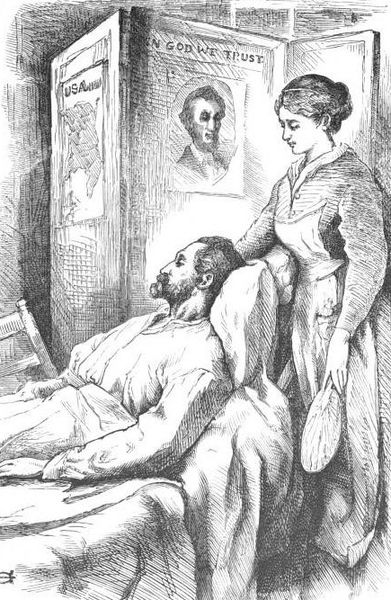
Tribulation Periwinkle was really Louisa May Alcott, who is best known for her novel Little Women. When the American Civil War broke out, she enlisted to care for wounded soldiers in Washington D.C. as a volunteer nurse: an experience she described in a cheerful little book titled Hospital Sketches.

War is horrible. I’ve never been in a battle, but I’ve seen and read and heard enough to understand that armed conflicts are unspeakably dreadful things. General Sherman, who fought in the American Civil War, famously declared, “I tell you, war is hell!”

Written from such tragic circumstances, Hospital Sketches is unexpectedly hilarious. It may not be very accessible for modern readers—the book is crammed with old-fashioned words, archaic idioms and references to classical literature—but I find it hysterically funny.

What really impresses me is how Alcott found humor in the bleakest situations. When confronted with an unappetizing meal, she cheerfully compared the bread to sawdust and observed how much the stewed blackberries looked like preserved cockroaches. Listening to her injured patients snore late at night, she declared them a “band of wind instruments” and restrained herself from breaking out in John Brown’s favorite hymn: “Blow ye the trumpet, blow!”

This incredible optimism and humor in the face of difficulty reminds me of something G.K. Chesterton once wrote: “Always be comic in a tragedy. What the deuce else can you do?”

It also reminds me of a certain pink pony.

Pinkie Pie

I’m pretty sure real ponies don’t come in pink, but whatevs.

Pinkie Pie is a character from a popular cartoon called My Little Pony: Friendship Is Magic, of which I am a fan. She breaks the fourth wall, blurts out non sequiturs and generally does things that make me laugh.

Pinkie also finds humor in miserable circumstances. Surrounded by horrific demon trees? She giggles at their twisted expressions and makes faces at them. Trapped in a surreal nightmare by an ancient spirit of discord? She points out the advantages: “Eternal chaos comes with chocolate rain, you guys! Chocolate rain!”

I’m a pessimist. A pessimist is not a fun thing to be. Louisa May Alcott and Pinkie Pie seem to have discovered a brighter outlook: finding glimmers of hope and humor in dark times.

Perhaps I should try to be positive, even when my circumstances are not.

When Blacksmiths Get Geeky


The first time I saw a Kingdom Hearts game, I was surprised to see the hero use an enormous key as a weapon. I mean, where were the swords and axes? What the heck was going on?

The keyblade is actually a pretty cool weapon. In combat, it’s something between a pole-axe and a two-handed sword. The keyblade also plays an important role in the (admittedly incomprehensible) plot of Kingdom Hearts. Its significance to the story and unique design make the keyblade one of the most interesting video game weapons I’ve ever seen.

Then this blacksmith decided to make a real-life keyblade. Which is amazing.

This video takes me back to That Time I Was a Blacksmith: the summer I wore noise-reducing earmuffs and dirty shirts, used machines like band saws and belt grinders, beat the daylights out of red-hot metal and wished I could grow an epic beard.

What video game weapon would I most like to see forged by a blacksmith? Cloud Strife’s buster sword, without question. The fact that it would be impossible to use is unimportant. What matters is that it would be awesome.

178. TMTF Reviews: Hyrule Historia

As an avid gamer, I love the Legend of Zelda series. Its charming blend of adventure, exploration, combat, quirky humor and killer chickens is truly amazing. When Hyrule Historia—a book released to celebrate twenty-five years of Zelda—hit Western shores, I was quick to snag a copy.

Is Hyrule Historia a worthy celebration of one of the greatest legends in the gaming industry, or is it merely a mediocre mess of video game trivia?

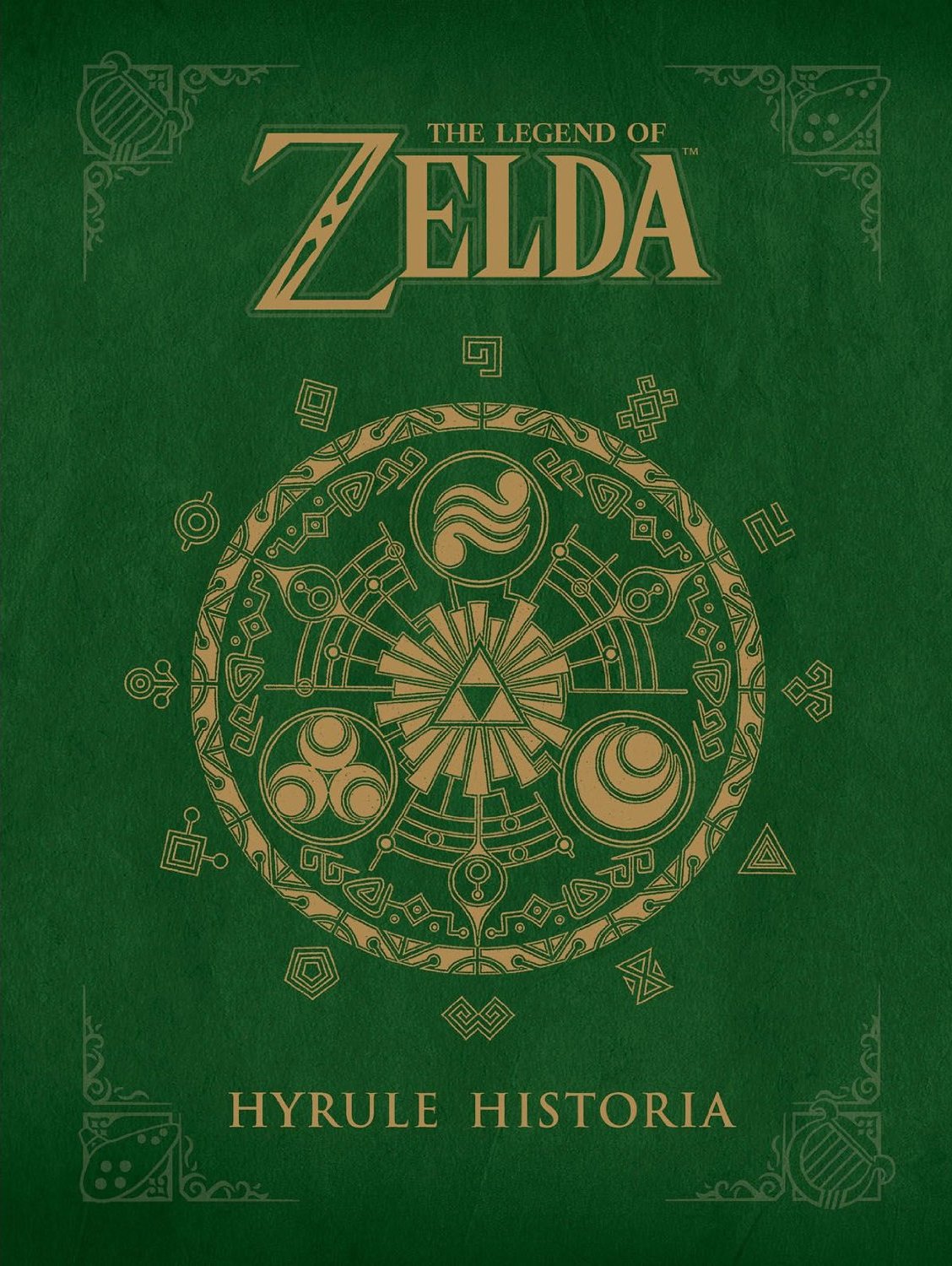
Hyrule Historia

As I expected, Hyrule Historia is a must-have book for anyone interested in Zelda: beautifully designed and packed with fun stuff for fans of the series.

I was surprised at the size of the book. For the price (about twenty dollars) I had expected something fairly small. Hyrule Historia is a whopping great hardback, about the size of my high school yearbooks and a bit thicker. The cover design is glossy and elegant. I’d totally put the book on my coffee table if, you know, I had a coffee table.

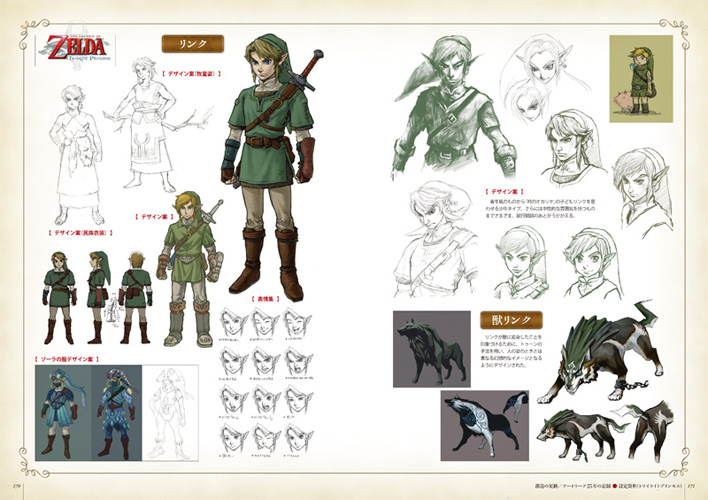
Hyrule Historia has two great assets. First is its vast wealth of concept art, reproduced in vibrant color. Second is its complete history of Hyrule, the world in which Legend of Zelda games take place. The official timeline of the games in the series—a subject of endless debate among fans and a mystery for more than two decades—is finally unveiled, along with detailed and precise (if slightly inconsistent) synopses for the games and explanations of what happens between them.

I found this pseudo-history almost as fascinating as the actual history of the series, chronicled in artwork and notes spanning twenty-five years. From the moment a strange old man handed Link a sword to Link’s latest adventure in the skies, it’s all there.

These pages are taken from the Japanese version of the book; I couldn't find images of the English version.

These pages are taken from the Japanese version of the book; I couldn’t find images of the English version.

A brief manga (Japanese comic) concludes Hyrule Historia: an exciting end to a thoroughly interesting book.

The writing in Hyrule Historia is rather weak, but that hardly matters since the book’s value is in its beautiful artwork and fascinating trivia. The thing that really puzzles me is the diffidence of the writers. They seem strangely uncertain. In describing the history of Hyrule and the development of the Legend of Zelda series, they often use phrases such as perhapsit seems and it is thought that. I expected the official guide to the Zelda series to seem a little more… official.

Strangers to Zelda won’t find much to interest them in Hyrule Historia. For fans of the series, however, the book is an absolute treasure. And you don’t even have to conquer a dungeon or defeat a boss to get it!

177. Why Dave Barry Is Awesome

This blog’s recent contest has been concluded, and the winners chosen at random from the Fez of Destiny have been notified. My thanks to everyone who participated!

Dave Barry was given a Pulitzer Prize in 1988 for writing about boogers. With that, I think I can wrap up my explanation of why he is awesome.

All right, he wasn’t given a Pulitzer specifically for writing about boogers. It was for “his consistently effective use of humor as a device for presenting fresh insights into serious concerns.” By serious concerns, the people who administered the Pulitzer evidently meant exploding whales, owl regurgitation and yes, boogers.

Ladies and gentlemen, I give you the man respected for being snarky and immature in the most hilarious, brilliant, wonderful ways possible.

I give you Dave Barry, whose commentaries have never failed to make me smile.

Dave Barry

Dave Barry was a columnist for The Miami Herald and currently writes books. In his days as a columnist, he tackled such important issues as exploding livestock with quick wit and even quicker subject changes. Barry writes the way some people think, bouncing from one topic to the next like a mountain goat leaping from peak to peak.

Like James Thurber, the writer who claimed his sense of humor was “set in motion by the damp hand of melancholy,” Dave Barry has an unexpectedly bitter philosophy: “A sense of humor is a measurement of the extent to which we realize that we are trapped in a world almost totally devoid of reason.”

Fortunately, Barry’s writing is anything but philosophical. He points out the absurdities we overlook, such as silly government spending and cultural phenomena, and mocks the heck out of them.

Barry is the one from whom I picked up the bad habit of coining names for rock bands. To assist him in his endless efforts to invent band names, he uses the acronym WBAGNFARB: Would Be A Good Name For A Rock Band. Another common phrase, following a description of something truly ridiculous, is the straight-faced assertion: “I am not making this up.”

Besides humor columns, Dave Barry has written some fiction and a number of books on government, travel, history and other subjects. I disliked his novel, Big Trouble, but his nonfiction books—well, supposedly nonfiction books—are delightful.

Dave Barry informed me that Indiana, my state of residence, is called the Hoosier State because hoosier is the noise pigs make when they sneeze.

When Dave Barry visited Japan, his major objectives changed immediately from things like “try to determine attitude of average salaried worker toward government industrial policy” to “try to find food without suckers on it.”

Dave Barry gave this illuminating commentary on a fundamental right of Americans: “The Second Amendment states that, since a well-regulated militia is necessary to the security of a free state, you can buy high-powered guns via mail order and go out into the woods with your friends and absolutely vaporize some deer.”

In conclusion, ladies and gentlemen, Dave Barry is awesome.

Jesus Broke the Fourth Wall

Truly I tell you, wherever this gospel is preached throughout the world, what she has done will also be told, in memory of her.

~ Matthew 26:13

One of my favorite storytelling tricks is called breaking the fourth wall. There was once a playwright, you see, who insisted on making his stage productions as realistic as possible. In a play performed on a stage with three walls, the audience must be the fourth wall.

Thus the fourth wall became a phrase describing the imaginary boundary between the audience and the performers, or (more broadly) between reality and fiction. When a performer acknowledges the audience, that fourth wall is broken. This trick is often used for comedic effect or even as a clever, self-aware way for fiction to communicate its meaning.

It occurred to me not long ago that Jesus seems to break the fourth wall, so to speak, in the Gospels of Matthew and Mark. The story is a familiar one. Days before his crucifixion, Jesus is anointed with perfume by a woman. His disciples are indignant: “Why this waste? This perfume could have been sold at a high price and the money given to the poor.”

Jesus gives this touching reply: “Why are you bothering this woman? She has done a beautiful thing to me. The poor you will always have with you, but you will not always have me. When she poured this perfume on my body, she did it to prepare me for burial.”

Then things get awesome as Jesus breaks the fourth wall.

“Truly I tell you, wherever this gospel is preached throughout the world, what she has done will also be told, in memory of her.”

In simply speaking those words, recorded in the Gospels of Matthew and Mark and later preached to countless people over many centuries, Jesus made them come true.

As much as I’d like to assume Jesus specifically meant the Gospel of Matthew or the Gospel of Mark when he said “this gospel,” history tells us otherwise. The word translated gospel in this passage—and later applied to the books of Matthew and Mark—means good news. By “this gospel,” Jesus was speaking broadly of the good news of his life, death and resurrection—not of a specific Gospel in the Bible.

All the same, I chuckle every time I read that passage. Jesus was a man of miracles. He walked on water, healed the sick, raised the dead and did what no one (as far as I know) has ever done outside of fiction.

Jesus broke the fourth wall.

176. Another Conversation with Myself

This post is the sequel to a previous conversation with myself. I just can’t seem to catch a break, can I? On a brighter note, check out this opportunity to win a free copy of my novel!

Hey, Adam!

For once, can I write a blog post without being interrupted? Is that too much to ask?

Sorry, I didn’t know you were busy. Blog post, eh? It must be for your amazing typewriter monkey blog.

Go away.

Your blog is great, and I love your novel. How many people are published authors? Not many. You’re really something special, dude. And your sideburns are fantastic. Way better than the Tenth Doctor’s.

Blasphemy! Nobody has better sideburns than the Tenth Doctor.

Except for you, Adam. You’re a good-looking guy, you know. And you’ve got a great sense of humor.

Thank you. Now would you kindly shut up and go away?

There’s no need to be so huffy, dude. I was just trying to be nice.

Really? I assumed you were trying to be a pest.

I’ve never tried to be a pest.

Well, I must say you’re doing dashed well for a beginner.

Ha! That was a brilliant comeback. You clever guy, you!

I was plagiarizing P.G. Wodehouse and you know it. Stop being a shameless sycophant.

Dude, I’m just trying to let you know you’re awesome. Totally awesome.

I’m also annoyed. Totally annoyed. Go away!

What’s the problem? You’re so down on yourself, and that other guy is always tearing you apart. He’s like an evil version of you—the Anti-Adam. I just want to build you up. Call me the Pro-Adam.

There’s a difference between building up someone’s confidence and puffing up someone’s ego. The Anti-Adam exaggerates my faults, but you exaggerate my virtues. You’re just as bad.

The Anti-Adam makes fun of you, dude! At least I’m trying to help.

You and the Anti-Adam have different stories, but you’re equally wrong. If you drive a car off the road and crash, it doesn’t matter much whether you’ve gone too far to the right or too far to the lefta wreck is still a wreck.

The Anti-Adam is wrong, but I’m totally legit. Seriously, you’re a great guy.

I don’t want to hear it. “A man who flatters his neighbor spreads a net for his feet.”

Quoting the Bible. That’s classy. I love how you quote people all the time, dude. You’re really smart.

Nah, I’m just really good at faking it.

There you go putting yourself down again! Listen, dude, you can’t deny you’ve got some mad skills. Like playing Mario Kart. Nobody beats you at Mario Kart.

I concede that.

And you’re generous with your money. And you spend forty freaking hours every week serving mentally handicapped men. That’s a tough job. And you’re good at it. You’re really patient—I’ve hardly ever seen you lose your temper. I could go on and on.

Leaving out all the unpleasant bits, of course. You haven’t mentioned that I’m selfish and insecure and sometimes kind of a jerk.

Everyone is, dude. It’s called being human. On the whole, I think you’re a really good person. Don’t pretend you’re not a good writer or a patient guy.

Do you think I should be congratulated for being a decent writer or having a patient temperament? These talents aren’t mine. They’re God’s. At the moment, they’re on loan.

You learned to be a good writer! You learned to be patient! Give yourself some credit!

My gifts and skills and things are like seeds. I didn’t make them grow. All I did was water them. God made them growand he was the one who planted them in the first place.

What about your virtues? You’re kind and respectful and honest.

Only because I’ve been conditioned to be. If I came from a background of abuse or neglect or poverty, I’d be a mess. That’s not what happened. I come from a background of kindness and faith and love, so that’s who I am. I’ve spent my life with good people. They’ve rubbed off on me.

You’re not just naturally a good person, dude. You’ve had to work at it.

I’ve built up some good things, sure, but the foundation was already there.

You’re being modest.

I’m being honest. Whatever goodness I have is borrowed. That’s really all there is to it. Now go away and let me work on my blog. It’s too late to write a new post… but that might not be a problem.

I love your blog, but, um, don’t post this conversation.

Why not? Now then, if you really want to be help, go heat up some water. I don’t know about you, but I could use a cup of tea.

175. Win a Free Copy of My Book!

I wrote a book. And you can win a copy. A signed copy. For free!

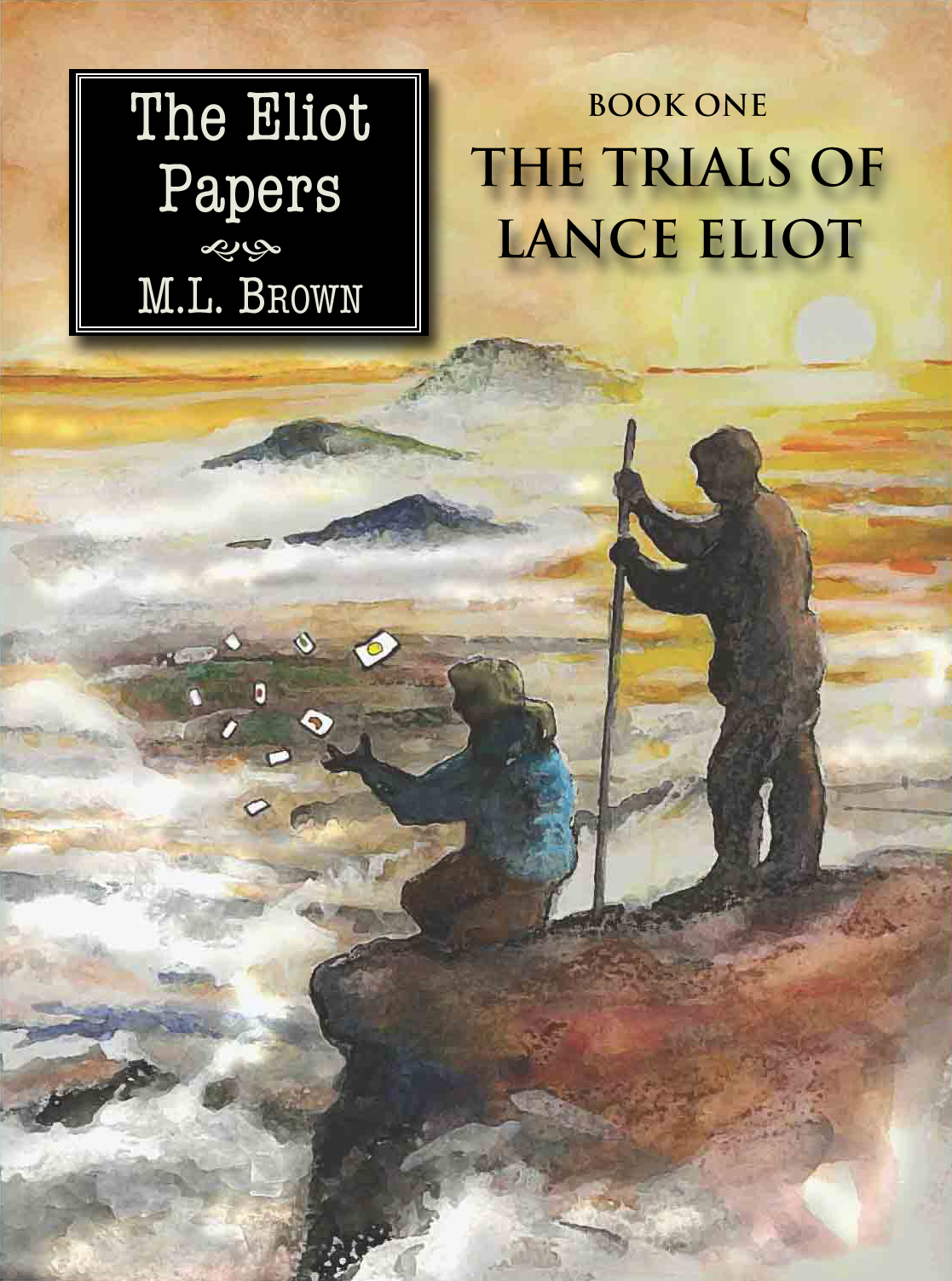
I’m giving away three paperback copies of my novel, The Trials of Lance Eliot, as part of a contest. To enter this contest, you must do one or both of the following things.

First, follow me on Twitter!

Second, share a link to this blog on your own blog, Facebook profile, Twitter account, Tumblr page or website!

Having done either of these things, leave a comment on this blog post or use the Contact page or contact me in some other way telling me which you’ve done. For doing one of these things, I’ll put your name in a hat; if you do both things, your name will go in the hat twice. On April 19, I’ll pull three names at random from the hat. (For the record, the hat will be a fez.) Having selected the winners, I’ll contact them to ask for their mailing address and send each of them a signed copy of my novel!

This could be yours!

This could be yours!

If the same name is selected more than once, another name will be pulled from the hat—in other words, only one book per winner. Nevertheless, having your name submitted twice will improve your chances of winning!

The purpose of this contest is to build a platform—that is, to reach new readers—for my novel and this blog. If you take part in this contest, you’ll be giving my writing career a little boost—and you’ll be giving yourself the chance to win a brand-new, autographed copy of a novel readers have praised as “humorous,” “thought-provoking” and “a delight to read.”

To conclude: follow me on Twitter or share this blog, and then let me know which of these things you’ve done. And please spread the word!

In a week, I’ll select the winners!

An Evil Scientist Explains Band Names

Starting this week, Geeky Wednesdays are officially a thing.

From Kicking Crickets to Closet Vikings, I’ve come up with a staggering number of awful band names. Dave Barry, a humorist and master of rock band nomenclature, is the one from whom I picked up the bad habit of turning odd phrases from everyday life into absurd names for rock bands.

Seriously, though, what’s with band names? A few make sense. Peter, Paul and Mary is refreshingly simple, and The Beatles is a clever pun on beat and beetle. But what about Pink Floyd and ZZ Top and other strange band names? Are such bizarre names the result of nonconformist intellect, warped humor or reckless drug use? And why do Doofenshmirtz’s explanations seem so reasonable?

174. TMTF’s Top Ten Hats in Video Games

I recently learned of an indie game titled Fez. The game’s protagonist wears a fez, presumably because fezzes are cool. (We all know this.) This game reminded me that characters in video games have some pretty sweet hats.

As a gamer, blogger and proud owner of several hats, I believe it’s my solemn duty to decide which video game hats are the best.

The following rules apply: I’ll choose hats only from games I’ve played, and I’ll select no more than one hat from any game series. Only original video game hats are permitted: no hats from licensed characters like Indiana Jones or Donald Duck. Hoods, helmets, headbands, ribbons and all headgear except hats and caps are disqualified from this list.

Now, ladies and gentlemen, hats off as TMTF proudly presents…

The TMTF List of Top Ten Hats in Video Games!

10. Quote’s Baseball Cap (Cave Story)

Quote's Baseball Cap

Quote, the amnesiac hero of indie classic Cave Story, manages to look quite heroic in a simple baseball cap. The hat isn’t particularly fancy or elegant, but its bright white and red design helps Quote’s pixelated figure stand out against the muted blacks and browns of Cave Story‘s subterranean locales. On an entirely different note, do the buttons on Quote’s hat remind anyone else of Mickey Mouse’s shorts?

9. Cormano’s Sombrero (Sunset Riders)

Cormano's Sombrero

This Mexican gunslinger, who has been described as “either groundbreakingly inclusive or an offensive stereotype, take your pick,” is a playable character from Sunset Riders for the SNES. The game consists mostly of shooting stuff. Cormano’s skill with a rifle is belied by his sombrero, which is colored bright magenta and shaped like a taco. Never has the Old West been so fabulous!

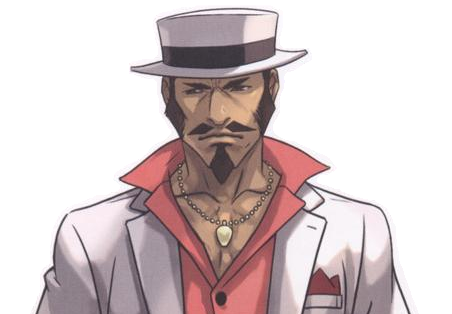
8. Shadi Smith’s Pork Pie Hat (Apollo Justice: Ace Attorney)

Shadi Smith's Pork Pie Hat

Not since Buster Keaton has anyone looked so good in a pork pie. Despite being a shifty character with questionable ethics, Shadi Smith is a really sharp dresser. There are many fantastic hats in the Ace Attorney series, from magician’s top hats to policewomen’s berets, but none seems more stylish or elegant than Shadi Smith’s classy pork pie hat.

7. Carmen Sandiego’s Fedora (Where in the World is Carmen Sandiego?)

Carmen Sandiego's Fedora

As a child, I played Where in the World Is Carmen Sandiego? on my family’s ancient black-and-white Apple Macintosh. (I’m pretty sure the above picture of Ms. Sandiego comes from another game in the series, but it’s the best I could find.) It was educational gaming at its finest: besides learning about geography and national flags, I got a taste of fashion from Carmen Sandiego’s criminally fabulous fedora.

6. Red’s Baseball Cap (Pokémon FireRed)

Red's Baseball Cap

This one was a toss-up between the hats worn by Red from Pokémon and Ness from Earthbound. Red won because his baseball cap is quite a bit cooler. (Besides, Red’s cap in the original Pokémon Red was the inspiration for Ash Ketchum’s iconic hat in the Pokémon anime.) Like Quote, Red takes a common item of casual apparel and makes it seem dashing and even heroic.

5. Agent Chieftain’s Stetson (Elite Beat Agents)

Agent Chieftan's Stetson

Elite Beat Agents is a wonderful rhythm game for the Nintendo DS in which government secret agents assist people in desperate need by invoking the inspirational power of song and dance. (Yes, the game is every bit as weird—and awesome—as it sounds.) Agent Chieftain, a senior agent of the Elite Beat Agency, flaunts a flashy Stetson that adds a dash of cowboy flair to his plain suit and tie.

4. Red Mage’s Wizard Hat (Final Fantasy III)

Red Mage's Wizard Hat

Although the Black Mages from the Final Fantasy series have neat hats, the Red Mages earn this place on the list with their gorgeous crimson hats adorned with snowy feathers. Other Final Fantasy characters have clunky helmets, dull hats or plain hoods. Red Mages alone uphold the lofty standards of fashion while defending their worlds from demons, dragons and other monsters.

3. Mario’s Flat Cap (Super Mario 64)

Mario's Flat Cap

How could I not include Mario’s cap? It’s indisputably the most famous video game hat in the world, and definitely one of the neatest. Mario’s cap from Super Mario 64 deserves special mention for giving Mario superpowers, including flight. Few things in video games have been more fun for me than soaring around the game’s locales with Mario’s winged cap. Like its owner, this hat is remarkable.

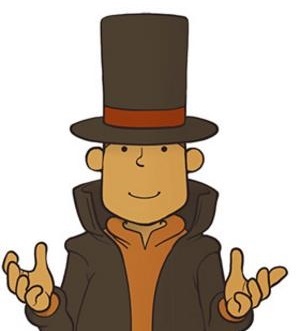
2. Professor Layton’s Top Hat (Professor Layton and the Curious Village)

Livewire-AGE

I have absolutely nothing to add.

1. Link’s… Cap? (The Legend of Zelda: The Minish Cap)

Link's... Cap

Link’s cap is one of the most iconic elements of the Legend of Zelda series. It’s instantly recognizable—seriously, how many legendary heroes wear green pointed caps? Link achieves an incredible feat in every Zelda game by looking cool in a hat that wouldn’t seem out of place on one of Santa’s elves. As much as I like it, I wouldn’t give Link’s cap the number one spot on this list if it weren’t for one detail: it talks. In The Legend of Zelda: The Minish Cap, Link is joined on his quest by Ezlo, an enchanted hat who gives advice, grumbles, cracks jokes and turns out to be one of the most engaging characters in the entire Zelda series. For its iconic status, surprisingly cool appearance and amusing dialogue—I can’t believe I’m saying this about a hat—Link’s cap is TMTF’s pick for the best hat in a video game.

O people of the Internet, what great video game hats would you add to this list? Let us know in the comments!