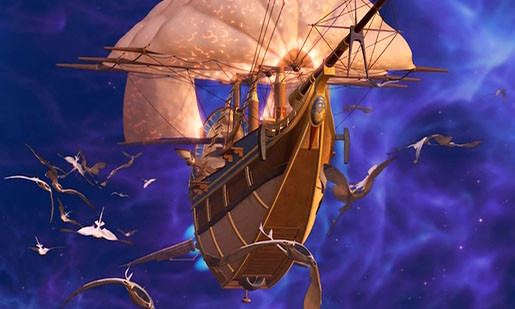
When Batman Has a Bad Day

A wise person once said, “Always be yourself, unless you can be Batman. Then be Batman.”

Batman is my favorite superhero. Christopher Nolan’s excellent films introduced me to the brilliant, skilled martial arts prodigy who decided the best way to cleanse his city of corruption was to dress up like a bat, throw pointy objects at evildoers and drive around in a really neat car.

Batman is interesting because he has no superpowers. His abilities are the fruit of determination, intelligence and self-discipline, augmented with some sweet technology.

More significantly, Batman is a conflicted character. I like conflicted characters. Granted, most superheroes have insecurities. Batman is different. As Charlie Brown would say, his anxieties have anxieties; Batman is the eponymous sufferer of Batman Syndrome. Nevertheless, he keeps going. He sees no joy and little hope in doing the right thing, yet he does it anyway. I admire that.

On a less intellectual level, Batman is really cool.

However, like every other person on Earth, Batman has bad days. The charming animation above depicts a day when the Caped Crusader just can’t seem to catch a break. Keep an eye out for an appearance from comics legend Stan Lee!

186. Adventures in Odyssey

Adventures in Odyssey should not exist. Every law in the known universe declares its continued existence impossible, but Adventures in Odyssey defies the odds and keeps going.

That, ladies and gentlemen, is amazing.
Adventures in Odyssey

Adventures in Odyssey is an original radio drama: an artistic medium that has been driven nearly extinct by films, television and the Internet.

More importantly, it’s a Christian program that’s really, really good.

I don’t mean to be uncharitable, but overtly Christian media is sometimes kind of awful. Christian video games stink. With a few outstanding exceptions—Gilead and Peace Like a River come to mind—openly Christian novels tend to be sappy, trite or one-dimensional. Much contemporary Christian music is horrendous. Religious films are often produced on a very low budget.

To wit, Christian media tends to be preachy, shoddy or simply bad.

Adventures in Odyssey is none of these things. Everything about the show—the writing, the music, the acting, the editing—is excellent. Did I mention the show, which has aired more than seven hundred full episodes, has been running for more than twenty-five years?

Odyssey is a little town in America; its exact location is the subject of much speculation. (At least one writer on the show has suggested the town moves around like the island from Lost.) The town’s most famous attraction is Whit’s End, an establishment for kids run by a middle-aged inventor named John “Whit” Whittaker and frequented by a colorful and ever-changing cast of characters.

One of my favorite things about Adventures in Odyssey is that it transcends genres. In one episode, an ordinary seminary student struggles to survive his studies. In the very next episode, a government spy is tracked to Odyssey by terrorists hellbent on weaponizing a deadly virus.

No other story I’ve ever read, seen or heard ventures into so many genres, and Adventures in Odyssey does it with effortless aplomb. Detective story? Sketch comedy? Spy thriller? Teen drama? Historical fiction? Adventures in Odyssey covers them all, often resorting to clever tricks like flashbacks and stories-within-stories.

One of the cleverest aspects of the show is the Imagination Station: an invention of Whit’s which is sort of like a cross between the TARDIS from Doctor Who and the virtual world from The Matrix. Basically, the Imagination Station lets a person (or several persons) enter a virtual adventure based on an event from history. This plot device allows the show to tell stories beyond the modern-day town of Odyssey, from the lives of Old Testament prophets to the battles of the American Revolutionary War.

Then there are the characters. Dash it, there are the characters.

Meet Wooton Bassett.

Wooton Bassett

“That’s a funny name,” remarks a kid meeting him for the first time.

“Yeah,” replies Wooton. “I know. It’s Old English for village by the wood.”

“Your parents were Old English?” demands the kid.

“No,” admits Wooton. “They were just old.”

After the incomparable Father Brown, Wooton Bassett is my favorite character in fiction. He surpasses even such legends as Atticus Finch, Jeeves, Anne Shirley and the Doctor in my esteem. I was incredibly honored when Paul McCusker, veteran Adventures in Odyssey writer and creator of Wooton Bassett, agreed to write a great guest post for this blog.

Wooton is a mailman, toy collector and huge fan of the highly successful PowerBoy comic series (which he secretly writes). He can play “Camptown Races,” and only “Camptown Races,” on a vast number of musical instruments. Wooton also furnishes his house with refurbished junk and produces such culinary wonders as popsicle cakes and jellybean casseroles. In everything, he acts with cheerful exuberance and perfect kindness toward everyone.

Wooton Bassett is, in absolutely the best possible way, freakishly strange. I wish he were my next-door neighbor.

Adventures in Odyssey is full of fascinating characters: Eugene Meltsner, the socially awkward genius; Harlow Doyle, the incompetent private eye; Bernard Walton, the pessimistic, sarcastic window washer; and, of course, Whit himself.

The show does a fantastic job of depicting nuanced characters. I once read a blog post by a nonreligious listener who loved Adventures in Odyssey and appreciated the respectful way it handled issues like agnosticism. Eugene Meltsner, a religious skeptic, wasn’t stereotyped or demonized, but developed with the same believable mixture of virtues, flaws and lovable quirks as the other characters.

To sum up: Adventures in Odyssey is awesome, and I wish there were more eccentric, toy-collecting, comic-obsessed mailmen in my life.

In case you’re interested, Adventures in Odyssey has a website where many episodes can be heard online.
185. Up in Flames

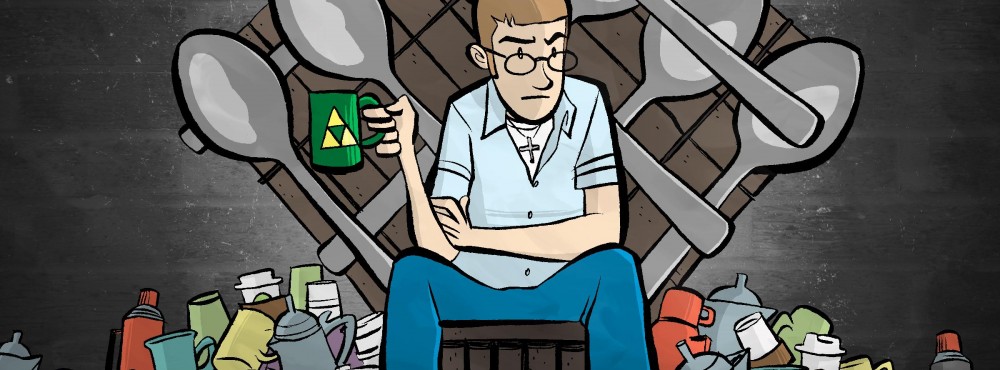
I haven’t written an ordinary blog post today. My typewriter monkeys are to blame. They managed to get their paws on some pyrotechnics. Again. This time, they made the fireworks themselves… or at any rate, they tried.

There ought to be a law against selling pyrotechnics to monkeys.

Too much black powder?

I took a vacation this week, you see. I spent it visiting friends and relatives. My monkeys stayed behind.

When I got back this evening, I heard rap music blasting from my apartment. That was a bad sign. Then I saw smoke pouring from the windows. That was a worse sign.

Damage is minimal, fortunately. Scorch marks can be painted over and the carpet can be replaced. All the same, it’s days like these that make me wonder why I invested in typewriter monkeys in the first place. I could have had an intern. He could have made coffee, not fireworks. Why didn’t I get an intern?

Anyhow, raging conflagrations ignited by homemade pyrotechnics are my excuse for not publishing a prompt, proper blog post today. This blog shall resume on Monday with our usual… whatever the heck it is we do around here.

Incidentally, my monkeys’ liking for rap music puzzles me. Fireworks I can understand, but… rap? Ah, well. I’m sure their interest is a harmless one.

The Best Cellist in the World

I wish I could do anything one-half as well as this gentleman plays the cello. To tell the truth, I’m a bit cellist of his remarkable talent.

Now I’m going to spend an hour or two doing penance for making such a terrible pun. I’m sorry. I’m so, so sorry.

(I’m not sorry.)

Just watch this gentleman’s facial expressions as he plays. His passion for music is unmistakable. I may never become as skilled at anything as he is at playing cello, but I want to nurture that same kind of joyful, passionate enthusiasm for my own gifts.

184. An Explosion of Pink

A tree has stood outside my apartment all winter: an empty, skeletal tangle of bare twigs and branches. There were brief moments when this tree was lovely—its intricate silhouette looked quite nice against the rising sun—but it seemed bleak and ugly most of the time.

One day, about two weeks ago, I was astonished to glance out my window and see this:

002This transformation happened almost overnight. A skeleton of weathered wood had burst into a fountain of blossoms, swaying in the breeze and sending petals fluttering to the ground. Something dead had exploded into bright, beautiful, exuberant life.

So yeah, that’s what’s been happening with me.

April was not a good month. My work schedule, ever as capricious and unpredictable as the clouds, changed repeatedly, forcing me to switch between daytime and nighttime shifts. I suffered from severe sleep deprivation. At work, I was compelled to handle unexpected responsibilities on short notice. I lost my appetite. My recurring struggle with depression became a constant battle.

All the while, my obligations and commitments kept coming with the unstoppable regularity of ocean waves. I felt about three seconds away from a breakdown on at least two occasions. To paraphrase the words of Lincoln, it seemed impossible for me to remain as I was. I could recover or break down, but I couldn’t keep going.

Then, around the beginning of May, things changed with the suddenness of a tree exploding into bloom.

My depression disappeared as quickly as it came. I managed to get some sleep. My appetite returned. Work became easier and my schedule eventually returned to normal. (I doubt it will stay that way, but I can hope!) I watched a couple of movies and some YouTube videos and actually enjoyed them.

I’m taking a break from work this week, starting tomorrow. Fueled by cookies and coffee, I’ll travel north to watch Iron Man 3 with my uncle, discuss Abraham Lincoln with my grandfather, play Mario Kart with my cousins and generally have a good time visiting friends and relatives.

My life is looking better and brighter by the day.

I knew the tree outside my apartment wouldn’t stay bare forever, but I didn’t think it would resurrect so suddenly. I definitely didn’t expect it to be pink.

I was sure my life would get better eventually, but my recovery still astonished me. I certainly didn’t expect it to be so overwhelming.

My sufferings are trivial compared to those faced by other people in the world. I have enough to eat. My family is awesome. I have no desire to hang myself, read the Twilight series or end my own life in any other way. I’m ridiculously blessed even through difficulties.

All the same, my difficulties last month seemed quite bad enough, thank you.

It has been endlessly comforting to look back over those dark weeks in April and realize they were not without purpose. Unlike poor old Job, who probably never knew why God made him suffer, I can see at least some meaning in last month’s trials.

Never before have I had such an appreciation for not being depressed. Freedom from anxiety and hopelessness is something I no longer take so much for granted. I’m getting more sleep and worrying less about the future.

More importantly, I learned last month to stop blaming myself for bad days. Neither bad nor good days are usually my doing.

This makes my life less complicated. I don’t have to figure out what I’m doing wrong on bad days or right on good ones. I can simply persevere through the bad and be thankful for the good, giving God my best through every kind of day. My best will be better on some days than on others. That’s all right. I may be inconsistent, but God’s grace is not.

The tree outside my window has faded to dull green. My life will sometimes seem hopeless and difficult. I’m not giving up. After all, every desolate, skeletal tree may soon become an explosion of pink.

004

183. A Lesson from Doctor Who

I often discover lessons in unexpected places. True, I learn from the Bible and wise people, but I also learn from Batman and webcomics about video games.

The Doctor from Doctor Who is not particularly wise—in fact, he has all the tact and maturity of a twelve-year-old boy—but he recently taught me an invaluable lesson.

This is not the face of a wise man.

This is not the face of a wise man.

I work in a group home for gentlemen with mental and physical disabilities. As you can imagine, my job is often amusing, sometimes heartbreaking and never predictable.

When I began working in a group home, I felt pity for some of its residents. Their lives are often dark and difficult. Some endure chronic physical pain. Most suffer from depression. Few are ever visited by friends or family. All of them are hurting in some way and few of them understand why.

At first I pitied only these gentlemen, but as months passed I realized they aren’t the only ones deserving of compassion.

Most of my coworkers are hurting. Some are divorced. Some have family issues. Many struggle with financial woes or health problems. I’ve heard tearful stories, bitter complaints and vicious arguments I wish I could forget.

Apart from work, I have friends facing heartrending difficulties: divorce, debt, depression, loneliness and grief.

I’m constantly surrounded by people whose problems I can’t solve, and I hate it.

At one point in Doctor Who, the Doctor and his friend learn that a person whose life they tried to save committed suicide. The Doctor’s companion is overwhelmed with grief. “We didn’t make a difference at all,” she says.

“I wouldn’t say that,” replies the Doctor, blinking back tears. He adds:

The way I see it, every life is a pile of good things and bad things. The good things don’t always soften the bad things, but vice versa, the bad things don’t necessarily spoil the good things or make them unimportant. And we definitely added to his pile of good things.

I may not be able to fix someone’s life, but nothing will ever prevent me from adding to his pile of good things.

I can’t fix my coworker’s marriage. I can’t take away the pain of the gentleman with arthritis or the hopelessness of the gentleman with depression. I can’t promise healing to a hurting friend.

I can, however, be patient. I can listen. I can pray. I pretend to be terrified when the gentlemen with whom I work tell me there are mummies in the cupboards or a mouse in my shoe.

On an afternoon a few weeks ago, just a day or two after I remembered this lesson from the Doctor, I was administering medications at work when a resident of the group home ambled up to me.

“This is for you,” he said with a grin, holding out a cup of coffee.

It occurred to me in that moment that I’m not the only one trying to add to the piles of good things around me.

Sometimes other people, even hurting people, add to mine.

A Collection of Fabulous Video Game Mustaches

Stache Stash

Clockwise, beginning at the top right: Yang (Final Fantasy), Mario (Super Mario Bros.), Dr. Eggman (Sonic the Hedgehog), Dr. Wily (Mega Man), Wario (Super Mario Bros.), Naked Snake (Metal Gear Solid), Don Paolo (Professor Layton) and Marvin Grossberg (Ace Attorney).

This is a collection of magnificent video game mustaches: a stache stash, if you will. Which is best? My money is on Mario’s mustache. It lacks the extravagant flair and staggering size of the competition, yet it boasts an understated charm.

182. Books I Want to Write

I have many ideas for books and stories rattling around in my head. Sadly, most of these won’t ever be written. I’ve been stuck on one manuscript for a long, long time. I’ll frankly be satisfied to finish The Eliot Papers and never write a book again.

All the same, my mind is cluttered with ideas for more books. I’ve decided to share some of the best. Who knows? When Lance Eliot’s journey is donewhenever the heck that may beI may begin a new adventure.

Here, then, are some books I want to write.

Chimera

Several centuries in the future, as the world begins to recover from a nuclear war, a student named Adam is informed by his friends (all of whom wear white coats for some reason) that he is actually a chimera: an organism engineered with genetic material from two separate species. Adam happens to be a chimpanzee with human intelligenceor as one of his white-coated friends cheerfully puts it, “A crime against God.”

Since the experiments that produced Adam are highly illegal, he is also a crime against the now-authoritarian government of the United States of America. When the Humanitarian National Service sends agents (nicknamed Huns) to eliminate Adam, he escapes and becomes a fugitive. Adam decides to flee to Alaska. Along the way he keeps a diary, which he began as an assignment from his white-coated educators and continues as a distraction from the hardships of his life.

The League of Young Detectives

Gabriel Green is an ordinary kid in Indiana, the most ordinary place in the world. Upon entering seventh grade, he makes two extraordinary friends: Nathan Quist, a reserved exchange student from Britain, and Samuel “Samurai” Reyes, a geeky Ecuadorian-American immigrant.

As the school year progresses, Gabriel and his friends uncover hints of a sinister conspiracy involving strange acts of vandalism, an honorable thief, a retired FBI agent, a local murder and a dark organization known only as The Week. These three young detectives must overcome the skepticism of grownups, the awkwardness of adolescence and the very real dangers of crime-solving to find the truth and bring justice to their little Indiana town.

The Oakwood Home for Special Gentlemen

The Oakwood Home for Special Gentlemen is a group home for men with mental and physical disabilities. Twelve incidents occur over the course of one year: some comic, some tragic.

In one incident, a depressed worker frustrated with her life abducts a residenta mild gentleman with an obsessive-compulsive desire to visit Californiaand take him on a trip across the country to fulfill his dream. In another incident, a worker conspires with a resident to terrify the home’s superstitious manager as a Halloween prank. Every incident, whether funny or sad, is unique and unexpected.

Samuel White

I’ve mentioned that I love changing perspectives when telling a storySamuel White would be an avant-garde novel telling the life story of its eponymous protagonist in the form of thirty brief vignettes from the lives of thirty different people. The twist? Samuel White himself would never make an appearance. Like dear old Godot from the play by Beckett, Samuel White’s entire life would defined by the incidental remarks of other people.

Professional Wanderers

Daniel Grey is a wandering vagabond, working odd jobs and never stopping in one place for more than a couple of days. His brief but memorable stay in a small Indiana town draws the attention of an out-of-work journalist, who decides to accompany Grey for a few months to gather material for a book. As they travel, the journalist becomes increasingly puzzled by his companion. Grey, an unshaven vagrant who carries all his worldly possessions a rusty wheelbarrow, has an impossible knowledge of geography, history and literature.

The mystery deepens as Grey runs into “a very, very old friend.” This man, who wears a silver albatross on a chain around his neck, warns Grey that “the man with the mark” has begun a campaign of murder. Grey resolves to track down the man with the mark, and his journalist companion follows in search of answers.

Portraits in Stained Glass

When a man’s car breaks down at night, he grabs a flashlight and climbs a nearby hill to find the building at its summit is not a house, as he had hoped, but an empty chapel with enormous stained glass windows. The man examines each window in turn. Each provides a retelling of a short story (often an obscure one) from the Bible. At last the sun rises, setting the stained glass ablaze, and the traveler leaves the chapel a better man.

Is there a book you want to write? Is there a book you’re writing? Let us know in the comments!

181. My Battle with Depression

I am now the most miserable man living. If what I feel were equally distributed to the whole human family, there would not be one cheerful face on the earth. Whether I shall ever be better I can not tell; I awfully forebode I shall not. To remain as I am is impossible; I must die or be better, it appears to me.

~ Abraham Lincoln

I don’t often write about depression. It’s not a pleasant subject, and I make an effort to be optimistic. Quoth Louisa May Alcott, a ridiculously cheerful person: “I can only say that it is a part of my religion to look well after the cheerfulnesses of life, and let the dismals shift for themselves.”

Besides, depression is kind of embarrassing. It’s easier not to talk about it.

I’ve struggled throughout my life with periods of anxiety and hopelessness—I once wrote a post about the worst of them—but depression isn’t usually a severe problem.

Recently, however, it has been more of a struggle. More than once in past weeks depression has impaired my ability to function… and today is one such occasion. Earlier today—not today today, but the day I wrote this post—I made some last-minute arrangements and came home early from work.

I just couldn’t do it.

There was no way on God’s green earth I could spend eight hours in a group home administering medications, washing dishes, changing soiled undergarments or doing whatever the heck else needed to be done. It was hard to do anything except keep breathing.

Thank God, I’m feeling much recovered—well enough, at least, to write a blog post. (Tea, rest and Brawl in the Family are fine cures for depression.) This is a post I’ve wanted to write for some time: not as a complaint or a plea for attention, but an honest acknowledgment of a personal struggle.

Dash it all, personal posts are the hardest to write… except for top ten lists and book reviews. But I digress.

I’m thankful not to have any troubles worse than depression, and extremely grateful for the loving support of friends and family.

Several people in my family suffer from depression. My old man, for example, has battled it throughout his life. Do you know what else?

My old man is awesome.

I will consider mine a life well spent if I grow up to be just like him. My old man is consistently cheerful, funny and kind. People are always surprised when they learn he suffers from intermittent depression and chronic physical pain. He gives me hope that I too can live a cheerful, useful life despite my own struggles with depression.

I wonder sometimes why God allows me to experience anxiety, fatigue and hopelessness. Wouldn’t I be a good deal more effective doing good things if I were not occasionally burdened with debilitating depression? I mean, really, God?

In the end, I always come back to the passage in the New Testament in which the Apostle Paul suffers a paralyzing problem of his own:

I was given a thorn in my flesh, a messenger of Satan, to torment me. Three times I pleaded with the Lord to take it away from me. But he said to me, “My grace is sufficient for you, for my power is made perfect in weakness.”

Depression might be a thorn in my flesh. It’s certainly a nuisance. Nevertheless, God’s answer to me has been the same as his answer to Paul. The grace of God is sufficient. That, as they say, is that.

God may not have spared me depression today, but he enabled me to pull some strings to come home early from work. He didn’t give me the strength for which I asked. Instead, he gave me tea and rest and funny webcomics.

I continue doing what I can to prevent depression: eating fruits and vegetables, drinking too much tea, working out (often while listening to music from My Little Pony: Friendship Is Magic, which is either really stupid or really awesome), watching cheerful cartoons, trying to get enough sleep and asking God for his help.

I have good days. I have bad days.

Through every kind of day, God’s grace is sufficient. Always.

Airships

The Tiger Moth from Castle in the Sky

The Tiger Moth from Castle in the Sky

An airship is a lighter-than-air aircraft; examples include dirigibles and hot-air balloons. Airships use buoyant gases such as hydrogen and helium to remain aloft, unlike heaver-than-air aircraft such as airplanes and helicopters that rely upon wings or rotors.

In fiction, however, airship is a catch-all term for unusual aircraft. Fictional airships are much cooler than real-life ones, probably because their designs aren’t restricted by nuisances like production cost and the law of gravity.

Airships are common in certain kinds of fiction (notably steampunk fantasy) and even make appearances in the Super Mario Bros. games. My favorite airships, however, are those from the Final Fantasy series and the films of Hayao Miyazaki.

Airships in fiction often evoke a sense of nautical adventure. The sky is an ocean waiting to be explored! In stories with airships, pirates roam the skies as readily as the seas. Balthier from Final Fantasy XII (who is basically Captain Jack Sparrow, but cooler) and the Dola Gang from Castle in the Sky (whose airship, the Tiger Moth, can be seen in the picture above) are among the most memorable sky pirates I’ve seen.

In its earliest stages, The Trials of Lance Eliot involved airships. I eventually cut them out of the novel because they served no significant purpose (other than being awesome) and complicated the story. It’s kind of a pity, really.

Here are some of my favorite airships.

The Gigante from Future Boy Conan

The Gigante from Future Boy Conan

The Highwind from Final Fantasy VII

The Highwind from Final Fantasy VII

The Fahrenheit from Final Fantasy X

The Fahrenheit from Final Fantasy X

The Strahl from Final Fantasy XII

The Strahl from Final Fantasy XII

The RLS Legacy from Treasure Planet

The RLS Legacy from Treasure Planet

Have you seen any interesting airships in fiction? Let us know in the comments!