227. The Return of the Anti-Adam

Hello, Adam. It’s nice to see you. Wait, did I say nice? I meant nauseating. It’s nauseating to see you.

You again? If someone has to annoy me while I’m trying to write blog posts, can’t it be the other guy?

If you’re talking about the Pro-Adam, he couldn’t make it. Don’t act surprised. You know I visit you much more often than he does.

I know, but I hoped for some variety. His empty praise is a refreshing change from your undeserved insults. What is it this time?

There are a few things, actually. May I sit?

No.

I’ll take the armchair, thank you. First of all, I think some congratulations are in order. You’ve finally given up trying to write novels. Well done! It’s about time you took my advice and stopped embarrassing yourself.

I don’t think I’m a bad writer, and I haven’t given up on The Eliot Papers. I’ve just put the project on hold indefinitely. I believe my circumstances made it necessary.

When you say “my circumstances,” I presume you’re referring to your lack of ambition and talent as a writer. I understand completely. Well, at least you have your blog.

Yes. Yes I do.

Sure, I can understand giving up your lifelong dream of being an author, and instead writing blog posts about exploding tomatoes and video game mustaches and girly cartoons with ponies and rainbows. It’s not as though you could actually be writing thoughtful posts about meaningful things.

do write about meaningful things… occasionally.

When you’re not busy being a frivolous idiot, that is.

I’m allowed to be frivolous! Heck, life would be awful if we had to be serious all the time. It’s the little things that make life livable, and the little blessings that help us appreciate the great ones.

Great blessings? Like grace? You write a lot about grace, expressing the same ideas again and again, like a lunatic muttering to himself. It’s almost as though you were trying to convince yourself of something you don’t really believe.

Belief is hard. “I do believe; help me overcome my unbelief.”

And you quote somebody! It was only a matter of time. Do you have even one original idea rattling around in your head, or just a lot of quotes?

I have ideas, really. Quoting people helps me express them.

Your memory stinks. How do you keep track of so many quotes?

I have no idea.

I suppose I can’t blame you for having a bad memory. Fortunately, I can still blame you for lots of other things. Like working a menial job.

It may not pay well, but there are worse jobs than serving persons with disabilities.

And doing absolutely nothing with your college degree.

I plan to use my teaching degree sooner or later—I just renewed my educator’s license, after all!

And being antisocial.

Being introverted and being antisocial aren’t the same thing.

And being afraid of life.

Life is scary!

And making the same stupid mistakes again and again and again.

Well, I’m a human being. We all make mistakes.

Excuses, excuses. You sound awfully confident for someone who spends a lot of his time being depressed.

You’re not going to blame me for that, are you? Lots of great people have suffered from depression. Abraham Lincoln, for example, and also my dear old dad. And have you counted how many good people in the Bible showed symptoms of depression?

You’re glorifying your depression by comparing yourself to great people. That’s classy.

I’m not saying we’re alike because we’re great. I’m saying we’re alike because we’ve suffered from depression. Depression does not a great person make, but it certainly doesn’t make a person any less important or valuable.

I’ve had enough of your prattle for one day. Don’t forget what I’ve told you, Adam. I’ll be back.

Of course you will. Something tells me you’ll never be far away. It’s a good thing you’re not the only one. “The Lord is my shepherd,” and all that.

I’m leaving.

Good. On your way out, would you mind getting me a sandwich?

226. Why C.S. Lewis Is Awesome

On November 22, 1963—exactly fifty years ago—the world lost a very great man. His name was Clive Staples Lewis, but he preferred to be called Jack. He was an academic, poet, novelist, literary critic and lay theologian. He was also a close friend and associate of J.R.R. Tolkien, the renowned writer of fantasy.

Jack was not a saint, a prophet or even an author of literary masterpieces. No, Jack was something very different and equally wonderful: a genius of varied interests, remarkable talent, deep faith and gentle humor.

Ladies and gentlemen, I give you the man to whom the world owes Narnia, Screwtape and a great deal of commonsense theology.

I give you C.S. Lewis, a man whom we shall never forget.

C.S. LewisRaised in a religious home, C.S. Lewis drifted into skepticism as a young man and became an atheist. It was with extreme reluctance that he returned to belief in God and eventually (with a little help from friends like Tolkien) devotion to Jesus Christ.

As an ex-atheist, Lewis devoted much thought to Christian apologetics—the rational defense of Christianity as an accurate worldview. He also dabbled in theology, penning books such as Mere Christianity and The Four Loves in which he discoursed upon faith, love and absolute morality.

Lewis’s faith blurred together with his prodigious imagination. His Narnia books wove together folklore and Greco-Roman mythology with a Christian worldview, and The Screwtape Letters explored Christian life from a diabolical point of view.

(I enjoyed The Screwtape Letters so much that I imitated them—badly—on this blog in the form of The Turnspike Emails, which I discontinued a long time ago. Forgive me, Jack.)

Lewis was—no pun intended—a jack of all trades. He dabbled in everything from theology to literary criticism to medieval studies. He wrote novels. He wrote essays. He wrote poems. The range and variety of his work is incredible.

One of Lewis’s greatest strengths was his gift for explaining things simply. Take the super-confusing concept of the Trinity: God as three persons, yet a single entity. Lewis gives the best explanation of the Trinity I have ever seen, read or heard… in three paragraphs. Three. (See Mere Christianity, Book IV, Chapter 2.)

Another example: For centuries, theologians have debated the exact relationship between faith and good works. Which is more important? By which does God save us? C.S. Lewis resolves the debate in two sentences: “Christians have often disputed as to whether what leads the Christian home is good actions, or Faith in Christ. I have no right really to speak on such a difficult question, but it does seem to me like asking which blade in a pair of scissors is more necessary.”

C.S. Lewis is idolized by some and reviled by others. He certainly wasn’t infallible, but no one can dismiss his intelligence or creativity. Personally, I find his works on Christianity remarkably insightful. The Narnia books are pretty good, The Space Trilogy rivals Doctor Who for offbeat science fiction and Till We Have Faces is simply fantastic.

For anyone interested in the Christian faith, Mere Christianity is a thoughtful work for believers and skeptics alike. The Screwtape Letters is a really clever treatise on Christian life. For sophisticated readers, Till We Have Faces is a brilliant reimagining of an ancient Greek myth; for those with simpler literary tastes, the Narnia books are fun, easy reads.

In conclusion, ladies and gentlemen, C.S. Lewis is awesome.

Fifty Years of Doctor Who

Doctor Who, the British sci-fi television program, has been around for fifty years. That’s a long time for a television show to exist. Heck, that’s a long time for anything to exist.

The long-awaited Doctor Who fiftieth anniversary special airs this Saturday. (Awesomely, the premier for the newest season of My Little Pony: Friendship Is Magic, for which I am unashamedly excited, airs on the same day.) The Doctor Who special promises homicidal aliens, majestic sideburns and answers to longstanding questions about the good Doctor.

Doctor Who is a wonderful show. The acting and writing are superb, and the premise is (as the Doctor himself would put it) absolutely fantastic. Simply put, Doctor Who is the tale of an eccentric, cheerful, cheeky traveler and the blue box in which he roams the whole of time and space. Storytelling opportunities are endless. After fifty years, Doctor Who continues to amaze.

In celebration of fifty years of quirky British science fiction, here’s an epic song about the not-quite inexorable passage of time. Enjoy!

225. Monkeys Are Missing

My typewriter monkeys, my reluctant assistants on this blog, have fled to parts unknown. This comes as no surprise. Their last escapade was months ago, and another one was due.

(The last time they disappeared, I found them trying to break capuchin monkeys out of the Fort Wayne Children’s Zoo. It was a mess.)

My monkeys’ departure to regions unknown is actually convenient for me. (If they’d known it would be, I guarantee they wouldn’t have gone.) It gives me an opportunity to work ahead on this blog, catch up with other commitments and play the latest Ace Attorney.

In the meantime, please keep an eye out for my monkeys.

“I don’t always write posts for other blogs, but when I do I write them for Typewriter Monkey Task Force.”

Have you seen this monkey?

This blog will return—I hope—on Wednesday, November 20. My monkeys should be back by then, and we’ll take it from there!

224. More Thoughts on Girls in Video Games

Video games often do a lousy job of respecting women. I’m no feminist, but I do believe women should be treated with respect.

One of the major problems I see in video games is sexual objectification, the deplorable practice of making people mere objects to be ogled. People are people. Treating them as anything less is demeaning, yet women in video games are often reduced to little more than slim waists, big breasts and curvy figures.

What about characters who are merely attractive? We like our heroes and heroines to be beautiful, and I don’t think there’s anything wrong with that. Good looks are a good thing. When does a character cross the line? At what point does an attractive character become a sexual object?

After thinking about it, I hit upon a few basic principles.

Appearance: Does a character have a realistic appearance or exaggerated physical proportions?

Attire: Are a character’s clothes appropriate or inappropriate?

Character: Is a character given a genuine personality or merely a shallow persona?

Context: Does a character’s appearance make sense in context?

Let’s put these principles to the test and take a look at some video game girls.

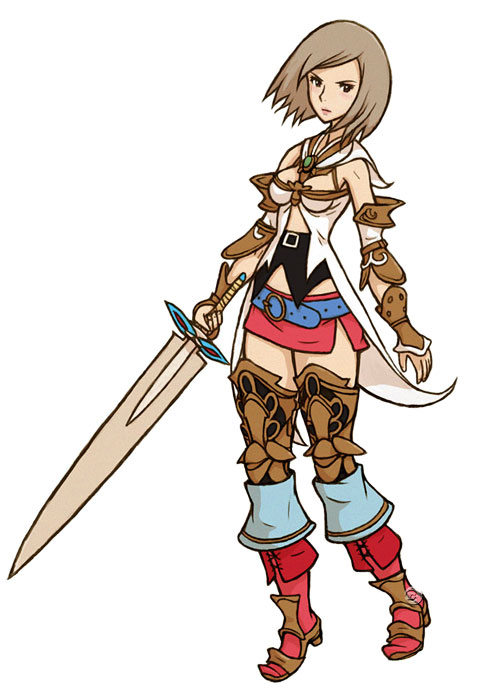
Ashe (Final Fantasy XII)

Ashe

Despite wearing the shortest of all possible miniskirts, the princess of Dalmasca in Final Fantasy XII is definitely not a sexual object. Ashe is a driven, intelligent person who fights for her subjects and earns the respect of her companions. Even her less-than-modest clothes are standard for Dalmasca, a kingdom enveloped by arid deserts. Ashe’s outfit is, in a literal as well as a figurative sense, cool.

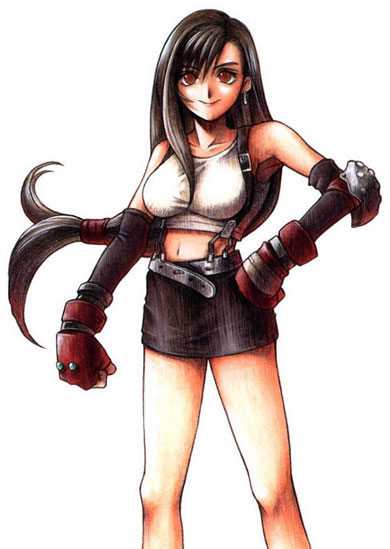
Tifa (Final Fantasy VII)

Tifa

Tifa Lockhart is a wonderful person, but her personality fails to save her from becoming a victim of sexual objectification. She wears a miniskirt and mini-shirt, even into battles against vicious monsters. How she avoids death and injury—not to mention charges of indecent exposure—I can’t imagine. Tifa is a strong woman with an empathetic, motherly nature… but too many gamers remember her only as the babe from Final Fantasy VII with the long legs and huge bust.

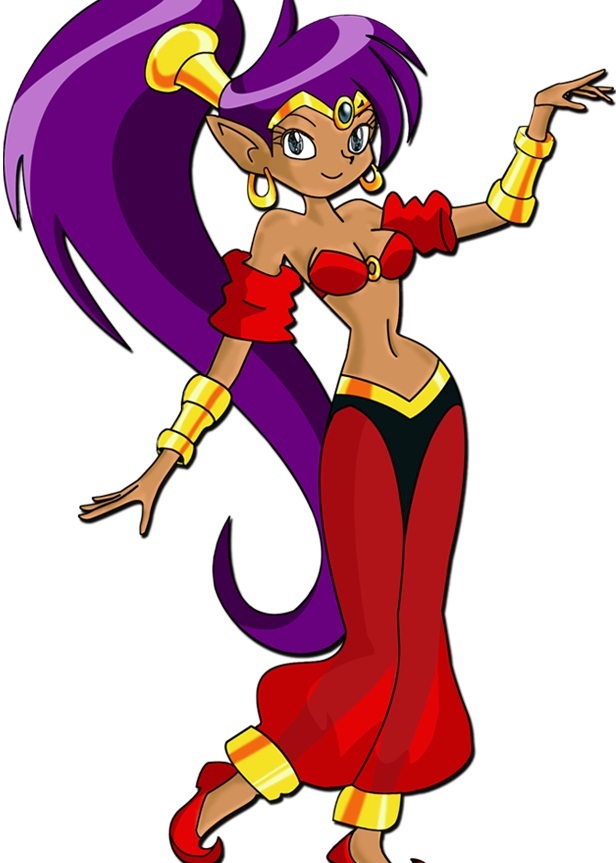
Shantae (Shantae series)

Shantae

Some women in video games look uncomfortably like strippers. Shantae looks more like someone in pajamas. Her clothes are revealing, but Shantae is no less modest than some of Disney’s kid-friendly princesses. Shantae is an upbeat, well-developed character, and only one of her physical features is greatly exaggerated… her ears. Even her outfit makes sense given the context of her hometown’s blazing climate. Shantae is definitely a person, and an adorable one at that.

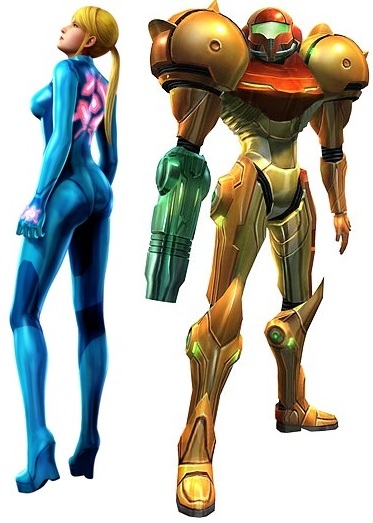
Samus (Metroid series)

SamusSamus Aran, the solitary bounty hunter from the Metroid series, is an interesting case. In most of her games, she’s a silent protagonist without much personality—yet she’s treated respectfully as an independent, capable person with the good sense to wear full body armor into battle. However, upon removing her armored suit, Samus becomes a babe in pointlessly revealing or form-fitting clothes. Whether Samus can be considered a victim of sexual objectification depends mostly on whether she’s on or off duty.

Physical beauty is a very good thing. Sexuality is an amazing gift, which is exactly why it shouldn’t be flaunted or cheapened by flagrantly sexualized characters. People are people. All people—even video game characters—should be respected.

The Slenderman

Thank you, alex663 from deviantART, for making sure I never sleep again.

For as long as there have been people, there have been spooky stories. Our distant ancestors handed down frightful tales of witches, werewolves, goblins, vampires (the non-sparkly variety) and the undead. What of our time? What creepy creatures will we bequeath to generations not yet born?

Meet the Slenderman.

This photo actually looks pretty norm—HEAVEN HELP US WHAT IS THAT?!

The Slenderman (or Slender Man) first appeared on some Internet forum, eventually becoming the silent, sinister villain of a simple-yet-terrifying indie video game called Slender: The Eight Pages. Slendy’s fame spread. I even mentioned him in what I consider probably the best post on this blog.

The Slenderman is an unnaturally tall, thin man with a black suit and no face. He has shown up in many media, including an ongoing YouTube series called Marble Hornets, in which he has developed a few consistent characteristics.

Besides having some fashion sense, the Slenderman stalks people, drives them insane and occasionally murders them. Cameras and recording equipment glitch whenever the Slenderman is near. His victims experience an ailment dubbed “Slender sickness,” whose symptoms are amnesia, paranoia, aggression and a tendency to wear creepy masks.

Why is Slendy so scary? I think it has something to do with his blank face, spectral appearance and unnatural proportions. He looks almost, but not quite, human. There’s also something creepy in how he silently toys with his victims instead of killing them outright. Is he a man? A spirit? A hallucination?

One thing he is, and that’s creepy.

That said, here are some tips from a player of Slender: The Eight Pages on how to make Slendy not scary.

223. Persecution

Remember those in prison as if you were their fellow prisoners, and those who are mistreated as if you yourselves were suffering.

Hebrews 13:3

The International Day of Prayer for the Persecuted Church takes place this month, which is my cue to write a Serious Post About Religious Persecution.

I don’t have much to say.

My last post about the International Day of Prayer for the Persecuted Church sums up pretty much all my thoughts on religious persecution, so I strongly recommend reading it here.

I conclude with a song from Michael Card, my favorite songwriter in the world. On days like these, when I have no words, this song says what I can’t.

Whether or not you are a Christian, please remember the persecuted this month. Thank you, and God bless!

222. NaNoWriMo

Today’s post was written by Kristi Drillien as we stand upon the brink of the splendid, terrifying adventure known as NaNoWriMo. (I’m too busy for NaNoWriMo this year, but… someday, maybe.) Take it away, Kristi!

Have you ever had a story to tell, but didn’t know how to tell it? Ever thought about writing a book, but didn’t think you could? Ever just wanted to write for fun, but couldn’t really find the time, motivation or reason to do it?

If your answer to any of these is yes—or even if it’s not—let me tell you about NaNoWriMo.

NaNoWriMo

First, from the NaNoWriMo website, here is a description:

National Novel Writing Month (NaNoWriMo) is a fun, seat-of-your-pants approach to creative writing. On November 1, participants begin working towards the goal of writing a 50,000-word novel by 11:59 p.m. on November 30. Valuing enthusiasm, determination, and a deadline, NaNoWriMo is for anyone who has ever thought fleetingly about writing a novel.

NaNoWriMo is a yearly event taking place in November in which participants attempt to write a novel in thirty days. Sounds scary, right? Fortunately, there’s a lot more to it, so I’m going to share some of the finer points of NaNoWriMo.

The words

Let me start by saying that yes, 50,000 words sounds like a lot. And it is a lot. (It’s closer to a novella than a novel, though). Fortunately, participants have thirty days to reach that goal. If you do the math, that works out to 1666.66667 words per day, which doesn’t sound so scary (unless you try to figure out how to write 0.66667 of a word). It takes commitment, but it is definitely possible. Ask the 300,000 people who participated last year!

The story

NaNoWriMo is all about quantity, not quality. One of the biggest keys to succeeding at NaNo is not to edit. You are not writing a wonderful novel to share with friends or submit to publishers… at least, not right away. December is for editing. November is for writing. If you give into the urge to go back and fix what you have written, you likely won’t finish.

I met someone earlier this year who declared he could never participate in NaNoWriMo because he didn’t see the point of writing all month expecting to produce a bad manuscript. I suppose he makes a fair point. But unless you already write on a regular basis, churning out a novel that isn’t very good is better than doing nothing. Most people who do NaNo are doing it just for fun and for the challenge.

The people

One of the biggest elements of NaNoWrimo is the social aspect. When you sign up on the website, you can find your home region, where you will almost definitely find in-person events going on during (and even a bit before and after) November. You may be surprised to find so many people living in your area who are also crazy enough to do this. It can be incredibly helpful to have that system of support.

There is also a huge community on the forums you can be part of. If you think you can’t participate because you don’t have time, don’t have ideas or simply aren’t ready, there are many people who are or have been in the same situation as you. They are always willing to share tips, ideas and suggestions or just share your agony. You can find forums specific to your genre or age group, and forums where people can go to get help with plot, characters or help coming up with a title.

Something I’ve never tried but may try this year is a word war. In a word war, two or more people set a time limit and write as many words as they can in that time. Whoever writes the most wins. It can be a great way to push yourself to write without thinking too hard or hesitating (and definitely without editing).

The challenge

Writing 50,000 words in thirty days is a challenge. It really is. Many people do not finish. However, failure is not the end of the world. You may just find that you’re proud of what you’ve done, even if it wasn’t the full 50K. And if you do reach that goal, you can be truly amazed that you accomplished the impossible—writing a novel in thirty days.

And if 50,000 words is not enough of a challenge, you can join the crazy people in the “Beyond 50K” forum, where they discuss things like writing 100K or even 150K in one month… or writing 50K in one day.

NaNoWriMo begins today! For more information, check out the official site.

When Poetry Is Awesome

Day after day, day after day, we stuck, nor breath nor motion; as idle as a painted ship upon a painted ocean.

Water, water, every where, and all the boards did shrink; water, water, every where, nor any drop to drink.

“The Rime of the Ancient Mariner,” Samuel Taylor Coleridge

I almost never read poetry. For the record, I have nothing against it. Poetry is a wonderful form of literary expression—heck, I’ve even written a few poems—but it’s not my cup of tea. I’ll take novels or short stories over poems any day.

Nevertheless, I occasionally stumble upon some poetic jewel: a phrase, verse or stanza of dazzling magnificence. The two stanzas above from “The Rime of the Ancient Mariner” amaze me. In just a few well-chosen words, the poet conveys the quiet desperation of sailors lost at sea.

Then there’s this stanza from “The Charge of the Light Brigade” by Alfred, Lord Tennyson, which I find incredibly epic even out of context:

Theirs not to make reply, theirs not to reason why, theirs but to do and die: into the valley of Death rode the six hundred.

My other favorites include the poem “Invictus” and the first eight verses of Ecclesiastes 12. So… much… awesome.

What’s your favorite poem or snippet of poetry? Let us know in the comments!

221. About Writ—I Mean, Storytelling

There was a time when this blog featured About Writing posts, which consisted of my rambling advice on how to write fiction. I wrote about stuff like characterization, style, setting and attitude.

After giving it some thought, I’ve decided to discontinue About Writing posts. I’ve covered pretty much every topic I wanted to discuss. Besides, I’m no longer sure I’m really qualified to give advice about writing fiction.

All the same, fiction fascinates me. I’m intrigued by storytelling. I can’t help it. That said, I want to continue discussing (read: rambling about) fiction on this blog. I won’t blather any more in About Writing posts on how to write stories, but I’d like to discuss narrative tricks and techniques in a new feature: About Storytelling posts.

What is Chekhov’s gun? Is objectionable content ever acceptable in fiction? What is retconning? (It sounds highly illegal, whatever it is.) Who cares about symbolism? What about character quirks? And why is Batman clearly the best superhero when he has no superpowers?

These are Burning Questions. We here at TMTF consider it our duty to answer them.