“Let It Go” Is a Great Song, but a Terrible Philosophy

Disney released Frozen a number of months ago. It was, honestly, quite a good movie, but the film was largely eclipsed by one of its songs, “Let It Go.” There’s some truth in the joke about Frozen being the song’s feature-length music video.

I like “Let It Go.” It may be ridiculously overhyped, but the song is really quite a catchy one. The remix above is by far my favorite. “Let It Go,” a slow, melodic ballad, translates unexpectedly well to dubstep.

Despite its beautiful music, I find “Let It Go” bittersweet. The song is defiant, exalting rebellion and egoism, lifted up from a broken heart, reflecting a bitter moment. “I don’t care what they’re going to say,” sings Elsa. “Let the storm rage on! The cold never bothered me anyway.” She adds, “No right, no wrong, no rules for me. I’m free!”

I know people who live with that kind of selfish abandon. They’re some of the most miserable people I know. I think of them sometimes when I hear “Let It Go,” and my heart aches for them.

In the film, Elsa eventually finds a happy ending. (This is a Disney film, after all.) “Let It Go” reflects just one moment in her journey—a particularly selfish, defiant moment. The song’s pathos is touching, but it represents a horrible attitude toward life. It makes me sad that in a film celebrating loyalty and love—real love, “putting someone else’s needs before yours,” not Disney’s usual follow-your-heart nonsense—the thing most people latched onto was the song about selfishness.

“Let It Go” may represent a terrible philosophy, but it’s a great song. I particularly enjoy the remix above. Nothing brightens up a sad song like stuffing it with dubstep beats!

272. Making Lessons Stick

I struggle to remember things. There’s probably a reason for this, but I’ve forgotten it.

In seriousness, I don’t have any good excuse for forgetting stuff. It’s not like I’m an old man or the guy from Memento. All the same, things seem to be constantly slipping out of my mind: names, faces, phone numbers and memories of all kinds. It’s especially hard for me to recall details from my own life. The past twenty-something years are a brightly-colored blur.

I visited my old college campus a number of weeks ago. It was a bit surreal. That campus was my home for seven semesters, yet it seemed to vanish from my memory the moment I graduated. Every time I visit the campus, it seems unfamiliar. I can hardly believe I spent months, let alone years, living there.

Why does this place seem so familiar? Have I seen photos or visited? Oh, that’s right, I spent a few years there. I suppose that would explain it.

In some ways, my poor memory is actually kind of a blessing. I’ve lived in so many places that it’s nice not to be burdened with homesickness for all of them. It’s hard to pine for the past when I can’t remember it. My day-to-day life is mostly uncluttered by memories, and they’re all the sweeter on the rare occasions I recall them.

Of course, a bad memory is also a nuisance… mostly for the people around me. I sometimes offer my younger brother an observation, opinion or bit of news only for him to reply, “Adam, this is the fourth time you’ve told me that.”

My memory isn’t even consistent in its faultiness. For example, I memorized the “quality of mercy” speech from “The Merchant of Venice” for an English class nearly a decade ago. I’ve made no effort to remember the speech, yet can recite it word for word to this day. On the other hand, entire epochs of my life (like my college years, mentioned above) seem distant and empty. It takes an effort for me to remember anything that happened before, say, last Tuesday.

The worst part of having a lousy memory is that it makes learning lessons hard.

If you’ve followed this blog for more than a few months, you should probably find some better way to spend your life. (I’m joking! Don’t go! Please come back!) If you’re one of the brave readers who has stuck with this blog for half a year or more, you’ve probably noticed how I’ve revisited certain things. I’ve written a lot about grace, and depression, and doubt, and the fear of not being good enough.

Part of the reason I revisit things is that learning is an incremental process. Learning a lesson takes one day; living a lesson takes years. If I’m honest with myself, however, part of the reason I write about some things so often is that I forget them. Writing about lessons and struggles helps me remember them.

What does this mean? Well, TMTF has had plenty of posts about grace and doubt and stuff, and it will probably have plenty more. I’ll keep going in circles, hitting some of the same notes again and again, occasionally hitting new ones (I hope) and gradually making the most important lessons stick.

Now then… what was I talking about?

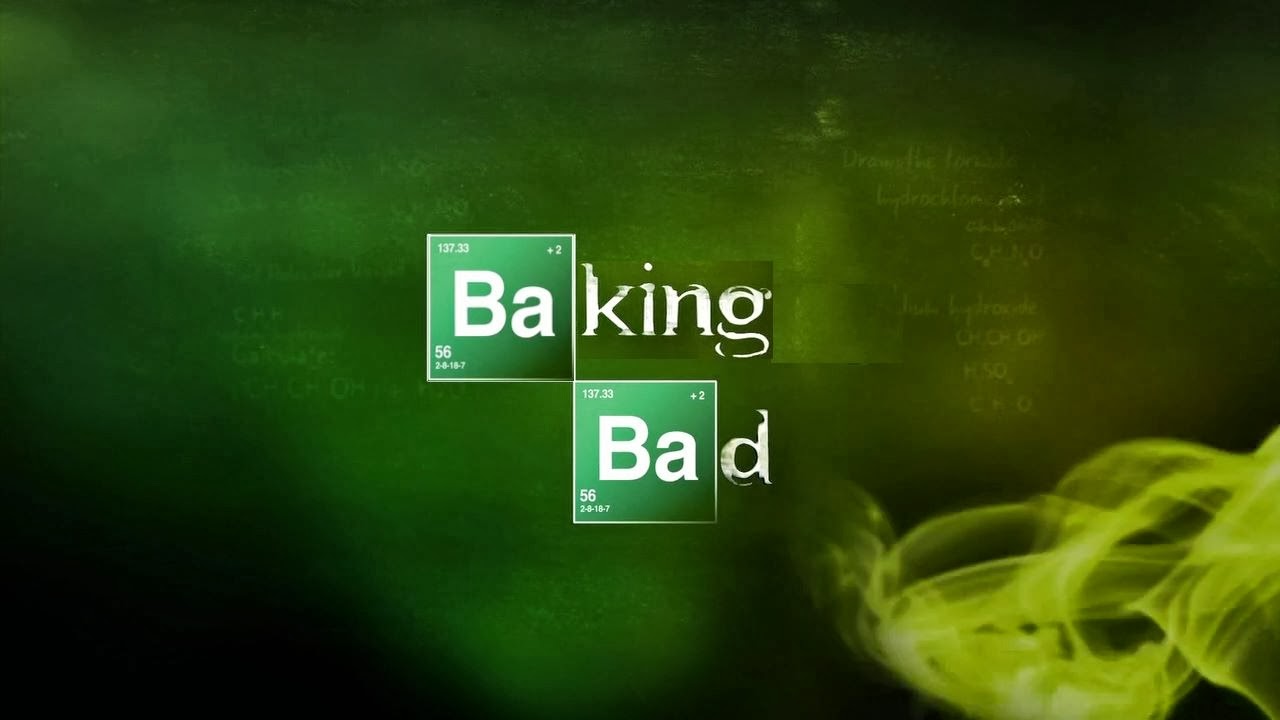
271. Baking Bad

Due to a frightening case of culinary arson, TMTF will be taking a two-week break.

My typewriter monkeys decided yesterday to bake muffins. Ignoring my dad’s useful muffin-making tips, they cranked up the oven to its hottest setting, threw in the muffins and forgot about them. My brother and I got home from church to find smoke pouring out of the windows and flames dancing merrily on the roof.

Baking Bad

Where there’s smoke, there’s fire… or muffins, in this case.

My monkeys have been known to play with fire now and then, so this latest incident is no surprise. What has astonished me this time is that my monkeys have fled to Canada, either to evade arrest for arson or else to escape my righteous fury. They sent me an email last night promising to return before the end of the month.

Since I can’t maintain this blog without my typewriter monkeys, I must put it on hold for a couple of weeks. TMTF will be back on May 26. I sure hope my monkeys have returned by then.

In the meantime, I had better start cleaning up my apartment. It’s looking a bit… ashen.

We’ll be back on Monday, May 26. Thanks for reading!

270. That Time I Fathered a Watermelon

High school was a strange chapter of my life. I moved repeatedly, attended schools on separate continents, became a writer, discovered my love of coffee and broke down on the Ecuadorian coast in the rain at night in an area infested with bandits. Good times, good times.

Some of my best high school memories come from the Alliance Academy International in Quito, the capital of Ecuador. The school offered an excellent education, and its faculty consisted largely of lunatics. It was at this school that I became the father of a small, rotund, green-skinned child. His mother and I named him Hakkatan Melchizedek Stück.

Watermelon Child

He had his father’s, um… dish towel.

My egg-shaped offspring was the result of a project in my senior year in which students were put in pairs, given watermelons and required to spend a week nurturing them as loving parents. This was meant to teach us all about parenting. I’m not sure exactly how that was supposed to work, except that babies and watermelons are both kind of heavy and don’t respond well to being dropped.

My wife for the project, whom I’ll call Socrates, wanted to name our child Hakkatan. I wanted to name him Melchizedek. In the end, in the spirit of matrimonial harmony, we compromised and gave him both names. Our classmates gave their children boring names, except for one young gentleman who called his melon Triton Quincy McFarland.

Hakkatan was a quiet, cheerful child. He never cried, always grinned and gave his parents hardly any trouble.

Of course, the same wasn’t true of all my classmates’ kids. At least one watermelon met a grim end when his parents abandoned him in a dorm room for several hours. According to the story I heard, they returned to find half the melon smashed on the floor, the other half stuck full of knives and a note that read NEVER LEAVE YOUR CHILD ALONE.

Some of my classmates really got into parenting their melons, dressing them up in baby clothes and wheeling them everywhere in strollers. I don’t recall how Socrates and I handled Hakkatan; we may have carried him around in a basket, but I don’t really remember. There is one thing I remember clearly: how Hakkatan met his end.

You see, the parenting project lasted only a week. Hakkatan was my child for seven days. After that, he was merely a watermelon. Some of my classmates celebrated the end of the project by eating their melons. That seemed a bit morbid, so I settled for chopping up Hakkatan with a machete and disposing of his body in a trash bag.

Socrates and I each received a good grade for the project, after which we dissolved our week-long marriage. She and I remained on good terms until our graduation from the Alliance Academy International; I haven’t seen her since. As for Hakkatan, well, his rounded figure and beaming face nearly faded from my memory. It was only as I browsed old photos recently that I stumbled upon the picture above: my child, smiling at me from across the years, neither bitter nor resentful at his violent demise.

Requiescat in pace, my son. Flights of angels sing thee to thy rest!

Please, Have a Llama

OLYMPUS DIGITAL CAMERAThere are times, dear reader, when I run out of ideas for blog posts. As a cloud is consumed and vanisheth away, so my creativity evaporates. I am left destitute, desperate for some spark of inspiration, groping blindly through an impenetrable fog of fatigue and mental paralysis.

Today is such a day. I can think of nothing more to say, so please accept this photo of a llama.


269. Why P.G. Wodehouse Is Absolutely Spiffing

This is a post I have long wanted to write for this blog, but have always put off. It will be difficult to write. How to put into words my appreciation and respect for the greatest humorist in all of literature? In one feeble post, how can this blog do justice to perhaps the wittiest human being ever to have graced God’s green earth?

This day has been long delayed, but no longer. Today we remember the man whose wit and humor have made our world a better, brighter place. Today we remember P.G. Wodehouse.

Michael J. Nelson, the comedian made famous by Mystery Science Theater 3000 and RiffTrax, declared, “I adore P.G. Wodehouse, could read him every single day and not get tired of it.” He also said, Wodehouse is absolutely the gold standard. It’s almost unfair how good he was, how long he wrote, and how easy, generous and agreeable his prose is.”

Evelyn Waugh, the British author and journalist, said, “Mr. Wodehouse’s idyllic world can never stale. He will continue to release future generations from captivity that may be more irksome than our own. He has made a world for us to live in and delight in.”

Douglas Adams, who wrote The Hitchhiker’s Guide to the Galaxy, flatly stated, “Wodehouse is the greatest comic writer ever,” and left it at that.

Ladies and gentlemen, I give you the man whose gentle humor illuminated the twentieth century and still brightens our own dreary, postmodern age.

I give you P.G. Wodehouse, that overflowing fountain of goofy stories, witty jokes and shining optimism.

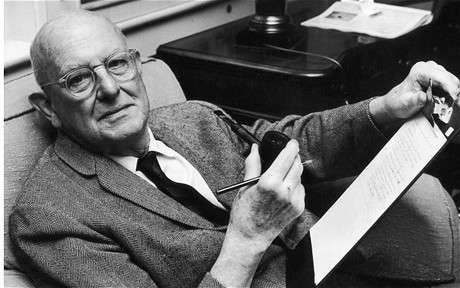
P.G. Wodehouse

Sir Pelham Grenville Wodehouse was a British humorist who wrote nearly one hundred books. (Yes, he was knighted for being hilarious. It was the least his country could do for him.)

Wodehouse’s stories mostly feature upper-class gentlemen in early twentieth-century Britain. These idle eccentrics get themselves into dreadful predicaments: accused of crimes, for example, or engaged by mistake to the wrong people. Escaping these frightful troubles takes luck, pluck and the occasional spot of brilliance.

There is a profound irony about Wodehouse’s writing: it’s fairly easy to criticize, yet all but impossible to call anything less than inspired. For example, his novels and stories are rather repetitive, yet never stale or tedious. Unlike many writers, Wodehouse has no particular masterpiece. His books are all masterpieces.

Wodehouse himself cheerfully acknowledged the repetitive nature of his books:

A certain critic—for such men, I regret to say, do exist—made the nasty remark about my last novel that it contained ‘all the old Wodehouse characters under different names’. He has probably by now been eaten by bears, like the children who made mock of the prophet Elijah [sic]; but if he still survives he will not be able to make a similar charge against [my latest novel]. With my superior intelligence, I have outgeneralled the man this time by putting in all the old Wodehouse characters under the same names. Pretty silly it will make him feel, I rather fancy.

It must also be noted that Wodehouse’s work isn’t profound or meaningful. He doesn’t grapple with deep questions of morality or philosophy or faith in his books. He’s simply hilarious, and that’s all he ever needs to be. Wodehouse wrote fluff, but it was some of the best, cleverest, funniest fluff ever written.

Wodehouse mastered the English language and used it with cheerful abandon. Consider the following gem, in which Bertram “Bertie” Wooster drinks a spicy tonic to cure his hangover.

I loosed it down the hatch, and after undergoing the passing discomfort, unavoidable when you drink Jeeves’s patented morning revivers, of having the top of the skull fly up to the ceiling and the eyes shoot out of their sockets and rebound from the opposite wall like racquet balls, felt better. It would have been overstating it to say that even now Bertram was back again in mid-season form, but I had at least slid into the convalescent class and was equal to a spot of conversation. “Ha!” I said, retrieving the eyeballs and replacing them in position.

A final note about Wodehouse’s style: It’s very, very British, packed with colloquialisms, slang and misquoted fragments of Scripture, Shakespeare and other literary classics.

Here’s a typical Wodehouse exchange:

Bertie: Do you recall telling me once about someone who told somebody he could tell him something that would make him think a bit? Knitted socks and porcupines entered into it, I remember.

Jeeves: I think you may be referring to the ghost of the father of Hamlet, Prince of Denmark, sir. Addressing his son, he said, “I could a tale unfold whose lightest word would harrow up thy soul, freeze thy young blood, make thy two eyes, like stars, start from their spheres, thy knotted and combined locks to part and each particular hair to stand on end like quills upon the fretful porpentine.”

Bertie: That’s right. Locks, of course, not socks. Odd that he should have said porpentine when he meant porcupine. Slip of the tongue, no doubt, as so often happens with ghosts.

The speakers, by the way, are Wodehouse’s most famous duo: Jeeves and Wooster. Bertie Wooster is an idle, amiable and dimwitted gentleman. His good-natured innocence leads him into all kinds of social crises, from which only the brilliant schemes of Jeeves, his seemingly omniscient valet, can rescue him. It’s a wonderful yin-yang partnership, and it never fails to make me laugh.

This is the part in a Why [Insert Author Name] Is Awesome post at which I would recommend the author’s best books. In this post, I can’t. P.G. Wodehouse’s stuff is all superb. There would be no point in highlighting any of his books when they’re equally good. Just pick one of his novels at random, perhaps one starring Jeeves and Wooster, and you’ll be set.

In conclusion, ladies and gentlemen, P.G. Wodehouse is awesome absolutely spiffing.

268. Haircuts Are Evil

Like taxes, haircuts are are a necessary evil.

Every few months, I glance in the mirror and despair, for my hair needs to be cut. It’s pretty easy for me to tell when I should hit the hair salon. When my hair starts to look like Justin Beiber’s iconic (and idiotic) hair helmet, I know it needs to be cut.

I’m sometimes tempted to ignore the Beiber resemblance and let my hair keep growing, but one thought pulls me back to safety from the brink of madness.

I will never, ever have a mullet.

My hair has generally been a mess. Once, in middle school, I tried styling it with gel: a mistake that shattered my fragile self-esteem into tiny, tiny pieces. Since then, I’ve occasionally attacked my hair with a comb and left it at that.

If you tell me I need a haircut, I will glare at you with cold, bitter fury. And then I'll go get a haircut.

If you tell me I need a haircut, I will glare at you with cold, bitter fury. And then I’ll probably go get a haircut.

The problem with haircuts is that they bring scissors, razors and other sharp objects very close to my eyes, ears and other things I’d rather not have cut off or gouged out. My fears are not baseless. At least one hair stylist has drawn blood—repeatedly—giving me good reason to fear anyone who brandishes bladed implements anywhere near my face.

Are haircuts evil? Yes. I will prove it. Let us turn to Scripture, brethren, for our answers.

Most of us know the story of Samson, who let his hair grow as a symbol of devotion to God. When his hair was cut, Samson lost his divinely-given strength. He was surrounded, powerless to resist. His tormentors blinded and enslaved him. In the end, Samson ended his own life. (This is all in Judges 16.) All of this happened because Samson got a haircut. A haircut killed him!

Don’t even get me started on Absalom. He was a really bad dude. He also had his hair cut regularly. An evil man who got haircuts? Coincidence? Coincidence?!

With this vast and comprehensive wealth of Scriptural evidence, I believe I’ve proved that haircuts are evil.

(No, I’m not being serious. Please put down your Bibles and/or heavy stones before someone gets hurt.)

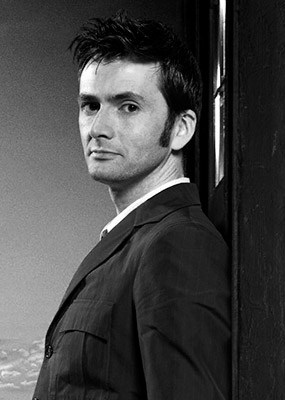
In the past two years, I have found one consolation to make haircuts bearable. The Tenth Doctor from Doctor Who has some sweet, sweet sideburns. Although my paltry sideburns are not worth comparing to the good Doctor’s, they’ve definitely grown on me. (Pun intended. I’m so, so sorry.) Haircuts are awful, yet they keep my sideburns neatly trimmed. Neat sideburns put me ever so slightly closer to achieving the splendor of the Tenth Doctor’s hairstyle.

Saving the universe? Bah! A negligible accomplishment compared to having such awesome hair.

THOSE SIDEBURNS.

Maybe haircuts are worth it after all.

Then again… maybe they’re not.

Puff the Magic Dragon Does Not Smoke Weed

It’s time to set the record straight. “Puff the Magic Dragon,” unlike any given Beatles song, is not a veiled allusion to drugs.

The first song I remember ever hearing was “Lemon Tree” by Peter, Paul and Mary. Songs by this sixties folk trio have played in the background of my life from my earliest childhood on the coast of Ecuador to my high school years in the Andes mountains. I love their songs to this day. As much as I’ve come to enjoy other styles of music, from rock and ska to chiptunes and the odd spot of dubstep, I will always find Peter, Paul and Mary’s harmonies beautiful.

Peter, Paul and Mary are remembered for performing hits like “Blowin’ in the Wind,” “Leaving on a Jet Plane” and, perhaps most infamously, “Puff the Magic Dragon.” The lyrics of this last song tell of a boy and a dragon who enjoy merry adventures together. When the boy grows up, he abandons the dragon to grief and loneliness.

I suppose the boy’s odd adventures could be considered a metaphor for drug trips, and yes, the dragon’s name could be an obvious nod to smoking marijuana.

In the end, however, “Puff the Magic Dragon” was simply a poem by a college student about the passing of childhood. After the poet had gotten it out of his head, he forgot about it until Peter Yarrow (the Peter of Peter, Paul and Mary) turned it into a song and credited him with the lyrics.

So let it be known to all people that “Puff the Magic Dragon” has no meaning except the obvious one. Peter, Paul and Mary are acquitted. Case dismissed!

267. I’m Giving Up

The ironic thing about some of the lessons I’ve learned is that I haven’t really learned them.

Sometimes, I know things without understanding them. I accept a lesson and then forget it. When I’m reminded of some lessons, I understand them a little more fully. Learning becomes an incremental process.

Thus I’m going to quote myself quoting C.S. Lewis and say,

Thus, in one sense, the road back to God is a road of moral effort, of trying harder and harder. But in another sense it is not trying that is ever going to bring us home. All this trying leads up to the vital moment at which you turn to God and say, “You must do this. I can’t.”

Living by grace doesn’t mean merely trying to do good things, says dear old Lewis,

But trying in a new way, a less worried way. Not doing these things in order to be saved, but because He has begun to save you already. Not hoping to get to Heaven as a reward for your actions, but inevitably wanting to act in a certain way because a first faint gleam of Heaven is already inside you.

In other words: Stop trying to be good enough and depend on God’s grace.

My problem is a paradox. I have made depending on God’s grace just another facet of trying to be good enough. As I said last time, I wanted to be consistent. I wanted to depend on God’s grace consistently. Grace became another weapon in my battle to get it right.

Maybe grace is simply permission to stop fighting.

I’m giving up. My dreams of reaching a nice, level plateau of angelic goodness and contentment are gone. My life will be disordered, flawed and messy. I shall sin and struggle and make mistakes. (Please note these are a statements of fact, not of intention.) There will be days of depression and grief and anxiety, and nothing I can do to prevent them.

What does this mean for my day-to-day life? Honestly… not much. I’ll keep living, working, praying, reading, writing, playing video games, drinking too much coffee and failing to act like a solemn, serious adult.

As I do these things, I’ll try not to hold myself to the self-imposed standards of years past. I won’t replay and review things constantly in my mind, and I certainly won’t agonize over mistakes. By accepting I shan’t be perfect, I can stop trying—better yet, I can try in that new, less worried way.

I’m giving up.

266. Crying Out for Consistency

And today I will trust you with the confidence of a man who’s never known defeat, but tomorrow upon hearing what I did, I will stare at you in disbelief. Oh, inconsistent me, crying out for consistency.

~ Relient K

I had a birthday not long ago. On that bright, chilly spring day, I reached the ripe old age of twenty-four and resigned myself to the gloomy of business of being an adult. As I reflected upon my future, I chose a keyword for my twenty-fifth year—a one-word resolution to guide my actions, attitudes, words and thoughts for the next twelve months.

Consistency.

Within one day, I had deceived myself into doing things I should not have done—sinful things. My fine resolutions were effortlessly flattened by familiar temptations. So much for consistency.

Just one day after that, a bleak depression settled upon me. It lasted for days. While I was depressed, I could only scowl at my hopeful new keyword. Consistency? What an idea. In the paralyzing grip of depression, it was all I could do to function. I dragged myself along, hour by hour, grimly surprised every night that I had survived another day. I couldn’t be consistent. I could barely keep going.

Once again, consistency was an empty hope.

For years and years, my life has been largely driven by one all-important conviction. I could express it in a number of ways, but the simplest is this: I needed to get it right. No matter the circumstances, no matter my feelings, no matter what trials and challenges assailed me, I needed to get it right—to love God and to love others and to have faith and to be awesome. God’s grace had redeemed my life, sure, but it was up to me to live.

I wanted for years to reach a plateau or level of goodness and faith. It seemed logical that I would eventually learn every lesson, overcome every temptation, cast off every burden and consistently live a good, contented life. There had to be some secret, some attitude, some perspective or paradigm to make everything click and all the pieces fall into place.

Thus I tried out a long series of resolutions, attitudes, philosophies and personas in my quest to be consistent. I’ve always known I can’t be perfect, but consistency seemed like a reasonable goal.

Now I’m not so sure.

I’ve written many times about my near-obsessive desire to be “good enough,” whatever the heck that means. God’s grace is another subject I’ve discussed repeatedly. My conclusion is always the same. God declares, “My grace is sufficient for you, for my power is made perfect in weakness.”

More clearly than more than ever before, I understand that weakness isn’t merely a sinful nature. It’s helplessness. Weakness is waking up on some days hardly able to stand, let alone work or write or pray. Weakness is never, ever reaching my long-sought plateau of consistency. Weakness is struggling and making mistakes and never quite getting it right.

Weakness is space for God to work.

What next? Well, another blog post, I guess. Check back next time for the conclusion to my thoughts on weakness, grace and where in blazes I should go from here.