279. Adam Turns into the Hulk and Rants about Church Music

Caution: This blog post contains furious ranting. Sensitive readers, and readers averse to things being smashed, are advised not to continue.

Being a blogger is great fun, but it’s not without risks. In a small number of cases, frequent exposure to wireless Internet connections has caused bloggers to develop unexpected conditions. I am one of these unfortunates. I and at least one other blogger have become tragic victims of HBS (Hulk Blogging Syndrome).

What does this mean? Well, there’s really only one thing about HBS you should know: Don’t make me angry. You wouldn’t like me when I’m angry.

That said, today’s blog post is all about contemporary church music, and the way classic hymns are rewritten with new music or lyrics. Well, rewritten may be too kind a word. Hymns are mutilated. They are trampled upon. They are… ugh… I suddenly don’t feel well…

I… I…

BLOG SMASH!

BLOG SMASH!

ADAM IS GONE. NOW THERE IS ONLY HULK. HULK HERE TO DISCUSS CHURCH MUSIC. AND TO SMASH.

HULK DOES NOT LIKE MODERN CHURCH MUSIC. ITS SONGS SEEM MUSICALLY WEAK AND NONDISTINCT. THEY ALL SOUND THE SAME TO HULK. THEIR LYRICS ARE OFTEN NOT VERY MEANINGFUL. THEY ARE SOMETIMES DOWNRIGHT STUPID.

(HULK DISCLAIMER: SOME MODERN WORSHIP SONGS ARE FANTASTIC.)

MANY PEOPLE LOVE MODERN CHURCH MUSIC. THAT IS OKAY WITH HULK. HULK DOES NOT WANT TO BE PHARISEE. WHATEVER MUSIC BRINGS PEOPLE CLOSE TO GOD IS GOOD MUSIC.

CHURCHES ARE WELCOME TO THEIR NEW MUSIC… BUT LEAVE OLD MUSIC ALONE!

SOME OF US LIKE OLD HYMNS. “IT IS WELL.” “AMAZING GRACE.” “BE THOU MY VISION.” “COME THOU FOUNT OF EVERY BLESSING.” THESE ARE GOOD SONGS. THEY ARE FINE THE WAY THEY ARE. SOME PEOPLE FIND THEM TOUCHING AND MEANINGFUL, FULL OF BEAUTY AND TRUTH.

STOP TACKING ON NEW VERSES, CHANGING MELODIES, ADDING UNNECESSARY BRIDGES AND MAKING POINTLESS CHANGES.

PLAYING OLD HYMNS IN NEW STYLES IS FINE. HULK LOVE HEARING HYMNS PERFORMED IN CONTEMPORARY STYLES. THAT IS AWESOME. OLD HYMNS ARE AWESOME. GO AHEAD. JAZZ THEM UP. BUT DO NOT CHANGE THEM.

HULK RECENTLY WENT TO CHURCH. CHURCH SANG “IN CHRIST ALONE.” THIS IS NOT OLD HYMN, BUT IT IS BEAUTIFUL IN EXACT SAME WAYS. “IN CHRIST ALONE” HULK’S FAVORITE SONG. EVER.

CHURCH ON SUNDAY CUT OUT AN ENTIRE VERSE OF “IN CHRIST ALONE.” WHY? ADDED BRIDGE WITH WEAK MELODY AND THESE LYRICS: “Oh, Oh, Oh.” HULK NOT MAKING THIS UP. THOSE WERE WORDS ON SCREEN. “Oh, Oh, Oh.”

THOSE WORDS NOT AN IMPROVEMENT OVER THESE WORDS:

In Christ alone, who took on flesh: fullness of God in helpless babe,

This gift of love and righteousness—scorned by the ones he came to save.

Till on that cross as Jesus died the wrath of God was satisfied,

For every sin on him was laid. Here in the death of Christ I live.

THESE WORDS ARE BETTER THAN “Oh, Oh, Oh.” WHY DID CHURCH STRIP AWAY BEAUTIFUL WORDS FROM HYMN AND REPLACE THEM WITH MEANINGLESS NOISES?

HULK NOT KNOW. HULK NEVER KNOWS.

HULK ASK ALL CHURCHES EVERYWHERE. PLEASE. LEAVE OLD HYMNS ALONE. THEY ARE FINE AS THEY ARE. PLAY YOUR NEW MUSIC. HULK GIVE YOU THAT. BUT GIVE HULK THIS ONE THING. MAKE ONE CONCESSION FOR HULK. YOU CAN HAVE NEW SONGS. DON’T RUIN OLD ONES.

PLEASE. PLEASE. HONOR BEAUTY AND TRUTH IN OLD HYMNS.

HULK OUT!

Whoa… I… what just happened? Why is there a mound of splintered wood where my desk used to be? Who ripped apart my shirt? Why are my typewriter monkeys fleeing in terror?

I suddenly feel sick, so I’m afraid I must cut this post short. Sorry. Now I’m going to yell at my monkeys for wrecking my bedroom, and then go put on some clothes.

Question: Should Hulk rants become a regular feature on this blog? Let us know in the comments!

Fireflies

In case there is anyone left in the world who hasn’t seen it, here is the music video for “Fireflies” by Owl City.

I don’t even like music videos, but I’ll be the first to admit this one is magical. I suppose it’s because it doesn’t star sultry babes or angry guys with guitars, but a dusty bedroom full of toys from the eighties.

The cuts get pretty fast and furious toward the end, giving the song a sense of kaleidoscopic color and motion. I like the effect, though some viewers might echo the good folks at RiffTrax and say, “Geez, with the quick edits here, Michael Bay thinks this thing is overcut!”

Our culture is saturated with songs about partying, sex, romance, heartbreak, bitterness, rebellion and other exhausted subjects. I’m tired of modern music; even its new songs seem old. I appreciate artists like Weird Al Yankovic and Schmoyoho whose songs are wildly weird, and I’m even more thankful for artists like Owl City whose songs are serious without seeming tired or clichéd.

On a different note, I haven’t seen fireflies in ages. Where have they gone? They were everywhere at twilight when I visited Indiana as a kid. Have the fireflies, like Douglas Adams’s dolphins, abandoned Earth for a better place?

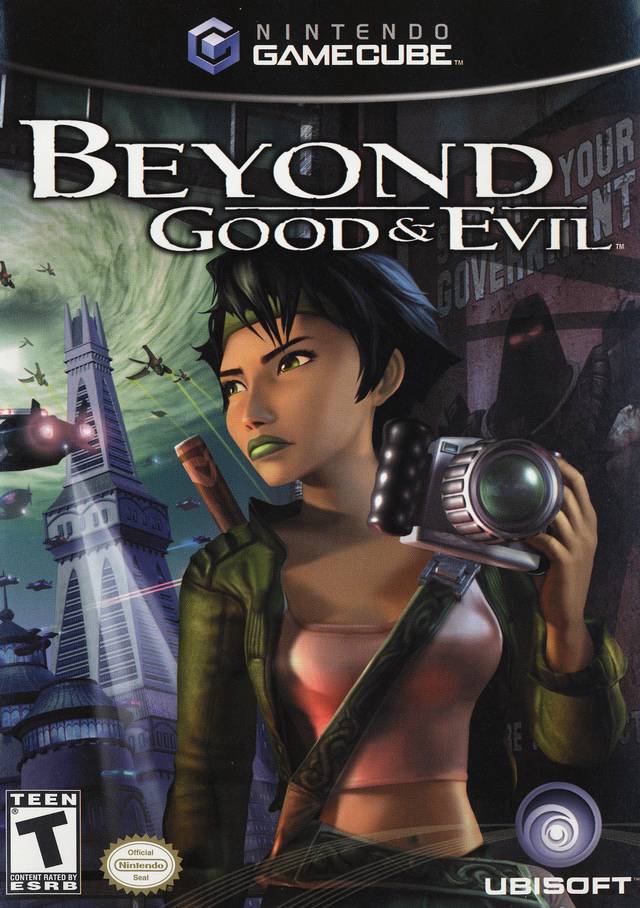
278. TMTF Reviews: Beyond Good & Evil

I have played many video games in my twenty-something years of life, but this is the first to be titled after a philosophical work by Friedrich Nietzsche.

When I was a child in Ecuador, my life was brightened by a magazine known as Nintendo Power. (May this noble publication rest in peace!) A friend lent me new issues, which gave me glimpses into the mysterious worlds of modern video games. (This was, incidentally, the very same friend who recommended the last game I reviewed on this blog.) Years before I blundered onto the Internet, Nintendo Power gave me the latest and greatest video game news.

There are a number of games Nintendo Power recommended very highly. Video games are scarce and expensive in Ecuador, so I was never able to buy them. Now, a decade later, I’m making a point of tracking down and playing some of the classics I missed as a child.

Of all the games Nintendo Power praised, few made a stronger impression than an odd game called Beyond Good & Evil. It stars not a tough-as-nails soldier or noble knight, but a photojournalist. An ordinary photojournalist! Madness! Next they’ll be making games starring boring professionals like surgeons, lawyers or customs officials. Ha! What an idea!

Jade, the photojournalist star of BG&E, isn’t exactly a boring professional. Most photojournalists don’t carry weapons, work for resistance groups or live on alien planets populated by anthropomorphic animals. Jade does. Armed with bō staff and camera, this plucky photographer-turned-rebel is out to expose the treachery of her planet’s military and rally her people to fight for freedom.

Did I mention that her uncle is a pig? Yeah, her uncle is a pig.

Jade and Pey'j

Beyond Good & Evil is as quirky as they come, but is it worth playing? Never mind its questions of good and evil. The real question is this: Is this game is great or lousy?

Beyond Good & EvilBeyond Good & Evil is a fine game, but never goes beyond good. It is a good game, not a great one.

The best way I can describe this game is to suppose its developers sneaked into Nintendo’s kitchen late at night and tried making a game with all Nintendo’s ingredients. There are several cups of fighting and puzzle-solving from the Legend of Zelda games, and a few tablespoons of futuristic racing from F-Zero, and just a dash of space combat from Star Fox, and a spoonful of Metal Gear Solid-style stealth borrowed from Konami’s kitchen next door.

BG&E has a bit of everything, and it does everything adequately—but few things really well.

The world of BG&E is beautiful and feels vast… until the player realizes it’s not as big as it seems. The combat works… but it’s not very deep. The racing is fun… for about ten minutes. The space combat is exhilarating… the one time it happens. Nothing about the game is bad, but few aspects are engaging enough to hold the player’s interest for long.

This includes the story. Jade is recruited early on into a resistance group determined to expose the military’s corruption. This setup is fantastic, but a couple of lame twists make for an underwhelming experience. The moral ambiguity suggested by the title is nowhere to be seen. The good guys are good, and the bad guys are bad, and that’s all.

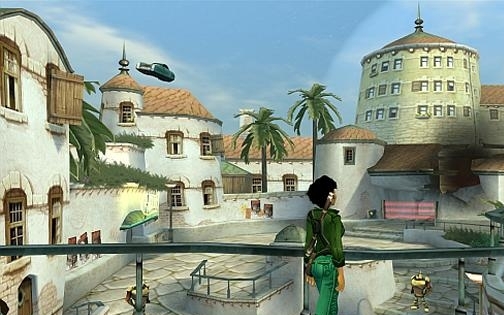
The setting and characters, however, are wonderful. The world of Hillys is lovely, with green mountains and tranquil oceans, and I had a blast exploring caves on foot and zipping across the seas in a hovercraft. I wish there had been more to see. The game’s one city is equal parts Star Wars and Arabian Nights, with futuristic technology and fanciful architecture.

Hillys

Most of the game’s characters are unexceptional, but the three who matter most—Jade, her pig-uncle (puncle?) Pey’j and Jade’s fellow resistance member Double H—are brilliantly developed and eminently lovable. Double H, for example, constantly quotes from a military manual titled Carlson & Peeters, citing page numbers with enthusiasm. When he charges into a fight, “Carlson and Peeters!” is his war cry. It’s positively adorkable.

I especially appreciate Jade. Women aren’t often treated respectfully in video games, but Jade is. She’s no damsel in distress or impossibly curvy babe. Jade is a person. She wears sensible pants, rocks green lipstick, cares for kids and tears apart robots with her bō staff. There is no pointless romance. Jade is never just a foil to male characters. It was really refreshing to play as a heroine who is—I say this in absolutely the best possible way—ordinary.

Jade’s camera was one of the best things about BG&E. Besides snapping incriminating photos for her resistance group, she is tasked by a research institute with taking pictures of local animals. More fauna photos mean more money, giving the player plenty of incentive to search high and low for exotic creatures. It was almost magical to zoom in on a distant seagull or wait for a whale to leap out of the water… and a delightful shock to realize Pey’j and other characters qualified as “local animals” whose pictures are worth cash.

BG&E is a bit short, and I’ve already mentioned its lack of depth. Besides minor camera issues and some obtuse level design, I have only one other complaint. Its stealth sections suck.

Maybe I’ve been spoiled by the Metal Gear Solid games, which perfected the fine art of sneaking, but stealth sections in BG&E are just frustrating. Stealth in the MGS games works because of its flexibility: the player has endless choices in how to avoid or confront enemies. BG&E gives players one or two strict choices, and it’s a matter of infuriating trial and error to figure them out. Worst of all is how players are punished for failing some stealth sections by instant death lasers. Instadeaths (that is, one-hit kills) in video games are frustrating. In this game, with its awkward camera controls and badly-designed stealth sections, instadeaths are intolerable. If I gave numerical scores to games in my reviews, I’d take off a full point out of ten just for those freaking lasers.

Despite its flaws, Beyond Good & Evil is a fine game. I now understand why Nintendo Power sang its praises all those years ago. The game is a colorful, offbeat adventure with a bit of everything.

I just wish it did everything a bit better.

277. Adam Breaks Down

Saturday – June 7, 2014

My friends are awaiting my arrival in Mishawaka, and it has been a pleasant trip so far from the little town of Berne. The sun is shining. A bottle of coffee is within reach. Tribulation, my scrap heap of a car, hasn’t broken down yet. I feel cautiously optimistic. The highway curves gently to the left, flanked by weeds and picturesque trees.

Everything seems fine, but I’m not quite at ease. Things went badly the last time I took Tribulation for a long drive. It broke down, smoking like a cigar and reeking of melted plastic. My younger brother and I were left stranded on the highway in the searing heat, and I missed an important job interview. Trib has been repaired, but I’m reluctant to take it on any long trips.

I have to be honest. I’m not reluctantI’m anxious. I struggle with depression and anxiety. The last time I strayed far from my home, my car troubles only made these problems worse.

I’m touched my friends invited me to visit today, and I want to see them, but… I don’t want to go.

Well, I suppose it’ll be fine. I can’t let anxiety control me. It’ll be good to spend time with my friends. They’re wonderful. I miss them. This’ll be worth the trip, and Tribulation was just fixed—I doubt it will have more problems anytime soon.

Bang!

Something that looks horribly like a deflated tire flies into my peripheral vision and vanishes. Tribulation jolts and bangs its way to a tired stop beside the highway. I hang my head, gripping the steering wheel. My heart sinks until it can sink no more.

Not again.

After putting on the brakes and hazard lights, I get out and survey the damage. Trib’s front-right tire has completely lost its tread—that must have been the fragment of tire I saw whizzing past my window. It tore off a strip of plastic from the door in its violent flight, leaving a scar of discolored paint and white plastic fasteners. The tire is ruined. My anxieties have been affirmed. It was a bad idea to leave home.

I phone my friends and let them know I won’t make it. I pray. I phone my younger brother to apprise him of the situation, and to ask him to pray. I phone my older brother to ask his advice. Things look grim. I’ve never changed a car tire before. My driving directions take me only to Mishawaka and back to Berne—without them, having to turn back, I’m completely lost. Oh, a police car is pulling up behind me. Fantastic.

An hour later, Tribulation limps to the nearest Wal-Mart on a spare tire the approximate size and shape of a doughnut. “Dash it, Tribulation,” I cry, striking the steering wheel. “Can’t I take you anywhere?”

Monday – June 9, 2014

I’ve been at work about an hour, and I’m frankly amazed I’ve lasted so long. I feel bad. No, I feel awful. I can’t remember the last time I felt so depressed. It’s all I can do to keep breathing, let alone deal with eight needy gentlemen.

The last time I worked, I was cursed and threatened and nearly smacked. Those kinds of behaviors are sometimes part of my job—occupational hazards. I’m not usually much fazed by them, but tonight is different.

Wait, what? We’re going to be short-staffed tonight? Of course. Oh, and we’re having an emergency drill? On top of everything else? Of course, of course.

What a fine shift this turning out to be.

Things are quiet for the moment, so I sit and bow my head and begin mumbling. “Father in heaven… I don’t know how I’m going to do this. I can’t do this. You must.” I add a few words, finish my panicked prayer and stand.

I’m going to make it.

Friday – June 13, 2014

Well, I’m home. This is my day off. There’s a pot of coffee on the desk beside me. Birds are chirping outside my window, the weather is beautiful and my younger brother is cooking sausages for breakfast. It may be Friday the thirteenth, a day of ill repute, but I’m feeling pretty good.

I made it.

When Tribulation’s tire was ruined on Saturday, I was quick to remember how my car had previously broken down. I was a little less quick to remember how God worked out everything all those weeks before. My car was towed to an auto shop and repaired, and generous relatives paid a majority of expenses. The interview I missed was rescheduled. My younger brother and I didn’t have long to wait until we were rescued. While we waited, I had coffee, cookies and a book to keep me going. Before any of our problems were resolved, God gave me and my brother courage, humor and a positive attitude.

My car broke down that day, but I didn’t.

Tribulation gave me trouble again on Saturday, but God made things right. I arrived safely home with two new tires at a pretty good price. My brothers were supportive and encouraging over the phone. My friends accepted my absence magnanimously. There was even coffee.

My tire was shredded; my nerves were not. My tire was ruined; my hope remained intact.

Even Monday’s paralyzing depression and daunting difficulties turned out not to be so bad. After two or three really bad hours, things improved. I felt almost recovered by the time I left work.

There are times I don’t feel well. Sometimes, I come uncomfortably close to breaking down. Depression and anxiety are frightful things, and it’s always easy for me to panic. I always remember the problems.

What I forget is the wonderful way my Father has never failed to resolve them.

I’m pretty bad at remembering things, but the faithfulness of God is something I’m trying hard not to forget.

276. How to Leave the Land of Writing Wannabe

Today’s post was written by Barbara Brutt, writer extraordinaire. For more thoughts on writing, follow her on Twitter!

The Land of Wannabe, an intoxicating and whimsical place, is based on unrealistic expectations. Yet somehow, I got caught up there, forgetting my to-do lists and even general life necessities. I applied for citizenship, and I even designed my own castle.

But nothing ever actually happens in Writing Wannabe Land. I could never live there.

Ready to leave Wannabe Land behind, too? Here are some tips that might help you make the citizenship switch back to Reality.

1. Your castle in the sky needs a name

A typical little girl, I wanted to be a ballerina. I even studied ballet and gymnastics for thirteen years, yet I insisted, “I dance; I’m not a dancer.”

In the same way, I find myself saying, “I write; I’m not a writer,” though that is my adult passion. I have invested my own money into a writing coach, hours of time into writing, and years of college education into it.

Affirm your dream by calling yourself a writer, dancer, musician, or whatever you want to be.

2. Set attainable expectations

In the dance studio of my Wannabe Castle, a dancer could do a three-turn pirouette without wobbling, and a leaping split without stretching. Mortal me had more likelihood of face planting. Therefore, I could not be a dancer.

With writing, I stopped even before I really started. “You’re not published so you’re not a writer.” My inner demons might taunt me.

Yet it’s the action—the verb—that makes us become the noun. A dancer dances. A writer writes. A singer sings. Do your passion a little bit every day.

3. Make a plan and do it

Sky castles can become reality, but their construction requires torrents of sweat, heavy stones, and a vision for the finished design. Bridge the gap between Wannabe and Reality by practicing what you want to be now.

Every day, I try to write, lacing words together like colored glass beads on a silk thread. I burrow into borrowed writing books and use Google Alerts to scour the Internet for writing tips. Between writing and reading, I engage with other writers through critique groups. The dream of writing or dancing cannot replace fingertips on paper or smooth wood beneath bare feet. Imagine your castle and then build it into reality.

How do you make your writing or any dream manageable? Share your tricks in the comments below or tweet @barbarabrutt.

275. TMTF’s Top Ten Chase Scenes in Film

Do you know what’s exciting in movies? Chase scenes. I love chase scenes. Chase scenes are wonderful.

Whether the heroes are fleeing in fear from something dangerous or bravely pursuing an important objective, the high-speed, action-packed, adrenaline-pumping excitement of chase scenes is glorious. I’m no film expert, but I like movies as much as anyone, and today we’re looking at some of my favorite chase scenes in film.

The usual one-per-series rule applies here, of course, and I’ve included YouTube links to chase scenes wherever possible. Observant readers will notice a lack of scenes from the James BondDie Hard and Bourne movies. This isn’t due to any personal prejudice against action thrillers. It’s because I’ve seen hardly any of those movies I wanted this list to have some variety!

On your marks, ladies and gentlemen, as TMTF presents…

The TMTF List of Top Ten Chase Scenes in Film!

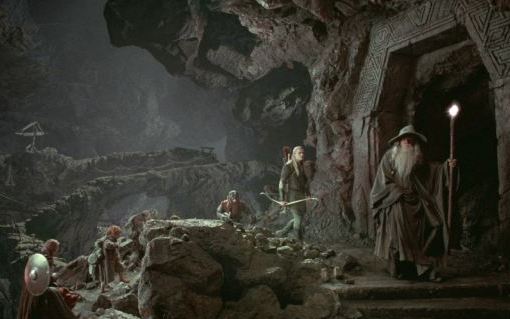
10. The Mines of Moria (The Lord of the Rings: The Fellowship of the Ring, 2001)

Mines of Moria

Although this chase isn’t as action-packed as others on this list, the Fellowship’s flight from the Balrog in the Mines of Moria ramps up the tension with an awesome musical score and a moment at which they must leap over a chasm as the unseen menace of the Balrog draws nearer. The monster doesn’t appear until the end of the chase, but the mere noise of its approach is enough to send Gandalf, a powerful wizard, running like a spooked cat. When the Balrog finally catches up with the Fellowship, it’s an epic conclusion to a thrilling chase.

I couldn’t find the scene on YouTube, so you’ll just have to watch the movie.

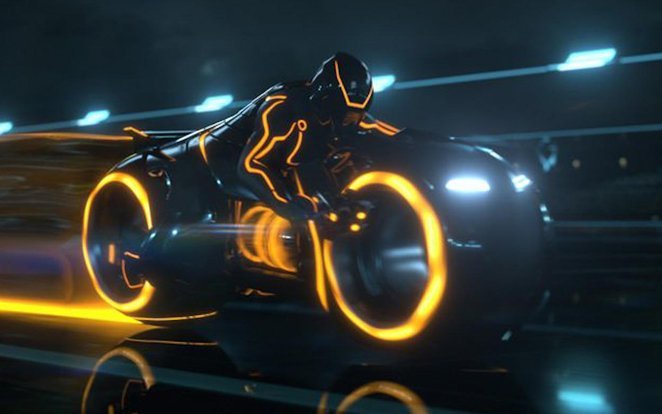
9. Light cycle chase (Tron: Legacy, 2010)

Light cycle chase

Short, sweet and colorful, this race between a Blue Guy and a Yellow Guy is great fun. The lack of music lends an understated realism to the scene; it reminds me of the podrace from the first Star Wars movie, but with brighter visuals and no annoying commentary. This chase also gets an honorable mention because Jeff Bridges.

You can watch this scene here.

8. Escaping the Reavers (Serenity, 2005)

Reaver chase

I was going to put the iconic speeder bike chase from Star Wars Episode VI: Return of the Jedi on this list, but then I remembered this little gem from Joss Whedon’s Serenity. It has all the excitement of the Star Wars chase, and also boasts wonderful dialogue and much higher stakes. As an all-or-nothing escape from vicious cannibals, it’s a tense scene… but not so tense as to exclude one or two really funny lines.

You can watch this scene here.

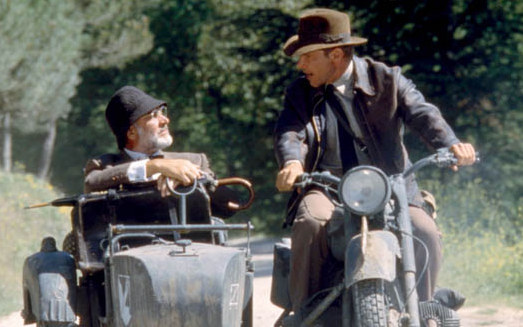
7. Motorcycle chase (Indiana Jones and the Last Crusade, 1989)

Motorcycle chase

Indiana Jones is practically synonymous with exciting chase scenes. Every film starring this intrepid grave robber archaeologist has him running away from something. This chase is by far my favorite. I mean, it has motorcycle jousting. It also has Henry Jones’s deadpan reactions to his son’s violent tactics. These disapproving glances, like the relics Indiana Jones picks up on his adventures, are simply priceless.

You can watch this scene here.

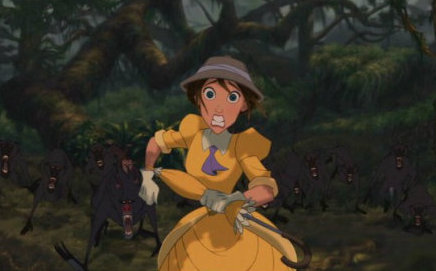
6. Fleeing baboons (Tarzan, 1999)

Fleeing baboons

This wonderful chase has Tarzan rescue Jane as she flees a hoard of angry baboons. Sprinkled with droll humor and backed by a lively musical score, this chase also features CG effects that were pretty impressive for the time. My favorite part of this chase? Tarzan’s facial expressions.

You can watch this scene here.

5. Pirate pursuit (Castle in the Sky, 1986)

Pirate pursuit

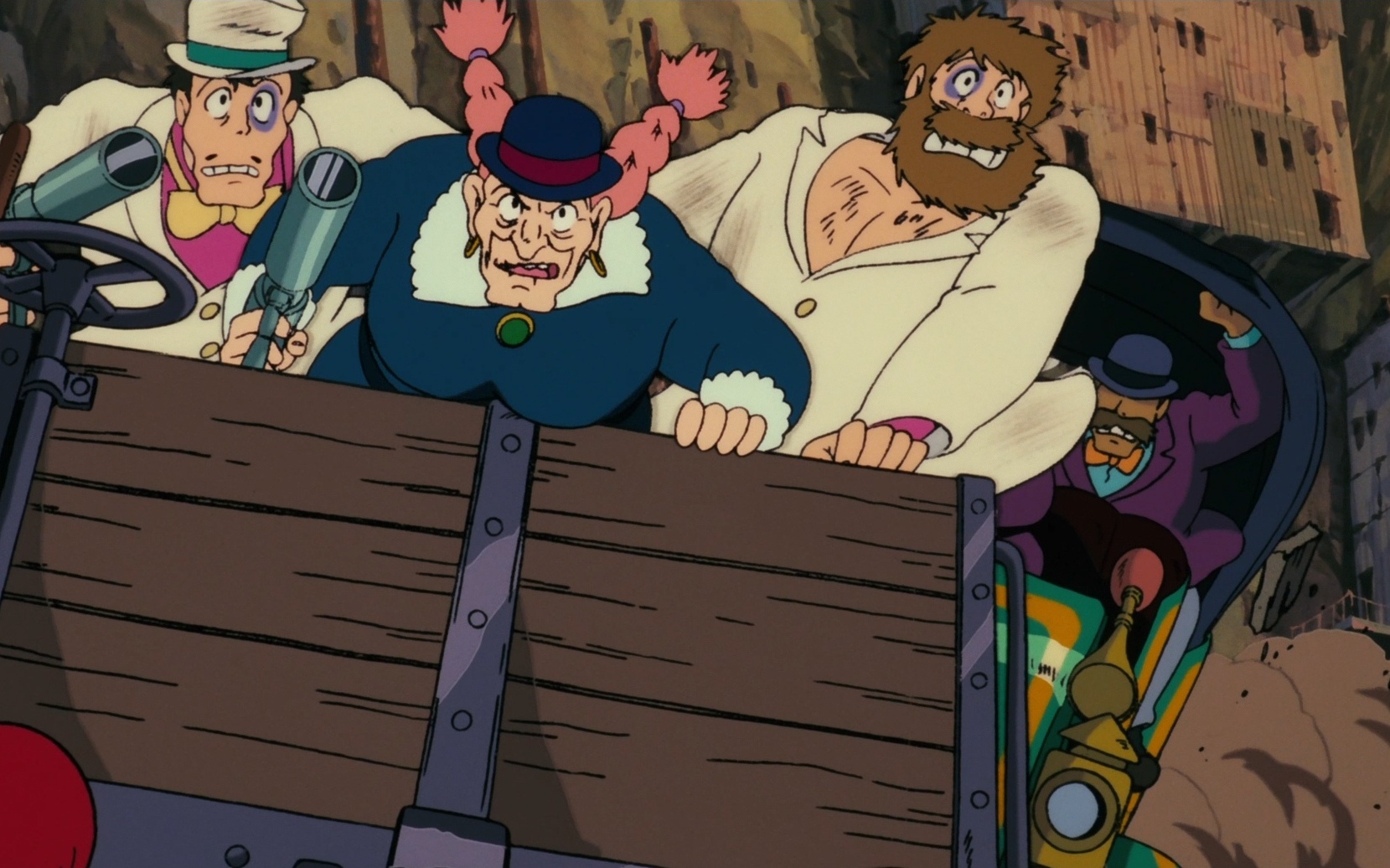
This chase is one of the best scenes in what may be my all-time favorite film, a classic from the legendary Studio Ghibli. The Dola Gang, a notorious band of sky pirates, pursue an innocent boy and girl into a canyon. When the children hop onto a train on raised tracks, the pirates follow in a rickety automobile. This beautifully-animated scene would be wonderful even without the pirates’ dialogue, which is hilarious.

I couldn’t find the scene on YouTube, so you’ll just have to watch the movie. Seriously, go watch it. Stop reading this blog post and go watch the movie!

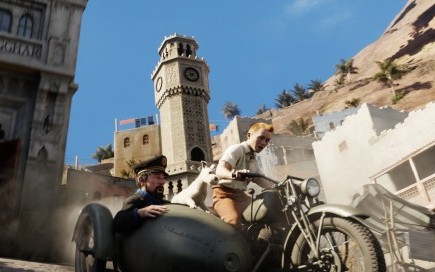
4. Race through Bagghar (The Adventures of Tintin, 2011)

Race through Bagghar

Steven Spielberg, bless him, sure knows a thing or two about directing great chase scenes. This chaotic rush down the streets of Bagghar, a fictional Moroccan city, is a joy to watch as Tintin crashes through buildings and over rooftops in a motorbike, trying to snatch a scroll from the talons of a hawk. There’s also a tank and a zip line and some accidental cross-dressing. Really, it’s quite a chase.

You can watch this scene here, but the quality of the clip is very poor; you may be better off just watching the movie.

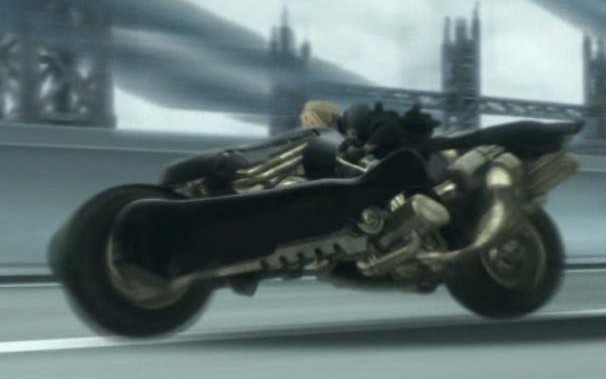
3. Motorcycle duel (Final Fantasy VII: Advent Children, 2005)

Motorcycle duel

Despite a nonsensical plot, Final Fantasy VII: Advent Children is probably the best video game movie I’ve seen, and a personal favorite of mine. Why? Because it’s packed with scenes like this one, in which the hero wields an oversized sword to fend off bad guys while hurtling down a highway on a motorcycle. Everyone in this scene has superhuman agility and reflexes. There are gratuitous slow-motion shots. Explosions and gunshots punctuate a frenetic musical score. (It’s basically The Matrix, but better.) And this, an extended version of the scene, throws in some helicopters because why not.

You can watch this scene here.

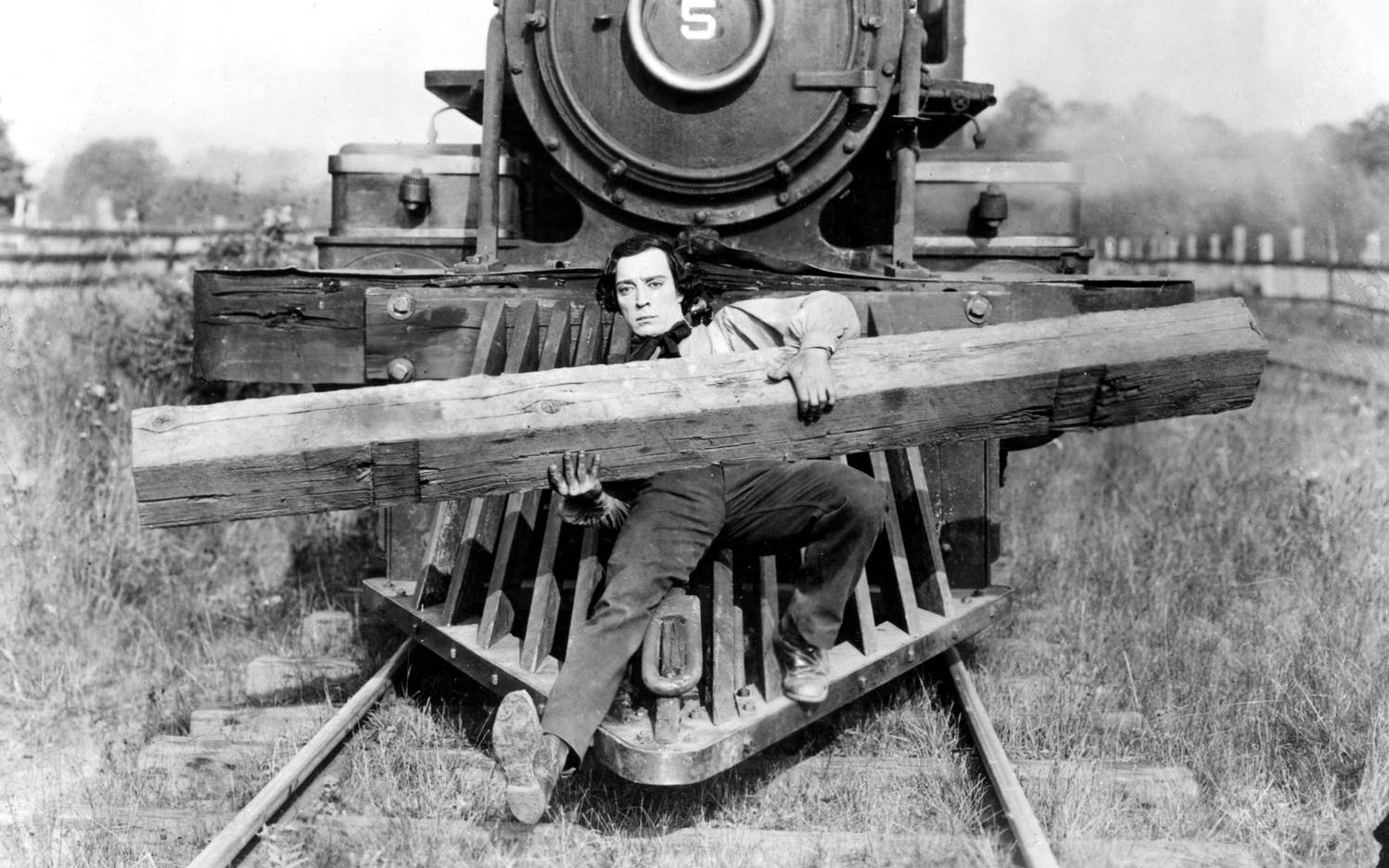
2. Locomotive chase (The General, 1926)

Locomotive chase

Chase scenes are generally frantic, but they don’t have to be. The General, Buster Keaton’s masterpiece, has two phenomenal chase scenes that last at least ten minutes each. In the first, the protagonist chases a train on foot, and then on a handcar, and then on an old-fashioned bicycle, and finally on his own locomotive. In the second, the protagonist’s locomotive is pursued by enemy trains. Everything about these chases is perfect, from Keaton’s deadpan expressions to his ingenious solutions for overcoming obstacles. They may not be fast or furious, but these chase scenes are outstanding.

You can watch part of the first chase here, and you should go watch The General in its entirety. It’s a great film.

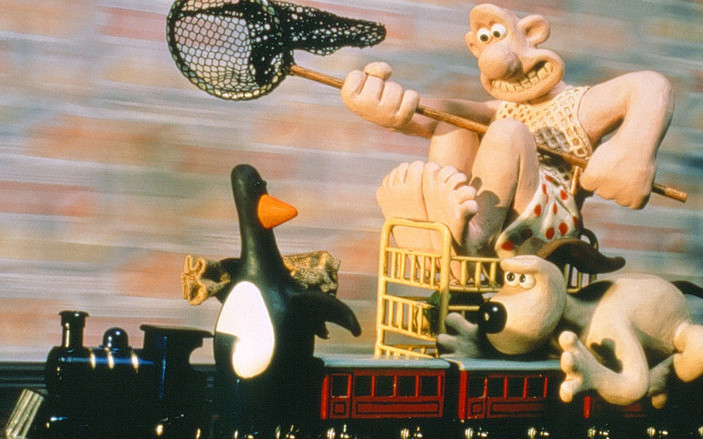
1. Toy train shenanigans (The Wrong Trousers, 1993)

Toy train shenanigans

My favorite chase scene in film history has no guns or explosions. What it has is a penguin, a dog, a toy train, a pair of mechanical trousers and a middle-aged man in his underpants. This scene, animated painstakingly in clay, is superb. As I worked on this top ten list, my younger brother asked me if this scene was number one, and added that he would slap me in the face if it was not. It’s that good. This brief, bizarre, brilliant chase through an ordinary English residence is my favorite in all of film.

You can watch this scene here. Please do.

What is your favorite chase scene in film? Let us know in the comments!
The Man Who Annoyed God

Napoleon had been impeached before the Infinite, and his fall was decreed. He annoyed God.

~ Victor Hugo

I’ve been reading Les Misérables, which is why I haven’t posted any book reviews recently and probably won’t post any for at least another three or four years. To say Lez Miz is a long novel is a staggering understatement. The book weighs about as much as all of my other books combined, with a couple of elephants thrown in for good measure.

Having previously read an abridged edition, I’m enjoying the full version of Less Misery very much. I’m also beginning to understand why so many editions are abridged. At the moment, the gripping tale of Jean Valjean has been interrupted by about nineteen chapters describing the battle of Waterloo, which has (if I remember correctly) only the slightest bearing upon one of many supporting characters in the novel. These Waterloo chapters are mostly an excuse for Hugo to ramble about Napoleon, whom he seems to admire.

I could hardly care less about Napoleon. I want to read about Jean Valjean, dash it!

There’s even a whole chapter praising a French officer for swearing when asked to surrender. (I swear I’m not making this up.) Victor Hugo apparently decided a filthy swearword with no relevance to the main story was important enough to merit an entire freaking chapter of the novel.

However, to be fair, even these pointless Waterloo chapters have a few literary gems sparkling here and there. My favorite of these can be found above: Napoleon, that brilliant tactician and self-assured leader of men, stumbled and fell because, Hugo informs us, “He annoyed God.”

This line reduces a colossus of world history—Napoleon, whose ambition, pride and courage knew no limits—to an annoyance. It’s a matter of perspective. God in his infinite greatness looked upon mighty Napoleon and saw a fly. Waterloo, which Hugo calls not merely a battle but “the changing face of the universe,” became God’s flyswatter.

“He annoyed God.” I love this line. It thrills my geeky soul.

274. About Storytelling: Chekhov’s Gun

There was once a writer named Anton Chekhov. Besides writing a play that trapped me in a stage kiss, this contemplative Russian also established the literary principle that has come to be known as Chekhov’s gun.

Chekhov once stated, “Remove everything that has no relevance to the story. If you say in the first chapter that there is a rifle hanging on the wall, in the second or third chapter it absolutely must go off. If it’s not going to be fired, it shouldn’t be hanging there.”

This concept of a background element becoming an important plot point has become known as Chekhov’s gun. Something that seems trivial becomes extremely significant. The thing you forgot from twenty chapters ago defeats the villain or break the hero’s heart.

A famous example of this can be found in The Hobbit and The Lord of the Rings by dear old Tolkien. The all-important Ring that ends up driving the whole story starts out as a convenient escape for Bilbo Baggins early in his adventures. When Tolkien brought a magic ring into the story, he originally had no plans for it. The Ring was a handy deus ex machina, a trinket discovered just in time to save Bilbo’s life.

Chekhov's... ring

This is an example of Chekhov’s gun. Yes, I know it’s not really a gun.

Only later did Tolkien decide to make the Ring more than a magical accessory. It became the crux of the story, the thing around which all other things revolved—one Ring to rule them all, so to speak. The rifle had gone off.

Chekhov’s guns tend to be common in plot-driven stories. J.K. Rowling uses this principle all the time in her Harry Potter books, in which later plot developments hinge on minor incidents and random rubbish from earlier books.

Although less common in character-driven stories, Chekhov’s gun can apply to people as well as objects and events. In The Lion, the Witch and the Wardrobe, kindly Professor Kirke seems unperturbed by wild claims of magical worlds inside his furniture. His composure doesn’t make much sense until the reader gets to The Magician’s Nephew. Here it is revealed that Kirke actually visited magical worlds as a child, explaining his lack of surprise as a grownup.

While Chekhov’s gun is a wonderful dramatic technique, it’s best used with subtlety and restraint. It’s a treat for careful readers and devoted fans to notice trivial things becoming important, but overuse of this principle makes stories seem contrived or confusing.

Incidentally, while I haven’t any rifles hanging on my walls, I do have swords. As much as I appreciate the principle of Chekhov’s gun, I hope my assorted blades stay on my walls in later chapters of my life.

273. TMTF Reviews: Resident Evil 4

I don’t like zombies.

Zombies are hideous creatures. They smell terrible. Worst of all, they’ve become one of the most tired clichés in pop culture. Like vampires, zombies are freaking everywhere. In the past two years, we’ve had The Walking DeadWorld War ZWarm Bodies and an endless slew of novels and video games featuring these lifeless imbeciles.

To put it simply: Zombies have been done to death. (Pun intended. I’m so, so sorry.) I’m tired of zombies. Heck, I never liked them in the first place.

That said, why on earth did I play a Resident Evil game?

Fortunately, Resident Evil 4 doesn’t have zombies. Well, maybe fortunately isn’t the right word. RE4 replaces shambling zombies with murderous peasants, and they’re pretty scary.

Ganados

Just your average Black Friday shoppers.

Nearly a decade ago, a friend in Ecuador recommended RE4. “It’s excellent!” he said, or words to that effect. When I told him I wasn’t a zombie enthusiast, he said something like, “The enemies aren’t actually zombies. And they shout at you in Spanish! How great is that?”

I’d heard of the Resident Evil games, which consist mostly of players shooting zombies with guns. Not only do I dislike zombies, but (contrary to the impression I’ve probably given in my past few reviews) I don’t care much for guns. Games with swords and magic, or no violence at all, are more my cup of tea.

For eight or nine years, however, praise for this game kept popping up. Nintendo Power (may it rest in peace!) named it one of the best games of all time. Everyone hailed RE4 as an enduring classic. It became a milestone in the game industry, influencing several major video game series being developed today.

At last, I submitted to the inevitable and got my hands on the game. It was time to see what the fuss was about, and also to be shouted at in Spanish.

Is this bloodstained game truly the masterpiece everyone claims it to be?

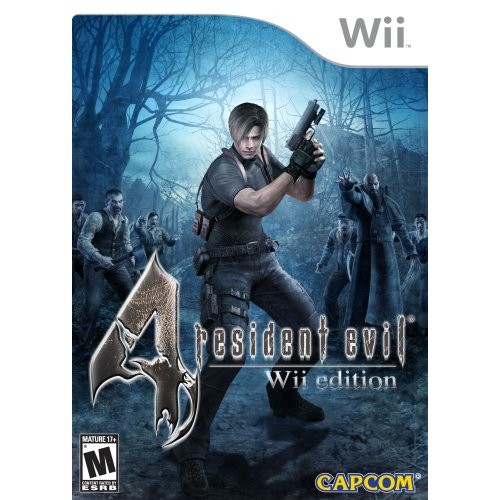
Resident Evil 4

It isn’t perfect, and it certainly ain’t pretty, but Resident Evil 4 is a remarkably good game.

RE4 begins with Leon S. Kennedy, a US secret service agent, dispatched to a remote village in rural Europe. The president’s daughter, Ashley Graham, has been kidnapped. Leon’s job is to get her back. Unfortunately for him, quite a lot stands between Leon and Ashley: crazed cultists, mutant abominations, scheming criminals and (of course) guys with masks and chainsaws.

The not-zombies of RE4 are called ganados. (That’s Spanish for livestock, by the way: a clever touch.) These peasants have gone murderously insane, and they’re actually pretty scary. I dislike zombies, but at least zombies move slowly. Ganados often run, brandishing axes and pitchforks, shouting threats in Spanish. (This may be scarier for those who don’t know Spanish; I found it funny when ganados sneaking up on me yelled things like, “Behind you, idiot!”) The madness of the ganados is eventually explained, but it remains unnerving to be constantly surrounded by crazed murderers. They look pretty normal, which makes their obsessive violence that much scarier.

The environments of RE4 are fantastically creepy: abandoned buildings, dying forests, unquiet crypts. The player is left with a frightening sense of isolation. There is no backup. There are only more ganados, with an occasional monster for variety.

This isn’t exactly a criticism, but I must point out the odd tonal shifts of the game’s environments. It starts in a dreary village surrounded by gray woods; the outdoorsy setting gave me Snake Eater flashbacks. Then the action shifted to a castle packed with puzzles, lava pits and suits of armor. It was like a level from a Legend of Zelda game. Then the game went all Metal Gear again with a high-tech military installation. These levels were creepy and well-designed, but they felt disconnected. I felt like a single character straying into two or three separate video games.

The core gameplay is superb. Shooting is simple with a useful (and apparently groundbreaking) over-the-shoulder perspective that allows for great precision. (I played the Wii version of the game, which allowed for convenient point-and-shoot motion controls.) Weapons can be upgraded, and items can be combined to increase their value or effectiveness. Treasures can be found and sold. Managing the inventory—usually a tedious chore—is a pleasant challenge, with players fitting items into a briefcase like blocks in a game of Tetris. Even a long-running escort quest, which I expected to be an excruciating nuisance, turned out to be kind of fun.

Best of all, Leon can suplex ganados. It isn’t as impressive as, say, suplexing a train, but it’s still pretty darn cool.

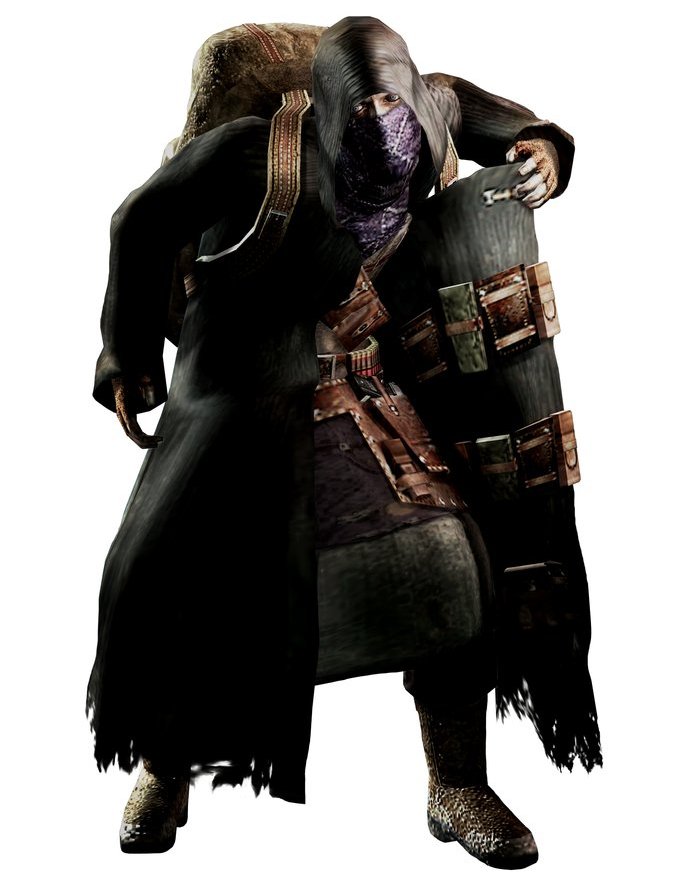
Then there’s the merchant. Oh, the merchant.

RE4 Merchant

“Whaddaya buyin’?”

This ubiquitous salesman shows up the most unlikely places, apparently unperturbed by the roaming hordes of homicidal ganados, and sells the player guns. I found his frequent appearances and exaggerated cockney accent hilarious. Every time I stumbled upon one of his strange little shops, I wanted to hug him.

In the end, I have only two major criticisms of the game.

First, there isn’t much story. What little plot makes it into the game is communicated by hammy action-movie dialogue and badly-written notes scattered for the player to find. The gameplay and setting are superb, but the story is utterly cheesy. It would have been nice to have some serious dialogue to complement the game’s grim environments and gallons of gore.

Second, the game consists almost entirely of fetch quests, and most of them make no sense. There are nearly a dozen doors that Leon must open by retrieving some meaningless relic: an insignia, a pair of goblets, fragments of art and other rubbish. Much of the game consists of finding stuff to open stuff in order to find more stuff to open more stuff. The brilliant gameplay, clever puzzles and superb level design keep the fetch quests from getting stale, but I still felt like an errand boy by the end of the game.

A final note: In case you hadn’t noticed, this is not a game for young players. There is some cursing (mostly in Spanish) and lots of blood. It’s worth playing—but I recommend it only for older, tougher gamers. This ain’t a game for the kiddies.

I’m glad to have played Resident Evil 4. Now, if you’ll pardon me, I’m going to find that merchant and give him a hug.