When Life Gives You Lemons, MAKE LIFE TAKE THE LEMONS BACK!

The old saying about making lemonade when life gives you lemons is rather trite. It’s certainly important to keep a positive attitude, but the fact is that some problems have no easy fixes. Not all lemons can be turned into lemonade. Sometimes it’s best not to be satisfied with the lemons life throws your way. Instead of resigning yourself to lemons, try changing things for the better.

Alternatively, you could invent combustible lemons and burn life’s house down.

Cave Johnson’s rant is one of many fantastic monologues from Portal 2, which may be one of the greatest video games ever made. Even if you aren’t the sort of person who plays games, I recommend giving it a try.

317. About Storytelling: Deus Ex Machina

Be sure to vote in this week’s poll!

There come moments when storytellers feel trapped. A story has a problem with no easy solution. The hero is cornered by ravenous wolves, pushed off a cliff, or given a toothpick for a duel instead of a sword. No happy ending is possible.

This is when storytellers use a dirty little trick called deus ex machina. This fancy-sounding phrase is used to describe contrived or impossible resolutions in storytelling.

In the first problem mentioned above, the hero might be saved by the wolves dropping dead of simultaneous heart attacks. The second problem can be solved by an angel catching the hero in midair, and the third by the hero’s opponent abruptly putting down his sword and becoming a pacifist.

These solutions are ridiculously improbable, and that’s the point: deus ex machinas (or dei ex machinis if you want to be really fancy) are not believable. They are jarring reminders that fiction is completely made-up.

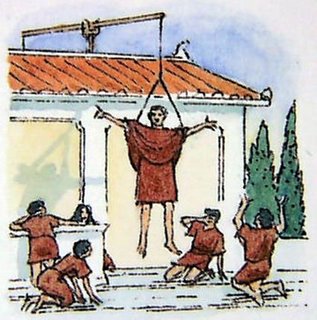
The phrase deus ex machina is Greek for god from the machine. In ancient Greek theater, actors representing gods entered the stage using literal machines, such as platforms that raised them up through trapdoors or lifts that lowered them down from above. These “gods from machines” represented divine beings capable of doing anything. Was the hero stuck in a problem with no solution? Presto! Here came a god to solve his problem miraculously!

Deus Ex Machina

Fear me, mortals! Be awed by my divine splendor! Pretend not to notice the crane!

Thanks to this theatrical convention, deus ex machina has entered the vocabularies of writers everywhere.

One of the most infamous deus ex machinas in recent history is the convenient arrival of giant eagles to save the heroes at the last possible moment in The Lord of the Rings. In The Adventures of Tintin, the hero is frequently saved by lucky coincidences such as landmines turning out to be duds when he drives over them. Charles Dickens, bless him, used deus ex machinas all the time to give his characters happy endings.

Aspiring writers should be familiar with the concept of deus ex machina for two reasons. First, they can avoid using it unnecessarily. Nothing ruins the excitement or verisimilitude of a good story like a cheap deus ex machina. Second, writers aware of the concept can use it meaningfully.

Yes, it can actually be a good thing for problems to be resolved in a contrived fashion. Deus ex machinas can be used for ironic or humorous effect, such as heroes escaping a monster because its animator has a sudden heart attack. They can also be used seriously to make a point, as in the final scenes of the movie Signs. In the climax of the film, a family survives a crisis due to an incredible set of coincidences… which begs a question asked earlier in the movie: “What if there are no coincidences?”

(Signs was quite a good film, but I will never forgive its director for what he later did to The Last Airbender. That movie, based on a truly superb television show, is a disaster no deus ex machina could save.)

Why am I writing about deus ex machinas? Well… I’m writing this post less than a day before it’s due. The subject of last-minute resolutions seems appropriate!

316. Christmas… Fundraiser?!

Around the start of December every year, TMTF promotes the Advent Conspiracy: an annual project that provides safe, clean, drinkable water for people in poorer countries.

Advent Conspiracy

This year, we want to do a little more.

This December, TMTF might support the Advent Conspiracy (and one other charity project) by holding… what? What? But—what?! WHAT?!

That’s right, TMTF might hold a fundraiser for charity! Well, TMTF might set up a fundraising webpage for charity. I suppose there’s a difference. I’ve wanted to hold a fundraiser on TMTF for a year or two, but the prospect daunted me. At last, I’ve decided to give this fundraising thing a try.

(To clarify: Neither I nor my blog would receive any money from this fundraiser. One hundred percent of money given by donors would go to the charity of their choice.)

An amazing organization called Living Water International drills wells and provides safe water solutions all over the world. I would like to create a Living Water donation page in December representing this blog and its readers.

Working together, we could help save lives this Christmas!

Living Water is a Christian organization. As not all of my dear readers are Christians, I would like to include an alternative charity: Child’s Play. This awesome/geeky organization donates video games, toys, and other goodies to kids in hospitals. Child’s Play doesn’t seem to have individualized pages that track donations, but TMTF could easily link to the organization’s general donations page.

If TMTF puts even one Legend of Zelda game in the hands of a sick child, I will consider this blog’s entire existence justified.

Although fundraisers can accomplish great things, they’re often really boring. Worry not! TMTF is here to put the fun in fundraiser. I’d like to create a Kickstarter-style tier of rewards for donors. While I haven’t worked out all the details, the idea is to acknowledge donations with small benefits.

For example, donors who give a dollar receive a digital thank-you message. Donors who give five dollars also get a shout out on this blog. Donors who give ten dollars receive an actual thank-you card in the mail. Larger donations might receive benefits like guest posts for donors’ blogs or websites, personalized poems or very short stories, or inclusion in a raffle to win a copy of my book. I’m open to further suggestions for rewards.

What’s that? You’re wondering why—if I’m really so excited by the possibility of holding a charity fundraiser—I haven’t already decided to hold one?

Here’s the thing. A fundraiser can’t work with just one person… unless that person is Batman. I’m not Batman. I can plan a fundraiser, but I can’t fund the whole thing myself! It has to be a group effort, and I can’t hold a fundraiser without hoping readers will support it.

That said, I’ve created a poll to test the waters and figure out whether a TMTF charity fundraiser is feasible. The poll will last a week; I’ll post reminders on this blog and on Twitter over the next few days. If you ever glance at this blog, please take ten seconds to cast your vote. And please be honest. And vote only once. And spread the word!

315. Fans, Geeks, and Shipping: A Momentary Study

Today we delve once again into anthropological study as we take a look at shipping. No, I don’t mean the transportation of goods. The word shipping also denotes a strange, fascinating, and occasionally outrageous trend observable in communities of geeks across the Internet.

As an eminently geeky blog, TMTF must investigate this sociological phenomenon. For science! Grab your pens, clipboards, and safety goggles, ladies and gentlemen. Let’s get geeky!

(Wait, give me ten minutes to research shipping on Wikipedia, that splendid fount of Internet knowledge. All right, let’s begin!)

We begin with a preliminary note about fandom. A portmanteau of fan and kingdom, a fandom is a community of people united by a common attachment to something. To put it more simply: a fandom is a group of fans. The word also refers to the subcultures created by these groups, and to each fan’s individual predilection for the object of attachment.

As the word shipping used in the context of fandom, it denotes a wish for two people, usually fictional characters, to have a certain kind of relationship—usually a romantic one. (I suppose shipping can involve more than two people, but I prefer not to pursue that thread of inquiry any further.) The term is the gerund form of the verb ship, which is derived from the word relationship. Fans ship their favorite characters by pairing them up. The word ship also functions as a noun, referring to a specific pairing.

In other words, shipping is fans wanting people (real or imagined) to find happiness together, which is sort of sweet, extremely silly, and just a bit creepy.

I didn’t know much about shipping before looking into it; I thought it might make an interesting blog post. I was astonished to realize how fully developed and widely accepted a practice shipping has become. Many fans pen fan fiction, create artwork, or write music promoting their preferred ships. Some fans argue about them—after all, this is the Internet.

Shipping has become so widely practiced that it apparently has its own terminology. A sailed ship, for example, is a pairing that actually happens. A joke ship is a ship too ridiculous to be taken seriously, and a sunken ship is one that has no chance of happening. (Wikipedia has a list of nearly twenty shipping terms. It’s insane.) Portmanteau combinations of names often represent ships, such as Romuliet for Romeo and Juliet. (Yes, Romuliet is an awful word; I hate to think of what terrible violence ships have inflicted upon the English language.) Some fans become so invested in certain ships that they declare them OTPthe One True Pairing for those characters.

I thought shipping was mostly a joke, but I was surprised to discover its complexity and ubiquity across the Internet.

What’s that? You want to know my preferred ship? That would be milk and coffee, thanks for asking. What finer OTP could there be?

314. The Parable of the Monkey’s Whiskers

When I shared on Monday about my struggles to cope with depression, I promised today’s post would be less gloomy. Not only shall my reflections today be more cheerful, but they’ll also feature pictures of cute monkeys!

(Don’t be surprised. This blog is called Typewriter Monkey Task Force, after all. The pictures belong to my dad, who graciously dug them out of his archive at my request.)

Here’s an old African parable. There were once two monkeys; I’ll name them Apollo and Socrates after two of my typewriter monkeys.
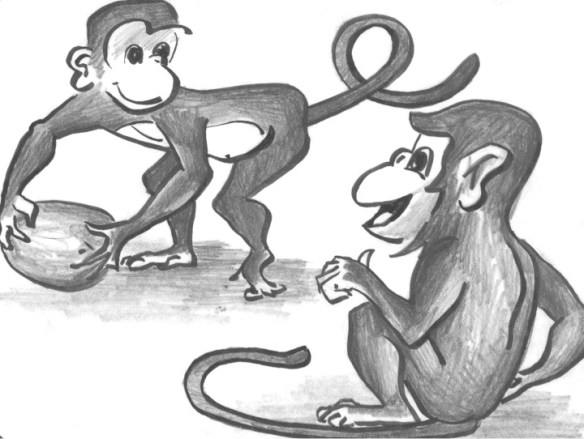
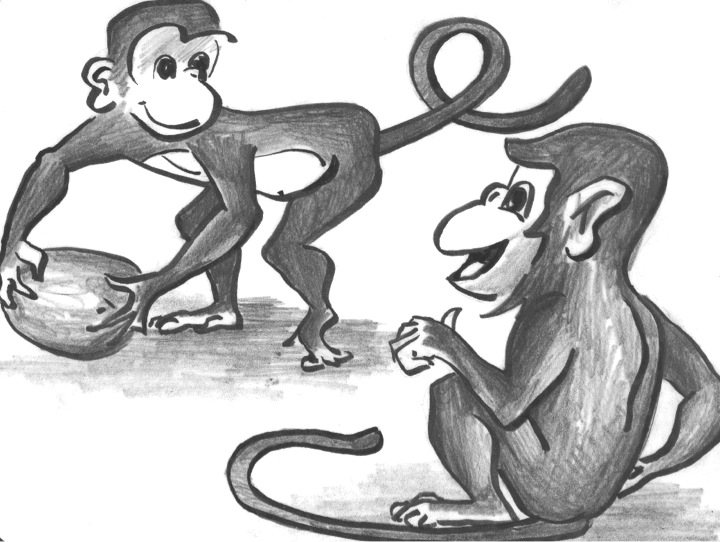
Monkey Parable - Playful monkeyApollo and Socrates frolicked across the savanna one day, tossing around a coconut and being adorable. Neither monkey realized they were playing near a foul swamp. (As I know from long experience, monkeys aren’t very bright.) Apollo and Socrates tossed their coconut back and forth until Socrates missed a catch. The coconut landed in sticky mud far from the bank.

As the monkeys sat on the bank, staring forlornly at the coconut, Apollo nudged Socrates as if to say, “You go first.”
Monkey Parable - Sinking monkey

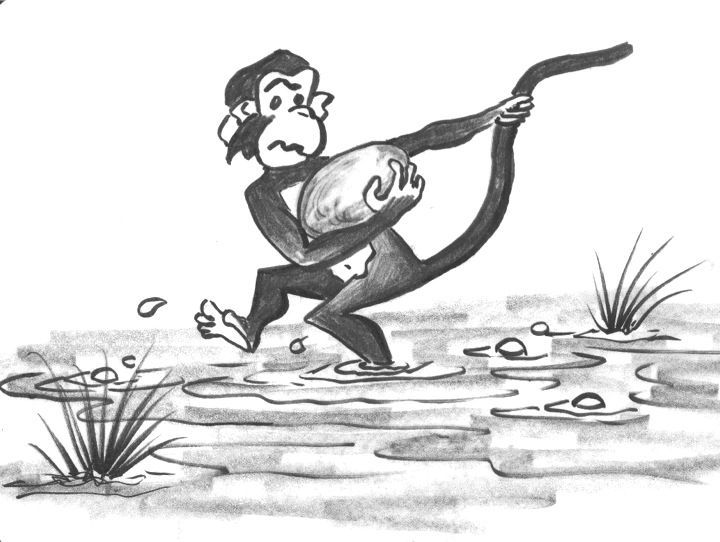
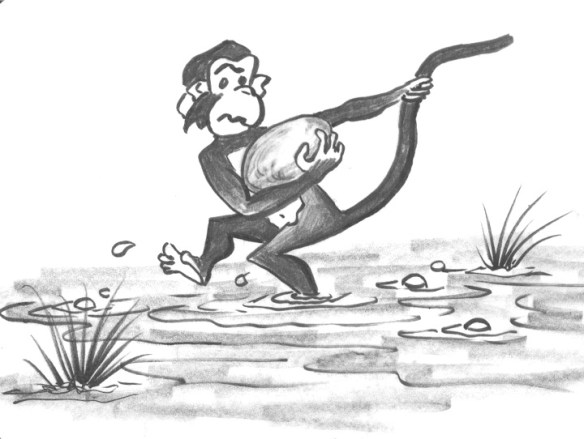
Socrates stepped into the swamp and trudged toward the coconut, holding up his tail to keep it from trailing through the stinking mud. At last he picked it up, tried plodding back to the safety of the bank, and realized he was stuck. The clinging muck held him fast by the ankles… and slowly pulled him downward.

Socrates let go of his tail, dropped the coconut, and tried pulling a foot out of the mud. It didn’t even budge. He tried the other foot. It was hopeless. The little monkey was trapped, and the mire sucked him steadily down, down, down into the gloom.
Monkey Parable - Desperate monkey

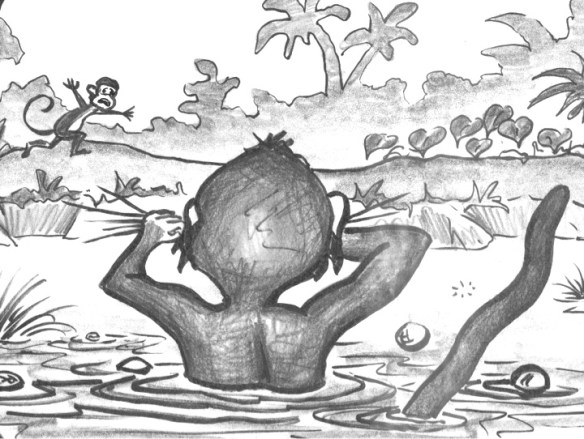
Apollo began running back and forth on the bank, waving his little arms helplessly. There were no branches, no vines, nothing that could be used as a bridge or lifeline. If only there were something to which Socrates could hold—something to keep him from sinking.

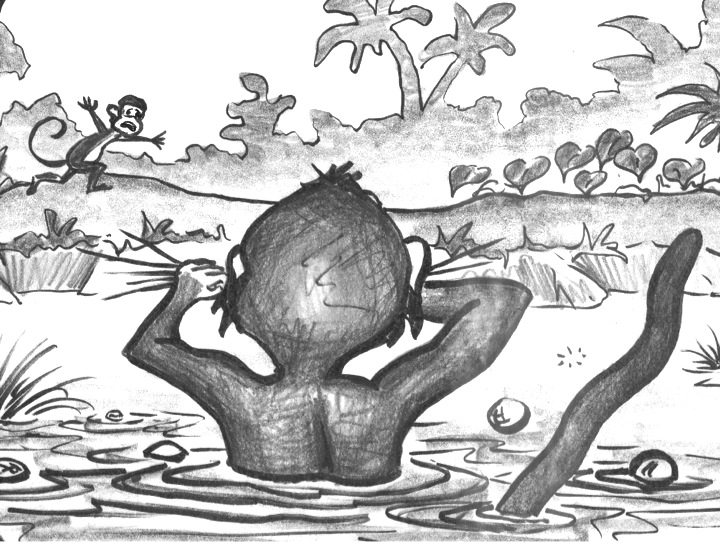
Then Apollo had an idea. He chattered at Socrates (now waist-deep) to get his attention, and then tugged on his own whiskers. Of course! Socrates didn’t need a lifeline. He could pull himself out of the swamp by his whiskers! The solution to his problem was literally right under his nose.

Socrates understood and began pulling his whiskers. He pulled and pulled and pulled, trying to raise himself out of the slimy mess drawing him into its reeking depths.

Monkey Parable - Drowned monkey

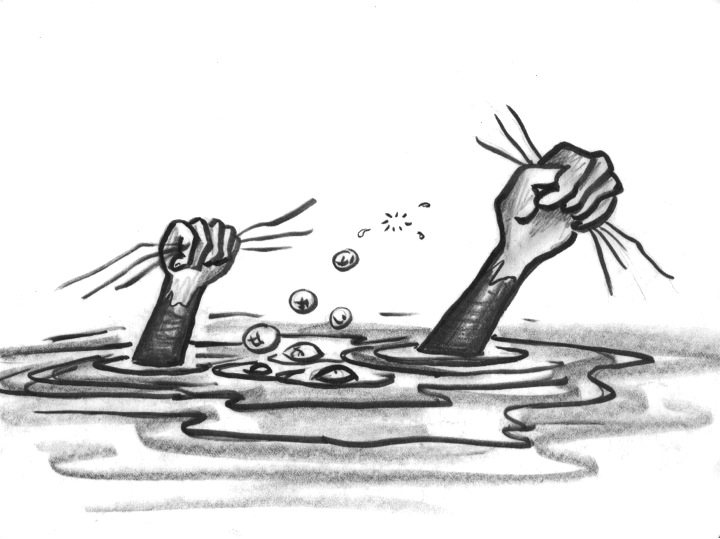
The last Apollo ever saw of Socrates was a pair of paws, twitching faintly and grasping handfuls of monkey whiskers.

Wait. That wasn’t a happy story, was it? Dash it, this is embarrassing. I promised my readers today’s post would be more hopeful. Well, it’s not too late to make a few changes to this parable. Let’s give it a happier ending!

Monkey Parable - Noticed monkey

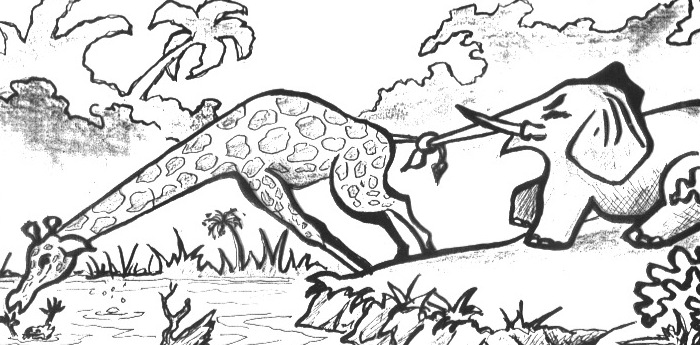
As Socrates yanked vainly on his whiskers, a nearby giraffe glanced over and saw the little monkey struggling in the swamp. Art Garfunkel Giraffe was this noble creature’s name. (Art’s parents were huge fans of folk rock.) He galloped away to find his friend Ringo Starr Elephant. (Ringo’s parents were more into classic rock and roll.) Art and Ringo reached the swamp just as Socrates’ head was about to slip beneath the mud.

Monkey Parable - Rescued monkeySocrates was saved! The animals, who never went near a swamp again, all went out for coffee and lived happily ever after.

There. Was that better?

On Monday, I mentioned that I hate my inability to cope with depression. I also pointed out that many of us struggle to win our private battles. Why have I shared a parable about monkey whiskers?

Some problems have no easy fixes.

As much as I want to find the perfect strategy for coping with depression and anxiety, it may not exist. There may be no easy fix for these problems. My best intentions may be no more useful than a monkey trying to lift himself up by his own whiskers.

Oddly enough, this comforts me. I tend to blame myself for every failure to cope with my depression. The parable of the monkey’s whiskers suggests the possibility that I may not always be able to rescue myself. Some battles may be beyond my power to win… and that means I can stop blaming myself for losing. I can feel depressed without feeling guilty.

If depression is a problem my best intentions can’t fix, should I just give up?

Well… no.

We can’t rescue ourselves—but others can help.

Depression is a private battle. All the things I mentioned on Monday—addiction, self-loathing, broken relationships, self-destructive impulses, and so on—are things we hide. They’re private. They’re shameful. They’re embarrassing. They’re also things we don’t have to face alone.

In fact, facing them alone may be as stupid as a monkey trying to haul himself out of a swamp by his whiskers.

We all need help from others. Some of us could benefit from professional counseling, antidepressants, or therapy. We all need hugs. Some of us need hugs. We feel better for talking or going for walks or playing Mario Kart with loved ones. It’s amazing to share a private battle with someone and hear them say “I love you” or “I’m praying for you” or even “That really sucks; I hope things get better.”

In my struggles, few things have brought me greater hope or healing than people listening to me, praying for me, encouraging me, or simply acknowledging that they know I’m struggling. Maybe that’s what the Apostle Paul, bless him, meant when he wrote, “Carry each other’s burdens, and in this way you will fulfill the law of Christ.”

We can look to others for help, and we can always look to God. As it is written, “Cast all your anxiety on him because he cares for you.” He listens when no one else will.

We all have our battles to fight. What we must always know is that we never have to face them alone.
Moon Music

The phrase moon music suggests compositions like Claude Debussy’s “Clair de Lune” or Beethoven’s “Moonlight Sonata.” For the geeks out there, however, it may call to mind a miserly cartoon duck and his adventures on the Nintendo Entertainment System.

The DuckTales video game should have been a disaster. More often than not, licensed games (i.e. games based on an existing intellectual property) are poorly-designed attempts to squeeze more money out of a media franchise. Seeing as DuckTales was never more than a decent cartoon in the first place, its game should have been an abject failure.

DuckTales turned out to be a masterpiece of the 8-bit era, and a resounding commercial success. I suppose Scrooge McDuck of all people (or poultry) really knows how to rake in the cash.

One of the game’s most enduring legacies is its moon music. “The Moon Theme” is among the most widely recognized game melodies of its time. Although the original version is a bit shrill, it’s quite complex for a song using the NES’s primitive sound chip. It makes me think of Schroeder from the Peanuts comics plinking out Beethoven’s masterpieces on a toy piano. The song also reminds me of the soundtracks to the old Mega Man games, which were made by the same developer.

When DuckTales was remade recently as DuckTales: Remastered, “The Moon Theme” was all over the game, not just in the Moon stage; I counted two or three arrangements of the song in the game’s end credits alone. One might even say… it eclipses the other songs in the soundtrack. (Pun intended. I’m so, so sorry.)

313. Coping with Depression

About a week ago, an acquaintance was asked how she planned to spend her evening. She replied, “Oh, I’ll go home,” and added in an undertone, “I’ll probably curl up and cry my eyes out.”

I assumed my acquaintance—I’ll call her Socrates—was being sarcastic, yet her tone was very matter-of-fact. “Will you really?” I inquired.

This was not a polite question. All the same, it led to a frank conversation about depression and the ways we try to deal with it. Socrates apparently cries a lot. I would never have guessed. She’s considerate, friendly, and helpful; she never seems depressed. As she talked about her struggles, I felt a sobering sadness.

I can’t pretend to understand her perfectly after one brief conversation, but I’m certain of at least one thing: Socrates is a very brave person. She fights her private battle with a courage that fooled me into thinking she was quite happy. She smiles, storing up her tears.

Socrates reminded me that depression is a common struggle. Most of us have hidden problems of some kind, whether depression, self-loathing, addiction, self-destructive impulses, broken relationships, or other issues. We all try to cope in different ways. Socrates cries. I write, drink too much coffee, and spend hours or days being antisocial and unproductive.

Trying to cope

Look, I’m really depressed. I can’t deal with people right now. Go away! Begone! Go read some other blog!

I don’t like depression, but what I really hate is not knowing how to deal with it.

My depression comes and goes. When I’m not depressed, it seems like a mere nuisance. In fact, in these brighter times, I feel slightly guilty talking or writing about it. I feel like I’m exaggerating a small problem.

Then depression creeps over me, darkening my life slowly and imperceptibly. (The process is so gradual that I sometimes feel depressed for days before realizing it.) Depression robs me of the ability to enjoy and appreciate good things. It sucks the hope and meaning out of life, leaving the universe a dismal, empty place.

Fortunately, my bouts with depression are neither frequent nor injurious, and seldom last more than a week or two—thank God! In the end, no matter how dark my depression, God carries me through it.

All the same, I wish I were better at coping. I want to be more self-aware in recognizing the symptoms of depression. I remind myself that what I do matters more than what I feel. I try not to blame myself, but to recognize depression as a sickness. Like Socrates, I smile and keep my struggles to myself.

As I look back on the battles I never won, I can’t shake a sense of regret. I feel guilty for being unproductive and unsociable. I rue time wasted, opportunities lost, and blessings unappreciated.

Depression really sucks.

Why am I writing all this? I have two reasons.

First, I know I’m not the only one who doesn’t win these battles. There are many people like me and Socrates. I want the readers fighting their own private battles to know they’re not alone.

Second, I have more to say. This is the darker half of a two-part discussion. I’ll end these reflections on a brighter note next time. Come back on Friday for the conclusion!

312. Gritty or Glittery?

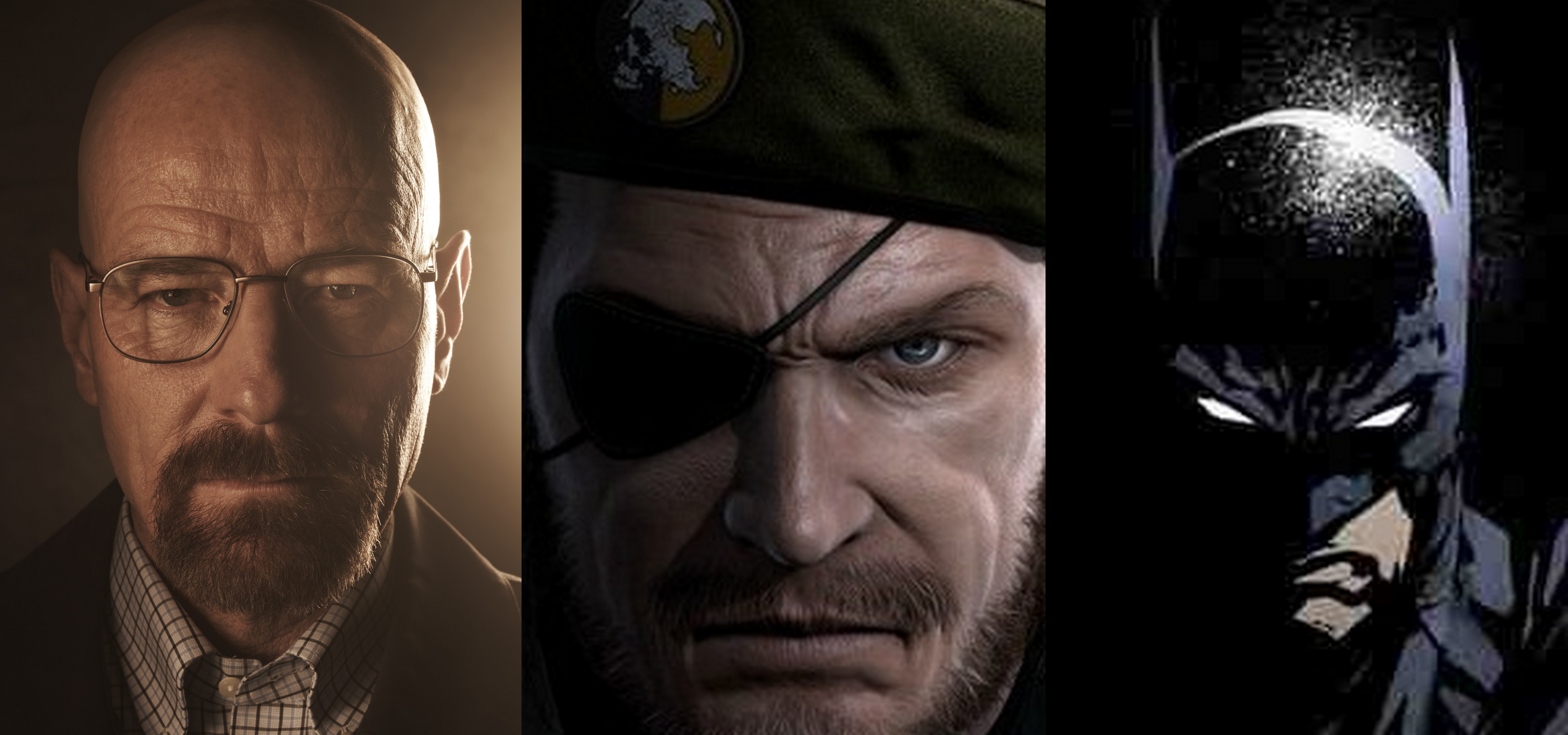
In the past few years, we’ve seen a lot of gritty media: books, films, and video games characterized by darkness, angst, violence, and square-jawed men brooding over inner conflicts. From Wolverine to Walter White, we’ve seen plenty of angsty characters on the large and small screens. Books—even young adult literature—feature people killing (and dying!) in all sorts of creative ways. The video game industry continues making games with guns, gore, and roughly one in every five words of dialogue being the f-bomb.

Angst! Darkness! Square jaws!

Angst! Darkness! Square jaws!

Why is gritty media popular? That’s a tough question to answer. I suppose there’s some truth to the darkness and violence in these media, and it resonates with people. We all feel sadness, discouragement, and anger. Some face depression, abuse, self-destructive impulses, or equally “gritty” problems.

Finally, gritty media often seems mature, sophisticated, or “grown-up.” All of this begs the question: Is it?

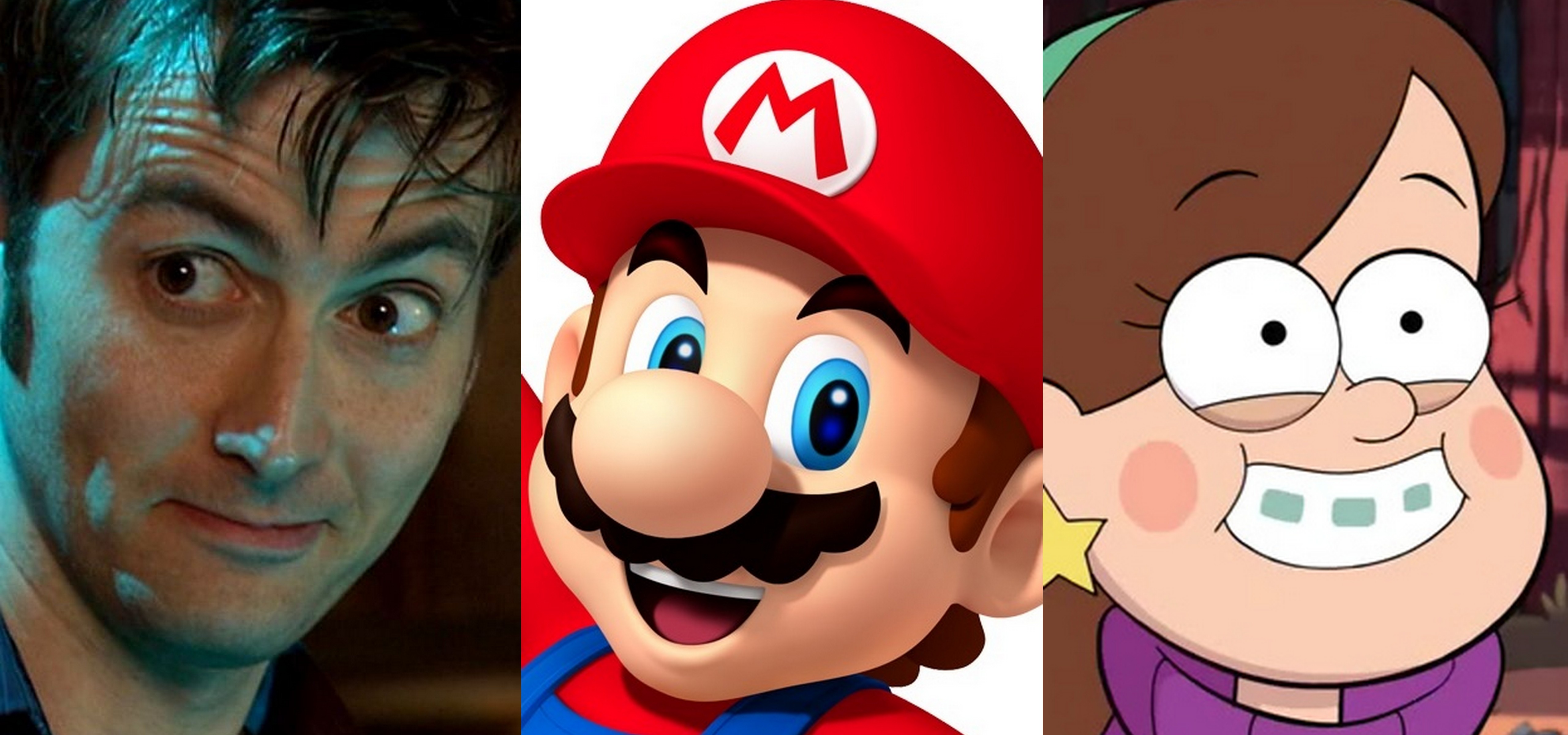
While gritty media has become more popular in past years, there are still plenty of lighthearted books, films, and video games: “glittery” media, so to speak.

Light! Smiles! Goofy braces!

Light! Smiles! Goofy braces!

Throughout history, comedy has nearly always taken a backseat to tragedy. Shakespeare’s most famous plays are his tragedies; Mark Twain’s cynical Adventures of Huckleberry Finn is celebrated over his cheerfuller books; P.G. Wodehouse’s clever comedies are largely eclipsed by the gloomy writings of his contemporaries. It seems humor and optimism can’t be taken seriously.

While there are certainly good things to say for gritty narratives, I don’t believe grittier is necessarily better. A purpose of art is to reflect or represent truth; the truth is that life isn’t always gloomy. A Farewell to Arms or The Things They Carried may be brilliant depictions of the horrors of war, but peace is no less real than violence. I think it’s absurd to suppose, say, Anne of Green Gables is necessarily an inferior book because it reflects joy and sentiment instead of pain and despair.

In the end, it’s a mistake to judge the quality of a thing by whether it’s gritty or glittery, tragic or comic, cynical or optimistic. That said, I would love to see people take glittery media more seriously. Can we study humorists like P.G. Wodehouse or James Thurber more widely in schools? I’m sure students wouldn’t mind putting down The Lord of the Flies. Can we have fewer gritty superhero movies and have more like Marvel’s quirky Guardians of the Galaxy? We could use a break from gloom and doom.

The world is an awfully dark place, but there’s a little light left. Some stories remember that, and I think they’re worth taking seriously.

Three Thinkers and a Chimpanzee

Three Thinkers and a Chimpanzee

A few days ago, I recalled a work titled Chris Chrisman Goes to College and thought, “It was a decent book, but it had a great cover.” It boasted a superb caricature of Karl Marx, Sigmund Freud, and Charles Darwin. Man, those guys had sweet beards.

When I was in high school, my favorite teacher had me read a bunch of books exploring various worldviews from a Christian perspective. I tackled thoughtful books by guys like Peter Kreeft, Philip Yancey, and James W. Sire.

It was Sire whose book featured the outstanding picture above of three famous nineteenth-century thinkers (and a chimpanzee). Chris Chrisman Goes to College was, if I remember correctly, a fictionalized account of a sheltered Christian going to college and facing new ideologies. It wasn’t a bad book, but it didn’t make nearly as much of an impression on me as its delightful cover.

Marx, Freud, and Darwin are an interesting triumvirate. Each of these bearded gentleman crafted an ideology that rocked the world. Marx revolutionized politics by laying foundations for socialism and communism. Freud revolutionized psychology with his daring and controversial ideas. Darwin revolutionized scientific study with his naturalistic theories.

To wit, for better or worse, these guys really made a splash.

I can’t pretend to be very knowledgeable about these thinkers, their philosophies, or their legacies, but there’s at least one thing of which I’m absolutely certain.

Those are seriously some awesome beards.