287. About Storytelling: Intertextuality

As long as we’re talking about The Avengers, I want to point out that Marvel’s superhero stories have a lot in common with the Bible, Little Women and the Teenage Mutant Ninja Turtles.

Why, you can hardly tell them apart!

The similarities here are obvious… aren’t they?

(I also want to point out for the record that Jo and Donatello are the best March sister and Ninja Turtle, respectively. I’m just throwing that out there.)

These stories are extremely different, but they share at least one notable characteristic: intertextuality. This fancy (and somewhat dirty-sounding) word refers to the way an artistic work is shaped by another artistic work.

Still confused? I sure am. Let’s make it simpler by looking at these stories one by one.

Little Women is a novel by Lousia May Alcott about sisters growing up and getting married. It’s basically Pride and Prejudice, but better. (Fans of Jane Austen, please spare my family.) The first half of the book, which follows the March sisters as they become young ladies, loosely parallels The Pilgrim’s Progress by John Bunyan. As these little women read Bunyan’s allegory, they find it mirrored in their own pilgrimages from childhood to adulthood.

The Bible is packed with intertextuality. The number of times Scripture references itself is practically beyond count. The New Testament alludes constantly to the Old. Many books of Scripture cite passages from other books. Jesus Christ, as he hung dying upon the cross, quoted a phrase from the Psalms. Stephen, in turn, repeated some of Christ’s final words during his own execution. The Bible echoes itself constantly.

The Avengers is a tale woven from several different stories. Every one of its heroes has some kind of history; the film is built upon the foundation of other films. Without Iron Man and Thor and all those other Marvel movies, The Avengers probably wouldn’t even exist.

As for my favorite band of crime-fighting reptiles, well, the Ninja Turtles began as a parody of several gritty comics popular at the time. Even its details were drawn from the works it parodied: the Turtles’ teacher Splinter was a jab at a comic book character named Stick, and the villainous Foot Clan poked fun at a supervillain group called The Hand. The Teenage Mutant Ninja Turtles exist as a lighthearted response to darker comics.

All these stories are shaped by other stories. So what?

Intertextuality can be either a brilliant asset or a horrible nuisance. It can give a story depth or make it incomprehensible.

The benefits of intertexuality are too many to list in a single blog post, so I’ll mention just a few. Referring to other works can establish a strong narrative framework, as in Little Women. The Bible shows how intertexuality can help explain and clarify ideas. In The Avengers, the way separate narratives converge in one big adventure is, if I may express it so bluntly, really freaking sweet. Finally, intertextuality can provide humor or insight in the form of parody or satire of existing works.

Of course, intertextuality can go wrong. G.K. Chesterton is probably my favorite author, and also really awesome, but he sometimes makes the mistake of assuming all his readers are just as smart and educated as he is. His book Orthodoxy is full of allusions to other thinkers, but without context or background these references only confuse ignorant readers like me.

We’re all shaped by other people. It’s only natural, then, for our ideas and stories to be shaped by those of other people.
282. Blog Burnout

Blogging has been kind of hard lately.

Mind, I’m not complaining. Blogging is fun, and I have no one to blame for TMTF but myself and my typewriter monkeys. (I mostly blame my monkeys.) I don’t ever want to gripe, and I’m certainly not looking for sympathy. I just want to admit, for the sake of honesty, that it’s been harder lately for me to get excited about TMTF and this whole blogging thing.

This worries me.

I love writing. It’s sort of an addiction, really. Now that I’ve almost-but-not-really given up on writing fiction, blogging is pretty much all I’ve got. I want TMTF to be something I get to do, not something I have to do.

That said, I’m going to hand over the discussion to my dear readers and go drink some coffee.

How do you stay passionate about your hobbies and creative projects? How do you deal with burnout? Send us a message or let us know in the comments!

281. How to English Real Good

Persons allergic to silliness or grammatical incorrectness should not read this blog post. This post is not meant to offend, stereotype or insult any speaker of English or of any other language. Side effects include headaches, nausea and dizziness. Keep out of reach of children and English professors.

If you are a reader who reads this, a winner is you! You have jackpotted! Welcome to TMTF, the blog of typing monkeys, where we learn today to English real good. Adam the blogger is the expert on language; he Englishes like a pro. Read this blog post with great intelligence and learn! It will be full of education that cheers and supports you!

An expert on Englishing

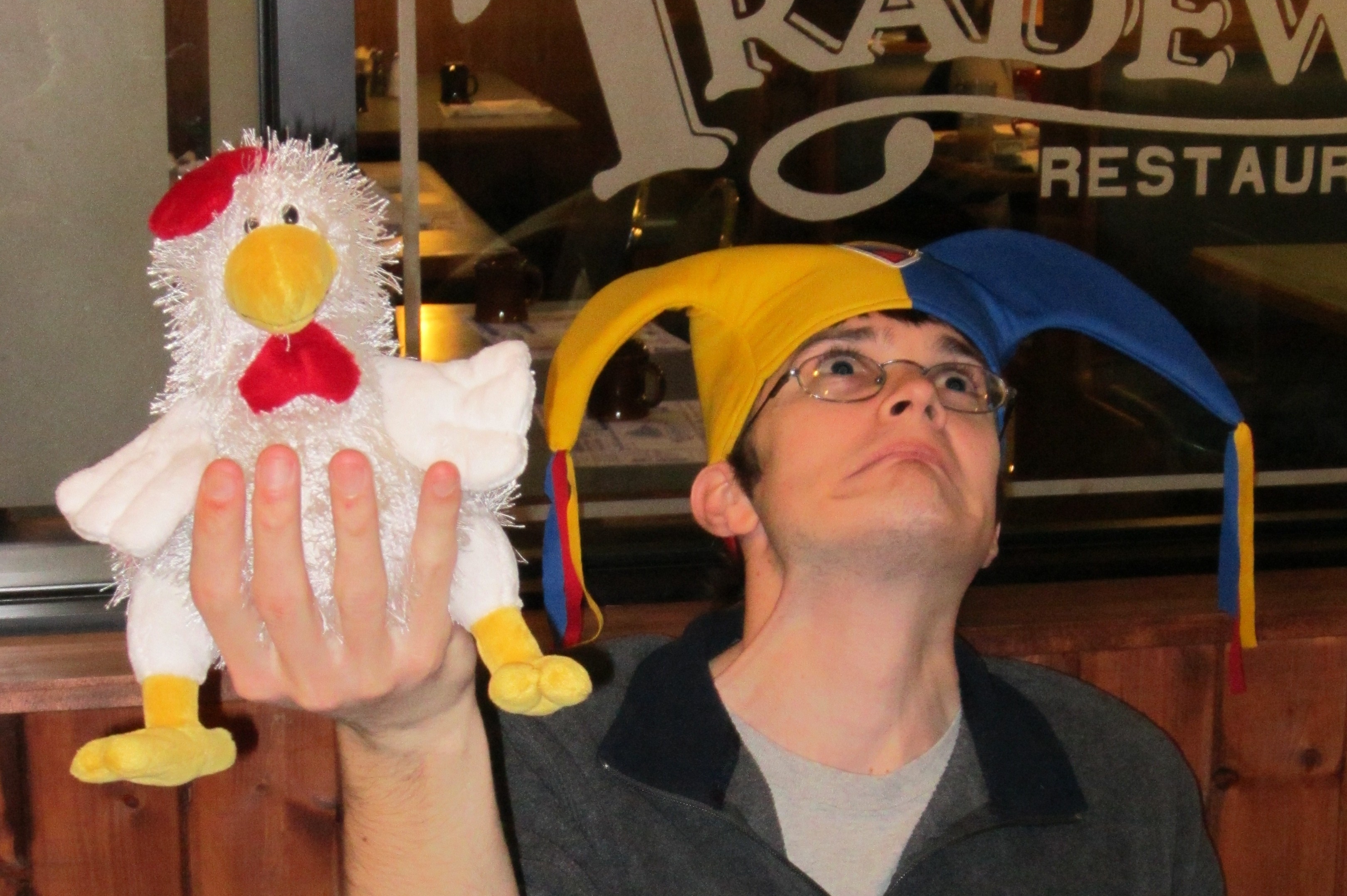
Adam will be your English instructor today. See the knowledge gleam in his face with the brilliance of a hundred shiny goldfish! (Adam is the hatted one, not the fowl who is having fuzzy feathers.)

Step number first toward Englishing with correctness is to have much self-confidence. Your fears and insecurities must crumble like cookies that are cowards! Crumble them with the fresh milk of courage. You must snack on your fears! If your nerves are nervous, you must be brave until you laugh from lack of anxieties. Learning to English will not hurt you! Conquer your fears and high-five all their faces!

Next step is reading all the books. Books in English are best for Englishing. They are cream and sugar for the coffee of your learning. Do not read French or Spanish books; these are not sugar or cream, but salty salt. Drink deeply from the coffee cup of reading books! Learn from its sweet, wordy fragrance.

If you are needing the books, find libraries. A library lets you steal books, but it is having the condition of bringing back old books before stealing new ones. Libraries are public dens of book bandits that smell like paper. Be the library thief to get the books for good Englishing!

Reading the books is the coffee cup that holds the coffee of your learning. It is your best breakfast beverage—a mighty drink for the breakfast of education!

After the reading, you must write. Write and write and write until your learning of English has completion! Writing is the practice that unleashes the knowledge of your reading to light up the darkness of ignorance. It shines like many happy sunbeams that have each other as friends. The writing can be with pens or pencils on papers, or keystrokes in computer documents, or paint on toasters. Learning takes all the forms!

You wrote, but what if your writing is of the worst badness? Adam has the solution! Make your friends read the writing you wrote and give their critical criticisms. Let us who are friends learn to English together like joyous beams of the sun! If you are lacking friends, ask schoolteachers for help or use cookies for the bribing of strangers.

Finally Adam has this final advice: Never give up! Fight the good fight of learning the English. If you give the one hundred percents, you can English as good as Adam. Reading and writing are nutritious parts of the tasty meal of your education!

Bon appétit! Happy Englishing!

276. How to Leave the Land of Writing Wannabe

Today’s post was written by Barbara Brutt, writer extraordinaire. For more thoughts on writing, follow her on Twitter!

The Land of Wannabe, an intoxicating and whimsical place, is based on unrealistic expectations. Yet somehow, I got caught up there, forgetting my to-do lists and even general life necessities. I applied for citizenship, and I even designed my own castle.

But nothing ever actually happens in Writing Wannabe Land. I could never live there.

Ready to leave Wannabe Land behind, too? Here are some tips that might help you make the citizenship switch back to Reality.

1. Your castle in the sky needs a name

A typical little girl, I wanted to be a ballerina. I even studied ballet and gymnastics for thirteen years, yet I insisted, “I dance; I’m not a dancer.”

In the same way, I find myself saying, “I write; I’m not a writer,” though that is my adult passion. I have invested my own money into a writing coach, hours of time into writing, and years of college education into it.

Affirm your dream by calling yourself a writer, dancer, musician, or whatever you want to be.

2. Set attainable expectations

In the dance studio of my Wannabe Castle, a dancer could do a three-turn pirouette without wobbling, and a leaping split without stretching. Mortal me had more likelihood of face planting. Therefore, I could not be a dancer.

With writing, I stopped even before I really started. “You’re not published so you’re not a writer.” My inner demons might taunt me.

Yet it’s the action—the verb—that makes us become the noun. A dancer dances. A writer writes. A singer sings. Do your passion a little bit every day.

3. Make a plan and do it

Sky castles can become reality, but their construction requires torrents of sweat, heavy stones, and a vision for the finished design. Bridge the gap between Wannabe and Reality by practicing what you want to be now.

Every day, I try to write, lacing words together like colored glass beads on a silk thread. I burrow into borrowed writing books and use Google Alerts to scour the Internet for writing tips. Between writing and reading, I engage with other writers through critique groups. The dream of writing or dancing cannot replace fingertips on paper or smooth wood beneath bare feet. Imagine your castle and then build it into reality.

How do you make your writing or any dream manageable? Share your tricks in the comments below or tweet @barbarabrutt.

274. About Storytelling: Chekhov’s Gun

There was once a writer named Anton Chekhov. Besides writing a play that trapped me in a stage kiss, this contemplative Russian also established the literary principle that has come to be known as Chekhov’s gun.

Chekhov once stated, “Remove everything that has no relevance to the story. If you say in the first chapter that there is a rifle hanging on the wall, in the second or third chapter it absolutely must go off. If it’s not going to be fired, it shouldn’t be hanging there.”

This concept of a background element becoming an important plot point has become known as Chekhov’s gun. Something that seems trivial becomes extremely significant. The thing you forgot from twenty chapters ago defeats the villain or break the hero’s heart.

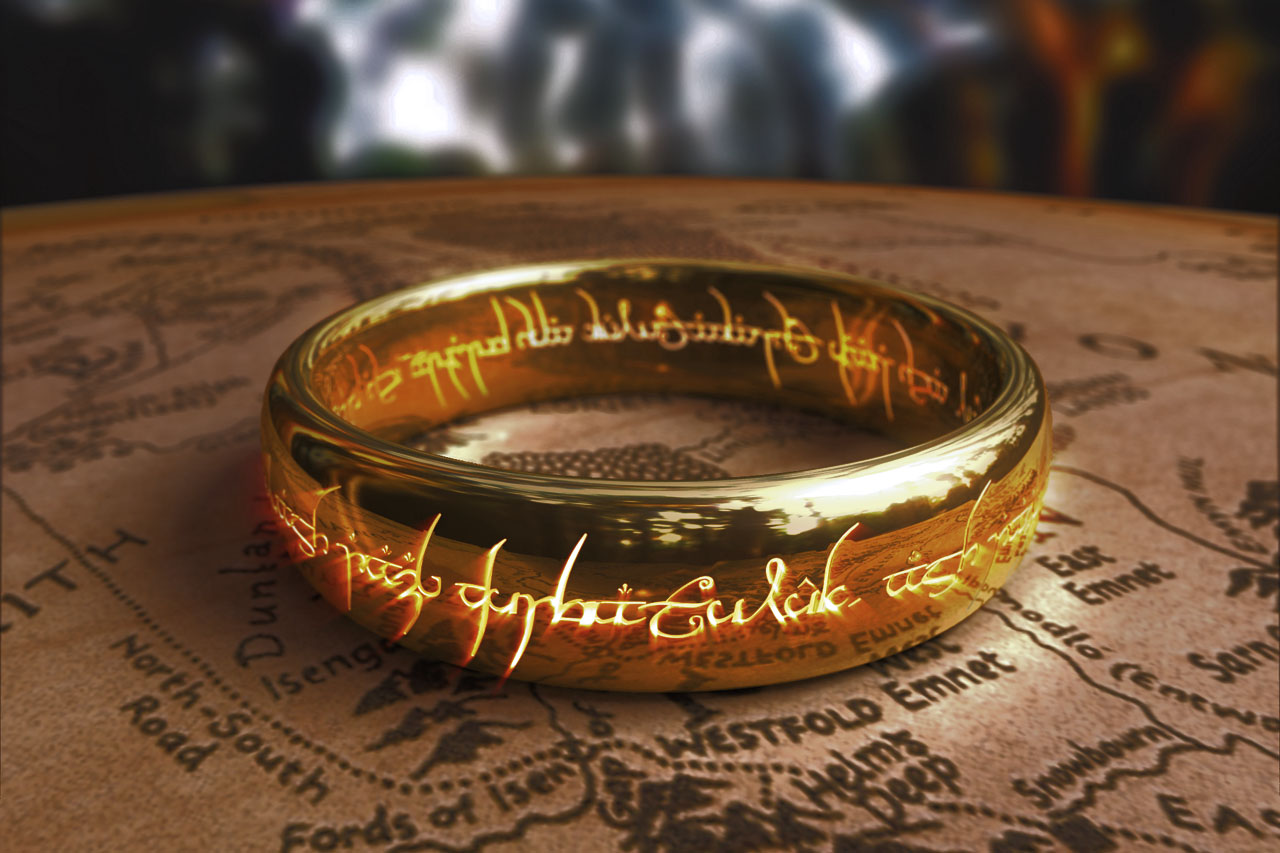
A famous example of this can be found in The Hobbit and The Lord of the Rings by dear old Tolkien. The all-important Ring that ends up driving the whole story starts out as a convenient escape for Bilbo Baggins early in his adventures. When Tolkien brought a magic ring into the story, he originally had no plans for it. The Ring was a handy deus ex machina, a trinket discovered just in time to save Bilbo’s life.

Chekhov's... ring

This is an example of Chekhov’s gun. Yes, I know it’s not really a gun.

Only later did Tolkien decide to make the Ring more than a magical accessory. It became the crux of the story, the thing around which all other things revolved—one Ring to rule them all, so to speak. The rifle had gone off.

Chekhov’s guns tend to be common in plot-driven stories. J.K. Rowling uses this principle all the time in her Harry Potter books, in which later plot developments hinge on minor incidents and random rubbish from earlier books.

Although less common in character-driven stories, Chekhov’s gun can apply to people as well as objects and events. In The Lion, the Witch and the Wardrobe, kindly Professor Kirke seems unperturbed by wild claims of magical worlds inside his furniture. His composure doesn’t make much sense until the reader gets to The Magician’s Nephew. Here it is revealed that Kirke actually visited magical worlds as a child, explaining his lack of surprise as a grownup.

While Chekhov’s gun is a wonderful dramatic technique, it’s best used with subtlety and restraint. It’s a treat for careful readers and devoted fans to notice trivial things becoming important, but overuse of this principle makes stories seem contrived or confusing.

Incidentally, while I haven’t any rifles hanging on my walls, I do have swords. As much as I appreciate the principle of Chekhov’s gun, I hope my assorted blades stay on my walls in later chapters of my life.

261. About Storytelling: Nazis

Nazis are bad. If you carry away one thing from this blog post, it’s that Nazis are bad.

Nazis Swastika

Protip: This is not a good design for interior decorating.

In fact, Nazis have become a handy shortcut in storytelling for representing evil. Need a bad guy? Make him a Nazi. No reader of books or viewer of films or player of video games thinks twice if Nazis die. They are evil. They are all evil!

There’s only one problem with this convenient idea.

Not all Nazis are evil—rather, Nazis are not all evil.

You see, people are complicated. No person—Nazi or not—is absolutely, one hundred percent wicked. No person is completely good, either. Bad people have virtues, and good people have flaws.

As satisfying as black-and-white moral struggles are in storytelling, they’re not very realistic. It’s hardly ever as simple as “good versus evil.” It’s usually “something versus a different something.” Even in cases of clear-cut good and bad, it tends to be “something mostly good versus something mostly bad.”

It’s hardly ever good storytelling to make the good guys perfect and the bad guys irredeemable. In real life, when does that ever happen?

Granted, it can work. J.R.R. Tolkien, who somehow managed to write great books while ignoring a lot of basic rules for storytelling, pits (mostly) good and selfless hobbits, men, elves and dwarves against orcs—twisted creatures damned to an existence of pain, war and cruelty. Tolkien’s black-and-white struggles work because they’re sort of symbolic. Orcs seem almost like Tolkien’s fairy-tale representation of absolute evil in his fairy-tale realm of Middle-earth. The villain, Sauron, is more like the concept of badness than an actual bad guy. (I should note that Tolkien did manage some morally ambiguous characters, such as Gollum and Boromir.)

For the most part, however, the best stories have good guys that are sort of bad and bad guys that are sort of good. Consider Avatar: The Last Airbender, the fantastic fantasy show. In its world, the Fire Nation is a lot like Nazi Germany. It attempts to conquer, exploit and control other countries: in this case, the Water Tribe and Earth Nation.

Guess what? The “good” countries have their fair share of bad guys. A psychotic criminal belongs to the Water Tribe. The Earth Kingdom is the home of thugs and thieves, not to mention a corrupt official and the merciless secret police under his control. The “evil” Fire Nation is populated largely by innocent, well-meaning citizens.

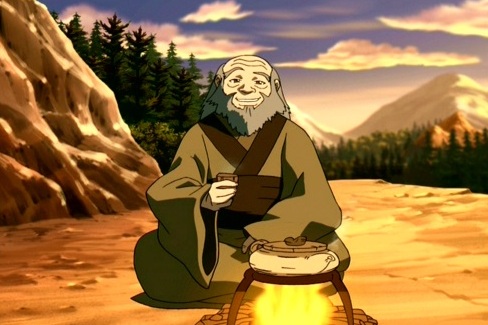
Iroh

The Fire Nation also has this guy.

Hayao Miyazaki also does a great job of creating morally ambiguous characters. Probably his best films in this regard are Princess Mononoke and Spirited Away, in which the villains are… no one, really. Princess Mononoke has a bunch of characters fighting selfishly for their own survival and prosperity; they’re self-centered, but not really evil. Spirited Away has characters that seem bad, but when you get to know them you realize they’re just gruff and insensitive.

People are hardly ever all good or all bad, and conflicts are usually more complicated than “good versus evil.” Ambiguity and subtlety are invaluable assets for any story or character!

259. What Blogs Should I Follow?

Some time ago, I tweeted a question to my fabulous followers on Twitter: I’d like to follow more blogs. What are your recommendations?

This tweet, like the voice of one crying in the wilderness, went unheard and unanswered. I would like some answers to my question, though, so today I’m asking you.

I’d like to follow more blogs. What are your recommendations?

Specifically, what great blogs delve into subjects like culture, Christianity, writing, video games, literature, film and media?

If you enjoy a blog, or think I might like a blog, or write a blog, share it!

What blogs do you recommend? Let us know in the comments!

252. About Storytelling: Endearing Quirks

When I was in high school, I had a teacher named Mr. Quiring whose legendary silliness I have mentioned one or twice before on this blog.

For example, he once removed his necktie and unbuttoned his shirt during class to reveal a T-shirt emblazoned with the Batman logo. (He wasn’t really Batman, sadly.) At various times, Mr. Quiring pelted me with chocolate, brandished a meat cleaver and leaped off a chair shouting “To infinitives and beyond!”

The reason Mr. Quiring’s antics amused me so much is that he is not a silly person. Quite the contrary: Mr. Quiring is one of the most intelligent, dignified gentlemen I have ever known. It’s as though he compressed all the humor and silliness of ordinary people into short, intense bursts. Every time he did something outrageous, he reverted immediately afterward to his solemn self.

Mr. Quiring provides fine examples of endearing quirks: those funny little habits of real people or fictional characters that make us love them.

Some fictional characters are simply masses of endearing character quirks. Wooton Bassett, the mailman from Adventures in Odyssey, has too many odd habits to count: collecting fast food toys, expressing his feelings by the color of his slippers, baking jellybean casseroles and exiting his house via a slide. Wooton is fully capable of thoughtful introspection, but he’s mostly just hilarious.

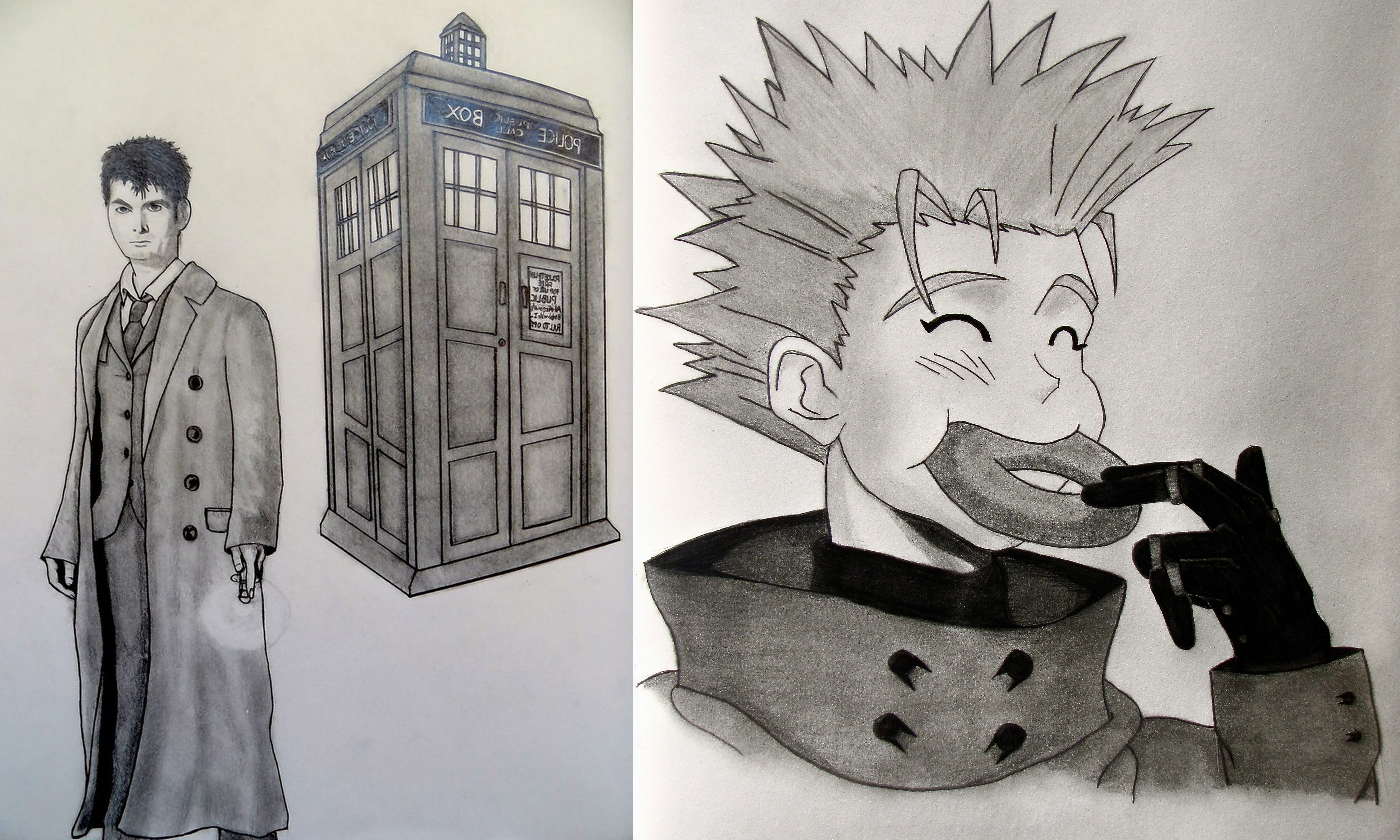
Wooton BassettSome characters are less silly, balancing funny quirks with tragic flaws or struggles. Consider the Doctor from Doctor Who and Vash the Stampede from Trigun. The Doctor is an intergalactic goofball, bouncing around the universe with a beaming face and a slew of witty remarks. Vash is a gunslinger who obsesses over doughnuts, whines like a child and walks into a firefight with a trashcan lid on his head.

My thanks to my younger bro for permission to use his artwork!

My thanks to my younger bro for permission to use his artwork!

Vash and the Doctor seem sillier than Wooton, but their quirks mask profound inner turmoil. The Doctor despises himself. His travels throughout space and time are not a careless vacation, but his way of running away from past mistakes. Vash also has a lot to hide. The body beneath the overcoat is covered in horrific scars, and the man behind the goofy grin is tormented by regret for the lives he couldn’t save.

In the case of Wooton, endearing quirks are a form of comedy. The quirks of Vash and the Doctor serve a different purpose. Their odd habits hide sad struggles, and make the viewer feel more when their stories take turns for the tragic. After all, it’s easier to feel sorry for funny characters than for serious ones.

Then there is Miles Edgeworth, the friendly rival of Phoenix Wright from the Ace Attorney series. Like Mr. Quiring, Edgeworth is dignified, composed and intelligent.

Miles Edgeworth

Edgeworth also has a secret.

This respected prosecutor is secretly a fan of Steel Samurai, a cheesy show for kids about a futuristic warrior and his neverending fight for justice. Edgeworth vehemently denies liking the show, of course… but there’s his inexplicable knowledge of Steel Samurai trivia and the Steel Samurai action figure in his office.

In the case of super-serious people like Mr. Edgeworth, a single quirk can make a cold, distant character seem a little more human. Liking Steel Samurai is a weakness, but not a sin. We can respect Edgeworth, and we can also laugh at him.

Carelessly loading a character with endearing quirks is a mistake: too many odd habits, or quirks that seem out of place, are irritating. Used intentionally, however, endearing quirks can develop great characters—and make us laugh!

250. Life Lessons from a Thirsty Blogger

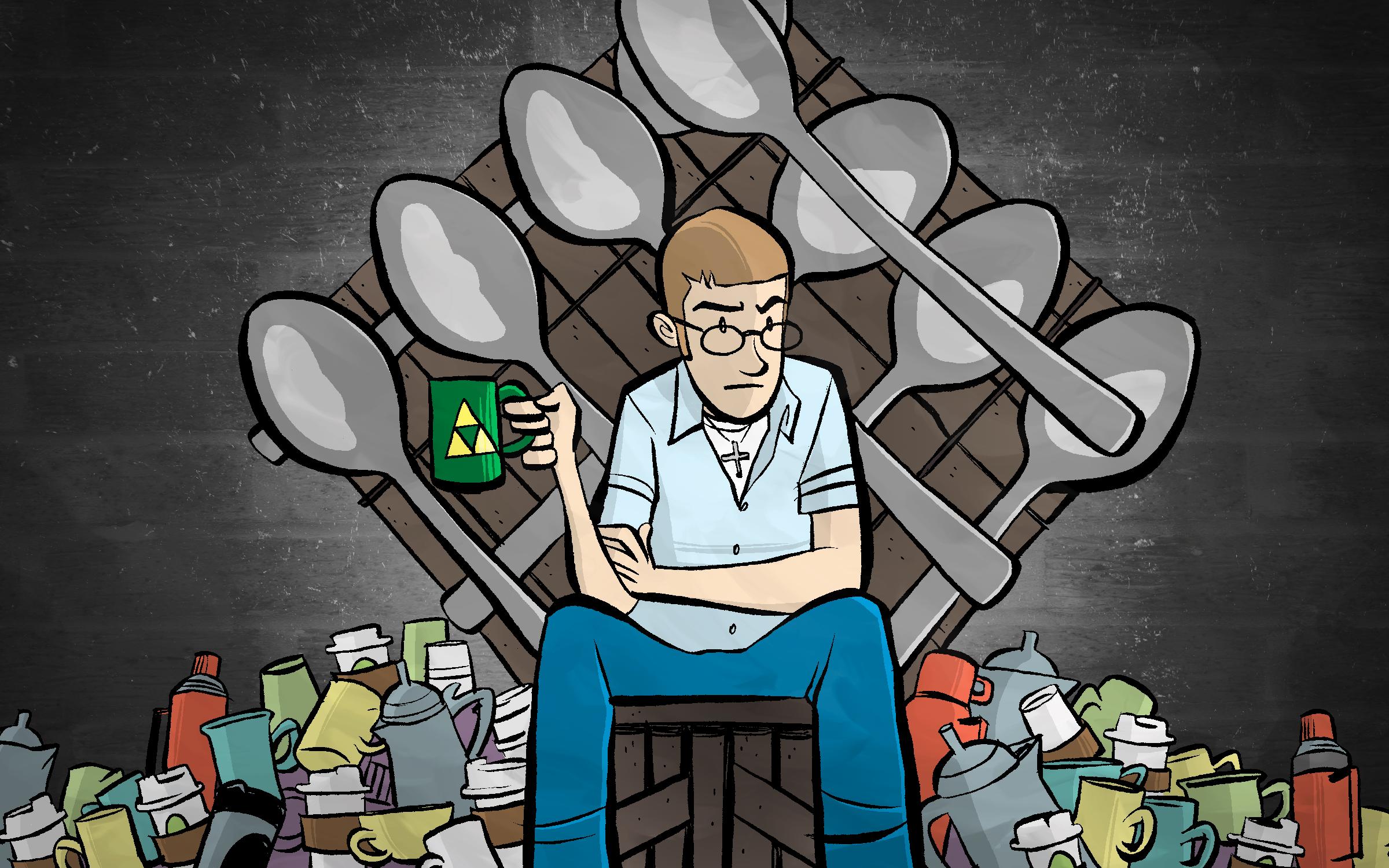
So I drink a lot of coffee. Don't judge me.

Yes, I drink a lot of coffee. Don’t judge me.

If anyone has ever wondered how I come up with ideas for this blog, the picture above tells the whole story: I sit and drink coffee and wait for something to happen. What can I say? Blogging is thirsty work.

(Due credit to the inimitable Wes Molebash for the splendid caricature, which has become my official Internet profile picture and a new banner for this blog.)

Today marks another milestone in the sunny existence of Typewriter Monkey Task Force: a blog fueled by coffee, sustained by geeky enthusiasm and buoyed by the support of loved ones. This blog has allowed me to share my passion for everything from God to tea to Tolkien. In good times and in bad, working on TMTF has brought me no end of satisfaction, comfort, encouragement, joy and pleasure. It has also given me the privilege of connecting with many fascinating, creative, generous people—writers, bloggers, artists and others—whom I would otherwise never have known.

In the two and a half years since starting this silly blog, I have gained a number of personal insights about life, the universe and everything. Today—as my typewriter monkeys and I celebrate this milestone with banana shakes and coffee, respectively—I’d like to share ten of the best lessons I’ve learned since TMTF began.

I must focus on today

I’m really good at brooding about the past, worrying about the future and generally thinking about all times but the present. God has given me today. Yesterday and tomorrow are in his hands, and I need to leave them there. My business isn’t to be burdened by worries or regrets, but to make the most of the time I have been given.

What matters is not what I feel, but what I do

For a long time, I made a simple assumption: If I felt bad, I was doing badly; if I felt good, I was doing well. I was wrong. Feelings are mostly beyond my control and largely unconnected to how well or badly I’m living my life. Depression isn’t proof of failure, nor does success does guarantee happiness. I should do my best under all circumstances, no matter what I feel.

I need sleep

I hate to say it, but I can’t shrug off sleep deprivation. Those late nights playing Ace Attorney or reading random Wikipedia articles seriously affect my concentration, mood and overall health. A long sleep can totally brighten my day; a short sleep can tip me over the brink into sickness or severe depression. In fact, I would go so far as to say sleep is almost as important as coffee.

Prayer and Scripture really, really make a difference

The past two years have taught me that prayer and Scripture are anchors. These commitments to God keep me rooted in my faith and focused on things that matter. When I quit praying and reading Scripture, I drift away from God. When I drift away from God, I become kind of a jerk. When I become kind of a jerk, everybody loses. Prayer and Scripture make an incredible difference in my life for good—even more than coffee, which is saying something.

I am not a great writer

I’m a pretty good writer, I think. Writing is one of my greatest talents, along with drinking coffee and having magnificent sideburns. I’m a good writer—but not a great one. When I was younger, I assumed my writing was brilliant. Working on this blog, failing to make The Eliot Papers a success and (above all) reading fantastic works by truly great writers have given me healthy doses of perspective and humility.

Things don’t fall apart

Heck, I wrote an entire post about this. No matter how I try to keep things together, I shall sometimes fail. It is well, then, that God is there to hold things together when my best efforts can’t keep them from falling apart.

I can’t fix people, but I can love them

If Doctor Who has taught me one thing, it is the importance of having epic sideburns. If the series has taught me a second thing, however, it is the value in simply showing kindness. “The way I see it, every life is a pile of good things and bad things,” the good Doctor reminds us. “The good things don’t always soften the bad things, but vice versa, the bad things don’t necessarily spoil the good things or make them unimportant.” The world is full of hurting people. I may not be able to take away their bad things, but nothing will ever prevent me from adding to their good ones.

I must be focused and intentional

It is so hard—so darn hard—to stay focused. I seem to live in a disorienting fog of distractions, diversions and complications. Depression and obsessive-compulsive impulses are only slightly greater obstacles to productivity than the Internet and its endless wealth of interesting articles and funny cat pictures. A useful, meaningful life doesn’t just happen. It takes intention, self-control and (in my case) a good deal of caffeine.

People are awesome

Human beings are amazing, awful, odd, ordinary, selfish, selfless creatures. In general, they’re pretty awesome. I’ve realized it’s worth getting to know people, and important to respect even those I don’t know.

I have good reasons for believing in God

When I began this blog, I felt conflicted about God and life and the universe in general. Many of my questions about God were unanswered. Some of them still are. It was while working on this blog that I reached a fundamentally important conclusion: I have my doubts about God and Christianity, but my evidence in their favor definitely outweighs my evidence against them. No worldview makes perfect sense to me, but Christianity makes the most sense.

Well, dear reader, thanks for reading this blog, putting up with our shenanigans and generally being awesome. My sincere thanks to everyone who has supported this blog, and to God for grace and coffee and stuff. Here’s to many more cheerful ramblings about faith, writing, video games, literature, life, the universe and everything!

249. Share Your Blogging Wisdom!

I wish I knew more about blogging.

Seriously, I assumed I would have this blogging thing figured out by now. TMTF has been around for two and a half years. I’ve written nearly two hundred fifty posts—not counting a novella, some short stories, dozens of geeky commentaries, a handful of guest posts for other blogs and a series of reflections upon the Christian faith.

In all of this, I somehow managed to avoid learning anything.

All right, I may have learned a few things, but I want to learn more. I want to be a better blogger, and I’m asking for your help.

Today, dear reader, is your day! Today is the day you share your blogging wisdom! Tell me: If you have ever contributed to a blog or website, what is the most important insight, lesson, tip or trick you have learned?

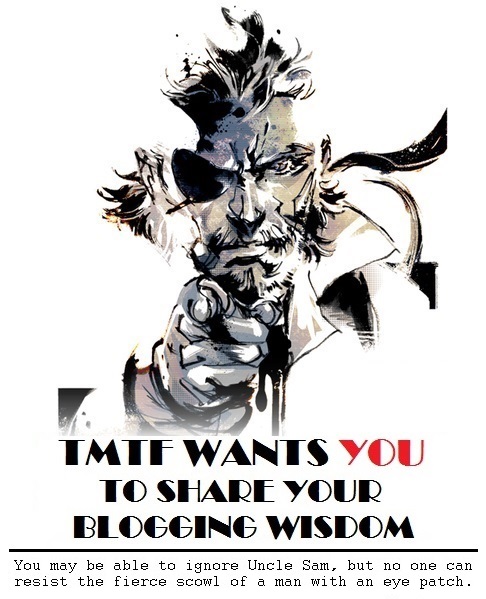
Big Boss Wants You!

I want to hear what you have to say! I ask, implore, beg, command, dare and/or defy every blogger reading this to share at least one piece of blogging advice. I especially want to learn how to build a stronger platform, so insights into reaching a wider audience are particularly appreciated!

Share your advice in the comments below! If you prefer not to comment, use this blog’s Contact page or find me on Twitter to share your thoughts. I want to hear what you have to say!

Ladies and gentlemen, the floor is yours. Today I am your student. Take it away!