237. Three Great Novels About the Silence of God

I could write pages about the silence of God, but it would all boil down to just a few words.

I don’t get it, and it troubles me.

Some of my doubts and questions about the Christian faith have been resolved. Some have not. Why does God let kids get hurt? Why does he allow us to make innocent mistakes? Why does he permit headaches and cockroaches and Fifty Shades of Grey to exist? Why, God? Why?

Yes, I know about sin and death and the fall of humankind. I know, darn it! Those things still don’t explain why God doesn’t, well, explain. Couldn’t he at least make his existence more clearly known? It seems unfair for God to penalize people for failing to believe in him when he seems intangible, invisible and… silent.

I don’t know why God remains silent. In the end, I believe because my evidence for God outweighs my evidence against him. There remain dark doubts and unanswered questions.

Since I don’t have any answers regarding the silence of God, here are what three great novels have to say upon the subject.

Be ye warned: Here there be spoilers for SilenceThe Chosen and The Man Who Was Thursday.

The Man Who Was Thursday by G.K. Chesterton
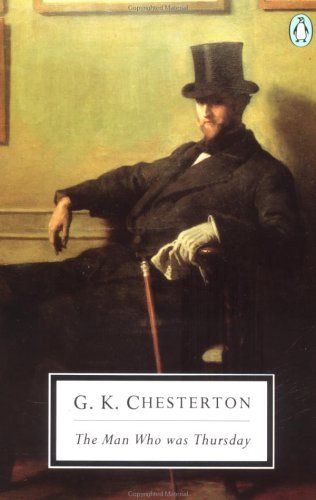
The Man Who Was ThursdayThe Man Who Is Thursday is the exciting tale of Gabriel Syme, a poet-turned-detective, and his attempts to stop a band of nihilistic terrorists. There’s a sword duel, and some thrilling chases, and at least one good discussion of poetry.

The novel takes a turn for the surreal in its final chapters, in which Syme and his companions realize their elaborate intrigues against the terrorist organization were actually orchestrated by its leader, the enigmatic man known only as Sunday.

Syme and his friends demand to know why Sunday, who is apparently not an evil man, allowed them to suffer so much pain and fear in their pursuit of him. One of Syme’s companions says, with the simplicity of a child, “I wish I knew why I was hurt so much.”

Sunday does not reply.

The silence is broken by the only sincere member of the nihilist organization, who accuses Syme of apathy and ignorance. It is then Syme realizes that his pain qualifies him to refute all accusations. He and his friends suffered by Sunday’s silence. No matter how wretched or tormented their accuser, the agonies they endured bought them the right to reply, “We also have suffered.”

The Chosen by Chaim Potok

The Chosen

The Chosen tells the story of two young Orthodox Jews in New York during the final years of World War II. During a baseball game, Reuven Malter meets a gifted student named Danny Saunders. They become friends, despite their dissimilar cultures and upbringings within the Orthodox Jewish community.

Reuven is astonished to learn Danny’s father, Reb Saunders, speaks to him only during religious discussions. At other times, Reb Saunders says nothing to his son. This cold silence baffles Danny and Reuven. What kind of father refuses to talk with his children?

The novel follows Danny and Reuven as they grow up and progress in their studies. In the wider world, the horrors of the Holocaust are revealed and Jews fight for the restoration of Israel as a nation. At last, as young men, Danny and Reuven learn the truth behind the silence of Reb Saunders.

Reb Saunders knew his son’s intelligence outweighed his concern for others. In order to teach Danny compassion, Reb Saunders distanced himself from his son. Silence, he hoped, would give Danny an understanding of pain and a greater empathy toward other people.

Danny had learned compassion, and so the silence was broken. Speaking of Reb Saunders, Danny tells Reuben at the end of the novel, “We talk now.”

Silence by Shusaku Endo

Silence

This is it: the definitive novel about the silence of God. Heck, the book is even titled Silence. This gloomy masterpiece tells of Sebastião Rodrigues, a Portuguese Jesuit sent to seventeenth-century Japan. He hopes to encourage the tiny population of Japanese Christians, and is willing to die for his mission.

What he doesn’t expect is to watch others die for his mission. When he is captured by Japanese authorities, Rodrigues is not martyred. Instead, he watches as the authorities martyr other Christians because of his religion. Rodrigues expected to suffer for his faith. He did not imagine he would cause others to suffer for it.

In this darkness and brutality, God says nothing. There is only silence.

At last, as Rodrigues recants his faith to spare the lives of other Christians, the image of Christ he is forced to trample seems to break the silence: “Trample! Trample! I more than anyone know of the pain in your foot. Trample! It was to be trampled on by men that I was born into this world. It was to share men’s pain that I carried my cross.”

For me, this is the most powerful answer in these three novels to the question of God’s silence. God may seem silent, but he has shattered the silence once for all with a single word—rather, a single Word: the Word who became flesh and made his dwelling among us. Whatever the sufferings in this world, Jesus shared them. However little God may seem to say to us now, Jesus said plenty.

Do I understand the silence of God? No. I do, however, find great comfort in these books, which offer tentative answers to a great and terrible question.

232. About Storytelling: The Unexpected Hero

I love it when heroes don’t start that way.

Some of the most popular heroes in fiction began their journeys as normal people. Luke Skywalker. Bilbo Baggins. Harry Potter. Bruce Wayne. Link from the Legend of Zelda games. The girl from those ridiculous Twilight books. All these characters have something in common: they’re ordinary. At the very least, they seem ordinary. They’re normal people with normal lives who stumble into something extraordinary, and we love them for it.

Why do we like unexpected heroes so much?

Unexpected heroes are relatable

Look at Batman. If he were just a man with a cape and a bunch of gadgets, we might be mildly impressed. The reason we love Batman is because we see the man behind the mask: Bruce Wayne, the child whose parents were murdered, the loner burdened with guilt, the hero determined to make a difference. We can wish we were Batman, but we can’t relate to him—not really. Batman is just a persona. Bruce Wayne is the one to whom we relate: the person whose struggles give depth and meaning to Batman’s adventures.

Heroes are hard for us to understand. Most of us are ordinary people. We can’t relate to good-looking, all-powerful, super-smart adventurers and superheroes. Only when heroes have a human side—or better yet, start out as ordinary people—can we relate to them.

Unexpected heroes inspire us

I find it hard to be inspired by Nelson Mandela, who recently passed away. He was a very great man—so great, in fact, that I can’t imagine how I could ever make one-hundredth as great a difference as he. I find it much easier to be inspired by people I know: my parents, for example, and my grandparents. I look at Nelson Mandela and see unattainable greatness. I look at my grandfather and see a man whose greatness I may someday achieve.

Unexpected heroes begin as ordinary people. When they go on to do amazing things, their example gives us hope that perhaps we can accomplish something worthwhile in our own ordinary lives.

Unexpected heroes are exciting

I don’t like Superman. It’s nothing personal, I just find it hard to get excited about a guy who is practically invincible. He flies, he shoots lasers from his eyes and oh, yeah, he’s nearly invulnerable. With only one weakness, Superman is boring. Batman is another story. He has no superpowers; every one of his strengths could feasibly belong to an ordinary human being. Batman is breakable, which makes him interesting.

When a hero starts off brave or powerful, it’s hard for us to care. We know they’ll win. There’s little excitement, little tension and little interest. When our protagonist is just an ordinary person, however, we wonder whether they’ll succeed. We sympathize with them. We cheer for them. As they grow and mature, we find satisfaction in their progress. At last, when they triumph, we’re overjoyed—because we know they’ve earned it.

O people of the Internet, who is your favorite unexpected hero? Let us know in the comments!

226. Why C.S. Lewis Is Awesome

On November 22, 1963—exactly fifty years ago—the world lost a very great man. His name was Clive Staples Lewis, but he preferred to be called Jack. He was an academic, poet, novelist, literary critic and lay theologian. He was also a close friend and associate of J.R.R. Tolkien, the renowned writer of fantasy.

Jack was not a saint, a prophet or even an author of literary masterpieces. No, Jack was something very different and equally wonderful: a genius of varied interests, remarkable talent, deep faith and gentle humor.

Ladies and gentlemen, I give you the man to whom the world owes Narnia, Screwtape and a great deal of commonsense theology.

I give you C.S. Lewis, a man whom we shall never forget.

C.S. LewisRaised in a religious home, C.S. Lewis drifted into skepticism as a young man and became an atheist. It was with extreme reluctance that he returned to belief in God and eventually (with a little help from friends like Tolkien) devotion to Jesus Christ.

As an ex-atheist, Lewis devoted much thought to Christian apologetics—the rational defense of Christianity as an accurate worldview. He also dabbled in theology, penning books such as Mere Christianity and The Four Loves in which he discoursed upon faith, love and absolute morality.

Lewis’s faith blurred together with his prodigious imagination. His Narnia books wove together folklore and Greco-Roman mythology with a Christian worldview, and The Screwtape Letters explored Christian life from a diabolical point of view.

(I enjoyed The Screwtape Letters so much that I imitated them—badly—on this blog in the form of The Turnspike Emails, which I discontinued a long time ago. Forgive me, Jack.)

Lewis was—no pun intended—a jack of all trades. He dabbled in everything from theology to literary criticism to medieval studies. He wrote novels. He wrote essays. He wrote poems. The range and variety of his work is incredible.

One of Lewis’s greatest strengths was his gift for explaining things simply. Take the super-confusing concept of the Trinity: God as three persons, yet a single entity. Lewis gives the best explanation of the Trinity I have ever seen, read or heard… in three paragraphs. Three. (See Mere Christianity, Book IV, Chapter 2.)

Another example: For centuries, theologians have debated the exact relationship between faith and good works. Which is more important? By which does God save us? C.S. Lewis resolves the debate in two sentences: “Christians have often disputed as to whether what leads the Christian home is good actions, or Faith in Christ. I have no right really to speak on such a difficult question, but it does seem to me like asking which blade in a pair of scissors is more necessary.”

C.S. Lewis is idolized by some and reviled by others. He certainly wasn’t infallible, but no one can dismiss his intelligence or creativity. Personally, I find his works on Christianity remarkably insightful. The Narnia books are pretty good, The Space Trilogy rivals Doctor Who for offbeat science fiction and Till We Have Faces is simply fantastic.

For anyone interested in the Christian faith, Mere Christianity is a thoughtful work for believers and skeptics alike. The Screwtape Letters is a really clever treatise on Christian life. For sophisticated readers, Till We Have Faces is a brilliant reimagining of an ancient Greek myth; for those with simpler literary tastes, the Narnia books are fun, easy reads.

In conclusion, ladies and gentlemen, C.S. Lewis is awesome.

217. TMTF Reviews: Have His Carcase

People in detective stories have a way of finding dead bodies. Really, it’s ridiculous. Anyone would think from reading mysteries that murder is more common than speeding.

Harriet Vane, being a character in a detective story, naturally stumbles upon a dead body soon after the novel begins. She is quick to report the incident to the local police, and Lord Peter Wimsey—able to resist neither Harriet nor an interesting murder—wades into a case involving missing gold, deadly razors and sentimental old ladies.

Should readers, like Lord Peter, entangle themselves in this mystery?

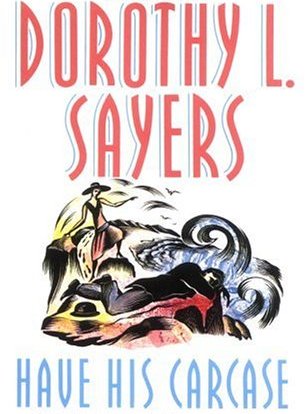
Have His Carcase

I’m all for interesting murders—in fiction, I mean—but this is definitely one to skip.

There are basically two kinds of detective stories. They can be called magician stories and policeman stories. I prefer call them great stories and dull stories.

In the first kind of story, the detective is like a magician. As a magician produces rabbits from empty hats, the detective produces answers from clues that appear meaningless. When the detective weaves these clues into a brilliant solution, it seems almost magical.

In the second kind of story, the detective is like a policeman. As a policeman does dreary procedural stuff, the detective does the same: checking alibis, comparing timetables, interviewing suspects and eliminating options until a solution is reached. This kind of story is more realistic, and also less interesting.

Have His Carcase is a policeman story, and a dull one. There are few surprises or interesting revelations. I recall only one clever plot twist in the entire novel. This twist came right at the end of the novel, after many chapters of slow, realistic, boring investigation. It wasn’t worth it.

As an example of how tedious the novel can be, Lord Peter and Harriet spend an entire chapter solving a complex encrypted message and outlining every single step of the process. That’s pages and pages of dense, nigh-unreadable explication. After one or two paragraphs, I gave up trying to understand any of it.

There’s some interesting chemistry between Lord Peter and Harriet, but it’s mostly lost in the dull minutiae of their investigations. Apart from those two—and Lord Peter’s wonderful butler, Bunter, who I swear must be related to Jeeves from the novels by P.G. Wodehouse—the characters in the book are pretty forgettable.

In fact, the entire novel is forgettable. Dorothy Sayers wrote some great short stories starring Lord Peter Wimsey—true magician stories—but Have His Carcase is a disappointment.

212. TMTF Reviews: Scott Pilgrim

I’m on vacation this week, so my typewriter monkeys are handling all blog updates from September 23 to September 27. Blame them for any mishaps. If I get Internet access at any point this week, I’ll be sure to check in!

Relationships are hard. Growing up is hard. Life is hard.

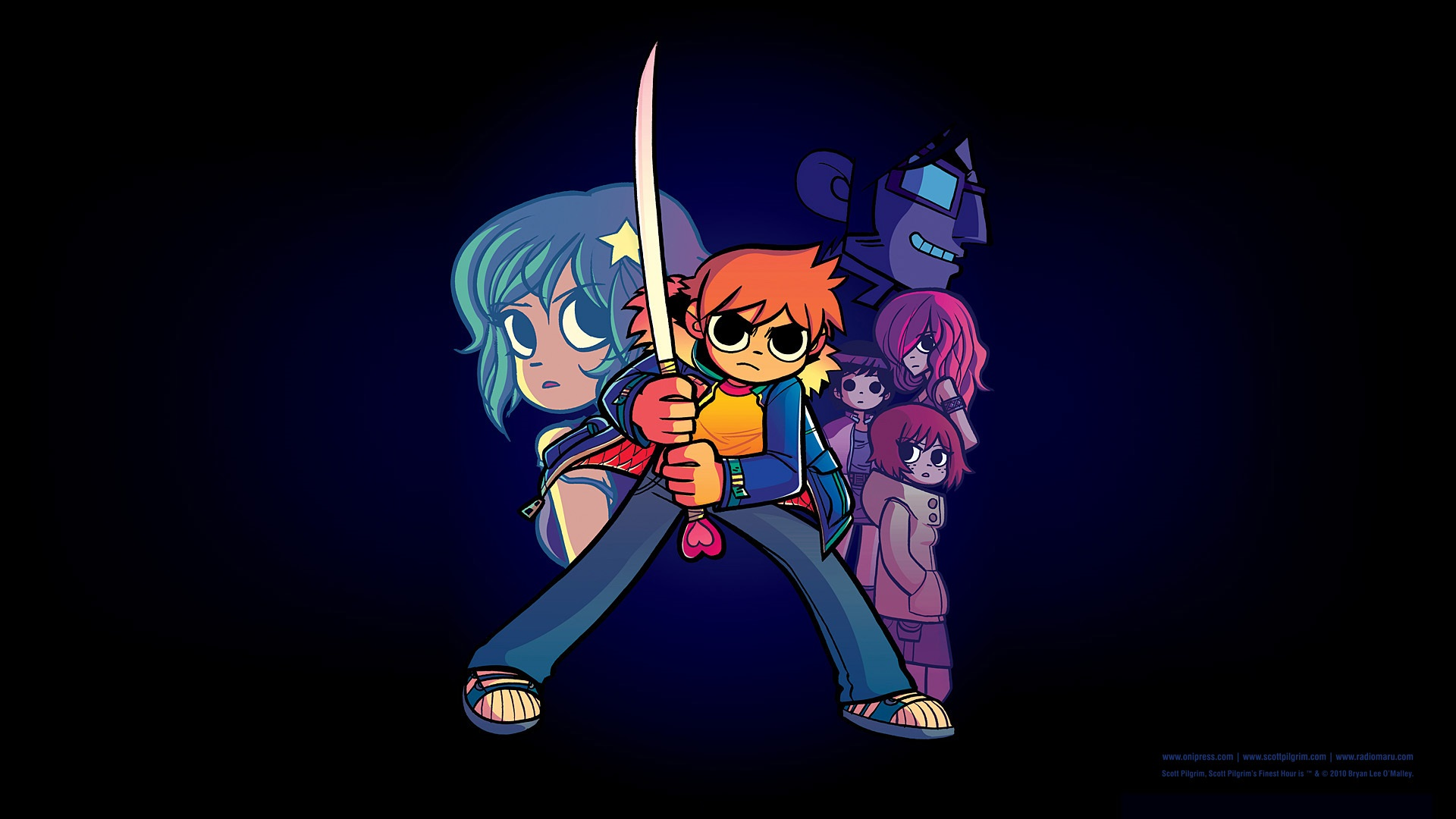
Just ask Scott Pilgrim. He’s a Canadian slacker, twenty-three years old, “between jobs,” mooching off his roommate, dating a high school student and doing his best to maintain his precious little life.

Then a mysterious girl rollerblades into his dreams, and people start attacking him with swords, and things get complicated.

I’d been meaning to read Scott Pilgrim, a graphic novel series, for some time. My search at the local library yielded all six volumes. Was it worth it?

Scott Pilgrim

Heck yeah, it was worth it.

Scott Pilgrim begins in a very ordinary way: Scott lives an average life in an average city with average friends. Then, little by little, almost imperceptibly, things get weird. A girl skates through Scott’s dreams because they’re a handy shortcut on her route delivering packages. A man crashes through the ceiling and challenges him to a duel. Before long, Scott is picking up video game-style extra lives and fighting guys with katanas, all to defeat his new girlfriend’s seven evil exes.

The Scott Pilgrim books are steeped in magic realism, a literary style that combines ordinary stories with surreal details—in this case, video game tropes. Scott and his friends take for granted this bizarre blend of video games and real life. As far as they’re concerned, robots and psychic powers are no more surprising than cars or libraries. This weird, wonderful blend of mundane and fantastic is probably my favorite thing about Scott Pilgrim.

I was also taken aback by how compelling the story turns out to be. The early volumes of Scott Pilgrim aren’t particularly deep, but the last two take a surprisingly compelling turn. The books may not seem serious at first, yet they have meaningful things to say about the importance of growing up and learning to take responsibility. Even some of the story’s most ridiculous elements can be interpreted symbolically… or not, depending on how seriously you choose to view them.

Besides being unexpectedly meaningful, Scott Pilgrim is often hilarious. Characters occasionally allude to previous events in the story by referring to the volume in which they took place. A villain develops psychic powers because of his vegan lifestyle. Scott’s fights are taken for granted by his friends; at one point, they chat calmly about their lives as Scott struggles for his life in the background against a stubborn opponent.

Scott himself, despite being insecure and cowardly, is an inexplicably gifted martial artist. (Someone calls him “the best fighter in the province.”) He’s also a self-centered loser. His faults are played for laughs early on, later becoming a serious part of his character’s development. Scott Pilgrim is, appropriately enough, a pilgrimage: the journey of an irresponsible jerk toward being a decent person.

I should note that Scott Pilgrim has a 13+ rating, the graphic novel equivalent of PG-13, and it earns every bit of it. Characters smoke, drink, curse, treat sexuality with casual abandon and insult each other mercilessly. Hardly anyone—least of all Scott himself—acts respectfully or responsibly. To put it simply, most of the characters in Scott Pilgrim are terrible role models. The books contain no shockingly offensive material, but sensitive readers may want to give them a miss.

In spite of its moral shortcomings, Scott Pilgrim is a marvelously unique, gloriously silly, unexpectedly compelling series. I recommend it.

206. TMTF’s Top Ten Jerks in Literature

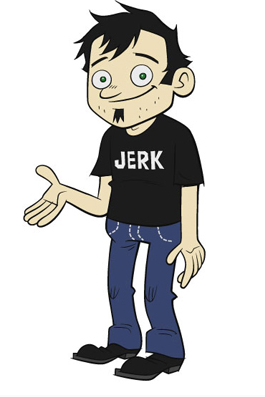
Jerks. They’re everywhere. Read any comments section on the Internet and you’ll see what I mean. Wherever there are people, there are jerks. (Except possibly in Canada.)

Dan Vs.

There are plenty of jerks in literature, and TMTF has chosen ten of the worst. The usual rules apply: I’ll include characters only from books I’ve read, and only one character per author. This list defines a jerk as a person who possesses unlikable qualities such as selfishness, cruelty, hypocrisy, rudeness or a tendency to kick small animals.

Be ye warned, here there be minor spoilers.

Brace yourselves, ladies and gentlemen, as TMTF presents…

The TMTF List of Top Ten Jerks in Literature!

10. Pap Finn (The Adventures of Huckleberry Finn by Mark Twain)

Pap Finn

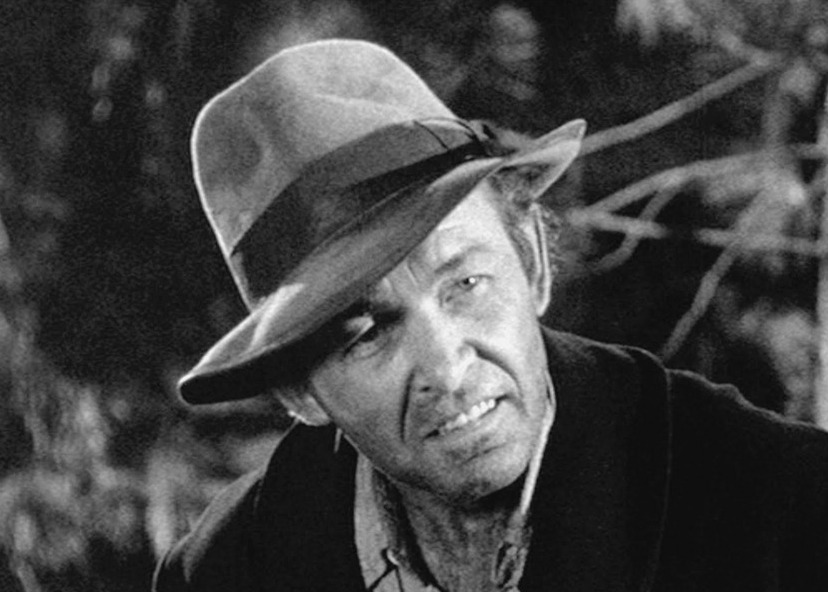
Huckleberry Finn’s father is abusive, greedy, drunken, heartless, filthy, violent, wheedling, dishonest, neglectful, ruthless, irresponsible and utterly devoid of conscience, charm or deodorant. I could go on, but I don’t think there’s any need. Pap Finn is a jerk.

9. Dolores Umbridge (Harry Potter series by J.K. Rowling)

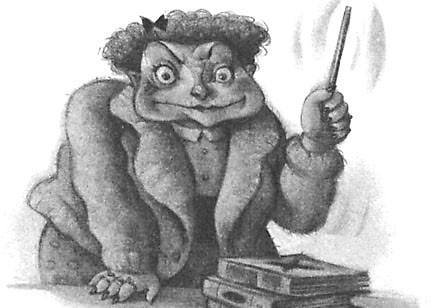
Frightening.

My introduction to Ms. Umbridge was a description of her as a character with a personality “like poisoned honey.” This description proved to be extraordinarily apt. Dolores Umbridge is sickeningly sentimental, cheerful and twee… and also bigoted, sadistic and evil. With smiles and giggles, she inflicts horrible punishments on students and taunts her colleagues. Really, Dolores Umbridge is a jerk.

8. Bill Sikes (Oliver Twist by Charles Dickens)

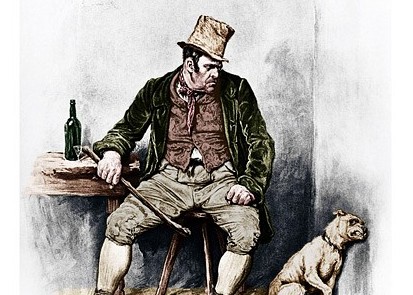
Bill Sykes

There are many great Dickensian jerks, but none worse than Bill Sikes. Even Fagin—himself a notorious jerk—is afraid of this guy. Sikes is barbaric and violent, beating his lover to death, hitting his dog and stopping at nothing to get what he wants. He also has no fashion sense. Bill Sikes is a particularly nasty jerk.

7. Charles Augustus Milverton (“The Adventure of Charles Augustus Milverton” by Sir Arthur Conan Doyle)

Charles Augustus Milverton

I’ll let Sherlock Holmes handle this one: “Do you feel a creeping, shrinking sensation, Watson, when you stand before the serpents in the Zoo, and see the slithery, gliding, venomous creatures, with their deadly eyes and wicked, flattened faces? Well, that’s how Milverton impresses me . . .  I have said that he is the worst man in London, and I would ask you how could one compare the ruffian, who in hot blood bludgeons his mate, with this man, who methodically and at his leisure tortures the soul and wrings the nerves in order to add to his already swollen money-bags?” Sherlock Holmes has spoken: Charles Augustus Milverton is a jerk.

6. Bob Ewell (To Kill a Mockingbird by Harper Lee)

Mr. Ewell

Bob Ewell is basically Pap Finn, except more viciously racist and (the novel implies) guilty of sexually abusing his daughter. Mr. Ewell also attempts to murder a couple of children. This is becoming something of a refrain for this list, but Mr. Ewell is drunken, disheveled and filthy. (Umbridge and Milverton may be evil, but at least they take baths.) Bob Ewell is, without question, a jerk.

5. Heathcliff (Wuthering Heights by Emily Brontë)

Heathcliff

Heathcliff has the notable distinction of being the only fictional character whom I have ever wanted to punch in the face. He’s horrible: a man whose resentment and poisonous love for a childhood friend drive him to exact slow, cruel, methodical vengeance on everyone who slighted him. Heathcliff goes so far as to marry someone he despises as part of his plan to hurt as many people as he can. Seriously, Heathcliff is a jerk.

4. Assef (The Kite Runner by Khaled Hosseini)

Assef

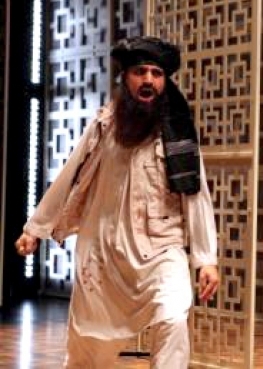
Assef begins a bully, becomes a rapist and ends up a sociopathic jihadist, all with contemptuous arrogance and not a single shred of guilt. Many literary jerks have some tiny gleam of goodness to provoke sympathy, compassion or pity from the reader. Not this guy. Assef is simply a jerk.

3. Professor Edward Rolles Weston (Space Trilogy by C.S. Lewis)

Professor Weston

Professor E.R. Weston is doubly a jerk. In his first appearance in Out of the Silent Planet, Weston is a ruthless believer in survival of the fittest: he calls a half-witted local boy “incapable of serving humanity and only too likely to propagate idiocy” and admits his intention to commit genocide to serve his own ends. In Perelandra, a later novel, Weston has transformed from an amoral humanist to an amoral spiritualist; he is implied eventually to be possessed by a satanic spirit. Thus it is proved: Weston is a jerk.

2. Dodge (Locke & Key series by Joe Hill and Gabriel Rodriguez)

Dodge

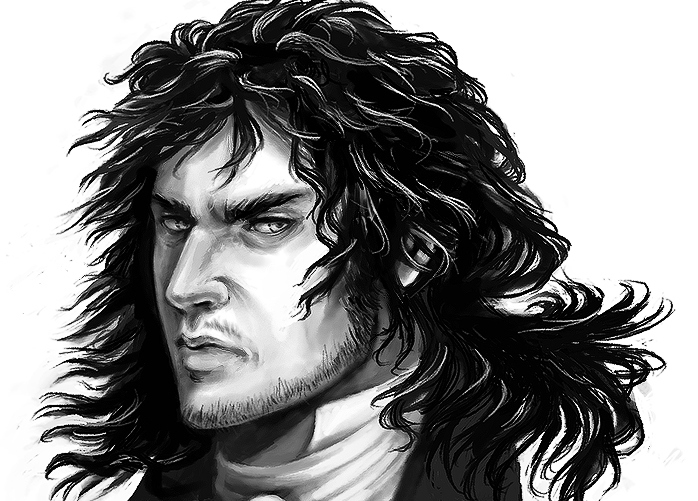
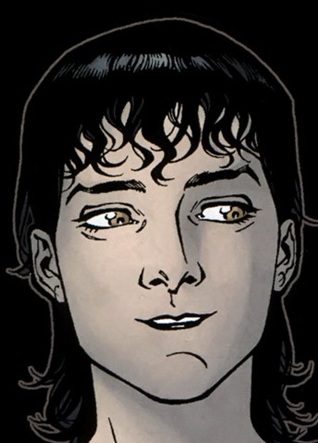
An absolutely evil person isn’t necessarily a jerk. Thieves and murderers can be respectful, charming and even polite. Dodge is an absolutely evil person and a jerk. He lies, steals, manipulates, betrays, rapes and murders with calculated precision, sadistic glee and not even the faintest hint of remorse. Whether taunting mentally handicapped teens or shoving kids in front of buses, Dodge is an irredeemable jerk.

1. Abiatha Swelter (Titus Groan by Mervyn Peake)

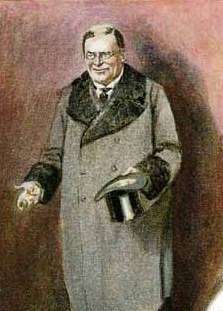
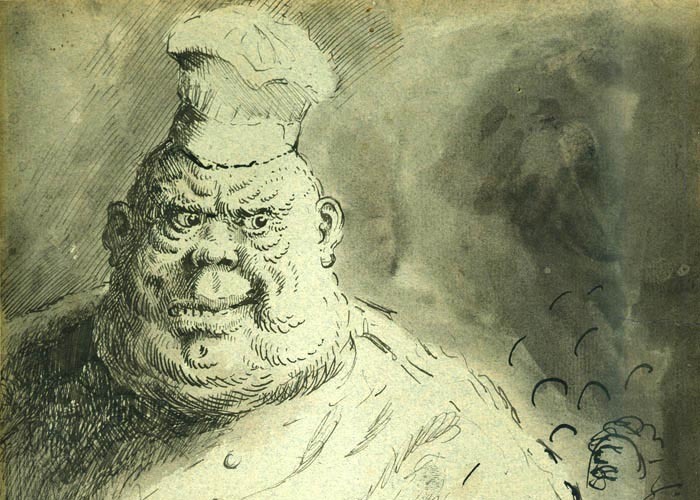
Abiathar SwelterThis hideously obese, “drunken, arrogant and pedantic” man is the chef of Gormenghast castle, a horribly… well… horrible man. Well, man may be too polite a word. In a book packed with awful people, Swelter is the worst: cruel, short-tempered, disgusting, resentful, demented and murderous. He may not be the most evil character on this list, but I think he’s the most odious. In conclusion, I have only one thing to add—and I’m sure you’ve guessed it. Swelter is a jerk.

O people of the Internet, what despicable literary jerks would you add to this list? Let us know in the comments!

205. An Open Letter to Hollywood

Dear Hollywood Executives,

You all read this blog, right? Yes? Excellent. I know you’re all very busy, so I’ll get right down to business. There are some things we need to discuss.

First of all, stop remaking films and television shows from the eighties. I know building on existing franchises is easier than creating new ones, but your remakes are tired and predictable.

Instead of remaking lousy old shows, why not make more literary adaptations? I’ve got a list for you right here. (Good job making Ender’s Game happen, by the way. It was about freaking time!) Literature is packed with stuff your viewers would love. You’ve just got to give it to them.

Since you’re so good at adapting existing works into movies, why not target the gaming demographic with video game movies that, you know, don’t totally stink? Not every game can be made into a good movie—ahem, Super Mario Bros.—but there are plenty of franchises with endless potential. Take video games seriously. Give us characters, not men with big muscles and women with big busts. Give us stories, not predictable plots riddled with clichés.

This next issue is a touchy one, but we’ve got to face it.

Hollywood, your Christians stink.

Seriously. Do your research. Find out what authentic Christians look like, and stop insulting us with shameless hypocrites, arrogant bigots and sociopathic lunatics. Christianity has its share of awful people, but we’re not all that bad. Just as most Muslims aren’t terrorists, most Christians aren’t your offensive stereotypes. Come on, Hollywood. It ain’t that darn hard.

Heck, I’ll even give you a good example. Look at Joss Whedon. He’s an atheist, and also a phenomenally successful director. (The Avengers is the third-highest earning film of all time. I’m just saying.) In Firefly, his highly-acclaimed show about lawless scoundrels, Whedon included a Christian character called Shepherd Book. This character isn’t a stereotype. As a Christian, he’s actually Christlike—and simply likable. Shepherd Book is a well-developed character with a dry sense of humor. Fans appreciate him.

Learn from Joss Whedon, Hollywood.

Speaking of Christians, we’re quite a sizable demographic. Have you considered, you know, actually making big-budget Christian films? The Passion of the Christ, which everyone expected to fail, earned roughly twenty times its budget. More recently,The Bible, a television miniseries, became a huge commercial success. Believe it or not, people want to see good Christian media. We need moviemakers with the courage (and cash) to make some.

With superhero movies being so popular, can we get a decent Deadpool movie? Please?

Finally, for heaven’s sake, stop letting Michael Bay and M. Night Shyamalan direct movies. That is all.

Peace,

Adam

P.S. We’re tired of vampires and zombies, Hollywood. Find some new monsters.

204. My Childhood Fantasy

As a kid, I loved fantasy stories. My budding imagination teemed with dragons, hobbits, wizards, weapons and those octopus-monsters from The Legend of Zelda that spit rocks. It was only natural, I suppose, for me to build a fantasy of my own.

The hero of this fantasy was an orphan (of course) with a tragic past (naturally) who overcame adversity to become a mighty swordsman, wizard and defender of the innocent. My fantasy hero was—like all true heroes—named after a character in a video game. Inspired by Link from the Legend of Zelda games, named for a challenger from the Pokémon games, my hero was Lance: a green-clad warrior for whom no quest, challenge or cup of tea was too big.

For a childish fantasy, Lance was ahead of his time. He fit the pattern of the wanderer-hero in almost every detail more than a decade before I recognized the archetype in fiction. Years before I knew anything about Doctor Who, Lance traveled through time and space with a box that was bigger on the inside. (However, unlike the Doctor, Lance didn’t travel in his box. Lance kept stuff in it.)

I didn’t feel the slightest qualm as a child about plagiarizing other stories. Lance used magic to travel anywhere, which included Middle-earth from The Lord of the Rings, Hyrule from the Legend of Zelda games, Hogwarts from Harry Potter and a few more copyrighted realms from books, films and games. (How fortunate that imagination is beyond the reach of lawsuits.) Lance rubbed shoulders, bumped elbows and occasionally sparred with many famous fantasy heroes.

After two years of vivid adventures, Lance slipped quietly into retirement when I entered my early teens. It was coincidence that the protagonist of the story I began writing a couple of years later—which grew into my novel, The Trials of Lance Eliot—had the same name as the hero of my childhood fantasy. Lance Eliot was given his name because the plot demanded it, as readers of the novel know.

I think the coincidence is rather funny. Lance the all-powerful hero and Lance Eliot the wry college student could hardly be more different. I suppose they have at least one thing in common… they like tea.

My imagination is less exuberant and more wary than it used to be. When I read, write or see a story, I find myself looking for inconsistencies, holes and weaknesses. Things have to make sense now that I’ve grown up.

All the same, I hope I never lose that spark of imagination. Making up stuff is fun.

203. TMTF Reviews: The Best of H.P. Lovecraft

Before Stephen King and Ray Bradbury, before The Exorcist and Dawn of the Dead, before Resident Evil and Silent Hill existed the horrors of H.P. Lovecraft.

Don’t be fooled by his pleasant-sounding name—Lovecraft is one of the most famous horror writers in history. He created an entire mythology, later dubbed the Cthulhu Mythos, which represents our world as a speck adrift in a cosmos of madness, horror and chaos. Lovecraft’s vision of the world is named after Cthulhu, the ancient, tentacle-faced abomination which slumbers in a hellish city beneath the sea.

Cthulhu, more or less.

Cthulhu, more or less.

The Cthulhu Mythos is a minor phenomenon, influencing everything from modern literature to pop culture. Now, I dislike horror fiction. It’s grim and gross and creepy. All the same, I decided to give H.P. Lovecraft’s short stories a try.

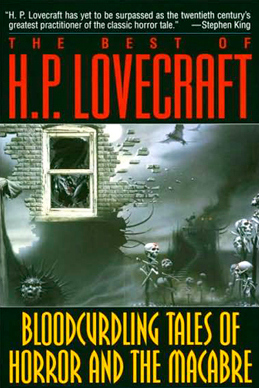
The Best of H.P. LovecraftThe Best of H.P. Lovecraft, cheerfully subtitled Bloodcurdling Tales of Horror and the Macabre, is a collection of some of Lovecraft’s most famous stories. It’s also quite a good read, with two great strengths.

First is the dark existential background of the stories. They feature pretty much the sort of scares you’d expect from horror fiction—insanity, cannibalism, monsters, aliens, gruesome and highly creative deaths—but they’re mostly depicted against the stark backdrop of an unknown, unfriendly cosmos seething with God knows what dreadful things.

Yes, declares Lovecraft, there’s a monster in the attic, but what really matters is that the universe is full of monsters.

The story that unsettled me most was the only one that was not a horror story. “The Silver Key” has some supernatural elements, but it’s not overtly scary. No one goes insane. There are no monsters. Nobody dies. What makes the story disturbing is its oppressively nihilistic worldview, its vision of a blind cosmos that “grinds aimlessly on from nothing to something and from something back to nothing again, neither heeding nor knowing the wishes or existence of the minds that flicker for a second now and then in the darkness.”

Lovecraft’s monsters are mildly scary, but what really puts me on edge is his philosophy of an empty existence in which life is fleeting and futile: a spark that flares for an instant in the darkness and illuminates nothing.

The second great strength of Lovecraft’s stories is their variety. There’s psychological horror in spades, from madness to cannibalism. Fantasy horror shows up in the form of demonic entities, ancient cults and dark magic. Much to my surprise, sci-fi horror makes appearances in the form of extraterrestrial creatures and eerie technology. Despite differences of genre, most of these stories are consistent with Lovecraft’s mythos, and the lines between genres are sometimes wonderfully vague.

Lovecraft’s literary style is plain and mostly unimpressive, and he occasionally tries too hard to convey a sense of horror by describing it openly. Dark hints would have been scarier than matter-of-fact phrases such as “Now, indeed, the essence of pure nightmare was upon me.” As Lovecraft himself pointed out, “the oldest and strongest kind of fear is fear of the unknown.” His stories might have benefited from fewer explanations and more haunting implications.

It is worth noting Lovecraft’s stories aren’t scary in the way, say, most horror movies are. There are few, if any, abrupt scares. The terror lies in the slow, steady buildup of tension. Impatient readers will be disappointed.

If horror is your cup of tea, H.P. Lovecraft delivers some genuinely creepy stories. If you’re sensitive to blood, existential angst or old-fashioned prose, Lovecraft is a good writer to skip.

192. Running Like Frodo

Today’s post was written by Zak Schmoll, a graduate from the University of Vermont with a double major in Accounting and Statistics. (For me, an English major, mathematical arcana like Accounting and Statistics inspire perplexity, fear and wonder.) On July 23, 2012 Zak undertook an epic quest: writing about one chapter of the Bible every day from start to finish. Check out his progress here!

Wherefore seeing we also are compassed about with so great a cloud of witnesses, let us lay aside every weight, and the sin which doth so easily beset us, and let us run with patience the race that is set before us, looking unto Jesus the author and finisher of our faith; who for the joy that was set before him endured the cross, despising the shame, and is set down at the right hand of the throne of God.

~ Hebrews 12:1-2

When I think about adventures, one of my favorite literary examples is Frodo Baggins, a reasonably comfortable hobbit who was thrown into the epic saga of The Lord of the Rings.

He carried the one Ring, the only thing separating the land of Middle-Earth from the evil domination of Sauron. Frodo wasn’t looking for an adventure, but one dropped in his lap out of nowhere.

I think we can see something similar in our Christian journey.

We are told that our life is a race. According to Strong’s numbers entry for this word race, there’s definitely an indication that this is not just going out for a jog. Some of the alternative words that are suggested are contest or contention. In other words, there is a definite opponent in this competition with real stakes.

We certainly have an adversary in the world, just like Frodo did. We are on a mission to overcome that opposition. For Frodo, that mission involved throwing the Ring into the fires of Mount Doom to destroy it forever. For us, our mission involves running this race successfully. Implicit in both of these statements is that we both have a target. Ours is not necessarily a geographic location, but it is certainly a place where we are in a good relationship with God.

How do we go about running successfully and making it to that destination?

Jesus himself pointed out a few pretty basic guidelines in Mark 12:30-31 that should govern all of our actions. First, we need to love God, and second, we need to love other people. The more we follow these two guidelines, the closer we will be walking to God.

Of course, I should mention that having a relationship with God in the first place is the most important thing. Without that relationship, all of the works in the world and love that we try to display don’t mean a whole lot.

Running successfully also means that we overcome stumbling blocks that are put in our way. Frodo had to fight through fatigue, betrayal, stress and anxiety in order to finally make it to his destination. Similarly, our lives will never be perfect either. There will always be problems that pop up. However, we are promised that through God, we can do all things (Philippians 4:13).

Our race does not stop because of roadblocks, but they do us to rely on God.

Our lives might not quite compare to the epic quest of Frodo Baggins, but we are in the middle of a race, a race run by being in a relationship with God and living with love. We need to love God and to love other people.

That is an adventure in itself.