288. Why Louisa May Alcott Is Awesome

And while we’re on the subject of Little Women, I should mention that Lousia May Alcott is a wonderful author… especially when she’s not trying to be.

I’ve read only two books by Alcott, and they’re very different. Little Women is her most enduring work: a fine novel with a heartwarming story and relatable characters. Her other book, a little-known memoir titled Hospital Sketches, is short, messy and bursting with unbridled charm and humor. Alcott is remembered for her characters, but she was also quite a character herself.

Ladies and gentlemen, I give you a lady who balanced humor with pathos and sense with sentiment.

I give you Louisa May Alcott, whose life and imagination were truly remarkable.

Louisa May Alcott

Little Women is a delightful novel, equal parts coming-of-age story and romance. In my (admittedly idiosyncratic) opinion, it feels like a pleasant mixture of Anne of Green Gables and Pride and Prejudice as its little women grow up, learn lessons, make their way in the world and find love. (Alcott’s ladies, unlike Austen’s, are rather likable.) All this wibbly-wobbly, icky-sticky sentimentalism is balanced by a refreshingly frank and sensible outlook. Every time the book comes close to being mushy, some wry witticism or unromantic plot point brings it back to earth.

As much as I like Little Women, I enjoy Hospital Sketches far more. It’s old-fashioned, unpolished and crammed with out-of-date language and obscure literary references. Needless to say, I love it.

Hospital Sketches is a memoir compiled from Alcott’s letters home during her time as a nurse during the American Civil War. Her novel Little Women is neatly structured and carefully worded. By contrast, Hospital Sketches gives the impression of being dashed off at high speed and in high spirits. It gives fascinating, often funny and sometimes touching glimpses of life amid the excitement and horror of war.

One of the things that strikes me most about Hospital Sketches is its relentless cheerfulness and optimism. Even the sadder parts of the book, which are very sad indeed, have a kind of poignant sweetness.

Both of Alcott’s books have a surprising balance of sense and sentimentality. Heaven knows I’m no feminist, but I admire the way Alcott brings together fiery emotion and cool pragmatism, especially in her memoir. She is even cheerful and sensible when breaking down in tears, crying, as she puts it, “in a very helpless but hearty way; for, as I seldom indulge in this moist luxury, I like to enjoy it with all my might, when I do.”

In conclusion, ladies and gentlemen, Louisa May Alcott is awesome.

287. About Storytelling: Intertextuality

As long as we’re talking about The Avengers, I want to point out that Marvel’s superhero stories have a lot in common with the Bible, Little Women and the Teenage Mutant Ninja Turtles.

Why, you can hardly tell them apart!

The similarities here are obvious… aren’t they?

(I also want to point out for the record that Jo and Donatello are the best March sister and Ninja Turtle, respectively. I’m just throwing that out there.)

These stories are extremely different, but they share at least one notable characteristic: intertextuality. This fancy (and somewhat dirty-sounding) word refers to the way an artistic work is shaped by another artistic work.

Still confused? I sure am. Let’s make it simpler by looking at these stories one by one.

Little Women is a novel by Lousia May Alcott about sisters growing up and getting married. It’s basically Pride and Prejudice, but better. (Fans of Jane Austen, please spare my family.) The first half of the book, which follows the March sisters as they become young ladies, loosely parallels The Pilgrim’s Progress by John Bunyan. As these little women read Bunyan’s allegory, they find it mirrored in their own pilgrimages from childhood to adulthood.

The Bible is packed with intertextuality. The number of times Scripture references itself is practically beyond count. The New Testament alludes constantly to the Old. Many books of Scripture cite passages from other books. Jesus Christ, as he hung dying upon the cross, quoted a phrase from the Psalms. Stephen, in turn, repeated some of Christ’s final words during his own execution. The Bible echoes itself constantly.

The Avengers is a tale woven from several different stories. Every one of its heroes has some kind of history; the film is built upon the foundation of other films. Without Iron Man and Thor and all those other Marvel movies, The Avengers probably wouldn’t even exist.

As for my favorite band of crime-fighting reptiles, well, the Ninja Turtles began as a parody of several gritty comics popular at the time. Even its details were drawn from the works it parodied: the Turtles’ teacher Splinter was a jab at a comic book character named Stick, and the villainous Foot Clan poked fun at a supervillain group called The Hand. The Teenage Mutant Ninja Turtles exist as a lighthearted response to darker comics.

All these stories are shaped by other stories. So what?

Intertextuality can be either a brilliant asset or a horrible nuisance. It can give a story depth or make it incomprehensible.

The benefits of intertexuality are too many to list in a single blog post, so I’ll mention just a few. Referring to other works can establish a strong narrative framework, as in Little Women. The Bible shows how intertexuality can help explain and clarify ideas. In The Avengers, the way separate narratives converge in one big adventure is, if I may express it so bluntly, really freaking sweet. Finally, intertextuality can provide humor or insight in the form of parody or satire of existing works.

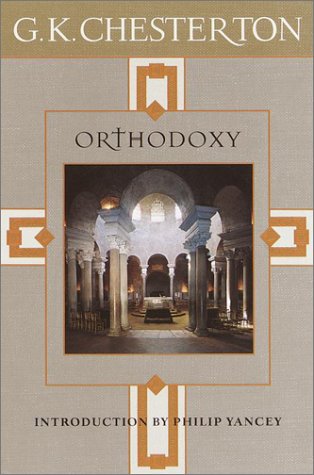
Of course, intertextuality can go wrong. G.K. Chesterton is probably my favorite author, and also really awesome, but he sometimes makes the mistake of assuming all his readers are just as smart and educated as he is. His book Orthodoxy is full of allusions to other thinkers, but without context or background these references only confuse ignorant readers like me.

We’re all shaped by other people. It’s only natural, then, for our ideas and stories to be shaped by those of other people.

274. About Storytelling: Chekhov’s Gun

There was once a writer named Anton Chekhov. Besides writing a play that trapped me in a stage kiss, this contemplative Russian also established the literary principle that has come to be known as Chekhov’s gun.

Chekhov once stated, “Remove everything that has no relevance to the story. If you say in the first chapter that there is a rifle hanging on the wall, in the second or third chapter it absolutely must go off. If it’s not going to be fired, it shouldn’t be hanging there.”

This concept of a background element becoming an important plot point has become known as Chekhov’s gun. Something that seems trivial becomes extremely significant. The thing you forgot from twenty chapters ago defeats the villain or break the hero’s heart.

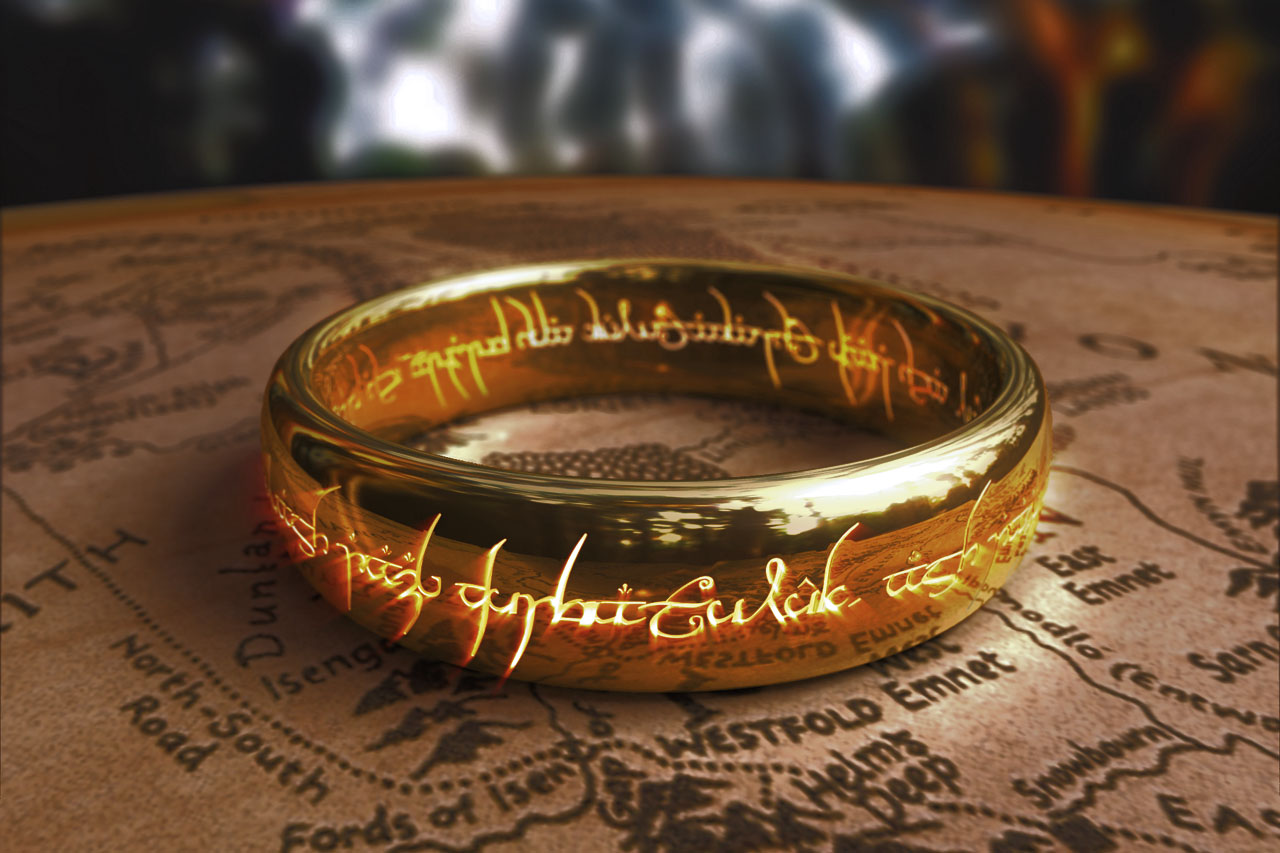
A famous example of this can be found in The Hobbit and The Lord of the Rings by dear old Tolkien. The all-important Ring that ends up driving the whole story starts out as a convenient escape for Bilbo Baggins early in his adventures. When Tolkien brought a magic ring into the story, he originally had no plans for it. The Ring was a handy deus ex machina, a trinket discovered just in time to save Bilbo’s life.

Chekhov's... ring

This is an example of Chekhov’s gun. Yes, I know it’s not really a gun.

Only later did Tolkien decide to make the Ring more than a magical accessory. It became the crux of the story, the thing around which all other things revolved—one Ring to rule them all, so to speak. The rifle had gone off.

Chekhov’s guns tend to be common in plot-driven stories. J.K. Rowling uses this principle all the time in her Harry Potter books, in which later plot developments hinge on minor incidents and random rubbish from earlier books.

Although less common in character-driven stories, Chekhov’s gun can apply to people as well as objects and events. In The Lion, the Witch and the Wardrobe, kindly Professor Kirke seems unperturbed by wild claims of magical worlds inside his furniture. His composure doesn’t make much sense until the reader gets to The Magician’s Nephew. Here it is revealed that Kirke actually visited magical worlds as a child, explaining his lack of surprise as a grownup.

While Chekhov’s gun is a wonderful dramatic technique, it’s best used with subtlety and restraint. It’s a treat for careful readers and devoted fans to notice trivial things becoming important, but overuse of this principle makes stories seem contrived or confusing.

Incidentally, while I haven’t any rifles hanging on my walls, I do have swords. As much as I appreciate the principle of Chekhov’s gun, I hope my assorted blades stay on my walls in later chapters of my life.

269. Why P.G. Wodehouse Is Absolutely Spiffing

This is a post I have long wanted to write for this blog, but have always put off. It will be difficult to write. How to put into words my appreciation and respect for the greatest humorist in all of literature? In one feeble post, how can this blog do justice to perhaps the wittiest human being ever to have graced God’s green earth?

This day has been long delayed, but no longer. Today we remember the man whose wit and humor have made our world a better, brighter place. Today we remember P.G. Wodehouse.

Michael J. Nelson, the comedian made famous by Mystery Science Theater 3000 and RiffTrax, declared, “I adore P.G. Wodehouse, could read him every single day and not get tired of it.” He also said, Wodehouse is absolutely the gold standard. It’s almost unfair how good he was, how long he wrote, and how easy, generous and agreeable his prose is.”

Evelyn Waugh, the British author and journalist, said, “Mr. Wodehouse’s idyllic world can never stale. He will continue to release future generations from captivity that may be more irksome than our own. He has made a world for us to live in and delight in.”

Douglas Adams, who wrote The Hitchhiker’s Guide to the Galaxy, flatly stated, “Wodehouse is the greatest comic writer ever,” and left it at that.

Ladies and gentlemen, I give you the man whose gentle humor illuminated the twentieth century and still brightens our own dreary, postmodern age.

I give you P.G. Wodehouse, that overflowing fountain of goofy stories, witty jokes and shining optimism.

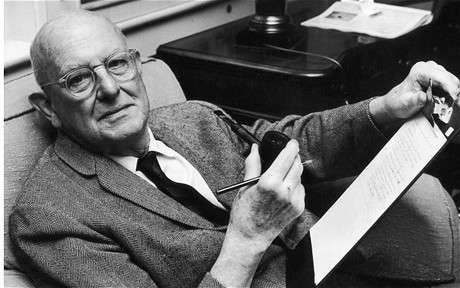
P.G. Wodehouse

Sir Pelham Grenville Wodehouse was a British humorist who wrote nearly one hundred books. (Yes, he was knighted for being hilarious. It was the least his country could do for him.)

Wodehouse’s stories mostly feature upper-class gentlemen in early twentieth-century Britain. These idle eccentrics get themselves into dreadful predicaments: accused of crimes, for example, or engaged by mistake to the wrong people. Escaping these frightful troubles takes luck, pluck and the occasional spot of brilliance.

There is a profound irony about Wodehouse’s writing: it’s fairly easy to criticize, yet all but impossible to call anything less than inspired. For example, his novels and stories are rather repetitive, yet never stale or tedious. Unlike many writers, Wodehouse has no particular masterpiece. His books are all masterpieces.

Wodehouse himself cheerfully acknowledged the repetitive nature of his books:

A certain critic—for such men, I regret to say, do exist—made the nasty remark about my last novel that it contained ‘all the old Wodehouse characters under different names’. He has probably by now been eaten by bears, like the children who made mock of the prophet Elijah [sic]; but if he still survives he will not be able to make a similar charge against [my latest novel]. With my superior intelligence, I have outgeneralled the man this time by putting in all the old Wodehouse characters under the same names. Pretty silly it will make him feel, I rather fancy.

It must also be noted that Wodehouse’s work isn’t profound or meaningful. He doesn’t grapple with deep questions of morality or philosophy or faith in his books. He’s simply hilarious, and that’s all he ever needs to be. Wodehouse wrote fluff, but it was some of the best, cleverest, funniest fluff ever written.

Wodehouse mastered the English language and used it with cheerful abandon. Consider the following gem, in which Bertram “Bertie” Wooster drinks a spicy tonic to cure his hangover.

I loosed it down the hatch, and after undergoing the passing discomfort, unavoidable when you drink Jeeves’s patented morning revivers, of having the top of the skull fly up to the ceiling and the eyes shoot out of their sockets and rebound from the opposite wall like racquet balls, felt better. It would have been overstating it to say that even now Bertram was back again in mid-season form, but I had at least slid into the convalescent class and was equal to a spot of conversation. “Ha!” I said, retrieving the eyeballs and replacing them in position.

A final note about Wodehouse’s style: It’s very, very British, packed with colloquialisms, slang and misquoted fragments of Scripture, Shakespeare and other literary classics.

Here’s a typical Wodehouse exchange:

Bertie: Do you recall telling me once about someone who told somebody he could tell him something that would make him think a bit? Knitted socks and porcupines entered into it, I remember.

Jeeves: I think you may be referring to the ghost of the father of Hamlet, Prince of Denmark, sir. Addressing his son, he said, “I could a tale unfold whose lightest word would harrow up thy soul, freeze thy young blood, make thy two eyes, like stars, start from their spheres, thy knotted and combined locks to part and each particular hair to stand on end like quills upon the fretful porpentine.”

Bertie: That’s right. Locks, of course, not socks. Odd that he should have said porpentine when he meant porcupine. Slip of the tongue, no doubt, as so often happens with ghosts.

The speakers, by the way, are Wodehouse’s most famous duo: Jeeves and Wooster. Bertie Wooster is an idle, amiable and dimwitted gentleman. His good-natured innocence leads him into all kinds of social crises, from which only the brilliant schemes of Jeeves, his seemingly omniscient valet, can rescue him. It’s a wonderful yin-yang partnership, and it never fails to make me laugh.

This is the part in a Why [Insert Author Name] Is Awesome post at which I would recommend the author’s best books. In this post, I can’t. P.G. Wodehouse’s stuff is all superb. There would be no point in highlighting any of his books when they’re equally good. Just pick one of his novels at random, perhaps one starring Jeeves and Wooster, and you’ll be set.

In conclusion, ladies and gentlemen, P.G. Wodehouse is awesome absolutely spiffing.

264. TMTF Reviews: Struggle Central

This seems to be a good week for reviewing things, so I think it’s time for a look at Struggle Central: Quarter-Life Confessions of a Messed Up Christian. An alternate subtitle for the book could be The Book Adam Has Been Meaning to Read and Review Since, Like, Last September. What can I say? I forget things.

Thomas Mark Zuniga is a blogger, introvert, Christian, coffee drinker and wordsmith. When he released an e-book some time ago, I snagged a free copy for review purposes. It spent the next few months gathering digital dust in a folder on my laptop. Around the time TMZ agreed to write an excellent guest post for this blog, I remembered his book and resolved to finish it. I bought the paperback version—I will always prefer ink-and-paper books to virtual ones—and walked with TMZ through twenty-five years of struggles.

Appropriately enough, one of the first significant autobiographies in history was titled Confessions. For its author, Augustine, the story of a life is a series of confessions. Whatever our accomplishments, we make mistakes. We all struggle. Struggle Central, a memoir in the tradition of Augustine, testifies to the fact.

Is Struggle Central a good memoir? A good story? A good book?

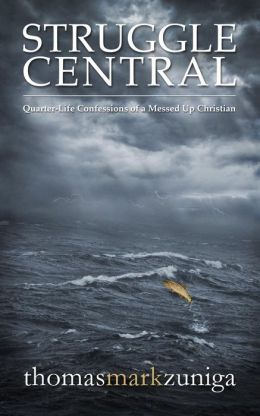
Struggle Central

Despite minor stylistic flaws, Struggle Central: Quarter-Life Confessions of a Messed Up Christian is an honest, vulnerable memoir that never loses sight of its purpose.

Right from the beginning, TMZ makes one thing clear: Although Struggle Central is his story, it isn’t really about him. The book is meant neither to shock nor impress its readers with his mistakes and triumphs. Its purpose is to encourage. It tells its readers, “You’re not alone!”

In Struggle Central, TMZ is remarkably honest, seeming to hold back nothing, making some heavy confessions. This is a book about loneliness, insecurity, fear and isolation. It deals with pornography, homosexuality, shame and doubt. If I wrote a memoir, I doubt I could be so vulnerable.

In all its confessions, Struggle Central tempers honesty with its strong sense of purpose. The book could easily have been a pleading, self-conscious cry for attention. It could have been a halfhearted attempt at openness, gilding its mistakes with excuses and rationalizations. Struggle Central is neither of those things. Its confessions are made as evidence of the book’s fundamental message: “You are not alone; there is hope.”

A number of the confessions in the book resonated with me. As an introvert, I relate to TMZ’s failed attempts to connect with people in churches. As a sinner, I understand the rationalization, shame and self-loathing in TMZ’s struggles to overcome pornography. As an insecure person, I know TMZ’s discouragement at how everyone else seems to be talented, successful or perfect. Struggle Central may not touch all of its readers, but it sure touched me.

On a literary level, Struggle Central has a surprisingly strong narrative. It recounts not a random string of events, but a structured story. TMZ doesn’t merely spit out facts. He highlights certain experiences, adding digressions and flashbacks wherever necessary to keep his story flowing smoothly. In the book’s story and structure, nothing is wasted.

The style of Struggle Central is a different matter: the book is packed with modifiers. If I had a penny for every qualifier, adjective and adverb, I would probably have enough cash to buy coffee at Starbucks.

Despite its many modifiers, the writing in Struggle Central isn’t bad. It’s engaging, readable, informal and crammed with sentence fragments and one-sentence paragraphs for emphasis. All the same, my nitpicky sensibilities were rubbed the wrong way by the constant use of modifiers and dramatic sentence fragments. The more they were used, the less impact they made. There were also a few puns and pop culture references that made me roll my eyes.

In the end, though, the writing takes secondary consideration to the book’s message and purpose—and these are excellent. Struggle Central has a clear and positive purpose, and it does a fine job of sticking to it. It could use a little polish, yet Struggle Central is a touching read for anyone who struggles—that is, for any human being on Earth.

261. About Storytelling: Nazis

Nazis are bad. If you carry away one thing from this blog post, it’s that Nazis are bad.

Nazis Swastika

Protip: This is not a good design for interior decorating.

In fact, Nazis have become a handy shortcut in storytelling for representing evil. Need a bad guy? Make him a Nazi. No reader of books or viewer of films or player of video games thinks twice if Nazis die. They are evil. They are all evil!

There’s only one problem with this convenient idea.

Not all Nazis are evil—rather, Nazis are not all evil.

You see, people are complicated. No person—Nazi or not—is absolutely, one hundred percent wicked. No person is completely good, either. Bad people have virtues, and good people have flaws.

As satisfying as black-and-white moral struggles are in storytelling, they’re not very realistic. It’s hardly ever as simple as “good versus evil.” It’s usually “something versus a different something.” Even in cases of clear-cut good and bad, it tends to be “something mostly good versus something mostly bad.”

It’s hardly ever good storytelling to make the good guys perfect and the bad guys irredeemable. In real life, when does that ever happen?

Granted, it can work. J.R.R. Tolkien, who somehow managed to write great books while ignoring a lot of basic rules for storytelling, pits (mostly) good and selfless hobbits, men, elves and dwarves against orcs—twisted creatures damned to an existence of pain, war and cruelty. Tolkien’s black-and-white struggles work because they’re sort of symbolic. Orcs seem almost like Tolkien’s fairy-tale representation of absolute evil in his fairy-tale realm of Middle-earth. The villain, Sauron, is more like the concept of badness than an actual bad guy. (I should note that Tolkien did manage some morally ambiguous characters, such as Gollum and Boromir.)

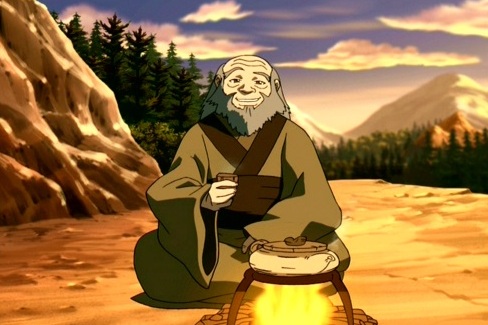
For the most part, however, the best stories have good guys that are sort of bad and bad guys that are sort of good. Consider Avatar: The Last Airbender, the fantastic fantasy show. In its world, the Fire Nation is a lot like Nazi Germany. It attempts to conquer, exploit and control other countries: in this case, the Water Tribe and Earth Nation.

Guess what? The “good” countries have their fair share of bad guys. A psychotic criminal belongs to the Water Tribe. The Earth Kingdom is the home of thugs and thieves, not to mention a corrupt official and the merciless secret police under his control. The “evil” Fire Nation is populated largely by innocent, well-meaning citizens.

Iroh

The Fire Nation also has this guy.

Hayao Miyazaki also does a great job of creating morally ambiguous characters. Probably his best films in this regard are Princess Mononoke and Spirited Away, in which the villains are… no one, really. Princess Mononoke has a bunch of characters fighting selfishly for their own survival and prosperity; they’re self-centered, but not really evil. Spirited Away has characters that seem bad, but when you get to know them you realize they’re just gruff and insensitive.

People are hardly ever all good or all bad, and conflicts are usually more complicated than “good versus evil.” Ambiguity and subtlety are invaluable assets for any story or character!

258. TMTF Reviews: Orthodoxy

I received some lovely presents for Christmas last year: an Edgeworth-colored coffeemaker, a few gift cards, a picture of ponies drinking milkshakes and a paperback copy of G.K. Chesterton’s Orthodoxy.

I loved Chesterton’s novels and stories, but I had never read any of his nonfiction. Orthodoxy and Heretics had been recommended to me for years by friends and teachers. It was clear there was no getting out of it. My unalterable destiny was to read at least one of these books, and so I settled upon Orthodoxy as a Christmas gift when my loving mum insisted on buying me something for the holidays.

Was Orthodoxy worth all those recommendations? Is this spiritual memoir a worthy read, or should Chesterton have stuck to writing stories?

Orthodoxy

Orthodoxy was thoughtful, engaging and lively—but not at all the book I expected it to be.

You see, I had assumed Orthodoxy would be a work of either apologetics or lay theology. I expected either a focused defense of Christianity or something along the lines of The Gospel According to ChestertonOrthodoxy turned out to be something much different, and much more interesting.

In his book, Chesterton lays out a sort of spiritual quest—no, a spiritual ramble, which began with his basic beliefs about existence. His views of the world required a certain set of facts or principles. No existing worldview seemed to fit his revolutionary ideas. Every ideology he tested rang false; every philosophy had some damning flaw.

It was with great surprise he realized his daring new ideals were perfectly matched to one very ancient worldview—Christianity.

Chesterton loved paradoxes: things that seem contradictory yet are true. It came as absolutely no surprise to me that Orthodoxy is packed with fascinating paradoxes from start to finish. Christianity, despite its ancient heritage and old traditions, is the most revolutionary creed on the market, maintains Chesterton. It is a system of ludicrous extremes, and it is the only system to make sense.

I wondered at the beginning whether Chesterton would try to prove any of his assertions by logic. He does not. In fact, he cheerfully confesses, “This is not an ecclesiastical treatise but a sort of slovenly autobiography.” Orthodoxy is not a work of lay theology. It’s more like a wandering essay packed with poetic prose and cheerful sarcasm.

Anyone looking for a concise defense or explication of religion in Orthodoxy won’t find it. The book is a lively discussion, not a lecture or sermon. For those contented to read a clever set of perspectives on faith and modern worldviews, Orthodoxy is absolutely a worthwhile read: thought-provoking, unapologetic and witty.

My only notable criticism of the book is the way Chesterton constantly alludes to thinkers ancient and contemporary (for his time) without explaining their philosophies. He tosses out names like Zola and Bellec, apparently expecting his readers to know exactly who they were and giving only the faintest hints of their ideologies. I recognized a few of these allusions, but most of them sailed over my sad, ignorant head. Chesterton clearly assumed I would be a good deal better educated than I am.

Its frequent allusions to random thinkers aside, Orthodoxy is a fascinating exploration of ancient doctrines, modern philosophies and the strange habit old things seem to have of being more revolutionary than new ones. Readers expecting structured arguments will be disappointed, but anyone looking for a wry discussion of ideologies sacred and secular is in for a superb read.

252. About Storytelling: Endearing Quirks

When I was in high school, I had a teacher named Mr. Quiring whose legendary silliness I have mentioned one or twice before on this blog.

For example, he once removed his necktie and unbuttoned his shirt during class to reveal a T-shirt emblazoned with the Batman logo. (He wasn’t really Batman, sadly.) At various times, Mr. Quiring pelted me with chocolate, brandished a meat cleaver and leaped off a chair shouting “To infinitives and beyond!”

The reason Mr. Quiring’s antics amused me so much is that he is not a silly person. Quite the contrary: Mr. Quiring is one of the most intelligent, dignified gentlemen I have ever known. It’s as though he compressed all the humor and silliness of ordinary people into short, intense bursts. Every time he did something outrageous, he reverted immediately afterward to his solemn self.

Mr. Quiring provides fine examples of endearing quirks: those funny little habits of real people or fictional characters that make us love them.

Some fictional characters are simply masses of endearing character quirks. Wooton Bassett, the mailman from Adventures in Odyssey, has too many odd habits to count: collecting fast food toys, expressing his feelings by the color of his slippers, baking jellybean casseroles and exiting his house via a slide. Wooton is fully capable of thoughtful introspection, but he’s mostly just hilarious.

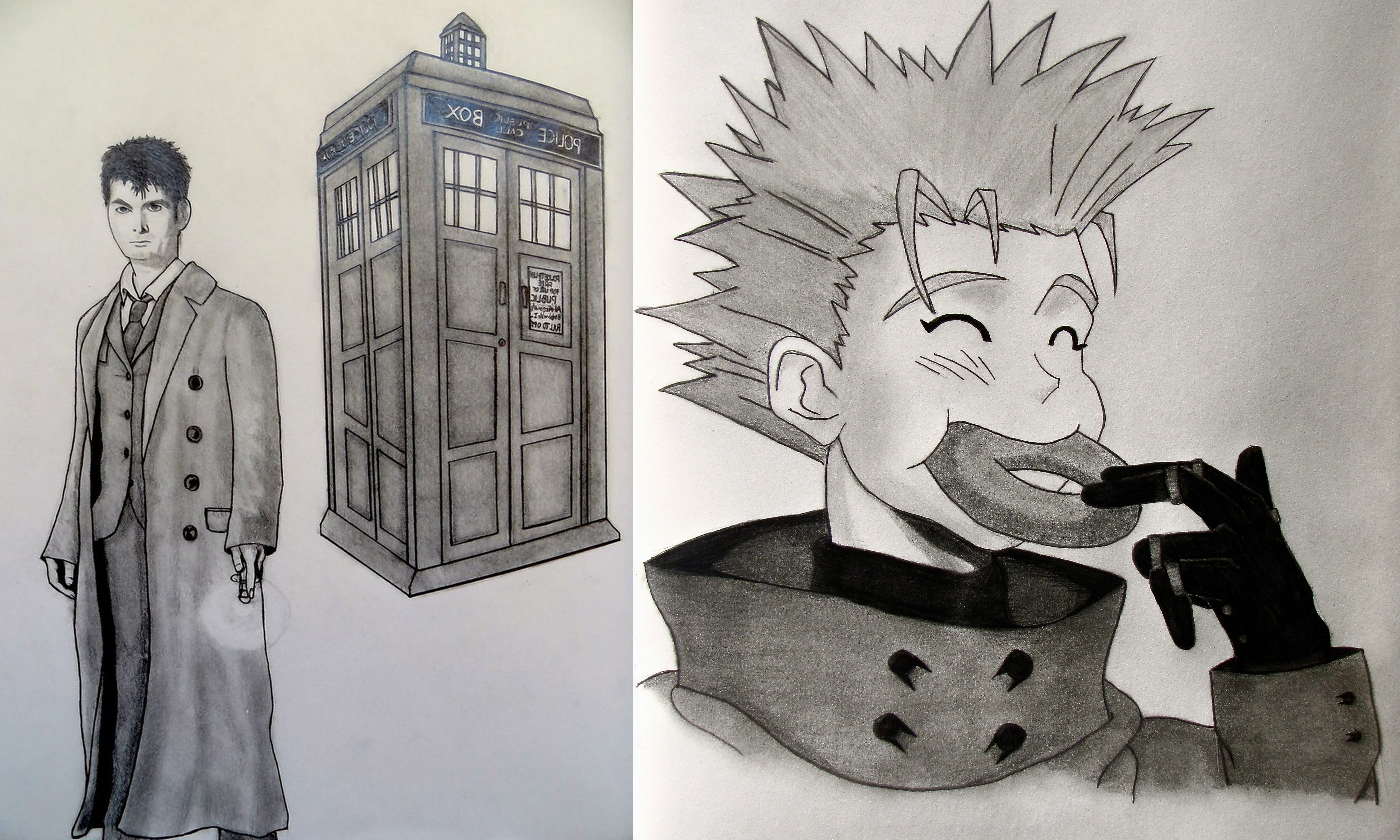
Wooton BassettSome characters are less silly, balancing funny quirks with tragic flaws or struggles. Consider the Doctor from Doctor Who and Vash the Stampede from Trigun. The Doctor is an intergalactic goofball, bouncing around the universe with a beaming face and a slew of witty remarks. Vash is a gunslinger who obsesses over doughnuts, whines like a child and walks into a firefight with a trashcan lid on his head.

My thanks to my younger bro for permission to use his artwork!

My thanks to my younger bro for permission to use his artwork!

Vash and the Doctor seem sillier than Wooton, but their quirks mask profound inner turmoil. The Doctor despises himself. His travels throughout space and time are not a careless vacation, but his way of running away from past mistakes. Vash also has a lot to hide. The body beneath the overcoat is covered in horrific scars, and the man behind the goofy grin is tormented by regret for the lives he couldn’t save.

In the case of Wooton, endearing quirks are a form of comedy. The quirks of Vash and the Doctor serve a different purpose. Their odd habits hide sad struggles, and make the viewer feel more when their stories take turns for the tragic. After all, it’s easier to feel sorry for funny characters than for serious ones.

Then there is Miles Edgeworth, the friendly rival of Phoenix Wright from the Ace Attorney series. Like Mr. Quiring, Edgeworth is dignified, composed and intelligent.

Miles Edgeworth

Edgeworth also has a secret.

This respected prosecutor is secretly a fan of Steel Samurai, a cheesy show for kids about a futuristic warrior and his neverending fight for justice. Edgeworth vehemently denies liking the show, of course… but there’s his inexplicable knowledge of Steel Samurai trivia and the Steel Samurai action figure in his office.

In the case of super-serious people like Mr. Edgeworth, a single quirk can make a cold, distant character seem a little more human. Liking Steel Samurai is a weakness, but not a sin. We can respect Edgeworth, and we can also laugh at him.

Carelessly loading a character with endearing quirks is a mistake: too many odd habits, or quirks that seem out of place, are irritating. Used intentionally, however, endearing quirks can develop great characters—and make us laugh!

246. TMTF Reviews: Heart of Darkness

A few days ago, a coworker and I had an interesting discussion about lunatic asylums, survival horror games and Joseph Conrad’s Heart of Darkness.

My coworker had just finished a survival horror game set in an insane asylum. (Survival horror is a scary genre of video games.) It reminded me of an article that questioned the use of lunatics in horror fiction. While some victims of mental illness are certainly dangerous, it’s unfair to stereotype them all as murderers, cannibals or psychopaths. Most lunatics are innocent people suffering from mental disorders. Compassion, not fear, is the appropriate response.

My coworker’s game was apparently an excellent (and terrifying) artistic work, but its scares came at the cost of demonizing and dehumanizing an entire group of people.

That reminds me of something.

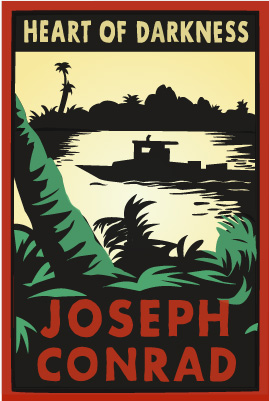
Heart of DarknessJoseph Conrad’s Heart of Darkness is a great book, but not a good one. Its impressive style and thematic complexity come at the cost of human dignity.

Heart of Darkness is the tale of Charles Marlow, a nineteenth-century sailor who tells of his fateful trip up an African river in search of ivory. Marlow captained a steamboat deep into the dark, wild heart of the inscrutable African continent, meeting indolent Europeans and barbaric Africans—and one very terrible man, the tortured Mr. Kurtz. It is Kurtz who embodies the eloquence of Europe and the savagery of Africa, and Kurtz whose ambition and cruelty are finally summed up in four whispered words: “The horror! The horror!”

As I told my coworker, I thought Heart of Darkness was a fine artistic work, just like his game. My book made its point about human depravity; his game was very scary; both works achieved their ends. However, both works accomplished their goals only by exaggerating and debasing a group of people. His demonized the lunatic. Mine demonized the African.

At first, I didn’t think twice about Conrad’s stereotyped Africans. Racism was almost universal among the Europeans of his day. It was my cousin who recommended this thought-provoking essay by Chinua Achebe. Achebe, an African, showed me how Heart of Darkness creates a stark, racist contrast between the white European and the black African. Kurtz is horrifying because he—a cultured European—descends into the savage brutality of those wild Africans.

I get it. For Heart of Darkness to work, it needs that contrast. For savagery to seem savage, it must be compared to sophistication. Kurtz has fallen from Point A to Point B, and the reader can’t appreciate how far he falls unless she sees both points. Sane, sensible Marlow is Point A. There must be a cruel, primitive Point B—and Heart of Darkness makes Africans its Point B. The book debases Africa’s people not out of malice, but out of necessity.

That doesn’t make it right.

That is my fundamental criticism of the book. How could it have been fixed? Well, Marlow might not have sought Kurtz in the dark heart of Africa—the dark heart of London would have sufficed. There were plenty of debased, primitive Europeans in Conrad’s day.

Heart of Darkness makes its point very well. Kurtz is a fascinating character, and he’s prefigured so well throughout the story that I was almost as eager as Marlow to meet him. While the book’s contrast of Europe and Africa is morally questionable, I’ll be the first to admit that it’s artistically excellent.

The book’s style is either great or horrible, depending on the reader. Conrad’s writing is dense and slow. Thoughtful readers will probably savor it. Impatient readers will hate it. Conrad has a tendency to wax meditative for pages and then say something crucial to the plot in just a few sentences. I repeatedly overshot important information because Conrad’s style had lulled me into a literary stupor.

Heart of Darkness is a great literary work—but is it a good book? I don’t think so.

239. TMTF’s Top Ten Unstoppable Heroes in Literature

Many works of fiction feature unstoppable heroes. These paragons of excellence may not be immune to defeat, but they sure seem like it!

Take Batman. He has no superpowers; Bruce Wayne is just a man with a high-tech suit and some fancy gadgets… and he’s also nigh-invincible. He excels physically, intellectually and morally as a strong fighter, brilliant strategist and champion of justice. I suppose it’s technically possible to kill Batman, but we all know in our heart of hearts that he’s unstoppable.

Literature is full of characters seem physically, intellectually or morally perfect. These are the characters the reader is sure will never be killed or get caught or suffer defeat. They are not invincible, but they may as well be. Some are nearly invulnerable; others are simply too clever or confident to be held down.

Why must I take an entire blog post to list unstoppable heroes from fiction? I can only echo George Mallory and reply: “Because they’re there.” As long as there are things to be ranked in top ten lists, TMTF shall be delighted to oblige!

My usual rules apply to this list: only one character is allowed per author, and characters can be included only from books I’ve read. (Batman would make the list, but I haven’t actually read any of his comics.) An unstoppable hero is defined as a character whose physical, intellectual or moral excellence make him or her seem utterly impervious to defeat.

Be ye warned, here there be minor spoilers.

Prepare to be amazed, ladies and gentlemen, as TMTF presents…

The TMTF List of Top Ten Unstoppable Heroes in Literature!

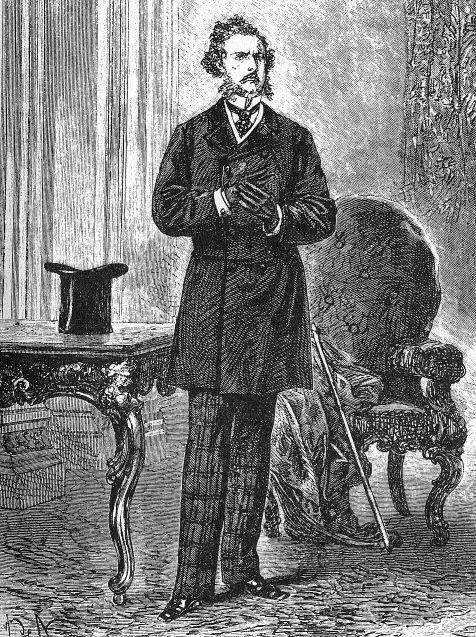
10. Phileas Fogg (Around the World in Eighty Days by Jules Verne)
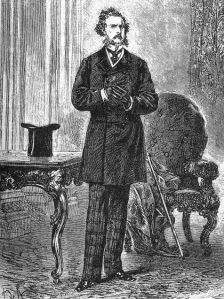
Phileas Fogg

Phileas Fogg is an impassive British gentleman whose life of precision and strict regularity is interrupted by the decision to circumnavigate the world in just eighty days: a feat that seems impossible given the limited technology of the time. Is it even possible to travel so far so fast? The reader must wait for an answer, but one thing is clear from the beginning. If it is humanly possible to travel around Earth in eighty days, Fogg will do it. Nothing—not faulty railways, conniving detectives, Sioux warriors or insufficient fuel—can deter this man.

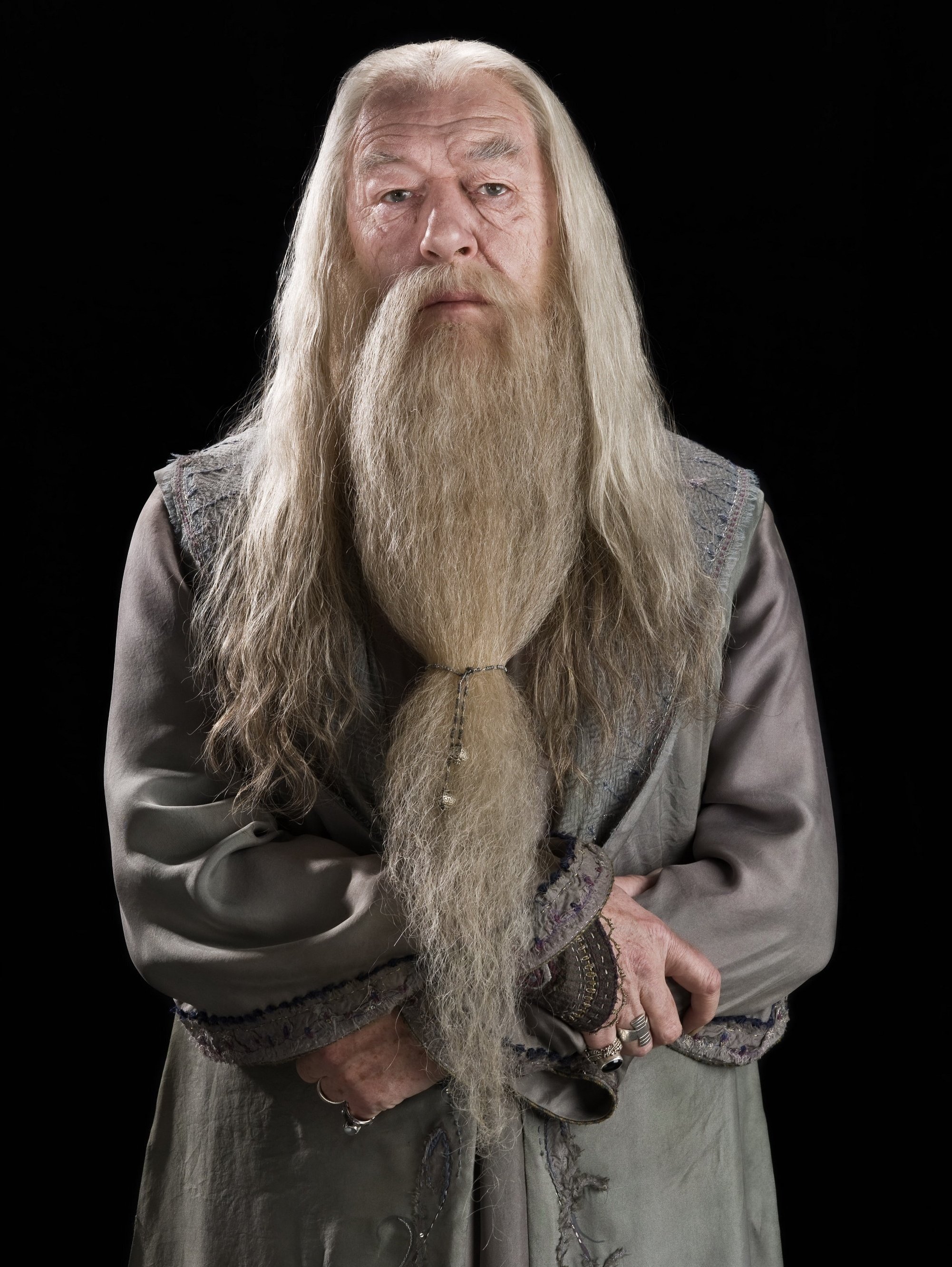
9. Professor Albus Dumbledore (Harry Potter series by J.K. Rowling)
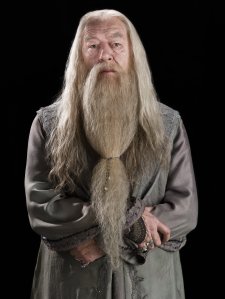
Albus Dumbledore

Gentle, wise, whimsical and rather odd, Professor Albus Dumbledore is the headmaster of Hogwarts School of Witchcraft and Wizardry. Dumbledore’s seeming frivolity and warm sense of humor belie his shrewd mind, powerful magic and terrifying capacity for anger: “There was cold fury in every line of the ancient face; a sense of power radiated from Dumbledore as though he were giving off heat.” Despite his age, Dumbledore seems far too clever, strong and wise to be stopped even by death. Right? Right?

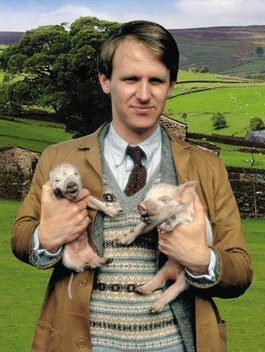
8. Tristan Farnon (All Creatures Great and Small by James Herriot)
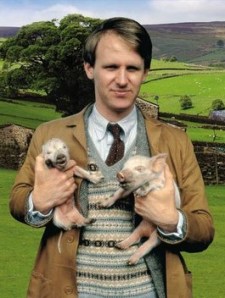
Tristan Farnon

In James Herriot’s fictionalized memoirs, Tristan Farnon is an irresistible force of optimism, charm and good-natured mischief. Not even the tyrannical bossiness and short temper of his older brother Siegfried can dampen his cheerful outlook. Tristan drinks too much, plays practical jokes and flirts with every young female in sight—and he nearly always gets away with it.

7. Mr. Great-heart (The Pilgrim’s Progress by John Bunyan)
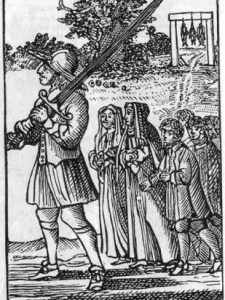
Mr. Great-heart

Mr. Great-heart is too good to be true. A manservant, Mr. Great-heart is ordered by his master to accompany Christiana and her companions on their journey to the Celestial City. His role for the rest of the story is to slay giants, rescue pilgrims, light dark paths, discuss theology and generally be an impossibly perfect (and mostly uninteresting) blend of warrior, mentor, guide and teacher. Mr. Great-heart is so angelically brave and pure that there’s absolutely no question of getting in his way.

6. Kaito Kid (Detective Conan by Gosho Aoyama)

Kaito Kid

Kaito Kid hails from Detective Conan, a long-running (and ongoing) series of mystery manga (i.e. Japanese comics) also known as Cased Closed. Kid is a gentleman thief, expert magician and master of disguise whose crimes are perfect. Even his habit of announcing heists beforehand never seems to get in his way: no matter how smart the police, Kid is smarter. Kid pulls off tricks that seem supernatural… until Conan, the eponymous detective of the series, figures them out. However, even Conan can’t always stop Kid. It’s fortunate that Kid always returns whatever he steals!

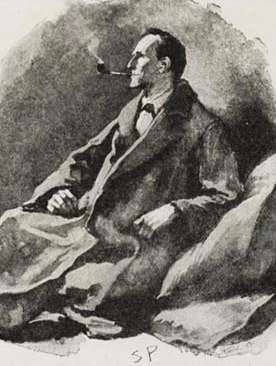
5. Sherlock Holmes (The Adventures of Sherlock Holmes by Sir Arthur Conan Doyle)
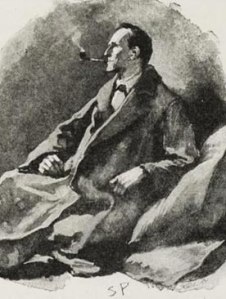
Sherlock Holmes

As long as we’re discussing detectives, let’s not forget the father of them all: Sherlock Holmes. How many cases has this man solved? How many juggernauts of crime has he brought to justice? No trick is too tricky nor mystery too mysterious for the incomparable Holmes. Besides being, you know, a freaking genius, Holmes is a skilled fencer, actor, sharpshooter, violinist, martial artist and expert on a bewildering range of subjects from poisons to tobacco ash. No criminal stands a chance against Holmes.

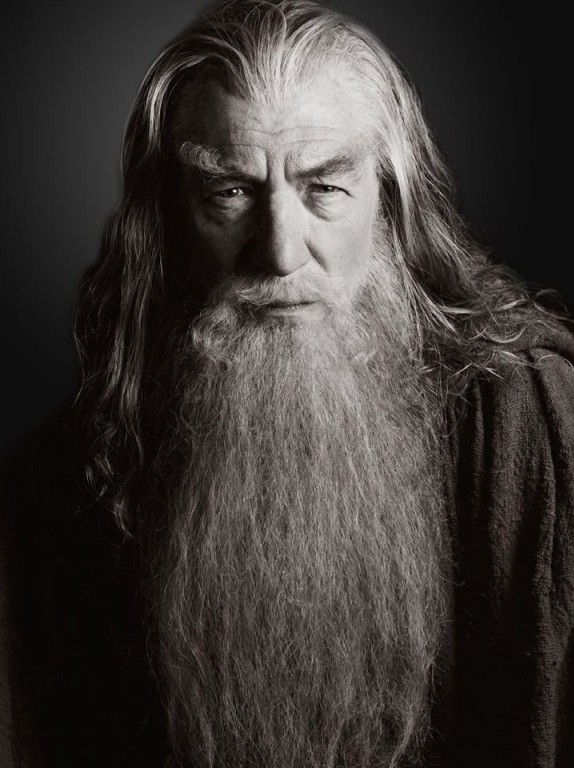
4. Gandalf (The Lord of the Rings by J.R.R. Tolkien)
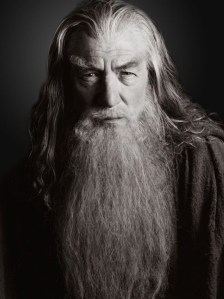
Gandalf

According to Tolkien’s mythology, Gandalf is basically an angel. A freaking angel. So yeah, he’s unstoppable. This short-tempered wizard is ancient, but his age doesn’t stop him from traveling the world, battling monsters and getting in and out of scrapes. Even death can’t stop this man. When Gandalf dies after dueling a demonic beast, some higher power resurrects him and sends him back to save the world. Gandalf recovers from death the way most people recover from colds, and I’m pretty sure there’s no stopping him.

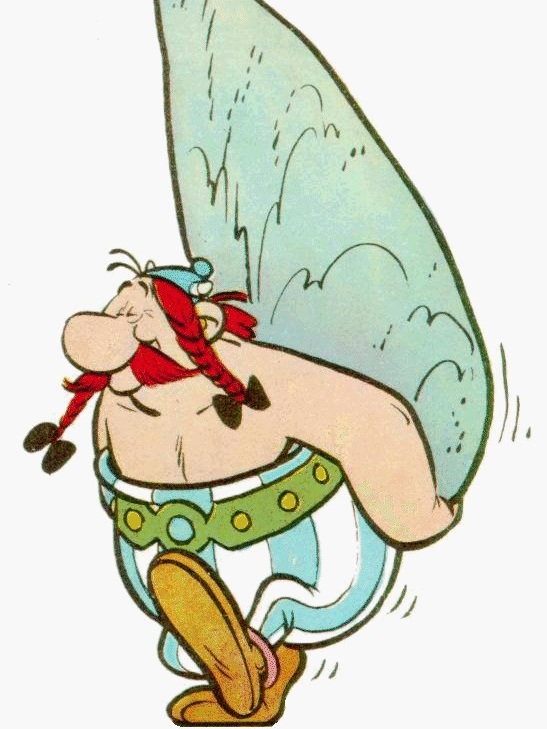
3. Obelix (The Adventures of Asterix by René Goscinny and Albert Uderzo)
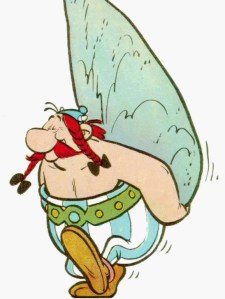
Obelix

When the ancient Roman Empire conquers Gaul, a vast region of Western Europe, they don’t conquer all of it. One tiny settlement, “the village of the indomitable Gauls,” remains free. The good-natured residents of this tiny town repel the legions of Rome thanks to a potion that gives them temporary surges of superhuman strength. When young Obelix falls into a cauldron of this potion, it has a permanent effect on him. Obelix grows into a pudgy delivery man who can lift anything, cannot be harmed and is literally unstoppable.

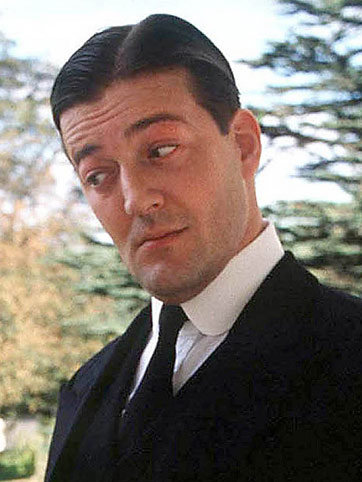
2. Jeeves (Carry On, Jeeves by P.G. Wodehouse)
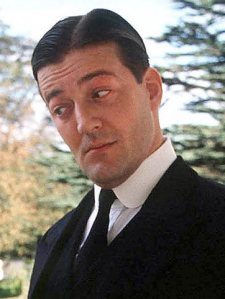
Jeeves

Imagine Socrates, Confucius and Solomon rolled into one person, and then make that person a polite British valet. Congratulations: you’ve just imagined Jeeves, insofar as human imagination can devise a person as brilliant as he. Jeeves doesn’t contend with giants or monsters or criminals—if he did, they would be toast. No, Jeeves turns his colossal genius toward solving social crises and keeping his wayward employer, well-meaning but dimwitted Bertram Wooster, out of trouble. Jeeves’s dry wit, perfect composure and sheer intelligence make him an inexorable force of peace and order.

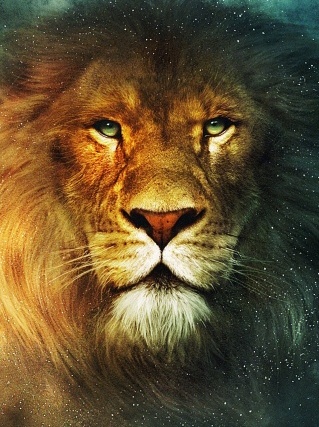
1. Aslan (The Chronicles of Narnia by C.S. Lewis)
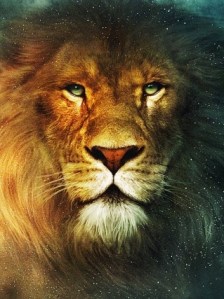
Aslan

Aslan is basically Jesus Christ, and also a lion with huge muscles and sharp teeth. You can’t get any more unstoppable than that. What’s that? Aslan dies? Please. Aslan watches Gandalf conquer death and says, “See here, lad, this is how it’s done.” Able to appear anywhere and do anything with his infinite wisdom and boundless power, Aslan is absolutely the most unstoppable hero in any fiction I have ever read.

O people of the Internet, what unstoppable literary heroes would you add to this list? Let us know in the comments!