149. Why I Watch Cartoons

As many of my readers have probably noticed, I like cartoons.

Well, I like some cartoons. Others I would watch only on pain of death, and perhaps not even then. (I’m looking at you, SpongeBob SquarePants.) Besides loving many animated films—for example, classic Disney movies and everything directed by Hayao Miyazaki—I enjoy television shows produced for kids.

I also like literature, especially the classics. Explosions? Car chases? Sultry romances? Bah! Humbug! To blazes with such nonsense! Give me meaningful themes, compelling characterization and well-crafted plots.

Thus I decided to take no fewer than three literature classes in one semester when I was in college. (Where was Admiral Ackbar when I needed him?) For months, I was hammered by grim novels like Silence, a bleak story about the silence of GodOne Hundred Years of Solitude, a fantastical history of a disturbing, sordid society; The Penelopiad, a cynical postmodern perspective on The Odyssey; and several more depressing books.

It was not a happy semester.

Some notable literature is lighthearted—I thank God for cheerful authors like P.G. Wodehouse—but the good stuff is mostly depressing. Even stories by humorists like Mark Twain and James Thurber have tragic undertones. Thurber once wrote, “To call such persons ‘humorists,’ a loose-fitting and ugly word, is to miss the nature of their dilemma and the dilemma of their nature. The little wheels of their invention are set in motion by the damp hand of melancholy.”

I like cartoons because they’re innocent, bright and funny, and they’re unapologetic about it.

Do cartoons give a balanced view of the world? Of course not—but then, neither does much of the best literature. Cartoons remind me that the world can be a pleasant, cheerful place, even as literature reminds me that it can be a dreadful, hopeless one.

For me, cartoons are a kind of escapism.

Is escapism wrong? When balanced with realism, I don’t believe it is. To quote J.R.R. Tolkien, who is awesome, “I do not accept the tone of scorn or pity with which ‘Escape’ is now so often used. Why should a man be scorned if, finding himself in prison, he tries to get out and go home? Or if he cannot do so, he thinks and talks about other topics than jailers and prison-walls?”

A Farewell to Arms tells me there is suffering in the world. My Little Pony: Friendship Is Magic tells me there is good in it. The Great Gatsby tells me happiness can’t be bought with money or popularity. Phineas and Ferb tells me happiness can be found by two kids sitting in the shade of a tree on a summer day. Animal Farm tells me the good guys sometimes lose. Avatar: The Last Airbender tells me the good guys sometimes win.

The other reason I watch cartoons is because, well, they’re fun to watch.

148. New Year’s Resolutions

In Ecuador, people celebrate the new year by burning effigies in the streets.

Good times, good times.

Ah, sweet memories.

In Indiana, however, the local authorities frown upon such celebrations. It’s too bad. Since setting things on fire is out of the question, I’ve decided to begin the new year by making some resolutions.

I’m sharing these resolutions on TMTF in order to make them official. After all, a resolution is much harder for me to forget (or ignore) once I’ve announced it publicly.

I will be focused, intentional and self-disciplined

I’ve squandered countless hours on the Internet: reading trivial articles, watching pointless videos and generally wasting time. I’ve also lost many hours due to procrastination, poor planning and sheer aimlessness. This year I intend to invest my time, not merely to spend it.

I will finish the manuscript for The Wanderings of Lance Eliot

I wrote about this resolution in my last post, so there’s not much left to say. This year Lance Eliot shall resume his journey. I hope we both survive it.

I will not be anxious, insecure or obsessive-compulsive

I can’t control my feelings. However, I can control my actions. This year I’ll try to remember what the Apostle Paul wrote about love, which “always trusts, always hopes, always perseveres.” That’s a good example to follow.

I will improve my Spanish

My grasp of the Spanish language—a dodgy thing at the best of times—has weakened severely since my graduation from high school. How do I intend to study the language? By watching cartoons in Spanish, of course.

I will grow sideburns like the Tenth Doctor’s

Saving the universe? Bah! A negligible accomplishment compared to having such awesome hair.

Saving the universe? Bah! A negligible accomplishment compared to having such awesome hair.

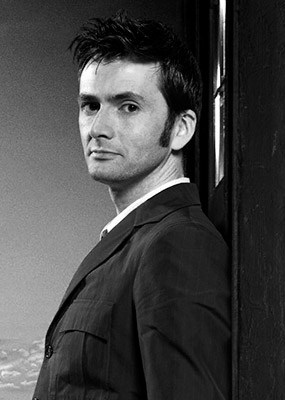
During his tenure as the protagonist of Doctor Who, David Tennant boasted some splendid sideburns. This year I’ll strive to grow sideburns of comparable majesty.

I will take steps forward

Now that my life has settled down, I must start planning for years ahead. This year I intend to look into future career options.

Have a truly fantastic new year, dear reader!

Do you have any resolutions for the new year that you’re willing to share? Let us know in the comments!

145. Snow

There was once a man named Dante Alighieri. You may have heard of him. He wrote Inferno, a cheerful, lighthearted little poem about hell.

According to Dante, hell is packed full of horrors: demons, monsters, rivers of blood, blazing tombs and other awful things. His version of hell is divided into concentric circles, and each is more gruesome than the one before.

What is in the innermost circle, you ask? What dreadful torment afflicts Satan himself?

The answer, of course, is snow.

Well, the answer is technically ice, but snow is close enough. (Snow consists of ice crystals, right?) Dante apparently disliked cold weather as much as I do.

Snow is falling outside. Well, falling isn’t the right word. The snow outside is traveling more or less horizontally, driven along by icy blasts of wind. It’s the first blizzard of winter, and it makes me wonder why I decided to come back to Indiana. I could have gone anywhere on Earth. I could have settled in the Sahara. Why did I choose the American Midwest?

As I grew up in Ecuador, snow was something remote: splashes of white on distant mountain peaks. At this moment, snow is a cold, wet carpet just outside my front door. I prefer my snow on faraway mountaintops. Right now, it’s too close for comfort.

I must admit snow can be quite pretty. On a night with no wind, a gentle snowfall is one of the most lovely things I’ve ever seen. New snow sparkles in the sunshine. Individual snowflakes, examined carefully, are microscopic works of art.

Tragically, the beauty of snow often comes at the cost of bitter cold, biting winds, icy roads and dreary skies. Even snow loses its charm. It becomes dull and crusty as days go by, or else turns to muddy slush.

At times like these, when wind rattles the windows and snowflakes turn the world white, I love lounging in an armchair, listening to Christmas music and drinking tea. Sooner or later, however, I must don my duster, set my face like flint and venture forth into the maelstrom of howling wind and stinging ice. It is a harrowing thought.

I’ve never before considered hibernation, but I like the thought of sleeping through the winter and awaking in the spring. Alas, my employer would probably disapprove. C’est la vie.

144. What Makes Christmas Special

Christmas.

What comes to your mind? Snow? Colored lights? Gift cards?

When I think of Christmas, what comes to my mind are palm trees, beaches at twilight and dusty houses built of cinder blocks.

Nothing says Christmas like a beach at twilight.

Nothing says Christmas like a beach at twilight.

As a missionary kid in Ecuador, I spent many Christmas vacations with my family at the beach. We’d pile into our car, crank up Adventures in Odyssey on our CD player and drive for hours: descending from the heights of the Andes, passing banana plantations, stopping at derelict gas stations for fuel and ice cream, winding among low hills and finally arriving at the beach.

Towns and villages are scattered across the Ecuadorian coast. Most of them are small, dirty, unimpressive places. Ecuador is a poor country. In December, however, these little communities are brightened with fake Christmas trees and cheap colored lights.

Not Relevant

Not relevant to this blog post, but adorable.

What really sticks in my memory is the way people celebrated. My old man and I once passed a merry gathering of children in a little town on Christmas Eve. Many were barefooted; most were dirty; nearly everyone was smiling. It was a scene Charles Dickens would have been proud to write.

In Ecuador, Christmas is a time for celebration. It’s a time for fireworks, family get-togethers and three-liter bottles of Coca-Cola. (Yeah, we’ve got those in Ecuador. Be jealous, Americans.) It’s a time for celebration.

Of course, in many ways, Christmas in Ecuador isn’t much different from Christmas in the United States of America. There are the same silly commercials. The same packed shopping malls. The same frenzied media trying to squeeze as much money as they can out of the holiday season.

All the same, when I see the extravagant displays of colored lights around my current home in Indiana, I miss the cinderblock houses on the Ecuadorian coast with tacky tinsel in the windows. The dusty Nativity sets in the corners of living rooms. The cheap ornaments hung from two-foot Christmas trees. The flimsy plastic cups of Coca-Cola.

Most of all, I miss the joy.

Today’s post is about Christmas as a holiday. There is a much deeper meaning to Christmas, and I’ll write about it later this month. For now I want to share what I believe makes the holiday special. It’s not the gifts or the decorations or the music or the food. Even the Grinch understands (eventually) that Christmas means more than stuff.

Joy and celebration and being together with loved ones are what make the holiday special. The other stuff is nice, of course. The holiday stuff is like pretty wrapping paper and shiny ribbons covering the gifts under the Christmas tree.

In the end, though, who wants just the ribbons and wrapping paper without the presents?

142. Moments of Pure Awesome

I recently decided I wanted a duster. What is a duster, you ask?

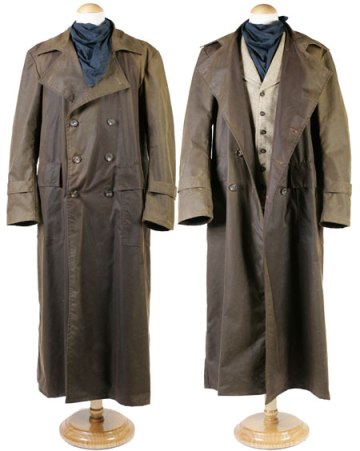
This, dear reader, is a duster:

Dusters

Isn’t it neat? Take just a moment, dear reader, to bask in its majesty.

My longing to own this particular overcoat began a few days ago, when I checked Wikipedia to find out what sets apart dusters from trench coats. (Dusters are distinct for having a slit up the back to the level of the waist, which allows them to be worn comfortably on horseback.)

Like most overcoats, dusters are cool. Neo from The Matrix wears a duster. Vash the Stampede wears a duster. Most gunslingers in Westerns wear dusters. Seriously, dusters are awesome. I even mentioned one in my last post.

Before continuing, I must make one thing clear: I haven’t accumulated much stuff in twenty-two years of moving from place to place. No matter where I’ve gone, however, I’ve kept one thing: a tendency to be neat and organized. When it comes to my possessions, I generally keep an accurate mental inventory of what I have and where I have it.

It was with great surprise, then, that I opened my hall closet a couple of days ago—fewer than twenty-four hours after deciding I wanted a duster—and found one.

I was puzzled. How in blazes did I acquire a duster? From where had it come? How long had it been hanging unnoticed in my closet?

Then I remembered. Some relatives had given me a bundle of used clothes a couple of months before. I’d hung them up in my hall closet without really looking at them, which is how I had overlooked that they had given me a freaking duster.

To say I am excited is a staggering understatement. Without paying a cent, I have acquired a warm duster that fits comfortably and billows satisfactorily when I walk against the breeze. (The coat probably looks silly, like I’m wearing a brown canvas tent, but that’s not the point—it makes me feel cool, which is what matters.)

When I found a duster hanging in my hall closet, it was a Moment of Pure Awesome.

There have been moments throughout my life, Moments of Pure Awesome, when it felt as though God were patting me on the shoulder and saying, “There, there, you’re going to be all right.”

In the worst months of my Thursday Afternoon the Soul, a year and a half of severe depression, I spent a week camping and traveling with my family in California. It was an unexpectedly perfect week, seven days of sunshine, peace and laughter: seven days peppered with Moments of Pure Awesome.

When I was struggling to find a publisher for The Trials of Lance Eliot—and beginning to wonder whether writing books was worth the trouble—I received a package from a creative writer whom I had met only once. It was filled with letters. A class of grade school kids had read a manuscript of mine and wanted to share what they liked about it. It was another Moment of Pure Awesome.

In my penultimate semester of college, two friends presented me with a beautiful sketch of Uncle Iroh: one of my favorite fictional characters. The gift was a random, wonderful act of kindness. On that night many months ago, my friends gave me something more than a picture: a Moment of Pure Awesome.

I could go on for many, many paragraphs, but I’ll conclude with two brief thoughts.

Dusters are really cool, and I’m thankful for a God who gives us Moments of Pure Awesome.

138. Advent Conspiracy Again

Colored lights. Holiday music. Television specials. Peppermint-flavored everything. Coca-Cola commercials.

The Christmas season is here, and along with it comes another opportunity to do something awesome.

I wrote last year about the Advent Conspiracy, an initiative inspired by three simple facts.

1. Americans spend $450 billion on Christmas every year.

2. Lack of clean water kills more people every day than almost anything else on Earth.

3. The estimated cost to make clean water available to everyone on Earth is about $20 billion—roughly 4.5% of how much Americans spend on Christmas every single year.

A few years ago, someone asked the question: What if we spent a little less on Christmas stuff and gave the extra money to projects that provide clean water?

Those shoes and DVDs and extra holiday decorations and all the other stuff that spends most of its existence gathering dust in a closet or on a shelf—these things can become life, health and hope for people in poor countries.

I usually dislike churchy videos, but this one is amazing. Watch it. Go on, I’ll wait for you.

There’s nothing wrong with giving and receiving Christmas presents. (I’ve already purchased one or two gifts for family members.) The challenge of the Advent Conspiracy isn’t to stop spending money for Christmas, but to spend less on stuff and more on people in need.

We don’t have to give up our Christmas traditions. Quite the opposite! I think it’s time we add new traditions to our celebration of Christmas: spending less, donating more, giving water, saving lives.

The Advent Conspiracy is dedicated to providing clean water, but its principles can be applied to other good causes. The hungry, the homeless and the brokenhearted need our money as much as the thirsty. Where we give doesn’t matter as much as whether we give.

This Christmas, we can rescue people from poverty, thirst and sickness. This Christmas, we can change the world—or we can buy more stuff for ourselves. It’s our choice.

More information about the Advent Conspiracy can be found here.

Have a truly glorious Christmas season!

137. A Note from the Typewriter Monkeys

This is Aquila, one of the hardworking monkeys whose diligence, skill and patience keep this blog alive, writing on behalf of the entire Typewriter Monkey Task Force.

Although the Boss was supposed to post on this blog today, he fell asleep on the floor a few hours ago. (I suppose it must be acknowledged that he had a tiring week, with seven consecutive overnight shifts at his job followed immediately by a two-day trip to visit relatives for Thanksgiving.) We tried waking him, but he only rolled over and mumbled incomprehensible phrases such as “Dodongo dislikes smoke” and “The cake is a lie.”

In his absence, the Typewriter Monkey Task Force would like to express our sincere hopes that the readers of this blog had a pleasant Thanksgiving, and to wish them many blessings in the final weeks of this year.

I would like to take this serendipitous opportunity to clear up a few misunderstandings. Contrary to suggestions made by our Boss in previous blog posts, members of the Typewriter Monkey Task Force are responsible, honest animals who work hard, accept instructions and absolutely never dream of breaking into the cupboards and refrigerator every week while the Boss is asleep to steal Oreo cookies and chocolate milk.

We also request for readers to post many comments on this blog petitioning our Boss to give us more bananas and higher salaries.

The Typewriter Monkey Task Force thanks you for reading this blog, and please do not forget about the bananas.

Regards,

Aquila and the Typewriter Monkey Task Force

133. Sketches from the Workplace

My job is often satisfying, sometimes discouraging, occasionally hilarious and never boring.

I work in a group home for men with mental and physical disabilities. As a residential trainer, my job is to help these gentlemen—officially titled consumers—live as independently as possible. So many interesting things have happened in my workplace in the past few months that I can’t help sharing a few brief sketches.

(To protect their privacy, I’ve given the consumers false names.)

Mark Twain is a sweet guy with a fine mustache who informs me there are mummies lurking everywhere. The refrigerator, the bathroom cupboards, beneath the sofa—nowhere is safe from these menacing spooks, which will, Mark Twain cheerfully informs me, bite off my throat and eat my eyeballs.

Edgar Allan Poe is an old gentleman who loves Dracula and scary movies. Due to dementia, he’s prone to outbursts of verbal and physical aggression, including cursing and death threats. In his calm moments, however, Edgar Allan Poe is quite a gentle fellow.

Charles Dickens, the oldest consumer at the group home, spends his days lounging in a recliner and watching television, getting up at intervals to amble around the house and shake hands with staff members.

Mentally speaking, Anton Chekhov is baby. He spends much of his time in a wheelchair, but enjoys crawling around the house.

When he’s not roaming the house in a mechanical wheelchair, Jules Verne likes playing with toys and listening to country music on his radio.

Rudyard Kipling gets around the house with a walker. He often sucks meditatively on one finger and stares into space, presumably thinking deep thoughts.

James Joyce is unquestionably the most trying resident of the group home. He suffers from obsessive compulsive disorder and a decidedly obnoxious personality.

Victor Hugo is a short, portly gentleman who smiles, mumbles and speaks either English or Russian—I haven’t figured out which. He bears strong resemblance to both Benjamin Franklin (the American thinker) and Otis Cambell (the drunk from The Andy Griffith Show).

A few consumers have honored me with unique names. On the occasions he remembers my name, Mark Twain calls me “Ayum.” Although Charles Dickens occasionally pronounces my last name as “Took,” he usually addresses me as “Moe” or “Doug.” James Joyce very pragmatically calls me “Man With Glasses.”

They may not always remember my name, but Mark Twain and Victor Hugo never forget my love of coffee. Hardly a shift goes by that one or the other doesn’t smile and mumble, “You want some coffee?”

The simple process of brewing coffee is complicated by Edgar Allan Poe. He’s on a tight fluid restriction, which means he’s not allowed to drink coffee. (My heart aches for the poor man.) Having explained to Mark Twain and Victor Hugo that coffee makes Edgar Allan Poe sick, I conspire with them to keep it hidden. At the moment, the microwave is our most reliable hiding spot.

I’d previously hidden the coffeepot atop kitchen cupboards, but stopped because of James Joyce. Staff members have been warned to keep their drinks out of sight due to his alarming tendency to steal them. Although James Joyce’s behaviors are sometimes frustrating, they can be hilarious. A police siren once sounded while James Joyce was sitting at the table. Glancing warily out the window, he muttered, “The police, they’re comin’ for me.”

I’m fascinated by the unique movements with which consumers move around the house. Victor Hugo pushes his walker with quick, mincing steps. Charles Dickens clomps noisily. Anton Chekhov crawls like an enormous baby. Mark Twain shambles, Edgar Allan Poe prowls, James Joyce sidles and Rudyard Kipling shuffles. Jules Verne wanders vaguely from room to room.

Some of the consumers are cheerful. Victor Hugo, for example, smiles constantly. Only once have I seen him lose his temper. When I tried taking off his foot brace in order to check an injury on his shin, he frowned and threatened to break my neck. It took much self-restraint to keep from laughing.

Not all of the consumers are as cheerful as Victor Hugo. My heart aches for Jules Verne, who seems to be on the verge of tears about half the time. I also pity Anton Chekhov, whose mind isn’t developed enough to understand why people do cruel things like scrubbing him with washcloths and forcing toothbrushes into his mouth.

There are days when I love my work, and days when I simply want to go home, drink tea and never sweep another floor or fill out another document or deal with another human being ever again.

Although I plan eventually to become a writer, teacher or editor, I’m thankful for my job. It gives me opportunities to serve others, and also free coffee.

I can’t ask for much more than that!

129. Useful French Phrases…?

Mitigating circumstances is a flexible phrase, covering everything from vehicular breakdowns to medical emergencies to extraterrestrial invasions. Today, due to mitigating circumstances, my typewriter monkeys and I don’t have a regular blog post prepared.

However, as I was looking through some old files on my computer the other day, I stumbled upon a list of useful* French phrases. I think my mum sent them to me years ago. Where she found them, I haven’t the slightest idea.

This blog post presents each phrase in three parts. The first is the phrase in the original French. The second is a phonetic guide to pronunciation. The third is an English translation of the phrase.

Now, for the benefit of people everywhere, TMTF humbly presents thirteen French phrases for practical everyday use!

*Disclaimer: These phrases may not actually be useful. Do not use them in France.

Tu as grossi. (tu ah gro—si) “You’ve put on weight.”

La police, ne t’a pas encore trouvé? (la po—lees ne ta pa zen—cor troo—vay) “Haven’t the police found you yet?”

Voulez-vous cesser de me cracher dessus pendant que vous parlez! (voo—lay voo se—say de me cra—shay de—su pen—dan que voo parl—ay) “Would you stop spitting on me while you’re talking!”

Le réalité et toi, vous ne vous entendez pas, n’est-ce pas? (le ree—al—ee—tay eh twa voo ne voo zen—ten—day pah nes pah) “Reality and you don’t get on, do they?”

De quoi est mort votre dernier esclave? (de kwa eh mor votr der—nee—er es—klahv) “What did your last slave die of?”

Je vous aurais bien aide, mais je ne vous aime pas. (zhe voo zaw—ray bien ai—de may zhe ne voo zaim—e pah) “I’d help you, but I don’t like you.”

Vos enfants sont très beaux. Ils sont adoptes? (vo zen—fant son tray boh. Il sont a—dop—te) “Your children are very attractive. Are they adopted?”

Ça pourrait être joli si c’etait décoré avec goût. (sa poo—ray etr zho—li si se—tay de—cor—ay avec gu) “It could be quite nice if it were decorated with taste.”

Combien de vos clients sont morts? (com—byen de vo clee—ent sont moo—ree) “How many of your customers have died?”

Ces poissons, ils sont mort d’irradiation? (se pwu—son il sont mor di—ray—di—ay—shun) “Did these fish die of radiation sickness?”

Comme dessert, que me suggereriez-vous pour effacer le goût du plat de resistance de ma bouche? (com de—zert com—en ke me su—zhair—er—i—ay voo poor eff—ah—say le goo du pla de re—zi—stans de ma boosh) “For dessert, what would you suggest to get the taste of the main course out of my mouth?”

Ce restaurant n’est pas aussi bon que le McDonalds. (se re—staw—ran neh pas o—si bon ke le mac don—alds) “This restaurant isn’t as good as McDonald’s.”

Je préfére l’Espagne. (zhe pre—fer les—pan—ya) “I like Spain better.”

127. Please, No More Advice!

Imagine a man dressed in rags and standing ankle-deep in snow, shivering in the gale blasting from a winter sky and peering through a window into a warm living room. On the other side of the glass, a man wrapped in a bathrobe sips hot chocolate and gazes curiously at the visitor outside his window.

“I have a question,” says the man in the bathrobe, speaking loudly enough for the man in rags to hear through the glass. “Would you please describe exactly how it feels to be cold?”

If you were the man in rags, how would you answer? Words like icy and frigid are meaningless to someone who has never felt cold, and adjectives like horrible and painful are too vague.

If you’ve never been severely depressed, I’m afraid I can’t describe it any more than the man in rags can tell the man in the bathrobe what cold feels like. The best explanation I can give is that depression is like lying on the very bottom of the ocean. Everything is cold and dark, and a suffocating pressure makes the simplest action ten times more difficult.

Not long ago, I read an article in which the writer described his struggle with depression, insecurity and suicidal thoughts. He has my utmost sympathy. If I ever met the man, I’d offer him a cup of tea and tell him how much I admire his courage in getting out of bed every morning.

Some of the people who commented on the article had other ideas.

“Depression. Who needs it. I say, if you’re upset and sad then own it.”

“Depression eh? Been there, done that years back. A large part of it is physical. My recommendation, eat fruits and veggies … Get some exercise … Join a gym.”

“You are what you are, you seem to accept you have issues, work on them and things will get better.”

The writer made himself vulnerable, confessing his personal struggles. Some of his readers responded by telling him, You’re obviously getting it wrong, so let me show you how to get it right. More vegetables! Better attitudes!

I suspect many of these readers are like the man in the bathrobe. They see, but they don’t understand. They look through the window at the man in rags, but they can’t begin to imagine how it feels to be cold.

To my relief, some of the people who commented on the article took a more compassionate approach.

“Thanks for sharing … Hopefully you’re also able to disregard all the ‘advice’ comments from people who don’t actually know what you’re going through.”

“I hope you win your battle. I have to say, I don’t understand it at all, but I know it seems to be very real for many people.”

“In a world filled with selfish, lazy, disgusting, and greedy [obscenities] that make all of us lose hope in the world, it is people like you that give me the strength to live on. Thank you for sharing a bit of yourself with us.”

Which kind of comment do you think the writer of the article found more helpful?

I need to make one thing very clear—advice can be compassionate, useful and awesome. In many circumstances, it’s the best thing you can offer. Advice can be a powerful, practical gift, even to people who may not want to hear it.

The reason I’m writing this blog post is that, in many circumstances, advice isn’t the best thing you can offer. It’s the worst.

In most cases, the person giving advice genuinely wants to help. However, there are times when advice—even wise, honest, well-meaning advice—isn’t helpful. Those who are humble, brave and honest enough to confess their struggles and mistakes deserve compassion, not lectures. If lectures must be given, compassion must come first.

What’s the best way of figuring out whether or not to give advice? In my experience, it’s one question.

Will this advice actually help this person?

If not, it’s probably best not to give it.

That’s my advice, and I hope it helps.