200. TMTF RAP BATTLE!

My typewriter monkeys have finally revealed their sinister plans for this blog’s two hundredth post. They’ve hired some guy called Ice Kream to humiliate me in a rap battle. I’m not sure what a rap battle is, but I know one thing.

This is my blog, and I will defend it!

I should have seen this coming. Oh, well. Live and learn.

I want to thank Kevin McCreary from The Ceiling Fan Podcast. I sent him an email asking to use a rap beat he’d written for his show; he replied by offering to write a brand-new beat and record guest lyrics for this rap battle. His generosity is amazing, and it has been an honor to work with him.

To hear more excellent music from Kevin and the Ceiling Fan crew, check out M’Kalister Park, a silly and wonderful album available on Amazon.com. I highly recommend it, especially if you’ve ever listened to Adventures in Odyssey.

Next, a word to my typewriter monkeys: If you ever do this again, I will donate you to the zoo. That is all.

I would like to thank my father for supporting this blog since before it began. His fantastic artwork, lavish encouragement and gentle criticism have been extremely helpful. Thanks, old man. You’re a Stout Fella.

I’m truly grateful to everyone else who has supported TMTF by writing guest posts, sharing artwork, leaving comments, celebrating Be Nice to Someone on the Internet Day, following the blog, adding it to their blogrolls, linking to it via social media or simply reading it. I deeply appreciate every bit of support!

I guess I should give a shout out to my typewriter monkeys—Sophia, Socrates, Plato, Hera, Penelope, Aristotle, Apollo, Euripides, Icarus, Athena, Phoebe and Aquila—for occasionally helping out with this blog. Thanks, guys.

TMTF ain’t much, but soli Deo gloria all the same.

I’m not sure what lies ahead for this blog. Heck, I haven’t the slightest idea of what my own future holds.

As always, I’m comforted by these words from the old hymn: “Through many trials, toils and snares I have already come. ‘Tis grace hath brought me safe thus far, and grace will lead me home.”

I believe it, and I hope TMTF will be there to chronicle every serious, strange and silly thing along the way.

TMTF shall return on August 9, 2013. In the meantime, please feel free to check out my novel, past posts in the Archive or the fantasy novella I published as a serial on this blog.

Thanks for reading! We’ll be back!

195. Faith, Hope and Tea

There was once an old sage named Iroh. His wisdom was tempered by many sorrows and crowned with a compassionate heart, an affable nature and a passionate love of tea.

Needless to say, Iroh is one of my heroes.

Iroh

Iroh may be merely a character in Avatar: The Last Airbender, a television show, but his wisdom has left a strong impression on me nonetheless. In previous posts, I’ve shared his views on the futility of regret, the importance of seeking insight from many sources and the value of accepting help from others.

“Life is like this dark tunnel,” Iroh once remarked as he and a companion walked along a gloomy underground passage. “You may not always see the light at the end of the tunnel, but if you keep moving, you will come to a better place.”

Earlier this year, I found myself in a dark tunnel of my own. The posts on this blog took a dismal turn, covering subjects like depression. Then, far ahead, I thought I saw a glimmer of light. A long, dark winter surrendered to the beauty of spring. The trees outside my apartment exploded into sprays of pink blossoms. I renewed my hope that things would get better.

Thank God, things have definitely gotten better.

I won’t go into all the details, but I will share a few of the things that have made a positive difference in my life in past weeks.

I’m back on a consistent schedule

After months of bouncing between daytime and nighttime shifts at two different workplaces, I have returned to my ordinary schedule at my usual workplace. Not having to invert my sleep pattern every few weeks is a great relief!

Speaking of which…

I’m getting more sleep

In past years, I assumed I needed about eight hours of sleep every night, and averaged between seven and eight. However, the aforementioned changes to my work schedule (and my consequent sleep deprivation) forced me to reconsider how much sleep I need.

I concluded I require about nine hours of sleep every night, and I have since averaged between eight and nine. That extra hour of sleep has made a huge difference. I’ve had more energy, and my waking hours have been more productive. Bouts with depression have been milder and less frequent. Getting more sleep has been a tremendous blessing.

I’m being more consistent in fulfilling commitments and goals

Instead of using fatigue or depression as excuses to be undisciplined, I’ve been more consistent in getting stuff done. The more I practice self-discipline, the easier it becomes. It’s satisfying and empowering—and quite a relief—to fulfill commitments promptly.

I’m trying to be pragmatic

I tend to be neurotic. My anxieties have anxieties, as Charlie Brown would say. These are joined by all kinds of insecurities, doubts and obsessive-compulsive tendencies. I continue learning how not to get tangled up in all that wibbly-wobbly, feely-weely stuff, and how instead to live with the sort of simple, efficient pragmatism that comes from relying upon the grace of God: to win those battles with anxiety and insecurity by choosing not to fight them.

Which brings me to my final point.

I’m doing my best to live by grace

Yes, I write a lot about grace. I often struggle to understand that God not only forgives my sins, but bears with me patiently through my endless struggles with insecurity, depression and selfishness. No matter how dismal life seems, this promise remains: “My grace is sufficient for you, for my power is made perfect in weakness.”

Quoth Iroh, “You may not always see the light at the end of the tunnel, but if you keep moving, you will come to a better place.”

Step by step, I’m getting there.

192. Running Like Frodo

Today’s post was written by Zak Schmoll, a graduate from the University of Vermont with a double major in Accounting and Statistics. (For me, an English major, mathematical arcana like Accounting and Statistics inspire perplexity, fear and wonder.) On July 23, 2012 Zak undertook an epic quest: writing about one chapter of the Bible every day from start to finish. Check out his progress here!

Wherefore seeing we also are compassed about with so great a cloud of witnesses, let us lay aside every weight, and the sin which doth so easily beset us, and let us run with patience the race that is set before us, looking unto Jesus the author and finisher of our faith; who for the joy that was set before him endured the cross, despising the shame, and is set down at the right hand of the throne of God.

~ Hebrews 12:1-2

When I think about adventures, one of my favorite literary examples is Frodo Baggins, a reasonably comfortable hobbit who was thrown into the epic saga of The Lord of the Rings.

He carried the one Ring, the only thing separating the land of Middle-Earth from the evil domination of Sauron. Frodo wasn’t looking for an adventure, but one dropped in his lap out of nowhere.

I think we can see something similar in our Christian journey.

We are told that our life is a race. According to Strong’s numbers entry for this word race, there’s definitely an indication that this is not just going out for a jog. Some of the alternative words that are suggested are contest or contention. In other words, there is a definite opponent in this competition with real stakes.

We certainly have an adversary in the world, just like Frodo did. We are on a mission to overcome that opposition. For Frodo, that mission involved throwing the Ring into the fires of Mount Doom to destroy it forever. For us, our mission involves running this race successfully. Implicit in both of these statements is that we both have a target. Ours is not necessarily a geographic location, but it is certainly a place where we are in a good relationship with God.

How do we go about running successfully and making it to that destination?

Jesus himself pointed out a few pretty basic guidelines in Mark 12:30-31 that should govern all of our actions. First, we need to love God, and second, we need to love other people. The more we follow these two guidelines, the closer we will be walking to God.

Of course, I should mention that having a relationship with God in the first place is the most important thing. Without that relationship, all of the works in the world and love that we try to display don’t mean a whole lot.

Running successfully also means that we overcome stumbling blocks that are put in our way. Frodo had to fight through fatigue, betrayal, stress and anxiety in order to finally make it to his destination. Similarly, our lives will never be perfect either. There will always be problems that pop up. However, we are promised that through God, we can do all things (Philippians 4:13).

Our race does not stop because of roadblocks, but they do us to rely on God.

Our lives might not quite compare to the epic quest of Frodo Baggins, but we are in the middle of a race, a race run by being in a relationship with God and living with love. We need to love God and to love other people.

That is an adventure in itself.

188. TMTF Reviews: The Inspired Wisdom of Abraham Lincoln

When I read a book, it’s generally for one of three reasons.

1. The book has literary significance or has impacted society in some way.

2. The book was written by an author whose other books I enjoy or appreciate.

3. The book was shoved in my face by a friend or relative who commanded me to read it.

For the most part, the books in the third category prove to be good reads. I discovered classics like Beau Geste and Peace Like a River only because my relatives quite literally pushed them into my hands.

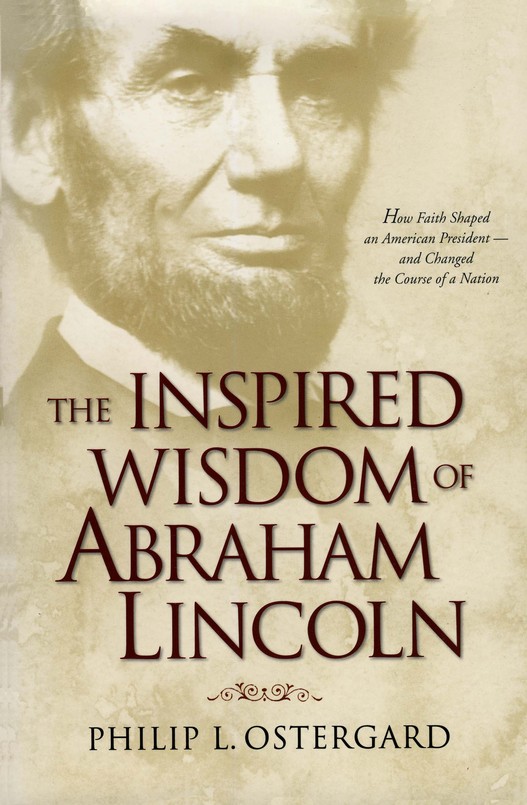
My grandfather, a kindly gentleman of tremendous intelligence, gave me a book last month titled The Inspired Wisdom of Abraham Lincoln. As far as I understand, the book impressed him so much that he purchased a brand-new copy for every one of his grandchildren—that’s roughly a dozen books.

If a book is good enough to buy nearly a dozen copies, I decided, it’s probably worth a look.

The Inspired Wisdom of Abraham LincolnThe Inspired Wisdom of Abraham Lincoln is a biography of the man who held the United States of America together when its dissolution seemed inevitable. More specifically, the book traces the development of Lincoln’s religious thought throughout his life by examining his speeches, letters and memorandums.

Was Abraham Lincoln, perhaps the greatest leader in American history, a believer or a skeptic? Did the fiery trial (as he put it) of devastating battles and political infighting destroy or strengthen a faith in a living God?

I won’t spoil the book’s answers to those questions—you’ve probably guessed them already—but I will say this: The Inspired Wisdom of Abraham Lincoln is an excellent read. The book mostly refrains from using second sources; the author writes, “I make my case stronger if the reader can be certain that he or she is reading the words of Lincoln.” Every major inference about Lincoln’s religious thought is drawn directly from his recorded statements.

These statements—contained in excerpts from memorandums, letters and speeches by Lincoln—are woven into a basic outline of his life. The author provides commentaries upon Lincoln’s statements, clarifying allusions to Scripture and giving historical and biographical context.

I knew about Abraham Lincoln. Don’t we all? He led the United States through the American Civil War! He saved the Union! He freed the slaves! Some of us are familiar with the images of the young man splitting rails in the Illinois frontier or the top-hatted politician pacing the halls of the White House. Beyond these vague ideas, however, I knew very little.

In the end, Abraham Lincoln turns out to be someone to whom I strongly relate. For much of his life, he suffered from intense depression. He loved literature. He wrestled with doubts about Christianity and religion in general. In many ways, he reminds me of myself. Lincoln and I even share a thing for hats.

The thing that impressed me most when I read The Inspired Wisdom of Abraham Lincoln is the way he kept calm and carried on. The country was falling apart—no, it was being actively pulled apart—and he held it together. His depression never left him. Lincoln and his wife lost a son during the Civil War; somehow, he pushed through his grief and kept making the shrewd decisions that saved his country. Lincoln’s sufferings would have broken an ordinary man. They would certainly have broken me.

In the end, Lincoln expressed a principle that may have carried him, and the Union, through the Civil War: “Without the assistance of the Divine Being . . . I cannot succeed. With that assistance I cannot fail.”

The Inspired Wisdom of Abraham Lincoln is a fine work of scholarship. It’s hardly a gripping read, but its conclusions are well-written and meticulously backed up with clear, unambiguous statements from Lincoln himself. Amid these statements and the biographical details surrounding them, the book includes occasional anecdotes that give a vivid picture of a fascinating man.

Inspired? Yes, I rather think so.

186. Adventures in Odyssey

Adventures in Odyssey should not exist. Every law in the known universe declares its continued existence impossible, but Adventures in Odyssey defies the odds and keeps going.

That, ladies and gentlemen, is amazing.

Adventures in Odyssey

Adventures in Odyssey is an original radio drama: an artistic medium that has been driven nearly extinct by films, television and the Internet.

More importantly, it’s a Christian program that’s really, really good.

I don’t mean to be uncharitable, but overtly Christian media is sometimes kind of awful. Christian video games stink. With a few outstanding exceptions—Gilead and Peace Like a River come to mind—openly Christian novels tend to be sappy, trite or one-dimensional. Much contemporary Christian music is horrendous. Religious films are often produced on a very low budget.

To wit, Christian media tends to be preachy, shoddy or simply bad.

Adventures in Odyssey is none of these things. Everything about the show—the writing, the music, the acting, the editing—is excellent. Did I mention the show, which has aired more than seven hundred full episodes, has been running for more than twenty-five years?

Odyssey is a little town in America; its exact location is the subject of much speculation. (At least one writer on the show has suggested the town moves around like the island from Lost.) The town’s most famous attraction is Whit’s End, an establishment for kids run by a middle-aged inventor named John “Whit” Whittaker and frequented by a colorful and ever-changing cast of characters.

One of my favorite things about Adventures in Odyssey is that it transcends genres. In one episode, an ordinary seminary student struggles to survive his studies. In the very next episode, a government spy is tracked to Odyssey by terrorists hellbent on weaponizing a deadly virus.

No other story I’ve ever read, seen or heard ventures into so many genres, and Adventures in Odyssey does it with effortless aplomb. Detective story? Sketch comedy? Spy thriller? Teen drama? Historical fiction? Adventures in Odyssey covers them all, often resorting to clever tricks like flashbacks and stories-within-stories.

One of the cleverest aspects of the show is the Imagination Station: an invention of Whit’s which is sort of like a cross between the TARDIS from Doctor Who and the virtual world from The Matrix. Basically, the Imagination Station lets a person (or several persons) enter a virtual adventure based on an event from history. This plot device allows the show to tell stories beyond the modern-day town of Odyssey, from the lives of Old Testament prophets to the battles of the American Revolutionary War.

Then there are the characters. Dash it, there are the characters.

Meet Wooton Bassett.

Wooton Bassett

“That’s a funny name,” remarks a kid meeting him for the first time.

“Yeah,” replies Wooton. “I know. It’s Old English for village by the wood.”

“Your parents were Old English?” demands the kid.

“No,” admits Wooton. “They were just old.”

After the incomparable Father Brown, Wooton Bassett is my favorite character in fiction. He surpasses even such legends as Atticus Finch, Jeeves, Anne Shirley and the Doctor in my esteem. I was incredibly honored when Paul McCusker, veteran Adventures in Odyssey writer and creator of Wooton Bassett, agreed to write a great guest post for this blog.

Wooton is a mailman, toy collector and huge fan of the highly successful PowerBoy comic series (which he secretly writes). He can play “Camptown Races,” and only “Camptown Races,” on a vast number of musical instruments. Wooton also furnishes his house with refurbished junk and produces such culinary wonders as popsicle cakes and jellybean casseroles. In everything, he acts with cheerful exuberance and perfect kindness toward everyone.

Wooton Bassett is, in absolutely the best possible way, freakishly strange. I wish he were my next-door neighbor.

Adventures in Odyssey is full of fascinating characters: Eugene Meltsner, the socially awkward genius; Harlow Doyle, the incompetent private eye; Bernard Walton, the pessimistic, sarcastic window washer; and, of course, Whit himself.

The show does a fantastic job of depicting nuanced characters. I once read a blog post by a nonreligious listener who loved Adventures in Odyssey and appreciated the respectful way it handled issues like agnosticism. Eugene Meltsner, a religious skeptic, wasn’t stereotyped or demonized, but developed with the same believable mixture of virtues, flaws and lovable quirks as the other characters.

To sum up: Adventures in Odyssey is awesome, and I wish there were more eccentric, toy-collecting, comic-obsessed mailmen in my life.

In case you’re interested, Adventures in Odyssey has a website where many episodes can be heard online.

184. An Explosion of Pink

A tree has stood outside my apartment all winter: an empty, skeletal tangle of bare twigs and branches. There were brief moments when this tree was lovely—its intricate silhouette looked quite nice against the rising sun—but it seemed bleak and ugly most of the time.

One day, about two weeks ago, I was astonished to glance out my window and see this:

002This transformation happened almost overnight. A skeleton of weathered wood had burst into a fountain of blossoms, swaying in the breeze and sending petals fluttering to the ground. Something dead had exploded into bright, beautiful, exuberant life.

So yeah, that’s what’s been happening with me.

April was not a good month. My work schedule, ever as capricious and unpredictable as the clouds, changed repeatedly, forcing me to switch between daytime and nighttime shifts. I suffered from severe sleep deprivation. At work, I was compelled to handle unexpected responsibilities on short notice. I lost my appetite. My recurring struggle with depression became a constant battle.

All the while, my obligations and commitments kept coming with the unstoppable regularity of ocean waves. I felt about three seconds away from a breakdown on at least two occasions. To paraphrase the words of Lincoln, it seemed impossible for me to remain as I was. I could recover or break down, but I couldn’t keep going.

Then, around the beginning of May, things changed with the suddenness of a tree exploding into bloom.

My depression disappeared as quickly as it came. I managed to get some sleep. My appetite returned. Work became easier and my schedule eventually returned to normal. (I doubt it will stay that way, but I can hope!) I watched a couple of movies and some YouTube videos and actually enjoyed them.

I’m taking a break from work this week, starting tomorrow. Fueled by cookies and coffee, I’ll travel north to watch Iron Man 3 with my uncle, discuss Abraham Lincoln with my grandfather, play Mario Kart with my cousins and generally have a good time visiting friends and relatives.

My life is looking better and brighter by the day.

I knew the tree outside my apartment wouldn’t stay bare forever, but I didn’t think it would resurrect so suddenly. I definitely didn’t expect it to be pink.

I was sure my life would get better eventually, but my recovery still astonished me. I certainly didn’t expect it to be so overwhelming.

My sufferings are trivial compared to those faced by other people in the world. I have enough to eat. My family is awesome. I have no desire to hang myself, read the Twilight series or end my own life in any other way. I’m ridiculously blessed even through difficulties.

All the same, my difficulties last month seemed quite bad enough, thank you.

It has been endlessly comforting to look back over those dark weeks in April and realize they were not without purpose. Unlike poor old Job, who probably never knew why God made him suffer, I can see at least some meaning in last month’s trials.

Never before have I had such an appreciation for not being depressed. Freedom from anxiety and hopelessness is something I no longer take so much for granted. I’m getting more sleep and worrying less about the future.

More importantly, I learned last month to stop blaming myself for bad days. Neither bad nor good days are usually my doing.

This makes my life less complicated. I don’t have to figure out what I’m doing wrong on bad days or right on good ones. I can simply persevere through the bad and be thankful for the good, giving God my best through every kind of day. My best will be better on some days than on others. That’s all right. I may be inconsistent, but God’s grace is not.

The tree outside my window has faded to dull green. My life will sometimes seem hopeless and difficult. I’m not giving up. After all, every desolate, skeletal tree may soon become an explosion of pink.

004

181. My Battle with Depression

I am now the most miserable man living. If what I feel were equally distributed to the whole human family, there would not be one cheerful face on the earth. Whether I shall ever be better I can not tell; I awfully forebode I shall not. To remain as I am is impossible; I must die or be better, it appears to me.

~ Abraham Lincoln

I don’t often write about depression. It’s not a pleasant subject, and I make an effort to be optimistic. Quoth Louisa May Alcott, a ridiculously cheerful person: “I can only say that it is a part of my religion to look well after the cheerfulnesses of life, and let the dismals shift for themselves.”

Besides, depression is kind of embarrassing. It’s easier not to talk about it.

I’ve struggled throughout my life with periods of anxiety and hopelessness—I once wrote a post about the worst of them—but depression isn’t usually a severe problem.

Recently, however, it has been more of a struggle. More than once in past weeks depression has impaired my ability to function… and today is one such occasion. Earlier today—not today today, but the day I wrote this post—I made some last-minute arrangements and came home early from work.

I just couldn’t do it.

There was no way on God’s green earth I could spend eight hours in a group home administering medications, washing dishes, changing soiled undergarments or doing whatever the heck else needed to be done. It was hard to do anything except keep breathing.

Thank God, I’m feeling much recovered—well enough, at least, to write a blog post. (Tea, rest and Brawl in the Family are fine cures for depression.) This is a post I’ve wanted to write for some time: not as a complaint or a plea for attention, but an honest acknowledgment of a personal struggle.

Dash it all, personal posts are the hardest to write… except for top ten lists and book reviews. But I digress.

I’m thankful not to have any troubles worse than depression, and extremely grateful for the loving support of friends and family.

Several people in my family suffer from depression. My old man, for example, has battled it throughout his life. Do you know what else?

My old man is awesome.

I will consider mine a life well spent if I grow up to be just like him. My old man is consistently cheerful, funny and kind. People are always surprised when they learn he suffers from intermittent depression and chronic physical pain. He gives me hope that I too can live a cheerful, useful life despite my own struggles with depression.

I wonder sometimes why God allows me to experience anxiety, fatigue and hopelessness. Wouldn’t I be a good deal more effective doing good things if I were not occasionally burdened with debilitating depression? I mean, really, God?

In the end, I always come back to the passage in the New Testament in which the Apostle Paul suffers a paralyzing problem of his own:

I was given a thorn in my flesh, a messenger of Satan, to torment me. Three times I pleaded with the Lord to take it away from me. But he said to me, “My grace is sufficient for you, for my power is made perfect in weakness.”

Depression might be a thorn in my flesh. It’s certainly a nuisance. Nevertheless, God’s answer to me has been the same as his answer to Paul. The grace of God is sufficient. That, as they say, is that.

God may not have spared me depression today, but he enabled me to pull some strings to come home early from work. He didn’t give me the strength for which I asked. Instead, he gave me tea and rest and funny webcomics.

I continue doing what I can to prevent depression: eating fruits and vegetables, drinking too much tea, working out (often while listening to music from My Little Pony: Friendship Is Magic, which is either really stupid or really awesome), watching cheerful cartoons, trying to get enough sleep and asking God for his help.

I have good days. I have bad days.

Through every kind of day, God’s grace is sufficient. Always.

180. Thoughts on Job and Ecclesiastes

I like some books of the Bible much less than others.

Take Ezekiel. I dislike Ezekiel. Paradoxically, it manages to be both trippy and tedious. It also paints an uncomfortably harsh picture of God.

Then there are the books I love, like Job and Ecclesiastes. Job is a meditation on punishment, pain and the authority of God. Ecclesiastes describes a philosopher’s search for the meaning of life. (Ecclesiastes is not to be confused with Eccleston, who played the Ninth Doctor in Doctor Who.)

These books fascinate me. They put the story of Scripture on hold to ponder some of the deep questions that have frustrated, tantalized and challenged thinkers for millennia: Why do good people suffer? Is God fair? What matters in life? What is the outcome of death?

These books come to the same conclusion, broadly speaking.

Most of us are familiar with the story of Job. At Satan’s request, God torments a righteous man named Job as a test of faith. Will Job remain faithful to God through his afflictions, or will he curse God for making him suffer?

Job’s friends arrive and say some stuff. Job says some stuff. A bystander named Elihu says some stuff. And just when the reader thinks everyone has finished talking, God himself shows up to say some stuff.

Job’s questions remain: “If I have sinned, what have I done to you, you who see everything we do? Why have you made me your target? Have I become a burden to you?”

Now that God has revealed himself to speak directly to Job, it’s time for answers.

Except it’s not.

God’s response to Job is to emphasize his own absolute power and authority over everything. From lightning bolts to ostriches, God has it all under control. Even though God answers none of Job’s questions, he resolves them. Job acknowledges God’s greatness, and God goes on to restore Job’s life.

While the book of Job ends on a comforting note, it’s not a very satisfying one. Job lived happily ever after, but he never (as far as we know) discovered the truth behind the cosmic contest that caused his suffering. Job’s agonies remained a mystery to him for the rest of his life.

The book of Ecclesiastes ends on an even gloomier note. Its author comes to the conclusion that life is beyond understanding, and it’s best simply to live and to work and to be happy. “Meaningless! Meaningless!” he declares. “Everything is meaningless!” Remember, this is the Bible I’m quoting here; these statements seem strangely agnostic to be included in the Word of God.

In the end, as we live in world we can’t understand, we’re left with one guiding principle: “Now all has been heard; here is the conclusion of the matter: Fear God and keep his commandments, for this is the duty of all mankind.”

I like Job and Ecclesiastes because they’re honest. They’re not bright, cheerful Sunday School lessons that pretend to make sense of everything. They struggle to find meaning in a world that seems meaningless, and conclude it can’t always be found. The most sensible option is to trust someone to whom nothing is meaningless: the God for whom there are no mysteries.

I once wrote a post for this blog, one of the best I’ve ever written, in which I admitted I have my doubts about Christianity. Some things don’t make sense to me. I’m a Christian anyway because these doubts are outweighed by evidence supporting the twofold idea that God is and that he is good.

God hasn’t answered my doubts and questions—but he has resolved them. Like Job and the author of Ecclesiastes, I must believe that God knows what he’s doing, even when I haven’t the faintest clue.

176. Another Conversation with Myself

This post is the sequel to a previous conversation with myself. I just can’t seem to catch a break, can I? On a brighter note, check out this opportunity to win a free copy of my novel!

Hey, Adam!

For once, can I write a blog post without being interrupted? Is that too much to ask?

Sorry, I didn’t know you were busy. Blog post, eh? It must be for your amazing typewriter monkey blog.

Go away.

Your blog is great, and I love your novel. How many people are published authors? Not many. You’re really something special, dude. And your sideburns are fantastic. Way better than the Tenth Doctor’s.

Blasphemy! Nobody has better sideburns than the Tenth Doctor.

Except for you, Adam. You’re a good-looking guy, you know. And you’ve got a great sense of humor.

Thank you. Now would you kindly shut up and go away?

There’s no need to be so huffy, dude. I was just trying to be nice.

Really? I assumed you were trying to be a pest.

I’ve never tried to be a pest.

Well, I must say you’re doing dashed well for a beginner.

Ha! That was a brilliant comeback. You clever guy, you!

I was plagiarizing P.G. Wodehouse and you know it. Stop being a shameless sycophant.

Dude, I’m just trying to let you know you’re awesome. Totally awesome.

I’m also annoyed. Totally annoyed. Go away!

What’s the problem? You’re so down on yourself, and that other guy is always tearing you apart. He’s like an evil version of you—the Anti-Adam. I just want to build you up. Call me the Pro-Adam.

There’s a difference between building up someone’s confidence and puffing up someone’s ego. The Anti-Adam exaggerates my faults, but you exaggerate my virtues. You’re just as bad.

The Anti-Adam makes fun of you, dude! At least I’m trying to help.

You and the Anti-Adam have different stories, but you’re equally wrong. If you drive a car off the road and crash, it doesn’t matter much whether you’ve gone too far to the right or too far to the lefta wreck is still a wreck.

The Anti-Adam is wrong, but I’m totally legit. Seriously, you’re a great guy.

I don’t want to hear it. “A man who flatters his neighbor spreads a net for his feet.”

Quoting the Bible. That’s classy. I love how you quote people all the time, dude. You’re really smart.

Nah, I’m just really good at faking it.

There you go putting yourself down again! Listen, dude, you can’t deny you’ve got some mad skills. Like playing Mario Kart. Nobody beats you at Mario Kart.

I concede that.

And you’re generous with your money. And you spend forty freaking hours every week serving mentally handicapped men. That’s a tough job. And you’re good at it. You’re really patient—I’ve hardly ever seen you lose your temper. I could go on and on.

Leaving out all the unpleasant bits, of course. You haven’t mentioned that I’m selfish and insecure and sometimes kind of a jerk.

Everyone is, dude. It’s called being human. On the whole, I think you’re a really good person. Don’t pretend you’re not a good writer or a patient guy.

Do you think I should be congratulated for being a decent writer or having a patient temperament? These talents aren’t mine. They’re God’s. At the moment, they’re on loan.

You learned to be a good writer! You learned to be patient! Give yourself some credit!

My gifts and skills and things are like seeds. I didn’t make them grow. All I did was water them. God made them growand he was the one who planted them in the first place.

What about your virtues? You’re kind and respectful and honest.

Only because I’ve been conditioned to be. If I came from a background of abuse or neglect or poverty, I’d be a mess. That’s not what happened. I come from a background of kindness and faith and love, so that’s who I am. I’ve spent my life with good people. They’ve rubbed off on me.

You’re not just naturally a good person, dude. You’ve had to work at it.

I’ve built up some good things, sure, but the foundation was already there.

You’re being modest.

I’m being honest. Whatever goodness I have is borrowed. That’s really all there is to it. Now go away and let me work on my blog. It’s too late to write a new post… but that might not be a problem.

I love your blog, but, um, don’t post this conversation.

Why not? Now then, if you really want to be help, go heat up some water. I don’t know about you, but I could use a cup of tea.

Help, I’m a Christian! – Faith and Works

Long ago, a clever fellow named Martin Luther changed the way a lot of people look at Christianity.

In his day, you see, the Church was a political organization that gave religious traditions almost as much importance as God’s commands. Luther protested against the Church, claiming Christianity was less complicated.

Luther’s beliefs were based on a few simple doctrines. Two of the most important were sola fides and sola gratiafaith alone and grace alone. His idea was that people didn’t have to do stuff to be saved. All they needed was to have faith in God, and God’s grace would save them.

Luther was bothered by the book of James in the Bible, which emphasizes the importance of good works. It seemed to contradict the rest of the New Testament, which claimed salvation comes through grace.

So which is it, faith or good works?

In the end, Luther’s followers came to this conclusion: “We are saved by faith alone, but if faith is alone it is not faith.” In other words, faith without good works is empty—as James put it, “faith without deeds is dead” (2:26).

I’ve spent a lot of my Christian life swinging like a pendulum from one extreme to the other. I tried living only by faith, and I became complacent. I tried living only by good works, and I became legalistic. Both extremes brought disillusionment and anxiety.

At last it occurred to me that it’s possible to live by faith and good works: to do my best to live for God, and to trust that his grace is sufficient for me when my best isn’t good enough.

C.S. Lewis put it really well: “Christians have often disputed as to whether what leads the Christian home is good actions, or Faith in Christ. I have no right really to speak on such a difficult question, but it does seem to me like asking which blade in a pair of scissors is more necessary.”

Both scissor blades are necessary, of course. In the same way, both faith and good works are necessary. Each is inadequate and incomplete without the other.

It’s a simple lesson, but an important one.

The Apostle Paul wrote:

“For it is by grace you have been saved, through faith—and this is not from yourselves, it is the gift of God—not by works, so that no one can boast. For we are God’s workmanship, created in Christ Jesus to do good works, which God prepared in advance for us to do” (Ephesians 2:8-10).

God saves us by grace. We accept that salvation through faith. Once saved, we’re equipped to do good works.

In other words, we do good works not to be saved, but because we are saved.

~

Before I conclude this series, there are two things I’d like to say.

First, I’d like to affirm that the Christian faith is an awesome, joyful, exciting adventure. It can be hard. It’s a relationship with God, and every close relationship—whether a marriage, a friendship or a parent-child relationship—has difficult stretches.

In the end, however, it’s worth it. Heck yeah, it’s worth it.

Nothing in the world—not coffee, not Legend of Zelda games, not my closest friendships—has even begun to come close to being as awesome as God.

Through everything, God has been there. No matter how great my mistakes, he has never let go of me—not once. His faithfulness has been perfect. His kindness has been incredible. His love has endured.

Faith in Christ can be hard. It takes commitment, patience and persistence.

It’s worth it.

The second thing I’d like to say: Thanks for reading!