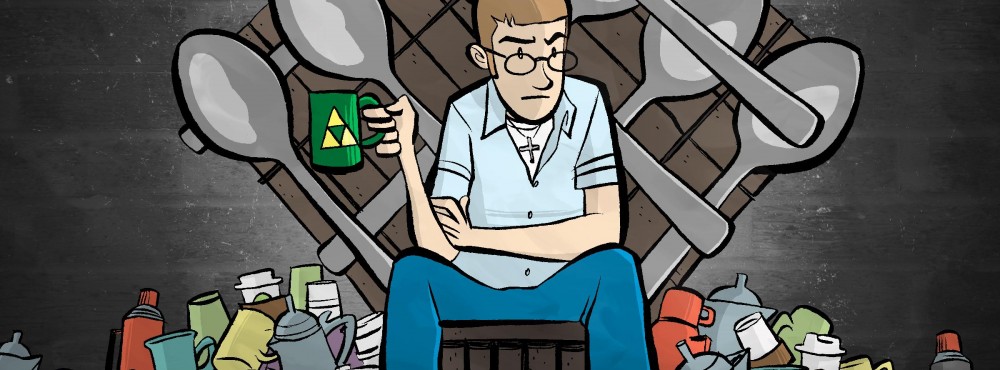
312. Gritty or Glittery?

In the past few years, we’ve seen a lot of gritty media: books, films, and video games characterized by darkness, angst, violence, and square-jawed men brooding over inner conflicts. From Wolverine to Walter White, we’ve seen plenty of angsty characters on the large and small screens. Books—even young adult literature—feature people killing (and dying!) in all sorts of creative ways. The video game industry continues making games with guns, gore, and roughly one in every five words of dialogue being the f-bomb.
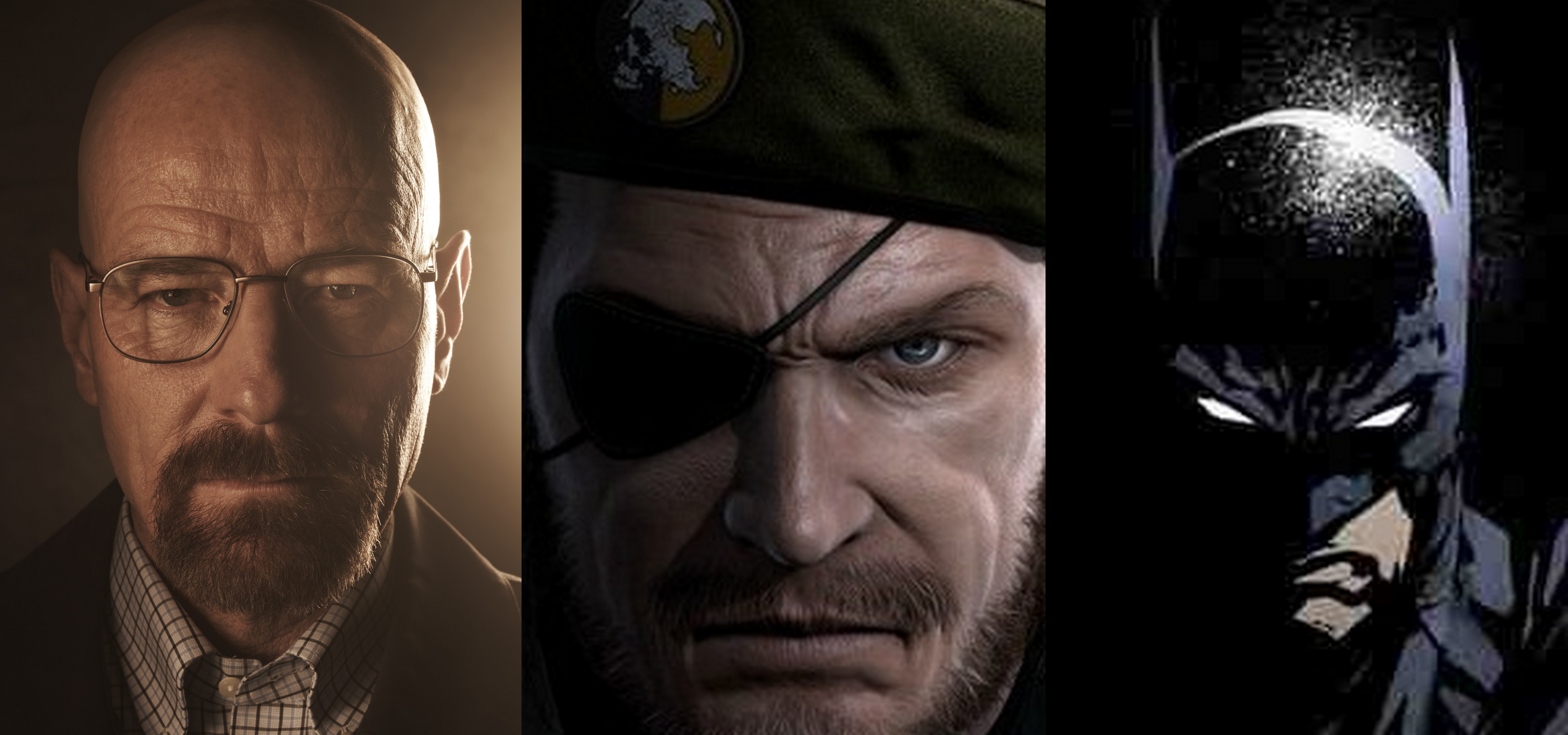
Angst! Darkness! Square jaws!

Angst! Darkness! Square jaws!

Why is gritty media popular? That’s a tough question to answer. I suppose there’s some truth to the darkness and violence in these media, and it resonates with people. We all feel sadness, discouragement, and anger. Some face depression, abuse, self-destructive impulses, or equally “gritty” problems.

Finally, gritty media often seems mature, sophisticated, or “grown-up.” All of this begs the question: Is it?

While gritty media has become more popular in past years, there are still plenty of lighthearted books, films, and video games: “glittery” media, so to speak.
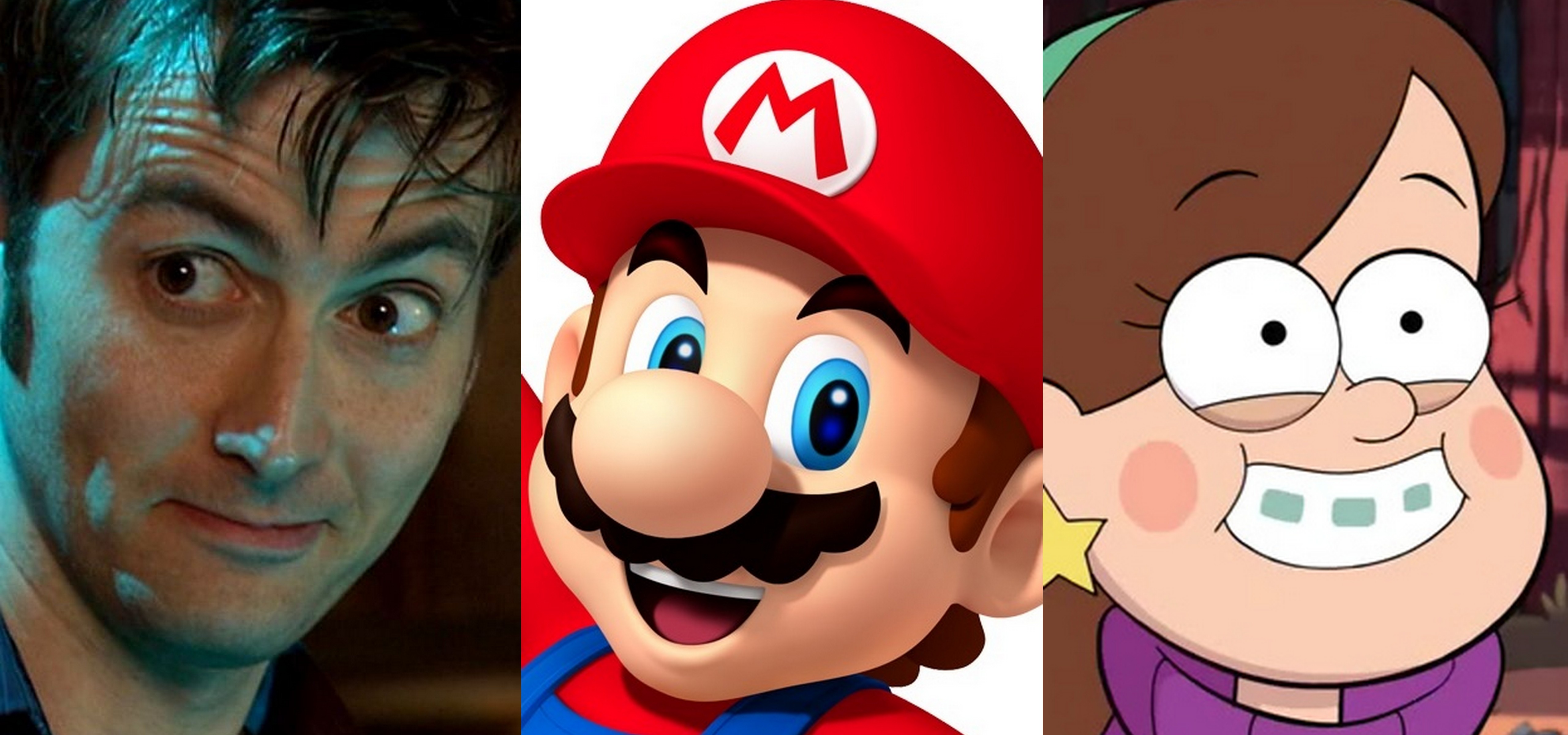
Light! Smiles! Goofy braces!

Light! Smiles! Goofy braces!

Throughout history, comedy has nearly always taken a backseat to tragedy. Shakespeare’s most famous plays are his tragedies; Mark Twain’s cynical Adventures of Huckleberry Finn is celebrated over his cheerfuller books; P.G. Wodehouse’s clever comedies are largely eclipsed by the gloomy writings of his contemporaries. It seems humor and optimism can’t be taken seriously.

While there are certainly good things to say for gritty narratives, I don’t believe grittier is necessarily better. A purpose of art is to reflect or represent truth; the truth is that life isn’t always gloomy. A Farewell to Arms or The Things They Carried may be brilliant depictions of the horrors of war, but peace is no less real than violence. I think it’s absurd to suppose, say, Anne of Green Gables is necessarily an inferior book because it reflects joy and sentiment instead of pain and despair.

In the end, it’s a mistake to judge the quality of a thing by whether it’s gritty or glittery, tragic or comic, cynical or optimistic. That said, I would love to see people take glittery media more seriously. Can we study humorists like P.G. Wodehouse or James Thurber more widely in schools? I’m sure students wouldn’t mind putting down The Lord of the Flies. Can we have fewer gritty superhero movies and have more like Marvel’s quirky Guardians of the Galaxy? We could use a break from gloom and doom.

The world is an awfully dark place, but there’s a little light left. Some stories remember that, and I think they’re worth taking seriously.

296. A Superhero Debate

I hardly ever quarrel with people, but I once had a heated argument about the religious significance of superhero stories.

We can all agree that some superheroes have higher moral standards that others. Take Batman. Gotham City’s famous vigilante never takes a life. Sure, he shatters bones and causes millions in property damage, but he draws the line at killing people.

Batman will defend you against an army.

Batman will fight for your freedom and safety.

By contrast, consider Deadpool. Marvel’s maverick hitman will kill anyone for the right price, or if he’s bored, or because it’s Tuesday. He’s also a shameless pervert and enjoys blowing up stuff. He may save the day occasionally, but there’s no escaping the fact he’s a scoundrel.

Deadpool will kill you for a chimichanga.

Deadpool will kill you for a chimichanga.

Questions like these are easily answered. Batman is morally superior to Deadpool.

Within the superhero genre, there are many such questions of morality. Some superheroes are nobler than others. Some do what is right; others settle for doing what is “necessary.” Some are unrepentant jerks. We could argue about the morality of specific superheroes, but we face a much bigger question.

What about superheroes in general? What about the entire superhero genre, in which people find great power and accept great responsibility? (Thanks, Uncle Ben.) There’s surely no harm in silly stories of people who fight crime by shooting lasers from their eyes or turning into enormous green rage monsters, is there?

That was my thought, anyway. My opponent, whom I’ll call Socrates, disagreed.

He posited the idea that superhero stories represent humanity’s rebellion against God. Superheroes are faux messiahs: subconscious attempts of sinful human beings to shun divine redemption by redeeming themselves. Who needs Jesus Christ when we’ve got Batman? Superheroes are triumphs of secular humanism. The convoluted cosmologies of their universes leave no room for God.

Having rejected God, said Socrates, humankind created gods.

I disagreed.

I think there’s definitely something messianic in superhero stories, but I don’t believe they’re a rejection of the Messiah. Quite the contrary. Superhero stories are an acknowledgement that we need to be rescued. We need redemption. We need a messiah. Superheroes become, to echo the author of Hebrews, “copies of heavenly things” and “a shadow of the good things that are coming—not the realities themselves.” Batman becomes a symbol of Jesus Christ, not a replacement for him.

In superheroes, I said, humankind has not created idols to be worshiped, but icons pointing to worship of someone greater.

Socrates and I argued for some time, debating intensely and getting nowhere. In the end, a third person stepped in and mildly ended our quarrel by telling us to go to bed. It was for the best, I think. I hardly ever get into debates, but when I do I have a hard time letting them go.

The religious significance of superheroes provides an interesting question, really, and one worth answering.

What’s your take on superheroes? Are they good, bad, or just silly? Let us know in the comments!

287. About Storytelling: Intertextuality

As long as we’re talking about The Avengers, I want to point out that Marvel’s superhero stories have a lot in common with the Bible, Little Women and the Teenage Mutant Ninja Turtles.

Why, you can hardly tell them apart!

The similarities here are obvious… aren’t they?

(I also want to point out for the record that Jo and Donatello are the best March sister and Ninja Turtle, respectively. I’m just throwing that out there.)

These stories are extremely different, but they share at least one notable characteristic: intertextuality. This fancy (and somewhat dirty-sounding) word refers to the way an artistic work is shaped by another artistic work.

Still confused? I sure am. Let’s make it simpler by looking at these stories one by one.

Little Women is a novel by Lousia May Alcott about sisters growing up and getting married. It’s basically Pride and Prejudice, but better. (Fans of Jane Austen, please spare my family.) The first half of the book, which follows the March sisters as they become young ladies, loosely parallels The Pilgrim’s Progress by John Bunyan. As these little women read Bunyan’s allegory, they find it mirrored in their own pilgrimages from childhood to adulthood.

The Bible is packed with intertextuality. The number of times Scripture references itself is practically beyond count. The New Testament alludes constantly to the Old. Many books of Scripture cite passages from other books. Jesus Christ, as he hung dying upon the cross, quoted a phrase from the Psalms. Stephen, in turn, repeated some of Christ’s final words during his own execution. The Bible echoes itself constantly.

The Avengers is a tale woven from several different stories. Every one of its heroes has some kind of history; the film is built upon the foundation of other films. Without Iron Man and Thor and all those other Marvel movies, The Avengers probably wouldn’t even exist.

As for my favorite band of crime-fighting reptiles, well, the Ninja Turtles began as a parody of several gritty comics popular at the time. Even its details were drawn from the works it parodied: the Turtles’ teacher Splinter was a jab at a comic book character named Stick, and the villainous Foot Clan poked fun at a supervillain group called The Hand. The Teenage Mutant Ninja Turtles exist as a lighthearted response to darker comics.

All these stories are shaped by other stories. So what?

Intertextuality can be either a brilliant asset or a horrible nuisance. It can give a story depth or make it incomprehensible.

The benefits of intertexuality are too many to list in a single blog post, so I’ll mention just a few. Referring to other works can establish a strong narrative framework, as in Little Women. The Bible shows how intertexuality can help explain and clarify ideas. In The Avengers, the way separate narratives converge in one big adventure is, if I may express it so bluntly, really freaking sweet. Finally, intertextuality can provide humor or insight in the form of parody or satire of existing works.

Of course, intertextuality can go wrong. G.K. Chesterton is probably my favorite author, and also really awesome, but he sometimes makes the mistake of assuming all his readers are just as smart and educated as he is. His book Orthodoxy is full of allusions to other thinkers, but without context or background these references only confuse ignorant readers like me.

We’re all shaped by other people. It’s only natural, then, for our ideas and stories to be shaped by those of other people.

Everything Wrong with The Avengers (in Three Minutes)

Hollywood can be pretty dumb. There, I said it.

I love movies as much as anyone, but I’ll be the first to admit they’re often packed with clichés, mistakes, bad performances, lousy dialogue, cheesy action scenes and sparkly teenage vampires. If only someone on the Internet had the courage to stand up and condemn these films for their faults!

Fear not, dear reader! We have such a hero: a true champion of snarking, nitpicking and being a jerk to movies. We have Cinema Sins.

Cinema Sins is a YouTube series that acts as judge, jury and executioner to condemn the problems in both recent and classic films. With extreme prejudice, Cinema Sins explains exactly what’s wrong with movies.

Take The Avengers. It wasn’t bad as superhero films go; director Joss Whedon wove a pretty decent tale from the tangled histories of five or six different heroes. Cinema Sins still manages to expose sixty-four sins in three minutes flat. Well played, Cinema Sins, well played.

As long as there are movies, they will have problems. And as long as they have problems, I hope Cinema Sins will be there to condemn them.

205. An Open Letter to Hollywood

Dear Hollywood Executives,

You all read this blog, right? Yes? Excellent. I know you’re all very busy, so I’ll get right down to business. There are some things we need to discuss.

First of all, stop remaking films and television shows from the eighties. I know building on existing franchises is easier than creating new ones, but your remakes are tired and predictable.

Instead of remaking lousy old shows, why not make more literary adaptations? I’ve got a list for you right here. (Good job making Ender’s Game happen, by the way. It was about freaking time!) Literature is packed with stuff your viewers would love. You’ve just got to give it to them.

Since you’re so good at adapting existing works into movies, why not target the gaming demographic with video game movies that, you know, don’t totally stink? Not every game can be made into a good movie—ahem, Super Mario Bros.—but there are plenty of franchises with endless potential. Take video games seriously. Give us characters, not men with big muscles and women with big busts. Give us stories, not predictable plots riddled with clichés.

This next issue is a touchy one, but we’ve got to face it.

Hollywood, your Christians stink.

Seriously. Do your research. Find out what authentic Christians look like, and stop insulting us with shameless hypocrites, arrogant bigots and sociopathic lunatics. Christianity has its share of awful people, but we’re not all that bad. Just as most Muslims aren’t terrorists, most Christians aren’t your offensive stereotypes. Come on, Hollywood. It ain’t that darn hard.

Heck, I’ll even give you a good example. Look at Joss Whedon. He’s an atheist, and also a phenomenally successful director. (The Avengers is the third-highest earning film of all time. I’m just saying.) In Firefly, his highly-acclaimed show about lawless scoundrels, Whedon included a Christian character called Shepherd Book. This character isn’t a stereotype. As a Christian, he’s actually Christlike—and simply likable. Shepherd Book is a well-developed character with a dry sense of humor. Fans appreciate him.

Learn from Joss Whedon, Hollywood.

Speaking of Christians, we’re quite a sizable demographic. Have you considered, you know, actually making big-budget Christian films? The Passion of the Christ, which everyone expected to fail, earned roughly twenty times its budget. More recently,The Bible, a television miniseries, became a huge commercial success. Believe it or not, people want to see good Christian media. We need moviemakers with the courage (and cash) to make some.

With superhero movies being so popular, can we get a decent Deadpool movie? Please?

Finally, for heaven’s sake, stop letting Michael Bay and M. Night Shyamalan direct movies. That is all.

Peace,

Adam

P.S. We’re tired of vampires and zombies, Hollywood. Find some new monsters.

When Batman Has a Bad Day

A wise person once said, “Always be yourself, unless you can be Batman. Then be Batman.”

Batman is my favorite superhero. Christopher Nolan’s excellent films introduced me to the brilliant, skilled martial arts prodigy who decided the best way to cleanse his city of corruption was to dress up like a bat, throw pointy objects at evildoers and drive around in a really neat car.

Batman is interesting because he has no superpowers. His abilities are the fruit of determination, intelligence and self-discipline, augmented with some sweet technology.

More significantly, Batman is a conflicted character. I like conflicted characters. Granted, most superheroes have insecurities. Batman is different. As Charlie Brown would say, his anxieties have anxieties; Batman is the eponymous sufferer of Batman Syndrome. Nevertheless, he keeps going. He sees no joy and little hope in doing the right thing, yet he does it anyway. I admire that.

On a less intellectual level, Batman is really cool.

However, like every other person on Earth, Batman has bad days. The charming animation above depicts a day when the Caped Crusader just can’t seem to catch a break. Keep an eye out for an appearance from comics legend Stan Lee!