414. There Is No Bed in My Bedroom

A week or two ago, I realized I needed a new bookcase. I acquire books with disquieting frequency and almost no effort. Heck, I hardly ever buy books these days; people just give ’em to me. I’m a book magnet. (Judging by my relatives on both sides, this is a family trait.)

Yes, it was time for a new bookcase, so I acquired one from Wal-Mart about a week ago. Putting it together was not a particularly fun experience, compelling me to vent my feelings on Twitter:

At last the bookcase joined Marvel’s Avengers in the Things That Have Been Assembled category. I placed the bookcase in my bedroom, which also contains a desk, two chairs, a nightstand, an old chest, some geeky decor, and a ridiculous number of machetes.

One thing my bedroom doesn’t contain is a bed, which is a little ironic if you think about it.

I sleep in a sleeping bag on my bedroom floor. Before that, I slept on an air mattress, which eventually sprung a leak and took on the spongy feeling of a stale marshmallow. (You can understand why I switched.) I haven’t owned a bed since… well, now that I think about it, I’ve never actually owned a bed.

There are reasons for this. Beds are expensive; sleeping bags are cheap. I enjoy the novelty of a bedroom without a bed. (I’m a bit strange, you see.) There is one more reason I haven’t bought a bed, and I’ve been thinking about it lately.

When I settled into my apartment a few years ago, I assumed it wasn’t to stay. My situation was temporary. My job was just a stepping stone to greater and higher things. I had never spent more than a few years in one place, and I assumed my latest situation was as temporary as all the others had been. I didn’t dare buy a bed. What would I do with it when I moved in a year or two?

That was almost three and a half years ago. I haven’t moved. My younger brother now lives with me. (He has a bed.) I have a cat and furniture and houseplants and more bladed weapons than most medieval armies. What I don’t have is clear plans for moving on.

For me, 2013 and 2014 were years of survival. I endured. I slowly, painfully learned the basics of being an independent adult. The year 2015 was one of change. I left my old job, found a new one, cut my hair shorter, grew a beard, and left behind the debris of previous years. As the year ended, I wondered what 2016 would bring.

So far, this year has been one of stability. My life is no longer full of upheaval and unpredictability. My job isn’t bad. My situation has become consistent. After three and a half years of not daring to put down roots or even buy a bed, I’m beginning to wonder whether I’m not here to stay… for another couple of years, at least.

I’m still not buying a bed, though. Beds are expensive, man.

404. Page Not Found

As I click through the wilderness of the Internet, I occasionally stumble upon the sinister number 404. Just look at it. It has two fours, and the number four is considered unlucky in some parts of the world. If 404 isn’t bad news, I don’t know what is.

404Error 404 occurs when a web address leads to a website, but fails to find a specific page. For example, if you search for a nonexistent page on this blog, you get a generic Page Not Found message. I tried to rewrite it, but TMTF won’t let me. (I blame my typewriter monkeys.) Hey, at least we don’t shout “404’d!” and insult you, unlike some websites. We may not have the page you want, but at least we try to be  nice about it.

The 404 error is a minor nuisance, but its philosophical implications are thoroughly depressing. Why is the page not found? Did the web link mislead me? I feel betrayed. Why would the link misdirect me to a dead end? It has made a fool of me. Am I so naive? What does this say about me as a person? Maybe the link isn’t to blame—perhaps I typed in the wrong web address. Am I blaming someone else for my own mistakes? What the heck is wrong with me?!

What if 404 Page Not Found is an Internet microcosm of real-life problems? Doesn’t every bad decision yield a 404 of its own? 404 Happiness Not Found. 404 Progress Not Made. 404 Life Not Lived. Never mind the Internet. Error 404 haunts us all. It is the voice that speaks in the stillness of our hearts: “You have made a wrong turn, and now you are in the wrong place. You have failed.”

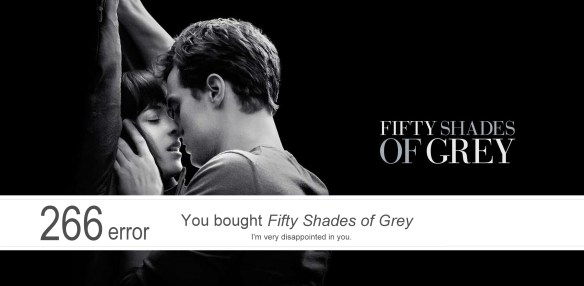
As long as we’re on the cheerful subject of failure: How did Error 404 receive its number? What are the 403 preceding Internet errors? I don’t know, but I’m guessing they include losing money to scams, releasing sensitive personal information online, and buying the e-book edition of Fifty Shades of Grey.

Internet Error 266

I don’t know how many Internet errors you’ve committed, but at least you avoided a 404 by finding this blog post. That counts for something, right?


Do you want to do something awesome? Please take a moment to check out Operation Yuletide—it’s not an Internet error, I swear! We’re raising money to help people this Christmas. There are even rewards and stuff! Check it out here!

402. Five Blessings of Being a Single Guy

So, um, I seem to have misplaced today’s blog post. Mea culpa.

Today’s post wound up on I’m Bringing Celibacy Back, a blog that belongs to my friend Robby Rasbaugh. (He’s a really cool dude, and has awesome hair.) I’m Bringing Celibacy Back is a funny, sassy, well-written series of commentaries on marriage, singleness, Christianity, culture, and underrated Disney couples.

My latest post, “Five Blessings of Being a Single Guy,” can be read here!

Leviticus Is Really Bloody

Of all the books in the Old Testament, Leviticus has a reputation for being tedious. What nobody seems to remember is that it’s also really, really gory.

Rated M

The Holy Bible: Rated M for intense violence, blood and gore, and sexual content.

I’ve been revisiting Leviticus lately, and it’s a grim read. Among the dull regulations for religious rituals are rules for sacrifices, which involve slaughtering livestock, cutting them into pieces, burning them, and splattering their blood in all kinds of interesting and unexpected places.

I often picture places of worship in the Old Testament as peaceful, churchlike sanctuaries smelling of incense, where immaculately-dressed priests walk quietly and speak in whispers.

Examining what Scripture actually says gives quite a different picture.

Livestock were killed for a wide variety of offerings, and the priests did at least some of the slaughtering. I sometimes think of Old Testament priests as pastors, but they seem more like butchers. Israel’s places of worship were likely deafening with the frantic bleats of dying animals, pervaded by the smell of burning meat, and speckled with dried blood.

Revisiting Leviticus, and reading the Bible generally, challenges my faith. Christian culture hardly ever mentions, let alone dwells upon, the nastier bits of the Bible—and dang, the Bible sure can be nasty. It’s nicer to think about the Sermon on the Mount, or the Christmas story, or the pleasanter Psalms.

We so often have preconceived ideas of what’s in the Bible without ever taking a look, or bothering to think about what we find.

Do any of the Sunday school teachers who put up cutesy pictures of Noah’s Ark remember that the Flood drowned nearly every person on earth? Do any of the people who share inspirational verses from Job recall how his life was shattered, his health was broken, and his children were crushed to death? Anybody?

Leviticus troubles me. Yes, I know that “without the shedding of blood there is no forgiveness.” It costs something. In the end, forgiving us cost God everything in the death of Jesus Christ. I get that. All the same, I’m bothered by the thought of God commanding the incessant, daily slaughter of helpless animals as a form of worship.

These challenging chapters in Leviticus remind me that lot of things in Scripture trouble me, and some surprise me—and many give me unexpected comfort, peace, and hope. The Bible often refuses to match up to my expectations or the impressions some churches give of it.

The Bible is a book not to be judged by its cover, nor by incomplete impressions. Especially for those who call it God’s Word, the Bible is worth reading: even the tedious, boring, and bloody bits.

I suppose that includes Leviticus.


This post was originally published on September 22, 2014. TMTF shall return with new content on November 30, 2015!

389. The Problem with The Peanuts Movie

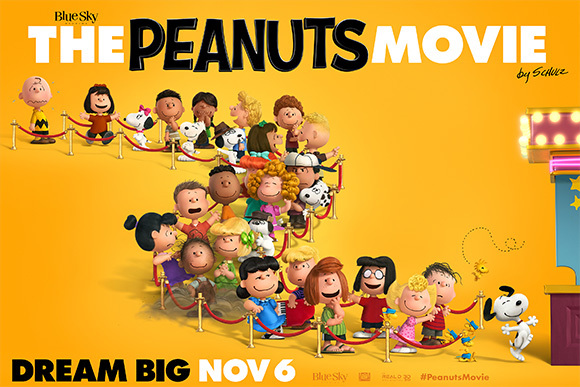
Hollywood is making a Peanuts movie. The film, appropriately titled The Peanuts Movie, will feature the misadventures of Charlie Brown, Snoopy, and the rest of the lovable gang from the comic strip by Charles Schultz.

Much to my surprise, the movie looks pretty good. Take a look at the trailer.

When The Peanuts Movie was announced, I cynically assumed it would be a cheap attempt to cash in on America’s nostalgia for its favorite comic strip. The trailers, however, have left me cautiously optimistic. The art is faithful to Schultz’s comics, the voices hearken back to the animated Peanuts specials, and everything (except the soundtrack) seems true to the spirit of Peanuts.

Well… almost everything does.

The Peanuts Movie posterIn at least one way, The Peanuts Movie will probably stray from the spirit of the comic strip.

The movie will have a happy ending.

In its trailers, The Peanuts Movie hints at a triumphant ending for its hero, Charlie Brown. His story will probably be one we’ve seen a dozen times before in other movies, from Wreck-It Ralph to How to Train Your Dragon. It’s the tale of an underdog conquering his insecurities and doing something great, earning respect and learning self-respect along the way.

It’s a familiar story. We’ve all seen it, and most of us love it. It will probably be the story of The Peanuts Movie. We all want Charlie Brown to succeed. We want him to win. I understand why the film seems to be taking this approach to the comic strip. It’s marketable. People will pay to see it, and they will enjoy it, and that’s perfectly fine. I like happy stories as much as anyone.

But that’s not what Peanuts is about.

Peanuts is not a happy comic strip. It has a reputation for innocence and optimism, thanks to cheerful TV specials and licensed greeting cards from Hallmark, but the comic itself can be pretty bleak.

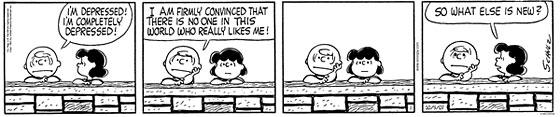
Charlie Brown is often lonely, depressed, and insecure, to the absolute indifference of those around him:

Depressed Charlie Brown

Flipping heck, even the very first Peanuts strip shows the cruel duplicity of of which children are capable:

Good old Charlie Brown

There are cheerful Peanuts strips, sure, but for every heartwarming strip about hugs or warm puppies, there are several about rejection or loneliness.

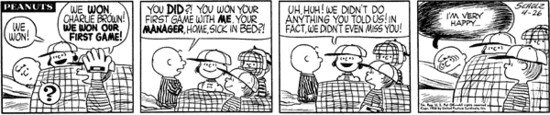
Charlie Brown is the hero of this melancholy comic strip, and he never really gets a happy ending. He never gets a Valentine. He never catches the eye of the pretty red-haired girl. He never kicks that football, and even on the rare occasions his baseball team wins, he doesn’t:

Charlie Brown's team wins

He isn’t alone. In some ways, Peanuts is a comic strip about failure. Lucy never grows out of her childishness. Snoopy doesn’t find a publisher for any of his manuscripts. In the face of a broken world, Linus clings helplessly to his security blanket.

Charlie Brown isn’t alone in his struggles, but what makes him stand out is how he responds to them. He never gets the happy ending The Peanuts Movie will probably give him, and that’s part of what makes him a hero. The other part, the really important part, is that he keeps trying.

Every February, Charlie Brown waits by the mailbox for a Valentine. He never gives up on his crush, never stops trying to kick that football, and leads his baseball team with indomitable enthusiasm. Charlie Brown, the punching bag of the universe, keeps dreaming, keeps hoping, keeps persevering. We don’t love him because he kicks that football. We love him because he keeps kicking.

However its movie turns out, Peanuts isn’t a predictable tale of finding happiness. It’s a story of persevering in an unhappy world. It’s a story of hope.

That’s what Peanuts is about, Charlie Brown.

383. Thoughts on the Josh Duggar Scandal

Yes, TMTF gets topical today. This hardly ever happens. You see, I hate discussing touchy subjects; TMTF is a blog about stuff that matters to me, and I don’t care for scandals or controversies. I would much rather write about butchered hymns or Marvel’s Daredevil than fuel the angry debates raging across the Internet.

Besides, I’m usually oblivious to current events. I prefer to read news and editorials about movies, video games, or geek culture—or else just read a good book—than wade through depressing headlines about scandals, violent crimes, and celebrity necklines.

However, the shock waves from Josh Duggar scandal have reached even my quiet corners of the Internet. I don’t normally write about this kind of thing, but something about this messy tragedy struck a chord with me.

In case you don’t already know them, here are the facts. Josh Duggar, a Christian television personality and family values activist, was recently found to have held paid accounts on Ashley Madison, a website for people seeking extramarital affairs. He responded to this disclosure by confessing to cheating on his wife and being addicted to porn. A few months before the Ashley Madison scandal, Duggar was discovered to have sexually molested several girls, including several of his sisters, when he was a teen.

Mr. Duggar claims to support family values.

To wit, for all his support of religious faith and family values, Josh Duggar is an unfaithful, dishonest, hypocritical scoundrel.

Josh Duggar

You’ve done awful things, Mr. Duggar. Shame on you. Shame on your face.

My reaction to the Josh Duggar scandal was more or less exactly the same as my reaction to every other scandal in contemporary Christianity: I shook my head, thought “What a fool,” spent a moment praying for him and his family, and then went back to reading about video games on Kotaku.

I could only imagine how grieved and devastated his family must be. Moreover, I was annoyed and saddened me that the idiocy of one high-profile religious person was so widely publicized, while decades of faithful ministry by honest, ordinary religious people everywhere went unnoticed by the media.

My problem is that I have far more in common with Mr. Duggar than I want to admit.

No, I don’t have an Ashley Madison account; no, I haven’t molested anyone; and no, I’m not hiding a porn addiction. (My only addiction is coffee, and I acknowledge it proudly.) However, at various times, I have certainly watched porn. I have lied. I have griped, gossiped, insulted, whined, accused, and ranted. I have neglected commitments, wasted time, wallowed in self-pity, blamed others for my mistakes, and been a shameless hypocrite. I am extremely selfish. I struggle to forgive others, and hold grudges like nobody’s business. I have frequently failed to be a good friend, a devout Christian, and a decent human being.

Shame on Adam

You’ve done awful things, Mr. Stück. Shame on you. Shame on your face.

If every wrong thing I have ever done were dragged out of the shadows and publicized all over the world, I would be desperate for forgiveness and compassion… and somewhere, a self-righteous git like me would shake his head, think “What a fool,” spend a moment praying for me and my family, and then go back to reading about video games on Kotaku.

I’m not defending Josh Duggar. In fact, I would like to smack him repeatedly with a heavy Bible, but that isn’t the point. Beyond my anger and sadness, there is quite a lot of hypocritical self-righteousness. When I start to judge Mr. Duggar, my accusations veer dangerously close to home. Lust? Selfishness? Dishonesty? Arrogance? A goofy-looking face? At one time or another, I have been guilty of all of these, and more.

Jesus Christ once said, “Do not judge, or you too will be judged. For in the same way you judge others, you will be judged, and with the measure you use, it will be measured to you.” The Apostle Paul later wrote, “You, therefore, have no excuse, you who pass judgment on someone else, for at whatever point you judge another, you are condemning yourself, because you who pass judgment do the same things.”

I’m not saying I shouldn’t condemn Mr. Duggar’s dishonesty, unfaithfulness, and hypocrisy. I absolutely should. He did some awful things, and it would be awful to pretend that he didn’t. However—and yes, I realize how painfully trite this sounds—I must hate the sin and love the sinner. He doesn’t deserve compassion, but neither do I.

I am not Josh Duggar, but I could have been. As the media continues tearing Josh Duggar to pieces, which it will do until it gets bored or finds someone else to tear to pieces, I’m trying not to forget that he is a living human being. He is a man who probably hates himself, and likely feels like everything has fallen apart.

So I’ll echo Simon & Garfunkel and say, with all the sincerity lacking in the original songHere’s to you, Mr. Josh Duggar. Jesus loves you more than you will know.

381. Change Is Hard

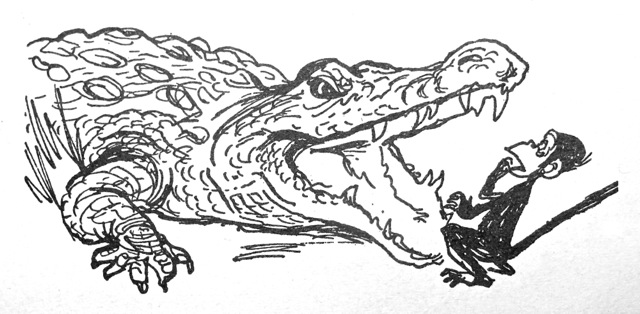
Well, I’m back. So are my typewriter monkeys, which is too bad. When they skipped town and scampered off to Florida a couple of weeks ago, I hoped they would run into alligators, like this:

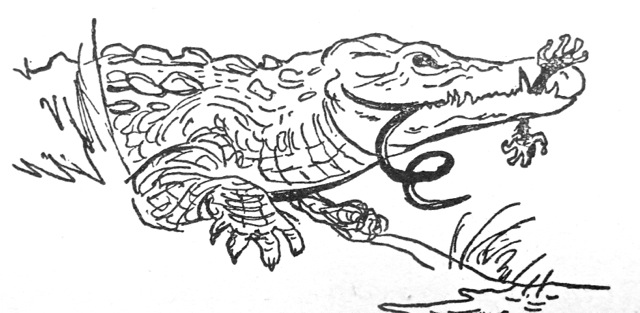
Monkey Vs. Alligator, Part 1If I were truly fortunate, I thought, they might even be eaten by alligators, like this:

Monkey Vs. Alligator, Part 2Alas, my monkeys’ travels were alligator-free, and the wretched blighters have returned, swaying drunkenly and smelling of bananas, wet fur, and bourbon. I don’t know how they spent their two-week break, or how long it will be before they resume their favorite hobby of setting stuff on fire, but I won’t ask. When you’ve run a blog as long as I have, you learn to stop asking these kinds of questions.

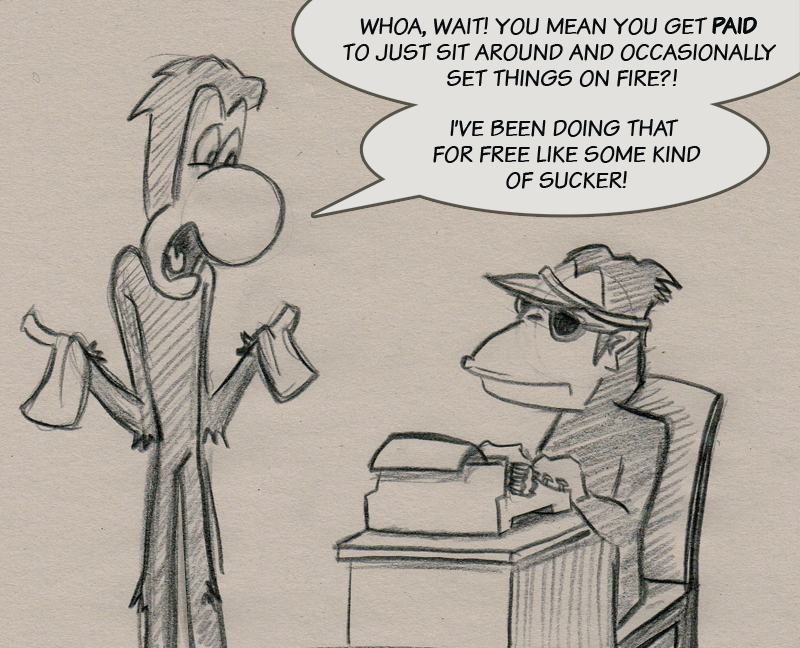
I don’t actually pay my monkeys to set stuff on fire. In fact, I don’t actually pay them for anything. (Thanks again for the comic, JK!)

While my typewriter monkeys were doing God-knows-what in the American South, I spent much of my break from this blog attending CNA (Certified Nursing Assistant) classes. Now I have only to finish up my final week in the kitchens of the nursing home where I work, and then I’ll begin CNA training in earnest, before taking a couple of state exams. Then, God willing, I’ll settle into my new role at the nursing home: taking care of old people.

Y’know, change is hard.

I used to think I like change, but I was wrong. I like variety. Change and variety are different things. Variety is a refreshing, temporary break from routine. Variety is a vacation, a road trip, or a new flavor of pie. By contrast, change destroys routine, only to remake it. Change is an exhausting rearrangement and relearning of routines. Change is moving, getting married, or switching jobs.

It was a change, albeit a really good one, when I left my old job to work at the nursing home. As awesome as it was to leave behind an awful workplace, the transition took effort. My current transition from Dish Washer Guy to Nurse Assistant Guy has already been challenging… and I’ve only just started.

For a person whose twenty-something years have been full of change, I’m not particularly good at it. I’m frequently surprised by how hard transitions are. At this point, I really should know what to expect, but change nearly always catches me off guard. Still, I’m learning—or so I like to think.

Change is hard, but I’m still here, so I suppose that counts for something. It will be nice to settle into comfortable consistency over the next few months. In the meantime, I’ll keep practicing my CNA skills: making beds, taking vital signs, and washing my hands with the frenzied desperation of Lady Macbeth. OUT, DAMNED SPOT! OUT, I SAY! (That’s a Shakespeare joke.)

I just heard glass breaking, and I can smell gasoline, so I had better see what my typewriter monkeys have done this time. Whatever the changes or challenges in your life, dear reader, I bid you Godspeed! TMTF will be back next time with its usual nonsense… I hope. Now, if you’ll excuse me, I need to remember where I left the fire extinguisher.

374. Feeling Bad for Feeling Bad

Well. If it isn’t the slouchiest blogger I know.

Get out, you miserable git.

I’m wounded, Adam. You’re a lot of awful things, but rude isn’t usually one of them. Insecure, yes; selfish, sure; useless, absolutely; but not rude. Not on a daily basis, anyway.

I’m not in the mood for you right now.

Are you ever?

No, but that doesn’t ever seem to stop you.

You shouldn’t slouch in your desk chair, Adam. It’s bad for your back. I care for your well-being, you know. That’s why I visit occasionally. Because I care.

If you had a face, I would punch it.

Oh, I have a face. And you’re welcome to punch it, but that seems just a bit self-destructive. Anyway, before you get violent, we need to talk about something.

Oh, joy.

You’re depressed, and you need to stop it.

Of course! Why didn’t I ever think of that? I’ll just stop being depressed. Problem solved. Anti-Adam, you’re a flipping genius. What would I ever do without you?

Adam, just shut up. Shut up your face. You know exactly what I mean. Don’t pretend you don’t.

Yes, I know what you mean.

You, Adam, are one of the most ridiculously fortunate people in the universe. You have a loving family. You had a happy childhood. Your cozy little life is full of blessings and creature comforts. Your health is perfect—

Except for chronic depression.

Shut up. Your health is perfect. You have no trauma in your life, no toxic relationships, no awful tragedies. Your old job kinda sucked, sure, but the new one is easy by comparison. Everything about your life is awesome… and here you are, slouching at your desk, whining about how depressed you feel. What is wrong with you?

I don’t feel depressed—I am depressed. There’s a world of difference.

Has it ever occurred to you that maybe the thing you call depression is what everyone else in the world calls being alive? Life can be hard, and that’s a fact. Everyone has bad days. You blame it on depression, and wallow in it.

I do not.

You sure don’t do anything useful, that’s for sure. You just sit around being depressed. And then you feel guilty for wasting your time and potential, moping when you could be writing novels, building a career, or doing something useful with your life.

Are you done?

I could go on, and on, and on, but that’s enough for one day.

Good. Go away.

You’re not going to argue? Fine. I accept your silence as tacit acknowledgment that I’m right.

I wasn’t arguing because—in case you haven’t been listening—I am seriously flipping depressed right now. Do you have any idea how hard it is to function when you’re depressed?

Stop making excuses.

You don’t want excuses? Fine. Have some facts. Depression is a mood disorder, not an emotion. Depression is not a choice. I can choose whether to treat depression, but I can’t choose whether to have it. My life circumstances, good and bad, affect my depression, but they can’t prevent it.

How do you know you have chronic depression? Have you been diagnosed by a doctor?

Nope.

So you’re guessing.

I’m paying attention. I have most of the symptoms of depression: low mood, abysmal self-esteem, lethargy, inability to find pleasure in things I normally enjoy, lack of focus, inability to function—

All right, yeesh, sorry I asked. If you really think you’re so broken, why don’t you take medications or get counseling?

Who needs counseling when I have you?

Shut up. Seriously, though, if you’re going to insist on having depression, shouldn’t you insist on needing help?

My depression isn’t that bad, thank God. Not anymore. I think I’m doing all right. My depression comes and goes. It doesn’t stay. I won’t worry about my depression unless it lasts more than a couple of weeks at a time. Besides, meds and counseling are expensive.

So that’s it. You insist your depression is authentic, and you’re just accepting it.

Yup. I won’t feel guilty for being depressed, no more than I’ll feel guilty for having a cold or headache. I won’t let you blame me. I won’t feel bad for feeling bad. At least, I’ll try not to feel bad for feeling bad. When my mood and self-esteem are low, it’s an uphill battle.

You’re a fool. And you should stop slouching.

It’s nice to know you care.

370. Jesus Is Offensive

The US Supreme Court recently legalized gay marriage nationwide. Today’s blog post actually has very little to do with that, and much more to do with the sudden, blinding proliferation of rainbows across the Internet.

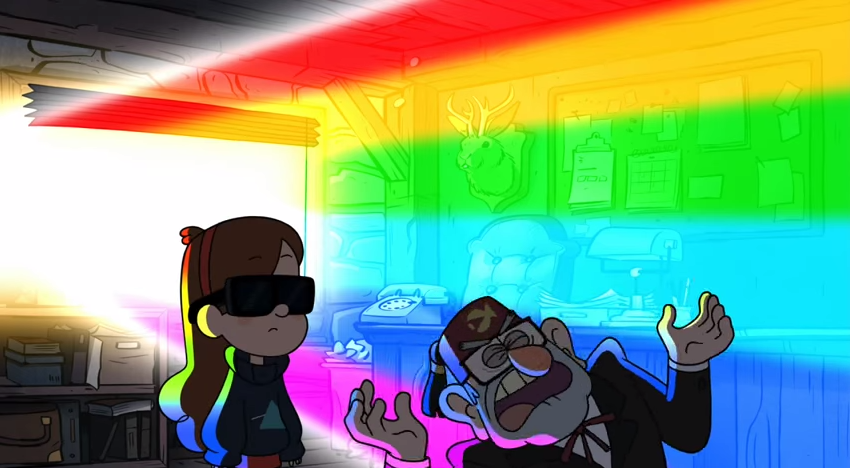
My eyes! MY EYES!

My eyes! MY EYES!

Rainbows are a symbol of the LGBT community. Following the Supreme Court’s decision, they began appearing everywhere on the Internet. Facebook was overrun by rainbows, and my Twitter feed would have given Joseph’s many-colored coat a run for its money. Flipping heck, even my blogging site, WordPress, replaced its usual monochromatic theme with a rainbow-colored one.

(On a vaguely related note, I recommend listening to the Rainbow Road soundtrack while reading the rest of this blog post.)

With rainbows suddenly popping up all over the Internet, I signed back on to Twitter to make a joke about them. I planned to say something goofy and innocent, something like: “The rainbows! They’re everywhere! Where are my shades? Ah, it’s too late! My eyes! MY EYES!”

However, as I typed out the joke, I hesitated. My comment wasn’t bitter or celebratory or controversial. It wasn’t anything but silly, but I couldn’t help worrying that it would ruffle someone’s feathers. Gay marriage is such a touchy subject that I was reluctant to mention it, even in the most lighthearted way. In the end, I remained silent.

(By the way, I thought about discussing the legalization of gay marriage in this blog post, but everything I want to say has been said much more eloquently by another blogger. Whatever your stance on gay marriage, I recommend reading her blog post; it’s a sensible, compassionate take on recent events. I’ve already discussed my own views on homosexuality on this blog, so I won’t repeat myself here.)

My reluctance to discuss gay marriage in even the most lighthearted way was an uncomfortable reminder that I selfishly want to be liked. I don’t want to offend anyone, even if it means keeping my views and thoughts and beliefs to myself. If being honest or insightful offends others, I’ll settle for being funny or clever.

This is a problem, because I am a follower of Jesus Christ, and he offends practically everybody.

In his lifetime, Jesus offended religious people; today, Jesus offends nonreligious people. The religious leaders in his day despised him every bit as much as many atheists do today. Jesus Christ has never been politically correct. He condemned not only sin and faithlessness, but pride and religious hypocrisy. In the end, the people who orchestrated his execution were religious authorities, not secular ones.

If I insist on following Jesus Christ, it will be only a matter of time before I offend someone. As a follower of Christ, I must believe that truth is absolute, even in our pluralistic, postmodern culture. I must believe that some things are not okay, however widely they may be accepted or celebrated. To wit, I must not compromise my beliefs, even when they offend people—and sooner or later, they will.

That’s hard for me to accept. I hate upsetting others. I really want to be liked by everyone. Offending others for any reason makes me feel like a deplorable jerk.

It all begs the question: Do I believe Jesus Christ is worth the risk of annoying, upsetting, or alienating people? Is the Christian faith, which is built upon loving others, worth offending some of them?

I believe it is.

Of course, I’ll do my best not to be a jerk. I can definitely be a jerk sometimes.

Jerk

As it happens, this is one of my favorite shirts. I wonder what that says about me.

Jesus Christ offends people, but he is not a jerk. In his lifetime, even when flipping tables and railing against sin and hypocrisy, Jesus acted with the utmost of intentions. He loved people, all people, crooks and prostitutes included, without ever compromising his convictions or beliefs—and yes, he offended people. He still does.

I will offend someone at some point. I must come to terms with that fact, while doing my best never to be a jerk, and to be as kind and accepting as I can.

That said, after a week of seeing rainbows flipping everywhere on the Internet, my eyes are really starting to hurt. I’m thinking I should invest in some shades.

God Is Sarcastic

“What is the way to the abode of light? And where does darkness reside? Can you take them to their places? Do you know the paths to their dwellings? Surely you know, for you were already born! You have lived so many years!”

~ Job 38:19-21

I’m often sarcastic, but that’s okay. God is sarcastic, too.

In the book of Job, God allows a righteous man to be tormented as a test of faith. It’s a paradoxical book, at once uplifting in showing the ultimate power and benevolence of God, and disturbing in depicting a God who allows a good person to suffer without any explanation. I’ve already said a thing or two about Job, and there’s more I could say, but for now I’ll simply point out how the book of Job proves that God can be really sarcastic.

Job spends most of the book arguing with his friends, defending his innocence as they accuse him of wrongdoing. If Job were innocent, they reason, why would God allow him to suffer? Job isn’t impressed by their arguments, and he proves to be quite sarcastic himself: “How you have helped the powerless!” he snaps in the twenty-sixth chapter. “How you have saved the arm that is feeble! What advice you have offered to one without wisdom! And what great insight you have displayed! Who has helped you utter these words? And whose spirit spoke from your mouth?”

Job’s biting sarcasm is surpassed only by God himself, who shows up a few chapters later. God doesn’t offer explanations or answer Job’s questions. Instead, he emphasizes his own absolute power and wisdom. However incomprehensible God seems, he knows what he’s doing. It’s not a terribly satisfying answer, but it’s enough for Job, and the book ends on a happier note with Job’s life restored.

God’s response to Job seems really harsh, especially when the Almighty gets sarcastic. After asking Job a long series of unanswerable questions, he adds, “Surely you know, for you were already born! You have lived so many years!” His sarcasm only emphasizes how little Job—or any human being, for that matter—can comprehend of God’s nature.

There’s another lesson here: God uses sarcasm, which I cheerfully accept as license to be as sarcastic as I like. After all, Christians are commanded to be like God: Jesus Christ said, “Be perfect, therefore, as your heavenly Father is perfect.”

In other words, by being sarcastic, I’m obeying the all-important commandment to be like God. Sarcasm is my moral and religious duty.

No, I’m not being serious. Yes, I’m being sarcastic, but not from any sense of religious obligation. Please don’t bombard me with angry emails or heavy stones! After all, it’s important to have a sense of humor, for as Jon Acuff reminds us, “Laughter is a gift from God. If we take it for granted and act like Christians can’t be funny, he’ll take it back. Like the unicorns.”