156. Workplace Conversations

I work in a home for gentlemen with mental and physical disabilities. (I’ve given them false names in this blog post to protect their privacy.) As months have passed, I’ve taken part in many interesting conversations. Some of them make sense. A surprising number do not.

“Mummies,” exclaims Mark Twain, pointing to the cupboard.

I pretend to shiver in fright. “M-M-M-Mummies?”

“You fraid oh mummies?”

“Yes.”

Mark Twain grins. “Why?”

“B-B-B-Because they want to eat my nose.”

This brief dialogue (and variations thereof) occurs, on average, half a dozen times during each of my shifts. I suppose Mark Twain considers it his duty to warn me of the bloodthirsty spooks lurking in my workplace.

Charles Dickens is another gentleman with whom I have strange conversations. I gave him a coloring book for Christmas. Five minutes later, he stomped up to me and held it out.

“See wha I got?” he inquired.

“I see,” I said. “Who gave you that?”

“I dunno,” he replied gravely. “Somebody did.”

Charles Dickens has dementia and tends to talk in circles. Our conversations consist of the same questions and answers repeated endlessly.

Every now and then, however, these predictable dialogues are interrupted by something unexpected.

“You got a girlfriend?” he inquired one morning. It’s one of his usual questions.

“No girlfriend.”

This answer didn’t seem to satisfy him. “How many you got?” he demanded suddenly. “Fourteen?”

I sometimes ask him about animals.

“Tell me, Charlie. What noise does a dog make?”

“Bow wow,” he replies, grinning.

“Very good, Charlie. How about a cat?”

“Meow meow.”

“How about a pig?”

“Oink oink.”

“How about a lobster?”

He beams. “Mau mau,” he says with gusto.

It’s challenging to carry on conversations with some of the gentlemen with whom I work. Jules Verne, who suffers from depression, tries to stay cheerful by talking to himself. “I’m having a good day,” he says tearfully. “Nobody likes a grouch.”

Anton Chekhov doesn’t speak, but occasionally growls and yowls like Chewbacca. (He does a much better Chewbacca impression than I.) Victor Hugo mumbles rapidly in either English or Russian—I’m still not sure which. He’s also rather deaf. We often communicate through simple sign language, such as pantomiming the act of drinking coffee.

Just a few nights ago I had the most unexpected conversation yet. Edgar Allan Poe, an elderly gentleman with dementia, was sitting at the kitchen table as I worked in the kitchen. It was late. Everyone else was in bed.

His dementia sometimes causes him to act aggressively. On several occasions he has hit, kicked or bitten me. (It’s not every day I get bitten by a senior citizen.) He curses and mutters death threats during his aggressive moments. When he’s calm, he hardly speaks. He just sits quietly.

As I worked, I was careful to keep a wary eye on him.

“Easter’s coming,” he observed suddenly, breaking a long silence.

Edgar Allan Poe loves holidays, so his statement wasn’t unusual.

“It sure is,” I said.

“That’s when Jesus rose from the dead.”

I paused a moment in surprise. “That’s right,” I said at last. “Do you know Jesus, Ed?”

He smiled a toothless smile. “Yup.”

“Me too,” I said. “Me too.”

Edgar Allan Poe is on hospice care because of his declining mental and physical condition. The nurses aren’t sure how much longer he has left.

I believe God, who is usually more gracious than we think, is merciful in judging those like Edgar Allan Poe who can’t understand concepts like faith or salvation. All the same, my brief conversation with Edgar Allan Poe left me with an odd sense of peace.

Whether discussing my fear of mummies, the Resurrection of Christ or my (apparently complicated) love life, it’s often delightful to chat with the gentlemen in my workplace.

It’s certainly never boring.

148. New Year’s Resolutions

In Ecuador, people celebrate the new year by burning effigies in the streets.

Good times, good times.

Ah, sweet memories.

In Indiana, however, the local authorities frown upon such celebrations. It’s too bad. Since setting things on fire is out of the question, I’ve decided to begin the new year by making some resolutions.

I’m sharing these resolutions on TMTF in order to make them official. After all, a resolution is much harder for me to forget (or ignore) once I’ve announced it publicly.

I will be focused, intentional and self-disciplined

I’ve squandered countless hours on the Internet: reading trivial articles, watching pointless videos and generally wasting time. I’ve also lost many hours due to procrastination, poor planning and sheer aimlessness. This year I intend to invest my time, not merely to spend it.

I will finish the manuscript for The Wanderings of Lance Eliot

I wrote about this resolution in my last post, so there’s not much left to say. This year Lance Eliot shall resume his journey. I hope we both survive it.

I will not be anxious, insecure or obsessive-compulsive

I can’t control my feelings. However, I can control my actions. This year I’ll try to remember what the Apostle Paul wrote about love, which “always trusts, always hopes, always perseveres.” That’s a good example to follow.

I will improve my Spanish

My grasp of the Spanish language—a dodgy thing at the best of times—has weakened severely since my graduation from high school. How do I intend to study the language? By watching cartoons in Spanish, of course.

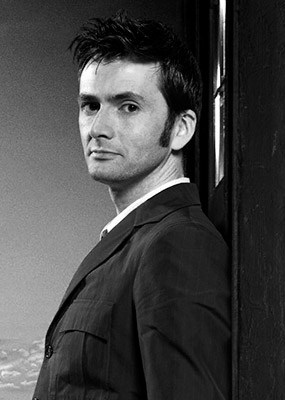
I will grow sideburns like the Tenth Doctor’s

Saving the universe? Bah! A negligible accomplishment compared to having such awesome hair.

Saving the universe? Bah! A negligible accomplishment compared to having such awesome hair.

During his tenure as the protagonist of Doctor Who, David Tennant boasted some splendid sideburns. This year I’ll strive to grow sideburns of comparable majesty.

I will take steps forward

Now that my life has settled down, I must start planning for years ahead. This year I intend to look into future career options.

Have a truly fantastic new year, dear reader!

Do you have any resolutions for the new year that you’re willing to share? Let us know in the comments!

147. Confessions of a Tired Writer

On the coast of Ecuador lies a little town called Same. (In Spanish, it’s pronounced with two syllables: sah-meh.) Although Same boasts a lovely beach, it’s also disfigured by one of the saddest sights I’ve ever seen.

Someone once planned to build a resort on the Same beach, and construction began of a huge hotel. That plan failed. I don’t know the details. The half-finished building looms over the beach, pathetic, silent, empty: a vacant shell of weathered concrete and rusted metal.

I hate to think how many hundreds of thousands of dollars were invested in this aborted hotel. The sight is an ugly one, and unspeakably sad. Someone’s dream died. The ruin isn’t merely an unfinished building. It’s a tombstone. A monument to failure.

That reminds me of something. Something personal.

When I was a kid, I decided to write a trilogy of fantasy novels. In high school, I started a story about a college student named Lance Eliot. At first it was nothing more than a shallow tale of journeys and dragons and sundry fantasy clichés. Early on, it even featured steampunk airships and motorcycles!

Years passed. More than once, I gave up on Lance Eliot and worked on something else. I wrote a couple of detective stories. (In a truly unexpected turn of events, one of them earned a scholarship that paid much of my college tuition!) I tried writing a crime novel. In the end, however, I always came back to Lance Eliot’s journey.

My silly story about swords and sorcerers became something more meaningful: the journey of a man searching for something—the trials of a traveler longing for home—the awakening of a hero from within a selfish, cynical coward. Of course, I kept the magic and dragons and people getting drunk. Lance Eliot’s story remained a fantasy.

It’s not a great story. I know that, but I hope it’s a good one. It has certainly become the most intensely personal project I’ve ever undertaken as a writer. I may not smoke or drink or use dated British idioms, but Lance Eliot and I are very nearly the same person.

It took four attempts over five years, but I finally finished the first part of Lance’s story: The Trials of Lance Eliot. A kindly author introduced me to a literary agent, whose invaluable assistance (and infinite patience) eventually brought my novel to publication as an e-book and later as a paperback.

At the moment, that’s where Lance Eliot’s story ends.

It’s hard to write a novel. It’s harder to publish one. After publishing The Trials of Lance Eliot, I was tired of writing. My life at that time was uncertain and stressful. Having just returned to the United States of America after six months in Uruguay, I had no job, no apartment, no driver’s license and no self-confidence.

Lance Eliot could wait. Once my life had settled down and The Trials of Lance Eliot had sold some copies, I could get back to work on the manuscript for its sequel.

It’s taken a long time for my life to settle down, and I’m pretty sure no more than a few dozen copies of The Trials of Lance Eliot have been sold. I have a job and several blogs and ten thousand other things to keep me busy. The manuscript for the novel’s sequel has been mostly untouched for many months.

Every now and then, however, I think of an empty concrete ruin looming over the town of Same.

The Eliot Papers, the trilogy of which The Trials of Lance Eliot is the first part, has been my greatest passion as a writer for almost as long as I’ve been writing.

Dash it to blazes, I’ve got to finish this thing.

(All right, maybe I do sometimes use dated British idioms.)

Besides my desire to get the deuced story written, I owe it to my agent and publisher to complete the trilogy. He’s invested much time and money in The Eliot Papers. For both our sakes, Lance Eliot must finish his journey.

This brings me to an important announcement.

When I decided to publish miscellaneous creative writing on this blog, I didn’t realize how great a commitment I was making. Posting “Zealot: A Christmas Story” has forced me to make some very hasty revisions and rewrites. It’s been stressful, and I’m not satisfied with the final result.

I can’t keep posting creative writing and regular blog posts if I’m going to make any progress on The Eliot Papers.

Thus, with apologies to my readers, I’m no longer publishing creative writing on this blog.

I’ll post the final chapter of “Zealot: A Christmas Story,” of course, and there’s a brief dramatic sketch I’ll put up on the blog next month. After that, however, TMTF shall revert to its old two-post-a-week schedule until further notice.

I hope that sad old hotel in Same is finished someday. In the end, though, it’s not my concern. Lance Eliot’s story is.

I hope that’s finished someday too.

144. What Makes Christmas Special

Christmas.

What comes to your mind? Snow? Colored lights? Gift cards?

When I think of Christmas, what comes to my mind are palm trees, beaches at twilight and dusty houses built of cinder blocks.

Nothing says Christmas like a beach at twilight.

Nothing says Christmas like a beach at twilight.

As a missionary kid in Ecuador, I spent many Christmas vacations with my family at the beach. We’d pile into our car, crank up Adventures in Odyssey on our CD player and drive for hours: descending from the heights of the Andes, passing banana plantations, stopping at derelict gas stations for fuel and ice cream, winding among low hills and finally arriving at the beach.

Towns and villages are scattered across the Ecuadorian coast. Most of them are small, dirty, unimpressive places. Ecuador is a poor country. In December, however, these little communities are brightened with fake Christmas trees and cheap colored lights.

Not Relevant

Not relevant to this blog post, but adorable.

What really sticks in my memory is the way people celebrated. My old man and I once passed a merry gathering of children in a little town on Christmas Eve. Many were barefooted; most were dirty; nearly everyone was smiling. It was a scene Charles Dickens would have been proud to write.

In Ecuador, Christmas is a time for celebration. It’s a time for fireworks, family get-togethers and three-liter bottles of Coca-Cola. (Yeah, we’ve got those in Ecuador. Be jealous, Americans.) It’s a time for celebration.

Of course, in many ways, Christmas in Ecuador isn’t much different from Christmas in the United States of America. There are the same silly commercials. The same packed shopping malls. The same frenzied media trying to squeeze as much money as they can out of the holiday season.

All the same, when I see the extravagant displays of colored lights around my current home in Indiana, I miss the cinderblock houses on the Ecuadorian coast with tacky tinsel in the windows. The dusty Nativity sets in the corners of living rooms. The cheap ornaments hung from two-foot Christmas trees. The flimsy plastic cups of Coca-Cola.

Most of all, I miss the joy.

Today’s post is about Christmas as a holiday. There is a much deeper meaning to Christmas, and I’ll write about it later this month. For now I want to share what I believe makes the holiday special. It’s not the gifts or the decorations or the music or the food. Even the Grinch understands (eventually) that Christmas means more than stuff.

Joy and celebration and being together with loved ones are what make the holiday special. The other stuff is nice, of course. The holiday stuff is like pretty wrapping paper and shiny ribbons covering the gifts under the Christmas tree.

In the end, though, who wants just the ribbons and wrapping paper without the presents?

142. Moments of Pure Awesome

I recently decided I wanted a duster. What is a duster, you ask?

This, dear reader, is a duster:

Dusters

Isn’t it neat? Take just a moment, dear reader, to bask in its majesty.

My longing to own this particular overcoat began a few days ago, when I checked Wikipedia to find out what sets apart dusters from trench coats. (Dusters are distinct for having a slit up the back to the level of the waist, which allows them to be worn comfortably on horseback.)

Like most overcoats, dusters are cool. Neo from The Matrix wears a duster. Vash the Stampede wears a duster. Most gunslingers in Westerns wear dusters. Seriously, dusters are awesome. I even mentioned one in my last post.

Before continuing, I must make one thing clear: I haven’t accumulated much stuff in twenty-two years of moving from place to place. No matter where I’ve gone, however, I’ve kept one thing: a tendency to be neat and organized. When it comes to my possessions, I generally keep an accurate mental inventory of what I have and where I have it.

It was with great surprise, then, that I opened my hall closet a couple of days ago—fewer than twenty-four hours after deciding I wanted a duster—and found one.

I was puzzled. How in blazes did I acquire a duster? From where had it come? How long had it been hanging unnoticed in my closet?

Then I remembered. Some relatives had given me a bundle of used clothes a couple of months before. I’d hung them up in my hall closet without really looking at them, which is how I had overlooked that they had given me a freaking duster.

To say I am excited is a staggering understatement. Without paying a cent, I have acquired a warm duster that fits comfortably and billows satisfactorily when I walk against the breeze. (The coat probably looks silly, like I’m wearing a brown canvas tent, but that’s not the point—it makes me feel cool, which is what matters.)

When I found a duster hanging in my hall closet, it was a Moment of Pure Awesome.

There have been moments throughout my life, Moments of Pure Awesome, when it felt as though God were patting me on the shoulder and saying, “There, there, you’re going to be all right.”

In the worst months of my Thursday Afternoon the Soul, a year and a half of severe depression, I spent a week camping and traveling with my family in California. It was an unexpectedly perfect week, seven days of sunshine, peace and laughter: seven days peppered with Moments of Pure Awesome.

When I was struggling to find a publisher for The Trials of Lance Eliot—and beginning to wonder whether writing books was worth the trouble—I received a package from a creative writer whom I had met only once. It was filled with letters. A class of grade school kids had read a manuscript of mine and wanted to share what they liked about it. It was another Moment of Pure Awesome.

In my penultimate semester of college, two friends presented me with a beautiful sketch of Uncle Iroh: one of my favorite fictional characters. The gift was a random, wonderful act of kindness. On that night many months ago, my friends gave me something more than a picture: a Moment of Pure Awesome.

I could go on for many, many paragraphs, but I’ll conclude with two brief thoughts.

Dusters are really cool, and I’m thankful for a God who gives us Moments of Pure Awesome.

134. When I Have No Words

I’m usually a cheerful, silly person, and I generally write cheerful, silly blog posts. To quote Louisa May Alcott, “I can only say that it is a part of my religion to look well after the cheerfulnesses of life, and let the dismals shift for themselves.” There is a time, however, to be serious.

Today’s post is a serious one.

There are times when I have no words. I’m good at using words. (In fact, I probably use too many of them.) There are times, however, when words fail me. I sometimes want to scream and holler and wave my fists, but I never do. (These behaviors are generally frowned upon.) Instead, I sit down and spend a few minutes feeling old and tired.

Yesterday was the International Day of Prayer for the Persecuted Church. Do you know what else happened yesterday? Christians in Nigeria mourned the slaughter of their loved ones. Christians in Eritrea languished in pitch-black prison cells. Christians in India struggled to survive as refugees, and at least one Christian in the United States of America spent a few minutes sitting down and feeling old and tired.

After giving it a lot of thought, I realized there are basically three things I want to say about religious persecution.

First, it exists.

Over several years, I’ve read hundreds of reports of persecution against Christians. Hundreds. There were hundreds I didn’t read, and God knows how many incidents were simply never reported.

Some of these cases were complicated. In Nigeria, for example, the attacks carried out by Islamist radicals in past months were not directed toward Christians exclusively, but toward anyone who violated the Islamist ideal of sharia law.

Then there were the simple cases—the tragically simple cases. I remember Nurta Mohamed Farah, a Somali teen who was shot to death simply for choosing to embrace Christianity. There have been so many cases in which Christians were targeted specifically because of their faith.

Religious strife sometimes blurs together with politics and economics, but one fact remains: Christians suffer for following Christ.

The second thing I want to say about religious persecution is that it’s wrong. It is wrong. Innocent people are arrested, abducted, beaten, tortured, raped or murdered, and why? They choose to believe in a loving God. That’s it. They pray and sing and worship and invite others to join them. That’s their crime, and so many suffer for it.

Religious persecution can’t be denied, and it mustn’t be tolerated.

This brings me to the third thing I want to say.

Jesus Christ once said, “So in everything, do to others what you would have them do to you.” If we were persecuted, we would certainly want others to care for us. Since others are persecuted, it’s up to us to care for them.

What can we do?

Keeping informed is a good place to start. (I have a blog, Solidarity, that posts summaries of persecution cases every two weeks.) Spreading awareness helps. Donations to humanitarian organizations like Voice of the Martyrs support victims of persecution. I believe prayer matters most of all.

There are times when I have no words. Today wasn’t one of them. I’ve written quite a number of words today, and I hope they make a difference.

130. Grace? What’s That?

Just because I know something doesn’t mean I understand it. I sometimes know things without really knowing them.

God’s grace—his patient, undeserved help—is greater than my faults. I know that. Sometimes, however, when my life gets a little rough, it’s hard for me to know it. Grace is easy to acknowledge, but so hard to understand.

Last week was a rough one. I considered providing an exhaustive list of reasons why, but I’ll spare my readers the nasty details. By the time I awoke on Saturday morning, I felt truly awful.

Do you know who else spent a lot of time feeling truly awful? The Apostle Paul. He had it rough. Dash it all, did he have it rough. Paul was repeatedly mistreated, flogged, imprisoned and shipwrecked. He suffered from hunger, cold, sleep deprivation and unbearable stress. These are just a few of the sufferings he mentions in his letters, and there were probably some he didn’t mention.

Out of all these afflictions, Paul found one truly insufferable. He called it a thorn in his flesh. Whatever it was, Paul hated it. “Three times I pleaded with the Lord to take it away from me,” he wrote. The Apostle Paul, the legendary missionary, couldn’t take it anymore. He pleaded with God again and again to take away his problem.

At last, God replied, “My grace is sufficient for you, for my power is made perfect in weakness.”

I hate being weak. I’m a faulty, imperfect person adrift in a faulty, imperfect world, and I don’t like it. My usual response is to try to be perfect—or at least, to try to be good enough.

I’m not good enough. I’ve never been, and I’ll never be. I have rough weeks. I get tired and sick and worried and depressed. I make mistakes. No matter how I try, I can’t fit my life into clean, tidy little boxes.

On Saturday, I came closer to understanding something I’ve known for a long time. God’s grace is greater than my mistakes and weaknesses. When I’m not perfect, God is. When I can’t go on, God carries me.

That gives me hope.

I try to wrap up these spiritual blog posts with neat little lessons, but not this time. I haven’t resolved anything. After years of struggling with the same problems, I keep struggling. I’ve written blog posts about these issues and related ones—the same problems again and again and again and again.

I’ve been making mistakes for twenty-two and a half years. If God hasn’t given up on me yet, I mustn’t give up on myself—and I certainly mustn’t give up on him.

I sometimes don’t understand God’s grace, and I often don’t feel it. There are days and weeks when the universe seems particularly empty of meaning, peace or hope.

Even so, I believe God’s grace is sufficient for me. My business isn’t to be good enough, but to trust and to hope and to persevere.

Do I understand God’s grace?

No.

Does it often seem absent?

Yes.

Do I believe God’s grace is always there, and always sufficient for me?

Yes, yes I do.

128. About Writing: The Hardest Lesson

A writer must write—and keep writing—for the right reasons.

That’s it.

That, dear reader, is the hardest lesson I’ve learned about writing.

When a story of mine was rejected not long ago, I was surprised at how upset I felt. What was wrong with it? How could the reviewer not recognize how much time, planning and effort I had poured into my work? Seriously, what was the problem?

After asking these questions, I asked two that mattered.

Why did I submit this story in the first place? Was it to benefit those who read it, or was it merely to impress an audience?

At this point in my deliberations, I removed my glasses, set them down carefully and gave my face a good smack with the palm of my hand.

There is a trap that lurks in the path of every writer, and I had fallen into it for the hundredth time.

My purpose as a writer isn’t to impress my readers, nor is it to puff up my sense of self-importance.

My purpose as a writer is to benefit my readers, and to enjoy writing.

Writing is fun. There’s nothing wrong with that! As any writer can testify, writing can be exhilarating, satisfying, cathartic or simply enjoyable.

Much more importantly, writing has incredible potential for good. Reflections and stories can amuse, teach, comfort, correct or inspire. Writers have the power to make their readers think, smile, laugh, learn or cry.

I sometimes forget these purposes, and write as a way of saying, “Look at me! Look at what I’ve done! Isn’t it great? Seriously, check it out—and while you’re at it, feel free to bask in my majesty.”

That’s not good. In fact, that’s deuced awful. It’s selfish and foolish and vain. It’s a trap!

Writing merely to impress an audience isn’t good, but it has one benefit—incentive for the writer. A desire for praise and popularity is a strong motivator! It’s easy to write for the wrong reasons, and dashed hard to write for the right ones.

Whatever your purpose as a writer, don’t lose sight of it. Remember why you write, and never forget two important facts.

It is not about you.

It is about everyone else.

Yes, these lessons have become kind of a motif on this blog. They’re important ones, honestly.

127. Please, No More Advice!

Imagine a man dressed in rags and standing ankle-deep in snow, shivering in the gale blasting from a winter sky and peering through a window into a warm living room. On the other side of the glass, a man wrapped in a bathrobe sips hot chocolate and gazes curiously at the visitor outside his window.

“I have a question,” says the man in the bathrobe, speaking loudly enough for the man in rags to hear through the glass. “Would you please describe exactly how it feels to be cold?”

If you were the man in rags, how would you answer? Words like icy and frigid are meaningless to someone who has never felt cold, and adjectives like horrible and painful are too vague.

If you’ve never been severely depressed, I’m afraid I can’t describe it any more than the man in rags can tell the man in the bathrobe what cold feels like. The best explanation I can give is that depression is like lying on the very bottom of the ocean. Everything is cold and dark, and a suffocating pressure makes the simplest action ten times more difficult.

Not long ago, I read an article in which the writer described his struggle with depression, insecurity and suicidal thoughts. He has my utmost sympathy. If I ever met the man, I’d offer him a cup of tea and tell him how much I admire his courage in getting out of bed every morning.

Some of the people who commented on the article had other ideas.

“Depression. Who needs it. I say, if you’re upset and sad then own it.”

“Depression eh? Been there, done that years back. A large part of it is physical. My recommendation, eat fruits and veggies … Get some exercise … Join a gym.”

“You are what you are, you seem to accept you have issues, work on them and things will get better.”

The writer made himself vulnerable, confessing his personal struggles. Some of his readers responded by telling him, You’re obviously getting it wrong, so let me show you how to get it right. More vegetables! Better attitudes!

I suspect many of these readers are like the man in the bathrobe. They see, but they don’t understand. They look through the window at the man in rags, but they can’t begin to imagine how it feels to be cold.

To my relief, some of the people who commented on the article took a more compassionate approach.

“Thanks for sharing … Hopefully you’re also able to disregard all the ‘advice’ comments from people who don’t actually know what you’re going through.”

“I hope you win your battle. I have to say, I don’t understand it at all, but I know it seems to be very real for many people.”

“In a world filled with selfish, lazy, disgusting, and greedy [obscenities] that make all of us lose hope in the world, it is people like you that give me the strength to live on. Thank you for sharing a bit of yourself with us.”

Which kind of comment do you think the writer of the article found more helpful?

I need to make one thing very clear—advice can be compassionate, useful and awesome. In many circumstances, it’s the best thing you can offer. Advice can be a powerful, practical gift, even to people who may not want to hear it.

The reason I’m writing this blog post is that, in many circumstances, advice isn’t the best thing you can offer. It’s the worst.

In most cases, the person giving advice genuinely wants to help. However, there are times when advice—even wise, honest, well-meaning advice—isn’t helpful. Those who are humble, brave and honest enough to confess their struggles and mistakes deserve compassion, not lectures. If lectures must be given, compassion must come first.

What’s the best way of figuring out whether or not to give advice? In my experience, it’s one question.

Will this advice actually help this person?

If not, it’s probably best not to give it.

That’s my advice, and I hope it helps.

124. A Battle Won by Surrender

It’s only a matter of time before most of my personal struggles become blog posts.

My readers may not appreciate the posts in which I confess my faults and pour out my woes, but I write them anyway. Writing about my struggles helps me to organize my thoughts.

Besides, personal posts are cathartic to write, and I hope some reader somewhere finds them encouraging—or at the very least, amusing. You may not learn from my mistakes, but you’re welcome to laugh at them.

I often overthink and overanalyze things, cluttering my mind with useless thoughts and pointless worries. My obsessive-compulsive tendency to think too much has wasted a ridiculous amount of time—not as much as, say, YouTube, but a considerable amount nonetheless.

My circumstances are sometimes beyond my control. My feelings are often beyond my control. As a neat, tidy, logical, organized, borderline obsessive-compulsive person, I hate not having control over any part of my life. I think my chronic compulsion to overthink things is an involuntary attempt to extend the illusion of control over my entire life.

I don’t have complete control over my life, but I know someone who does.

In the end, life is too full of mysteries and subtleties and complexities for me to comprehend it fully. Sometimes, I must stop trying to understand life and simply live, trusting God and blundering hopefully onward.

Worry is a paradox, really. It’s the one problem that goes away when it’s ignored. Thinking about worry only makes it worse. The only way to win the battle is to stop fighting.

Now if you’ll excuse me, I have some living to do.