Redeeming the Worst Song in the World

All right, the title of this post is a little misleading. “Friday” is the worst song in the world, and it is far beyond redemption. The song above, “Communicate,” is the worst redeemable song in the world.

Adventures in Odyssey is amazing, but this long-running Christian radio drama once made an unspeakable mistake. In 1987, a year of darkness and infamy, an episode titled “Lights Out at Whit’s End” unleashed an atrocity upon the world. This was “Communicate,” a rap song sung by two middle-aged men and a bunch of kids, whose message was… the importance of communication.

I couldn’t find the original version of the song online, presumably because “Communicate” would leave the Internet a smoldering ruin. The song was so bad that “Lights Out at Whit’s End” has not been aired since its first broadcast.

Then the brave folks over at The Ceiling Fan Podcast, a really clever Adventures in Odyssey fan series, decided to find out whether “Communicate” could be made into… well… something that didn’t stink.

I think the video above is a smashing success. Given the source material, the new “Communicate” is actually kind of awesome.

For some reason, my typewriter monkeys (who are fond of rap music) really like this video. I mean, they really, really like it. It worries me.

The Best Cellist in the World

I wish I could do anything one-half as well as this gentleman plays the cello. To tell the truth, I’m a bit cellist of his remarkable talent.

Now I’m going to spend an hour or two doing penance for making such a terrible pun. I’m sorry. I’m so, so sorry.

(I’m not sorry.)

Just watch this gentleman’s facial expressions as he plays. His passion for music is unmistakable. I may never become as skilled at anything as he is at playing cello, but I want to nurture that same kind of joyful, passionate enthusiasm for my own gifts.

165. Wishing I Had My Own Theme Music

This Monday, March 4, is Be Nice to Someone on the Internet Day. That said, follow the good (or bad?) example of Scar from The Lion King and be prepared!

People in video games get their own theme music. I envy them.

Take Princess Zelda from the Legend of Zelda games. She has a wonderful musical theme. Seriously, check it out on YouTube. It’s beautiful. The soft, lovely notes of this song reflect Zelda’s character: kind, pure and gentle.

On the other end of the scale we have charming psychopaths like Sephiroth, a truly daunting villain. His musical theme is… not beautiful. It’s actually kind of terrifying. Somewhere between the chanting choir and the screaming guitars, the player gets a strong impression that Sephiroth is not a nice person.

I wish I had a leitmotif, my own personal musical theme that accompanied me everywhere. I would, of course, want to be able to switch it on and off at will. An epic musical theme might not be the best thing to have, say, during a church service.

If I could have my own theme music, here are a few possibilities.

“I Can Do It When It Counts, Pal!”

Dick Gumshoe is an incompetent, good-natured, ramen noodle-munching detective from the Ace Attorney games. This upbeat arrangement of his musical theme is simply fantastic. (Seriously, just listen to dat bass.) I’m generally a cheerful person, so I think the song fits. Besides, I really like ramen noodles.

“Detective Conan Theme”

This song is similar to the last one, but bigger and more exciting. The exuberant bass is toned down and replaced with cheerful brass, epic strings and (why not?) some electric guitar. I’m no detective, but I wish this theme were mine.

“Skyrim Theme”

All right, I admit it. I included this song simply because it’s awesome. It doesn’t fit my personality at all, but I still kind of wish it were my leitmotif. Honestly, who wouldn’t?

“BRODYQUEST”

Yes, I’m joking. Well, sort of joking.

If you could have your own personal musical theme, what would it be? Let us know in the comments!

151. Bronies

As much as I like cartoons, I never expected to become a fan of a show about magical rainbow ponies. It’s strange that I did, I suppose, but something far stranger happened.

I became a fan of its fans.

The community inspired by My Little Pony: Friendship Is Magic, though often regarded with suspicion or loathing, is the most creative, quirky, compassionate group of fans I’ve ever seen. Combining bro and ponies in a portmanteau word, these weird, wonderful people are known as bronies.

There is a ridiculous number of artists in the brony community. Besides creating art inspired by the show, they sometimes reimagine real or fictional peopleincluding bloggersas ponies.

Not many people know this, but I'm actually a pony.

Not many people know this, but I’m actually a pony.

The artwork produced by bronies takes innumerable forms: comics, sketches, paintings, woodcuts, stained glass and more. Name any kind of visual art, and bronies are guaranteed to have used it.

I have a sudden, inexplicable urge to buy a fedora. And to grow a mustache.

I have a sudden, inexplicable urge to buy a fedora. And to grow a mustache.

There are nearly as many musicians in the brony community as there are artists, and their music is no less diverse. Besides remixing music from the show, bronies have produced a staggering number of original songs in every style imaginable. Classical? Electronic? Classical remixed as electronic? Progressive bluegrass? Symphonic rock? Bronies have them all covered.

Brony musicians even cover music by other bronies. “Discord,” a catchy Eurobeat song about a villain from the show, has been arranged for orchestra, jazz, electronic and other genres.

I won’t even begin to cover the animations and video games created by bronies. While some are amateur efforts, others are literally of professional quality.

Even my typewriter monkeys (Thanks again to # of deviantArt!)

The Typewriter Monkey Task Force can’t handle the incredible creativity of bronies.
(Special thanks to Derpy Hooves for making a guest appearance!)

The creativity of the brony community seems to know no end, but the thing that impresses me most about bronies is their compassion.

Through fundraisers, auctions and special events, a charity called Bronies for Good recently paid for the construction of an orphanage in Uganda. Bronies for Good is currently funding clean water projects in Uganda and Tanzania. Another charity, the Brony Thank You Fund, is working to endow a scholarshiptentatively titled the Derpy Hooves Scholarship in Animationto the California Institute of the Arts. (Tim Burton, John Lasseter and many notable animators graduated from CalArts, which was founded by Walt Disney.) Various brony initiatives have raised many thousands of dollars for Kiki Havivy, a little girl diagnosed with a brain tumor.

The list of charitable projects goes on and on. It’s ridiculous.

Nothing is perfect, of course. The brony community has its share of conflicts, problems, crude artwork and tasteless fan fiction. In the end, though, it remains the most amazing group of fans I’ve ever seen.

I am, I admit, slightly embarrassed to be a fan of My Little Pony: Friendship Is Magic. It’s a cartoon for little girls, after all.

I am not, however, embarrassed to be a brony.

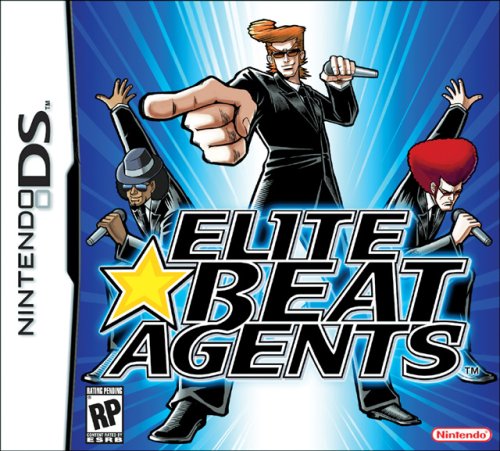
103. Elite Beat Agents

I don’t think it’s possible to play Elite Beat Agents and be depressed at the same time.

Released for the Nintendo DS, Elite Beat Agents is a rhythm game that features one of the strangest (and most brilliant) premises of any video game ever.

A specialized government agency is devoted to helping desperate people through the inspirational power of song. When a person reaches a point of critical distress, three agents in black suits and sunglasses arrive on the scene and…dance. Motivated by the agents and their fabulous performances, the person overcomes all obstacles and succeeds.

The gameplay in Elite Beat Agents consists mostly of tapping spots on a touchscreen to the rhythm of the music. In spite of its simplicity, the gameplay is engaging and satisfying.

Elite Beat Agents uses a bright, exaggerated, comic-book style. Its humor is quirky, and some of the situations from which the agents rescue hapless people are delightfully absurd.

Sure, they start out innocently enough: a babysitter struggles to keep three kids under control, for example, and a lost dog tries to find his way home.

Then the agents find themselves helping Leonardo da Vinci convince the Mona Lisa to become the subject of his next painting—and motivating white blood cells to cure an athlete before an important competition—and inspiring an ex-baseball star to rescue kids in a theme park from a fire-breathing golem.

The game becomes steadily weirder, and proportionately more awesome.

Each scene is set to a popular song, such as “September” by Earth, Wind and Fire or “You’re the Inspiration” by Chicago. If the colorful visuals, goofy humor and compelling gameplay were not enough, the catchy music settles it: Elite Beat Agents is an excellent game.

It’s also a fine way to beat depression. Apart from its jolly, silly style, the game takes a good deal of concentration. It’s awfully hard to be depressed and keep the beat.

That’s just the inspirational power of song.

82. About Writing: Rhythm

Before I share my thoughts about rhythm, here are a few words from Phineas Flynn and Ferb Fletcher. (They’re mostly from Phineas. Ferb doesn’t talk much.)

All right, it’s important to have a sense of rhythm. But what does that mean for writers?

It’s a mistake to use the same kinds of sentences. A paragraph full of identical sentence structures is boring. Sentences should be varied. Sentences should not become monotonous. That kind of writing sounds boring and choppy. That kind of writing is worse if consecutive sentences begin or end with the same words because it sounds boring and choppy.

That last paragraph was, as one of my brothers would say, an abomination. It committed pretty much all the transgressions against which it warned. The structures of its sentences were similar, and it repeated certain phrases. It sounded—forgive the repetition—boring and choppy.

It’s easy to use the same sentence structures over and over. In fact, I do it all the time without realizing it. Writers need to vary the rhythm of their writing, and deliberately use different kinds of sentences.

I won’t go into the technical details of dependent and independent clauses, compound sentences, complex sentences or any of those other ghastly things.

Let us instead learn by doing. Here’s a lousy paragraph, one that ain’t got rhythm.

Uproariously, the typewriter monkeys chattered as Adam dictated a blog post to them. He told them to listen, but they wouldn’t. He shouted, but they only yanked the ribbons out of their typewriters. Clutching his head, Adam went into the kitchen to make tea. Unhappily, he returned and surveyed the devastation.

We have two basic sentence structures repeated in this paragraph: Adverb or adverbial phrase, blah blah blah and Blah blah blah, but blah blah blah.

(A real professional would use proper grammatical terms to describe these sentence structures, but I ain’t real professional.)

Let us rewrite the paragraph with a little more rhythm.

The typewriter monkeys chattered uproariously as Adam dictated a blog post to them. Although he told them to listen, they wouldn’t. He shouted, but they only yanked the ribbons out of their typewriters. Adam went into the kitchen to make some tea, clutching his head, and returned to survey the devastation unhappily.

Behold! With a few words changed and a few phrases shifted around, the paragraph has gone from being monotonous to readable.

Rhythm is important, and syntax—the order in which words are arranged—matters. (Syntax is not a tax extorted from sinners, to quote one of my high school teachers.) Writing that ain’t got rhythm isn’t nearly as powerful as writing that has it.

15. Video Game Music

I love video game music. As I’ve mentioned previously, video games have an unfortunate (and mostly unmerited) reputation for being lowbrow or even harmful. Video game music is not generally considered to be of much value.

This is sad, since much of the music from video games is absolutely superb.

In addition to the great music in video games, there are thousands of remixes created by musicians who rearrange, reinterpret and reinvent video game melodies.

There are four things I particularly like about video game remixes.

They’re creative

I’ve heard the main theme from Super Mario Bros. remixed as electronica, performed by a string quartet, scatted a cappella and played on a piano. A single song might be interpreted in a hundred different ways. It’s delightful to find a new perspective on a familiar melody—rather like looking at a painting in a museum and recognizing the view out of my own bedroom window.

They cover pretty much every musical genre

I’ve heard at least one song rearranged with bagpipes in the style of traditional Scottish music. Need I say more?

They’re often amazing

Composers of video game music have commented on the surpassing quality of remixes they’ve heard. David Wise and Christopher Tin, among others, have spoken positively about remixes of their music. (Christopher Tin, by the way, won a Grammy for a song he composed for a video game.) I’ve heard many remixes of professional quality, sometimes with vocals or live instruments.

They’re free

Most video game remixes are available for download—legally—for free. Because remixes are based on music owned by video game developers, those who make them aren’t usually able to sell them without breaking copyright law. The alternative is to distribute remixes for free, which is legal and totally awesome.

In order to demonstrate the quality, variety and grandeur of video game music, I’ve decided to give a few examples—or rather, one example remixed in several ways. The remixes are taken from OverClocked Remix, an organization “dedicated to the appreciation and promotion of video game music as an art form.”

First is the original song, “Valley of the Fallen Star” from Final Fantasy VII. The song has sort of a Native American feel to it, with muted percussion providing rhythm and a woodwind carrying the melody.

Next we have “Red XII Redux,” a straightforward rock remix—nothing fancy or extravagant, just a smooth arrangement of the song recorded live.

Moving from laid-back rock to frantic guitar shredding, “Lunatic Moon” combines rock and electronica in a song that practically radiates energy and aggression.

We finish with “Ascension to Cosmo Canyon.” The song is simply beautiful, every bit as peaceful as “Lunatic Moon” was frenetic, with piano and strings leading into a woodwind melody backed by drums and a male chorus. The song is lovely and has a decidedly cinematic feel.

These are just a few examples of how one song can be interpreted in many ways. Video game music is wonderful on its own merits—especially in these days when so many games include music from choirs and live orchestras—and remixes present endless interpretations and reinventions of video game melodies.

Remixes are also free. You can’t beat that!