152. Nor Can We Be What We Recall

Today’s post was written by Josh Hamm, also known as The Scholar. (I need a title like that; it’s a pity “The Doctor” is taken.)

“Nor can we be what we recall, / Nor dare we think on what we are.”

I like to quote people in my writing. I like to sprinkle references as if Tinker Bell were a little tipsy and got too free with the magic pixie dust. Maybe it’s a remnant from school, where we have to integrate all sorts of quotations. I distinctly remember a teacher in Grade Twelve telling the class that we should quote authors because anything they’ve said is better than whatever we could up with.

I enjoy it though; it’s an act of sharing secrets that were never meant to be secrets. It’s the same as when you feel the urge to start exchanging YouTube videos, but I prefer to exchange the thoughts of influential authors I’ve read. I tend to drop a few specific names in most of my writing.

People like G.K. Chesterton, Thomas Merton, C.S. Lewis, Frederick Buechner and Marilynne Robinson. I don’t solely quote these guys. I read a lot, so I’ve got a lot of wells to draw from, but these are some of my favorites. Besides, let’s be serious, I’ve never met a Christian who doesn’t profess love for C.S. Lewis.

(I’m pretty sure that when Martin Luther declared Sola Scriptura he included a little caveat for C.S. Lewis.)

But sometimes I disagree with what my teacher said. It seems so defeatist, as if we may as well not try to write anything at all, because it’s all been said, and said better and more profoundly than we could ever hope to write.

Now, I rarely use this word, and I’m sorry to use such strong language, but that is just utter balderdash.

Sure, in most cases these authors have extremely profound phrases and witty turns of speech, but whatever we write has value too. We may never become half the writer that Chesterton or Merton was, but that doesn’t render my voice or your voice useless.

Don’t just outsource your thinking.

Don’t check your brain at the door because you’ve given up and assume that others have already taken your place.

Come up with your own viewpoint, your own writing, and then supplement it with authors you like. Quote those that you love, those authors you’ve read or read about and feel a connection to. Then add your own flavor. Add some meaning, some of yourself into their words and ideas.

But whatever you do, don’t blindly accept what they say or regard everything they’ve written as a work of genius. It’s not.

Remember that other writers do not define what kind of writer you are. I read great novels or great autobiographies, or philosophies, or poetry, and I wonder in jealous despair why I will never write like they do.

Then I’ll remember, it’s not my job to write like them. It’s my job to write like myself.

Don’t feel like your message is diluted just because writers and thinkers before you said similar things in brilliant ways. Share their thoughts if you think it will enhance your message, but remember that’s just what it is at the end of the day—your message.
137. A Note from the Typewriter Monkeys

This is Aquila, one of the hardworking monkeys whose diligence, skill and patience keep this blog alive, writing on behalf of the entire Typewriter Monkey Task Force.

Although the Boss was supposed to post on this blog today, he fell asleep on the floor a few hours ago. (I suppose it must be acknowledged that he had a tiring week, with seven consecutive overnight shifts at his job followed immediately by a two-day trip to visit relatives for Thanksgiving.) We tried waking him, but he only rolled over and mumbled incomprehensible phrases such as “Dodongo dislikes smoke” and “The cake is a lie.”

In his absence, the Typewriter Monkey Task Force would like to express our sincere hopes that the readers of this blog had a pleasant Thanksgiving, and to wish them many blessings in the final weeks of this year.

I would like to take this serendipitous opportunity to clear up a few misunderstandings. Contrary to suggestions made by our Boss in previous blog posts, members of the Typewriter Monkey Task Force are responsible, honest animals who work hard, accept instructions and absolutely never dream of breaking into the cupboards and refrigerator every week while the Boss is asleep to steal Oreo cookies and chocolate milk.

We also request for readers to post many comments on this blog petitioning our Boss to give us more bananas and higher salaries.

The Typewriter Monkey Task Force thanks you for reading this blog, and please do not forget about the bananas.

Regards,

Aquila and the Typewriter Monkey Task Force

106. How to Make Christian Media Awesome

Today’s post was written by Paul McCusker, veteran writer and director for Adventures in Odyssey and Focus on the Family Radio Theatre, and author of numerous books and plays. (For more from Paul, check out his website!) Since his work in Christian media has been phenomenal, I could think of no better person of whom to ask the question: “Why does Christian media so often fail, and how can we make it better?”

In the thirty years I’ve spent as a writer I’ve often heard Christians complain about the sub-standard quality of the Arts in modern Evangelical Christendom. The lament is that films, novels, plays, music and all other forms of Art seem to suffer at the hands of well-meaning Christians. I have launched this complaint myself at one time or another. And some might argue that I’ve contributed to the problem, considering my varied career as a writer in some of those fields.

Before we complain too much or too often, I think it helps to ask a few questions just to clarify what we’re talking about. What do people mean by “sub-standard quality”? Sub-standard compared to what? Are we measuring against the secular realm, which certainly has its share of flops (maybe even more if you consider the percentages)? Or are we measuring against something else? If so, what?

If nothing else, we need a coherent definition of success. For example, how do we measure artistic success? Is it based on a sense of fulfillment and experience—a story or song hits in all the right ways for the audience? Or maybe it’s the fulfillment and experience of the artist, somehow shared with others? I once read how the composer Ralph Vaughan Williams stated that he wasn’t sure if he liked it one of his symphonies, but it was certainly what he meant to say when he wrote it.

Are we measuring according to financial success? Is a great story something less than a great story if a lot of people don’t buy it? Or maybe we’re creating sub-standard art because we don’t have the right level of investment at the start? More money means better effort? Or does it?

Or are we measuring according to spiritual success, tallied by the number of people who are drawn closer to Christ in one way or the other?

These are the kinds of questions we must ask before applauding or dismissing the efforts of Artists. I’ve been moved by stories that I knew were not very well-made. Equally, I’ve been unmoved by stories because the flaws were impossible to look past. I’ve shrugged at big-budget films that should have gotten it right and didn’t. And I’ve watched in wonder at low-budget films that combined plot, character and theme in near-perfection.

All these questions aren’t meant to evade the issue. I’ve wrestled with them repeatedly over the years—from project to project, and audience to audience. There are so many factors an Artist in any discipline has to consider. But those factors aren’t always clear to the unwary. And success may only be an elusive hope, no matter what we do. But let’s allow that we should always do our best. Here are a few suggestions how.

I would suggest that any Artist—Christian or otherwise—must know the disciplines of Art. We must learn the craft. Master it, as much as it can be mastered. Do our very best while recognizing our limitations and the limitations of the Art we hope to master. Understand the objective rules of Art while appreciating the subjective experience people will have of it. Learn, learn and keep learning.

We must never do, nor accept, less than the very best, even if people seem to grow closer to God because of it. Well-intended rubbish is still rubbish. God can redeem our very worst efforts, but we mustn’t keep putting Him in a position where He has to. Yes, we can be forgiving about poorly crafted Art, but we mustn’t let that forgiveness excuse the flaws in a poor effort.

We have to remember that every Artistic effort has its own choices and challenges and opportunities for mistakes. The goal is to learn from those mistakes this time in the hope we won’t repeat them again next time. We learn—and we learn again.

It’s not popular to suggest it, but I believe we must understand for whom we write. Who are they? What are they expecting from us? (And if we don’t like the answer to that question, then we may be writing for the wrong audience.) It’s easy to look down our artistic noses at the very people we want to communicate with—especially when they’ve rejected us. Personally, I’m inclined to want to assume the best about my audience. I suspect that they are a lot smarter than me—and haven’t been proven wrong—and try to write accordingly.

None of this has to do with being “successful” in media, by the way. It’s only part of the equation. Our “success” as Artists is often determined by sales-people, distributors, producers, marketers, and a large number of professionals who will impact what we do and how we do it. In that world, we have to learn their rules—and try to play by them—until someone creates new rules for us to learn and follow. That’s yet another reality.

Even as I guest-write this blog, I’m aware that there’s someone looking over my shoulder, representing his audience, determining whether or not I’ve come close to what he asked me to write. And as I wind up, I have to paraphrase Ralph Vaughan Williams once again: I don’t know if I like what I’ve written, but it’s what I meant to say.

99. Pencil Drawings

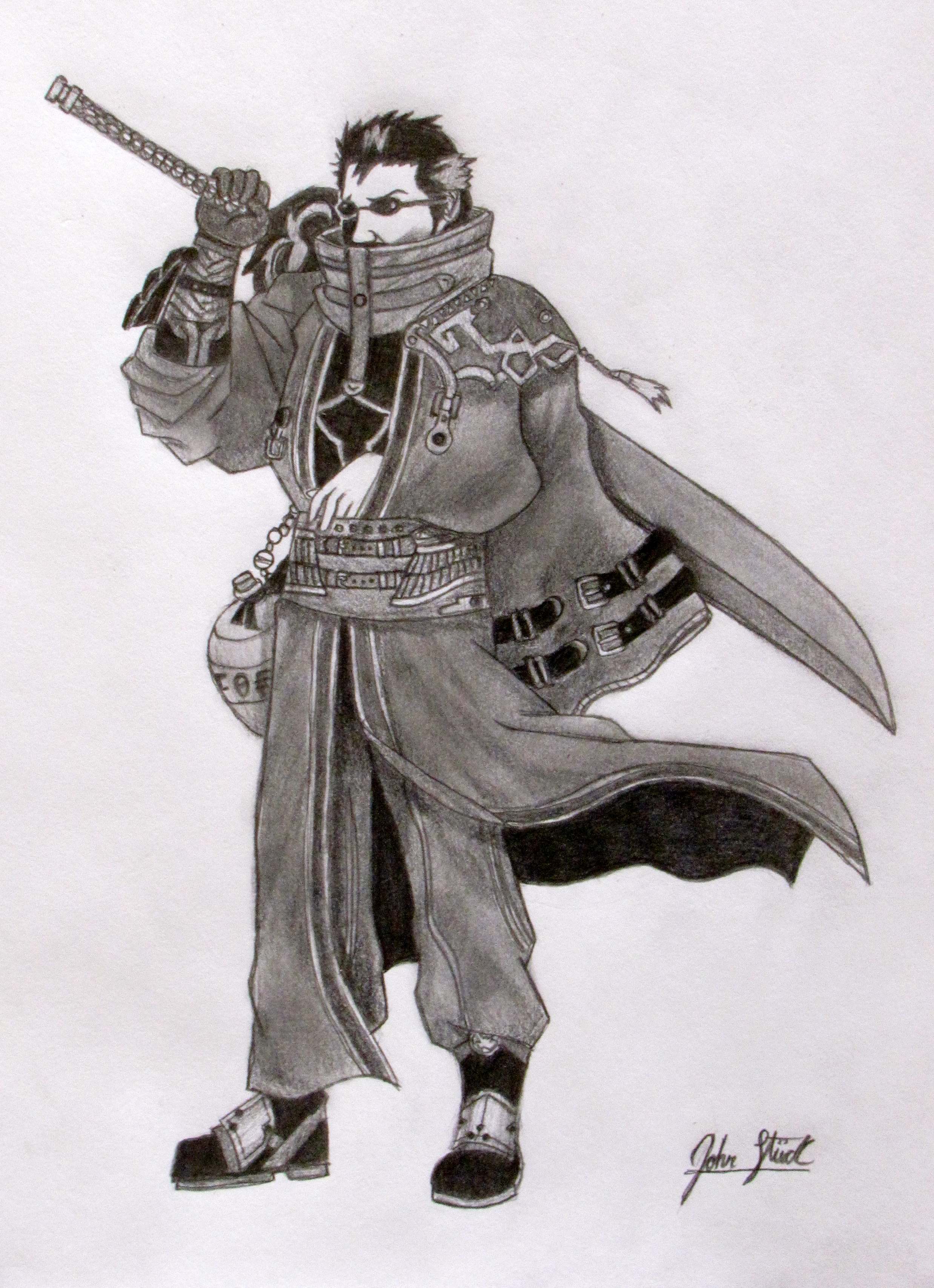
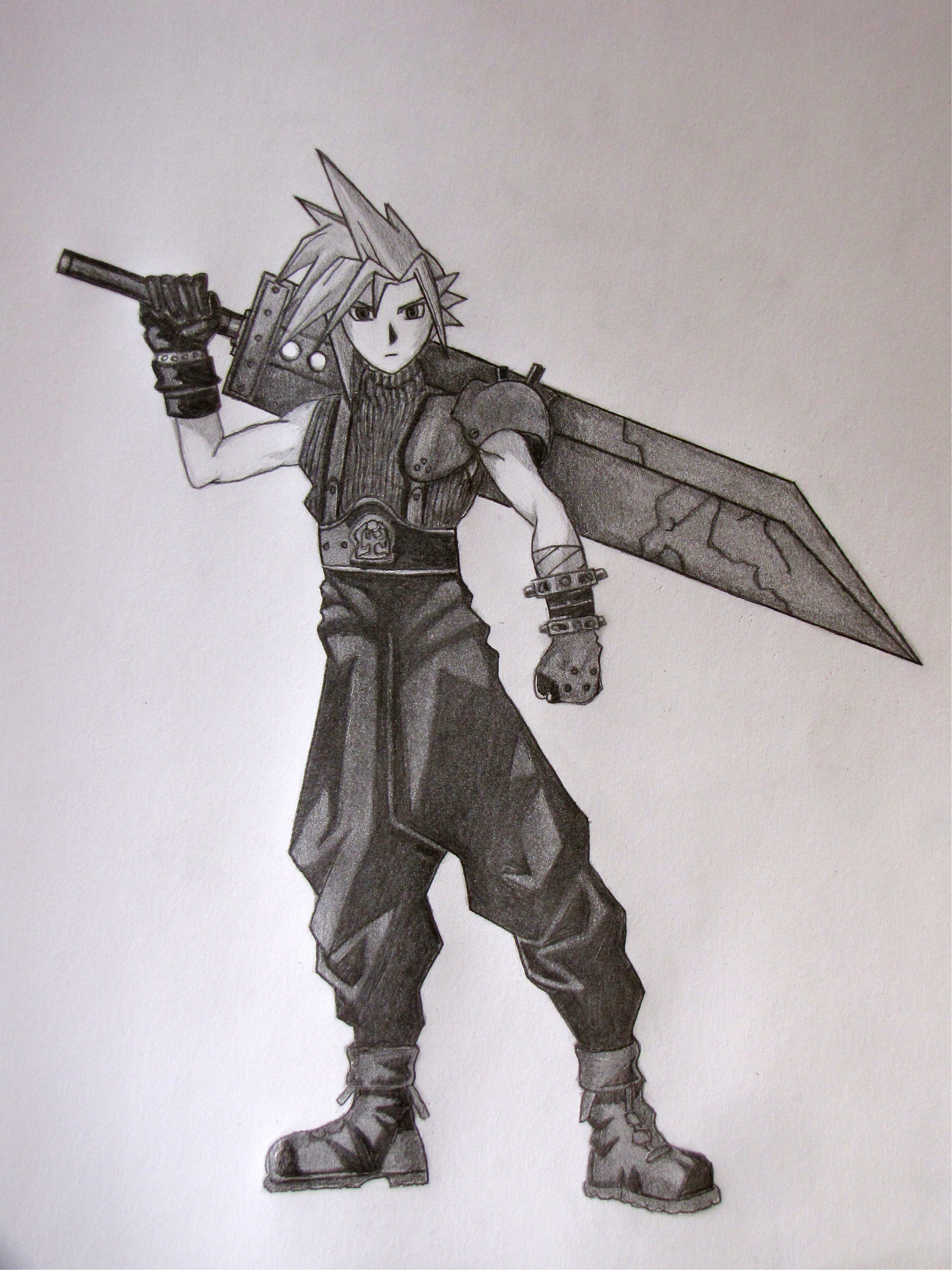
My old man is a great artist, and his portrait of my typewriter monkeys at work—work being a relative term—graces TMTF’s banner. Sadly, neither I nor my older brother inherited any of my old man’s artistic skill. My younger brother, however, is turning into an excellent artist, and I’m proud today to share some of his work. Check out his deviantART page for more awesome artwork!

I’m not sure why he needs the sunglasses or the sake jug, but Auron is one cool dude.

This excellent portrait of Cloud Strife leaves me with one question: Which is sharper, the sword or the hair?

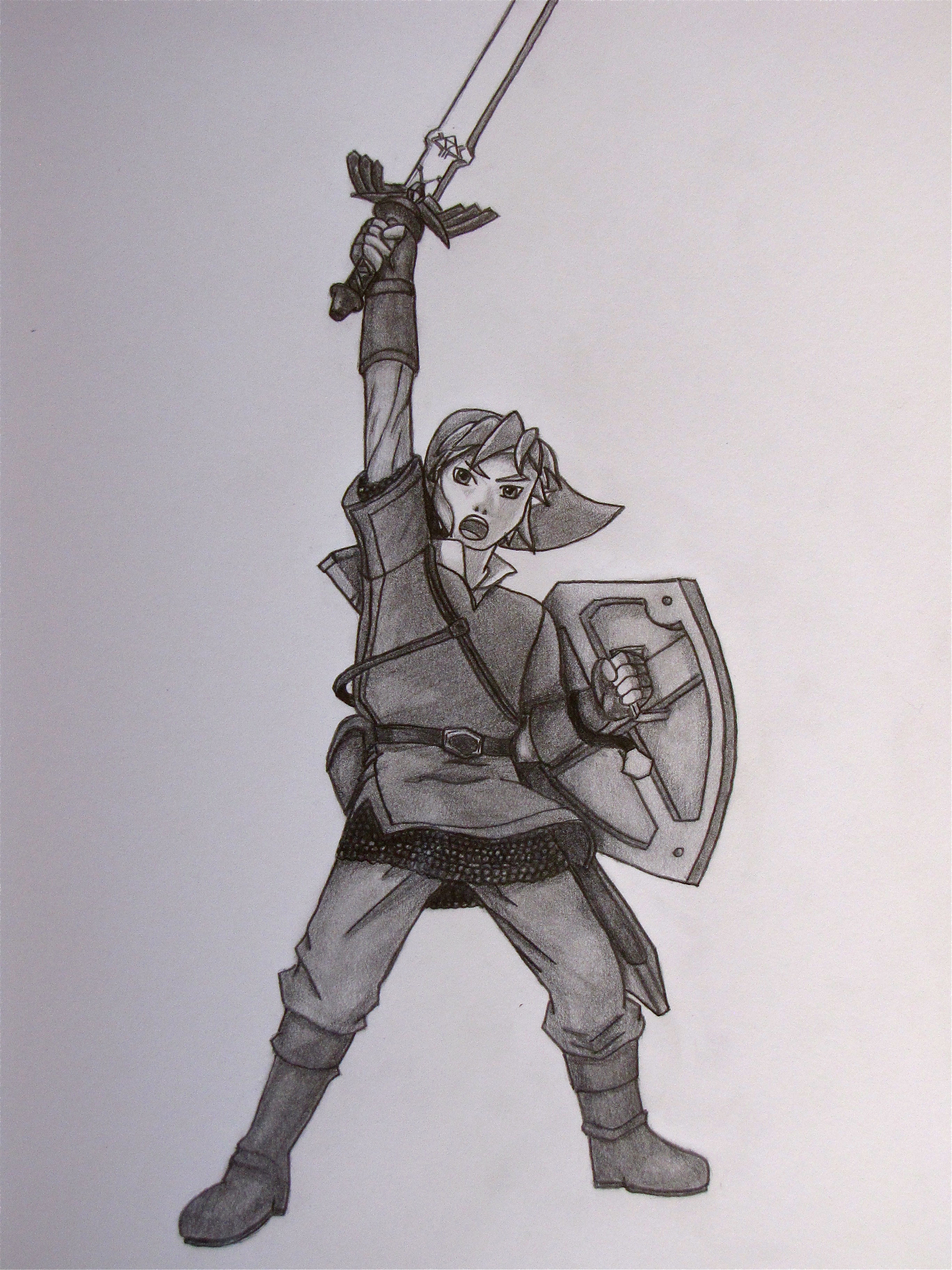
Besides being brave and noble, Link has a great fashion sense.

Featuring Vash the Stampede, a legendary outlaw, this may be the most awesome wanted poster in the history of history.

83. Prayer Phrases to Be Banished

Today’s post was written by Some Guy, blogger extraordinaire. For more humorous reflections and commentaries, check out his blog!

We all have our comfortable prayer phrases—things you say during prayer when you can’t think of anything else. And I’m not talking about filler words either. I mean the verbs in the prayer—what you are asking God to do.

I have some prayer phrases I use but I wish I didn’t use. To help rid myself of this bad habit, I’m going to hand out those buzzers that come in the game Taboo. Anytime I pray these words, someone will buzz me. It might be a bit distracting though. And too tempting for those pranksters who would slip one onto the chair just before someone sits down.

Here are my three phrases to be banished for being too generic.

The Word “Bless”

I once read that an easy way to improve your prayers is to avoid the word “bless.” It’s way too generic, rendering it meaningless.

“Dear God, please bless Socrates.” How are you going to know when God answers that one? Maybe you wanted him to have a better job, but God gave him more children. They are both blessings.

It certainly wouldn’t hurt to be specific when you ask for something. Saying “bless Socrates” is, in effect, saying “do something for Socrates, but I don’t care what it is.”

The Phrase “Be With”

Do I believe that God is always with me? With anyone else? Then why do I pray as if God isn’t going to be with someone? “Lord, please be with Socrates.”

If I didn’t know that God is patient, I would expect Him to get frustrated. “I am with you. I already told you that. Why don’t you believe Me?”

The Phrase “Watch Over”

This is along the same lines as “Be With.” Of course God is going to watch over us. In your prayers though, do you want Him just watching? Or do you want Him to do something?

I observed a good illustration of this at the beach. A wife asked the husband to watch their toddler, who was enjoying throwing sand at the waves. It was a cooler day, so the child was wearing a shirt and pants along with sandals. Perfect for playing in the sand instead of swimming. The toddler didn’t mind that the waves occasionally splashed his pant legs, so the husband didn’t disturb the child’s fun. The wife returned, saw the wave-splashed child, and became upset.

“I thought you were watching him!”

“I did watch him.”

“Then why is he all wet?”

“Oh, you wanted me to keep him dry?”

A prayer to have God “watch over” someone does not really ask God to do anything different from what He is already doing. How are you going to see that prayer answered?

Those are my top three phrases that deserve banishment. Perhaps you use them too. Don’t worry—if I hear you use them, I won’t judge you.

At least not out loud.

So what’s your go-to prayer phrase? What else would you like to see banished? Let us know in the comments!

74. Guest Posts Welcome!

Update: This blog is finished, and no longer accepts guest posts. Thanks all the same!

John Donne once observed, “No blog is an island.”

I may possibly be misquoting him, but the basic principle is the same. Few people can survive apart from other people. Few blogs can exist independently from other blogs. Like most people, most blogs are part of a community.

I’d never have begun TMTF without inspiration from bloggers like Jon Acuff and Wes Molebash. Community can be extremely important for writers; bloggers are no exception. As I’ve said before, just because writing can be a lonely form of art doesn’t mean it should be.

I’d love to feature guest posts more regularly on TMTF. Quoth Uncle Iroh, “It is important to draw wisdom from many different places. If you take it from only one place, it becomes rigid and stale.”

TMTF has already featured great guest posts on creativity, literary dialogue and the things we find when we clean out our Bibles. I would be delighted to present guest posts on other humorous, useful or unusual topics.

What criteria are needed for a guest post to be featured on TMTF?

It should be about faith, writing, video games, literature, TV, movies, or meaningful personal experiences.

Possible topics for guest posts include creative writing tips, spiritual insights, literary musings or humorous observations about gaming culture. Posts about celebrity hairstyles, trigonometry or rubber bands will be instantly rejected.

It should be well-written.

Guest posts should be coherent, succinct and easy to read. Between four hundred to eight hundred words is the ideal length. Grammatical errors and spelling mistakes shall be met with the full fury of my righteous indignation.

It should be funny, insightful or both.

I try to make every post on TMTF entertaining or edifying. I don’t always succeed. That makes it even more important for guest posts to succeed where I fail!

It should be pleasant.

TMTF is not an edgy or controversial blog, and there are already enough disputes, arguments and insults on the Internet without adding more. The purpose of this blog is “to impart hope or understanding or inspiration—or at the very least a healthy laugh—to someone who needs it.” Guest posts should honor that purpose.

If a guest post meets the above criteria, TMTF will be honored to feature it.

How can guest posts be submitted?

Behold! TMTF now has a Contact page! If you’re interested in submitting a guest post, simply use the contact form.

I may not accept every single submission. Some guest posts, however well-written, may not be well-suited for TMTF. In some cases I’ll suggest changes to guest posts to make them more suitable. In all cases I’ll do my best to be respectful of the work submitted.

I’m going to be guilty of shameless self-promotion and admit my typewriter monkeys and I are always delighted to write guest posts for other blogs. If you’re looking for a guest post about faith, writing, video games, literature, life, the universe or everything, let us know using the Contact page!

62. About Writing: Dialogue

Today’s post was written by Amy Green, blogger and author of young adult fiction. For more thoughts on writing, faith and fiction, check out her blog!

If you want the safe version of this post, here are three simple tips to writing better dialogue: listen to others, know your characters well, and ask others for help with editing. You can stop right there. Go ahead. I won’t be offended. Really.

If you’re still reading, let me tell you something: there’s a problem with those three simple tips.

They’re not simple. And they probably won’t work.

How do I know? Because I am a selfish person, and I recently realized that the biggest obstacle to writing good dialogue is selfishness. Before you stone me with copies of Christian Writer’s Market Guide, here are the reasons why I came to this conclusion.

Selfishness keeps us from listening

I have a cartoon taped to my desk where a boy is going on a rant about how most people just “wait to talk” instead of actually listening. “You know you’ve met someone special if they can respond to what you’ve said without launching into something unrelated about themselves,” he says.

Ouch. Do you know how humiliating it is to be called out on selfishness by a one-inch tall line drawing?

Most of the time, I don’t really listen to what people are saying. I just hijack the conversation to get it to what I want to talk about. That makes me selfish, obviously, but it also makes me a bad writer, because unless I learn to listen to what others say—really listen—I won’t be able to write what others say.

Selfishness makes people into props

I have this really bad habit of using people as objects in my life. Like in the section above, they can be springboards to topics of conversations I’m interested in, or I can use them to make me feel good about myself (sometimes by showing off my excellent sense of humor at their expense).

This carries over to my writing, too. I occasionally dump characters haphazardly into a scene simply because my protagonist needs them for something. Or I start a story with an antagonist who I know as much about as a person I looked up on Facebook.

Then I wonder why my dialogue sounds unnatural or repetitive.

To sound convincing, characters have to be made from fragments of reality—quirks, passions, irrational fears, and annoying habits that make other people want to punch them sometimes. Writing them as people instead of props is what makes the dialogue come alive, and it’s hard for me to do that if, in real life, my relationships with others are two-dimensional or all about me.

Selfishness refuses to ask for help

I don’t like asking for feedback on my dialogue, partly because I think I can do it on my own, and partly because I’m secretly afraid the other person will laugh at me.

If I have a male narrator, I should probably ask a guy if I’m getting it right. If I’m writing about a five-year-old boy, I should go to a mom with small kids to get help with his lines. But I’m too afraid, because what if I got it wrong and they laugh at me and quote the worst part on their Facebook status and everyone comments about how awful it is and they happen to be friends with an editor who blacklists me from every publisher in the country….

So, I clearly have an overactive imagination. The point is, if I don’t know what’s wrong, I can’t fix it. I have to be willing to put away my rugged individualism and fear of failure and get a different perspective on what I write.

I still struggle with all three of these. But I’m working on it. And, hey, even the process of writing this post was humbling. Which means I’m getting better at dialogue while writing a post on getting better at dialogue. Top that!

Oh. That was a little arrogant and selfish, wasn’t it?

Oops.

44. Bed Intruder

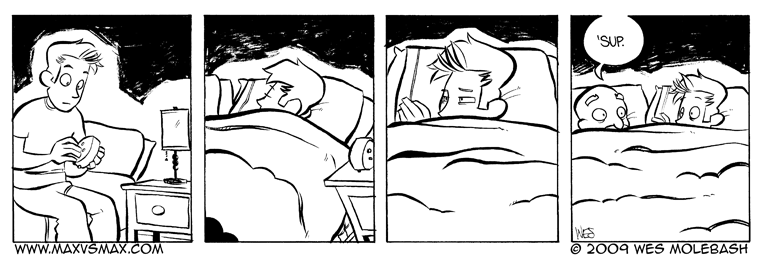
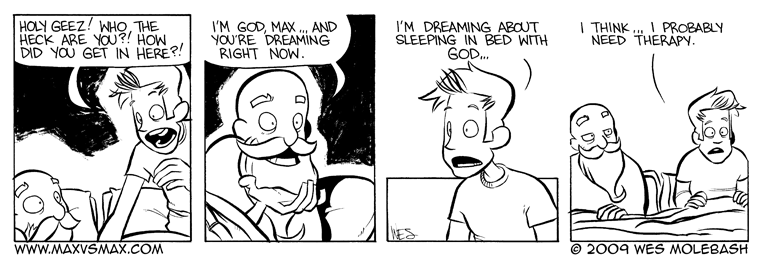
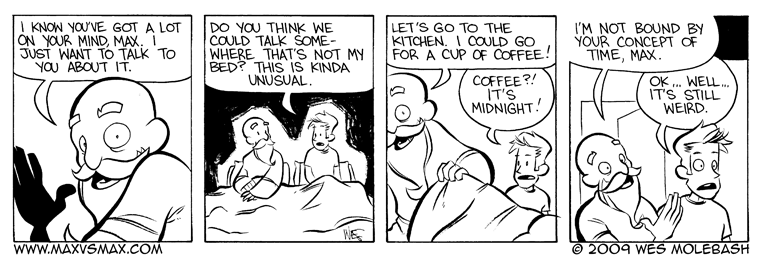
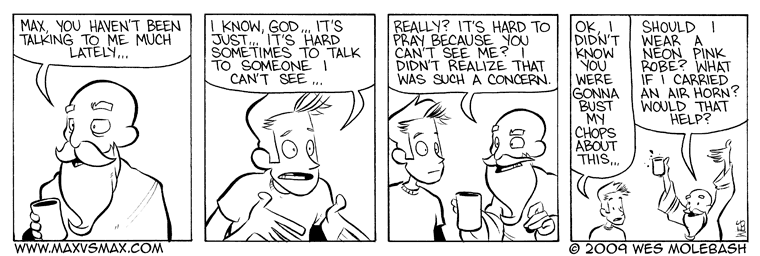
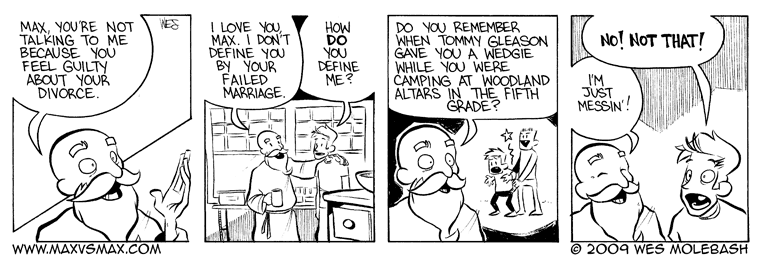
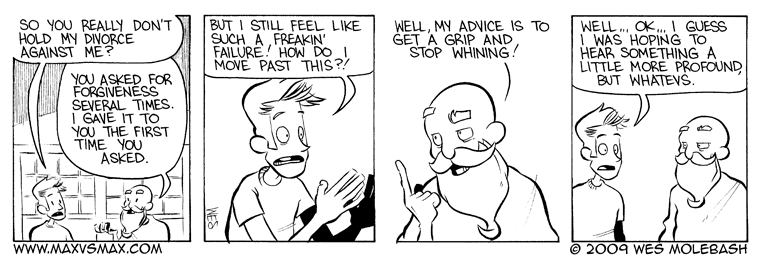
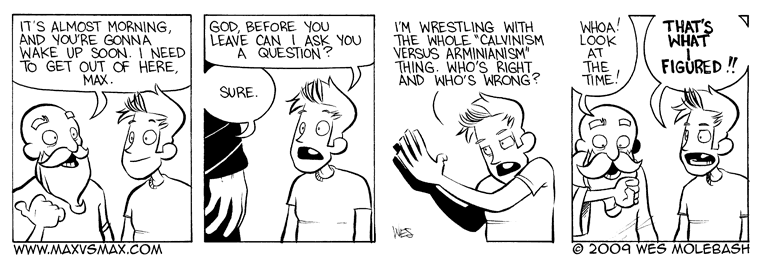
My typewriter monkeys finally arrived in Montevideo today after an airline luggage mix-up sent them to the farthest corners of Earth. They’re too exhausted to type out an entire post, so today’s post is borrowed from Max vs. Max, a webcomic by Wes Molebash. Deftly balancing humor and poignancy, these eight strips make up pretty much the best comic story arc ever. The story: A recent divorcee named Max awakes during the night to find a strange old man in bed with him. My thanks to Wes for his permission to use his comic; for more stuff from Wes, check out his latest comic project!

37. Everything I Know about Creativity I Learned from The Legend of Zelda

Today’s post was written by Wes Molebash, blogger and cartoonist extraordinaire. It came at the perfect time, since The Legend of Zelda: Skyward Sword is coming out in a couple of days. Check out his website for more awesome artwork and insights on creativity!

Like most people my age, I grew up playing the Legend of Zelda video game series. I loved every minute of those games, and Ocarina of Time played a defining role in my young adulthood.

Now I like to consider myself a “creative person.” What I mean by this is that I love to create art and I’m always scheming of my next “big” project. Ideas are cheap; art is work, and I’m absolutely in love with the creative process.

That being said, I realized the other day as I was toiling in my basement office that everything I know about creativity was learned from playing the Legend of Zelda video games.

For instance:

It doesn’t matter how small you are or what tools you are using

In several of the Zelda games, Link starts his journey as a little boy who wields a measly wooden sword and a Deku shield. A DEKU shield! No one is afraid of a Deku shield. But he doesn’t let this stop him. He goes straight into his first dungeon and defeats the baddie with his slingshot David-and-Goliath-style. The journey has begun. He’s received his first taste of victory, and he’s off to the next dungeon.

So what does this tell me about the creative process? Simple: It doesn’t matter how skilled you are or how big your platform is or how expensive your tools are, just create! Don’t be hindered by your limited experience or lack of resources. I know famous cartoonists who draw awesome cartoons on three-thousand-dollar computer tablets. I also know a lot of amateur cartoonists who draw awesome cartoons using Ticonderoga No. 2 pencils and Sharpie markers. Take the resources you have and use them to the best of your ability.

Every obstacle has a weak spot—exploit it!

The Legend of Zelda series has been around since the eighties and it continues to follow a familiar formula: go into dungeons, collect maps and compasses and special weapons, and fight seemingly indestructible beasts who all have a glaring Achilles heel. Does the beastie have one huge, rolling eyeball? It’s a safe bet that you’ll want to shoot some arrows into the beast’s ocular cavity. Does the baddie occasionally stop to roar for a prolonged period of time? I’d grab some bombs and make it rain inside that guy’s maw. No matter how big the monster is, his weak point is right there in front of you begging to be struck.

The same holds true with our creative obstacles. They seem impossible to topple, but—the fact is—they’re quite easy to destroy! If I had to guess, I’d say that 99% of our creative obstacles can be toppled by simply CREATING. Are you having a hard time motivating yourself? Get out your tools and create. Do you have some naysayers telling you that you suck at life? Tune them out and create. Are you swimming in a sea of rejection letters from agents and publishers? Take the critiques and criticism with a grain of salt and create.

It really is that simple. Once you get started it’ll be hard to stop. The weak spot of your obstacle is right there staring you in the face. Exploit it.

You’re going to get better

As I said above, when Link starts his journey he is just a little boy with a crappy sword and shield and three hearts in his life meter. However, as he continues his quest he gets better. He collects more weapons. He becomes more resilient. He ages. By the end of the game he’s got the Hyrule Shield, the Master Sword, some rad magic powers, a pair of flippers that help him swim and hold his breath under water, a bunch of sweet weapons in a bag that would be impossible to carry in the real world, and eighteen hearts in his life meter. He finally ends up at Ganon’s door and he’s ready to—as they say in the UFC—“bang.”

The same is true for your creative endeavors. The more you create, the better you’ll get. You’ll also acquire new tools and awesome advice from other creators. Most importantly, you’ll gain experience. No longer will you feel completely daunted by project proposals, pitches, and rejections. It’s all part of the process and you’ll get better and better at those things.

So wipe your brow, keep creating, and—when you need to take a break—dust off your N64, pop in Ocarina of Time, and wander around Hyrule Field for a spell.

What have you learned from video games? Let us know in the comments!

24. Cleaning Out Your Bible

Today’s post was written by my friend Robby Rasbaugh, renowned at Bethel College for his awesome hair and love for people. Check out his blog for profound and humorous insights into life at Bethel College, IN!

I fondly remember my pilgrimage to Israel a few summers ago with Bethel College, IN. I got the rare opportunity to climb sacred mountains, swim in the Sea of Galilee, walk the same trails that Jesus walked, and eat an authentic Israeli falafel, which I highly recommend (the falafel as well as the Israel experience).

Throughout the expedition, our group encountered a few live archeology sites. You could see the archaeologists hard at work, carefully excavating the dirt, examining the terrain, and measuring and documenting everything. A lot of historic artifacts, left intact for thousands of years and untouched by human hands, were finally discovered and used to learn more about ancient civilization.

If I wanted to, I could turn this into a beautifully woven sermon illustration about how if you dig deep enough into God’s Word, you’ll discover hidden treasures of deep insight and unfathomable knowledge. I could go on about how through careful study and examination of the Scriptures, you can unearth nuggets of profound truth for your spiritual life. But that’s a post for another day. I’m talking about cleaning out your Bible. Because over time, the average Christian’s Bible accumulates a certain amount of junk, transforming it into a holy time capsule littered with hidden artifacts from your spiritual past.

Here are the top three things Bible veterans are most likely to find hiding in their Bibles when they do choose to do a little excavation.

Ancient Church Bulletins

For some reason, you felt compelled on a certain obscure Sunday three years ago to stick the bulletin in the pocket of your Bible cover. There really was no significance tied to that Sunday. It was just like any other Sunday bulletin where you only sketched in half of the sermon fill-in-the-blanks before giving up, but did a good job at filling in all the os and bs and other bubble letters. Even with all the clues in the ancient bulletin, there’s not a chance in Sheol that you’ll be able to remember what your pastor spoke about that Sunday. Yet it is probably safe to assume that your church praise team did “Mighty to Save” for worship that day, considering that song was all the rage back in 2008. [Sniff] Sorry, I just had a moment of nostalgia.

Jesus Bookmarks

Maybe it features the Ten Commandments chiseled on stone tablets and embellished with lightning bolts. Maybe it has a Christian acronym that was totally rad in the 90s, like W.W.J.D. or F.R.O.G. Maybe it’s in the shape of a cross with an inspirational verse and dark clouds eclipsing brilliant rays of sunshine. No matter what it looks like, the question remains: How did this elusive Jesus bookmark stay hidden in your Bible for so long? It probably got buried in the Minor Prophets years ago, deep in the neglected part of your Bible somewhere near Habakkuk (which is a great book by the way).

Money

Am I the only one who does this? Do other Christians ever hide money in their Bibles with the intention of forgetting it’s there and finding it later? In the past, I know I’ve surreptitiously tucked a few bucks in my Bible, secretly wishing that God would multiply them when I wasn’t looking; that my money would grow thirty, sixty or a hundredfold what was sown, and that I would discover it in a season of need and praise God from whom all blessings flow.

What about you? What do you find when you clean out your Bible? Let us know in the comments!