109. Science Fiction Vs. Fantasy

The title of this post may be a little misleading. If you were expecting an epic death battle between two literary genres, I’m afraid you will be disappointed. The purpose of this post is to take a quick look at why science fiction and fantasy—two literary genres often associated with each other—are different.

There are similarities, of course. The most striking is that fantasy and science fiction aren’t realistic. Fantasy is unrealistic because of supernatural elements such as magic and monsters. Science fiction, however, doesn’t involve the supernatural. Its unrealism comes from scientific discoveries or developments in technology, society and history that haven’t occurred.

Let’s start with science fiction.

Since the emphasis of science fiction is naturalistic, the genre focuses on the development of human society. Robots, spacecraft and laser weapons reflect the evolution of the human race.

The lack of supernatural elements in science fiction precludes any kind of divinity or absolute morality. Because of this, the genre doesn’t usually depict struggles between good and evil. The ultimate goal of characters in science fiction is usually survival, not moral triumph. What matters is the continued existence of the human race.

Due to this lack of absolute morality, the themes of science fiction are usually psychological, ethical and existential, not moral or religious.

Although it’s often paired with science fiction, fantasy is fundamentally different.

Since the emphasis of fantasy is the supernatural, the genre traditionally places little importance upon the development of human society. Cars, computers and guns are replaced with horses, scrolls and swords.

The supernatural elements in fantasy often indicate some kind of absolute morality, whether a standard good-versus-evil morality (e.g. The Lord of the Rings), a morality based upon maintaining cosmic balance (e.g. A Wizard of Earthsea) or some other moral system. The typical goal of fantasy characters isn’t merely survival, but moral or cosmic victory.

Due to the presence of absolute morality, the themes of fantasy are usually philosophical, moral and religious, not psychological or ethical.

In a previous post presenting a short, untidy and highly idiosyncratic history of fantasy, I made the observation that many of fantasy’s greatest authors have been Christians: George MacDonald, J.R.R. Tolkien, C.S. Lewis and Madeleine L’Engle, among others. I think it’s no coincidence that Christians, who believe in the existence of the supernatural and an absolute moral law, should leave such a profound mark upon a literary genre defined by supernatural phenomena and moral struggles.

Science fiction and fantasy are both unrealistic, but for opposite reasons. Fantasy is characterized by the supernatural, science fiction by a naturalistic worldview. These genres are opposite sides of the same coin.

What about stories like Star Wars or Star Trek that are considered science fiction and yet involve the supernatural? Consider the Force in Star Wars. It isn’t merely a scientific phenomenon, but a spiritual force. The Jedi aren’t scientists, but monks. Even so, Star Wars is usually considered a science fiction franchise. It has aliens and space battles, after all.

I think stories like these are sort of a hybrid genre. Let’s call it science fantasy. Stories in this mixed-up genre tend to demonstrate the outward characteristics of science fiction—advanced technology, space travel and so on—while expressing the moral and philosophical themes typical of fantasy fiction. Final Fantasy is a fine example of science fantasy: magic, lasers, swords, spacecraft and an unmistakable struggle of good against evil.

In the end, I believe science fiction and fantasy belong together. These genres represent radically different approaches to the same concept: a world unlike our own.

Which genre do I prefer?

Fantasy, of course. It has dragons.

57. Final Fantasy

I have a fascination for the fantasy genre. Fantasy provides a unique medium through which to explore themes like redemption and destiny and objective morality. Fantasy also teems with dragons and wizards and heroes. In other words, it’s got pretty much everything.

As I’ve mentioned in a previous post, fantasy has branched out into roughly several million subgenres: high fantasy, low fantasy, dark fantasy, steampunk fantasy, urban fantasy, magic realism, paranormal romance—the list goes on and on and on.

One of my favorite subgenres of fantasy also happens to be a series of video games. I speak, of course, of Final Fantasy.

Fantasy might have a ridiculous number of subgenres, but Final Fantasy doesn’t seem to fit any of them. It basically creates its own.

A good word to describe the Final Fantasy games would be eclectic. The games take many wildly different elements—elements that simply should not make sense in the same story—and somehow weave them together into compelling narratives. Soldiers wielding swords ride motorcycles. Scientists in research facilities study magic and genetic engineering in neighboring laboratories. Heroes are confronted by robots one moment and dragons the next. A hodgepodge of elements from fantasy and science fiction are combined to create worlds that seem quite believable.

I saw worlds, plural, because each Final Fantasy game takes place in an entirely different world. This means each game features a new plot, setting and cast of characters more or less unrelated to any other game in the series. Each game is its own adventure.

There are a few common threads throughout the Final Fantasy series. Reoccurring elements include creatures, names, terminology, plot devices and themes.

The themes of Final Fantasy are noteworthy as being surprisingly deep. The series deals with diverse moral, philosophical and ethical themes: everything from nihilism to environmentalism.

Apart from the fact that the games are fun to play, arguably the best thing about Final Fantasy is the characters. Whether seeking revenge, striving for redemption or grappling with existential angst, the characters of Final Fantasy are usually complex, dynamic and memorable.

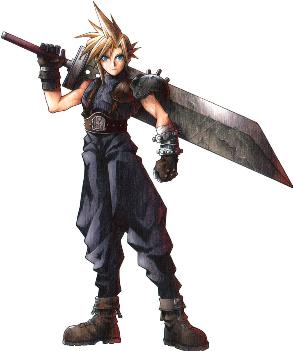
The characters are also pretty cool. Consider Cloud Strife, equally renowned for his complex characterization and massive sword. Note also his spiky hair.

Massive swords tend to be another recurring feature of Final Fantasy games, by the way.

In regard to gameplay, the Final Fantasy games are quite good, though not as inspired as, say, the Legend of Zelda series. Final Fantasy offers massive worlds to explore and endless quests to accomplish, but the RPG-style battles can get a little tedious. It should be noted that the Final Fantasy games have amazing music.

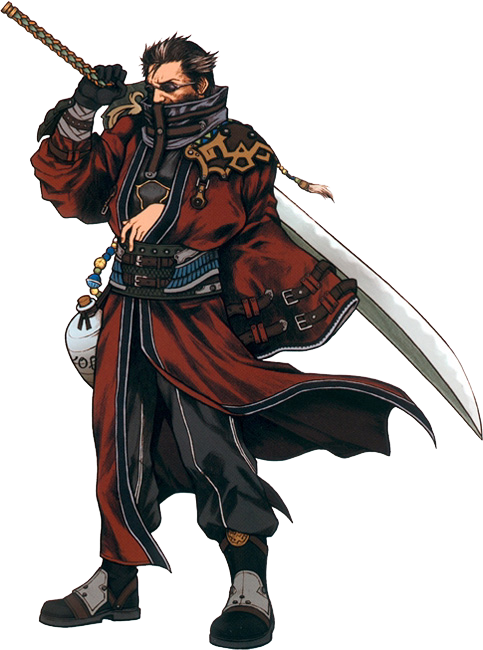
I can hardly resist including one more image, this time a striking portrait that goes a long way to illustrate the essence of Final Fantasy.

This character represents pretty much everything there is to know about Final Fantasy. His design represents the strangely coherent blend of old and new prevalent through the series, combining stylish sunglasses with clothes that wouldn’t look out of place in feudal Japan. His face hints at deep internal struggles—in his case, unfulfilled promises—typical of Final Fantasy characters. His sword is, of course, improbably large.

Although some critics argue that Final Fantasy has declined in recent years, I argue that it’s still one of the best video game series in existence. It also brings a number of excellent narratives to the fantasy genre: a contribution not to be overlooked.

35. A Short, Untidy and Highly Idiosyncratic History of Fantasy

Warning: This post is long and very literary.

I love the genre of fantasy. On one level it provides a literary medium through which writers can explore moral responsibility, the human condition and the existence of the supernatural. On another level it pits heroes against dragons, sorcerers and monsters. What’s not to like?

The development of the fantasy genre fascinates me. This blog post chronicles—in an admittedly cursory and haphazard fashion—the history of fantasy.

Human beings have been making up stories about the supernatural since…well…presumably since they were kicked out of Eden.

These stories fall into several categories. Mythology refers to the traditional stories of a people or nation, usually concerning all-important matters like the accomplishments of deities and the creation of the world. Legends are less grandiose, consisting of stories about extraordinary people or events. Folklore is the collection of tales and superstitions of a particular people or nation, and fairy tales are a subgenre of folklore intended for younger people.

Although stories about the supernatural have been in currency for millennia, the genre we call fantasy didn’t come into being until the nineteenth century. Ancient stories about the supernatural are normally considered precursors to fantasy and placed in one of the categories already mentioned: mythology, legend, folklore or fairy tales.

The modern genre of fantasy is usually defined as the type of fiction in which supernatural phenomena are a primary element of theme, plot or setting. Fantasy is distinguished from the horror genre because it typically avoids dark, macabre themes. Fantasy is also considered separate from science fiction, which uses advanced technology and science (or pseudoscience) as storytelling elements.

There’s some debate about the first author of modern fantasy. As far as I’m concerned, that honor belongs to George MacDonald, a Scottish minister and novelist. MacDonald was a close friend and mentor of Charles Lutwidge Dodgson—better known as Lewis Carroll—who wrote the famous Alice books; MacDonald was also acquainted with Mark Twain, Charles Dickens and other notable authors of his day. He is most famous for his fairy tales and two fantasy novels, Phantastes and Lilith, which would later have a profound effect on authors like C.S. Lewis.

Some decades after George MacDonald’s seminal fantasies, a reclusive professor of Anglo-Saxon was persuaded to finish and publish a bedtime story he had written for his children. That professor was J.R.R. Tolkien, and that story was The Hobbit.

Tolkien had been developing a private mythology for decades, making notes upon thousands of years of fictional history and creating multiple languages. To his own surprise, The Hobbit, which began as a bedtime story, established itself in his private mythology. After he was persuaded to publish The Hobbit, readers clamored for a sequel, and he eventually obliged with The Lord of the Rings—which is, in my humble judgment, the greatest work of fantasy and one of the finest works of fiction ever written. The Lord of the Rings is notable not only for its unprecedented depth, but its use of themes from Norse mythology and Anglo-Saxon folklore.

Around this time, C.S. Lewis published The Chronicles of Narnia, his seven-volume contribution to the fantasy genre. Narnia drew upon earlier children’s literature (such as the works of E. Nesbit) and would later influence J.K. Rowling’s popular Harry Potter books and inspire—provoke is probably a better word—Philip Pullman’s His Dark Materials trilogy. Tolkien, who was a friend of Lewis’s, disliked Narnia: he believed the books were sloppily written and full of inconsistencies.

The fantasy genre rapidly gained popularity midway through the twentieth century, especially in the United States. The Lord of the Rings in particular gathered a huge following during the sixties, exerting a major influence upon other works of literary fantasy, the growing video game industry and the development of fantasy role-playing games.

From the sixties onward, the fantasy genre expanded in two ways.

First, the fantasy genre became more financially lucrative, driving the publication of commercial fantasy—shoddy, formulaic fantasy fiction written for the sole purpose of making money. Well-written fantasy fiction, or literary fantasy, became less common.

Second, the fantasy genre proliferated into dozens of subgenres. There is high fantasy, which creates supernatural worlds; low fantasy, which introduces the supernatural into our own world; magic realism, which combines matter-of-fact narration with surreal details; steampunk fantasy, which incorporates anachronistically old-fashioned technology and culture; sword and sorcery, which emphasizes sensational magic and medieval warfare; and many, many others.

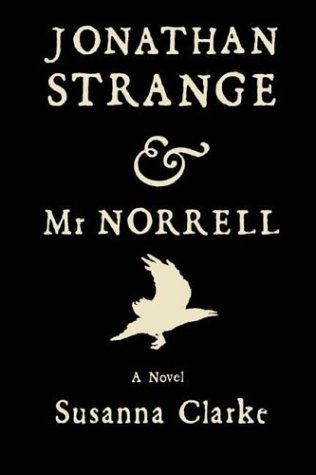
Fantasy continues to flourish. Commercial fantasy is still produced and sold, unfortunately, but occasional works of literary fantasy reassure me there’s still hope for the genre. (Jonathan Strange & Mr Norrell, which TMTF reviewed some weeks ago, is a good example of modern literary fantasy.)

It’s worth pointing out that many of fantasy’s best authors have been Christians: George MacDonald, J.R.R. Tolkien, C.S. Lewis, Madeleine L’Engle and others. Although I’m not sure why, I have a theory: The ideals of Christianity and of fantasy tend to be similar.

Christians believe in the existence a supernatural world that exists alongside the natural world; when the supernatural world intrudes into the natural world, we call it a miracle. Christians also believe in objective morality, the belief that right and wrong are consistent, unchanging realities, and that good is better than evil.

Fantasy usually creates a supernatural world that exists alongside the natural world; when the supernatural world intrudes into the natural world, fantasy labels it magic. Fantasy also typically remains true to the concept of objective morality—good triumphs over evil in fantasy fiction, after all, because good is consistently better than evil.

Christianity and fantasy fiction hold many concepts in common, so I think it’s no coincidence that some of fantasy’s best authors have been Christians. Since fantasy is fictitious, does my theory suggest Christianity is false? Absolutely not! The paradox of fantasy is that it reflects some truths more clearly than realistic fiction.

What do you think about fantasy? Do you have a favorite author or book? Let us know in the comments!

18. TMTF Reviews: Jonathan Strange & Mr Norrell

Jonathan Strange & Mr Norrell was first mentioned to me by a cousin who happens to be a Literary Person. He described it as a fantasy novel that was very funny and reminiscent of Dickens. As I listened, I was rapidly working out an equation in my head: Fantasy Novel + Humorous Style + Charles Dickens = Awesome.

I eventually found the novel in a local library. It’s understatement to say Jonathan Strange & Mr Norrell is a large book; it weighs only slightly more than an adult hippopotamus. I began reading, wondering whether such an enormous novel would be worth my time.

It was. Every word of it.

In this day of formulaic fantasies—books with lurid covers and predictable plots and lots of bizarre sex scenes—it was truly delightful to sit down with something truly original and well-written as Jonathan Strange & Mr Norrell. It’s not quite like anything I’ve ever read, yet oddly reminiscent of familiar authors like Charles Dickens and Jane Austen.

The basic premise of the book is that magic was once an accepted part of British history: magicians once lived and worked magic, and none was greater than the mysterious Raven King. The year, however, is 1806 and magic is ancient history—very boring history. Only a few theoretical magicians still discuss and debate the fine points of magical tradition. Then a practical magician, a retiring gentleman called Mr Norrell, is found. He begins a campaign to revive English magic, eventually partnering with a man named Jonathan Strange who shows remarkable aptitude for magic. The novel recounts the return of magic to England, an event involving cold-hearted fairies, dignified gentlemen, rough beggars and, of course, the Raven King.

The sheer ingenuity of the setting is wonderful. The novel beautifully weaves the factual culture and history of nineteenth-century Britain with the fictional history and practice of British magic. The tone of the novel shifts between humor and melancholy: some passages shine with the cheerful drollery of Dickens’s brightest novels; others convey the same haunting sense of desolation as the Brontë sisters’ more discouraging books.

If pressed to place Jonathan Strange & Mr Norrell in a specific genre, I wouldn’t be quite sure where to put it. It’s a comedy of manners—a Gothic novel—an alternative history—to be honest, it defies attempts at categorization. Whatever it is, it’s probably one of the best fantasies of the century so far.

Reading the novel requires a significant investment of time, and some readers may find the humor humorless and the melancholy too melancholy, but I wouldn’t hesitate to recommend Jonathan Strange & Mr Norrell to anyone who likes fantasy fiction or classic British literature, and especially to anyone who likes both. It’s a solid, satisfying and highly imaginative piece of fiction that’s probably destined to become a classic of its genre—whatever the deuce its genre might be.