137. A Note from the Typewriter Monkeys

This is Aquila, one of the hardworking monkeys whose diligence, skill and patience keep this blog alive, writing on behalf of the entire Typewriter Monkey Task Force.

Although the Boss was supposed to post on this blog today, he fell asleep on the floor a few hours ago. (I suppose it must be acknowledged that he had a tiring week, with seven consecutive overnight shifts at his job followed immediately by a two-day trip to visit relatives for Thanksgiving.) We tried waking him, but he only rolled over and mumbled incomprehensible phrases such as “Dodongo dislikes smoke” and “The cake is a lie.”

In his absence, the Typewriter Monkey Task Force would like to express our sincere hopes that the readers of this blog had a pleasant Thanksgiving, and to wish them many blessings in the final weeks of this year.

I would like to take this serendipitous opportunity to clear up a few misunderstandings. Contrary to suggestions made by our Boss in previous blog posts, members of the Typewriter Monkey Task Force are responsible, honest animals who work hard, accept instructions and absolutely never dream of breaking into the cupboards and refrigerator every week while the Boss is asleep to steal Oreo cookies and chocolate milk.

We also request for readers to post many comments on this blog petitioning our Boss to give us more bananas and higher salaries.

The Typewriter Monkey Task Force thanks you for reading this blog, and please do not forget about the bananas.

Regards,

Aquila and the Typewriter Monkey Task Force

136. Vampires

A few days ago, I received a call from my employer asking me to work the overnight shift for a week. I have become a creature of the night, sleeping away the daylight hours and awaking in the evening to revel in my reign of darkness—not unlike a vampire, albeit one who prefers coffee to blood.

As I was working a couple of nights ago, I stumbled upon a vampire picture book belonging to one of the men with whom I work. Early yesterday morning, a coworker rhapsodized about the new Twilight movie.

Vampires are everywhere, and there are so many kinds. Action movies star leather-clad vampires with silver pistols and cool shades. The Twilight series features Edward “Sparkles” Cullen, a pale, irritating excuse for a creature of the night. The novels of Anne Rice depict vampires whose bloody lives are marked by moral quandaries and existential crises, and classics like Bram Stoker’s Dracula give a more traditional interpretation of America’s favorite monster.

Why are vampires so popular? I think part of it must be that vampires are tragic. They live without hope, doomed to survive by draining away the lives of others, hiding from the day, lurking alone in the cold, dark night, unable to die any death but a violent one, forever separated from love and light and happiness.

We sympathize with vampires, especially the ones who seek redemption. Edward from the Twilight series is engaging—well, tolerable—well, not quite one hundred percent awful—because he clings to his humanity. Vampire Hunter D, a character in Japanese media, travels alone, protecting humans from his own kind, never asking for gratitude or recognition.

Characters like these are compelling. Although they’re cursed with the destiny of villains, they choose instead to be heroes. They persevere, alone and misunderstood.

Of course, vampires can also be great bad guys. There’s something truly horrible about a creature that drinks blood, and this brutal bloodlust is often balanced by a cold, refined politeness. A vampire can be both a monster and a gentleman. That duality makes vampires exceptionally sinister villains.

The problem with vampires is that they’ve been done to death. (No pun intended.) Like zombies, vampires are ubiquitous. They’ve lost their novelty. When I see a novel or film or television show featuring vampires, my first response is to think, “Dash it, not another one.”

As I hinted in a recent creative piece, “A Portrait of the Artist as a Performing Monkey,” I dislike most vampire fiction. The genre has become stale, and I detest the violence, sexual perversity and muddy morality often associated with vampires. I miss old-fashioned stories like Dracula, in which evil evokes disgust and good inspires hope.

I must work a few more overnight shifts, and then I shall no longer have to be a vampire. I look forward to seeing the sun again.

135. Why J.R.R. Tolkien Is Awesome

When I decided to start writing these Why [Insert Author Name] Is Awesome blog posts, I wasn’t sure with whom to begin. At first I considered G.K. Chesterton, and then James Herriot, and then P.G. Wodehouse.

In the end, of course, I realized there was only one author with whom to begin this exciting new series of posts. One author to rule them all.

Ladies and gentleman, I give you the man who created a universe on the backs of letters and exam papers, writing in his study late at night when the world was asleep, reinventing mythology for the modern age—and doing it in his spare time.

I give you John Ronald Reuel Tolkien, my childhood hero and the father of the fantasy genre.

J.R.R. Tolkien

Of course, Tolkien didn’t invent fantasy. As I noted in my short, untidy and highly idiosyncratic history of the genre, its inventor was probably a Scottish minister named George MacDonald. Don’t be surprised if you haven’t heard of him. Not many people have. He may have invented the fantasy genre, but Tolkien was the man who made it famous.

Enough preamble. Let’s get down to business.

What makes Tolkien awesome?

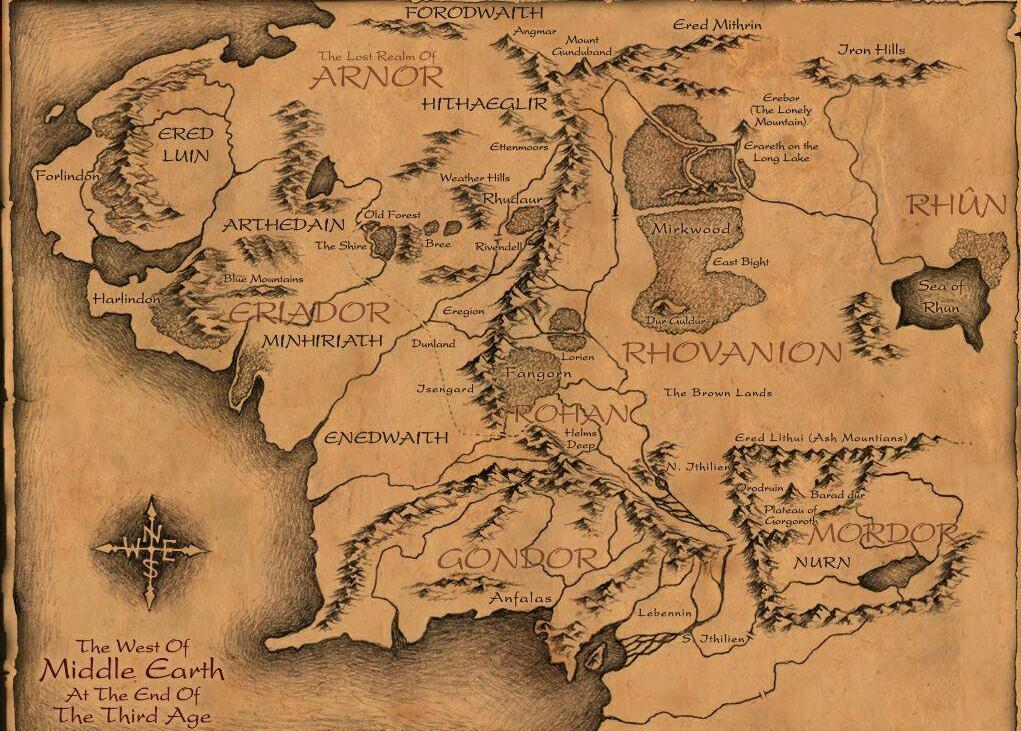
The thing that amazes me most about Tolkien is that the world he created is vast—vaster than vast—vastly vast. Tolkien’s world, Middle-earth, is huge. Worlds like Narnia are tiny by comparison.
Middle-earth

The history of Middle-earth, meticulously chronicled, spans tens of thousands of years. Its geography (which changes over the centuries) is recorded in maps. Tolkien created languages, cultures, genealogies and even legends—myths within his myth. I once read that Tolkien holds the record for creating the largest fictional universe ever devised by a single person.

Tolkien’s literary style is sometimes a bit ponderous, and many readers are discouraged by the slow pace of the early chapters of The Lord of the Rings, his masterpiece. It’s not a fast-paced, action-packed novel. It takes its time creating a world for its characters to inhabit, and patient readers are rewarded with a story made more powerful by its fullness.

Personally, I love Tolkien’s style. It’s not flashy or funny or avant-garde, but does a beautiful job of conveying images and experiences vividly.

Tolkien weaves many familiar images and archetypes into his world. Gandalf reminds us of Merlin. Rohan comes straight out of Beowulf. The elves and dwarves are borrowed from Norse mythology, and the Shire is unmistakably English. While Aragorn wears armor and wields a sword, Bilbo wears a waistcoat and wields an umbrella. These disparate elements somehow never clash.

Although many of Tolkien’s characters are superb, some lack depth and intricate characterization. With three or four exceptions, the fourteen dwarves in The Hobbit (the prequel to The Lord of the Rings) are so undeveloped that they blur together.

The villain, Sauron, isn’t really a character. Although he’s mentioned frequently, he never actually makes an appearance in The Hobbit or The Lord of the Rings. Sauron is more like a threat, an unseen presence haunting these stories like a shadow.

Gollum, by contrast, is developed brilliantly: a minor villain whose slow, faltering steps toward redemption make him a surprisingly compelling character. Gandalf, a wizard, is unforgettable: gruff, powerful, impatient and kind. Bilbo, a timid hobbit, demonstrates a unique sort of courage—not showy heroism, but a quiet, determined bravery built upon resourcefulness and common sense.
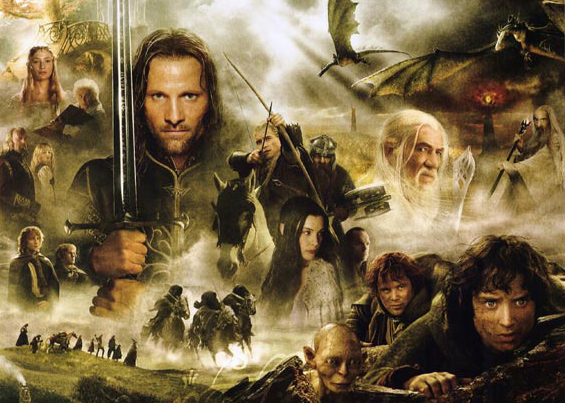
Tolkien's Characters

Even Tolkien’s dialogue is memorable. It lacks clever quips and one-liners, but succeeds on a much deeper level: it’s believable. Kings speak with grace and elegance. Samwise Gamgee, a gardener, talks with colloquial simplicity. Tolkien’s books are populated by an enormous range of characters, from ageless sages to degenerate monsters, and their dialogue is no less diverse.

Perhaps the most striking thing about Tolkien’s books is their moral strength. Tolkien never preaches. He doesn’t need to. Loyalty, courage, honesty and self-sacrifice shine throughout his stories. Without ever saying it, Tolkien makes one thing crystal clear: good is better than evil, and good wins.

For someone new to Tolkien, I recommend starting with The Hobbit. It’s a fine introduction to Tolkien’s world and literary style. The Hobbit is a simple story of adventure, like a fairy tale. The Lord of the Rings is more like a myth, featuring a more mature style and a much deeper story.

The Silmarillion, a history of Middle-earth published after Tolkien’s death, isn’t a particularly compelling book. I recommend it only to the most devoted of Tolkien’s readers. The Silmarillion reads like a history textbook: occasionally interesting, but seldom engaging.

For readers who are interested in Tolkien’s other works, Roverandom is a delightful book for children. Farmer Giles of Ham is a funny story about a farmer who tames a dragon, and Leaf by Niggle is a beautiful allegory of a struggling artist.

In conclusion, ladies and gentlemen, J.R.R. Tolkien is awesome.
134. When I Have No Words

I’m usually a cheerful, silly person, and I generally write cheerful, silly blog posts. To quote Louisa May Alcott, “I can only say that it is a part of my religion to look well after the cheerfulnesses of life, and let the dismals shift for themselves.” There is a time, however, to be serious.

Today’s post is a serious one.

There are times when I have no words. I’m good at using words. (In fact, I probably use too many of them.) There are times, however, when words fail me. I sometimes want to scream and holler and wave my fists, but I never do. (These behaviors are generally frowned upon.) Instead, I sit down and spend a few minutes feeling old and tired.

Yesterday was the International Day of Prayer for the Persecuted Church. Do you know what else happened yesterday? Christians in Nigeria mourned the slaughter of their loved ones. Christians in Eritrea languished in pitch-black prison cells. Christians in India struggled to survive as refugees, and at least one Christian in the United States of America spent a few minutes sitting down and feeling old and tired.

After giving it a lot of thought, I realized there are basically three things I want to say about religious persecution.

First, it exists.

Over several years, I’ve read hundreds of reports of persecution against Christians. Hundreds. There were hundreds I didn’t read, and God knows how many incidents were simply never reported.

Some of these cases were complicated. In Nigeria, for example, the attacks carried out by Islamist radicals in past months were not directed toward Christians exclusively, but toward anyone who violated the Islamist ideal of sharia law.

Then there were the simple cases—the tragically simple cases. I remember Nurta Mohamed Farah, a Somali teen who was shot to death simply for choosing to embrace Christianity. There have been so many cases in which Christians were targeted specifically because of their faith.

Religious strife sometimes blurs together with politics and economics, but one fact remains: Christians suffer for following Christ.

The second thing I want to say about religious persecution is that it’s wrong. It is wrong. Innocent people are arrested, abducted, beaten, tortured, raped or murdered, and why? They choose to believe in a loving God. That’s it. They pray and sing and worship and invite others to join them. That’s their crime, and so many suffer for it.

Religious persecution can’t be denied, and it mustn’t be tolerated.

This brings me to the third thing I want to say.

Jesus Christ once said, “So in everything, do to others what you would have them do to you.” If we were persecuted, we would certainly want others to care for us. Since others are persecuted, it’s up to us to care for them.

What can we do?

Keeping informed is a good place to start. (I have a blog, Solidarity, that posts summaries of persecution cases every two weeks.) Spreading awareness helps. Donations to humanitarian organizations like Voice of the Martyrs support victims of persecution. I believe prayer matters most of all.

There are times when I have no words. Today wasn’t one of them. I’ve written quite a number of words today, and I hope they make a difference.

133. Sketches from the Workplace

My job is often satisfying, sometimes discouraging, occasionally hilarious and never boring.

I work in a group home for men with mental and physical disabilities. As a residential trainer, my job is to help these gentlemen—officially titled consumers—live as independently as possible. So many interesting things have happened in my workplace in the past few months that I can’t help sharing a few brief sketches.

(To protect their privacy, I’ve given the consumers false names.)

Mark Twain is a sweet guy with a fine mustache who informs me there are mummies lurking everywhere. The refrigerator, the bathroom cupboards, beneath the sofa—nowhere is safe from these menacing spooks, which will, Mark Twain cheerfully informs me, bite off my throat and eat my eyeballs.

Edgar Allan Poe is an old gentleman who loves Dracula and scary movies. Due to dementia, he’s prone to outbursts of verbal and physical aggression, including cursing and death threats. In his calm moments, however, Edgar Allan Poe is quite a gentle fellow.

Charles Dickens, the oldest consumer at the group home, spends his days lounging in a recliner and watching television, getting up at intervals to amble around the house and shake hands with staff members.

Mentally speaking, Anton Chekhov is baby. He spends much of his time in a wheelchair, but enjoys crawling around the house.

When he’s not roaming the house in a mechanical wheelchair, Jules Verne likes playing with toys and listening to country music on his radio.

Rudyard Kipling gets around the house with a walker. He often sucks meditatively on one finger and stares into space, presumably thinking deep thoughts.

James Joyce is unquestionably the most trying resident of the group home. He suffers from obsessive compulsive disorder and a decidedly obnoxious personality.

Victor Hugo is a short, portly gentleman who smiles, mumbles and speaks either English or Russian—I haven’t figured out which. He bears strong resemblance to both Benjamin Franklin (the American thinker) and Otis Cambell (the drunk from The Andy Griffith Show).

A few consumers have honored me with unique names. On the occasions he remembers my name, Mark Twain calls me “Ayum.” Although Charles Dickens occasionally pronounces my last name as “Took,” he usually addresses me as “Moe” or “Doug.” James Joyce very pragmatically calls me “Man With Glasses.”

They may not always remember my name, but Mark Twain and Victor Hugo never forget my love of coffee. Hardly a shift goes by that one or the other doesn’t smile and mumble, “You want some coffee?”

The simple process of brewing coffee is complicated by Edgar Allan Poe. He’s on a tight fluid restriction, which means he’s not allowed to drink coffee. (My heart aches for the poor man.) Having explained to Mark Twain and Victor Hugo that coffee makes Edgar Allan Poe sick, I conspire with them to keep it hidden. At the moment, the microwave is our most reliable hiding spot.

I’d previously hidden the coffeepot atop kitchen cupboards, but stopped because of James Joyce. Staff members have been warned to keep their drinks out of sight due to his alarming tendency to steal them. Although James Joyce’s behaviors are sometimes frustrating, they can be hilarious. A police siren once sounded while James Joyce was sitting at the table. Glancing warily out the window, he muttered, “The police, they’re comin’ for me.”

I’m fascinated by the unique movements with which consumers move around the house. Victor Hugo pushes his walker with quick, mincing steps. Charles Dickens clomps noisily. Anton Chekhov crawls like an enormous baby. Mark Twain shambles, Edgar Allan Poe prowls, James Joyce sidles and Rudyard Kipling shuffles. Jules Verne wanders vaguely from room to room.

Some of the consumers are cheerful. Victor Hugo, for example, smiles constantly. Only once have I seen him lose his temper. When I tried taking off his foot brace in order to check an injury on his shin, he frowned and threatened to break my neck. It took much self-restraint to keep from laughing.

Not all of the consumers are as cheerful as Victor Hugo. My heart aches for Jules Verne, who seems to be on the verge of tears about half the time. I also pity Anton Chekhov, whose mind isn’t developed enough to understand why people do cruel things like scrubbing him with washcloths and forcing toothbrushes into his mouth.

There are days when I love my work, and days when I simply want to go home, drink tea and never sweep another floor or fill out another document or deal with another human being ever again.

Although I plan eventually to become a writer, teacher or editor, I’m thankful for my job. It gives me opportunities to serve others, and also free coffee.

I can’t ask for much more than that!

132. TMTF Reviews: Boy

Although he’s most famous for writing books about chocolate factories, giant peaches and Oompa-Loompas, Roald Dahl also published a couple of memoirs.

While visiting my family in Uruguay a few months ago, I read Going Solo, Dahl’s account of his experiences as a fighter pilot in World War II. I enjoyed the book, and thus it was with excitement that I snatched up its prequel, Boy: Tales of Childhood, at a local yard sale.

Are these tales of childhood worth hearing, or is Dahl a dull read?

Roald Dahl puts off Boy to a hopeful start: “An autobiography is a book a person writes about his own life and it is usually full of all sorts of boring details. This is not an autobiography.” The book is, in fact, a collection of anecdotes from Dahl’s childhood. Important details are included to establish context. The reader is taken from before Dahl’s birth all the way to his graduation from school.

Some of the anecdotes are interesting, but I was mostly disappointed. While Going Solo gives readers Dahl’s vivid recollections of African jungles and vicious battles, Boy consists mostly of plain stories that might have happened to anyone. It’s not a bad memoir, but it’s not a particularly gripping one either.

Nevertheless, the book was not without its surprises. As he tells stories about his childhood, Dahl occasionally pauses to address deeper issues. After writing about his headmaster’s skill for corporal punishment or his own experiences as a businessman, he sidetracks suddenly into simple, powerful accounts of his disillusionment with religion or the difficulties of writing creatively. These unexpected reflections give weight and depth to an otherwise unexceptional book.

I would probably have found the book more interesting had Dahl made more effort to explain how his experiences shaped his writing. He makes only a few connections between his life and his books, and so I was left with hardly anything to tie the eponymous Boy of Dahl’s memoir to the author whose books I enjoyed as a child.

I recommend Boy: Tales of Childhood to anyone who enjoys memoirs or the books of Roald Dahl, but not to the average reader. Going Solo is a more engaging read. Africa and World War II are much more interesting than boarding schools and candy shops. Better yet, read one of Dahl’s books for children. He’s remembered for those books, after all—not for his memoirs!

131. My Novel Is Now Available as a Paperback!

My typewriter monkeys and I are excited to announce that The Trials of Lance Eliot, my debut novel, is now available as a paperback!

(Well, I’m excited. My typewriter monkeys really don’t care.)

When I was a child, I wanted to write a book—a tangible, ink-and-paper novel that could sit on a bookshelf with The Hobbit and The Chronicles of Narnia and The Wind in the Willows. My novel was published a few months ago as an e-book for Nook and Kindle devices, but I really wanted to see it released as an old-fashioned book. Thanks to my publisher’s patience and expertise, The Trials of Lance Eliot has finally become a proper novel.

Many years ago, I decided to write a fantasy. I wanted the hero to be an average person who stumbled into another world, but I faced a perplexing challenge. How could the hero move from one world to another? I didn’t want him to blunder through a wardrobe or a looking-glass or something else that has already been done.

At last it occurred to me that magicians are always summoning things from one place to another. The Pevensie children are transported from their world into Narnia in C.S. Lewis’s Prince Caspian, and Aladdin invokes a couple of genies from who-knows-where in the Middle Eastern folk tale.

It made me wonder: What if the magician summoned the wrong person?

With that, more than six years ago, a story began that would grow into The Trials of Lance Eliot, the first chapter of The Eliot Papers.

In the novel, Lance Eliot, a timid college student, is snatched up by magic and thrown into another world by a mage who mistook him for Lancelot, the legendary knight of Camelot. Now stranded, Lance must embark upon journey to return home, meeting heroes and scoundrels (and possibly a dragon or two) along the way, and becoming—much to his own surprise—a hero.

For more than a quarter of my life, The Trials of Lance Eliot and The Eliot Papers have been my greatest passion as a writer. I’m extremely excited to share Lance’s story as an old-fashioned paperback, and I hope you’ll consider checking it out!

130. Grace? What’s That?

Just because I know something doesn’t mean I understand it. I sometimes know things without really knowing them.

God’s grace—his patient, undeserved help—is greater than my faults. I know that. Sometimes, however, when my life gets a little rough, it’s hard for me to know it. Grace is easy to acknowledge, but so hard to understand.

Last week was a rough one. I considered providing an exhaustive list of reasons why, but I’ll spare my readers the nasty details. By the time I awoke on Saturday morning, I felt truly awful.

Do you know who else spent a lot of time feeling truly awful? The Apostle Paul. He had it rough. Dash it all, did he have it rough. Paul was repeatedly mistreated, flogged, imprisoned and shipwrecked. He suffered from hunger, cold, sleep deprivation and unbearable stress. These are just a few of the sufferings he mentions in his letters, and there were probably some he didn’t mention.

Out of all these afflictions, Paul found one truly insufferable. He called it a thorn in his flesh. Whatever it was, Paul hated it. “Three times I pleaded with the Lord to take it away from me,” he wrote. The Apostle Paul, the legendary missionary, couldn’t take it anymore. He pleaded with God again and again to take away his problem.

At last, God replied, “My grace is sufficient for you, for my power is made perfect in weakness.”

I hate being weak. I’m a faulty, imperfect person adrift in a faulty, imperfect world, and I don’t like it. My usual response is to try to be perfect—or at least, to try to be good enough.

I’m not good enough. I’ve never been, and I’ll never be. I have rough weeks. I get tired and sick and worried and depressed. I make mistakes. No matter how I try, I can’t fit my life into clean, tidy little boxes.

On Saturday, I came closer to understanding something I’ve known for a long time. God’s grace is greater than my mistakes and weaknesses. When I’m not perfect, God is. When I can’t go on, God carries me.

That gives me hope.

I try to wrap up these spiritual blog posts with neat little lessons, but not this time. I haven’t resolved anything. After years of struggling with the same problems, I keep struggling. I’ve written blog posts about these issues and related ones—the same problems again and again and again and again.

I’ve been making mistakes for twenty-two and a half years. If God hasn’t given up on me yet, I mustn’t give up on myself—and I certainly mustn’t give up on him.

I sometimes don’t understand God’s grace, and I often don’t feel it. There are days and weeks when the universe seems particularly empty of meaning, peace or hope.

Even so, I believe God’s grace is sufficient for me. My business isn’t to be good enough, but to trust and to hope and to persevere.

Do I understand God’s grace?

No.

Does it often seem absent?

Yes.

Do I believe God’s grace is always there, and always sufficient for me?

Yes, yes I do.

129. Useful French Phrases…?

Mitigating circumstances is a flexible phrase, covering everything from vehicular breakdowns to medical emergencies to extraterrestrial invasions. Today, due to mitigating circumstances, my typewriter monkeys and I don’t have a regular blog post prepared.

However, as I was looking through some old files on my computer the other day, I stumbled upon a list of useful* French phrases. I think my mum sent them to me years ago. Where she found them, I haven’t the slightest idea.

This blog post presents each phrase in three parts. The first is the phrase in the original French. The second is a phonetic guide to pronunciation. The third is an English translation of the phrase.

Now, for the benefit of people everywhere, TMTF humbly presents thirteen French phrases for practical everyday use!

*Disclaimer: These phrases may not actually be useful. Do not use them in France.

Tu as grossi. (tu ah gro—si) “You’ve put on weight.”

La police, ne t’a pas encore trouvé? (la po—lees ne ta pa zen—cor troo—vay) “Haven’t the police found you yet?”

Voulez-vous cesser de me cracher dessus pendant que vous parlez! (voo—lay voo se—say de me cra—shay de—su pen—dan que voo parl—ay) “Would you stop spitting on me while you’re talking!”

Le réalité et toi, vous ne vous entendez pas, n’est-ce pas? (le ree—al—ee—tay eh twa voo ne voo zen—ten—day pah nes pah) “Reality and you don’t get on, do they?”

De quoi est mort votre dernier esclave? (de kwa eh mor votr der—nee—er es—klahv) “What did your last slave die of?”

Je vous aurais bien aide, mais je ne vous aime pas. (zhe voo zaw—ray bien ai—de may zhe ne voo zaim—e pah) “I’d help you, but I don’t like you.”

Vos enfants sont très beaux. Ils sont adoptes? (vo zen—fant son tray boh. Il sont a—dop—te) “Your children are very attractive. Are they adopted?”

Ça pourrait être joli si c’etait décoré avec goût. (sa poo—ray etr zho—li si se—tay de—cor—ay avec gu) “It could be quite nice if it were decorated with taste.”

Combien de vos clients sont morts? (com—byen de vo clee—ent sont moo—ree) “How many of your customers have died?”

Ces poissons, ils sont mort d’irradiation? (se pwu—son il sont mor di—ray—di—ay—shun) “Did these fish die of radiation sickness?”

Comme dessert, que me suggereriez-vous pour effacer le goût du plat de resistance de ma bouche? (com de—zert com—en ke me su—zhair—er—i—ay voo poor eff—ah—say le goo du pla de re—zi—stans de ma boosh) “For dessert, what would you suggest to get the taste of the main course out of my mouth?”

Ce restaurant n’est pas aussi bon que le McDonalds. (se re—staw—ran neh pas o—si bon ke le mac don—alds) “This restaurant isn’t as good as McDonald’s.”

Je préfére l’Espagne. (zhe pre—fer les—pan—ya) “I like Spain better.”

128. About Writing: The Hardest Lesson

A writer must write—and keep writing—for the right reasons.

That’s it.

That, dear reader, is the hardest lesson I’ve learned about writing.

When a story of mine was rejected not long ago, I was surprised at how upset I felt. What was wrong with it? How could the reviewer not recognize how much time, planning and effort I had poured into my work? Seriously, what was the problem?

After asking these questions, I asked two that mattered.

Why did I submit this story in the first place? Was it to benefit those who read it, or was it merely to impress an audience?

At this point in my deliberations, I removed my glasses, set them down carefully and gave my face a good smack with the palm of my hand.

There is a trap that lurks in the path of every writer, and I had fallen into it for the hundredth time.

My purpose as a writer isn’t to impress my readers, nor is it to puff up my sense of self-importance.

My purpose as a writer is to benefit my readers, and to enjoy writing.

Writing is fun. There’s nothing wrong with that! As any writer can testify, writing can be exhilarating, satisfying, cathartic or simply enjoyable.

Much more importantly, writing has incredible potential for good. Reflections and stories can amuse, teach, comfort, correct or inspire. Writers have the power to make their readers think, smile, laugh, learn or cry.

I sometimes forget these purposes, and write as a way of saying, “Look at me! Look at what I’ve done! Isn’t it great? Seriously, check it out—and while you’re at it, feel free to bask in my majesty.”

That’s not good. In fact, that’s deuced awful. It’s selfish and foolish and vain. It’s a trap!

Writing merely to impress an audience isn’t good, but it has one benefit—incentive for the writer. A desire for praise and popularity is a strong motivator! It’s easy to write for the wrong reasons, and dashed hard to write for the right ones.

Whatever your purpose as a writer, don’t lose sight of it. Remember why you write, and never forget two important facts.

It is not about you.

It is about everyone else.

Yes, these lessons have become kind of a motif on this blog. They’re important ones, honestly.