151. Bronies

As much as I like cartoons, I never expected to become a fan of a show about magical rainbow ponies. It’s strange that I did, I suppose, but something far stranger happened.

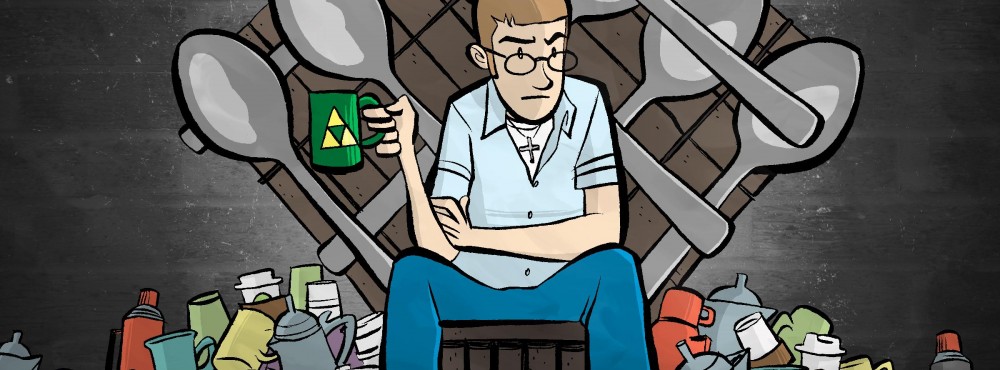
I became a fan of its fans.

The community inspired by My Little Pony: Friendship Is Magic, though often regarded with suspicion or loathing, is the most creative, quirky, compassionate group of fans I’ve ever seen. Combining bro and ponies in a portmanteau word, these weird, wonderful people are known as bronies.

There is a ridiculous number of artists in the brony community. Besides creating art inspired by the show, they sometimes reimagine real or fictional peopleincluding bloggersas ponies.

Not many people know this, but I'm actually a pony.

Not many people know this, but I’m actually a pony.

The artwork produced by bronies takes innumerable forms: comics, sketches, paintings, woodcuts, stained glass and more. Name any kind of visual art, and bronies are guaranteed to have used it.

I have a sudden, inexplicable urge to buy a fedora. And to grow a mustache.

I have a sudden, inexplicable urge to buy a fedora. And to grow a mustache.

There are nearly as many musicians in the brony community as there are artists, and their music is no less diverse. Besides remixing music from the show, bronies have produced a staggering number of original songs in every style imaginable. Classical? Electronic? Classical remixed as electronic? Progressive bluegrass? Symphonic rock? Bronies have them all covered.

Brony musicians even cover music by other bronies. “Discord,” a catchy Eurobeat song about a villain from the show, has been arranged for orchestra, jazz, electronic and other genres.

I won’t even begin to cover the animations and video games created by bronies. While some are amateur efforts, others are literally of professional quality.

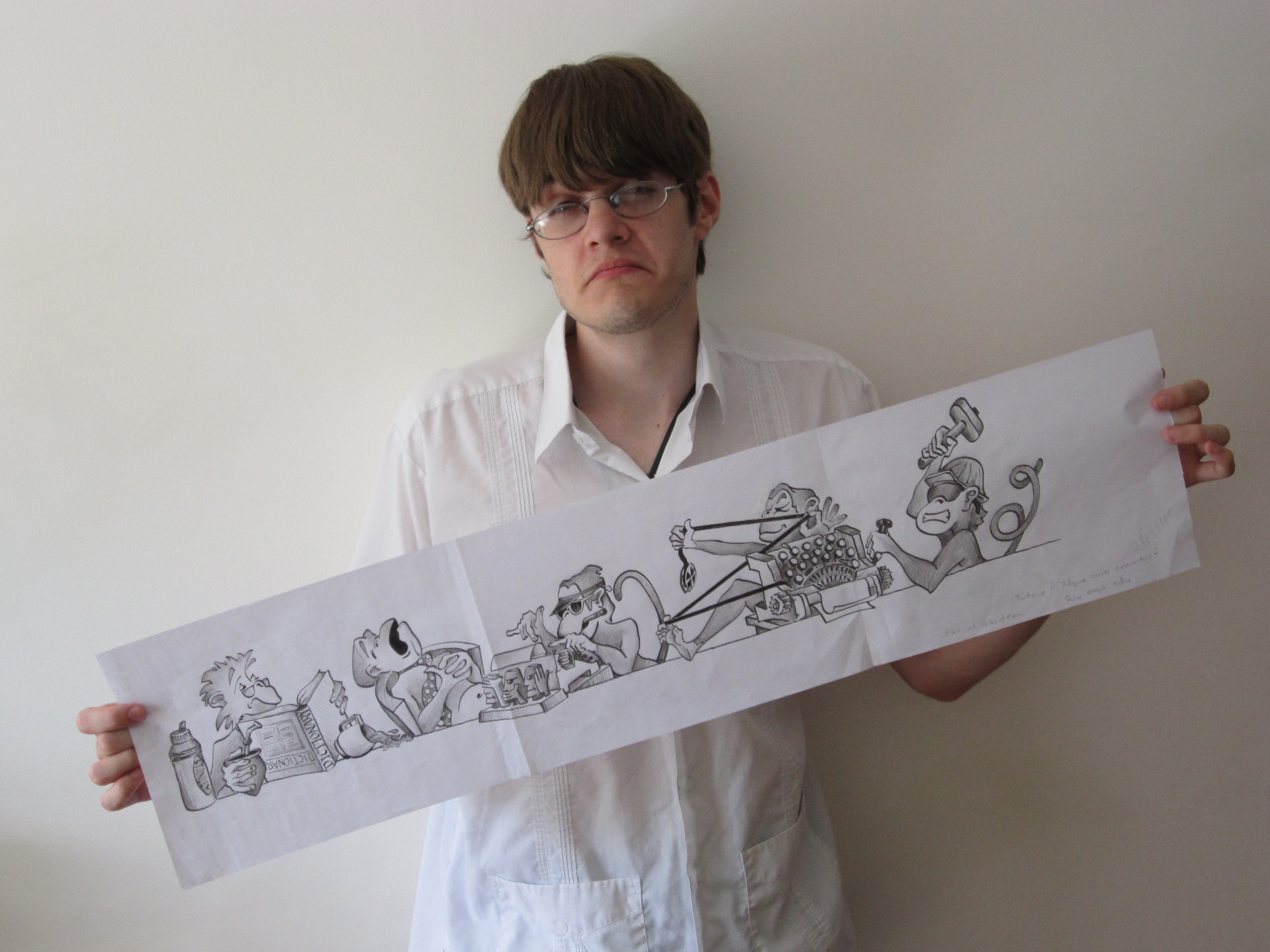
Even my typewriter monkeys (Thanks again to # of deviantArt!)

The Typewriter Monkey Task Force can’t handle the incredible creativity of bronies.
(Special thanks to Derpy Hooves for making a guest appearance!)

The creativity of the brony community seems to know no end, but the thing that impresses me most about bronies is their compassion.

Through fundraisers, auctions and special events, a charity called Bronies for Good recently paid for the construction of an orphanage in Uganda. Bronies for Good is currently funding clean water projects in Uganda and Tanzania. Another charity, the Brony Thank You Fund, is working to endow a scholarshiptentatively titled the Derpy Hooves Scholarship in Animationto the California Institute of the Arts. (Tim Burton, John Lasseter and many notable animators graduated from CalArts, which was founded by Walt Disney.) Various brony initiatives have raised many thousands of dollars for Kiki Havivy, a little girl diagnosed with a brain tumor.

The list of charitable projects goes on and on. It’s ridiculous.

Nothing is perfect, of course. The brony community has its share of conflicts, problems, crude artwork and tasteless fan fiction. In the end, though, it remains the most amazing group of fans I’ve ever seen.

I am, I admit, slightly embarrassed to be a fan of My Little Pony: Friendship Is Magic. It’s a cartoon for little girls, after all.

I am not, however, embarrassed to be a brony.

150. Stuff I Wish I Had Known When I Started This Blog

As TMTF reaches its one hundred and fiftieth post, I wonder what would happen if I traveled back in time and visited myself. Would the resulting temporal paradox tear apart the universe, or would I merely offer my younger self a cup of tea and tell him how to write a blog?

Assuming the universe held together, here’s the advice Future Adam would give his younger self about blogging.

Listen up, Adam. You think you're so cool with your typewriter monkey picture, but you've got a lot to learn about writing a blog. Let your older, wiser self give you some advice.

Listen up, youngster. You think you’re so cool with your typewriter monkey picture and supercilious smirk, but you’ve got a lot to learn about blogging. Let your older, wiser self give you some advice.

Keep it short

When I began this blog, I wrote way too much. Nothing discourages a reader like massive blocks of text. Instead of rambling like an academic or a drunkard, I should have written shorter paragraphs and avoided needless repetition.

Plan for the future, and write blog posts ahead of time

Only recently have I begun planning out blog posts weeks in advance. It has made all the difference. It’s easier to follow a schedule than to make rushed decisions, and simply clicking the Publish button when a post is due is much better than writing one at the last minute!

Do not, under any circumstances, give your typewriter monkeys the blog’s password

I learned this the hard way.

Use visuals!

Early on, I hardly ever included pictures. That was a mistake. Illustrations entice readers to check out blog posts that would otherwise go unnoticed. Visuals also break up the monotony of black text against a white background. Finally, writing silly captions is fun.

Make it your blog, not an imitation of someone else’s

TMTF began as an imitation of Stuff Christians Like by Jon Acuff, except my blog was about topics other than, well, stuff Christians like. I tried to copy Acuff’s approach and style.

It took me a long time, but I finally accepted an important truth: I am not Jon Acuff. I am Adam, a guy with glasses who drinks too much coffee and writes about faith and grammar and severed human arms. Despite my faults and failures, no one does a better job of being Adam than I.

Success and popularity aren’t the same thing

When I began TMTF, I secretly hoped it would become as popular as Stuff Christians Like and other notable blogs. It hasn’t, and that’s okay. I enjoy writing this blog. I hope other people enjoy reading it. I hope it honors God. If I and others and God are all fine with TMTF, I think it’s a success.

Be encouraged

Since I began blogging, my writing has improved so much. I’ve learned a lot, and it’s been fun despite its challenges and frustrations. For every time I wanted to bang my head against a hard, flat surface, there was a time I flung up my arms and shouted “Yes!

Like life, faith and breaking records in Mario Kart, writing is hard.

Like life, faith and breaking records in Mario Kart, writing is totally worth it.

As we head into a new year—and as TMTF moves beyond one hundred and fifty posts—my typewriter monkeys and I would like to add just one more thing.

Thanks for reading!

149. Why I Watch Cartoons

As many of my readers have probably noticed, I like cartoons.

Well, I like some cartoons. Others I would watch only on pain of death, and perhaps not even then. (I’m looking at you, SpongeBob SquarePants.) Besides loving many animated films—for example, classic Disney movies and everything directed by Hayao Miyazaki—I enjoy television shows produced for kids.

I also like literature, especially the classics. Explosions? Car chases? Sultry romances? Bah! Humbug! To blazes with such nonsense! Give me meaningful themes, compelling characterization and well-crafted plots.

Thus I decided to take no fewer than three literature classes in one semester when I was in college. (Where was Admiral Ackbar when I needed him?) For months, I was hammered by grim novels like Silence, a bleak story about the silence of GodOne Hundred Years of Solitude, a fantastical history of a disturbing, sordid society; The Penelopiad, a cynical postmodern perspective on The Odyssey; and several more depressing books.

It was not a happy semester.

Some notable literature is lighthearted—I thank God for cheerful authors like P.G. Wodehouse—but the good stuff is mostly depressing. Even stories by humorists like Mark Twain and James Thurber have tragic undertones. Thurber once wrote, “To call such persons ‘humorists,’ a loose-fitting and ugly word, is to miss the nature of their dilemma and the dilemma of their nature. The little wheels of their invention are set in motion by the damp hand of melancholy.”

I like cartoons because they’re innocent, bright and funny, and they’re unapologetic about it.

Do cartoons give a balanced view of the world? Of course not—but then, neither does much of the best literature. Cartoons remind me that the world can be a pleasant, cheerful place, even as literature reminds me that it can be a dreadful, hopeless one.

For me, cartoons are a kind of escapism.

Is escapism wrong? When balanced with realism, I don’t believe it is. To quote J.R.R. Tolkien, who is awesome, “I do not accept the tone of scorn or pity with which ‘Escape’ is now so often used. Why should a man be scorned if, finding himself in prison, he tries to get out and go home? Or if he cannot do so, he thinks and talks about other topics than jailers and prison-walls?”

A Farewell to Arms tells me there is suffering in the world. My Little Pony: Friendship Is Magic tells me there is good in it. The Great Gatsby tells me happiness can’t be bought with money or popularity. Phineas and Ferb tells me happiness can be found by two kids sitting in the shade of a tree on a summer day. Animal Farm tells me the good guys sometimes lose. Avatar: The Last Airbender tells me the good guys sometimes win.

The other reason I watch cartoons is because, well, they’re fun to watch.

Zealot: A Christmas Story – Last Chapter: Luke

Chapter Five can be found here.

“Let us pause,” said Luke. “My fingers ache.”

“This was your idea,” said his companion, leaning back and gazing out over the city. From their vantage point upon the housetop, Rome gleamed in the morning light. Armor and chariots flashed as a military procession passed in the distance. The sun turned iron to silver and bronze to gold. It was a splendid sight.

Luke’s companion scratched his nose, evidently unimpressed.

“My dear Luke, you have only yourself to blame if your fingers ache. You insisted on taking notes.”

“A foolish decision,” said Luke. “This may come as a surprise, Paul, but other people are not always as wise as you. Not everyone can be as wise as Paul, whose writings are renowned in Rome and Jerusalem and all the provinces in between.”

“Do you think you are the only one ever to have suffered the pain of aching fingers?” asked Paul. “Every time I wrote a letter I asked, ‘O Lord, how long until you provide your servant with a scribe?’ My life has been difficult here in Rome, you know, but I have one great consolation: our brothers from the synagogue write my letters as I dictate.”

Luke nodded with mock seriousness. “It is certainly a blessing for the churches, which are no longer burdened with the difficulty of deciphering your handwriting. Your letters are hard enough to understand when they are written clearly.”

A moment passed as Luke flexed his fingers and loaded his quill with ink. “I am ready,” he announced. “Where were we? Ah, I remember. We left you dangling from the wall of Damascus in a basket. Paul, would you kindly pay attention? I will never finish my book unless you stay focused.”

“I apologize,” said Paul, rubbing his jaw. “I have a toothache.”

Luke laughed. “A toothache? I thought you were meditating.”

“I was thinking of someone I once knew,” said Paul. “I have thought of him often in past weeks.”

“Tell me.”

“Before my conversion, you know, I went from house to house in Jerusalem arresting all who professed faith in Jesus of Nazareth. One afternoon I raided a home where some of the Lord’s disciples were meeting. There were about a dozen men with me. The moment we entered the house, an old man jumped up and said to the others, ‘We are discovered. Run!’ Then he charged at us.”

Paul chuckled. “Since I was the first to go down, I do not remember exactly what happened. I was later informed our attacker knocked out five of us before he was arrested. The strange thing was that he stopped fighting once the other disciples had escaped. After his arrest, we learned the man’s name was Jehu. He had been a notorious assassin before becoming a disciple of the Messiah.”

“What happened to the man?” asked Luke.

Paul made a chopping motion across his neck. “There was no trial,” he added. “Jehu reminded me of Stephen. Neither was afraid to die. Jehu’s execution made quite an impression.”

“Besides the one he had already made upon your face, I suppose.”

Paul smiled gingerly. “My jaw hurt for weeks. Since then, I think of Jehu every time my teeth ache. You know, there is one thing I shall never forget about him.”

“What?”

“His eyes.”

“What about them?”

“They were the calmest and kindest I have ever seen.”


Author’s Note:

I enjoy telling a story from multiple perspectives. The Infinity Manuscript, a novella I posted as a serial on this blog, delivered each chapter from a different character’s point of view. As a writer, I like bouncing from one character to another as I tell a story. (I really hope it doesn’t annoy my readers.) This story is another victim of my favorite narrative trick, and it’s been fun for me to describe Jehu’s journey through the eyes of six different characters.

This story is also a victim of rushed rewrites and revisions. I’d like to expand, fix and polish it someday. Maybe next Christmas.

I like to imagine solemn historical figures having a lighter side. We don’t really get to see Luke, Paul or anyone in the New Testament being anything but serious. (Paul occasionally betrays a hint of humor, but not often.) I wonder what kind of things made men like Luke and Paul laugh. I mean, P.G. Wodehouse wasn’t born until 1881. What was funny before Wodehouse?

Thanks for reading!

148. New Year’s Resolutions

In Ecuador, people celebrate the new year by burning effigies in the streets.

Good times, good times.

Ah, sweet memories.

In Indiana, however, the local authorities frown upon such celebrations. It’s too bad. Since setting things on fire is out of the question, I’ve decided to begin the new year by making some resolutions.

I’m sharing these resolutions on TMTF in order to make them official. After all, a resolution is much harder for me to forget (or ignore) once I’ve announced it publicly.

I will be focused, intentional and self-disciplined

I’ve squandered countless hours on the Internet: reading trivial articles, watching pointless videos and generally wasting time. I’ve also lost many hours due to procrastination, poor planning and sheer aimlessness. This year I intend to invest my time, not merely to spend it.

I will finish the manuscript for The Wanderings of Lance Eliot

I wrote about this resolution in my last post, so there’s not much left to say. This year Lance Eliot shall resume his journey. I hope we both survive it.

I will not be anxious, insecure or obsessive-compulsive

I can’t control my feelings. However, I can control my actions. This year I’ll try to remember what the Apostle Paul wrote about love, which “always trusts, always hopes, always perseveres.” That’s a good example to follow.

I will improve my Spanish

My grasp of the Spanish language—a dodgy thing at the best of times—has weakened severely since my graduation from high school. How do I intend to study the language? By watching cartoons in Spanish, of course.

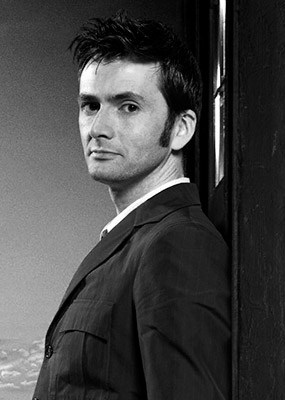
I will grow sideburns like the Tenth Doctor’s

Saving the universe? Bah! A negligible accomplishment compared to having such awesome hair.

Saving the universe? Bah! A negligible accomplishment compared to having such awesome hair.

During his tenure as the protagonist of Doctor Who, David Tennant boasted some splendid sideburns. This year I’ll strive to grow sideburns of comparable majesty.

I will take steps forward

Now that my life has settled down, I must start planning for years ahead. This year I intend to look into future career options.

Have a truly fantastic new year, dear reader!

Do you have any resolutions for the new year that you’re willing to share? Let us know in the comments!

147. Confessions of a Tired Writer

On the coast of Ecuador lies a little town called Same. (In Spanish, it’s pronounced with two syllables: sah-meh.) Although Same boasts a lovely beach, it’s also disfigured by one of the saddest sights I’ve ever seen.

Someone once planned to build a resort on the Same beach, and construction began of a huge hotel. That plan failed. I don’t know the details. The half-finished building looms over the beach, pathetic, silent, empty: a vacant shell of weathered concrete and rusted metal.

I hate to think how many hundreds of thousands of dollars were invested in this aborted hotel. The sight is an ugly one, and unspeakably sad. Someone’s dream died. The ruin isn’t merely an unfinished building. It’s a tombstone. A monument to failure.

That reminds me of something. Something personal.

When I was a kid, I decided to write a trilogy of fantasy novels. In high school, I started a story about a college student named Lance Eliot. At first it was nothing more than a shallow tale of journeys and dragons and sundry fantasy clichés. Early on, it even featured steampunk airships and motorcycles!

Years passed. More than once, I gave up on Lance Eliot and worked on something else. I wrote a couple of detective stories. (In a truly unexpected turn of events, one of them earned a scholarship that paid much of my college tuition!) I tried writing a crime novel. In the end, however, I always came back to Lance Eliot’s journey.

My silly story about swords and sorcerers became something more meaningful: the journey of a man searching for something—the trials of a traveler longing for home—the awakening of a hero from within a selfish, cynical coward. Of course, I kept the magic and dragons and people getting drunk. Lance Eliot’s story remained a fantasy.

It’s not a great story. I know that, but I hope it’s a good one. It has certainly become the most intensely personal project I’ve ever undertaken as a writer. I may not smoke or drink or use dated British idioms, but Lance Eliot and I are very nearly the same person.

It took four attempts over five years, but I finally finished the first part of Lance’s story: The Trials of Lance Eliot. A kindly author introduced me to a literary agent, whose invaluable assistance (and infinite patience) eventually brought my novel to publication as an e-book and later as a paperback.

At the moment, that’s where Lance Eliot’s story ends.

It’s hard to write a novel. It’s harder to publish one. After publishing The Trials of Lance Eliot, I was tired of writing. My life at that time was uncertain and stressful. Having just returned to the United States of America after six months in Uruguay, I had no job, no apartment, no driver’s license and no self-confidence.

Lance Eliot could wait. Once my life had settled down and The Trials of Lance Eliot had sold some copies, I could get back to work on the manuscript for its sequel.

It’s taken a long time for my life to settle down, and I’m pretty sure no more than a few dozen copies of The Trials of Lance Eliot have been sold. I have a job and several blogs and ten thousand other things to keep me busy. The manuscript for the novel’s sequel has been mostly untouched for many months.

Every now and then, however, I think of an empty concrete ruin looming over the town of Same.

The Eliot Papers, the trilogy of which The Trials of Lance Eliot is the first part, has been my greatest passion as a writer for almost as long as I’ve been writing.

Dash it to blazes, I’ve got to finish this thing.

(All right, maybe I do sometimes use dated British idioms.)

Besides my desire to get the deuced story written, I owe it to my agent and publisher to complete the trilogy. He’s invested much time and money in The Eliot Papers. For both our sakes, Lance Eliot must finish his journey.

This brings me to an important announcement.

When I decided to publish miscellaneous creative writing on this blog, I didn’t realize how great a commitment I was making. Posting “Zealot: A Christmas Story” has forced me to make some very hasty revisions and rewrites. It’s been stressful, and I’m not satisfied with the final result.

I can’t keep posting creative writing and regular blog posts if I’m going to make any progress on The Eliot Papers.

Thus, with apologies to my readers, I’m no longer publishing creative writing on this blog.

I’ll post the final chapter of “Zealot: A Christmas Story,” of course, and there’s a brief dramatic sketch I’ll put up on the blog next month. After that, however, TMTF shall revert to its old two-post-a-week schedule until further notice.

I hope that sad old hotel in Same is finished someday. In the end, though, it’s not my concern. Lance Eliot’s story is.

I hope that’s finished someday too.

Zealot: A Christmas Story – Chapter Five: Judas

Chapter Four can be found here.

A vast crowd sat in silence. Apart from the words of the rabbi, the only sounds to be heard were the distant twittering of birds and the occasional grunt as someone shifted position on the warm grass.

“There,” said Simon, poking Judas in the ribs. “The man with gray hair.”

Judas glanced at the stranger. “That fossil? You are joking, Simon.”

Simon nudged Judas again. “I am sure. He has aged, but I could never forget those eyes. He looks like a man who has gazed upon all the sorrows of the world.”

Judas watched the stranger for a minute before tugging on Simon’s sleeve. “You are mistaken, Simon. You may pretend to be a zealot, but you cannot pretend that frail old man is Jehu. I grew up hearing stories of an invisible assassin before whom Romans fell like wheat before the scythe. He is not that man.”

The stranger knelt in the grass, his head bowed, listening with half-closed eyes as the rabbi spoke of God’s mysteries. Once the old man glanced toward Judas.

“Is he drunk?” whispered Judas. “There is no life in his eyes.”

Simon stifled a chuckle. “What did you expect? Jehu has killed more men than any Roman legion has ever done. For more than thirty years, Rome has sought him in vain.”

The rabbi lifted up his voice. “You have heard that it was said, ‘Eye for eye, and tooth for tooth.’ But I tell you, do not resist an evil person.”

Judas watched the stranger, overcome by morbid curiosity, wondering how he respond to such mild, peaceful words. The stranger neither moved nor spoke.

Time passed. As listeners came and went, the stranger knelt like a weathered statue, listening. The sun moved slowly overhead.

Beads of sweat ran down Judas’s face. “Is he almost done?” he muttered, glaring at the rabbi. “We are all hungry. He often speaks of spiritual bread, but he never seems to remember that we also need the worldly kind. My body is about to perish of hunger and leave my spirit homeless.”

“Come to me, all you who are weary and burdened, and I will give you rest,” said the rabbi.

“That sounds good,” grumbled Judas.

“Take my yoke upon you and learn from me, for I am gentle and humble in heart, and you will find rest for your souls.”

“What about our bodies?” whispered Judas. “Will we find rest for them?”

“For my yoke is easy and my burden is light.”

At that moment, Simon gave Judas such a jab in the side that he gasped in pain.

“Simon,” hissed Judas. “You may think you are a zealot, but I refuse to be your target practice.”

“Look at Jehu!” said Simon.

Judas looked. There, kneeling alone in the grass, the most vicious criminal in Judea, the man at whose name Romans cursed and Jews turned pale, wept openly.

Chapter Six can be found here.


Author’s Note:

I am reminded once again that grumpy, snarky characters are much more fun to write than solemn, serious ones. Judas may be kind of a jerk, but I think anyone who has sat through a really long sermon at church can sympathize with his impatience.

Jesus had twelve close disciples, and they were quite an odd bunch. Simon the Zealot presumably hated Rome. Matthew, also called Levi, was a tax collector who probably worked for the Roman authorities. The Gospels tell us the disciples of Jesus sometimes bickered, and I can believe it!

Peter was originally the star of this particular chapter. When he turned out to be such a complainer, I decided Judas Iscariot was a much better fit. After all, disillusionment with the long-awaited Jewish Messiah may have been Judas Iscariot’s motive for betraying Jesus to be executed.

146. Grace Makes Sense

I’ve been meaning to write this post for a long time. The reason I’ve put it off is that it’s an important post, and those are always the hardest to write.

Occasionally, when I think I’ve discovered some amazing spiritual insight, I glance at one of C.S. Lewis’s books and realize he discovered it first. Since it’s hard to write blog posts about important things like grace, I’ll let Lewis handle the introduction.

Take it away, Jack!

Thus, in one sense, the road back to God is a road of moral effort, of trying harder and harder. But in another sense it is not trying that is ever going to bring us home. All this trying leads up to the vital moment at which you turn to God and say, “You must do this. I can’t.”

I know God has saved me by grace, but that hasn’t stopped me from trying to be good enough.

Then, some time ago, I began to understand.

I’m not good enough.

I’ve never been.

I shan’t ever be.

That’s okay.

God doesn’t expect me to be good enough. Nowhere in the Bible does God say, “Unless you meet my standards, I won’t love you.” I don’t deserve God’s love. Grace is a gift, and it’s finally making sense. I don’t have to earn anything.

Of course, that doesn’t mean I can stop trying to be good.

To quote C.S. Lewis again, living by grace doesn’t mean merely trying to do good things,

But trying in a new way, a less worried way. Not doing these things in order to be saved, but because He has begun to save you already. Not hoping to get to Heaven as a reward for your actions, but inevitably wanting to act in a certain way because a first faint gleam of Heaven is already inside you.

God isn’t commanding me to be good enough. He’s asking me to give him my best. When—not if but when—my best isn’t good enough, his grace covers the rest.

Christmas began as a celebration of Christ’s birth. Christ was born to die. He died and rose again to give us life, not to burden us with impossible demands. At its heart, Christmas is a celebration of grace.

We’re not good enough, but we don’t have to be. God’s grace is good enough, and that’s what matters. We must give him our best. The rest is up to him.

Happy Christmas, dear reader!

145. Snow

There was once a man named Dante Alighieri. You may have heard of him. He wrote Inferno, a cheerful, lighthearted little poem about hell.

According to Dante, hell is packed full of horrors: demons, monsters, rivers of blood, blazing tombs and other awful things. His version of hell is divided into concentric circles, and each is more gruesome than the one before.

What is in the innermost circle, you ask? What dreadful torment afflicts Satan himself?

The answer, of course, is snow.

Well, the answer is technically ice, but snow is close enough. (Snow consists of ice crystals, right?) Dante apparently disliked cold weather as much as I do.

Snow is falling outside. Well, falling isn’t the right word. The snow outside is traveling more or less horizontally, driven along by icy blasts of wind. It’s the first blizzard of winter, and it makes me wonder why I decided to come back to Indiana. I could have gone anywhere on Earth. I could have settled in the Sahara. Why did I choose the American Midwest?

As I grew up in Ecuador, snow was something remote: splashes of white on distant mountain peaks. At this moment, snow is a cold, wet carpet just outside my front door. I prefer my snow on faraway mountaintops. Right now, it’s too close for comfort.

I must admit snow can be quite pretty. On a night with no wind, a gentle snowfall is one of the most lovely things I’ve ever seen. New snow sparkles in the sunshine. Individual snowflakes, examined carefully, are microscopic works of art.

Tragically, the beauty of snow often comes at the cost of bitter cold, biting winds, icy roads and dreary skies. Even snow loses its charm. It becomes dull and crusty as days go by, or else turns to muddy slush.

At times like these, when wind rattles the windows and snowflakes turn the world white, I love lounging in an armchair, listening to Christmas music and drinking tea. Sooner or later, however, I must don my duster, set my face like flint and venture forth into the maelstrom of howling wind and stinging ice. It is a harrowing thought.

I’ve never before considered hibernation, but I like the thought of sleeping through the winter and awaking in the spring. Alas, my employer would probably disapprove. C’est la vie.

Zealot: A Christmas Story – Chapter Four: Baraz

Chapter Three can be found here.

“I despise this filthy city.”

Having declared his opinion of Jerusalem, the City of God, Baraz coughed into a linen cloth and peered through the window lattice at the dusty streets.

“What misfortune to be struck with fever! As the others meet with King Herod, I am confined to this detestable hovel. The finest inn in all Jerusalem? Bah! A foul place. Are all the powers of heaven conspiring against me?”

Baraz’s servant chose that unfortunate moment to kick open the door and announce, “There is a visitor to see you, Master. He says he wishes to speak with you about the king of the Jews.”

A paroxysm of coughing overtook Baraz’s mocking laughter. As soon as he could speak again, he growled, “Kindly knock before entering. Are you my servant or a savage? I expect such behavior of a Scythian, but not of you.”

“Master, the king of the Jews—”

“I have no wish to speak with anyone about Herod,” grumbled Baraz. “We may seek his advice, but that does not mean we approve of him.”

“Not Herod, Master,” said the servant, fidgeting. “The king of the Jews.”

Baraz sat bolt upright. “Another king? Could it—bid our guest enter. Quickly! Do not stand there catching flies with your mouth, you simpleton! Bring in the visitor.”

The servant ushered in a man in a dark cloak. After one glance at the visitor, Baraz quietly rose from his stool and sidled behind a table.

“I am not here to hurt you,” said the stranger. “Be thankful, old man.”

Baraz instantly forgot his fear. “I am Baraz, a learned scholar of Persia,” he exclaiming, shaking a finger. “How dare you address me so impudently! Who are you to act with such brazen disrespect?”

“I am an armed man, and I will address you however I please.” Steel gleamed on the stranger’s arm as he pulled up a sleeve.

“Perhaps I spoke in haste,” said Baraz. He motioned toward a dining couch across the room. “You may recline. Do you care for wine or figs?”

Baraz studied the visitor as he filled a goblet with wine and sat upright on the couch. He had the grim, gaunt look of one to whom hardship was no stranger. More peculiar was his listless manner. The visitor’s tone was not menacing as he spoke of sicae. He sounded bored, as though threats were merely a formality.

“My servant tells me you have news of the king of the Jews,” said Baraz.

The man sipped his wine. “All Jerusalem buzzes with rumors of the wise men from the East. They follow the brightest star in the heavens, or so the tale goes. That star has perplexed all Herod’s wise men. It appeared suddenly, burning in the sky over Bethlehem.”

“What of the star?” inquired Baraz, feigning ignorance. “It is one star: a bright one, perhaps, but one of many.”

“It is not wise to bait me, old man,” said the visitor, setting down his goblet.

Baraz retreated a little farther behind the table. “I am not baiting you,” he said. “I merely inquire. Of what interest is the star to… a man in your line of work?”

“Freedom is my line of work,” said the stranger. “My name is Jehu, and I am a zealot.”

“I am unfamiliar with the word.”

“A zealot is either a revolutionary or a criminal. It depends upon whom you ask. I fight to free Israel from her oppressors. I am no rabbi, but even I have heard the prophecies about Bethlehem, the birthplace of the Messiah who will bring peace to Israel. When a sign appears in heaven over such a place, I am very much interested.”

Baraz gazed in puzzlement across the table at the visitor. “Why have you come to me? I am Persian. Forgive me—and kindly keep your weapon in your sleeve—but the peace of Israel is hardly my concern.”

“We both seek the Messiah, the true king of the Jews,” said the visitor. “Herod is a brute. The throne of Israel belongs to the Messiah of God. What I do not understand is why you are concerned.”

In spite of his nervousness, Baraz smiled. “Truth is always my concern. Ours is an ignorant world, is it not? Look out the window at the crowds kicking up dust like cattle. Everyone is a fool. You are a fool, Jehu. I am a fool. We are all fools stumbling in the dark. My companions and I are looking for truth, and we hope it may be found in this king of the Jews.”

“I once met a group of shepherds,” said Jehu, and finished his wine.

“Shepherds,” said Baraz, baffled.

“Shepherds,” repeated Jehu. “About two years ago in Bethlehem. They told me angels had proclaimed the birth of the Messiah: a baby in a manger. It was insanity, but there is something I have never forgotten.”

“What is that?”

“There was a baby in a manger that night. I saw him.”

Baraz could restrain himself no longer. “Jehu, why have you come? Is it upon this baby you have set your hopes? Do you wish for me to find this child, this boy in Bethlehem, to see whether he is the Messiah?”

It was at that moment Baraz saw tears on Jehu’s cheeks.

“I stab and slit and strangle,” said Jehu. “To what end? Rome still grinds Israel into the dust. My efforts are of no use. I am a man trying to hold back the tide of the sea. My soul is stained with blood, old man.”

“Dare I suggest taking up another profession?”

“God forgive me, I cannot stop. I must fight until Israel is free, but I cannot free her. Only the Messiah can save Israel. You are searching for him, and I have come today with one purpose.”

Baraz leaned forward. “Yes?”

“Go to Bethlehem, old man. Find the child in the manger. Help him, so that he can someday rescue Israel. As long as Israel is a slave, so am I.”

“We will find him,” said Baraz.

Without a word, Jehu set down his goblet and left.

Baraz coughed into his cloth and folded it meditatively. “We are nearing the end of our journey, I think,” he murmured. “I do not know whether the Messiah awaits us in Bethlehem, but any place is better than this vile Jerusalem!”

Chapter Five can be found here.


Author’s Note:

Posting this story on TMTF seemed like a good idea at the time. “A Christmas story gathering dust (or whatever virtual debris are gathered by computer files) in an archive of old writing? I can post it on TMTF!” Only after I’d committed to posting this story did I realize it was sort of awful. I’ve had to do some very hasty revisions and rewrites. While I’m still not satisfied with the result, Zealot: A Christmas Story is at least better than it was before. I guess that’s a step forward.

Not much is known about the Wise Men, so there’s lots of speculation. They fascinate me. The biblical narrative of Christ’s birth moves along smoothly, and then mysterious men arrive from “the East” in search of a king destined to rule a nation that no longer exists. In the end they deliver their gifts to Jesus, apparently oblivious to the fact that the king of the Jews is the child of peasants. Am I the only one who thinks that’s kind of weird?

Incidentally, grumpy old men are really fun to write. (I’m not much good at serious dialogue; I prefer characters with a sense of humor.) I think Baraz is my favorite character so far.