239. TMTF’s Top Ten Unstoppable Heroes in Literature

Many works of fiction feature unstoppable heroes. These paragons of excellence may not be immune to defeat, but they sure seem like it!

Take Batman. He has no superpowers; Bruce Wayne is just a man with a high-tech suit and some fancy gadgets… and he’s also nigh-invincible. He excels physically, intellectually and morally as a strong fighter, brilliant strategist and champion of justice. I suppose it’s technically possible to kill Batman, but we all know in our heart of hearts that he’s unstoppable.

Literature is full of characters seem physically, intellectually or morally perfect. These are the characters the reader is sure will never be killed or get caught or suffer defeat. They are not invincible, but they may as well be. Some are nearly invulnerable; others are simply too clever or confident to be held down.

Why must I take an entire blog post to list unstoppable heroes from fiction? I can only echo George Mallory and reply: “Because they’re there.” As long as there are things to be ranked in top ten lists, TMTF shall be delighted to oblige!

My usual rules apply to this list: only one character is allowed per author, and characters can be included only from books I’ve read. (Batman would make the list, but I haven’t actually read any of his comics.) An unstoppable hero is defined as a character whose physical, intellectual or moral excellence make him or her seem utterly impervious to defeat.

Be ye warned, here there be minor spoilers.

Prepare to be amazed, ladies and gentlemen, as TMTF presents…

The TMTF List of Top Ten Unstoppable Heroes in Literature!

10. Phileas Fogg (Around the World in Eighty Days by Jules Verne)
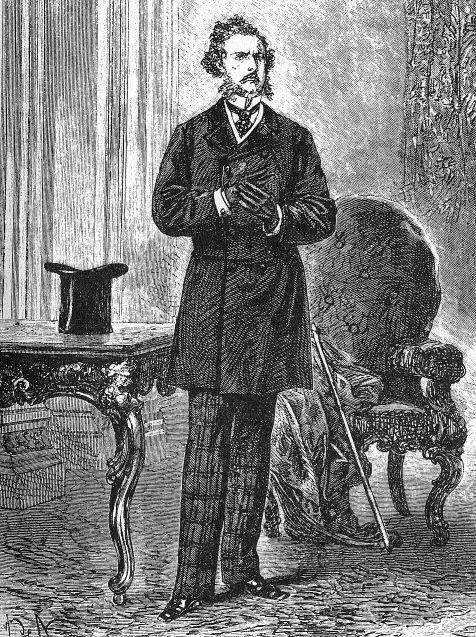
Phileas Fogg

Phileas Fogg is an impassive British gentleman whose life of precision and strict regularity is interrupted by the decision to circumnavigate the world in just eighty days: a feat that seems impossible given the limited technology of the time. Is it even possible to travel so far so fast? The reader must wait for an answer, but one thing is clear from the beginning. If it is humanly possible to travel around Earth in eighty days, Fogg will do it. Nothing—not faulty railways, conniving detectives, Sioux warriors or insufficient fuel—can deter this man.

9. Professor Albus Dumbledore (Harry Potter series by J.K. Rowling)
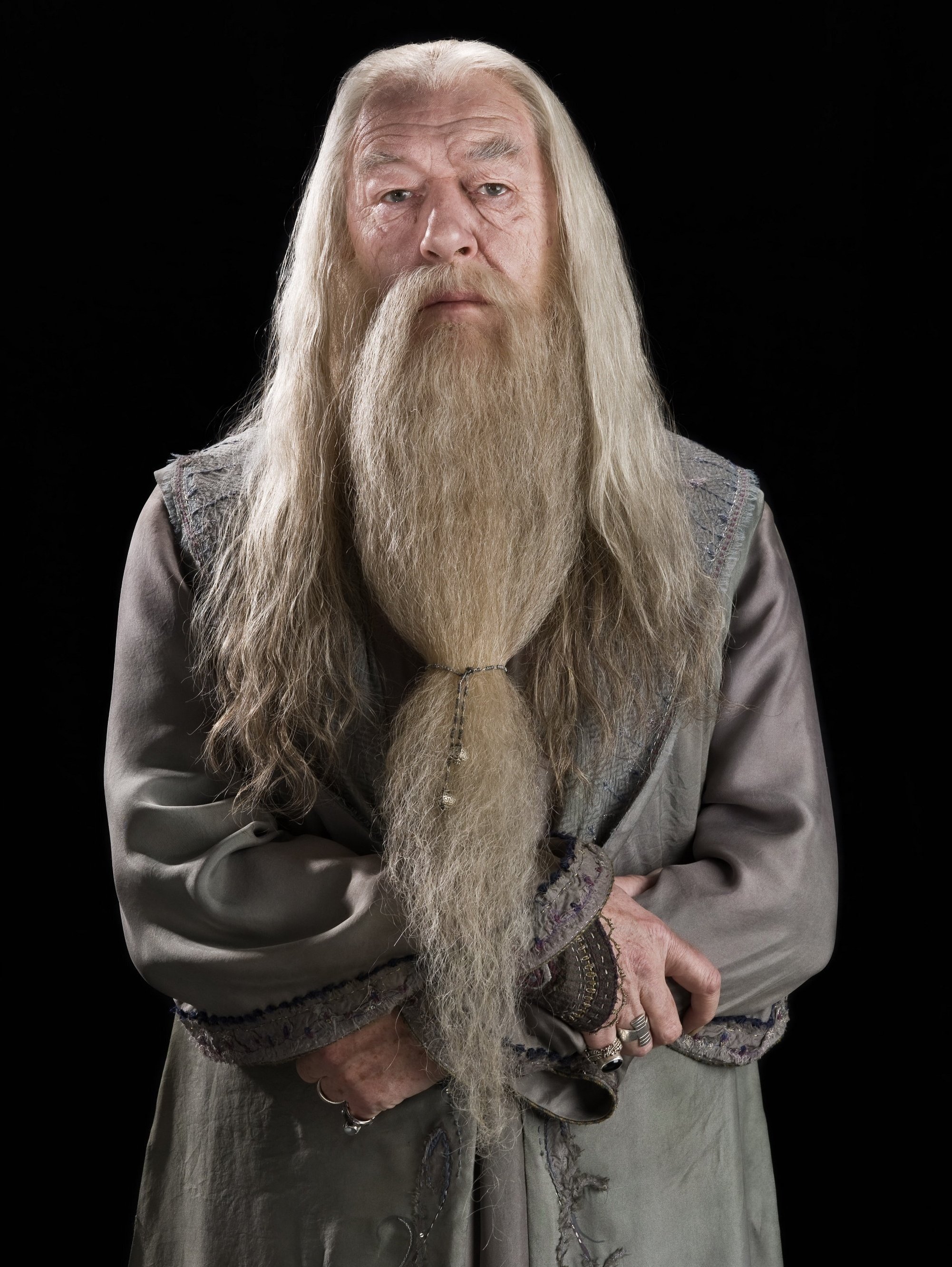
Albus Dumbledore

Gentle, wise, whimsical and rather odd, Professor Albus Dumbledore is the headmaster of Hogwarts School of Witchcraft and Wizardry. Dumbledore’s seeming frivolity and warm sense of humor belie his shrewd mind, powerful magic and terrifying capacity for anger: “There was cold fury in every line of the ancient face; a sense of power radiated from Dumbledore as though he were giving off heat.” Despite his age, Dumbledore seems far too clever, strong and wise to be stopped even by death. Right? Right?

8. Tristan Farnon (All Creatures Great and Small by James Herriot)
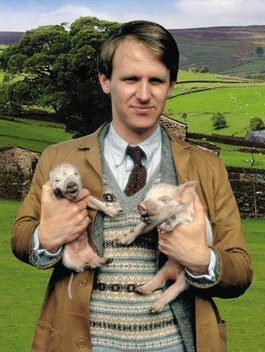
Tristan Farnon

In James Herriot’s fictionalized memoirs, Tristan Farnon is an irresistible force of optimism, charm and good-natured mischief. Not even the tyrannical bossiness and short temper of his older brother Siegfried can dampen his cheerful outlook. Tristan drinks too much, plays practical jokes and flirts with every young female in sight—and he nearly always gets away with it.

7. Mr. Great-heart (The Pilgrim’s Progress by John Bunyan)

Mr. Great-heart

Mr. Great-heart is too good to be true. A manservant, Mr. Great-heart is ordered by his master to accompany Christiana and her companions on their journey to the Celestial City. His role for the rest of the story is to slay giants, rescue pilgrims, light dark paths, discuss theology and generally be an impossibly perfect (and mostly uninteresting) blend of warrior, mentor, guide and teacher. Mr. Great-heart is so angelically brave and pure that there’s absolutely no question of getting in his way.

6. Kaito Kid (Detective Conan by Gosho Aoyama)

Kaito Kid

Kaito Kid hails from Detective Conan, a long-running (and ongoing) series of mystery manga (i.e. Japanese comics) also known as Cased Closed. Kid is a gentleman thief, expert magician and master of disguise whose crimes are perfect. Even his habit of announcing heists beforehand never seems to get in his way: no matter how smart the police, Kid is smarter. Kid pulls off tricks that seem supernatural… until Conan, the eponymous detective of the series, figures them out. However, even Conan can’t always stop Kid. It’s fortunate that Kid always returns whatever he steals!

5. Sherlock Holmes (The Adventures of Sherlock Holmes by Sir Arthur Conan Doyle)
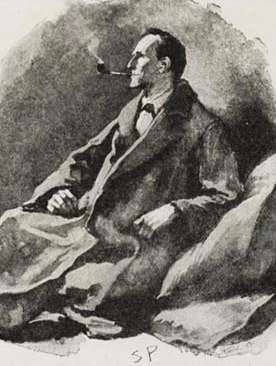
Sherlock Holmes

As long as we’re discussing detectives, let’s not forget the father of them all: Sherlock Holmes. How many cases has this man solved? How many juggernauts of crime has he brought to justice? No trick is too tricky nor mystery too mysterious for the incomparable Holmes. Besides being, you know, a freaking genius, Holmes is a skilled fencer, actor, sharpshooter, violinist, martial artist and expert on a bewildering range of subjects from poisons to tobacco ash. No criminal stands a chance against Holmes.

4. Gandalf (The Lord of the Rings by J.R.R. Tolkien)
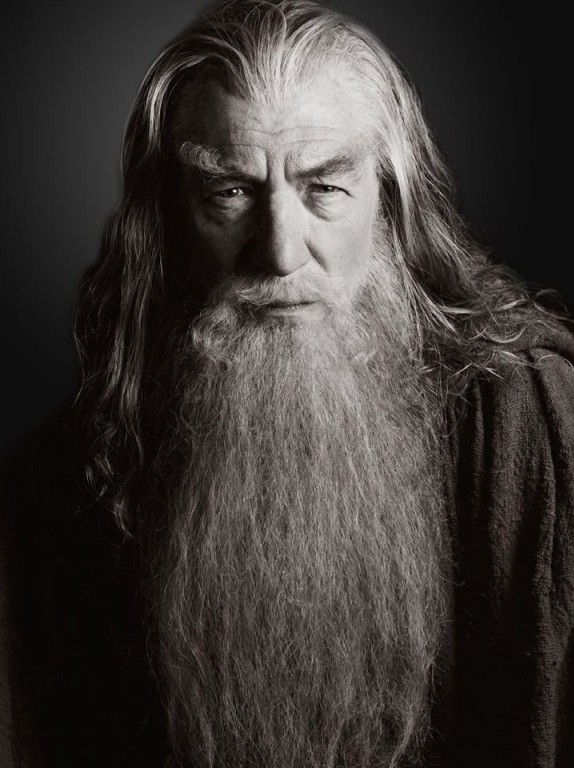
Gandalf

According to Tolkien’s mythology, Gandalf is basically an angel. A freaking angel. So yeah, he’s unstoppable. This short-tempered wizard is ancient, but his age doesn’t stop him from traveling the world, battling monsters and getting in and out of scrapes. Even death can’t stop this man. When Gandalf dies after dueling a demonic beast, some higher power resurrects him and sends him back to save the world. Gandalf recovers from death the way most people recover from colds, and I’m pretty sure there’s no stopping him.

3. Obelix (The Adventures of Asterix by René Goscinny and Albert Uderzo)
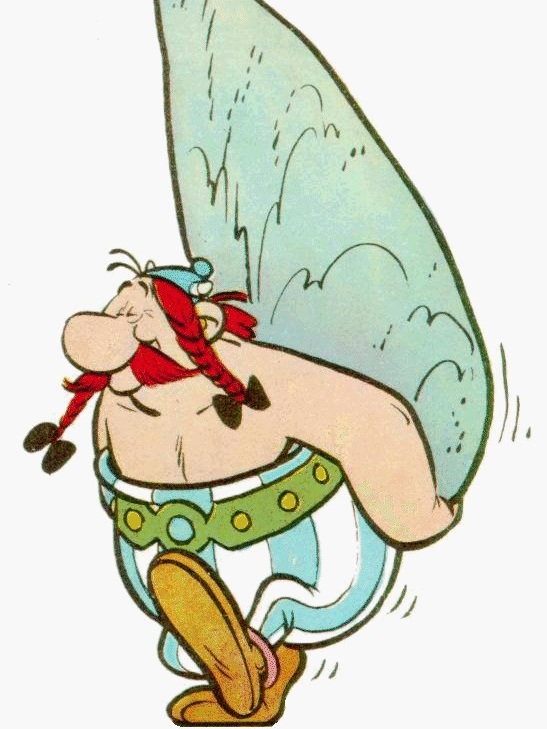
Obelix

When the ancient Roman Empire conquers Gaul, a vast region of Western Europe, they don’t conquer all of it. One tiny settlement, “the village of the indomitable Gauls,” remains free. The good-natured residents of this tiny town repel the legions of Rome thanks to a potion that gives them temporary surges of superhuman strength. When young Obelix falls into a cauldron of this potion, it has a permanent effect on him. Obelix grows into a pudgy delivery man who can lift anything, cannot be harmed and is literally unstoppable.

2. Jeeves (Carry On, Jeeves by P.G. Wodehouse)
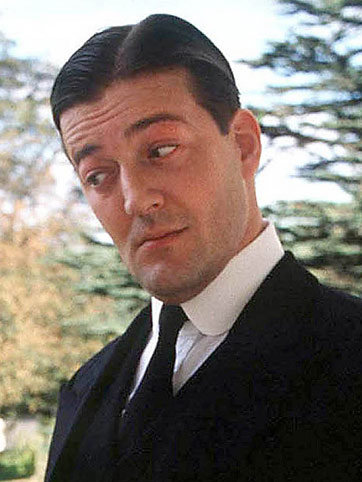
Jeeves

Imagine Socrates, Confucius and Solomon rolled into one person, and then make that person a polite British valet. Congratulations: you’ve just imagined Jeeves, insofar as human imagination can devise a person as brilliant as he. Jeeves doesn’t contend with giants or monsters or criminals—if he did, they would be toast. No, Jeeves turns his colossal genius toward solving social crises and keeping his wayward employer, well-meaning but dimwitted Bertram Wooster, out of trouble. Jeeves’s dry wit, perfect composure and sheer intelligence make him an inexorable force of peace and order.

1. Aslan (The Chronicles of Narnia by C.S. Lewis)

Aslan

Aslan is basically Jesus Christ, and also a lion with huge muscles and sharp teeth. You can’t get any more unstoppable than that. What’s that? Aslan dies? Please. Aslan watches Gandalf conquer death and says, “See here, lad, this is how it’s done.” Able to appear anywhere and do anything with his infinite wisdom and boundless power, Aslan is absolutely the most unstoppable hero in any fiction I have ever read.

O people of the Internet, what unstoppable literary heroes would you add to this list? Let us know in the comments!

Zealot: A Christmas Story – Last Chapter: Luke

Chapter Five can be found here.

“Let us pause,” said Luke. “My fingers ache.”

“This was your idea,” said his companion, leaning back and gazing out over the city. From their vantage point upon the housetop, Rome gleamed in the morning light. Armor and chariots flashed as a military procession passed in the distance. The sun turned iron to silver and bronze to gold. It was a splendid sight.

Luke’s companion scratched his nose, evidently unimpressed.

“My dear Luke, you have only yourself to blame if your fingers ache. You insisted on taking notes.”

“A foolish decision,” said Luke. “This may come as a surprise, Paul, but other people are not always as wise as you. Not everyone can be as wise as Paul, whose writings are renowned in Rome and Jerusalem and all the provinces in between.”

“Do you think you are the only one ever to have suffered the pain of aching fingers?” asked Paul. “Every time I wrote a letter I asked, ‘O Lord, how long until you provide your servant with a scribe?’ My life has been difficult here in Rome, you know, but I have one great consolation: our brothers from the synagogue write my letters as I dictate.”

Luke nodded with mock seriousness. “It is certainly a blessing for the churches, which are no longer burdened with the difficulty of deciphering your handwriting. Your letters are hard enough to understand when they are written clearly.”

A moment passed as Luke flexed his fingers and loaded his quill with ink. “I am ready,” he announced. “Where were we? Ah, I remember. We left you dangling from the wall of Damascus in a basket. Paul, would you kindly pay attention? I will never finish my book unless you stay focused.”

“I apologize,” said Paul, rubbing his jaw. “I have a toothache.”

Luke laughed. “A toothache? I thought you were meditating.”

“I was thinking of someone I once knew,” said Paul. “I have thought of him often in past weeks.”

“Tell me.”

“Before my conversion, you know, I went from house to house in Jerusalem arresting all who professed faith in Jesus of Nazareth. One afternoon I raided a home where some of the Lord’s disciples were meeting. There were about a dozen men with me. The moment we entered the house, an old man jumped up and said to the others, ‘We are discovered. Run!’ Then he charged at us.”

Paul chuckled. “Since I was the first to go down, I do not remember exactly what happened. I was later informed our attacker knocked out five of us before he was arrested. The strange thing was that he stopped fighting once the other disciples had escaped. After his arrest, we learned the man’s name was Jehu. He had been a notorious assassin before becoming a disciple of the Messiah.”

“What happened to the man?” asked Luke.

Paul made a chopping motion across his neck. “There was no trial,” he added. “Jehu reminded me of Stephen. Neither was afraid to die. Jehu’s execution made quite an impression.”

“Besides the one he had already made upon your face, I suppose.”

Paul smiled gingerly. “My jaw hurt for weeks. Since then, I think of Jehu every time my teeth ache. You know, there is one thing I shall never forget about him.”

“What?”

“His eyes.”

“What about them?”

“They were the calmest and kindest I have ever seen.”


Author’s Note:

I enjoy telling a story from multiple perspectives. The Infinity Manuscript, a novella I posted as a serial on this blog, delivered each chapter from a different character’s point of view. As a writer, I like bouncing from one character to another as I tell a story. (I really hope it doesn’t annoy my readers.) This story is another victim of my favorite narrative trick, and it’s been fun for me to describe Jehu’s journey through the eyes of six different characters.

I like to imagine solemn historical figures having a lighter side. We don’t really get to see Luke, Paul or anyone in the New Testament being anything but serious. (Paul occasionally betrays a hint of humor, but not often.) I wonder what kind of things made men like Luke and Paul laugh. I mean, P.G. Wodehouse wasn’t born until 1881. What was funny before Wodehouse?

Thanks for reading!

238. That Time I Survived a Volcanic Eruption

I live in Indiana, where there are no volcanoes. We have woods and cornfields and adorable squirrels, but no volcanic eruptions. I appreciate Indiana’s peaceful predictability. The weather can be nasty and tornadoes blow through occasionally, but ash and brimstone are pretty rare.

A few days ago, I spent a moment of my tranquil Indiana life trying to think of past adventures to write about for this blog. I have previously shared anecdotes of memorable moments in my life: tales of awkward kisses and severed human arms and Giant Mutant Killer Jungle Ants. (All of these anecdotes, I assure my readers, are true.) Heck, my very first post for this blog was the story of That Time I Was Attacked by a Tomato.

I was beginning to worry I had run out of interesting anecdotes for this blog—and then I remembered all the times those freaking volcanoes went off when I was a kid.

Guagua Pichincha

Guagua Pichincha, 1999

The Andes Mountains run right down the middle of Ecuador, dividing my homeland neatly in two. The Andes are full of volcanoes. These have a disquieting tendency to go off like bombs, showering cities in ash.

Pictured above is the Pichincha Volcano, which erupted in 1999 and blanketed Quito, Ecuador’s capital, in ash. My older brother lived in Quito at the time, and he told me all about it when he came home to visit. I lived with my family in Santo Domingo de los Colorados, hours away from Quito, and thus missed all the excitement.

We would later climb one of Pichincha’s peaks, Rucu, on several occasions. Guagua, not Rucu, is the active peak of the volcano; consequently, we never witnessed any volcanic activity during our climbs.

Climbing Rucu, back when I was a pudgy teenager.

Climbing Rucu, back when I was a pudgy teenager.

In later years, when I lived in Quito, I survived two or three volcanic eruptions. We were too far from the volcano to see fire or sprays of lava, but we saw plenty of ash. Dash it all, did we see plenty of ash.

As a kid, I never got snow days. Snow hardly ever falls in Quito, and certainly never enough for school to be canceled. No, I got volcano days: weekdays when mounds of soft, powdery volcanic ash blocked the roads and shut down the schools. During the 1999 eruption, my brother and other Quito residents wore dust masks to keep the ash out of their lungs.

My memory is a sketchy thing at the best of times, and I don’t remember which volcanoes erupted when I lived in Quito. (Full disclosure: It took a bit of research to figure out whether the big eruption I remembered from 1999 came from Guagua Pichincha or Tungurahua.) The last eruption I recall happened when I was in seventh or eighth grade; my high school years were uninterrupted by clouds of volcanic ash.

Now that I live in Indiana, the most exciting disaster to strike is a tornado or a blizzard.

Not that I’m complaining, mind!

237. Three Great Novels About the Silence of God

I could write pages about the silence of God, but it would all boil down to just a few words.

I don’t get it, and it troubles me.

Some of my doubts and questions about the Christian faith have been resolved. Some have not. Why does God let kids get hurt? Why does he allow us to make innocent mistakes? Why does he permit headaches and cockroaches and Fifty Shades of Grey to exist? Why, God? Why?

Yes, I know about sin and death and the fall of humankind. I know, darn it! Those things still don’t explain why God doesn’t, well, explain. Couldn’t he at least make his existence more clearly known? It seems unfair for God to penalize people for failing to believe in him when he seems intangible, invisible and… silent.

I don’t know why God remains silent. In the end, I believe because my evidence for God outweighs my evidence against him. There remain dark doubts and unanswered questions.

Since I don’t have any answers regarding the silence of God, here are what three great novels have to say upon the subject.

Be ye warned: Here there be spoilers for SilenceThe Chosen and The Man Who Was Thursday.

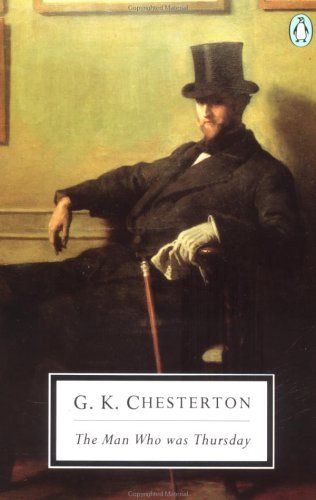
The Man Who Was Thursday by G.K. Chesterton

The Man Who Was ThursdayThe Man Who Is Thursday is the exciting tale of Gabriel Syme, a poet-turned-detective, and his attempts to stop a band of nihilistic terrorists. There’s a sword duel, and some thrilling chases, and at least one good discussion of poetry.

The novel takes a turn for the surreal in its final chapters, in which Syme and his companions realize their elaborate intrigues against the terrorist organization were actually orchestrated by its leader, the enigmatic man known only as Sunday.

Syme and his friends demand to know why Sunday, who is apparently not an evil man, allowed them to suffer so much pain and fear in their pursuit of him. One of Syme’s companions says, with the simplicity of a child, “I wish I knew why I was hurt so much.”

Sunday does not reply.

The silence is broken by the only sincere member of the nihilist organization, who accuses Syme of apathy and ignorance. It is then Syme realizes that his pain qualifies him to refute all accusations. He and his friends suffered by Sunday’s silence. No matter how wretched or tormented their accuser, the agonies they endured bought them the right to reply, “We also have suffered.”

The Chosen by Chaim Potok

The Chosen

The Chosen tells the story of two young Orthodox Jews in New York during the final years of World War II. During a baseball game, Reuven Malter meets a gifted student named Danny Saunders. They become friends, despite their dissimilar cultures and upbringings within the Orthodox Jewish community.

Reuven is astonished to learn Danny’s father, Reb Saunders, speaks to him only during religious discussions. At other times, Reb Saunders says nothing to his son. This cold silence baffles Danny and Reuven. What kind of father refuses to talk with his children?

The novel follows Danny and Reuven as they grow up and progress in their studies. In the wider world, the horrors of the Holocaust are revealed and Jews fight for the restoration of Israel as a nation. At last, as young men, Danny and Reuven learn the truth behind the silence of Reb Saunders.

Reb Saunders knew his son’s intelligence outweighed his concern for others. In order to teach Danny compassion, Reb Saunders distanced himself from his son. Silence, he hoped, would give Danny an understanding of pain and a greater empathy toward other people.

Danny had learned compassion, and so the silence was broken. Speaking of Reb Saunders, Danny tells Reuben at the end of the novel, “We talk now.”

Silence by Shusaku Endo

Silence

This is it: the definitive novel about the silence of God. Heck, the book is even titled Silence. This gloomy masterpiece tells of Sebastião Rodrigues, a Portuguese Jesuit sent to seventeenth-century Japan. He hopes to encourage the tiny population of Japanese Christians, and is willing to die for his mission.

What he doesn’t expect is to watch others die for his mission. When he is captured by Japanese authorities, Rodrigues is not martyred. Instead, he watches as the authorities martyr other Christians because of his religion. Rodrigues expected to suffer for his faith. He did not imagine he would cause others to suffer for it.

In this darkness and brutality, God says nothing. There is only silence.

At last, as Rodrigues recants his faith to spare the lives of other Christians, the image of Christ he is forced to trample seems to break the silence: “Trample! Trample! I more than anyone know of the pain in your foot. Trample! It was to be trampled on by men that I was born into this world. It was to share men’s pain that I carried my cross.”

For me, this is the most powerful answer in these three novels to the question of God’s silence. God may seem silent, but he has shattered the silence once for all with a single word—rather, a single Word: the Word who became flesh and made his dwelling among us. Whatever the sufferings in this world, Jesus shared them. However little God may seem to say to us now, Jesus said plenty.

Do I understand the silence of God? No. I do, however, find great comfort in these books, which offer tentative answers to a great and terrible question.

Zealot: A Christmas Story – Chapter Five: Judas

Chapter Four can be found here.

A vast crowd sat in silence. Apart from the words of the rabbi, the only sounds to be heard were the distant twittering of birds and the occasional grunt as someone shifted position on the warm grass.

“There,” said Simon, poking Judas in the ribs. “The man with gray hair.”

Judas glanced at the stranger. “That fossil? You are joking, Simon.”

Simon nudged Judas again. “I am sure. He has aged, but I could never forget those eyes. He looks like a man who has gazed upon all the sorrows of the world.”

Judas watched the stranger for a minute before tugging on Simon’s sleeve. “You are mistaken, Simon. You may pretend to be a zealot, but you cannot pretend that frail old man is Jehu. I grew up hearing stories of an invisible assassin before whom Romans fell like wheat before the scythe. He is not that man.”

The stranger knelt in the grass, his head bowed, listening with half-closed eyes as the rabbi spoke of God’s mysteries. Once the old man glanced toward Judas.

“Is he drunk?” whispered Judas. “There is no life in his eyes.”

Simon stifled a chuckle. “What did you expect? Jehu has killed more men than any Roman legion has ever done. For more than thirty years, Rome has sought him in vain.”

The rabbi lifted up his voice. “You have heard that it was said, ‘Eye for eye, and tooth for tooth.’ But I tell you, do not resist an evil person.”

Judas watched the stranger, overcome by morbid curiosity, wondering how he respond to such mild, peaceful words. The stranger neither moved nor spoke.

Time passed. As listeners came and went, the stranger knelt like a weathered statue, listening. The sun moved slowly overhead.

Beads of sweat ran down Judas’s face. “Is he almost done?” he muttered, glaring at the rabbi. “We are all hungry. He often speaks of spiritual bread, but he never seems to remember that we also need the worldly kind. My body is about to perish of hunger and leave my spirit homeless.”

“Come to me, all you who are weary and burdened, and I will give you rest,” said the rabbi.

“That sounds good,” grumbled Judas.

“Take my yoke upon you and learn from me, for I am gentle and humble in heart, and you will find rest for your souls.”

“What about our bodies?” whispered Judas. “Will we find rest for them?”

“For my yoke is easy and my burden is light.”

At that moment, Simon gave Judas such a jab in the side that he gasped in pain.

“Simon,” hissed Judas. “You may think you are a zealot, but I refuse to be your target practice.”

“Look at Jehu!” said Simon.

Judas looked. There, kneeling alone in the grass, the most vicious criminal in Judea, the man at whose name Romans cursed and Jews turned pale, wept openly.

Chapter Six can be found here.


Author’s Note:

I am reminded once again that grumpy, snarky characters are much more fun to write than solemn, serious ones. Judas may be kind of a jerk, but I think anyone who has sat through a really long sermon at church can sympathize with his impatience.

Jesus had twelve close disciples, and they were quite an odd bunch. Simon the Zealot presumably hated Rome. Matthew, also called Levi, was a tax collector who probably worked for the Roman authorities. The Gospels tell us the disciples of Jesus sometimes bickered, and I can believe it!

Peter was originally the star of this particular chapter. When he turned out to be such a complainer, I decided Judas Iscariot was a much better fit. After all, disillusionment with the long-awaited Jewish Messiah may have been Judas Iscariot’s motive for betraying Jesus to be executed.

236. My (New) New Year’s Resolutions

A new year is about to dawn, bringing endless opportunities for betterment, growth and self-improvement. (It also brings innumerable chances for making a fool of myself, but I’m trying not to think about that.) I’ve already reflected upon my resolutions for the past year. What about the next? In what ways will Adam strive to be a better person?

Here are my resolutions for 2014.

I will value variety

When I discover something I like, I stick to it until I’m sick of it—whether a song or a snack food or a television show. This is a really bad habit. I exhaust my enjoyment of all kinds of good things, and I make my life boring by doing the same blasted stuff over and over again. Variety is a gift. In the coming year, I intend to appreciate it.

I will live with confidence

If I had a penny for each of my insecurities, I would have enough cash to buy coffee at Starbucks. (That’s saying something.) I waste a lot of time and effort obsessively reassuring myself that I’m doing okay, everything is fine, etc. It’s annoying. I resolve to be confident—or at least to fake confidence—in my day-to-day life.

I will be a people person

As an introvert, I enjoy spending time alone. I think that’s perfectly fine; I scoff at the notion that introverts are broken extroverts. All the same, I can’t help but wonder… how many good things have I lost over the years because I chose to keep to myself? People have brought so much laughter and comfort and joy into my life, and I’d like to think I’ve occasionally brought something good into theirs. Without forsaking my love of peace and solitude, I want to spend more time with people.

I will keep up with this lousy blog

As you’ve probably noticed, I struggle to keep up with this blog. I write many posts—this one, for example—at the last minute, and generally fail to plan ahead. (My lack of self-discipline is surpassed only by my typewriter monkeys’ staggering apathy and laziness.) In the coming year, I’ll be more committed to working on this blog and writing posts in a timely fashion.

I will drink tea and coffee while they’re still hot

By the time I remember to quaff my final cups of morning coffee or my evening cup of tea, they’re usually cold. Seriously, I need to drink hot beverages while they’re, you know, still hot.

I will be consistent and faithful in fulfilling my spiritual commitments

Probably my greatest regret from the past five years is not being more faithful in reading Scripture and spending meaningful time in prayer. More recently, my churchgoing has been pretty inconsistent—my erratic work schedule is largely to blame, but still. My faith is absolutely the most important thing in my life, and I need to prove it in what I do.

Do you have any resolutions for the new year that you’re willing to share? Let us know in the comments!

235. My (Old) New Year’s Resolutions

Twelve months ago, I made some new year’s resolutions. Did I keep them? Was this year of our Lord two thousand thirteen an epoch of marked self-improvement or abysmal failure?

Let’s find out.

These were my resolutions for 2013.

I will be focused, intentional and self-disciplined

For the most part, I kept this resolution. I occasionally wasted time, but less time than in years past. That’s an improvement, right?

I will finish the manuscript for The Wanderings of Lance Eliot

This… this was a resolution I couldn’t keep.

I will not be anxious, insecure or obsessive-compulsive

I’m still working on this one, but I made great progress this year. My anxieties and obsessive-compulsive tendencies were once debilitating struggles; they are now minor nuisances.

I will improve my Spanish

I worked a bit on my Spanish this year, but not as much as I had planned. My preferred method of study, watching cartoons in Spanish, was hindered by my laptop’s less-than-stellar DVD software. I’ll keep working on this one.

I will grow sideburns like the Tenth Doctor’s

The Tenth Doctor from Doctor Who boasted incomparable sideburns. Mine, though not as neat, weren’t bad. I consider this resolution kept, insofar as any mere mortal can keep an impossible resolution like equaling the majesty of the Tenth Doctor’s hairstyle.

I will take steps forward

I… sort of kept this resolution. I’m living in the same place, working the same job and generally living the same life, but I feel a good deal more assured and… well… grown up. For the moment, I believe I am exactly where I need to be.

So much for my old new year’s resolutions. What are my new new year’s resolutions? What are my plans for becoming a stronger, nicer, better person in 2014? Does anyone really care?

Find out next time!

Zealot: A Christmas Story – Chapter Four: Baraz

Chapter Three can be found here.

“I despise this filthy city.”

Having declared his opinion of Jerusalem, the City of God, Baraz coughed into a linen cloth and peered through the window lattice at the dusty streets.

“What misfortune to be struck with fever! As the others meet with King Herod, I am confined to this detestable hovel. The finest inn in all Jerusalem? Bah! A foul place. Are all the powers of heaven conspiring against me?”

Baraz’s servant chose that unfortunate moment to kick open the door and announce, “There is a visitor to see you, Master. He says he wishes to speak with you about the king of the Jews.”

A paroxysm of coughing overtook Baraz’s mocking laughter. As soon as he could speak again, he growled, “Kindly knock before entering. Are you my servant or a savage? I expect such behavior of a Scythian, but not of you.”

“Master, the king of the Jews—”

“I have no wish to speak with anyone about Herod,” grumbled Baraz. “We may seek his advice, but that does not mean we approve of him.”

“Not Herod, Master,” said the servant, fidgeting. “The king of the Jews.”

Baraz sat bolt upright. “Another king? Could it—bid our guest enter. Quickly! Do not stand there catching flies with your mouth, you simpleton! Bring in the visitor.”

The servant ushered in a man in a dark cloak. After one glance at the visitor, Baraz quietly rose from his stool and sidled behind a table.

“I am not here to hurt you,” said the stranger. “Be thankful, old man.”

Baraz instantly forgot his fear. “I am Baraz, a learned scholar of Persia,” he exclaiming, shaking a finger. “How dare you address me so impudently! Who are you to act with such brazen disrespect?”

“I am an armed man, and I will address you however I please.” Steel gleamed on the stranger’s arm as he pulled up a sleeve.

“Perhaps I spoke in haste,” said Baraz. He motioned toward a dining couch across the room. “You may recline. Do you care for wine or figs?”

Baraz studied the visitor as he filled a goblet with wine and sat upright on the couch. He had the grim, gaunt look of one to whom hardship was no stranger. More peculiar was his listless manner. The visitor’s tone was not menacing as he spoke of sicae. He sounded bored, as though threats were merely a formality.

“My servant tells me you have news of the king of the Jews,” said Baraz.

The man sipped his wine. “All Jerusalem buzzes with rumors of the wise men from the East. They follow the brightest star in the heavens, or so the tale goes. That star has perplexed all Herod’s wise men. It appeared suddenly, burning in the sky over Bethlehem.”

“What of the star?” inquired Baraz, feigning ignorance. “It is one star: a bright one, perhaps, but one of many.”

“It is not wise to bait me, old man,” said the visitor, setting down his goblet.

Baraz retreated a little farther behind the table. “I am not baiting you,” he said. “I merely inquire. Of what interest is the star to… a man in your line of work?”

“Freedom is my line of work,” said the stranger. “My name is Jehu, and I am a zealot.”

“I am unfamiliar with the word.”

“A zealot is either a revolutionary or a criminal. It depends upon whom you ask. I fight to free Israel from her oppressors. I am no rabbi, but even I have heard the prophecies about Bethlehem, the birthplace of the Messiah who will bring peace to Israel. When a sign appears in heaven over such a place, I am very much interested.”

Baraz gazed in puzzlement across the table at the visitor. “Why have you come to me? I am Persian. Forgive me—and kindly keep your weapon in your sleeve—but the peace of Israel is hardly my concern.”

“We both seek the Messiah, the true king of the Jews,” said the visitor. “Herod is a brute. The throne of Israel belongs to the Messiah of God. What I do not understand is why you are concerned.”

In spite of his nervousness, Baraz smiled. “Truth is always my concern. Ours is an ignorant world, is it not? Look out the window at the crowds kicking up dust like cattle. Everyone is a fool. You are a fool, Jehu. I am a fool. We are all fools stumbling in the dark. My companions and I are looking for truth, and we hope it may be found in this king of the Jews.”

“I once met a group of shepherds,” said Jehu, and finished his wine.

“Shepherds,” said Baraz, baffled.

“Shepherds,” repeated Jehu. “About two years ago in Bethlehem. They told me angels had proclaimed the birth of the Messiah: a baby in a manger. It was insanity, but there is something I have never forgotten.”

“What is that?”

“There was a baby in a manger that night. I saw him.”

Baraz could restrain himself no longer. “Jehu, why have you come? Is it upon this baby you have set your hopes? Do you wish for me to find this child, this boy in Bethlehem, to see whether he is the Messiah?”

It was at that moment Baraz saw tears on Jehu’s cheeks.

“I stab and slit and strangle,” said Jehu. “To what end? Rome still grinds Israel into the dust. My efforts are of no use. I am a man trying to hold back the tide of the sea. My soul is stained with blood, old man.”

“Dare I suggest taking up another profession?”

“God forgive me, I cannot stop. I must fight until Israel is free, but I cannot free her. Only the Messiah can save Israel. You are searching for him, and I have come today with one purpose.”

Baraz leaned forward. “Yes?”

“Go to Bethlehem, old man. Find the child in the manger. Help him, so that he can someday rescue Israel. As long as Israel is a slave, so am I.”

“We will find him,” said Baraz.

Without a word, Jehu set down his goblet and left.

Baraz coughed into his cloth and folded it meditatively. “We are nearing the end of our journey, I think,” he murmured. “I do not know whether the Messiah awaits us in Bethlehem, but any place is better than this vile Jerusalem!”

Chapter Five can be found here.


Author’s Note:

Not much is known about the Wise Men, so there’s lots of speculation. They fascinate me. The biblical narrative of Christ’s birth moves along smoothly, and then mysterious men arrive from “the East” in search of a king destined to rule a nation that no longer exists. In the end they deliver their gifts to Jesus, apparently oblivious to the fact that the king of the Jews is the child of peasants. Am I the only one who thinks that’s kind of weird?

Incidentally, grumpy old men are really fun to write. (I’m not much good at serious dialogue; I prefer characters with a sense of humor.) I think Baraz is my favorite character so far.

What Makes Christmas Special

I was planning to write a new post, but my typewriter monkeys drank too much eggnog last night and passed out on the floor of my apartment. Since they’re not awake to type out a new post, here’s one from last year about what makes Christmas special. Happy Christmas! Stay away from the eggnog!

Christmas.

What comes to your mind? Snow? Colored lights? Gift cards?

When I think of Christmas, what comes to my mind are palm trees, beaches at twilight and dusty houses built of cinder blocks.

Nothing says Christmas like a beach at twilight.

Nothing says Christmas like a beach at twilight.

As a missionary kid in Ecuador, I spent many Christmas vacations with my family at the beach. We’d pile into our car, crank up Adventures in Odyssey on our CD player and drive for hours: descending from the heights of the Andes, passing banana plantations, stopping at derelict gas stations for fuel and ice cream, winding among low hills and finally arriving at the beach.

Towns and villages are scattered across the Ecuadorian coast. Most of them are small, dirty, unimpressive places. Ecuador is a poor country. In December, however, these little communities are brightened with fake Christmas trees and cheap colored lights.

Not relevant to this blog post, but adorable.

What really sticks in my memory is the way people celebrated. My dad and I once passed a merry gathering of children in a little town on Christmas Eve. Many were barefooted; most were dirty; nearly everyone was smiling. It was a scene Charles Dickens would have been proud to write.

In Ecuador, Christmas is a time for celebration. It’s a time for fireworks, family get-togethers and three-liter bottles of Coca-Cola. (Yeah, we’ve got those in Ecuador. Be jealous, Americans.) It’s a time for celebration.

Of course, in many ways, Christmas in Ecuador isn’t much different from Christmas in the United States of America. There are the same silly commercials. The same packed shopping malls. The same frenzied media trying to squeeze as much money as they can out of the holiday season.

All the same, when I see the extravagant displays of holiday decorations around my current home in Indiana, I miss the cinderblock houses on the Ecuadorian coast with tacky tinsel in the windows. The dusty Nativity sets in the corners of living rooms. The cheap ornaments hung from two-foot Christmas trees. The flimsy plastic cups of Coca-Cola.

Most of all, I miss the joy.

What makes the holiday special isn’t the gifts or the decorations or the music or the food. Even the Grinch understands (eventually) that Christmas means more than stuff. Joy and celebration and being together with loved ones are what make Christmas special. The other stuff is nice, of course. The holiday stuff is like pretty wrapping paper and shiny ribbons covering the gifts under the Christmas tree.

In the end, though, who wants just the ribbons and wrapping paper without the presents?

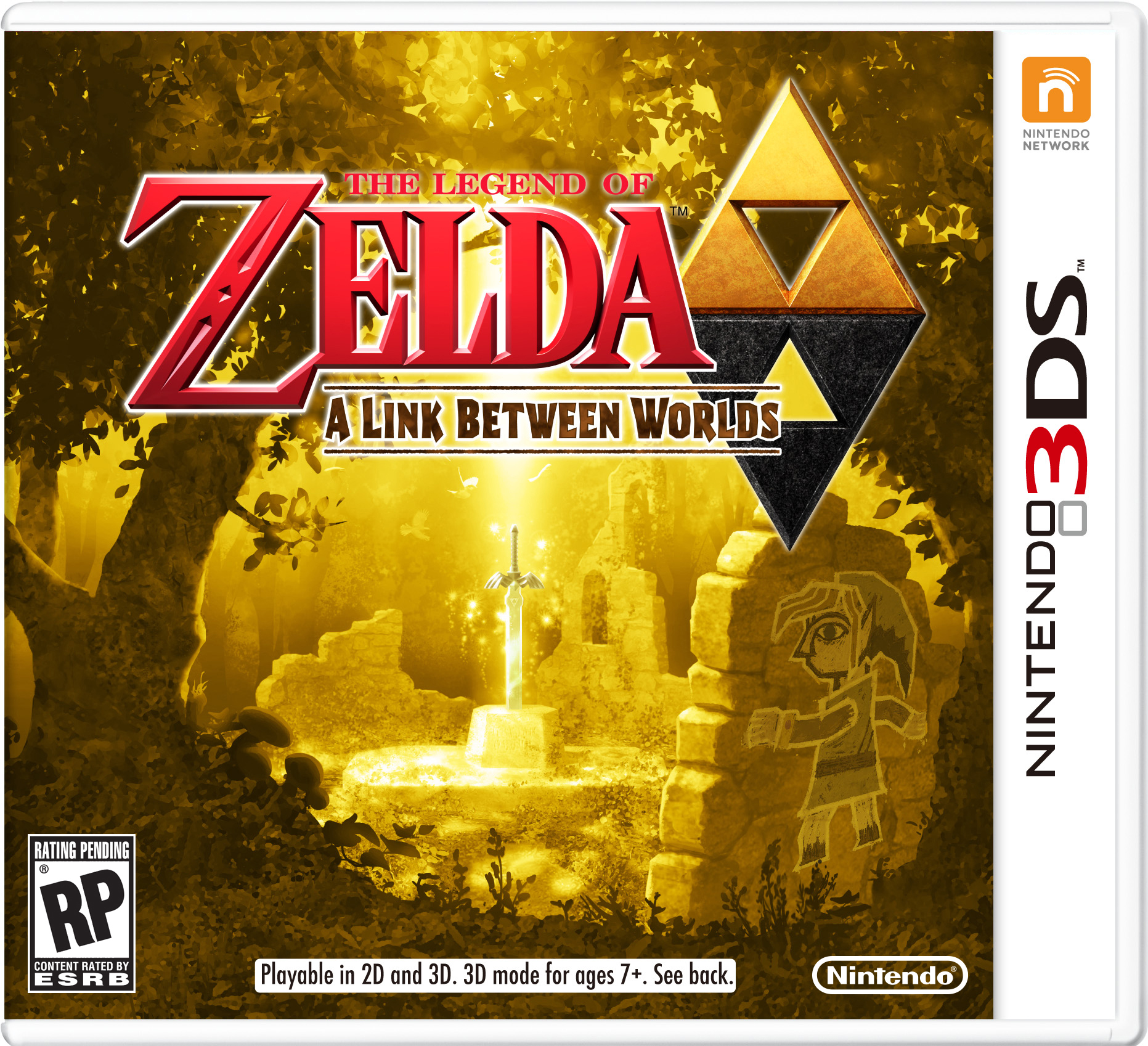
234. TMTF Reviews: The Legend of Zelda – A Link Between Worlds

This blog now reviews video games, because Zelda. I believe no further explanation is needed.

Well, I suppose a little explanation won’t hurt. The Legend of Zelda is a series of games by Nintendo in which a green-clad hero named Link explores the fantasy world of Hyrule: fighting monsters, solving puzzles, conquering dungeons and occasionally rescuing princesses. The Zelda series, which spans over twenty-five years and more than a dozen games, is possibly the most critically-acclaimed in the video game industry. Zelda games are generally classics at worst, and masterpieces at best.

(Except for… those games. We don’t speak of them.)

The Legend of Zelda: A Link Between Worlds for the Nintendo 3DS is the first new Zelda game in a couple of years. As a devoted fan of Zelda games, I was… not very excited.

A Link Between Worlds is an indirect sequel to The Legend of Zelda: A Link to the Past, a game released for the Super Nintendo Entertainment System more than twenty years ago. Even though the game is an undisputed masterpiece, I didn’t enjoy A Link to the Past as much as, well, pretty much any other game in the Zelda series.

I expected A Link Between Worlds to cash in on the longstanding popularity of A Link to the Past. I didn’t like the new game’s art style. What concerned me most of all were the game’s two biggest innovations: a new gameplay mechanic that seemed like a lame gimmick, and a largely nonlinear structure.

In short, I expected not to be impressed by A Link Between Worlds. I knew it would be a good game—heck, it’s Zelda, and Zelda never disappoints—but my expectations were (relatively) low.

How wrong I was. How very, very wrong.

A Link Between Worlds

In all the best possible ways, The Legend of Zelda: A Link Between Worlds feels like a very old game. There are no overbearing tutorials (a problem in recent Zelda games); rather, the player learns by doing, which is much more fun than being told what to do. A Link Between Worlds, like the earliest Zelda games, also takes a minimalistic approach to story. As much as I love a complex plot and nuanced characters, I’ll be the first to admit the game’s narrative simplicity works in its favor.

The game’s production values—music, graphics and all that sort of thing—are top-notch. Advanced graphics have never been Nintendo’s strong suit, but the game’s visuals have a charming storybook quality to them. (They’re especially lovely when viewed in 3D.) As for the music, well, Zelda music has always been superb. This game is no exception.

The basic gameplay in A Link Between Worlds is typically effective Zelda stuff: walk, swing sword, raise shield, etc. This game adds the usual oddball assortment of weapons and tools—bombs, boomerangs, magic rods and so on—but with a twist: they are now rented and bought.

See, there’s this longstanding Zelda tradition of each dungeon containing a tool of some kind, along with puzzles that can only be solved with that tool. It’s kind of a lock-and-key dynamic.

This game throws that tradition out the window. Almost every weapon, tool and item can be rented or bought right from the start of the game. I was skeptical at first of such a system—and frankly, I missed the joy of discovering each dungeon’s new tool—but it worked pretty well.

Since most tools are available to the player from the beginning, dungeons no longer have to be completed in any particular order. The player, after a certain point in the game, is given a map marked with a bunch of red Xs and told, “Those are dungeons. Have fun!” Now, I don’t mind linearity in games. There’s satisfaction in completing linear objectives, and I find it almost reassuring to have a set path to follow. Having such freedom in A Link Between Worlds, however, was awesome. I could go anywhere. With two kingdoms to explore—one light, one dark—that’s a lot of freedom.

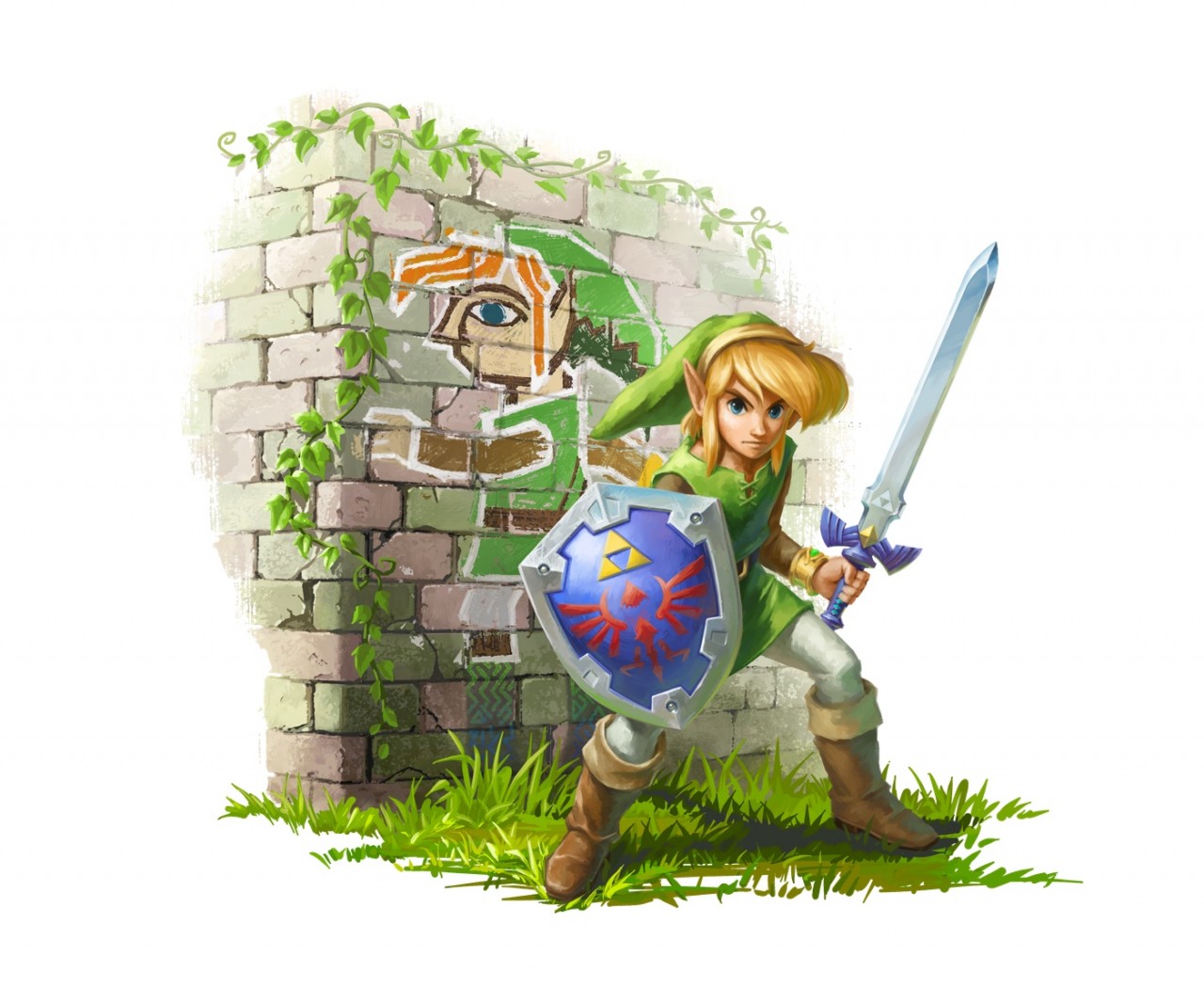
Heck, I could even switch dimensions. Players of A Link Between Worlds can merge into flat surfaces to become two-dimensional paintings.

Link with PaintingThis gimmick seemed really lame at first. Becoming a painting? Bah! Boring! Upon actually trying it, however, I realized this gameplay mechanic is brilliant. As painting, players can move around, pop in and out of walls and reach all kinds of unexpected places. Like the portals in the Portal games, this mechanic totally changed my perspective. It’s even used to switch universes; appropriately to the game’s title, it serves as a literal link between worlds.

The dungeons in A Link Between Worlds are, like all Zelda dungeons, excellent: packed with puzzles and monsters and treasures, with a boss (i.e. a uniquely challenging enemy) at the end.

This is not a game for players who hope simply to hack and slash their way to victory. No puzzle is painfully difficult, and there’s an unobtrusive hint system, but most players will do much more thinking than fighting.

And, of course, there’s the usual slew of minigames, side quests and stuff to collect. I should also mention how easy the map and item interfaces are to use; while buttons are used for most gameplay, the 3DS touchscreen is utilized for maps and menus.

Ironically, considering how low my expectations were at first for A Link Between Worlds, I can’t find much to complain about. The game seems just a bit short. I would have liked to have seen the setting and backstory fleshed out more, and the plot lacked the emotional oomph of other Zelda games. This game is one to be remembered for the gameplay, not the story or characters.

The Legend of Zelda: A Link Between Worlds is a great game—not merely a good game, but a truly great one. My only lasting regrets are that it’s over so soon, and I shall have to wait at least a couple of years for the next Zelda.