160. The Wonderful Weirdness of Life

If I were a preacher, I would use the geekiest sermon illustrations Christendom has ever known.

I once joked about using the Millennium Falcon as the basis for a sermon. As a pastor, I probably wouldn’t go that far… but then I might. I’m sure there are parallels between Han Solo’s dilapidated starship and the profound truths of Christianity. I just haven’t found any. At least not yet.

I was recently reminded of a great lesson by Doctor Who. The Doctor has become one of my favorite fictional characters, surpassing even literary greats like Anne Shirley and Bertie Wooster in my esteem.

One of my favorite things about the Doctor is the way he responds to commonplace things—humans, for example—with amazement.

“Look at these people, these human beings,” he exclaims. “Consider their potential! From the day they arrive on the planet, blinking, step into the sun, there is more to see than can ever be seen, more to do than—no, hold on. Sorry, that’s The Lion King.”

Pop culture allusions aside, the point is made: humans are pretty darn awesome.

At one point, the Doctor runs into a research team investigating an unprecedented phenomenon. Their curiosity delights him. “So when it comes right down to it, why did you come here?” he inquires. “Why did you that? Why? I’ll tell you why—because it was there! Brilliant! Excuse me,” he adds, beaming. “Just stand there, because I’m going to hug you.”

In his travels through space and time, the Doctor never fails to appreciate how weird and wonderful they are. Plain old people astound him no less than the greatest marvels of the universe.

Like the Doctor, G.K. Chesterton looked at ordinary things and pronounced them extraordinary. “I do not generally agree with those who find rain depressing,” he wrote. “A shower-bath is not depressing; it is rather startling. And if it is exciting when a man throws a pail of water over you, why should it not also be exciting when the gods throw many pails?”

Michael Card, my favorite songwriter, has this to add: “If you must see a miracle, then just look in the mirror!”

Too often, I live without thinking. I follow a mechanical routine of habits and repetitions without pausing to consider how brilliantly strange my life has been—and is.

With my computer and its microphone, I can carry on conversations with people thousands of miles away. With the flip of a switch or the touch of a button, I can summon light, heat or water instantly to my apartment. With a digital camera, I can create near-perfect images of anything: pictures that are stored securely in a tiny chip of metal and plastic.

My life is weird in ten thousand glorious ways—and I take it for granted. I shouldn’t. Thoughtless repetition leads to ennui, ennui to discontent and discontent to discouragement, ungratefulness and all kinds of nasty things.

How much better it is to appreciate the wonder of simply being alive!

149. Why I Watch Cartoons

As many of my readers have probably noticed, I like cartoons.

Well, I like some cartoons. Others I would watch only on pain of death, and perhaps not even then. (I’m looking at you, SpongeBob SquarePants.) Besides loving many animated films—for example, classic Disney movies and everything directed by Hayao Miyazaki—I enjoy television shows produced for kids.

I also like literature, especially the classics. Explosions? Car chases? Sultry romances? Bah! Humbug! To blazes with such nonsense! Give me meaningful themes, compelling characterization and well-crafted plots.

Thus I decided to take no fewer than three literature classes in one semester when I was in college. (Where was Admiral Ackbar when I needed him?) For months, I was hammered by grim novels like Silence, a bleak story about the silence of GodOne Hundred Years of Solitude, a fantastical history of a disturbing, sordid society; The Penelopiad, a cynical postmodern perspective on The Odyssey; and several more depressing books.

It was not a happy semester.

Some notable literature is lighthearted—I thank God for cheerful authors like P.G. Wodehouse—but the good stuff is mostly depressing. Even stories by humorists like Mark Twain and James Thurber have tragic undertones. Thurber once wrote, “To call such persons ‘humorists,’ a loose-fitting and ugly word, is to miss the nature of their dilemma and the dilemma of their nature. The little wheels of their invention are set in motion by the damp hand of melancholy.”

I like cartoons because they’re innocent, bright and funny, and they’re unapologetic about it.

Do cartoons give a balanced view of the world? Of course not—but then, neither does much of the best literature. Cartoons remind me that the world can be a pleasant, cheerful place, even as literature reminds me that it can be a dreadful, hopeless one.

For me, cartoons are a kind of escapism.

Is escapism wrong? When balanced with realism, I don’t believe it is. To quote J.R.R. Tolkien, who is awesome, “I do not accept the tone of scorn or pity with which ‘Escape’ is now so often used. Why should a man be scorned if, finding himself in prison, he tries to get out and go home? Or if he cannot do so, he thinks and talks about other topics than jailers and prison-walls?”

A Farewell to Arms tells me there is suffering in the world. My Little Pony: Friendship Is Magic tells me there is good in it. The Great Gatsby tells me happiness can’t be bought with money or popularity. Phineas and Ferb tells me happiness can be found by two kids sitting in the shade of a tree on a summer day. Animal Farm tells me the good guys sometimes lose. Avatar: The Last Airbender tells me the good guys sometimes win.

The other reason I watch cartoons is because, well, they’re fun to watch.

139. The Wanderer-Hero

I’ve been watching Doctor Who. Besides kindling a strong desire in my heart to own a fez, the show has reminded me of my very favorite character archetype: a rare, strange and wonderful kind of character, comic and tragic, plain and mysterious—the Wanderer-Hero.

(I should wear a fez. Fezzes are cool.)

The Wanderer-Hero is my favorite kind of character in fiction, and a very rare one. I can think of only four characters that fit the description perfectly: the Doctor from Doctor Who, Gandalf from The Lord of the Rings, Vash the Stampede from Trigun and Father Brown from the stories by G.K. Chesterton.

These four—a time-traveling alien, a wizard, a gunslinger and a priest—have hardly anything in common, or so it seems at first glance. They actually share quite a number of traits, all of which characterize the archetype of the Wanderer-Hero.

For fun, let’s take a look at just a few.

The Wanderer-Hero wanders

There is no home for the Wanderer-Hero, whose destiny is to roam.

The Doctor travels in time and space with no home but his TARDIS, a spaceship and time machine. Gandalf wanders across Middle Earth. Vash roams the deserts of Gunsmoke. Even Father Brown, who supposedly lives in Essex and later in London, spends a surprising amount of time rambling throughout England, stumbling onto crime scenes wherever he goes.

The Wanderer-Hero is comic

Outwardly, the Wanderer-Hero is cheerful, witty or clever.

When confronted with deadly peril, the Doctor’s first reaction is to make a joke. Gandalf has a wry sense of humor. Vash makes a fool of himself at every opportunity; for example, while bravely defending a town from bandits, he wears a trash can lid for a hat. Father Brown possesses a gentle wit and a comically unorthodox manner of solving mysteries.

The Wanderer-Hero is tragic

Inwardly, the Wanderer-Hero endures terrible agonies.

The Doctor suffers from deep loneliness, guilt and self-doubt, besides the sorrow of being the only surviving member of his race. Gandalf fights a long, lonely, thankless battle against a nearly invincible enemy. Wherever Vash goes, innocent people die; these tragedies tear him apart. Father Brown admits to solving crimes by possessing a profound, painful understanding of human wickedness.

The Wanderer-Hero is more than human

In some way, the Wanderer-Hero is superhuman.

The Doctor is a Time Lord, the last survivor of an ancient race of extraterrestrials. Gandalf is one of the Maiar: divine beings sent into Middle Earth in the guise of mortals. Vash is a Plant, a humanoid creature possessing incredible power. Father Brown is only a human being, but his gentleness, wisdom and compassion are almost angelic.

The Wanderer-Hero is old

The courage of the Wanderer-Hero is balanced by the wisdom of age.

The Doctor is roughly nine hundred and nine years old. Gandalf spends centuries wandering Middle Earth. Vash is one hundred thirty-one. Father Brown is the only one whose age isn’t numbered in the hundreds, and even he gives the impression of being an ancient saint.

The Wanderer-Hero always happens to be in the right place at the right time

The character is called the Wanderer-Hero, after all.

Quite by accident, the Doctor always finds himself in exactly the right time and place to avert a catastrophe. Gandalf regularly appears just in time to rescue his companions. Vash helps people wherever he goes. By solving every crime he encounters, Father Brown saves the day—and sometimes the criminal.

I suppose the reason I like the Wanderer-Hero so much is that the character is a paradox: funny and sad, silly and wise, plain and mysterious, ordinary and extraordinary. The Wanderer-Hero has a little bit of everything.

Who is your favorite Wanderer-Hero? Should I acquire a fez? Let us know in the comments!

136. Vampires

A few days ago, I received a call from my employer asking me to work the overnight shift for a week. I have become a creature of the night, sleeping away the daylight hours and awaking in the evening to revel in my reign of darkness—not unlike a vampire, albeit one who prefers coffee to blood.

As I was working a couple of nights ago, I stumbled upon a vampire picture book belonging to one of the men with whom I work. Early yesterday morning, a coworker rhapsodized about the new Twilight movie.

Vampires are everywhere, and there are so many kinds. Action movies star leather-clad vampires with silver pistols and cool shades. The Twilight series features Edward “Sparkles” Cullen, a pale, irritating excuse for a creature of the night. The novels of Anne Rice depict vampires whose bloody lives are marked by moral quandaries and existential crises, and classics like Bram Stoker’s Dracula give a more traditional interpretation of America’s favorite monster.

Why are vampires so popular? I think part of it must be that vampires are tragic. They live without hope, doomed to survive by draining away the lives of others, hiding from the day, lurking alone in the cold, dark night, unable to die any death but a violent one, forever separated from love and light and happiness.

We sympathize with vampires, especially the ones who seek redemption. Edward from the Twilight series is engaging—well, tolerable—well, not quite one hundred percent awful—because he clings to his humanity. Vampire Hunter D, a character in Japanese media, travels alone, protecting humans from his own kind, never asking for gratitude or recognition.

Characters like these are compelling. Although they’re cursed with the destiny of villains, they choose instead to be heroes. They persevere, alone and misunderstood.

Of course, vampires can also be great bad guys. There’s something truly horrible about a creature that drinks blood, and this brutal bloodlust is often balanced by a cold, refined politeness. A vampire can be both a monster and a gentleman. That duality makes vampires exceptionally sinister villains.

The problem with vampires is that they’ve been done to death. (No pun intended.) Like zombies, vampires are ubiquitous. They’ve lost their novelty. When I see a novel or film or television show featuring vampires, my first response is to think, “Dash it, not another one.”

As I hinted in a recent creative piece, “A Portrait of the Artist as a Performing Monkey,” I dislike most vampire fiction. The genre has become stale, and I detest the violence, sexual perversity and muddy morality often associated with vampires. I miss old-fashioned stories like Dracula, in which evil evokes disgust and good inspires hope.

I must work a few more overnight shifts, and then I shall no longer have to be a vampire. I look forward to seeing the sun again.

101. Magical Rainbow Ponies?

When I took time off from this blog last week, I suddenly had some free time on my hands. I spent some of it researching the unprecedented rise of the brony fandom—to wit, the inexplicable attraction of young men to a television show produced for girls, My Little Pony: Friendship Is Magic.

I felt it was my duty to investigate this enigma. For science.

We begin with the visuals. My Little Pony: Friendship Is Magic uses a vivid color palette. Although the animation looks suspiciously like something made with Adobe Flash, HomestarRunner.com-style, it’s expressive and charming.

The show follows the adventures of six ponies: Twilight Sparkle, Rarity, Pinkie Pie, Rainbow Dash, Fluttershy and Applejack.

(I can only suppose Applejack is named for the liquor—an odd choice for a kids’ show.)

Following my investigations, I think I may know why magical rainbow ponies are so popular with men in their twenties and thirties.

There are at least three reasons.

First, My Little Pony: Friendship Is Magic is surprisingly funny in a goofy, geeky, adorably cheesy sort of way. The writing is good, and the show is very self-aware. It never strays too far into ridiculous sentimentality.

Second, the show has become an Internet meme, and it’s therefore socially acceptable for men to enjoy a show about magical rainbow ponies.

Third, the show is pleasant. There are disagreements and arguments and tragic ironies, but things always work out. People—well, ponies—get hurt, but hurts are healed. Lessons are learned. Friends are reconciled. The show’s moral values are remarkably strong.

C.S. Lewis wrote, “A mature palate will probably not much care for crème de menthe: but it ought still to enjoy bread and butter and honey.” Grownups can enjoy complicated dramas or sophisticated tragedies, but there’s no reason they can’t also enjoy lighthearted stories about magical rainbow ponies.

I think a lot of guys are tired of living in a cynical world. There are tragedies on the news every day. Films, novels, video games and music are full of cursing, violence, sexual perversity and bad attitudes. People use these media anyway, but I think there’s still a longing for things like simplicity, goodness, honesty and loyalty.

Guys watch Saw and play God of War and listen to Metallica, but some of them probably miss those Saturday morning cartoons they watched as kids. Shows like My Little Pony: Friendship Is Magic and Phineas and Ferb (another hit with older guys) evoke nostalgia, balancing sentimentality with enough edgy humor to be, well, not lame.

I think that’s why magical rainbow ponies have become so popular with the menfolk. There could be deeper, darker reasons, but I doubt it.

Now I’m going to watch some cartoons. For science.

82. About Writing: Rhythm

Before I share my thoughts about rhythm, here are a few words from Phineas Flynn and Ferb Fletcher. (They’re mostly from Phineas. Ferb doesn’t talk much.)

All right, it’s important to have a sense of rhythm. But what does that mean for writers?

It’s a mistake to use the same kinds of sentences. A paragraph full of identical sentence structures is boring. Sentences should be varied. Sentences should not become monotonous. That kind of writing sounds boring and choppy. That kind of writing is worse if consecutive sentences begin or end with the same words because it sounds boring and choppy.

That last paragraph was, as one of my brothers would say, an abomination. It committed pretty much all the transgressions against which it warned. The structures of its sentences were similar, and it repeated certain phrases. It sounded—forgive the repetition—boring and choppy.

It’s easy to use the same sentence structures over and over. In fact, I do it all the time without realizing it. Writers need to vary the rhythm of their writing, and deliberately use different kinds of sentences.

I won’t go into the technical details of dependent and independent clauses, compound sentences, complex sentences or any of those other ghastly things.

Let us instead learn by doing. Here’s a lousy paragraph, one that ain’t got rhythm.

Uproariously, the typewriter monkeys chattered as Adam dictated a blog post to them. He told them to listen, but they wouldn’t. He shouted, but they only yanked the ribbons out of their typewriters. Clutching his head, Adam went into the kitchen to make tea. Unhappily, he returned and surveyed the devastation.

We have two basic sentence structures repeated in this paragraph: Adverb or adverbial phrase, blah blah blah and Blah blah blah, but blah blah blah.

(A real professional would use proper grammatical terms to describe these sentence structures, but I ain’t real professional.)

Let us rewrite the paragraph with a little more rhythm.

The typewriter monkeys chattered uproariously as Adam dictated a blog post to them. Although he told them to listen, they wouldn’t. He shouted, but they only yanked the ribbons out of their typewriters. Adam went into the kitchen to make some tea, clutching his head, and returned to survey the devastation unhappily.

Behold! With a few words changed and a few phrases shifted around, the paragraph has gone from being monotonous to readable.

Rhythm is important, and syntax—the order in which words are arranged—matters. (Syntax is not a tax extorted from sinners, to quote one of my high school teachers.) Writing that ain’t got rhythm isn’t nearly as powerful as writing that has it.

65. TMTF’s Top Ten Fictional Clergy

Deep within every blogger’s heart is a strong, almost irresistible compulsion to make a list of the top ten of something.

This means that practically every possible top ten list has already been made. This is a problem, since I, being but a mortal man, am not exempt from the desire to feature a top ten list of some kind on TMTF.

Then it occurred to me a few days ago that there are many notable, unusual or simply awesome priests, ministers, chaplains, monks, nuns and clergymen in fiction, many of whom deserve notice and none of whom (to the best of my knowledge) are commonly featured on top ten lists.

It is, therefore, with pride and satisfaction that TMTF repairs this deficiency by presenting…

The TMTF List of Top Ten Fictional Clergy!

Note that when pictures of the characters themselves are not available, pictures of the author have been featured instead.

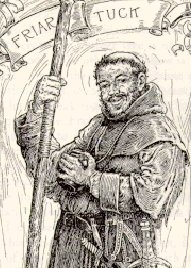
10. Friar Tuck (Ivanhoe)

Friar Tuck

He may be a sham and a scoundrel, but I can’t help but like Friar Tuck: a trusted companion of Robin Hood, a formidable fighter and an unapologetic drinker. His reputation as a man of the cloth is questionable, but his cheerful disregard for his priestly duties is somewhat endearing all the same.

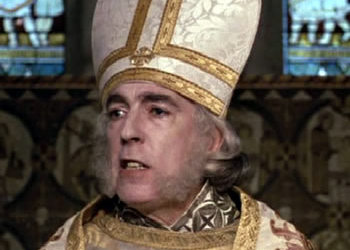
9. The Impressive Clergyman (The Princess Bride)
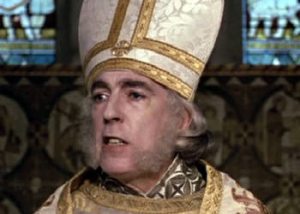
The Impressive Clergyman

“Marriage is what brings us together today.” That’s all I have to say.

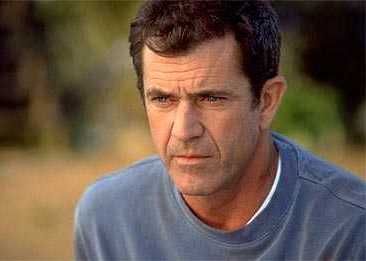
8. Graham Hess (Signs)
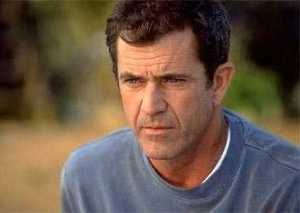
Graham Hess

For a movie about aliens, M. Night Shyamalan’s Signs gives quite a touching picture of a man torn between faith and cynicism. After his wife dies in a car accident, Graham resigns from the ministry and becomes an agnostic. He spends much of the film struggling with doubt, and the rest of the film defending his family from alien invaders: a courageous man on both fronts.

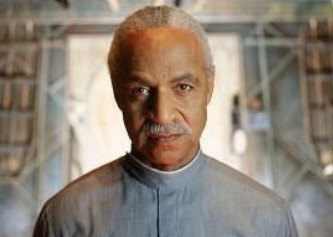
7. Shepherd Book (Firefly)
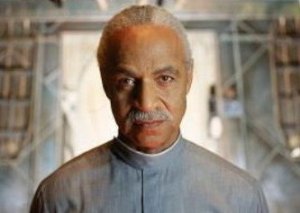
Shepherd Book

Firefly is a show about criminals, rogues and scoundrels. The cast includes a smuggler, a trigger-happy gunman, a wanted criminal, a lunatic and a classy prostitute. In the midst of these (surprisingly charming and likable) rogues is a kindly, compassionate, grandfatherly gentleman known as Shepherd Book. While one or two of his theological beliefs are slightly suspect, he may be the most genuinely Christ-like character I’ve seen in any television series of the last decade.

6. Dinah Morris (Adam Bede)
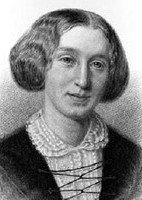
George Eliot

For those who have wondered, Adam Bede is not a cheerful book. It’s a novel about vanity and betrayal, and several of its characters end up dead or disillusioned. The gloominess of the novel makes Dinah shine all the brighter. Apart from demonstrating great selflessness and compassion, she is patient with even the characters whom the reader detests: a remarkable feat.

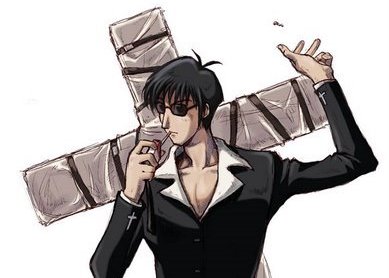
5. Nicholas D. Wolfwood (Trigun)

Nicholas D. Wolfwood

One thing must be made clear from the beginning: Nicholas D. Wolfwood has questionable morals. His morals are so questionable, in fact, that even other characters object to them. Nevertheless, his character is a fantastic depiction of a man trying to do the right thing the wrong way. He believes in absolute justice—he who lives by the sword must die by the sword—and can’t understand his friend Vash, who somehow solves crises without killing anyone. Vash and Wolfwood are easily two of the most complex and compelling characters I’ve seen on television.

4. Sister Carlotta (Ender’s Shadow)

dnews

Compassionate, patient and delightfully sarcastic, Sister Carlotta rescues orphans and street kids in her search for a child genius to defend Earth from a potential extraterrestrial invasion. She demonstrates great patience toward the children in her care and no patience whatsoever toward her haughty superiors—one of whom complains, “I didn’t know nuns were allowed to be sarcastic.” Like Christ himself, Sister Carlotta is kind, gentle and unafraid to speak out against foolishness.

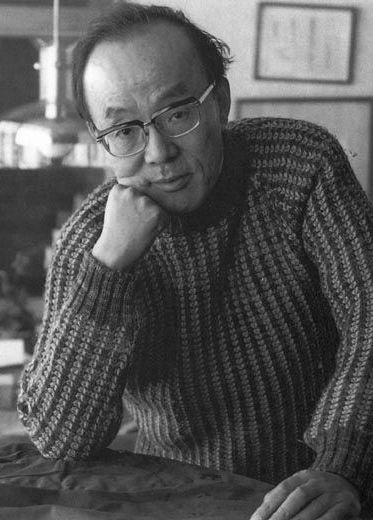
3. Sebastião Rodrigues (Silence)

Shusaku Endo

When Sebastião Rodrigues, a Portuguese priest, travels to medieval Japan to learn the truth behind the alleged apostasy of another priest, he finds himself in a crisis unlike anything he could even have imagined. He was prepared to be martyred for the sake of Christ. He wasn’t prepared to watch as Japanese Christians were martyred instead. Rodrigues is given a choice: renounce his faith or watch as his brethren are slaughtered. Desperate for divine guidance, he is instead tormented by the silence of God. Rodrigues finds himself asking, as another great Priest once asked, “My God, my God, why have you forsaken me?” Sebastião Rodrigues ranks high on this list for the depth of his character and his earnest desire to help others at any cost.

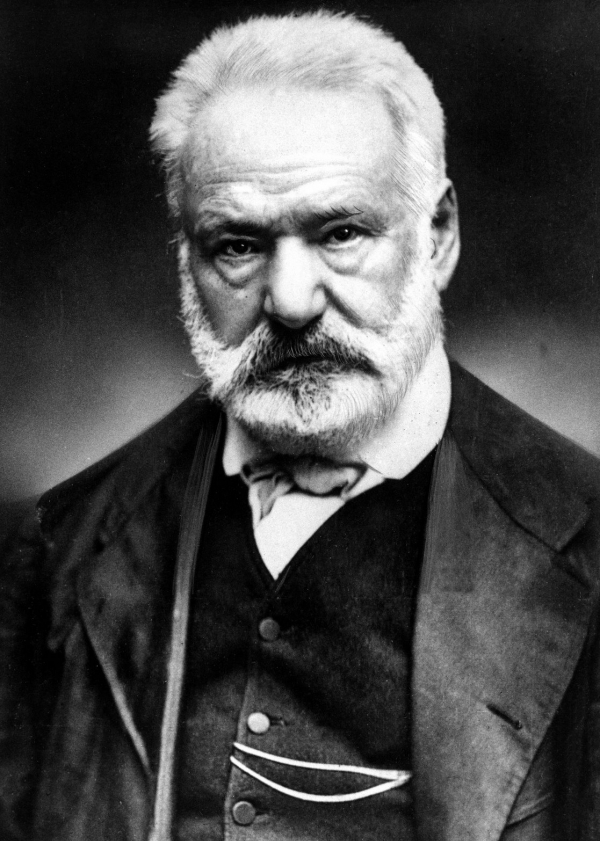
2. Charles François-Bienvenu Myriel (Les Misérables)
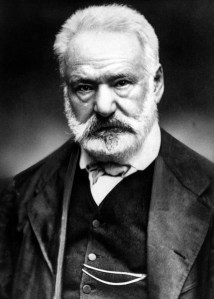
Victor Hugo

Monsieur Myriel, the Bishop of Digne, once goes on a journey to visit a remote village because, he explains, its residents “need someone occasionally to tell them of the goodness of God.” He is warned that dangerous bandits roam the area; if he travels toward the village, he may meet them. “True,” says the bishop. “I am thinking of that. You are right. I may meet them. They too must need some one to tell them of the goodness of God.” Unlike the pompous, self-righteous bishops of his day, the Bishop of Digne is humble, selfless, kind, patient and generous. It is a single selfless action of the Bishop of Digne that saves Jean Valjean, a disillusioned convict and the protagonist of Les Misérables, from a bitter life of crime.

1. Father Brown (The Innocence of Father Brown)

Father Brown

Number one on this list is my all-time favorite fictional character. Father Brown is a short, clumsy, disheveled Roman Catholic priest with a blank face, a compassionate heart and a keen understanding of human nature. He’s also a brilliant detective, albeit an apologetic one. Most remarkable is his concern for criminals. Sherlock Holmes throws his archenemy over a precipice to a violent death. Father Brown, by contrast, persuades his archenemy to give up crime and become a private investigator; they later become close friends. As a detective, as a priest and as a fictional character, Father Brown is amazing.

What notable, unusual or simply awesome fictional clergy do you think should be on this list? Let us know in the comments!

16. Voice Acting

I have a lot of odd obsessions, such as my fascination for video game music and love of British literature. One of my peculiar passions is voice acting.

For those unfamiliar with this noble profession, voice acting is the art of playing a role through the voice and the voice alone. A voice actor can’t rely on her own expression or body language; every nuance of her character must be represented by her voice.

The fun thing about voice acting is that a really good voice actor can make himself sound like pretty much anybody. Listening for familiar voice actors in movies and television shows is sort of like playing an audio version of Where’s Waldo? Familiar voice actors turn up in the most unexpected places, and there’s a thrill in hearing the voice of, say, Howl in Howl’s Moving Castle and crying out, “Aha! That’s the guy who plays Batman!”

There was a time in my life when my ambition was to become a professional voice actor. This glorious dream lasted about two weeks before it was brutally crushed by two realizations.

First was the fact that voice acting is a difficult field that’s already full to bursting with talented people. Second was the sad truth that most voice actors can’t pick and choose their projects. If I became a voice actor and could actually find work, I’d probably end up playing a minor character on some cartoon about talking ponies or—if I were truly fortunate—a dub of some obscure anime.

So in the end I exchanged my dream of voice acting for a sensible plan to teach English and write novels.

All the same, I sometimes wonder what might have been.

6. Five Books that Should Be Made into Movies

Stephen Spielberg and Peter Jackson are currently collaborating on a film adaptation of The Adventures of Tintin, perhaps the greatest graphic novel series ever. Jackson is also adapting The Hobbit, the amazing prequel to The Lord of the Rings, into not one but two movies.

(Fun fact: Andy Serkis, best known for his performance as Gollum, will star in both the Tintin and the Hobbit films as a drunken sea captain and the aforesaid slimy creature, respectively.)

With these excellent books receiving their long-overdue transition to movie screens, I couldn’t help but wonder what other books would make good films. Here are five novels that would make, in my humble and totally biased judgment, amazing movies.

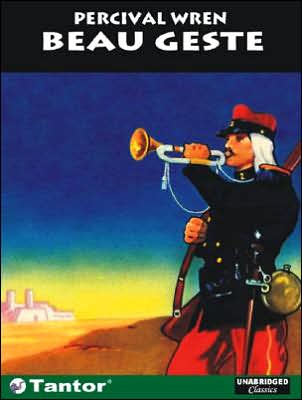
5. Beau Geste by Percival Christopher Wren

If you’ve ever read Peanuts, you may be familiar with Snoopy’s occasional daydream that he’s a member of the French Foreign Legion leading his troop, a line of little yellow birds, through the desert in search of Fort Zinderneuf.

This is a reference to Beau Geste, a classic adventure novel. It tells the story of three brothers who join the French Foreign Legion and embark on a quest involving an inexplicable mystery, a priceless gem, a terrifying battle and two silly Americans. Several film adaptations were made of Beau Geste many years ago, and it’s time for its triumphant return to cinema.

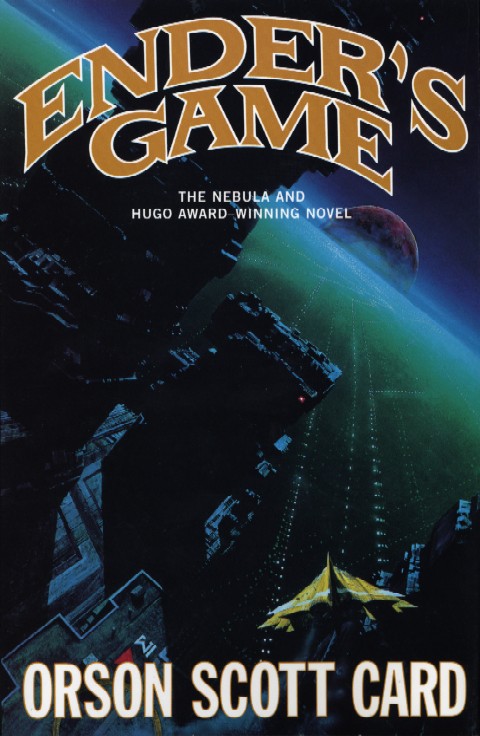
4. Ender’s Game by Orson Scott Card

I keep hearing rumors of an Ender’s Game movie being made, but for years it has stubbornly insisted on not being made. A science fiction masterpiece, Ender’s Game is the story of Andrew “Ender” Wiggin, a child prodigy who’s recruited into Battle School to become a military commander and save humankind from the hostile extraterrestrials called the Buggers.

The movie could incorporate elements from Ender’s Shadow, a companion novel telling the same story from the point of view of the child called Bean, who is more intelligent and sarcastic—and therefore, to my sensibility, more likable—than Ender. An Ender’s Game film would offer epic space battles, great characterization and absolutely no teenage romance.

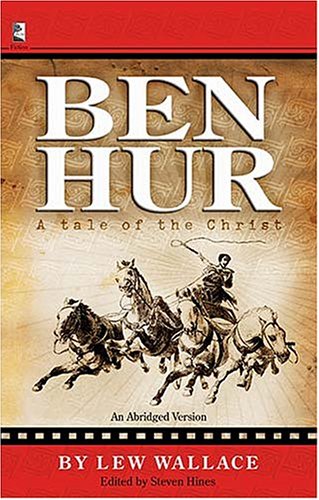
3. Ben-Hur by Lew Wallace

This novel has been adapted into a film at least twice. The first time, it became one of the greatest classics of the silent movie era. The second time, it won eleven Academy Awards. Ben-Hur has sword fighting, political intrigue, a chariot race, a battle at sea and a bitter yet handsome young man whose thirst for vengeance is dramatically conquered by mercy.

Ben-Hur is the tale of a man betrayed by his closest companion and condemned to life as a galley slave. He eventually earns freedom and wealth, and resolves to use them (and his mad chariot-racing skills) to punish his treacherous friend. The novel strives to tell this exciting story in the most boring way possible, but a modern movie adaptation would be epic.

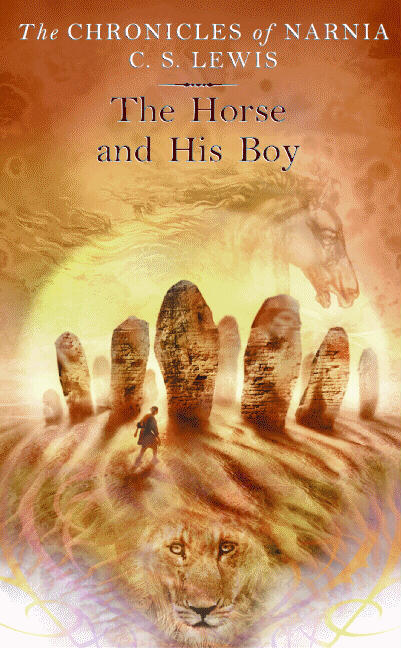
2. The Horse and His Boy by C.S. Lewis

I read a lot of books as a child. Of all the books I read, about only one did I think, “Man, I wish they’d make this into a movie.” That book was The Horse and His Boy, the third book in The Chronicles of Narnia. It’s been my favorite since I first read the Narnia series, and I’m pretty sure I read somewhere that it was also the author’s favorite.

They keep making books from The Chronicles of Narnia into movies, adding gratuitous romances and battles. The Horse and His Boy is the only book in the series that doesn’t need extra romances or battles. There’s already romantic tension between two of the main characters. There’s also a battle, and an exhilarating chase on horseback, and a harrowing journey along a mountain precipice—dash it, it’s been more than a decade since I first read the book and I’m still saying, “Man, I wish they’d make this into a movie.”

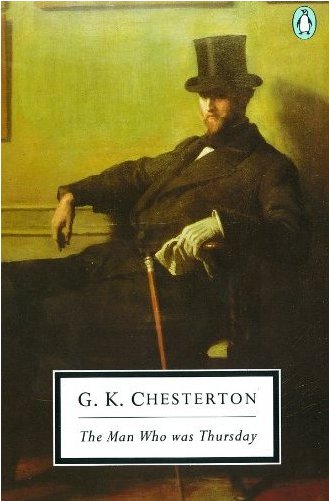
1. The Man Who Was Thursday by G.K. Chesterton

Mystery novels are intriguing, fantasy novels are spellbinding, literary novels are thought-provoking, but no book has ever kept me hooked quite like The Man Who Was Thursday.

The Man Who Was Thursday is the incredible story of a poet-turned-detective who joins a great council of anarchists in order to bring them to justice. The anarchists are named after days of the week; the title refers to the appointment of the detective to the post of Thursday. The scene in which we meet the anarchist council is terrifying. We’re alarmed by Muslim extremists who blow things up for religious reasons, but the anarchists in The Man Who Was Thursday are a good deal more frightening—they blow things up for no reason. The author of the novel also has a fantastic trick of introducing something that seems impossible and terrifying, and later explaining it in an instant with the addition of one simple fact: like someone hitting a switch in a dark room and instantly flooding it with light. Of all the novels that could be made into a really good movie, this is the one I’d most like to see.

What books would you like to see made into movies? Let us know in the comments!

5. Anime Hair

In my middle school days, it seemed that everyone had spiked hair. Well, by everyone I mean many of the boys. I did know a girl with spiked hair—it was actually quite a good look—but the fashion was almost exclusive to the males of the species. I even tried spiking my hair once, a dreadful mistake that I’m still trying to block out of my memory.

It would be much more convenient to have naturally spiky hair. People have naturally wavy or curly hair. Why not naturally spiky hair? Sadly, spiky hair is not a gift God has given humankind. Perhaps spiky hair is a gift we lost when we sinned against God at the beginning of the world. Could Adam and Eve have had naturally spiky hair in the Garden of Eden?

I guess I’ll save that theological question for another time.

Spiky hair seems to be a requisite for anime, or Japanese animation. This prompts a number of questions. Do anime characters take time to style their hair, or is it naturally spiky? If it’s naturally spiky, what are the theological implications? Are characters with spiky hair holier than characters without spiky hair?

Another common tendency of anime hair is to be creatively colored. Anime characters have black, brown or blond hair like the rest of the human race. They also have blue, green or purple hair. Explanations are never given for these unusual colors. Viewers are left to assume that anime characters either dye their hair or possess highly irregular genes.

I read somewhere that the trend toward odd hair colors began with manga, or Japanese comics. These comics were printed without colored ink, restricting a character’s hair color to black, white or a shade of gray. The covers of the comics, however, were printed in color. In order to visually distinguish characters as much as possible, comic artists gave their characters vividly colored hair. This tendency toward unnatural colors passed from manga to anime, thereby accounting for the brilliant shades of pink and indigo that brighten the hair of certain characters.

The really striking thing is how natural spiky or vividly colored hair seems in Japanese anime. Viewers tend not to think twice about a character with spiky blue hair.

Of course, there are a lot of strange things in Japanese anime that viewers tend not to think twice about. Like the characters (usually females) with furry ears and whiskers who possess a vague resemblance to cats, and the innate ability of some characters to produce large hammers from thin air, and the inexplicable ubiquity of pandas.

Strong Bad was right. Japanese cartoons are weird, man.