The Internet is full of cats: cute cats, grumpy cats, misspelled cats and many more. How should we react to this furious, furry invasion of felines? Fear not! Two enterprising engineers have taken it upon themselves to educate the masses about cats. From kitty cocaine to cat yodeling, this video has got you covered.
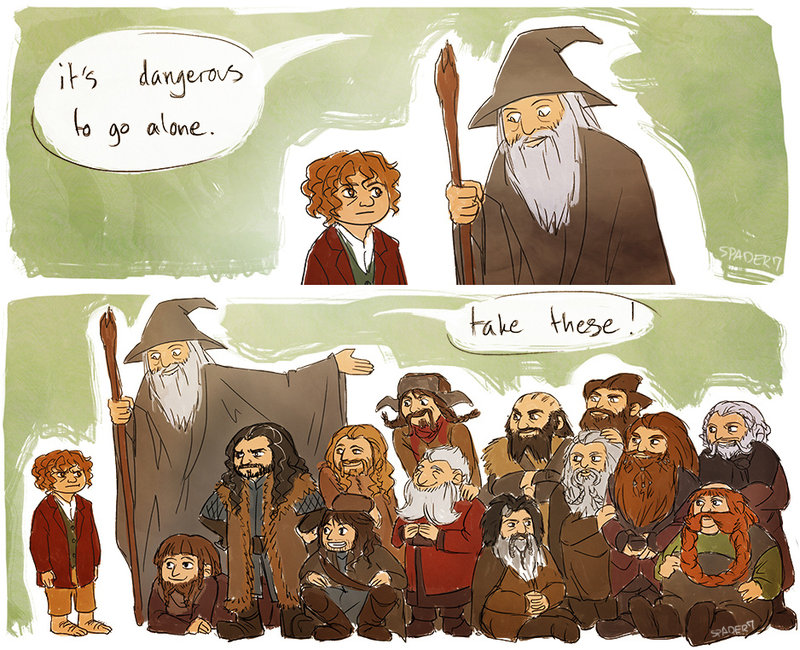
These are the famous opening words of The Legend of Zelda, and an age-old motif in mythology, legend, folklore and fantasy. “Going on an adventure? Here, take _____ with you!”
Luke Skywalker got a lightsaber at the start of his journey. Frodo Baggins received a magic ring. The Pevensies (sans Edmund)accepted useful gifts from Father Christmas, and Captain Jack Sparrow was granted a pistol and one shot. Heck, even Perseus got a bunch of neat stuff for his quest from the gods in the old Greek myths.
The hero often seems to get something—a sword, an amulet, a keepsake—at the start of his or her adventure, and whatever it is always turns out to be really useful. A pointless knick-knack is later revealed to be the all-important Map or Key or Talisman of Plot Advancement.
So take my advice. If someone gives you something at the beginning of an adventure, hold on to the darn thing. You’ll be needing it.
Never before has video game history been so awesome… or so darn catchy.
Fun Fact: Nintendo existed for nearly a century before it began producing video games. It dabbled in everything from card games to cab services before striking gold with franchises like Donkey Kong, Super Mario Bros. and Legend of Zelda in the eighties.
In an early Geeky Wednesday post, I wrote about a blacksmith who forged a video game weapon, and expressed my wish that he would someday make Cloud Strife’s impossibly huge sword from Final Fantasy VII.
badass: (noun, adj.) an individual considered admirable for having an extreme appearance, attitude or behavior; the quality of being a badass
Ah, swearwords. Offensive language is everywhere: offending conservatives, keeping censors busy and puzzling grammarians.
(In a stunning coincidence, expletive can refer either to a dirty word or a word with a particular syntactic function; swearwords can be both kinds of expletives at the same time!)
I don’t think swearwords are inherently wrong. All the same, foul language demonstrates a lack of respect for people offended by it. Swearing may not be wrong, but disrespect is.
This prevents me from using a really awesome word: badass, the latter half of which comprises a vulgar noun. I can’t find any other word that means the same thing. Most swearwords have euphemistic equivalents. Instead of swearing, I use words like heck and blazes and (when I need an extra-strong intensifier) freaking.
Badass has no such equivalent. It represents the absolute pinnacle of awesomeness, unmarred by even the slightest hint of insecurity, ambivalence or self-consciousness. No other word in the English language does the concept justice: not impressive or cool or even gnarly. Censoring the word for everyday use—bad-ss or bad@$$, for example—is just silly.
Constrained by courtesy, I may never have an inoffensive word for this wonderful idea. Alas!
If I get married, I hope my wife doesn’t mind me choosing video game music for the wedding ceremony. Maybe I’ll just make her to listen to songs without telling her they’re from video games. Yeah, that might work.
How can she refuse the stirring notes of the prologue from Final Fantasy in the video above? Or this touching ballad from the latest Legend of Zelda game? Or some slow, sweet piano from Final Fantasy VI? What about this melody from the Kingdom Hearts series? Heck, the song is even titled “Dearly Beloved,” the words which began so many wedding ceremonies.
If my wife rejects all of these lovely songs, maybe I can persuade her to allow a nice, um, upbeatarrangement of “Pachelbel’s Canon.” The melody is a wedding classic, and therefore immune to all objections. I love loopholes!
Let me make something clear: I love the books of J.R.R. Tolkien. Besides The Hobbit and The Lord of the Rings, I’ve read The Silmarillion and many of Tolkien’s obscurer works, not to mention two or three biographies of the man and several books about his mythos. (I once went through a Tolkien/Lewis phase.) There are few people in all history who fascinate me more than the reclusive, disheveled Oxford professor who created a universe in his spare time.
As much as I love Tolkien’s works, I have to wonder how he could have overlooked the eagles as a way to carry the cursed Ring to Mount Doom. He had no qualms about using them as a deus ex machina to rescue Sam and Frodo from Mount Doom after they’d walked hundreds of miles through dangerous enemy territoryto cast the Ring into the volcano’s molten depths. Why not just fly the Ring there in the first place? If the villain’s domain were completely eagle-proof, couldn’t the eagles have carried the heroes at least to its border? And if there were a good reason, why not mention it?
Tolkien was incredibly meticulous about his writing. As he drafted The Lord of the Rings, he kept track of things like the phases of the moon and how long it takes to travel distances on foot. I’m surprised he overlooked (or ignored) so great a plot hole as the eagles as an alternative to walking the whole freaking way.
Incidentally, How It Should Have Ended is a remarkably funny, clever YouTube series that’s worth checking out. Its writers have a gift for pointing out inconsistencies and plot holes in films, and the series is pretty darn funny.
I’m amused and amazed by remix culture: the broad concept of a society that encourages reinterpreting or reimagining existing works of art.
This includes sophisticated literature like John Gardner’s Grendel and Margaret Atwood’s The Penelopiad, which retell (and deconstruct) Beowulf and The Odyssey, respectively. Remix culture also applies to the endless slew of recent films and television programs that turn familiar stories into action flicks, comedies or romances: everything from action-packed retellings of The Wizard of Oz and Alice in Wonderland to bizarre reinterpretations of fairy stories like “Hansel and Gretel” and “Red Riding Hood.”
These remixes are not only creative and clever—they’re also legally available to download for free. The people who remix music often do so not for profit, but as a fun homage to the source material.
If melodies from cartoons and video games are getting rockin’ remixes, why aren’t hymns?
I love hymns. (Let’s not talk about contemporary worship music.) The old hymns are absolutely my favorite kind of music. Modern hymns like “In Christ Alone,” my all-time favorite song, are fantastic.
Why, why, why are these great hymns seldom reinterpreted with the same incredible creativity and brilliance as less important songs?
A few Christian artists do clever things with hymns, like Phil Keaggy in the video above. The band 2nd Chapter of Acts brought an eighties vibe to traditional worship music, and other artists occasionally record contemporary covers of old songs.
What I don’t see—and what I would love to see—is people getting creative with hymns, showing the same joyful abandon as the musicians remixing less important music. I want to hear smooth jazz arrangements of “Come Thou Fount of Every Blessing” and hard metal versions of “A Mighty Fortress is Our God.”
(Do not, for heaven’s sake, rewrite any lyrics. Got that?)
A wise man once asked, “Why should the Devil have all the best tunes?”
I must add: Why should cartoons and video games get all the best remixes?
I like making silly top ten lists. (You’ve probably noticed.) Video game top tens are particularly fun because of the endless variety in video games. Whether you happen to enjoy solving puzzles, raising livestock, fighting Nazis or launching turtle shells from moving vehicles, video games have got you covered.
The video above was made by a fellow who calls himself Peanut Butter Gamer. He knows a thing or two about top ten lists. (He also looks like Shaggy from Scooby-Doo.) This man has mastered the art of the video game top ten: a deceptively challenging craft requiring experience, creativity, humor and quite a lot of silliness.
My early attempts at video game top ten lists were rathergeneric. PBG’s videos encouraged me to try making lists that were a bit lessordinary. My newer lists certainly aren’t unique, but I think they’re more engaging than the older ones. They invite the reader to consider things not always noticed or appreciated in video games.
I think goofy top ten lists are important, and for the same reason as childlike things like cartoons: they’re amusing and funny and cheerful. In this sad, serious world, we need all the laughs we can get.
Godspeed, PBG. Our world—this dismal, shadowed vale of tears—needs more lighthearted, frivolous top ten lists about video games.

 Typewriter Monkey Task Force