70. Talking Too Much

I talk too much.

This wouldn’t be a problem, except for one small detail: when I talk, most people feel obligated to listen. Some of my acquaintances have probably perfected the art of Tuning Out Adam, but the rest have no choice but to suffer politely through my ramblings, rants and dramatic monologues.

Even after I realized I talk too much, I didn’t think it was a serious fault. Pastors don’t preach sermons about the sin of talkativeness. The Lord Jesus didn’t warn against being too chatty. The Bible doesn’t have anything to say about rampant loquacity.

At least that’s what I thought.

Once, years ago, I contradicted a high school teacher about a passage of Scripture. A grim expression came over his face. He busted out a Bible. One of my classmates whispered, “Oh, Adam’s about to get Scripture-owned.” As it turned out, my teacher was absolutely correct. I was chastened, humbled and embarrassed.

Pretty much the same thing happened in regard to my tendency to talk too much.

Much to my discomfort, I kept finding verses in Scripture that suggest talking too much is a foolish thing to do.

Solomon had all kinds of things to say in the book of Proverbs.

“When words are many, sin is not absent, but he who holds his tongue is wise.”

“A man of knowledge uses words with restraint, and a man of understanding is even-tempered.”

“Even a fool is thought wise if he keeps silent, and discerning if he holds his tongue.”

New Testament writers were equally eloquent upon the subject.

“Do not let any unwholesome talk come out of your mouths, but only what is helpful for building others up according to their needs, that it may benefit those who listen,” wrote the Apostle Paul.

“Everyone should be quick to listen, slow to speak and slow to become angry,” wrote James the brother of Jesus.

Most discomforting were words spoken by the Lord Jesus himself: “But I tell you that men will have to give account on the day of judgment for every careless word they have spoken.”

Wait, I’ll have to give account for every careless word I’ve spoken? Every careless word I’ve ever spoken?

Dash it.

Once again, I got Scripture-owned.

One of my resolutions for this year is not to talk quite so much. Have I broken this resolution? Yes, yes I have. I’m still working on it.

65. TMTF’s Top Ten Fictional Clergy

Deep within every blogger’s heart is a strong, almost irresistible compulsion to make a list of the top ten of something.

This means that practically every possible top ten list has already been made. This is a problem, since I, being but a mortal man, am not exempt from the desire to feature a top ten list of some kind on TMTF.

Then it occurred to me a few days ago that there are many notable, unusual or simply awesome priests, ministers, chaplains, monks, nuns and clergymen in fiction, many of whom deserve notice and none of whom (to the best of my knowledge) are commonly featured on top ten lists.

It is, therefore, with pride and satisfaction that TMTF repairs this deficiency by presenting…

The TMTF List of Top Ten Fictional Clergy!

Note that when pictures of the characters themselves are not available, pictures of the author have been featured instead.

10. Friar Tuck (Ivanhoe)

Friar Tuck

He may be a sham and a scoundrel, but I can’t help but like Friar Tuck: a trusted companion of Robin Hood, a formidable fighter and an unapologetic drinker. His reputation as a man of the cloth is questionable, but his cheerful disregard for his priestly duties is somewhat endearing all the same.

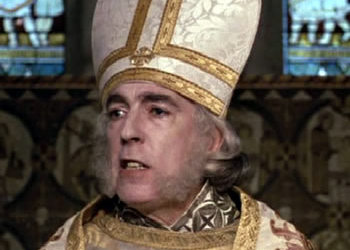
9. The Impressive Clergyman (The Princess Bride)

The Impressive Clergyman

“Marriage is what brings us together today.” That’s all I have to say.

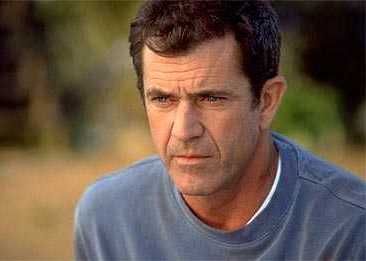
8. Graham Hess (Signs)

Graham Hess

For a movie about aliens, M. Night Shyamalan’s Signs gives quite a touching picture of a man torn between faith and cynicism. After his wife dies in a car accident, Graham resigns from the ministry and becomes an agnostic. He spends much of the film struggling with doubt, and the rest of the film defending his family from alien invaders: a courageous man on both fronts.

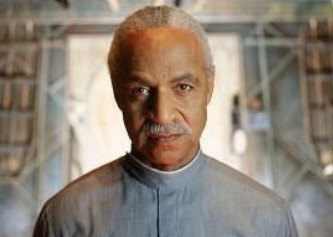
7. Shepherd Book (Firefly)

Shepherd Book

Firefly is a show about criminals, rogues and scoundrels. The cast includes a smuggler, a trigger-happy gunman, a wanted criminal, a lunatic and a classy prostitute. In the midst of these (surprisingly charming and likable) rogues is a kindly, compassionate, grandfatherly gentleman known as Shepherd Book. While one or two of his theological beliefs are slightly suspect, he may be the most genuinely Christ-like character I’ve seen in any television series of the last decade.

6. Dinah Morris (Adam Bede)

George Eliot

For those who have wondered, Adam Bede is not a cheerful book. It’s a novel about vanity and betrayal, and several of its characters end up dead or disillusioned. The gloominess of the novel makes Dinah shine all the brighter. Apart from demonstrating great selflessness and compassion, she is patient with even the characters whom the reader detests: a remarkable feat.

5. Nicholas D. Wolfwood (Trigun)

Nicholas D. Wolfwood

One thing must be made clear from the beginning: Nicholas D. Wolfwood has questionable morals. His morals are so questionable, in fact, that even other characters object to them. Nevertheless, his character is a fantastic depiction of a man trying to do the right thing the wrong way. He believes in absolute justice—he who lives by the sword must die by the sword—and can’t understand his friend Vash, who somehow solves crises without killing anyone. Vash and Wolfwood are easily two of the most complex and compelling characters I’ve seen on television.

4. Sister Carlotta (Ender’s Shadow)

dnews

Compassionate, patient and delightfully sarcastic, Sister Carlotta rescues orphans and street kids in her search for a child genius to defend Earth from a potential extraterrestrial invasion. She demonstrates great patience toward the children in her care and no patience whatsoever toward her haughty superiors—one of whom complains, “I didn’t know nuns were allowed to be sarcastic.” Like Christ himself, Sister Carlotta is kind, gentle and unafraid to speak out against foolishness.

3. Sebastião Rodrigues (Silence)

Shusaku Endo

When Sebastião Rodrigues, a Portuguese priest, travels to medieval Japan to learn the truth behind the alleged apostasy of another priest, he finds himself in a crisis unlike anything he could even have imagined. He was prepared to be martyred for the sake of Christ. He wasn’t prepared to watch as Japanese Christians were martyred instead. Rodrigues is given a choice: renounce his faith or watch as his brethren are slaughtered. Desperate for divine guidance, he is instead tormented by the silence of God. Rodrigues finds himself asking, as another great Priest once asked, “My God, my God, why have you forsaken me?” Sebastião Rodrigues ranks high on this list for the depth of his character and his earnest desire to help others at any cost.

2. Charles François-Bienvenu Myriel (Les Misérables)

Victor Hugo

Monsieur Myriel, the Bishop of Digne, once goes on a journey to visit a remote village because, he explains, its residents “need someone occasionally to tell them of the goodness of God.” He is warned that dangerous bandits roam the area; if he travels toward the village, he may meet them. “True,” says the bishop. “I am thinking of that. You are right. I may meet them. They too must need some one to tell them of the goodness of God.” Unlike the pompous, self-righteous bishops of his day, the Bishop of Digne is humble, selfless, kind, patient and generous. It is a single selfless action of the Bishop of Digne that saves Jean Valjean, a disillusioned convict and the protagonist of Les Misérables, from a bitter life of crime.

1. Father Brown (The Innocence of Father Brown)

Father Brown

Number one on this list is my all-time favorite fictional character. Father Brown is a short, clumsy, disheveled Roman Catholic priest with a blank face, a compassionate heart and a keen understanding of human nature. He’s also a brilliant detective, albeit an apologetic one. Most remarkable is his concern for criminals. Sherlock Holmes throws his archenemy over a precipice to a violent death. Father Brown, by contrast, persuades his archenemy to give up crime and become a private investigator; they later become close friends. As a detective, as a priest and as a fictional character, Father Brown is amazing.

What notable, unusual or simply awesome fictional clergy do you think should be on this list? Let us know in the comments!

61. The Turnspike Emails: Offensive Language

It is the solemn duty of TMTF to present another diabolical email intercepted from the demon Turnspike to his colleague Goreflak. TMTF has previously succeeded in obtaining two of Turnspike’s emails, the latest of which can be found here.

My dear Goreflak,

I must congratulate you! I was beginning to think you had no potential whatsoever as a demon, but the latest development in the life of your Patient suggests otherwise.

Your Patient has slipped into the habit of using swearwords. I am afraid swearwords are not a mortal sin, my dear devil, but that does not mean we cannot use them to our own ends. If you intend to exploit this promising development in your Patient’s habits, it is imperative that you understand the nature of offensive language.

There are three basic categories of offensive language: obscenities, slurs and blasphemies. To put it as simply as possible—so simply that even you, my dear devil, cannot fail to understand—obscenities are insults against propriety, slurs are insults against human beings and blasphemies are insults against God.

Consider for a moment the severity of these insults. From the point of view of the human vermin, it is worst to insult God. After that it is worst to insult other humans. It is least offensive to insult propriety. Therefore we may arrange these categories of foul language from most to least offensive: blasphemies, slurs, obscenities.

Is this clear so far?

Our Father Below has made great progress with foul language in the last few centuries. He has twisted the standards of society so that the mildest obscenities have become more offensive than the worst blasphemies.

Take the most offensive swearwords in use today, those related to sexuality and bodily functions. Anyone who uses these kinds of obscenities is instantly branded an offender of the worst degree.

The human vermin overlook the fact that sexuality, unless it is abused or perverted, is not offensive. Sexuality is an invention of our Enemy. It is, from his point of view, a good thing. Bodily functions are also an invention of our Enemy. They are embarrassing to the humans, but there is nothing wrong with them.

We have so skewed the mindset of society that most humans perceive sexual and scatological swearwords as the worst kind of foul language. We have succeeded in making mere obscenities taboo.

Now let us consider the swearwords considered by the humans to be the mildest: words such as damn and hell. Few people mind if these words are used. Even many Christians think nothing of using such “mild language.”

Can you see the joke?

Hell and eternal damnation are the worst things that can happen to any of the human vermin. There is nothing more torturous, more wretched or more painful for humans than to suffer separation from their Creator. Even so, we have trained humans to consider words like damn and hell much less offensive than bodily functions and human sexuality.

I regret to inform you that we have made little progress with slurs. Despite our best efforts to persuade them that slurs are only slightly offensive, the humans have recognized religious, racial and sexual slurs as the filthy insults they are.

However, we have made excellent progress with blasphemies against the name of our Enemy.

When the Enemy gave his people the regulations known as the Ten Commandments, only one of them pertained in any way to offensive language. Among solemn pronouncements such as “You shall not murder” and “You shall not commit adultery” came these oft-ignored words: “You shall not misuse the name of the Lord your God.”

Misusing the name of our Enemy is, in his judgment, the very worst kind of offensive language.

Admittedly, merely saying “My God!” in a moment of surprise is hardly blasphemy. It is, however, extremely irreverent. I am delighted when Christians, who owe everything to the God who saved them at the cost of his own Son, throw God’s name about as though it were a common swearword.

In summation, Our Father has done a careful job of making sure the human vermin misjudge the severity of foul language. They overlook the strongest blasphemies and consider mere obscenities taboo.

Regarding your own Patient, it is possible to produce in him a kind of contempt for his God through blasphemous language. It affords us much amusement to witness his hypocrisy as he prays, “My God, I love you,” in church, and swears, “My God, that was awful,” in his home.

However, the most effective use of foul language among Christians is not to destroy their own faith. It is to destroy the respect of others. If your patient uses foul language, he is giving a very poor impression of Christ. Since Christians are called to reflect Christ, it is to our advantage when they use the same obscenities, slurs and blasphemies as the rest of the world.

Your Patient is coming along nicely, my dear devil. Keep up your good work.

Your affectionate colleague,

Turnspike

60. How to Be Useful

Cause and effect.

These three simple, innocent words sometimes represent an incredible chain of events—not just a chain, but an entire web of events. A single action may have unbelievable consequences.

There’s a story I’d like to share. It involves two of my favorite authors, J.R.R Tolkien and C.S. Lewis. They’re both famous, but for very different reasons.

Tolkien is renowned as a literary critic and author of fantasy fiction. While he’s most famous for writing The Hobbit and The Lord of the Rings, he’s also held in high regard for his contributions to the study of Anglo-Saxon literature and innovative approaches to literary criticism.

Lewis is also a famous author of fantasy fiction, but he is mostly remembered for his books about Christianity. The author of The Chronicles of Narnia dabbled in apologetics, theology, biblical studies and philosophy. From Mere Christianity to The Screwtape Letters, his books have had an incalculable impact on modern Christianity. In the decades since his death, Lewis has become something of a Christian celebrity.

J.R.R. Tolkien and C.S. Lewis are both famous, but only one is remembered as a great Christian. Many people don’t even know that Tolkien was a Christian. Ask anyone which man served God more effectively and the answer will be C.S. Lewis ninety-nine times out of every hundred.

Lewis’s books have led many people to Christ, and given many Christians a clearer understanding of what Christianity is all about. Many of the people whom C.S. Lewis helped through his writing have gone on to help others. For example, Chuck Colson, who committed his life to Christ after reading Mere Christianity, went on to found a ministry called Prison Fellowship, which has served hundreds of prisoners, ex-prisoners and families worldwide.

We see those three words, cause and effect, working through the life of one man to impact many thousands of lives.

Even though C.S. Lewis is a much more famous Christian than J.R.R. Tolkien, I believe Tolkien was every bit as useful to God as Lewis. This belief may seem a bit odd. The Lord of the Rings is an amazing literary work—a literary work, moreover, especially beloved by Christians—but it isn’t exactly famous for pointing people toward Christ. Really, how many conversion stories begin with Bilbo Baggins and Gandalf the Grey?

Through the process of cause and effect, C.S. Lewis and his books have impacted thousands of people. However, there’s something about his life that most people don’t know.

That process of cause and effect didn’t begin with C.S. Lewis.

It began long before Lewis, and it involved an Oxford professor named J.R.R. Tolkien.

After many years as an atheist, Lewis reluctantly accepted a vague belief in God and became a theist in 1929. A couple of years later, he happened to go for a walk in an Oxford park with two fellow professors, Hugo Dyson and John Tolkien. As they walked, they discussed myths and mythmaking.

Lewis was surprised by Tolkien’s belief that myths can originate in God and reflect eternal truth. Christianity is beautiful, maintained Tolkien, because it’s a myth. This doesn’t mean Christianity is untrue like other myths. Tolkien believed Christianity is beautiful because it’s the only myth that perfectly reflects the truth.

Perhaps, suggested Tolkien, someone could serve God by writing myths.

C.S. Lewis converted from theism to Christianity a few days later. “I have just passed on from believing in God to definitely believing in Christ,” he wrote in a letter to a friend. He added, “My long night walk with Dyson and Tolkien had a great deal to do with it.”

Would Lewis have become a Christian without Tolkien? Only God knows. However, there is one thing of which we can be sure: Tolkien helped lead Lewis to Christ. After Lewis became a Christian, he went on to write the books that would instruct, encourage, comfort, correct and strengthen thousands of people around the world.

What those people owe to Lewis, they owe in part to Tolkien.

Why does this matter?

Why have I shared this story about cause and effect?

I’ve shared this story because I’ve heard people suggest that Christians must enter official, fulltime ministries to serve God effectively.

Ridiculous.

God can use anybody anywhere.

He can use a math teacher or a computer programmer as readily as a pastor or missionary.

All that he asks is that we follow him wherever he leads us.

Let’s say a person has the desire and ability to become a carpenter. Is it too farfetched to believe that God wants that person to be a carpenter? For that person to become something else, say a pastor or missionary, would be like trying to screw in a bolt with a hammer or hammer in a nail with a screwdriver. Let someone with a passion for ministry become a pastor or missionary. Let the one who loves carpentry become a carpenter.

The Apostle Paul wrote: “We have different gifts, according to the grace given us. If a man’s gift is prophesying, let him use it in proportion to his faith. If it is serving, let him serve; if it is teaching, let him teach; if it is encouraging, let him encourage; if it is contributing to the needs of others, let him give generously; if it is leadership, let him govern diligently; if it is showing mercy, let him do it cheerfully.”

I would add, “If a man’s gift is painting, let him paint; if it is building, let him build; if it is police work, let him become a police officer; if it is playing soccer, let him become a soccer player,” and so on.

Lewis had a passion for Christianity, and God used him.

Tolkien had a passion for mythology, and God used him.

If you’ve chosen to follow Christ, don’t worry that your plans might “not be Christian enough.” Do your best to serve Christ wherever you are. Be willing to accept whatever opportunities he gives you.

If you do that, wherever you are, Christ will use you.

As Abraham Lincoln said, “Whatever you are, be a good one.”

58. Gangster Pastors

One of my most prized possessions is a weather-stained, gray cloth cap. If my residence ever burns down, this cap is one of the first things I will try to rescue from the flames. I call it my gangster cap, not because it fits the so-called gangster style, but because a gangster—or rather, an ex-gangster—gave it to me.

I was touched when my ex-gangster friend, whom I’ll call Miguel, gave me his cap, because it has great sentimental value for him. He had once lost it while plunging into a gully to escape from a rival gang. It lay at the bottom of the ravine for four months until he sneaked back to retrieve it.

Miguel was a car thief and a gang leader in Quito, the capital of Ecuador and the city of my birth. Besides his other crimes, Miguel occasionally worked for Mama Lucha, a notorious criminal kingpin. (I guess she should actually be called a queenpin since she was a woman.)

On one occasion, Miguel and his comrades tried to steal a long sheet metal sign welded to a pedestrian bridge. Unfortunately for them, they weren’t able to divide the sign into pieces as they’d planned. In the end they had to carry it whole through the streets of Quito, weaving furtively through city streets like some sort of monstrous metal centipede.

Miguel is currently happily married, working at a government job in Quito and ministering as a lay leader in his church.

It is a source of amazement, amusement and wonder to me how many of the church leaders I knew in Ecuador are former gangsters, thieves or occultists.

I’m not using real names in this post in order to protect the privacy of the leaders whose stories I’m sharing. I assure you, however, that to the best of my knowledge all of these stories are accurate, factual and true.

Paco is a kind, gentle and fiercely amiable pastor from the coast of Ecuador. Like King Saul in the Old Testament, Paco is about a head taller than everyone around him. His skin is black, his frame is muscular and his cheek is scarred by a gash from a knife. He used to be a thief on the streets.

Armed with a knife, Paco once accosted a girl at night with the intention of taking her money. The girl, who was a Christian, began talking with him about God. Although it was a long time before Paco would know Christ, he eventually put away the knife and escorted the girl to her home because—as he explained—it was a dangerous neighborhood and he didn’t want her to get robbed.

Paco eventually wound up in prison. Some of his fellow prisoners were personal enemies who wanted to kill him. However, before they had the opportunity, Paco was released. He didn’t know how or why—the only hint he received was a vague explanation that “some lawyer” had made all the necessary arrangements. What those arrangements were, and who the lawyer was, he doesn’t know to this day. It has been suggested to him that the lawyer might have been an angel. He doesn’t deny the possibility.

Then there’s Luís, another ex-criminal from the Ecuadorian coast. His skin is black, which makes his dazzling white smile all the more striking. Luís is a fantastic storyteller, and my dad has been privileged to hear accounts of several of his escapades.

Luís, while stoned on drugs, once tried to murder another man, also stoned. Having crept up on him from behind, Luís put a pistol to the man’s head and pulled the trigger. The gun misfired. Luís examined the pistol, peering blearily into its barrel, while his victim sat peacefully unaware of the attempt being made on his life. Luís tried again to murder his victim. The gun didn’t go off, but this time the man realized what was happening and fled shrieking while Luís resumed his bewildered examination of the gun.

On another occasion, Luís entered a church and sat down—only for a huge army knife to fall out of his shirt and hit the concrete floor with a thunk. Nearly every head turned to look at him, and a little old lady sitting nearby picked up the knife and sweetly gave it back to him.

A turning point came when a taxi crashed into a light pole as Luís leaned against it. The pole absorbed most of the impact, but Luís flew a considerable distance and landed hard. Just a few minutes later he met a Christian lady from his neighborhood. “Did something just happen to you?” she asked. “God told me to pray for you five minutes ago, so I did.”

After Luís became a Christian, two attempts were made on his life, once with a pistol and once with a sawed-off shotgun. The guns misfired both times—two more miraculous interventions.

All three of these church leaders have told my dad that they’re grateful to God for never letting them kill anybody. They all came frighteningly close to it. Looking back, they can see the hand of God at work in their lives, even when they didn’t care for him.

I believe, if we look hard enough, most of us can see the hand of God at work in our own lives.

I know I can.

51. Crying over Spilt Tea

Uncle Iroh, a fictional character whom I hold in high regard, once remarked tearfully, “I know you’re not supposed to cry over spilt tea, but it’s just so sad.”

There’s an idiom about crying over spilt milk, but I agree with Iroh—spilt tea is much, much sadder. If I spill a cup of tea, tears flow like a river and anguished sobs sound forth like peals of thunder.

All right, I exaggerate. But the waste of a cup of tea certainly causes me some regret. It’s awful to lose something good irrevocably because of a mistake.

I lost a lot of good things this year—things much better than tea, and that’s saying something. Hours that could have been spent reading or writing or praying were wasted pointlessly lounging around the house or aimlessly surfing the Internet. Words that should not have been spoken were, and words that should have been spoken were not. Dreams were choked by anxiety or laziness before they could grow.

Looking back, I realize I’ve spilt a good deal of tea.

I don’t know whether anyone else is ever burdened with regrets, but I am sometimes. It’s so dashed easy to look back and say to myself, “You certainly made a mess of that, you blasted fool,” or “You had an opportunity to do something amazing, and you missed it.” Trying to let go of regrets seems irresponsible. “You made those mistakes,” I tell myself. “You’re just going to have to live with them.”

Fortunately, the Apostle Paul took quite a different view. Paul, whom I hold in even higher regard than Uncle Iroh, was quite a wise fellow. He once wrote, “But one thing I do: Forgetting what is behind and straining toward what is ahead, I press on toward the goal to win the prize for which God has called me heavenward in Christ Jesus.”

Wait, what?

Forgetting what is behind? Straining toward what is ahead?

Seriously?

Awesome.

So we can live without clinging to regrets. Now what?

According to some people, the ancient Mayans predicted the world will end in 2012. Even if the Mayans did predict such a thing (which is pretty doubtful) I don’t put any confidence in their ability to foretell the future. The Mayans held human sacrifices, after all, so their views about the world were probably a little skewed.

Assuming the Mayans were wrong about the world ending in 2012, I’m going to head into the new year without any regrets about the past. There’s a saying about starting off each day with a clean slate. While it’s a little trite, I’m beginning to think that saying is also quite sensible.

It’s no good crying over spilt tea. It’s far better just to clean up the mess and brew another cup.

Speaking of which, all these metaphors are making me thirsty.

49. The Turnspike Emails: Christmas

TMTF solemnly presents another hellish look at life from a demon’s perspective. This is an email intercepted from the demon Turnspike to his colleague Goreflak; a previous email from Turnspike and TMTF’s commentary thereupon can be found here.

My Dear Goreflak,

You continue to amaze me, my dear devil, with your supreme ignorance and idiocy. You actually want to abolish the holiday called Christmas? There are so many flaws in your thinking that I hardly know how to begin the process of pointing them out.

First of all, the Enemy would never let Christmas be completely destroyed. It is (or was; more on that presently) a celebration of his own Son’s life on Earth as one of those ridiculous human vermin. A full-fledged attack upon Christmas would be disastrous for us and Our Father Below. Our only chance lies in perverting Christmas into something more suited to our purposes.

Second, destroying Christmas would not change the regrettable fact of Christ’s birth. So long as that fact remains, the celebration of Christmas remains possible even if we do away with the trappings of the holiday. The meaning of Christmas is not in seasonal decorations or traditions, but in Christ. We would accomplish nothing by abolishing the decorations and traditions, for Christ would remain.

Third, even if we could somehow do away with Christmas entirely, we would still have a dozen other wretched Christian holidays to obliterate: Saint Valentine’s Day, Saint Patrick’s Day, Easter, All Saints’ Day—the list goes on.

Destroying Christmas is clearly not an option. However, we have achieved something even better. As I mentioned, we would accomplish nothing by abolishing the decorations and traditions of the holiday—so we have instead exaggerated them.

Do you remember how in a previous email I explained how we had eclipsed All Saints’ Day by making Halloween into a commercialized holiday? We have done something similar with Christmas. It is no longer a celebration of Christ. It is a celebration of holiday specials and decorated trees, seasonal music and sugar cookies—and shopping. Christmas has become the biggest commercial frenzy of the year, when people across the world are given a gift-wrapped excuse to spend money.

I am afraid there is nothing inherently wrong in the decorations and traditions of Christmas. The humans enjoy music and food and gift-giving, and there is nothing we devils can do to prevent it. However, it is happily within our power to use these things to distract the humans from the Enemy, who would give them gifts too great to be bought or wrapped if only they would let him.

Incidentally, I wish to draw your attention to our use of political correctness in conquering Christmas. It is a Christian holiday, yet we have largely succeeded in removing its Christianity.

Christmas trees are sometimes called holiday trees and Nativity scenes are banned from public places for the sake of “not upsetting anybody.” Phrases like Merry Christmas are eschewed in favor of insipid slogans like Happy Holidays in order to be “more tolerant.” No secular establishment dares to acknowledge that Christ might have something to do with Christmas because someone “might be offended” if they do.

We have made sure it never occurs to anyone that Christians might be offended—not just offended, but deeply hurt—that Christmas, a Christian celebration, has been hijacked by people who prevent its Christianity from being celebrated publicly and use it simply to make money. The wonderful thing about political correctness is that it typically insults nobody but Christians, and nobody but Christians seems to mind.

My dear devil, I hope you are noticing a recurring tendency in our work as demons. Judging by the stupidity of your emails to me, I sincerely doubt it, and so it falls to me to point it out to you. We seldom face our Enemy head-on. We never destroy what we can pervert.

I hope you keep this principle in mind as you continue tempting your Patient.

Happy holidays!

Your affectionate colleague,

Turnspike

48. Falling Asleep in Church

God loves the people who fall asleep in church.

This comes as a relief to me, since my thoughts sometimes wander to the ends of Earth during sermons. To borrow a phrase inadvertently coined by an acquaintance of mine, I tend to daze off during services—to slip into a blank state of mind somewhere between a daze and a doze in which I’m only vaguely aware of the message being preached.

I suspect the reason some churches serve coffee is to keep churchgoers awake during the sermon. Other churches, not quite so shrewd, make the mistake of serving real wine during communion services—there’s nothing like alcohol to make churchgoers drowsy.

One of my favorite stories in the Bible concerns a young man who fell asleep during church. Paul, the missionary who wrote about half of the books in the New Testament, was preaching in an upstairs room late at night. As Paul droned on and on, a young man named Eutychus fell asleep, plummeted from a third-story window and died.

It would have been awful if the story had ended there. The moral of the story would have been You fall asleep in church, you die. The story continues, however, and we learn two great things about God. First, he loves the people who fall asleep in church. Second, he has a sense of humor.

After Eutychus fell out the window, Paul rushed down to the street and put his arms around his dead body. “Don’t be alarmed,” he said. “He’s alive!” Eutychus revived, much to the delight of the people. Paul went upstairs, had something to eat—and kept preaching.

If I had been God, I might have considered not restoring Eutychus to life. “Let his death stand as a warning to all future sleepers in churches,” I might have said. Fortunately for churchgoers everywhere, the Lord is very merciful. Eutychus was revived and God’s love for all people—even people who fall asleep during church—was demonstrated.

(The story of Eutychus can be found in Acts 20:7-12.)

There are quite a number of funny things like that in the Bible.

There’s the poetic passage in which God described the stupidity of ostriches (Job 39:13-17).

There’s the tragicomic story of how King David’s murderous son Absalom was killed by soldiers after he rode beneath an oak tree, got his head caught in a branch and dangled helplessly in midair as his mule went on without him (2 Samuel 18:9-15).

There’s the account of how, during a contest between God and the false god Baal, the prophet Elijah taunted rival prophets with snarky remarks (1 Kings 18:22-29).

For all its seriousness—and it can certainly be serious—the Bible is sometimes pretty funny.

45. Give Us This Day Our Daily Schedule

An acquaintance of mine once uttered this profound insight: “Procrastination is just an extreme form of patience, and patience is a good thing.”

By this standard, I’ve been extraordinarily patient for the last two weeks.

In fairness, I’ve had a number of distractions: graduating from college, packing, traveling to Uruguay, unpacking and playing Skyward Sword. Before arriving in Uruguay, I had ambitious plans to write at least half a dozen posts for TMTF to spare myself the stress of desperately composing a post at the last minute. Within five or ten minutes of actually arriving in Uruguay, my plans to work ahead on my blog had been forgotten.

Now at last I’m resuming my sensible plan of working out a tentative schedule for TMTF a week or so in advance. Since I’m trying to figure out a schedule for the blog, this seems like the perfect time to mention the most unexpected strategy I’ve discovered for keeping in touch with God: scheduling.

I believe Christians are supposed to keep in touch with the Lord through prayer and reading Scripture—not as a requirement for salvation but as a response to it. Jesus said something clever about branches not being able to bear fruit unless they remain in the vine, meaning his followers won’t be productive unless they remain in a consistent relationship with him.

Fact of Importance: Prayer and reading the Bible aren’t part of a system to earn God’s favor. Christians don’t have to earn anything. Studying Scripture and praying are simply the best way to keep in touch with God: to honor him, learn from him, be encouraged, be corrected and be ready for action.

The other day I was reminded of a simple and decidedly unspectacular method for being consistent in praying and reading the Bible. I speak, of course, of the fine art of scheduling.

The more I procrastinate, the less motivated I become to pray or read the Bible. If I choose not to procrastinate—in other words, if I choose to pray and study Scripture early in the day while I’m refreshed from a night’s sleep and fueled by coffee—I’m able to face the rest of the day with greater motivation, enthusiasm and confidence.

(This also proves the potential spiritual benefits of coffee.)

Scheduling isn’t an impressive strategy, but it’s done more to help my relationship with God than almost anything else.

Are you a “patient” person? What strategies help you get things done? Let us know in the comments!

44. Bed Intruder

My typewriter monkeys finally arrived in Montevideo today after an airline luggage mix-up sent them to the farthest corners of Earth. They’re too exhausted to type out an entire post, so today’s post is borrowed from Max vs. Max, a webcomic by Wes Molebash. Deftly balancing humor and poignancy, these eight strips make up pretty much the best comic story arc ever. The story: A recent divorcee named Max awakes during the night to find a strange old man in bed with him. My thanks to Wes for his permission to use his comic; for more stuff from Wes, check out his latest comic project!