447. Ask Me Anything… Again!

This blog hits four hundred and fifty posts next week. I could celebrate this milestone with something extra-special, or else I could be lazy and make my readers do half the work for me. At the moment, that second option sounds pretty good.

Yes, before TMTF bites the dust, I’m going to squeeze in one last AMA. (That stands for Ask Me Anything, in case you didn’t know.) I held one about a hundred posts ago, and to my everlasting surprise, a few people did actually ask me things. I’m not sure whether it’s worth trying again, but I don’t have any other ideas, so it’ll have to do.

From today, June 6, until Thursday, June 16, you may ask me anything! I will accept all kinds of questions by any means of communication: comments on this post, emails, notes via the Contact page, Twitter or Facebook messages, or fortune cookies. (That last one might be a bit tricky.)

On Friday, June 17, I will answer your questions, however many or few. Ask away!

446. Will the Circle Be Unbroken?

I had planned to share this beautiful cover of “Will the Circle Be Unbroken?” at some point, but quixotically decided to record my own cover of the hymn instead. You see, kids, this is why we don’t let Adam near microphones.

My wobbly vocals are propped up by a dynamic piano arrangement from Silas Rosenskjold, who made it freely available on his YouTube channel. The photo in the video, snapped by my dad quite a number of years ago, shows the Basílica del Voto Nacional: a cathedral in Quito renowned for its architecture and hideous gargoyles.

I discovered this lovely hymn in a violent video game, of all places. BioShock Infinite, a first-person shooter, offers the most fascinating take on Christianity I’ve ever seen in a video game. “Will the Circle Be Unbroken?” is part of the game’s soundtrack.

Around the time I shared of how I almost left my faith last year, I found myself often listening to this hymn. Some of its questions seem to be aimed squarely at wavering skeptics like me.

There are loved ones in the glory whose dear forms you often miss; when you close your earthly story, will you join them in their bliss?

You remember songs of heaven, which you sang with childish voice; do you love the hymns they taught you, or are songs of earth your choice?

One by one their seats were emptied, one by one they went away; now the family is parted—will it be complete one day?

One question, the question, stands above the rest: Will the circle be unbroken? Will that legacy of faith, cherished by your loved ones, upheld by generations past, live on in you—or will you break the circle? Will you be the one to shatter this legacy of religious faith?

I know people who’ve broken the circle. I know people who’ve kept it whole. For my part, the circle remains unbroken.

As I work with the elderly, I face regular reminders of the transience and frailty of human life. As James Thurber flatly expressed it, “Even a well-ordered life can not lead anybody safely around the inevitable doom that waits in the skies. As F. Hopkinson Smith long ago pointed out, the claw of the sea-puss gets us all in the end.”

While the skeptical part of me can’t help but question the notion of an afterlife, I rejoice that death is a temporary separation, not a permanent one. I can hardly bear the thought of losing loved ones forever.

When my family is parted, it will yet be reunited one day—thank God.

Stupid, Stupid Rat Creatures

Stupid, Stupid Rat Creatures

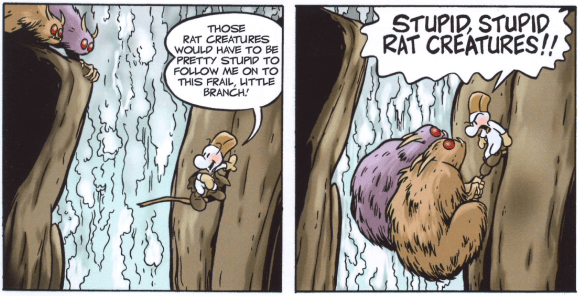
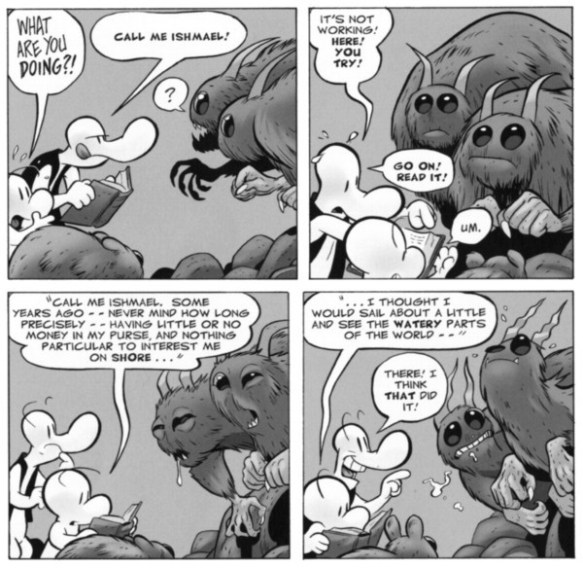
The panels above mark the exact moment at which I fell in love with Bone, the epic comic book series by Jeff Smith. I could provide story context, but really, none is needed. Stupid, stupid rat creatures.

As an artistic medium, comics face unique challenges, such as depicting action and movement in a limited number of small, silent, static panels. I’m sometimes amazed by the ingenious ways artists bring their comic panels to life, and have noticed a number of visual tricks and techniques used to tell stories in comics.

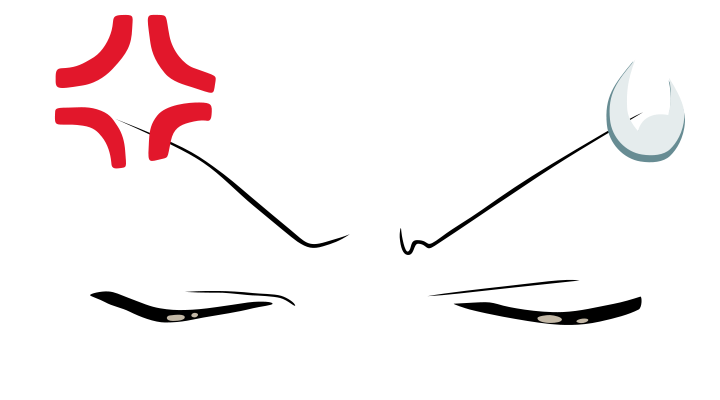
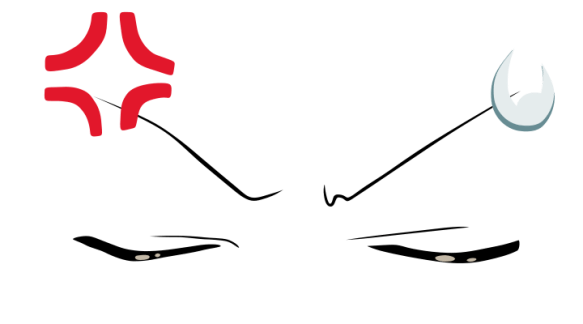
Absurd sound effects are one way, of course. Others include filter effects, blurred backgrounds, and squashing or stretching to represent movement. In Japanese comics (and animation), symbolic shorthand is common: for example, an oversized bead of sweat to represent anxiety or a throbbing vein to represent anger.
Manga iconography

Manga iconography is a visual shorthand for character emotion.

A thing that delights me in the Bone panels above is how economically the artist tells the story. Several actions must occur between the first and second panels, yet the artist doesn’t bore the reader with them. He sets up the joke and then immediately provides the punchline, assuming the reader is clever enough to infer what occurred between panels without having to be shown. It’s quick, efficient storytelling, and I really dig it.

Bone is an incredible comic series. There’s nothing else quite like it: an unlikely blend of The Lord of the Rings with the Pogo comic strip. It’s at once dark and lighthearted, serious and cartoony, and above all, quirky. There are bloodthirsty rat-monsters in one scene, and jokes about Moby-Dick in the next. Heck, one scene even pits the rat creatures against Melville’s novel. (The rat creatures lose.)
Moby Dick Vs. the Rat Creatures

I adore the rat creatures’ expressions in the third panel.

Jeff Smith self-published the first issues of Bone in the early nineties, helping kick start the indie comics movement, and eventually winning boatloads of awards. I was introduced to the series by the same kindly relative who occasionally sends me random books and comics. (I aspire to be that kind of person.)

I began reading Bone a year or so ago—at this point, I own the entire series—but had to set it aside halfway through due to busyness. At the moment, my reading list is dominated by background reading for my book project, but someday I’ll revisit Bone and read it from start to finish, stupid rat creatures and all.