6. Five Books that Should Be Made into Movies

Stephen Spielberg and Peter Jackson are currently collaborating on a film adaptation of The Adventures of Tintin, perhaps the greatest graphic novel series ever. Jackson is also adapting The Hobbit, the amazing prequel to The Lord of the Rings, into not one but two movies.

(Fun fact: Andy Serkis, best known for his performance as Gollum, will star in both the Tintin and the Hobbit films as a drunken sea captain and the aforesaid slimy creature, respectively.)

With these excellent books receiving their long-overdue transition to movie screens, I couldn’t help but wonder what other books would make good films. Here are five novels that would make, in my humble and totally biased judgment, amazing movies.

5. Beau Geste by Percival Christopher Wren

If you’ve ever read Peanuts, you may be familiar with Snoopy’s occasional daydream that he’s a member of the French Foreign Legion leading his troop, a line of little yellow birds, through the desert in search of Fort Zinderneuf.

This is a reference to Beau Geste, a classic adventure novel. It tells the story of three brothers who join the French Foreign Legion and embark on a quest involving an inexplicable mystery, a priceless gem, a terrifying battle and two silly Americans. Several film adaptations were made of Beau Geste many years ago, and it’s time for its triumphant return to cinema.

4. Ender’s Game by Orson Scott Card
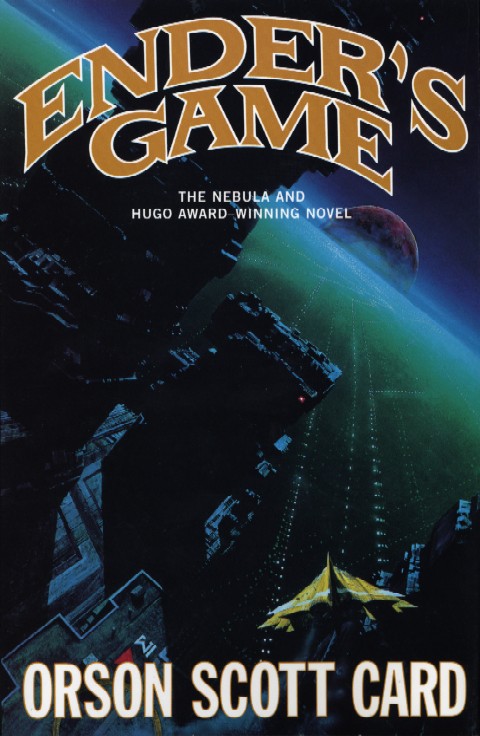
I keep hearing rumors of an Ender’s Game movie being made, but for years it has stubbornly insisted on not being made. A science fiction masterpiece, Ender’s Game is the story of Andrew “Ender” Wiggin, a child prodigy who’s recruited into Battle School to become a military commander and save humankind from the hostile extraterrestrials called the Buggers.

The movie could incorporate elements from Ender’s Shadow, a companion novel telling the same story from the point of view of the child called Bean, who is more intelligent and sarcastic—and therefore, to my sensibility, more likable—than Ender. An Ender’s Game film would offer epic space battles, great characterization and absolutely no teenage romance.

3. Ben-Hur by Lew Wallace
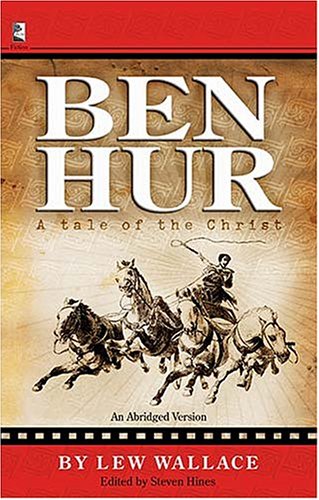
This novel has been adapted into a film at least twice. The first time, it became one of the greatest classics of the silent movie era. The second time, it won eleven Academy Awards. Ben-Hur has sword fighting, political intrigue, a chariot race, a battle at sea and a bitter yet handsome young man whose thirst for vengeance is dramatically conquered by mercy.

Ben-Hur is the tale of a man betrayed by his closest companion and condemned to life as a galley slave. He eventually earns freedom and wealth, and resolves to use them (and his mad chariot-racing skills) to punish his treacherous friend. The novel strives to tell this exciting story in the most boring way possible, but a modern movie adaptation would be epic.

2. The Horse and His Boy by C.S. Lewis
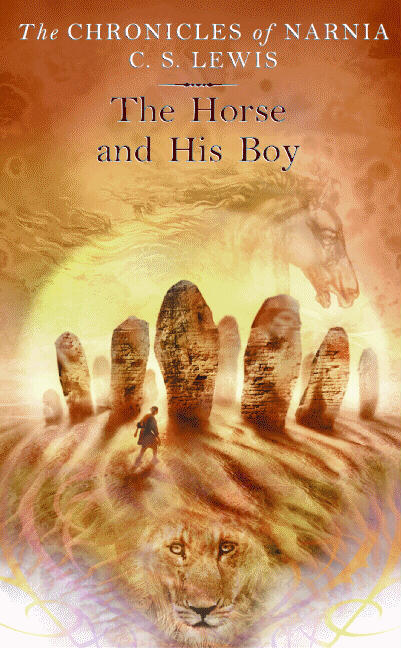
I read a lot of books as a child. Of all the books I read, about only one did I think, “Man, I wish they’d make this into a movie.” That book was The Horse and His Boy, the third book in The Chronicles of Narnia. It’s been my favorite since I first read the Narnia series, and I’m pretty sure I read somewhere that it was also the author’s favorite.

They keep making books from The Chronicles of Narnia into movies, adding gratuitous romances and battles. The Horse and His Boy is the only book in the series that doesn’t need extra romances or battles. There’s already romantic tension between two of the main characters. There’s also a battle, and an exhilarating chase on horseback, and a harrowing journey along a mountain precipice—dash it, it’s been more than a decade since I first read the book and I’m still saying, “Man, I wish they’d make this into a movie.”

1. The Man Who Was Thursday by G.K. Chesterton
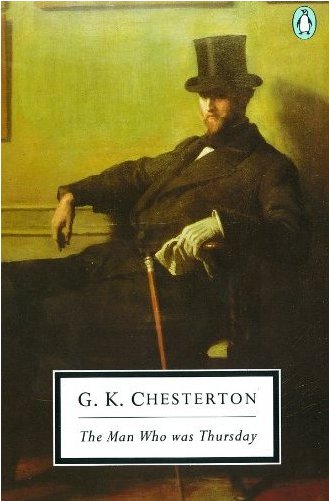
Mystery novels are intriguing, fantasy novels are spellbinding, literary novels are thought-provoking, but no book has ever kept me hooked quite like The Man Who Was Thursday.

The Man Who Was Thursday is the incredible story of a poet-turned-detective who joins a great council of anarchists in order to bring them to justice. The anarchists are named after days of the week; the title refers to the appointment of the detective to the post of Thursday. The scene in which we meet the anarchist council is terrifying. We’re alarmed by Muslim extremists who blow things up for religious reasons, but the anarchists in The Man Who Was Thursday are a good deal more frightening—they blow things up for no reason. The author of the novel also has a fantastic trick of introducing something that seems impossible and terrifying, and later explaining it in an instant with the addition of one simple fact: like someone hitting a switch in a dark room and instantly flooding it with light. Of all the novels that could be made into a really good movie, this is the one I’d most like to see.

What books would you like to see made into movies? Let us know in the comments!

5. Anime Hair

In my middle school days, it seemed that everyone had spiked hair. Well, by everyone I mean many of the boys. I did know a girl with spiked hair—it was actually quite a good look—but the fashion was almost exclusive to the males of the species. I even tried spiking my hair once, a dreadful mistake that I’m still trying to block out of my memory.

It would be much more convenient to have naturally spiky hair. People have naturally wavy or curly hair. Why not naturally spiky hair? Sadly, spiky hair is not a gift God has given humankind. Perhaps spiky hair is a gift we lost when we sinned against God at the beginning of the world. Could Adam and Eve have had naturally spiky hair in the Garden of Eden?

I guess I’ll save that theological question for another time.

Spiky hair seems to be a requisite for anime, or Japanese animation. This prompts a number of questions. Do anime characters take time to style their hair, or is it naturally spiky? If it’s naturally spiky, what are the theological implications? Are characters with spiky hair holier than characters without spiky hair?

Another common tendency of anime hair is to be creatively colored. Anime characters have black, brown or blond hair like the rest of the human race. They also have blue, green or purple hair. Explanations are never given for these unusual colors. Viewers are left to assume that anime characters either dye their hair or possess highly irregular genes.

I read somewhere that the trend toward odd hair colors began with manga, or Japanese comics. These comics were printed without colored ink, restricting a character’s hair color to black, white or a shade of gray. The covers of the comics, however, were printed in color. In order to visually distinguish characters as much as possible, comic artists gave their characters vividly colored hair. This tendency toward unnatural colors passed from manga to anime, thereby accounting for the brilliant shades of pink and indigo that brighten the hair of certain characters.

The really striking thing is how natural spiky or vividly colored hair seems in Japanese anime. Viewers tend not to think twice about a character with spiky blue hair.

Of course, there are a lot of strange things in Japanese anime that viewers tend not to think twice about. Like the characters (usually females) with furry ears and whiskers who possess a vague resemblance to cats, and the innate ability of some characters to produce large hammers from thin air, and the inexplicable ubiquity of pandas.

Strong Bad was right. Japanese cartoons are weird, man.

4. The Awful Problem of Pain

It’s Friday, and one of my students began singing Rebecca Black’s “Friday” in class today, and it made me think of the problem of pain.

The existence of pain is probably my biggest doubt about Christianity.

If I weren’t a Christian, I think I’d be an atheist with the existence of pain as my chief weapon against crazy religious people. “How can you claim,” I would thunder, “that God loves everyone and is all-powerful if he lets thousands of innocent children starve to death every day? Your God lets religious hypocrites hurt people in his name. Your God just watches instead of doing something as men and women kill each other. How can you say he’s good and almighty? You can’t have it both ways, you crazy religious person!”

(I’m actually really glad I’m not an atheist, because I’m pretty sure I’d also be kind of a jerk.)

It would be awesome if every Christian received The Complete Compendium of Answers to Every Moral and Theological Question Ever. That way, when perplexed by the problem of pain, I could just turn to page 374 and read God’s authoritative answer to the question of why bad things happen.

However, Christians don’t have The Complete Compendium of Answers to Every Moral and Theological Question Ever. (The Bible is God’s Word, but—as many dissenting theologians can testify—it doesn’t answer certain questions.) We’ve had to study the Bible and reflect upon our own experience in order to come up some possible answers.

One possible answer has to do with free will. If God gives us free will, the ability to do whatever the deuce we want, we can choose to ignore his good instructions and wreak havoc on his creation. Another possible answer has to do with personal growth. We do tend to shine our brightest when we’re dealing with our tragedies—or helping others deal with theirs.

Whatever God’s reason for allowing pain in the world, one thing is clear. It’s a good enough reason that he didn’t hesitate to suffer because of it. Jesus Christ came into the world and endured not only an excruciating death but every other pain, humiliation and discomfort known to humankind, from the pain of rejection and betrayal among his friends to the minor nuisances of blisters and bad breath. The problem of pain didn’t deter Jesus.

These reflections are abstract, but I still find them comforting—most of the time. The real problem comes when someone else is suffering and wants to know why God lets it happen. What answers can be given to someone in pain?

“I know you’re hurting, but God loves you.”

“Where’s the proof of that?”

“I know you’re hurting, but this tragedy is making you a better person.”

“So God’s punishing me because I’m not good enough, is that it?”

“I know you’re hurting, but Jesus suffered too.”

“Why the heck should I care?”

“I know you’re hurting, but you can’t blame God for human error.”

“Just shut up.”

What’s the conclusion of the matter? Why does God allow pain and brokenness and Rebecca Black’s “Friday” to exist in the world?

I wish I knew.