
I love it when heroes don’t start that way.
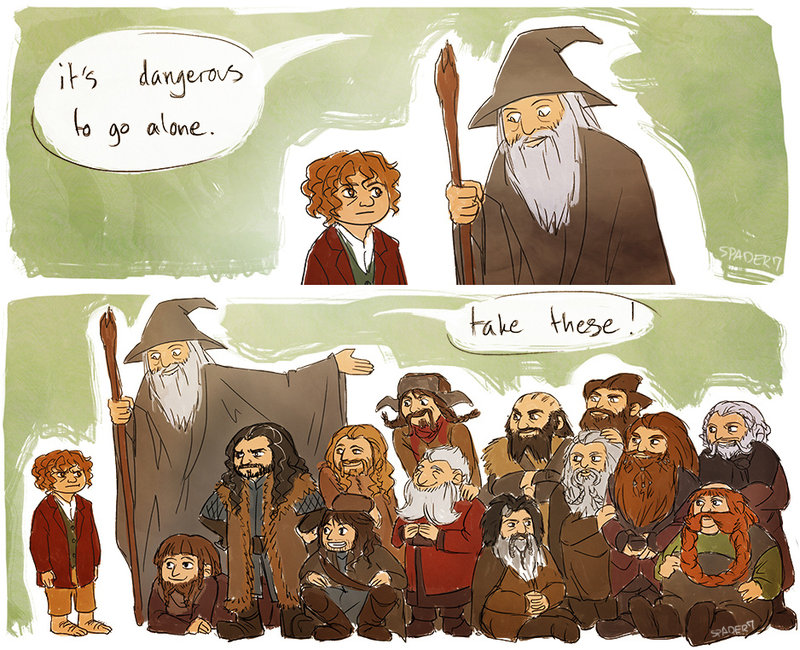
Some of the most popular heroes in fiction began their journeys as normal people. Luke Skywalker. Bilbo Baggins. Harry Potter. Bruce Wayne. Link from the Legend of Zelda games. The girl from those ridiculous Twilight books. All these characters have something in common: they’re ordinary. At the very least, they seem ordinary. They’re normal people with normal lives who stumble into something extraordinary, and we love them for it.
Why do we like unexpected heroes so much?
Unexpected heroes are relatable
Look at Batman. If he were just a man with a cape and a bunch of gadgets, we might be mildly impressed. The reason we love Batman is because we see the man behind the mask: Bruce Wayne, the child whose parents were murdered, the loner burdened with guilt, the hero determined to make a difference. We can wish we were Batman, but we can’t relate to him—not really. Batman is just a persona. Bruce Wayne is the one to whom we relate: the person whose struggles give depth and meaning to Batman’s adventures.
Heroes are hard for us to understand. Most of us are ordinary people. We can’t relate to good-looking, all-powerful, super-smart adventurers and superheroes. Only when heroes have a human side—or better yet, start out as ordinary people—can we relate to them.
Unexpected heroes inspire us
I find it hard to be inspired by Nelson Mandela, who recently passed away. He was a very great man—so great, in fact, that I can’t imagine how I could ever make one-hundredth as great a difference as he. I find it much easier to be inspired by people I know: my parents, for example, and my grandparents. I look at Nelson Mandela and see unattainable greatness. I look at my grandfather and see a man whose greatness I may someday achieve.
Unexpected heroes begin as ordinary people. When they go on to do amazing things, their example gives us hope that perhaps we can accomplish something worthwhile in our own ordinary lives.
Unexpected heroes are exciting
I don’t like Superman. It’s nothing personal, I just find it hard to get excited about a guy who is practically invincible. He flies, he shoots lasers from his eyes and oh, yeah, he’s nearly invulnerable. With only one weakness, Superman is boring. Batman is another story. He has no superpowers; every one of his strengths could feasibly belong to an ordinary human being. Batman is breakable, which makes him interesting.
When a hero starts off brave or powerful, it’s hard for us to care. We know they’ll win. There’s little excitement, little tension and little interest. When our protagonist is just an ordinary person, however, we wonder whether they’ll succeed. We sympathize with them. We cheer for them. As they grow and mature, we find satisfaction in their progress. At last, when they triumph, we’re overjoyed—because we know they’ve earned it.
O people of the Internet, who is your favorite unexpected hero? Let us know in the comments!
 Typewriter Monkey Task Force