85. TMTF’s Top Ten Video Game Villains

TMTF has already featured a top ten list, but the old impulse to categorize things has stirred again deep within my blogger’s heart. This time, the object of my top-ten-list-mania is video game characters.

We cheer for the heroes, naturally, but—let’s be honest—the villains are usually much more interesting. Thus TMTF is excited to present…

The TMTF List of Top Ten Video Game Villains!

10. Dahlia Hawthorne (Ace Attorney: Trials and Tribulations)
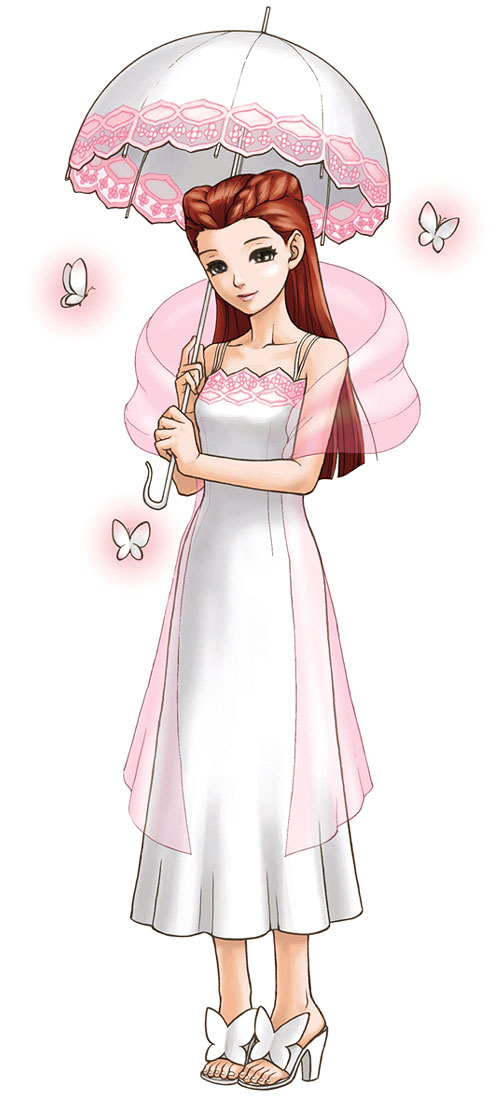
Ace Attorney villains aren’t typical video game baddies: they don’t breathe fire, wield chainsaws or threaten to inflict any other kind of bodily harm. No, their villainy is much more insidious. The player must corner them in court and prove their guilt with hard evidence. Of all these criminals, none is creepier than Dahlia Hawthorne, a dainty young lady with a parasol and a lacy dress. Behind that fair façade lurks a vindictive, selfish and manipulative murderer. Although she wears a sweet smile, Hawthorne betrays her true nature by glaring murderously at any attorney foolish enough to cross her.

9. Bowser (Mario series)

Bowser may not be the most threatening villain—or even the most competent—but his tenacity is remarkable. After twenty-five years of trying to defeat Mario, he’s still at it. Bowser is delightfully self-conceited. At one point, he announces his entrance by roaring, “Did somebody page the king of awesome?” In spite of his shortcomings, he can also be pretty scary. Giga Bowser, anyone?

8. Majora (Legend of Zelda: Majora’s Mask)
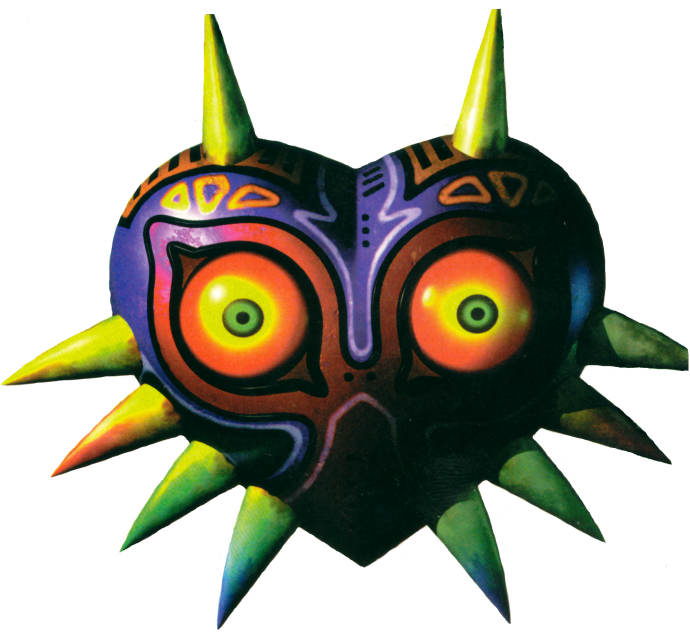
Before reading further, go back and spend fifteen seconds looking at Majora’s Mask. Go on. I’ll wait for you. I could write lots about Majora, but everything I have to say is expressed much more eloquently in the mad, nihilistic stare of those horrible yellow eyes. Majora is demented, with no apparent motivation other than bringing the world to ruin. Ambitious, power-hungry villains are scary, but at least we understand them. Truly terrifying are villains like Majora, who are driven by nothing more than a detached, inexplicable determination to see the world burn.

7. Sarah Kerrigan (StarCraft series)

Sarah Kerrigan isn’t a villain at first—in fact, she’s hardly a major character. Kerrigan is introduced as an insurgent fighting to topple an oppressive government, and she seems like a pretty decent person. Then she’s betrayed by her superior, left to die and assimilated into the hostile extraterrestrial species known as the Zerg. Now a superhuman creature, she begins a campaign to conquer the sector, betraying allies and showing no mercy. Kerrigan’s unexpected descent into evil earns her a place on this list, along with the cool, casual way she grinds her enemies into the dust.

6. Giygas (Earthbound)
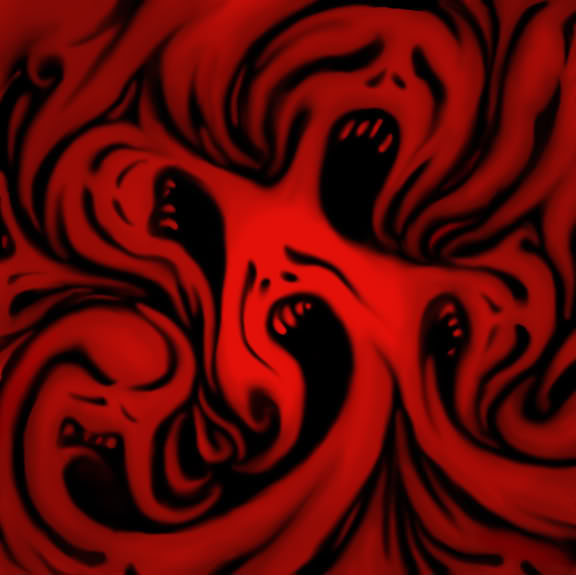
Earthbound is not a typical RPG. Its heroes aren’t warriors with swords and lances, but kids with baseball bats and frying pans. The game is cheerful, full of bright visuals and quirky humor. All this stands in stark contrast to its villain, possibly the freakiest enemy to appear in any video game ever. Giygas is… an extraterrestrial entity driven insane by its own power, maybe? Whatever it is, it looks terrifying and can speak only in the fragmented phrases expected of a creature whose consciousness has been dissolved by evil. The fact that it’s impossible to defeat without using a strange trick makes it that much scarier.

5. Lavos (Chrono Trigger)
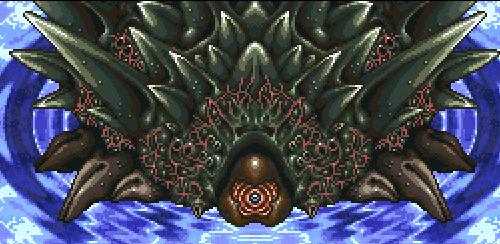
Chrono Trigger is another unusual RPG, not to mention a masterpiece. The hero travels through time from prehistory to the far future, and his companions—a medieval knight, a cave woman and a dilapidated robot, among others—span the whole of the world’s history. Their enemy? An extraterrestrial parasite called Lavos that burrows into the world’s crust, spends millennia draining the planet’s life and emerges to reduce it to ashes. Lavos isn’t so much a character as a deadly force, a cross between a plague and a thousand atomic weapons, destined to destroy the world—unless the player can stop it first, of course.

4. GLaDOS (Portal series)
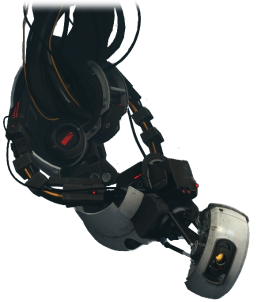
GLaDOS, a computer developed by Aperture Science, is childish, sarcastic, spiteful and surprisingly likable. It puts the game’s protagonist through a series of tests, promising her a slice of cake if she succeeds in passing them all. Only partway through the game does it become clear that GLaDOS is trying to kill her. Even after its sinister nature is revealed, the computer remains an engaging character. For an amoral machine, GLaDOS earns quite a lot of respect—and perhaps even sympathy—from the player. Plus, GLaDOS sings “Still Alive.” Need I say more?

3. Kefka Palazzo (Final Fantasy VI)
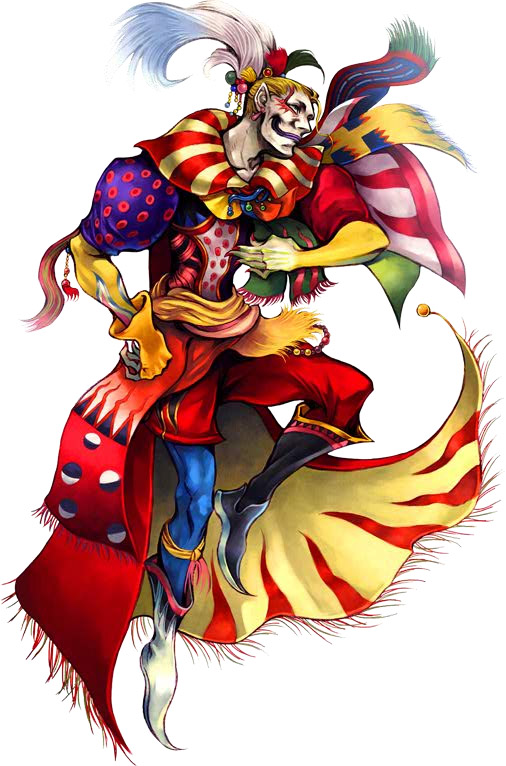
Yes, he looks a bit like Joker from the Batman franchise, and yes, he shares the same twisted sense of glee, but Kefka is unforgettable. Before Kefka, most RPG villains were distant, predictable tyrants, who relied upon minions to eliminate the protagonists and sometimes made brief appearances to taunt the player. Then Kefka appears on the scene—as a lackey. A servant of the evil Emperor Gestahl, Kefka runs like a coward every time the player confronts him. Through betrayal and deception, however, Kefka attains an ancient power and devastates the earth. In the end, the protagonists don’t save the world—they save what’s left of it. Besides his memorable rise to power, Kefka is notable for his nihilistic views and fantastic musical theme, the four-part, twelve-to-seventeen-minute “Dancing Mad.”

2. Ganon (Legend of Zelda series)
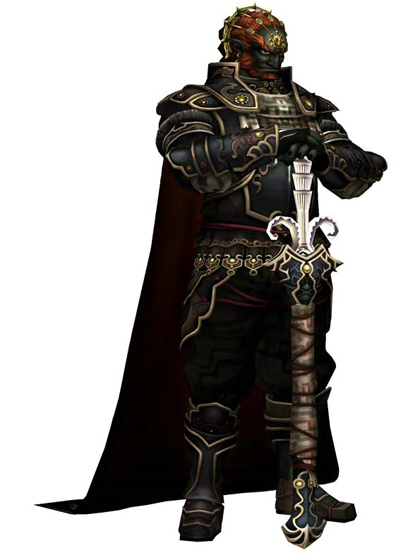
Ganon, also called Ganondorf, is one stubborn guy. Generations of heroes rise to confront him, yet he manages to press on, century after century, relentlessly seeking the powerful relic known as the Triforce. Each game gives a slightly different spin on Ganon’s character. In Ocarina of Time, he’s a thief: arrogant, treacherous and cruel. Wind Waker introduces us to a sorrowful, bitter Ganon, and Twilight Princess gives us a Ganon pulling strings from the shadows. In every game, whether controlling fiends, transforming into monsters or facing the hero in single combat, Ganon is a force with which to be reckoned.

1. Sephiroth (Final Fantasy VII)
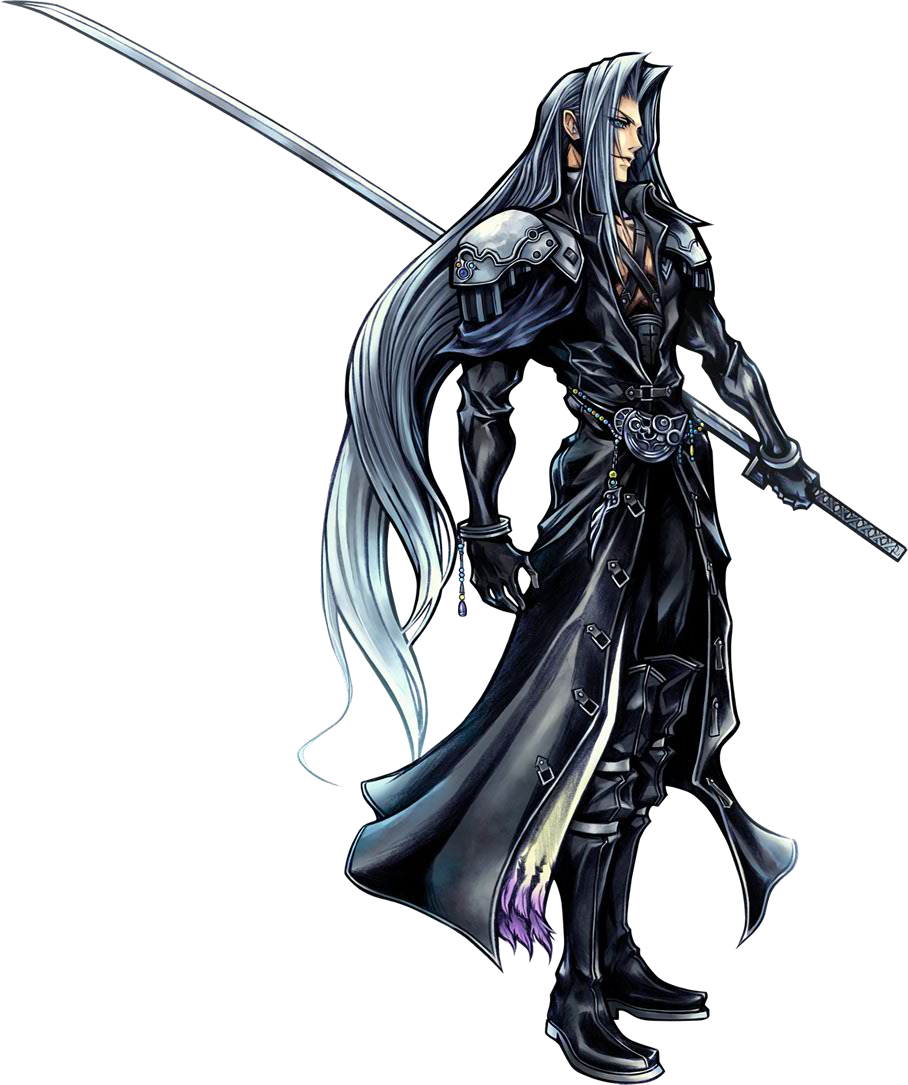
Don’t be fooled by the long silver hair and stylish coat—Sephiroth is about as evil as a villain can get. Tragic backstory full of disastrous misunderstandings? Check. Delusions of godlike grandeur? Check. Utter disregard for morality, conscience or decency? Check. Tendency to massacre innocent, unsuspecting people? Check. Driven by a lust for power and revenge, Sephiroth manipulates one protagonist, brutally murders another and casually inflicts all kinds of havoc upon the world. Add his epic musical leitmotif, “One Winged Angel,” and you’ve got a villain to give the bravest hero second thoughts.

O people of the Internet, what great video game villains would you add to this list? Let us know in the comments!

37. Everything I Know about Creativity I Learned from The Legend of Zelda

Today’s post was written by Wes Molebash, blogger and cartoonist extraordinaire. It came at the perfect time, since The Legend of Zelda: Skyward Sword is coming out in a couple of days. Check out his website for more awesome artwork and insights on creativity!

Like most people my age, I grew up playing the Legend of Zelda video game series. I loved every minute of those games, and Ocarina of Time played a defining role in my young adulthood.

Now I like to consider myself a “creative person.” What I mean by this is that I love to create art and I’m always scheming of my next “big” project. Ideas are cheap; art is work, and I’m absolutely in love with the creative process.

That being said, I realized the other day as I was toiling in my basement office that everything I know about creativity was learned from playing the Legend of Zelda video games.

For instance:

It doesn’t matter how small you are or what tools you are using

In several of the Zelda games, Link starts his journey as a little boy who wields a measly wooden sword and a Deku shield. A DEKU shield! No one is afraid of a Deku shield. But he doesn’t let this stop him. He goes straight into his first dungeon and defeats the baddie with his slingshot David-and-Goliath-style. The journey has begun. He’s received his first taste of victory, and he’s off to the next dungeon.

So what does this tell me about the creative process? Simple: It doesn’t matter how skilled you are or how big your platform is or how expensive your tools are, just create! Don’t be hindered by your limited experience or lack of resources. I know famous cartoonists who draw awesome cartoons on three-thousand-dollar computer tablets. I also know a lot of amateur cartoonists who draw awesome cartoons using Ticonderoga No. 2 pencils and Sharpie markers. Take the resources you have and use them to the best of your ability.

Every obstacle has a weak spot—exploit it!

The Legend of Zelda series has been around since the eighties and it continues to follow a familiar formula: go into dungeons, collect maps and compasses and special weapons, and fight seemingly indestructible beasts who all have a glaring Achilles heel. Does the beastie have one huge, rolling eyeball? It’s a safe bet that you’ll want to shoot some arrows into the beast’s ocular cavity. Does the baddie occasionally stop to roar for a prolonged period of time? I’d grab some bombs and make it rain inside that guy’s maw. No matter how big the monster is, his weak point is right there in front of you begging to be struck.

The same holds true with our creative obstacles. They seem impossible to topple, but—the fact is—they’re quite easy to destroy! If I had to guess, I’d say that 99% of our creative obstacles can be toppled by simply CREATING. Are you having a hard time motivating yourself? Get out your tools and create. Do you have some naysayers telling you that you suck at life? Tune them out and create. Are you swimming in a sea of rejection letters from agents and publishers? Take the critiques and criticism with a grain of salt and create.

It really is that simple. Once you get started it’ll be hard to stop. The weak spot of your obstacle is right there staring you in the face. Exploit it.

You’re going to get better

As I said above, when Link starts his journey he is just a little boy with a crappy sword and shield and three hearts in his life meter. However, as he continues his quest he gets better. He collects more weapons. He becomes more resilient. He ages. By the end of the game he’s got the Hyrule Shield, the Master Sword, some rad magic powers, a pair of flippers that help him swim and hold his breath under water, a bunch of sweet weapons in a bag that would be impossible to carry in the real world, and eighteen hearts in his life meter. He finally ends up at Ganon’s door and he’s ready to—as they say in the UFC—“bang.”

The same is true for your creative endeavors. The more you create, the better you’ll get. You’ll also acquire new tools and awesome advice from other creators. Most importantly, you’ll gain experience. No longer will you feel completely daunted by project proposals, pitches, and rejections. It’s all part of the process and you’ll get better and better at those things.

So wipe your brow, keep creating, and—when you need to take a break—dust off your N64, pop in Ocarina of Time, and wander around Hyrule Field for a spell.

What have you learned from video games? Let us know in the comments!

21. The Legend of Zelda

There’s no way on Earth I can fit my appreciation for The Legend of Zelda in a single post. It requires an effort of heroic proportions, but I’m going to try.

The Legend of Zelda is a series of video games in which a young hero named Link rescues Princess Zelda from the wicked sorcerer Ganon. The basic plot of most games is simple—Link rescues Zelda and defeats Ganon—but each game embellishes it with beautiful settings, delightful characters and unexpected twists. A few Zelda games reject the classic Link-rescues-Zelda formula for something entirely different, shipwrecking Link on an island or forcing him to relive three days over and over in order to save a town from a nihilistic imp. There are numerous incarnations of Link and Zelda throughout the series, but Ganon is always the same character—like Sauron and Voldemort, he’s one of those villains who refuse to die.

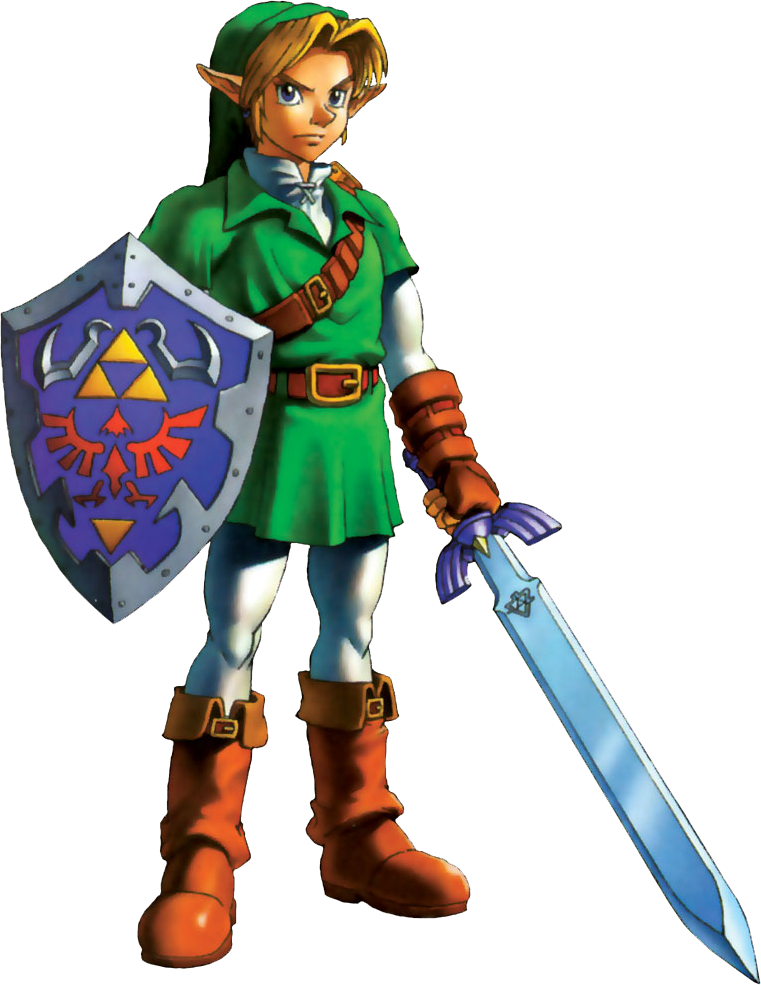
Link isn’t a typical adventurer. First of all, he wears a green tunic, a stocking cap and occasionally a pair of white tights: definitely not standard garments for a mighty hero.

While he uses some of the usual tools and weapons of the adventurer—sword, shield, bow, arrows and so on—he also uses equipment that’s frankly rather strange: boomerang, bug-catching net, bombs, empty bottles, musical instruments and chickens. Well, to be precise, he uses cuccos, the Zelda equivalent of chickens, which can be used to glide through the air after jumping from a ledge.

(By the way: If you ever happen to play a Zelda game, don’t attack the cuccos. Trust me on this one. Bad things happen to players who attack cuccos.)

Link is usually accompanied by a companion: a talkative fairy, a cowardly sea captain, a magical sailboat, a shadow imp or Princess Zelda herself. These companions are helpful for the most part, though some players (myself included) have tried in vain for years to kill Navi, Link’s fairy companion in Ocarina of Time, who shrieks “Hey!” and “Listen!” and “Hello!” and “Watch out!” with irritating frequency.

Ocarina of Time, by the way, is the greatest video game ever. It received almost universally perfect scores upon its release about thirteen years ago. Review compiler websites rank it as the highest-reviewed game ever. It tops pretty much every list ever compiled of the best video games ever made. In fact, the Zelda series is probably the most highly-acclaimed video game series of all time.

There are too many good things about the Zelda series to fit into a short post, so I’ll highlight just a few more.

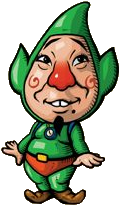
Although Link is a silent protagonist without much personality, the supporting cast and minor characters are typically eccentric, likable and highly memorable. A few of them are also kind of creepy. Mostly this guy.

The gameplay of the series is a balanced blend of exploration, combat and puzzles, with a few minigames thrown in for good measure. The games usually feature important treasures for Link to collect, all of which must be gathered to complete the game. Each treasure lies in the heart of a dungeon full of puzzles, traps, locked doors, keys and monsters. At the end of each dungeon lurks a difficult and terrifying enemy, the boss, for Link to conquer in order to claim the dungeon’s treasure. In between dungeons Link is free to roam the land, interacting with people, exploring, earning money, completing optional quests and barging into private homes to break clay pots.

The music of the Zelda series is beautiful. Music plays in integral role in most of the games; Link often uses magical instruments to progress in his quest. (In Ocarina of Time, the eponymous instrument is a woodwind possessing considerable magical power.)

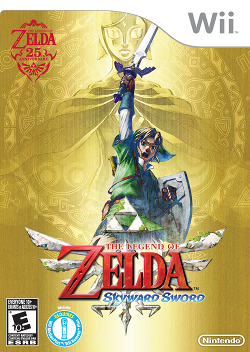
The Legend of Zelda is celebrating its twenty-fifth anniversary this year. This is also the year Skyward Sword, the latest Zelda game, is released.

It comes out on November 20 for the Nintendo Wii. To say I’m excited for its release is a staggering understatement. My younger brother is also awaiting it eagerly. We’ll be sharing the same copy of the game in December, so I’m not sure how we’re going to work out who gets to play it first. My brother owns several machetes and swords, so I might borrow my old man’s cavalry saber and fight my brother for the right to play Skyward Sword first. We’ll see.

My final thoughts about the Zelda series? Play it. If you like video games at all, I can pretty much guarantee you won’t regret it.