77. That Time I Tangled with Barbed Wire

Many missionary kids have learned the folly of strolling carelessly through the jungle, and some even have the scars to prove it.

The jungles in Ecuador are beautiful: dazzling waterfalls, crystal-clear streams, bright flowers and lush vegetation. However, visitors to the jungle must not become too distracted by its beauty. The jungle is a wild place, full of potential threats.

No, I’m not talking about piranhas, jaguars, poisoned darts or ancient temples full of death traps. The true dangers of the jungle are much more insidious and sinister: ticks, amoebas, parasitic worms and mosquitoes. I particularly detest mosquitoes, those messengers of Satan, which buzz and bite and sometimes carry deadly diseases.

The jungle is also full of sharp objects waiting to pierce unwary feet. Unwary visitors to the jungle are confronted by thorns, spines, sharp rocks, rusty nails and even barbed wire. Only a fool walks through the jungle without watching his step.

I was always careful to watch my step. The problem was that sharp objects in the jungle are sometimes found in places other than the ground underfoot.

When I was just a kid, I went camping in the jungle with my old man and big brother. The place to which we went was called Aguas Claras, or Clear Waters. On our way there we stopped at a cacao plantation to visit the parents of a pastor with whom my parents worked. (For those who don’t know, cacao beans are the main ingredient of chocolate.)

My old man, a true missionary, stayed for hours talking. Having long since become accustomed to my parents talking for hours with people I didn’t know, I went off exploring alone. Fortunately, it was an interesting place to explore. There were groves of cacao trees nearby and a river with stones for throwing. I also found a couple of paths through the jungle.

I don’t remember why I decided to run along one of those paths. My brother may have been chasing me, or I may have been letting off steam. Whatever the reason, it was a mistake. Stretched across the path at eye level was a long strand of rusty barbed wire.

Have you ever run into a clothesline? I don’t remember the exact details of my tangle with the barbed wire, but I imagine it must have been something like colliding with a taut clothesline while running at full speed.

We were many miles from any kind of medical facility, so the gash in my left cheek was never stitched up. Some weeks after the incident, my old man tried to console me about the scar by pointing out that I now had something in common with both Indiana Jones and the evil lion from The Lion King. I didn’t need to be consoled. As far as I was concerned, a scar—especially a facial scar—was pretty much the coolest thing that could ever happen to a missionary kid.

My left cheek is still scarred more than a decade later. I’m not sure whether to be relieved or disappointed that the scar isn’t very noticeable. I suppose I should simply be thankful I didn’t lose an eye.

The moral of the story? Be aware of your surroundings if you ever visit a jungle, and consider wearing goggles.

73. Exotic Cuisine

Being a missionary kid can be both a blessing and a curse. MKs are privileged to enjoy all sorts of experiences unavailable to most kids, but they also suffer all sorts of difficulties most kids never have to endure.

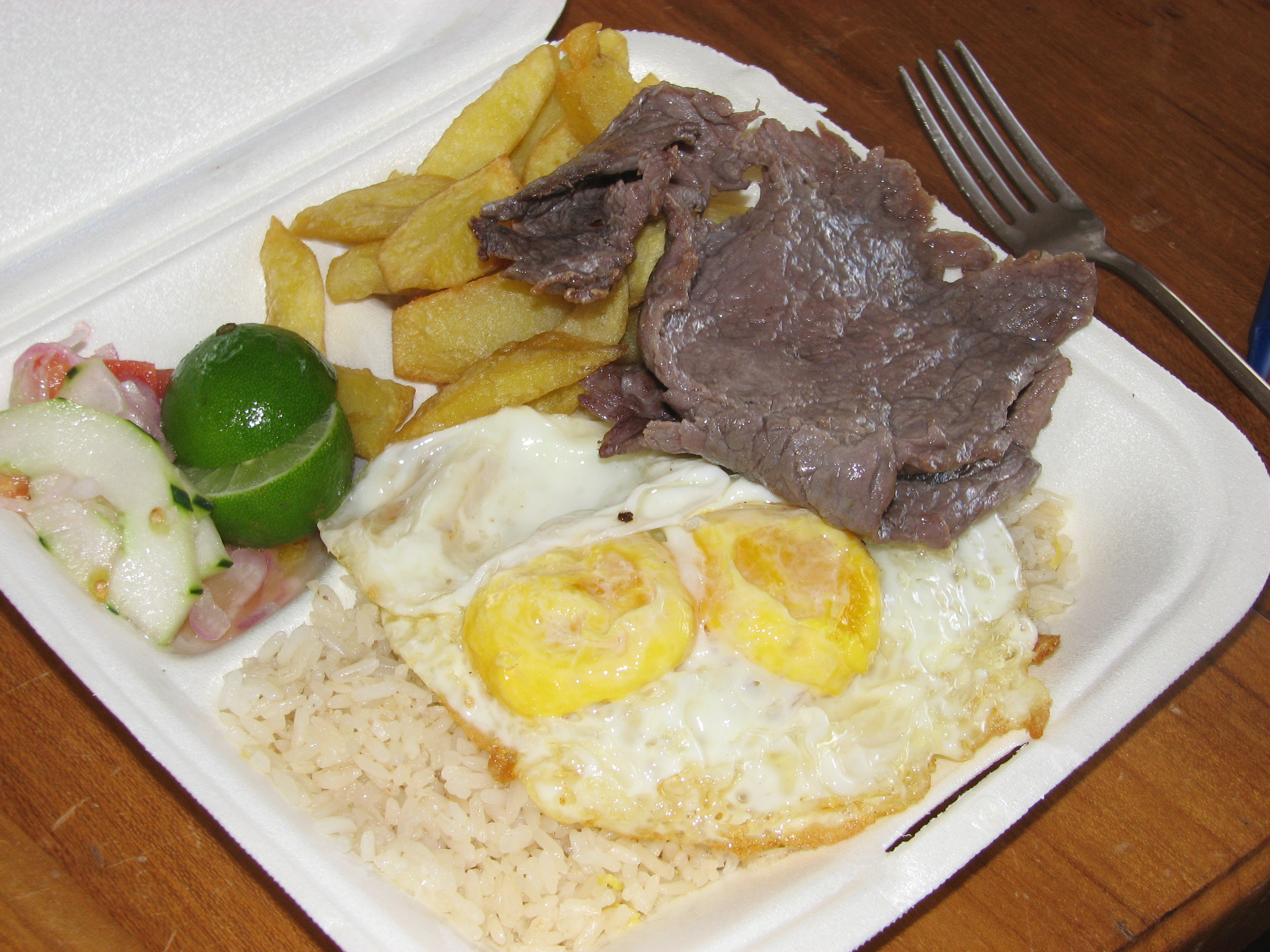
For most MKs, the local cuisine can be either a blessing or a curse. Some exotic foods are awesome. Some are awful.

Regardless of whether or not they like international cuisine, missionaries and their children hold to a sacred missionary proverb: Where God leads me I will follow; what God feeds me I will swallow.

From the jungles of Ecuador to the suburbs of South Korea, I’ve been blessed to enjoy (and cursed to endure) all sorts of exotic foods. Fried leaf-cutter ants, stir-fried tapir meat, squid jerky, grilled squid, red bean ice cream—the list goes on and on.

If pressed, I’d probably name maracuyá juice as my favorite exotic fare. Maracuyá, also called passion fruit, is an ugly, often shriveled pomegranate-like fruit the size of a tennis ball. Despite its drab outer appearance and sour flavor, it makes an exquisite juice when prepared correctly.

My least favorite exotic fare might be kimchi, a popular dish in South Korea. I recorded my impression of kimchi in my novel. Here’s an excerpt:

The only thing I didn’t like was kimchi, a pungent dish consisting of cabbage soaked in some strong liquid (I suspected sulfuric acid) and fermented until its alcohol level equaled that of vodka. Had any of the kimchi fallen to the table, I would not have been surprised had the tablecloth caught fire.

While many MKs get to experience a vast range of unusual dishes, they miss out on a lot of treats most Americans take for granted: marshmallows, root beer and peanut butter cups, to name but a few. When my brothers and I were young, we viewed the United States of America not so much a country as the source of all the treats we couldn’t get in Ecuador.

There have been, I admit, certain exotic dishes I never had the opportunity to sample. I never tried cuy, an Andean specialty consisting of roasted guinea pig. I also missed out on chicha, a manioc- or corn-based alcoholic beverage popular in the jungles and highlands of Ecuador.

Someday, perhaps.

58. Gangster Pastors

One of my most prized possessions is a weather-stained, gray cloth cap. If my residence ever burns down, this cap is one of the first things I will try to rescue from the flames. I call it my gangster cap, not because it fits the so-called gangster style, but because a gangster—or rather, an ex-gangster—gave it to me.

I was touched when my ex-gangster friend, whom I’ll call Miguel, gave me his cap, because it has great sentimental value for him. He had once lost it while plunging into a gully to escape from a rival gang. It lay at the bottom of the ravine for four months until he sneaked back to retrieve it.

Miguel was a car thief and a gang leader in Quito, the capital of Ecuador and the city of my birth. Besides his other crimes, Miguel occasionally worked for Mama Lucha, a notorious criminal kingpin. (I guess she should actually be called a queenpin since she was a woman.)

On one occasion, Miguel and his comrades tried to steal a long sheet metal sign welded to a pedestrian bridge. Unfortunately for them, they weren’t able to divide the sign into pieces as they’d planned. In the end they had to carry it whole through the streets of Quito, weaving furtively through city streets like some sort of monstrous metal centipede.

Miguel is currently happily married, working at a government job in Quito and ministering as a lay leader in his church.

It is a source of amazement, amusement and wonder to me how many of the church leaders I knew in Ecuador are former gangsters, thieves or occultists.

I’m not using real names in this post in order to protect the privacy of the leaders whose stories I’m sharing. I assure you, however, that to the best of my knowledge all of these stories are accurate, factual and true.

Paco is a kind, gentle and fiercely amiable pastor from the coast of Ecuador. Like King Saul in the Old Testament, Paco is about a head taller than everyone around him. His skin is black, his frame is muscular and his cheek is scarred by a gash from a knife. He used to be a thief on the streets.

Armed with a knife, Paco once accosted a girl at night with the intention of taking her money. The girl, who was a Christian, began talking with him about God. Although it was a long time before Paco would know Christ, he eventually put away the knife and escorted the girl to her home because—as he explained—it was a dangerous neighborhood and he didn’t want her to get robbed.

Paco eventually wound up in prison. Some of his fellow prisoners were personal enemies who wanted to kill him. However, before they had the opportunity, Paco was released. He didn’t know how or why—the only hint he received was a vague explanation that “some lawyer” had made all the necessary arrangements. What those arrangements were, and who the lawyer was, he doesn’t know to this day. It has been suggested to him that the lawyer might have been an angel. He doesn’t deny the possibility.

Then there’s Luís, another ex-criminal from the Ecuadorian coast. His skin is black, which makes his dazzling white smile all the more striking. Luís is a fantastic storyteller, and my dad has been privileged to hear accounts of several of his escapades.

Luís, while stoned on drugs, once tried to murder another man, also stoned. Having crept up on him from behind, Luís put a pistol to the man’s head and pulled the trigger. The gun misfired. Luís examined the pistol, peering blearily into its barrel, while his victim sat peacefully unaware of the attempt being made on his life. Luís tried again to murder his victim. The gun didn’t go off, but this time the man realized what was happening and fled shrieking while Luís resumed his bewildered examination of the gun.

On another occasion, Luís entered a church and sat down—only for a huge army knife to fall out of his shirt and hit the concrete floor with a thunk. Nearly every head turned to look at him, and a little old lady sitting nearby picked up the knife and sweetly gave it back to him.

A turning point came when a taxi crashed into a light pole as Luís leaned against it. The pole absorbed most of the impact, but Luís flew a considerable distance and landed hard. Just a few minutes later he met a Christian lady from his neighborhood. “Did something just happen to you?” she asked. “God told me to pray for you five minutes ago, so I did.”

After Luís became a Christian, two attempts were made on his life, once with a pistol and once with a sawed-off shotgun. The guns misfired both times—two more miraculous interventions.

All three of these church leaders have told my dad that they’re grateful to God for never letting them kill anybody. They all came frighteningly close to it. Looking back, they can see the hand of God at work in their lives, even when they didn’t care for him.

I believe, if we look hard enough, most of us can see the hand of God at work in our own lives.

I know I can.

33. That Time We Broke Down

This post really ought to be titled That Time We Broke Down at Night in the Rain on a Remote Stretch of the Ecuadorian Coast Notorious for Bandits, but that title was too long.

This is the story of something that happened a few years ago. Every missionary kid has a few stories he or she can’t resist sharing, and this is one of mine. It involved some truckers, a loaded gun, a kindhearted pastor and lots of mosquitoes.

When I graduated from high school in Quito some years ago, my family and I were mere weeks from moving away from Ecuador. I was going to Indiana to begin college; my family was going to Uruguay to work in the city of Montevideo. We decided to make the most of our final weeks in Ecuador by going on a couple of trips.

Our first trip was to the town of Shell Mera in the jungle. Some of my readers may recognize Shell Mera as the town used as a base by Jim Elliot, Nate Saint and the other famous missionaries killed by the Huaorani people in the fifties. We stayed in a cabin some miles out of town and made excursions to our favorite waterfalls, trails and restaurants.

Our second trip was to a camp outside the village of Same on the coast of Ecuador. My grandfather, who spent much of his life as a missionary on the Ecuadorian coast, came along with us to say goodbye to old acquaintances.

We were driving along the coast toward the city of Esmeraldas when our car stopped running. Night had fallen. Rain was falling. It was a decidedly gloomy evening.

My old man took off into the darkness to find someone from whom we could buy or borrow a gallon of gasoline. The rest of us waited in the blazing heat of the car, opening the windows occasionally to let in cool air and mosquitoes.

At length we heard a gunshot come from the direction in which my old man had gone. We immediately began fasting and praying.

My old man returned at last with a gas can, explaining he was able to obtain some gas from a nearby shrimp farmer. We asked about the gunshot. “Oh, he thought I was a bandit,” said my old man. “This area is apparently renowned for bandits.”

We were not comforted.

The gas was not enough to get the car going. We were perplexed, and then our guardian angels arrived in the unlikely form of two grinning truckers. They towed our car to the nearest village and parked us safely in the light of the only street lamp. (There may have been more than one street lamp in the village, but I remember only one.) The truckers took off and we settled down to wait.

At last my old man was able to contact a pastor from Esmeraldas, who arranged for our car to be transported to a mechanic in the city. My parents stayed with the pastor while my grandfather, younger brother and I found lodging in a rickety, old-fashioned hotel.

We spent much of the next day wandering around the city before catching a ride to the camp outside Same. Our car was eventually fixed, and we were able to return to Quito with two or three days to spare before my grandfather and I caught our flight to Indiana.

Our adventure cost us sleep, for we were awake late into the night; money, for we had to pay to have the car fixed; and blood, for we fought a losing battle against the mosquitoes. In the end, however, we gained more than we lost: my family and I had one final adventure together in Ecuador before parting ways and traveling to opposite ends of the earth.

23. TMTF Reviews: Living Poor

About forty-five years ago, a Peace Corps volunteer was deployed to a remote South American village. For those who don’t know, the Peace Corps is a program run by the US government in which volunteers travel to impoverished countries to provide technical assistance. Moritz Thomsen, the author of Living Poor, wound up in a tiny village called Río Verde on the coast of Ecuador. He stayed four years, teaching about agriculture and learning about human nature.

My parents have been nagging me to read Living Poor for years. My grandfather and some of my uncles were personally acquainted with Thomsen and some of the people he describes in the book. A phrase from the book, the sadness of the rats, is used by my family to refer to loneliness or melancholy. Although I prefer fiction to nonfiction as a rule, I decided I should read Living Poor to oblige my family and figure out what exactly the sadness of the rats is supposed to mean.

Living Poor is an excellent book. Having spent much of my life in Ecuador I’m probably biased, but there’s no denying the book is superbly written. Quoth Mark Covert, “Moritz Thomsen could well be the finest American writer you’ve never heard of.” The tone of Living Poor alternates between melancholy and cynical humor. The author is at his best when describing his failures. One of my favorite lines in the book recounts his failure to cultivate lettuce in the tropical climate: “The lettuce appeared very tentatively, took one horrified look at the Ecuadorian sun blazing in the sky, and promptly died from shock.”

The book gives vivid descriptions of places, but the best descriptions are of people. The author manages to convey a sense of the lives of the people of Río Verde—the resigned weariness and quiet desperation, the superstitious blend of religion and folklore, the myriad affections and squabbles and jealousies of village life. It’s a touching picture of people in poverty, a picture that could be applied to villages across the world.

Despite the jabs of humor, the prevailing tone of Living Poor is one of cynical resignation. The author’s initial optimism and idealism fade in the face of poverty and misfortune and the poor, ignorant, stubborn villagers he must contend with day after day.

Living Poor is definitely worth reading, particularly by anyone remotely interested in poverty or third-world culture. It’s the sort of book that makes the reader think and laugh and cry. The style is great, but—as its title suggests—the book’s greatest strength is the vivid impression it conveys of what living poor is like.

Oh, one more thing.

the sadness of the rats: (n. phrase) an expression coined by Jorge, a resident of Río Verde, to describe the melancholy that afflicted Moritz Thomsen as he lay in his house at night with only rats for company

10. Squirrels

It was fun to grow up in Ecuador for many reasons, but one of them was the way visitors to the country reacted in awe and amazement to everyday things. A missions team would come to Quito from the US and gape in wonder at llamas or street performers or the Andes Mountains, and I would feel a smug sense of pride at considering these miraculous wonders a normal part of my missionary kid life.

Then I came to Indiana and began doing the same thing as those visitors, except my awe and amazement were reserved for squirrels.

In my fourteen or so years in Ecuador, I only ever saw two squirrels. One was kept in a cage as an exotic animal at a beach resort. The other crossed my path while I was visiting a cloud forest with my high school biology class. Cloud forests are basically high-altitude rainforests, and the location we were visiting was renowned worldwide for its vast variety of bird species. My class was given the option of taking an early-morning bird-watching tour. Most of us agreed to try it.

So at about six o’clock in the morning we found ourselves stumbling along a jungle path, bereft of breakfast or coffee, clutching our binoculars and trying to stay awake as our guide pointed out toucans and parrots that were so far away they all looked alike. I was almost asleep on my feet when someone gave a sharp, sudden cry.

“Squirrel!”

We immediately abandoned whatever tropical bird our guide was pointing out and looked around eagerly for the squirrel. There it was! A squirrel! Running across our path just thirty feet away! We were fascinated. In the end, the most remarkable and memorable thing about that whole bird-watching tour was the squirrel.

Then I came to Indiana to attend college and realized there are squirrels everywhere. I immediately pointed this out to people.

“Squirrels!” I exclaimed. “Right there! Cute fuzzy furry squirrels!

People began giving me odd looks.

Squirrels are adorable. I don’t understand why people aren’t more excited about them.