238. That Time I Survived a Volcanic Eruption

I live in Indiana, where there are no volcanoes. We have woods and cornfields and adorable squirrels, but no volcanic eruptions. I appreciate Indiana’s peaceful predictability. The weather can be nasty and tornadoes blow through occasionally, but ash and brimstone are pretty rare.

A few days ago, I spent a moment of my tranquil Indiana life trying to think of past adventures to write about for this blog. I have previously shared anecdotes of memorable moments in my life: tales of awkward kisses and severed human arms and Giant Mutant Killer Jungle Ants. (All of these anecdotes, I assure my readers, are true.) Heck, my very first post for this blog was the story of That Time I Was Attacked by a Tomato.

I was beginning to worry I had run out of interesting anecdotes for this blog—and then I remembered all the times those freaking volcanoes went off when I was a kid.

Guagua Pichincha

Guagua Pichincha, 1999

The Andes Mountains run right down the middle of Ecuador, dividing my homeland neatly in two. The Andes are full of volcanoes. These have a disquieting tendency to go off like bombs, showering cities in ash.

Pictured above is the Pichincha Volcano, which erupted in 1999 and blanketed Quito, Ecuador’s capital, in ash. My older brother lived in Quito at the time, and he told me all about it when he came home to visit. I lived with my family in Santo Domingo de los Colorados, hours away from Quito, and thus missed all the excitement.

We would later climb one of Pichincha’s peaks, Rucu, on several occasions. Guagua, not Rucu, is the active peak of the volcano; consequently, we never witnessed any volcanic activity during our climbs.
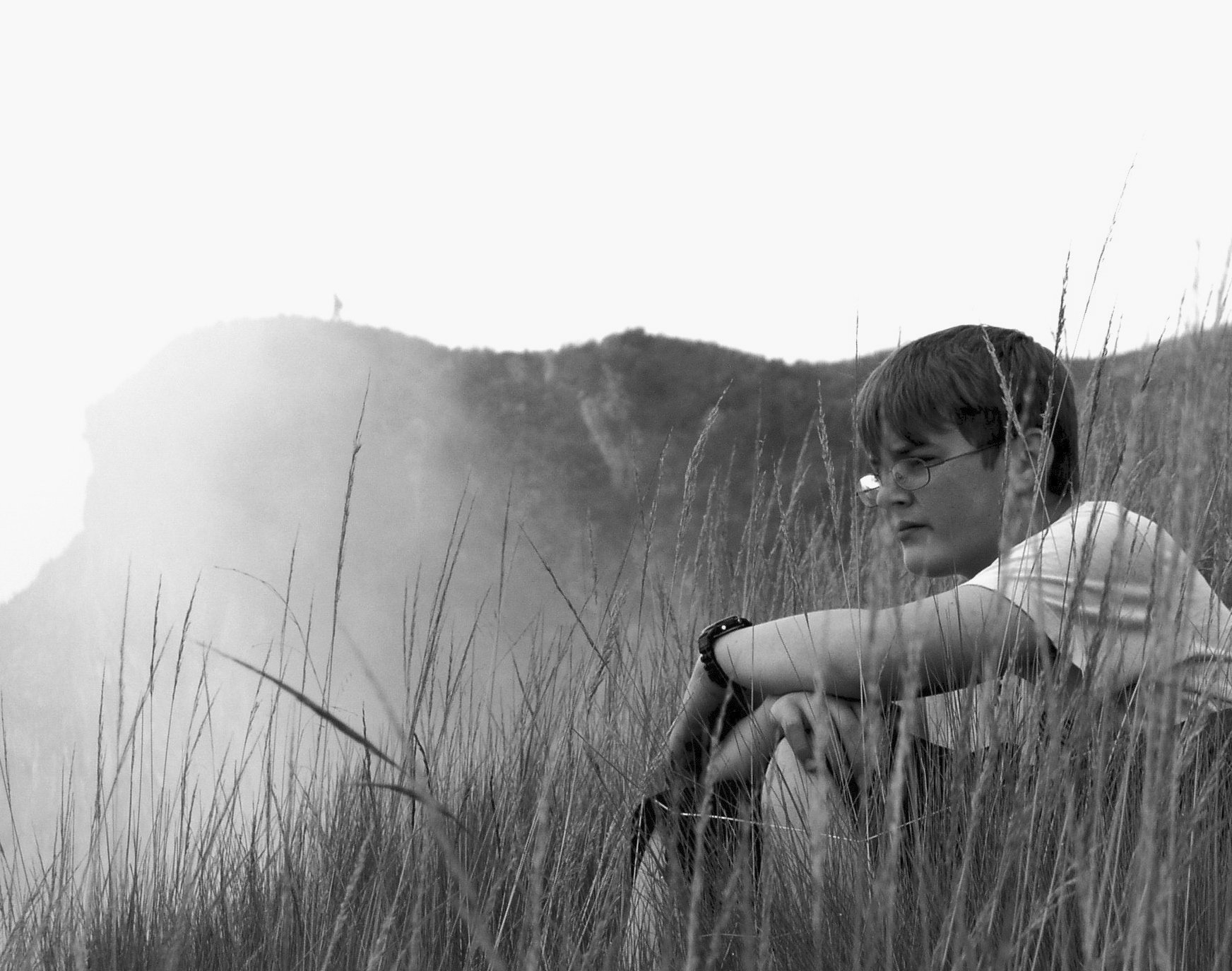
Climbing Rucu, back when I was a pudgy teenager.

Climbing Rucu, back when I was a pudgy teenager.

In later years, when I lived in Quito, I survived two or three volcanic eruptions. We were too far from the volcano to see fire or sprays of lava, but we saw plenty of ash. Dash it all, did we see plenty of ash.

As a kid, I never got snow days. Snow hardly ever falls in Quito, and certainly never enough for school to be canceled. No, I got volcano days: weekdays when mounds of soft, powdery volcanic ash blocked the roads and shut down the schools. During the 1999 eruption, my brother and other Quito residents wore dust masks to keep the ash out of their lungs.

My memory is a sketchy thing at the best of times, and I don’t remember which volcanoes erupted when I lived in Quito. (Full disclosure: It took a bit of research to figure out whether the big eruption I remembered from 1999 came from Guagua Pichincha or Tungurahua.) The last eruption I recall happened when I was in seventh or eighth grade; my high school years were uninterrupted by clouds of volcanic ash.

Now that I live in Indiana, the most exciting disaster to strike is a tornado or a blizzard.

Not that I’m complaining, mind!

What Makes Christmas Special

I was planning to write a new post, but my typewriter monkeys drank too much eggnog last night and passed out on the floor of my apartment. Since they’re not awake to type out a new post, here’s one from last year about what makes Christmas special. Happy Christmas! Stay away from the eggnog!

Christmas.

What comes to your mind? Snow? Colored lights? Gift cards?

When I think of Christmas, what comes to my mind are palm trees, beaches at twilight and dusty houses built of cinder blocks.

Nothing says Christmas like a beach at twilight.

Nothing says Christmas like a beach at twilight.

As a missionary kid in Ecuador, I spent many Christmas vacations with my family at the beach. We’d pile into our car, crank up Adventures in Odyssey on our CD player and drive for hours: descending from the heights of the Andes, passing banana plantations, stopping at derelict gas stations for fuel and ice cream, winding among low hills and finally arriving at the beach.

Towns and villages are scattered across the Ecuadorian coast. Most of them are small, dirty, unimpressive places. Ecuador is a poor country. In December, however, these little communities are brightened with fake Christmas trees and cheap colored lights.

Not relevant to this blog post, but adorable.

What really sticks in my memory is the way people celebrated. My dad and I once passed a merry gathering of children in a little town on Christmas Eve. Many were barefooted; most were dirty; nearly everyone was smiling. It was a scene Charles Dickens would have been proud to write.

In Ecuador, Christmas is a time for celebration. It’s a time for fireworks, family get-togethers and three-liter bottles of Coca-Cola. (Yeah, we’ve got those in Ecuador. Be jealous, Americans.) It’s a time for celebration.

Of course, in many ways, Christmas in Ecuador isn’t much different from Christmas in the United States of America. There are the same silly commercials. The same packed shopping malls. The same frenzied media trying to squeeze as much money as they can out of the holiday season.

All the same, when I see the extravagant displays of holiday decorations around my current home in Indiana, I miss the cinderblock houses on the Ecuadorian coast with tacky tinsel in the windows. The dusty Nativity sets in the corners of living rooms. The cheap ornaments hung from two-foot Christmas trees. The flimsy plastic cups of Coca-Cola.

Most of all, I miss the joy.

What makes the holiday special isn’t the gifts or the decorations or the music or the food. Even the Grinch understands (eventually) that Christmas means more than stuff. Joy and celebration and being together with loved ones are what make Christmas special. The other stuff is nice, of course. The holiday stuff is like pretty wrapping paper and shiny ribbons covering the gifts under the Christmas tree.

In the end, though, who wants just the ribbons and wrapping paper without the presents?

208. Mangling Spanish: A Beginner’s Guide

One of my new year’s resolutions was to improve my Spanish, and I’ve finally resumed my linguistic studies. How have I chosen to study? In the same way all great scholars do, of course.

I’m watching cartoons.

Specifically, I’m watching the Spanish language dub of Avatar: The Last Airbender, my all-time favorite show. It’s a wonderful way to study. Just hearing spoken Spanish again is working wonders for my vocabulary, grammar and syntax.

My studies have reminded me of the linguistic horror stories (or comedies, depending on your point of view) I’ve heard from acquaintances in my homeland of Ecuador.

For example, there was a gentleman who asked for sopa to wash his hands. He meant soap. He received soup.

There was a lady who tried to explain that she had been embarrassed by a pastor, and used the word embarazada because of its similarity to the English word embarrassed. What she announced by mistake was that the pastor had made her pregnant.

Another lady wanted to ride a horse without a rope attached to its bridle, and asked the owner whether she might have permission to mount his horse without the ropa. This greatly alarmed the owner, since ropa is Spanish for clothes.

My favorite story comes from the husband of one of my middle school teachers. One day a group of Jehovah’s Witnesses came to his door. He informed them in faltering Spanish that he did not care to hear about Jehovah’s Witnesses, and was baffled at how angrily they departed.

Only later did he realize that instead of calling them Testigos de Jehová, Jehovah’s Witnesses, he had mistakenly called them Testículos de Jehová—Jehovah’s Testicles.

Not every story is a painful one. A favorite of mine is that of an interpreter asked to translate the following joke into Spanish for an audience: “What did the ocean say to the beach? Nothing. It just waved.”

This awful joke, a play on words, works only in English.

That brilliant interpreter didn’t let that stop him. Without missing a beat, he translated the question into Spanish and answered it with a new punchline: “Hola!”

This Spanish word for hello sounds exactly like ola, the word for wave. That, dear reader, is pretty dashed clever.

I haven’t made any truly memorable mistakes in Spanish, but that’s all right. I’m already quite good enough at making a fool of myself in English.

168. That Time I Was Robbed… Twice

I’m running out of That Time I _____ posts, which is why this blog hasn’t had one since August. I don’t allow myself to make up any of these stories, so they’re in limited supply.

Since I settled last year in small-town Indiana, it has gradually dawned upon me that I probably won’t get mugged if I go out at night. Years of living in Ecuador conditioned me to be cautious. After dark, the streets in cities like Quito are not exactly the safest place.

I once fell prey to a band of thieves on the streets at night, and it was rather a dull business.

Honestly, I’m not sure whether to be disappointed or thankful the incident wasn’t more exciting. There were no knives, guns, blackjacks, nunchakus or venomous snakes. As I strolled along a sidewalk in Quito, three or four hoodlums descended upon me, ripped a silver chain off my neck and snatched some items out of my backpack.

With tremendous sagacity and presence of mind, I skedaddled.

I hailed a taxi once the thieves were out of sight. Now there’s something I need to make clear. Taxi drivers, known as taxistas in Ecuador, sometimes swindle their passengers by charging too high a fee—especially if their passengers are gringos. (There is a widespread and decidedly false notion in parts of Ecuador that all gringos are wealthy.) The best way to avoid being swindled is to keep an eye on the taximetro, or taximeter, making sure the taxista turns it on and charges not a cent more than it indicates.

Well, I was too flustered after being robbed to check the taximetro. I hopped blithely into the taxi, gave the taxista directions and sat in stunned silence. When the taxi stopped just a few minutes later, the taxista demanded five dollars.

This was ridiculous. Taxis are pretty inexpensive in Ecuador—they’re used mostly by people too poor to buy cars—and we hadn’t spent even five minutes driving.

I objected. The taxista repeated his demand. I played my trump card and threatened to summon a policeman. The taxista made a reply I’ve forgotten, but the gist was something like “Bring it!”

Tired, angry and desperate to get home, I paid the taxista. I was twice a victim of robbery that night, but it didn’t matter. I was home.

Looking back, I have to admire that taxista. Any petty criminal can snatch a necklace or a bag. It takes an artist to persuade the victim to surrender his money.

These days, I don’t worry much about getting robbed on the streets. My town seems to be populated mostly by Amish, squirrels and senior citizens, so muggings are rare.

148. New Year’s Resolutions

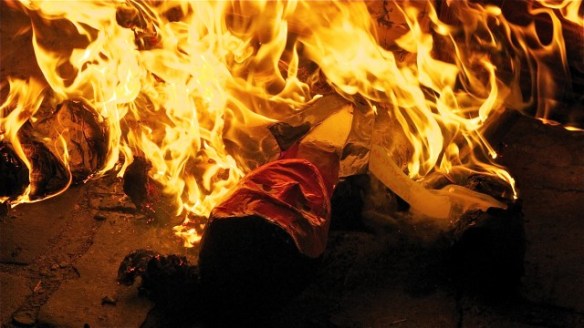
In Ecuador, people celebrate the new year by burning effigies in the streets.

Good times, good times.

Ah, sweet memories.

In Indiana, however, the local authorities frown upon such celebrations. It’s too bad. Since setting things on fire is out of the question, I’ve decided to begin the new year by making some resolutions.

I’m sharing these resolutions on TMTF in order to make them official. After all, a resolution is much harder for me to forget (or ignore) once I’ve announced it publicly.

I will be focused, intentional and self-disciplined

I’ve squandered countless hours on the Internet: reading trivial articles, watching pointless videos and generally wasting time. I’ve also lost many hours due to procrastination, poor planning and sheer aimlessness. This year I intend to invest my time, not merely to spend it.

I will finish the manuscript for The Wanderings of Lance Eliot

I wrote about this resolution in my last post, so there’s not much left to say. This year Lance Eliot shall resume his journey. I hope we both survive it.

I will not be anxious, insecure or obsessive-compulsive

I can’t control my feelings. However, I can control my actions. This year I’ll try to remember what the Apostle Paul wrote about love, which “always trusts, always hopes, always perseveres.” That’s a good example to follow.

I will improve my Spanish

My grasp of the Spanish language—a dodgy thing at the best of times—has weakened severely since my graduation from high school. How do I intend to study the language? By watching cartoons in Spanish, of course.

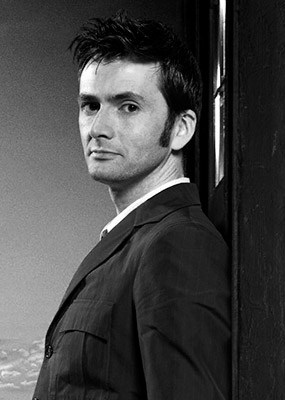
I will grow sideburns like the Tenth Doctor’s

Saving the universe? Bah! A negligible accomplishment compared to having such awesome hair.

Saving the universe? Bah! A negligible accomplishment compared to having such awesome hair.

During his tenure as the protagonist of Doctor Who, David Tennant boasted some splendid sideburns. This year I’ll strive to grow sideburns of comparable majesty.

I will take steps forward

Now that my life has settled down, I must start planning for years ahead. This year I intend to look into future career options.

Have a truly fantastic new year, dear reader!

Do you have any resolutions for the new year that you’re willing to share? Let us know in the comments!

147. Confessions of a Tired Writer

On the coast of Ecuador lies a little town called Same. (In Spanish, it’s pronounced with two syllables: sah-meh.) Although Same boasts a lovely beach, it’s also disfigured by one of the saddest sights I’ve ever seen.

Someone once planned to build a resort on the Same beach, and construction began of a huge hotel. That plan failed. I don’t know the details. The half-finished building looms over the beach, pathetic, silent, empty: a vacant shell of weathered concrete and rusted metal.

I hate to think how many hundreds of thousands of dollars were invested in this aborted hotel. The sight is an ugly one, and unspeakably sad. Someone’s dream died. The ruin isn’t merely an unfinished building. It’s a tombstone. A monument to failure.

That reminds me of something. Something personal.

When I was a kid, I decided to write a trilogy of fantasy novels. In high school, I started a story about a college student named Lance Eliot. At first it was nothing more than a shallow tale of journeys and dragons and sundry fantasy clichés. Early on, it even featured steampunk airships and motorcycles!

Years passed. More than once, I gave up on Lance Eliot and worked on something else. I wrote a couple of detective stories. (In a truly unexpected turn of events, one of them earned a scholarship that paid much of my college tuition!) I tried writing a crime novel. In the end, however, I always came back to Lance Eliot’s journey.

My silly story about swords and sorcerers became something more meaningful: the journey of a man searching for something—the trials of a traveler longing for home—the awakening of a hero from within a selfish, cynical coward. Of course, I kept the magic and dragons and people getting drunk. Lance Eliot’s story remained a fantasy.

It’s not a great story. I know that, but I hope it’s a good one. It has certainly become the most intensely personal project I’ve ever undertaken as a writer. I may not smoke or drink or use dated British idioms, but Lance Eliot and I are very nearly the same person.

It took four attempts over five years, but I finally finished the first part of Lance’s story: The Trials of Lance Eliot. A kindly author introduced me to a literary agent, whose invaluable assistance (and infinite patience) eventually brought my novel to publication as an e-book and later as a paperback.

At the moment, that’s where Lance Eliot’s story ends.

It’s hard to write a novel. It’s harder to publish one. After publishing The Trials of Lance Eliot, I was tired of writing. My life at that time was uncertain and stressful. Having just returned to the United States of America after six months in Uruguay, I had no job, no apartment, no driver’s license and no self-confidence.

Lance Eliot could wait. Once my life had settled down and The Trials of Lance Eliot had sold some copies, I could get back to work on the manuscript for its sequel.

It’s taken a long time for my life to settle down, and I’m pretty sure no more than a few dozen copies of The Trials of Lance Eliot have been sold. I have a job and several blogs and ten thousand other things to keep me busy. The manuscript for the novel’s sequel has been mostly untouched for many months.

Every now and then, however, I think of an empty concrete ruin looming over the town of Same.

The Eliot Papers, the trilogy of which The Trials of Lance Eliot is the first part, has been my greatest passion as a writer for almost as long as I’ve been writing.

Dash it to blazes, I’ve got to finish this thing.

(All right, maybe I do sometimes use dated British idioms.)

Besides my desire to get the deuced story written, I owe it to my agent and publisher to complete the trilogy. He’s invested much time and money in The Eliot Papers. For both our sakes, Lance Eliot must finish his journey.

This brings me to an important announcement.

When I decided to publish miscellaneous creative writing on this blog, I didn’t realize how great a commitment I was making. Posting “Zealot: A Christmas Story” has forced me to make some very hasty revisions and rewrites. It’s been stressful, and I’m not satisfied with the final result.

I can’t keep posting creative writing and regular blog posts if I’m going to make any progress on The Eliot Papers.

Thus, with apologies to my readers, I’m no longer publishing creative writing on this blog.

I’ll post the final chapter of “Zealot: A Christmas Story,” of course, and there’s a brief dramatic sketch I’ll put up on the blog next month. After that, however, TMTF shall revert to its old two-post-a-week schedule until further notice.

I hope that sad old hotel in Same is finished someday. In the end, though, it’s not my concern. Lance Eliot’s story is.

I hope that’s finished someday too.

144. What Makes Christmas Special

Christmas.

What comes to your mind? Snow? Colored lights? Gift cards?

When I think of Christmas, what comes to my mind are palm trees, beaches at twilight and dusty houses built of cinder blocks.

Nothing says Christmas like a beach at twilight.

Nothing says Christmas like a beach at twilight.

As a missionary kid in Ecuador, I spent many Christmas vacations with my family at the beach. We’d pile into our car, crank up Adventures in Odyssey on our CD player and drive for hours: descending from the heights of the Andes, passing banana plantations, stopping at derelict gas stations for fuel and ice cream, winding among low hills and finally arriving at the beach.

Towns and villages are scattered across the Ecuadorian coast. Most of them are small, dirty, unimpressive places. Ecuador is a poor country. In December, however, these little communities are brightened with fake Christmas trees and cheap colored lights.

Not Relevant

Not relevant to this blog post, but adorable.

What really sticks in my memory is the way people celebrated. My old man and I once passed a merry gathering of children in a little town on Christmas Eve. Many were barefooted; most were dirty; nearly everyone was smiling. It was a scene Charles Dickens would have been proud to write.

In Ecuador, Christmas is a time for celebration. It’s a time for fireworks, family get-togethers and three-liter bottles of Coca-Cola. (Yeah, we’ve got those in Ecuador. Be jealous, Americans.) It’s a time for celebration.

Of course, in many ways, Christmas in Ecuador isn’t much different from Christmas in the United States of America. There are the same silly commercials. The same packed shopping malls. The same frenzied media trying to squeeze as much money as they can out of the holiday season.

All the same, when I see the extravagant displays of colored lights around my current home in Indiana, I miss the cinderblock houses on the Ecuadorian coast with tacky tinsel in the windows. The dusty Nativity sets in the corners of living rooms. The cheap ornaments hung from two-foot Christmas trees. The flimsy plastic cups of Coca-Cola.

Most of all, I miss the joy.

Today’s post is about Christmas as a holiday. There is a much deeper meaning to Christmas, and I’ll write about it later this month. For now I want to share what I believe makes the holiday special. It’s not the gifts or the decorations or the music or the food. Even the Grinch understands (eventually) that Christmas means more than stuff.

Joy and celebration and being together with loved ones are what make the holiday special. The other stuff is nice, of course. The holiday stuff is like pretty wrapping paper and shiny ribbons covering the gifts under the Christmas tree.

In the end, though, who wants just the ribbons and wrapping paper without the presents?

116. Because I Am a Christian

While my command of the English language is redoubtable—well, adequate—my knowledge of Spanish is weak. I’ve read very little Latin American literature, and understood very little of what I’ve read.

There is one story, however, I will never forget.

Juan León Mera, the man who wrote the lyrics to Ecuador’s national anthem, penned a story titled “Porque Soy Cristiano,” which translates to “Because I Am a Christian.” I had to read it for one of my Spanish classes in middle school.

It’s the story of a man whom a military officer treats brutally during one of South America’s many civil wars. The officer eventually cuts off the man’s arm with a machete and abandons him. Many years later, the officer is injured (or becomes sick; I don’t recall exactly) and is rescued by a one-armed peasant.

Of course, the peasant is the man whom the officer had maimed years before. Although he recognizes the officer, the peasant chooses to care for him instead of exacting revenge. When the officer learns the identity of his rescuer, he’s staggered.

“Why have you helped me?” he asks.

The peasant replies, “Because I am a Christian.”

It’s only a few words, but it’s enough. Everyone understands. Christian means forgiveness. Christian means compassion. Christian means love—not romantic nonsense, but a simple resolve to treat other people decently.

Things have changed.

To many people today, Christian means hypocrisy. Christian means superstition. Christian means homophobia, prejudice, legalism, ignorance, arrogance and prudishness. Christian means spending an hour sitting in church every Sunday.

Many followers of Christ have abandoned the word Christian due to its negative connotations. I don’t blame them, and yet I don’t agree. I think the word Christian can be redeemed. How can we redeem it? What can we do?

Do we even have to ask?

Let’s redefine Christian. Better yet, let’s stop redefining it. Its original meaning was awesome.

Why do I read those boring prophecies and genealogies in the Bible? Why do I refrain from lying and swearing and being an Internet troll? Why do I even try to treat other people with kindness and respect?

Because I am a Christian.

89. That Time I Encountered a Giant Mutant Killer Jungle Ant

In the jungles of Ecuador there exist enormous ants called congas. Their scientific name is Paraponera clavata, but I prefer to call them Giant Mutant Killer Jungle Ants.

These insects put the ant in giant. Not only are they freakishly large—about an inch long—but also very dangerous.

Here’s an extract from Wikipedia:

Paraponera is a genus of ant consisting of a single species, commonly known as the lesser giant hunting antconga ant, or bullet ant (Paraponera clavata), named on account of its powerful and potent sting, which is said to be as painful as being shot with a bullet. It inhabits humid lowland rainforests from Nicaragua south to Paraguay. The bullet ant is called “Hormiga Veinticuatro” or “24 (hour) ant” by the locals, referring to the 24 hours of pain that follow being stung.

My old man tells me congas bite their victims to secure a firm hold before stinging, and their sting can put a strong man in bed with a fever for as much as a few days.

To wit: nasty little beasts, those congas.

There’s a river in Ecuador called Río Baba: a ribbon of crystal-clear water that winds its way through the jungle. Translated from Spanish, Río Baba means Drool River. Why anyone would give it such a nasty name, I can’t fathom. At the age of nine or ten, I was baptized in this river of tranquil beauty and dubious name.

Río Baba was also the setting of my epic escape from the Giant Mutant Killer Jungle Ant.

Santo Domingo de los Colorados, the town in which I spent much of my childhood, is just a few hours away from Río Baba. My family and I sometimes visited the river for picnics, camping trips and church events.

The river runs beneath a high, steep bank, at the top of which stands a tree with spreading branches. At that point the water is only three or four feet deep. I used to wade near the riverbank, pretending to be a jungle explorer or picking up rocks and throwing them.

On one memorable occasion, as I was playing in the clear water beneath the tree, I felt a prickling on my right shoulder. I turned my head and found myself nose-to-nose with a conga.

At the time, oblivious to the ant’s sinister intent, I brushed it off my shoulder, picked it up from the surface of the water with a leaf and carried it to my old man for his inspection.

I don’t remember whether he swatted the leaf out of my hand or merely commanded me to drop it. Either way, the leaf fell to the ground—the conga holding on for dear life—and I was spared a fate worse than death.

Well, worse than death is a bit melodramatic. Being stung would have been painful, but not as bad as, say, reading Twilight cover to cover.

My old man put the conga in an empty soda bottle and later reprimanded me sternly when I tried to get a close look at it. When we got home, he drowned the ant in alcohol and pinned it to a piece of foam.

The conga was eventually given away to some missionary colleagues, and I was left with only the memory of my dangerous encounter with the Giant Mutant Killer Jungle Ant.

I was spared the pain of a conga sting. However, I did read Twilight a couple of years ago, so I guess the two experiences sort of cancel each other out.

81. The Lunacy of My High School Teachers

One of my high school teachers was probably the closest thing to a lunatic I’ll ever meet.

This teacher, whom I’ll call Mr. Socrates, coached the soccer team and taught Physical Education. A full record of his insane exploits would take at least half a dozen blog posts, so I’ll limit myself to recounting just three of his misadventures.

(While I saw none of these events myself, I have the assurance of trustworthy witnesses that they are true.)

Mr. S was once rappelled down a cliff beside a waterfall in Ecuador called Pailón del Diablo—Devil’s Cauldron. As he lowered himself down, he slipped off his rappelling rope and plummeted into the abyss. Incredibly, he managed to grab a strong branch and climb up the rock face with his bare hands.

On another occasion, Mr. S decided his soccer team wasn’t running laps fast enough, so he borrowed a lawnmower vehicle from a school groundskeeper and chased his team around the field.

Once, while playing soccer, his son kicked him in the shin by mistake. Mr. S fell to the ground, clutching his leg. (For those of my readers who have never received a hard kick from a cleated foot, it ranks just above red-hot pokers on any dependable list of painful experiences.) After half a minute or so, Mr. S rose shakily, grabbed his son by the collar and shouted, “Why, you—you son of a great person, you!”

Apart from Mr. S, some of the most eccentric/awesome people I’ve ever met have been teachers at my high school.

My Spanish teacher regularly accused her students of being drunk, stoned, in love or under the influence of some other strong intoxicant. She also suspected her students of salacious behavior and told them, “I will have to send you to the school counselor so that she can take those perverse thoughts out of your head.” This same teacher once, upon looking at one of my baby pictures, exclaimed, “Aw, you were so cute. What happened to you?”

My history teacher, who once worked part-time as an Elvis impersonator, did amazing impressions of historical figures. He also reenacted presidential assassinations, leaping from a chair to represent John Wilkes Booth jumping from the theater box where Lincoln was killed, and rolling around the classroom in an office chair to represent John F. Kennedy’s vehicle just before the president was shot.

My biology teacher, a former employee of a shrimp farm, sometimes abandoned his lectures to describe the mating habits of shrimp. (This was the same teacher who took us to see the cadaver whose arm I held.)

In describing the lunacy of my high school teachers, this blog post has hardly scratched the surface of the tip of the iceberg, so to speak. I’ve had to leave many interesting stories left untold. Suffice it to say, some of my high school teachers were among the strangest/greatest people I have ever known.