Help, I’m a Christian! – Relationship

Perhaps the most important lesson I ever learned is that the Christian faith is a relationship, not a system.

When I was younger, I was convinced faith was a system made up of logical rules. I thought all I needed to be a good Christian was to spend x number of minutes praying and read y number of chapters in the Bible and do z number of good deeds every day. Being a follower of Christ, I believed, was sort of like being a member of a club. All that was needed was to meet the minimum requirements.

To put it simply, I believed Christian living was just about doing stuff.

I was wrong.

For years I felt vaguely anxious, guilty and perplexed. Praying was awkward. Reading the Bible was tedious. Doing good things, and not doing bad things, seemed pointless.

I prayed, but not to know God or to help anyone. I read the Bible, but not to learn. I did good deeds, but not to be honor God or to serve others. I went to church, but not to strengthen my faith. I did these things simply because they were what Christians did.

I’d gotten the how right, but I’d totally missed the why.

Faith isn’t a system. Treating it like one will only lead to confusion, disillusionment and pain.

What, then, is faith?

It’s a relationship!

Granted, it’s more formal than most relationships. A relationship with God is sort of like a parent-child relationship and sort of like marriage.

We’re dependent on God, just as children are dependent on their parents. He provides for us, protects us and sometimes disciplines us, just as parents do for their children.

As for the marriage example: there are rules that guide our relationship with God, just as there are rules that guide the relationship between husband and wife.

It’s not enough just to “pray the prayer” to become a Christian. That’s the first step. A marriage relationship is more than just a wedding! The wedding is only the first of many, many steps.

In our relationship with God, do we make mistakes?

Absolutely.

That’s when we realize why a relationship is a thousand times better than a system. In a system, mistakes demand remuneration, atonement, compensation. In a relationship, one person simply forgives the other.

However—as in all other relationships—the whole thing falls apart if one person tries to take advantage of the other.

In a marriage, the wife can be the kindest, sweetest woman ever, but the relationship won’t last if the husband is selfish or unfaithful. A father can be the most patient, loving man in the world, but he can’t care for his children if they insist on running away from home.

God forgives us when we make mistakes. However, if we insist on disobeying him, he eventually lets us go our own way. To quote C.S. Lewis, “There are two kinds of people: those who say to God, ‘Thy will be done,’ and those to whom God says, ‘All right, then, have it your way.'” God doesn’t force us to obey him. He gives us the freedom to choose, even if our choice is to turn away from him.

If we turn back to God, he will always accept us. Just look at the story of the Prodigal Son!

If we want to accept God, however, we must accept him on his terms.

One those terms is that God speaks to us indirectly. As nice as it would be to chat with him face to face over coffee every morning, he chooses less direct methods to communicate: the Bible, literature, nature and people, to name a few.

This is admittedly frustrating. I’m not sure why God isn’t more direct, but there is one thing of which I’m sure: this indirectness is temporary. Quoth the Apostle Paul, “Now we see but a poor reflection as in a mirror; then we shall see face to face. Now I know in part; then I shall know fully, even as I am fully known” (1 Corinthians 13:12).

All this is fine theoretical stuff, but what does it mean in practical terms? How does it affect how we live?

It means we must understand the why of Christian living as we live out the how.

We should pray in order to help others and build up our relationship with God. We should read the Bible in order to learn. We should obey and serve in order to be useful. We should attend church in order to grow closer to each other and to God.

Faith isn’t a system, and God doesn’t ask us to do things for no reason. Understanding that faith is a relationship, and Christian living is part of that relationship, is probably the most important lesson I’ve ever learned.
Next: Prayer

60. How to Be Useful

Cause and effect.

These three simple, innocent words sometimes represent an incredible chain of events—not just a chain, but an entire web of events. A single action may have unbelievable consequences.

There’s a story I’d like to share. It involves two of my favorite authors, J.R.R Tolkien and C.S. Lewis. They’re both famous, but for very different reasons.

Tolkien is renowned as a literary critic and author of fantasy fiction. While he’s most famous for writing The Hobbit and The Lord of the Rings, he’s also held in high regard for his contributions to the study of Anglo-Saxon literature and innovative approaches to literary criticism.

Lewis is also a famous author of fantasy fiction, but he is mostly remembered for his books about Christianity. The author of The Chronicles of Narnia dabbled in apologetics, theology, biblical studies and philosophy. From Mere Christianity to The Screwtape Letters, his books have had an incalculable impact on modern Christianity. In the decades since his death, Lewis has become something of a Christian celebrity.

J.R.R. Tolkien and C.S. Lewis are both famous, but only one is remembered as a great Christian. Many people don’t even know that Tolkien was a Christian. Ask anyone which man served God more effectively and the answer will be C.S. Lewis ninety-nine times out of every hundred.

Lewis’s books have led many people to Christ, and given many Christians a clearer understanding of what Christianity is all about. Many of the people whom C.S. Lewis helped through his writing have gone on to help others. For example, Chuck Colson, who committed his life to Christ after reading Mere Christianity, went on to found a ministry called Prison Fellowship, which has served hundreds of prisoners, ex-prisoners and families worldwide.

We see those three words, cause and effect, working through the life of one man to impact many thousands of lives.

Even though C.S. Lewis is a much more famous Christian than J.R.R. Tolkien, I believe Tolkien was every bit as useful to God as Lewis. This belief may seem a bit odd. The Lord of the Rings is an amazing literary work—a literary work, moreover, especially beloved by Christians—but it isn’t exactly famous for pointing people toward Christ. Really, how many conversion stories begin with Bilbo Baggins and Gandalf the Grey?

Through the process of cause and effect, C.S. Lewis and his books have impacted thousands of people. However, there’s something about his life that most people don’t know.

That process of cause and effect didn’t begin with C.S. Lewis.

It began long before Lewis, and it involved an Oxford professor named J.R.R. Tolkien.

After many years as an atheist, Lewis reluctantly accepted a vague belief in God and became a theist in 1929. A couple of years later, he happened to go for a walk in an Oxford park with two fellow professors, Hugo Dyson and John Tolkien. As they walked, they discussed myths and mythmaking.

Lewis was surprised by Tolkien’s belief that myths can originate in God and reflect eternal truth. Christianity is beautiful, maintained Tolkien, because it’s a myth. This doesn’t mean Christianity is untrue like other myths. Tolkien believed Christianity is beautiful because it’s the only myth that perfectly reflects the truth.

Perhaps, suggested Tolkien, someone could serve God by writing myths.

C.S. Lewis converted from theism to Christianity a few days later. “I have just passed on from believing in God to definitely believing in Christ,” he wrote in a letter to a friend. He added, “My long night walk with Dyson and Tolkien had a great deal to do with it.”

Would Lewis have become a Christian without Tolkien? Only God knows. However, there is one thing of which we can be sure: Tolkien helped lead Lewis to Christ. After Lewis became a Christian, he went on to write the books that would instruct, encourage, comfort, correct and strengthen thousands of people around the world.

What those people owe to Lewis, they owe in part to Tolkien.

Why does this matter?

Why have I shared this story about cause and effect?

I’ve shared this story because I’ve heard people suggest that Christians must enter official, fulltime ministries to serve God effectively.

Ridiculous.

God can use anybody anywhere.

He can use a math teacher or a computer programmer as readily as a pastor or missionary.

All that he asks is that we follow him wherever he leads us.

Let’s say a person has the desire and ability to become a carpenter. Is it too farfetched to believe that God wants that person to be a carpenter? For that person to become something else, say a pastor or missionary, would be like trying to screw in a bolt with a hammer or hammer in a nail with a screwdriver. Let someone with a passion for ministry become a pastor or missionary. Let the one who loves carpentry become a carpenter.

The Apostle Paul wrote: “We have different gifts, according to the grace given us. If a man’s gift is prophesying, let him use it in proportion to his faith. If it is serving, let him serve; if it is teaching, let him teach; if it is encouraging, let him encourage; if it is contributing to the needs of others, let him give generously; if it is leadership, let him govern diligently; if it is showing mercy, let him do it cheerfully.”

I would add, “If a man’s gift is painting, let him paint; if it is building, let him build; if it is police work, let him become a police officer; if it is playing soccer, let him become a soccer player,” and so on.

Lewis had a passion for Christianity, and God used him.

Tolkien had a passion for mythology, and God used him.

If you’ve chosen to follow Christ, don’t worry that your plans might “not be Christian enough.” Do your best to serve Christ wherever you are. Be willing to accept whatever opportunities he gives you.

If you do that, wherever you are, Christ will use you.

As Abraham Lincoln said, “Whatever you are, be a good one.”

36. About Writing: Community

Along with visual arts—drawing, painting, sculpting and so on—writing is probably one of the loneliest forms of art.

Most art demands the involvement of more than one person. Most music, whether instrumental or choral, requires a group of people. Theatrical productions usually feature multiple performers; even shows with only one actor require a stage crew. Films demand legions of musicians, editors, producers, sound technicians, makeup artists, prop designers, camerapersons and special effects artists.

Writing is different. The craft of writing can be collaborative, but, unlike other forms of art, it doesn’t have to be. It can be as simple as a writer sitting in front of a computer or notebook and putting her thoughts into words. Whole novels can be written without a single piece of advice or criticism from another person.

However, just because writing can be a lonely form of art doesn’t mean it should be.

Two of my favorite authors, J.R.R. Tolkien and C.S. Lewis, were part of a writing group called the Inklings. They met every week in a pub or private room in Oxford, drank beer, smoked pipes, talked about literature and told jokes. Most significantly, certain members of the Inklings read aloud whatever manuscripts they happened to be working on, and other members offered their criticism.

Of course, not all criticism was encouraging. Hugo Dyson once responded to a passage from a manuscript of The Lord of the Rings with, “Oh no, not another f—ing elf!” (Several versions of this quote have been attributed to both Dyson and Tolkien’s son Christopher.) Much of the criticism was positive, however, and famous works such as The Lord of the Rings and Out of the Silent Planet were influenced by the Inklings.

I believe we can learn something from the Inklings. Speaking from personal experience, writing shouldn’t be a solitary craft. Criticism and encouragement from others are invaluable.

We writers tend not to be very good judges of our own work. We tend to make one of two mistakes when evaluating our own writing: we think it’s superb when it’s really not that good, or we think it’s awful when it’s really not that bad. It’s tremendously useful and helpful to receive criticism from other people.

When finding other people to judge our writing, it benefits us to choose people with different skills and interests. Let’s suppose someone writes a young adult novel. The obvious people from whom to seek criticism are young adults—they’re the ones for whom the book is written, after all. However, it will also be helpful to submit the manuscript to other kinds of readers: a fellow writer to point out weak passages, an English teacher to correct grammar mistakes, an experienced reader to check for plot holes.

When I finished The Trials of Lance Eliot, a fantasy novel, I submitted manuscripts to all kinds of people: a high school student, a number of amateur writers, a professional author, numerous college students, several college professors, my elderly grandparents and several others. I received many kinds of criticism, ranging from in-depth literary analysis to superficial proofreading to simple statements of like or dislike—and it was all helpful.

Apart from useful criticism, community offers something writers can never provide for themselves: encouragement.

Pretty much every writer ever has suffered from self-doubt. I can’t count the times I’ve stared at words on my computer screen and thought, “Dash it all, I’m no good at this.” So much of what has kept me going as a writer has been the encouragement I’ve received from my readers.

It’s easy for writers to become fatigued, but a single encouraging remark can go a long way to keep writers motivated. Encouragement and positive criticism reassures writers that, despite their mistakes and faults, they’re doing something right. Their efforts are not a colossal waste of time.

Criticism should always be honest. “An honest answer is like a kiss on the lips,” as the author of Proverbs reminds us. Flattery isn’t helpful to writers. At the same time, it’s beneficial to writers to be encouraged: “An anxious heart weighs a man down, but a kind word cheers him up,” to quote another proverb.

Writers shouldn’t accept all criticism unthinkingly. In the end, they and no others know what sort of work they want to write. However, writers shouldn’t reject any criticism without considering it first. Quoth the author of Proverbs, “Listen to advice and accept instruction, and in the end you will be wise.”

Art comes out of community. Very, very few artists are sufficient unto themselves. Writers are no exception. Almost every writer can benefit from becoming part of a community of readers and writers, receiving useful criticism and being reassured their attempts to write are worth something.

35. A Short, Untidy and Highly Idiosyncratic History of Fantasy

Warning: This post is long and very literary.

I love the genre of fantasy. On one level it provides a literary medium through which writers can explore moral responsibility, the human condition and the existence of the supernatural. On another level it pits heroes against dragons, sorcerers and monsters. What’s not to like?

The development of the fantasy genre fascinates me. This blog post chronicles—in an admittedly cursory and haphazard fashion—the history of fantasy.

Human beings have been making up stories about the supernatural since…well…presumably since they were kicked out of Eden.

These stories fall into several categories. Mythology refers to the traditional stories of a people or nation, usually concerning all-important matters like the accomplishments of deities and the creation of the world. Legends are less grandiose, consisting of stories about extraordinary people or events. Folklore is the collection of tales and superstitions of a particular people or nation, and fairy tales are a subgenre of folklore intended for younger people.

Although stories about the supernatural have been in currency for millennia, the genre we call fantasy didn’t come into being until the nineteenth century. Ancient stories about the supernatural are normally considered precursors to fantasy and placed in one of the categories already mentioned: mythology, legend, folklore or fairy tales.

The modern genre of fantasy is usually defined as the type of fiction in which supernatural phenomena are a primary element of theme, plot or setting. Fantasy is distinguished from the horror genre because it typically avoids dark, macabre themes. Fantasy is also considered separate from science fiction, which uses advanced technology and science (or pseudoscience) as storytelling elements.

There’s some debate about the first author of modern fantasy. As far as I’m concerned, that honor belongs to George MacDonald, a Scottish minister and novelist. MacDonald was a close friend and mentor of Charles Lutwidge Dodgson—better known as Lewis Carroll—who wrote the famous Alice books; MacDonald was also acquainted with Mark Twain, Charles Dickens and other notable authors of his day. He is most famous for his fairy tales and two fantasy novels, Phantastes and Lilith, which would later have a profound effect on authors like C.S. Lewis.

Some decades after George MacDonald’s seminal fantasies, a reclusive professor of Anglo-Saxon was persuaded to finish and publish a bedtime story he had written for his children. That professor was J.R.R. Tolkien, and that story was The Hobbit.

Tolkien had been developing a private mythology for decades, making notes upon thousands of years of fictional history and creating multiple languages. To his own surprise, The Hobbit, which began as a bedtime story, established itself in his private mythology. After he was persuaded to publish The Hobbit, readers clamored for a sequel, and he eventually obliged with The Lord of the Rings—which is, in my humble judgment, the greatest work of fantasy and one of the finest works of fiction ever written. The Lord of the Rings is notable not only for its unprecedented depth, but its use of themes from Norse mythology and Anglo-Saxon folklore.

Around this time, C.S. Lewis published The Chronicles of Narnia, his seven-volume contribution to the fantasy genre. Narnia drew upon earlier children’s literature (such as the works of E. Nesbit) and would later influence J.K. Rowling’s popular Harry Potter books and inspire—provoke is probably a better word—Philip Pullman’s His Dark Materials trilogy. Tolkien, who was a friend of Lewis’s, disliked Narnia: he believed the books were sloppily written and full of inconsistencies.

The fantasy genre rapidly gained popularity midway through the twentieth century, especially in the United States. The Lord of the Rings in particular gathered a huge following during the sixties, exerting a major influence upon other works of literary fantasy, the growing video game industry and the development of fantasy role-playing games.

From the sixties onward, the fantasy genre expanded in two ways.

First, the fantasy genre became more financially lucrative, driving the publication of commercial fantasy—shoddy, formulaic fantasy fiction written for the sole purpose of making money. Well-written fantasy fiction, or literary fantasy, became less common.

Second, the fantasy genre proliferated into dozens of subgenres. There is high fantasy, which creates supernatural worlds; low fantasy, which introduces the supernatural into our own world; magic realism, which combines matter-of-fact narration with surreal details; steampunk fantasy, which incorporates anachronistically old-fashioned technology and culture; sword and sorcery, which emphasizes sensational magic and medieval warfare; and many, many others.

Fantasy continues to flourish. Commercial fantasy is still produced and sold, unfortunately, but occasional works of literary fantasy reassure me there’s still hope for the genre. (Jonathan Strange & Mr Norrell, which TMTF reviewed some weeks ago, is a good example of modern literary fantasy.)

It’s worth pointing out that many of fantasy’s best authors have been Christians: George MacDonald, J.R.R. Tolkien, C.S. Lewis, Madeleine L’Engle and others. Although I’m not sure why, I have a theory: The ideals of Christianity and of fantasy tend to be similar.

Christians believe in the existence a supernatural world that exists alongside the natural world; when the supernatural world intrudes into the natural world, we call it a miracle. Christians also believe in objective morality, the belief that right and wrong are consistent, unchanging realities, and that good is better than evil.

Fantasy usually creates a supernatural world that exists alongside the natural world; when the supernatural world intrudes into the natural world, fantasy labels it magic. Fantasy also typically remains true to the concept of objective morality—good triumphs over evil in fantasy fiction, after all, because good is consistently better than evil.

Christianity and fantasy fiction hold many concepts in common, so I think it’s no coincidence that some of fantasy’s best authors have been Christians. Since fantasy is fictitious, does my theory suggest Christianity is false? Absolutely not! The paradox of fantasy is that it reflects some truths more clearly than realistic fiction.

What do you think about fantasy? Do you have a favorite author or book? Let us know in the comments!

17. Rampant and Irresponsible Capitalization

Christians like to capitalize things.

Don’t believe me? Let’s have a bet. Wait, we probably shouldn’t gamble about something related to Christianity. (I’m pretty sure there’s a passage in Hebrews that forbids gambling about religion.) How about I dare you instead of placing a bet? All right, I dare you to go to church next Sunday and see how many Christian words are capitalized.

A lot of people—even some non-Christians—capitalize divine pronouns (pronouns used to refer to God) in order to show reverence or respect. C.S Lewis, a man for whom I have utmost admiration, capitalized divine pronouns. He also capitalized Heaven and Hell because they are places, like London or New York City, and should therefore be capitalized as proper nouns.

C.S. Lewis was consistent in his capitalizations and could give good reasons for them. It seems many people, however, are guilty of rampant and irresponsible capitalization. I may just be cynical, and I’m definitely a literary snob, but it seems sometimes as though American Christians capitalize words related to Christianity just to make them seem holier.

For example, hymns and worship songs never refer to God and his mercy. It’s evidently more holy to capitalize the divine pronoun and refer to God and His mercy. And if we capitalize mercy, which is a divine attribute, it makes the hymn or worship song even holier. I mean, God and His Mercy is clearly holier than God and his mercy, isn’t it?

So sermons are full of Grace, Goodness, Predestination, Prophecy, Agape, Apostles, Epistles, Pre-Millennialism, Mid-Millennialism, Post-Millennialism and the Millennium Falcon. All right, maybe not that last one. At least not in any sermons I’ve heard.

Anyway, there have come to be so many capitalizations that capitalization is becoming meaningless.

If a word is capitalized, there should be a good reason for it. I capitalize Gospel to distinguish the good news of Jesus Christ from the music genre. I capitalize Church to set apart the worldwide community of God’s people from the fancy building down the street. I capitalize Prophets to differentiate between a section of the Old Testament and the plural form of a common noun.

Unlike C.S. Lewis, I don’t capitalize heaven or hell or divine pronouns. There’s absolutely nothing wrong with capitalizing these words, but it doesn’t seem necessary. I don’t think God cares much about capitalization. He cares more about love and obedience and mercy.

Should divine pronouns and spiritual words be capitalized? Should there be more sermons about the Millennium Falcon? Let us know in the comments!

6. Five Books that Should Be Made into Movies

Stephen Spielberg and Peter Jackson are currently collaborating on a film adaptation of The Adventures of Tintin, perhaps the greatest graphic novel series ever. Jackson is also adapting The Hobbit, the amazing prequel to The Lord of the Rings, into not one but two movies.

(Fun fact: Andy Serkis, best known for his performance as Gollum, will star in both the Tintin and the Hobbit films as a drunken sea captain and the aforesaid slimy creature, respectively.)

With these excellent books receiving their long-overdue transition to movie screens, I couldn’t help but wonder what other books would make good films. Here are five novels that would make, in my humble and totally biased judgment, amazing movies.

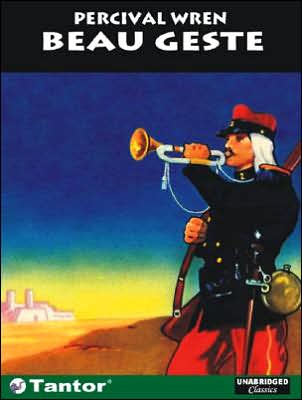
5. Beau Geste by Percival Christopher Wren

If you’ve ever read Peanuts, you may be familiar with Snoopy’s occasional daydream that he’s a member of the French Foreign Legion leading his troop, a line of little yellow birds, through the desert in search of Fort Zinderneuf.

This is a reference to Beau Geste, a classic adventure novel. It tells the story of three brothers who join the French Foreign Legion and embark on a quest involving an inexplicable mystery, a priceless gem, a terrifying battle and two silly Americans. Several film adaptations were made of Beau Geste many years ago, and it’s time for its triumphant return to cinema.

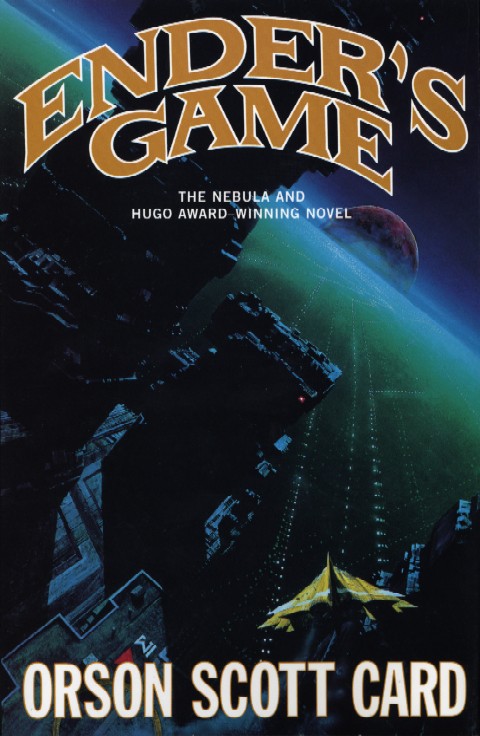
4. Ender’s Game by Orson Scott Card

I keep hearing rumors of an Ender’s Game movie being made, but for years it has stubbornly insisted on not being made. A science fiction masterpiece, Ender’s Game is the story of Andrew “Ender” Wiggin, a child prodigy who’s recruited into Battle School to become a military commander and save humankind from the hostile extraterrestrials called the Buggers.

The movie could incorporate elements from Ender’s Shadow, a companion novel telling the same story from the point of view of the child called Bean, who is more intelligent and sarcastic—and therefore, to my sensibility, more likable—than Ender. An Ender’s Game film would offer epic space battles, great characterization and absolutely no teenage romance.

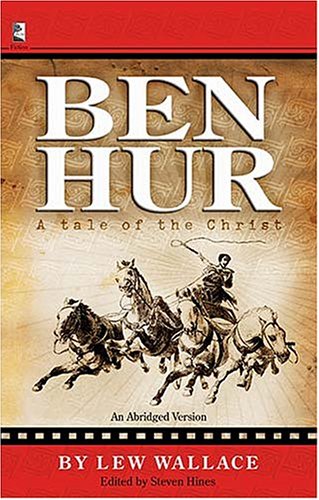
3. Ben-Hur by Lew Wallace

This novel has been adapted into a film at least twice. The first time, it became one of the greatest classics of the silent movie era. The second time, it won eleven Academy Awards. Ben-Hur has sword fighting, political intrigue, a chariot race, a battle at sea and a bitter yet handsome young man whose thirst for vengeance is dramatically conquered by mercy.

Ben-Hur is the tale of a man betrayed by his closest companion and condemned to life as a galley slave. He eventually earns freedom and wealth, and resolves to use them (and his mad chariot-racing skills) to punish his treacherous friend. The novel strives to tell this exciting story in the most boring way possible, but a modern movie adaptation would be epic.

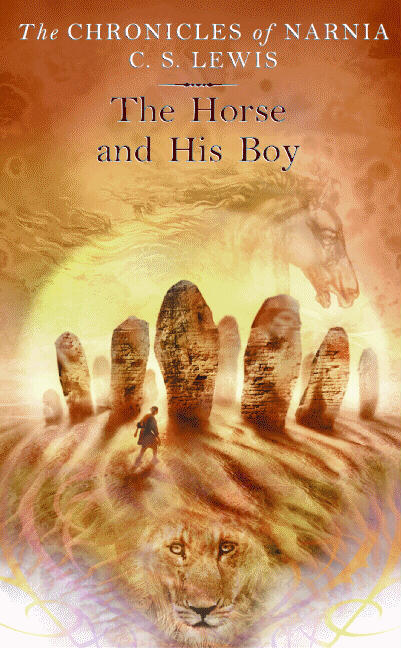
2. The Horse and His Boy by C.S. Lewis

I read a lot of books as a child. Of all the books I read, about only one did I think, “Man, I wish they’d make this into a movie.” That book was The Horse and His Boy, the third book in The Chronicles of Narnia. It’s been my favorite since I first read the Narnia series, and I’m pretty sure I read somewhere that it was also the author’s favorite.

They keep making books from The Chronicles of Narnia into movies, adding gratuitous romances and battles. The Horse and His Boy is the only book in the series that doesn’t need extra romances or battles. There’s already romantic tension between two of the main characters. There’s also a battle, and an exhilarating chase on horseback, and a harrowing journey along a mountain precipice—dash it, it’s been more than a decade since I first read the book and I’m still saying, “Man, I wish they’d make this into a movie.”

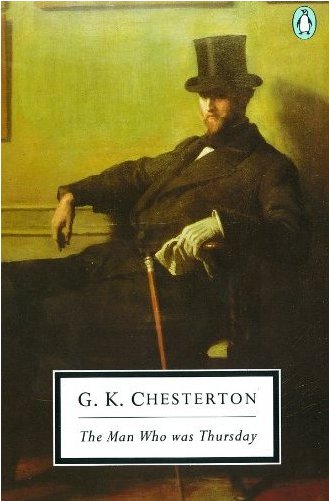
1. The Man Who Was Thursday by G.K. Chesterton

Mystery novels are intriguing, fantasy novels are spellbinding, literary novels are thought-provoking, but no book has ever kept me hooked quite like The Man Who Was Thursday.

The Man Who Was Thursday is the incredible story of a poet-turned-detective who joins a great council of anarchists in order to bring them to justice. The anarchists are named after days of the week; the title refers to the appointment of the detective to the post of Thursday. The scene in which we meet the anarchist council is terrifying. We’re alarmed by Muslim extremists who blow things up for religious reasons, but the anarchists in The Man Who Was Thursday are a good deal more frightening—they blow things up for no reason. The author of the novel also has a fantastic trick of introducing something that seems impossible and terrifying, and later explaining it in an instant with the addition of one simple fact: like someone hitting a switch in a dark room and instantly flooding it with light. Of all the novels that could be made into a really good movie, this is the one I’d most like to see.

What books would you like to see made into movies? Let us know in the comments!