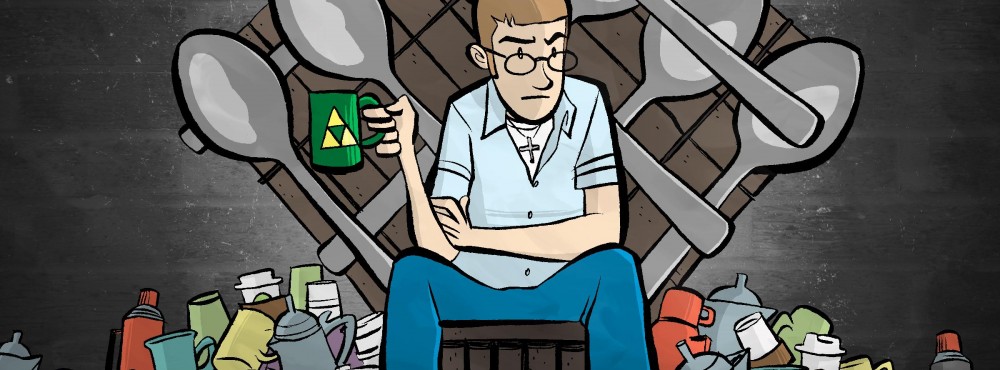
206. TMTF’s Top Ten Jerks in Literature

Jerks. They’re everywhere. Read any comments section on the Internet and you’ll see what I mean. Wherever there are people, there are jerks. (Except possibly in Canada.)

Dan Vs.

There are plenty of jerks in literature, and TMTF has chosen ten of the worst. The usual rules apply: I’ll include characters only from books I’ve read, and only one character per author. This list defines a jerk as a person who possesses unlikable qualities such as selfishness, cruelty, hypocrisy, rudeness or a tendency to kick small animals.

Be ye warned, here there be minor spoilers.

Brace yourselves, ladies and gentlemen, as TMTF presents…

The TMTF List of Top Ten Jerks in Literature!

10. Pap Finn (The Adventures of Huckleberry Finn by Mark Twain)

Pap Finn

Huckleberry Finn’s father is abusive, greedy, drunken, heartless, filthy, violent, wheedling, dishonest, neglectful, ruthless, irresponsible and utterly devoid of conscience, charm or deodorant. I could go on, but I don’t think there’s any need. Pap Finn is a jerk.

9. Dolores Umbridge (Harry Potter series by J.K. Rowling)
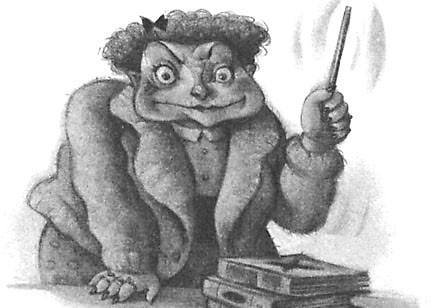
Frightening.

My introduction to Ms. Umbridge was a description of her as a character with a personality “like poisoned honey.” This description proved to be extraordinarily apt. Dolores Umbridge is sickeningly sentimental, cheerful and twee… and also bigoted, sadistic and evil. With smiles and giggles, she inflicts horrible punishments on students and taunts her colleagues. Really, Dolores Umbridge is a jerk.

8. Bill Sikes (Oliver Twist by Charles Dickens)

Bill Sykes

There are many great Dickensian jerks, but none worse than Bill Sikes. Even Fagin—himself a notorious jerk—is afraid of this guy. Sikes is barbaric and violent, beating his lover to death, hitting his dog and stopping at nothing to get what he wants. He also has no fashion sense. Bill Sikes is a particularly nasty jerk.

7. Charles Augustus Milverton (“The Adventure of Charles Augustus Milverton” by Sir Arthur Conan Doyle)
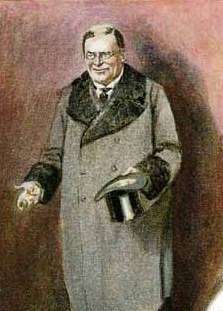
Charles Augustus Milverton

I’ll let Sherlock Holmes handle this one: “Do you feel a creeping, shrinking sensation, Watson, when you stand before the serpents in the Zoo, and see the slithery, gliding, venomous creatures, with their deadly eyes and wicked, flattened faces? Well, that’s how Milverton impresses me . . .  I have said that he is the worst man in London, and I would ask you how could one compare the ruffian, who in hot blood bludgeons his mate, with this man, who methodically and at his leisure tortures the soul and wrings the nerves in order to add to his already swollen money-bags?” Sherlock Holmes has spoken: Charles Augustus Milverton is a jerk.

6. Bob Ewell (To Kill a Mockingbird by Harper Lee)

Mr. Ewell

Bob Ewell is basically Pap Finn, except more viciously racist and (the novel implies) guilty of sexually abusing his daughter. Mr. Ewell also attempts to murder a couple of children. This is becoming something of a refrain for this list, but Mr. Ewell is drunken, disheveled and filthy. (Umbridge and Milverton may be evil, but at least they take baths.) Bob Ewell is, without question, a jerk.

5. Heathcliff (Wuthering Heights by Emily Brontë)

Heathcliff

Heathcliff has the notable distinction of being the only fictional character whom I have ever wanted to punch in the face. He’s horrible: a man whose resentment and poisonous love for a childhood friend drive him to exact slow, cruel, methodical vengeance on everyone who slighted him. Heathcliff goes so far as to marry someone he despises as part of his plan to hurt as many people as he can. Seriously, Heathcliff is a jerk.

4. Assef (The Kite Runner by Khaled Hosseini)

Assef

Assef begins a bully, becomes a rapist and ends up a sociopathic jihadist, all with contemptuous arrogance and not a single shred of guilt. Many literary jerks have some tiny gleam of goodness to provoke sympathy, compassion or pity from the reader. Not this guy. Assef is simply a jerk.

3. Professor Edward Rolles Weston (Space Trilogy by C.S. Lewis)
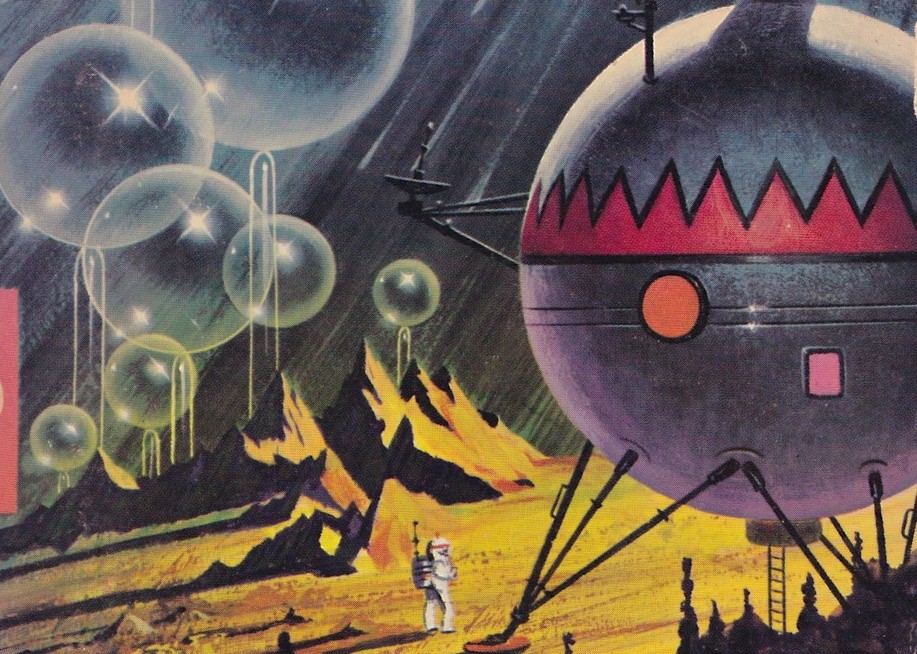
Professor Weston

Professor E.R. Weston is doubly a jerk. In his first appearance in Out of the Silent Planet, Weston is a ruthless believer in survival of the fittest: he calls a half-witted local boy “incapable of serving humanity and only too likely to propagate idiocy” and admits his intention to commit genocide to serve his own ends. In Perelandra, a later novel, Weston has transformed from an amoral humanist to an amoral spiritualist; he is implied eventually to be possessed by a satanic spirit. Thus it is proved: Weston is a jerk.

2. Dodge (Locke & Key series by Joe Hill and Gabriel Rodriguez)

Dodge

An absolutely evil person isn’t necessarily a jerk. Thieves and murderers can be respectful, charming and even polite. Dodge is an absolutely evil person and a jerk. He lies, steals, manipulates, betrays, rapes and murders with calculated precision, sadistic glee and not even the faintest hint of remorse. Whether taunting mentally handicapped teens or shoving kids in front of buses, Dodge is an irredeemable jerk.

1. Abiatha Swelter (Titus Groan by Mervyn Peake)
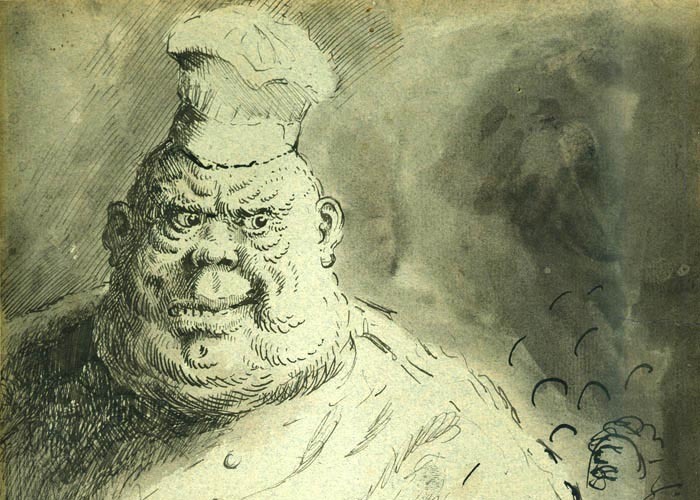
Abiathar SwelterThis hideously obese, “drunken, arrogant and pedantic” man is the chef of Gormenghast castle, a horribly… well… horrible man. Well, man may be too polite a word. In a book packed with awful people, Swelter is the worst: cruel, short-tempered, disgusting, resentful, demented and murderous. He may not be the most evil character on this list, but I think he’s the most odious. In conclusion, I have only one thing to add—and I’m sure you’ve guessed it. Swelter is a jerk.

O people of the Internet, what despicable literary jerks would you add to this list? Let us know in the comments!

Help, I’m a Christian! – Faith and Works

Long ago, a clever fellow named Martin Luther changed the way a lot of people look at Christianity.

In his day, you see, the Church was a political organization that gave religious traditions almost as much importance as God’s commands. Luther protested against the Church, claiming Christianity was less complicated.

Luther’s beliefs were based on a few simple doctrines. Two of the most important were sola fides and sola gratiafaith alone and grace alone. His idea was that people didn’t have to do stuff to be saved. All they needed was to have faith in God, and God’s grace would save them.

Luther was bothered by the book of James in the Bible, which emphasizes the importance of good works. It seemed to contradict the rest of the New Testament, which claimed salvation comes through grace.

So which is it, faith or good works?

In the end, Luther’s followers came to this conclusion: “We are saved by faith alone, but if faith is alone it is not faith.” In other words, faith without good works is empty—as James put it, “faith without deeds is dead” (2:26).

I’ve spent a lot of my Christian life swinging like a pendulum from one extreme to the other. I tried living only by faith, and I became complacent. I tried living only by good works, and I became legalistic. Both extremes brought disillusionment and anxiety.

At last it occurred to me that it’s possible to live by faith and good works: to do my best to live for God, and to trust that his grace is sufficient for me when my best isn’t good enough.

C.S. Lewis put it really well: “Christians have often disputed as to whether what leads the Christian home is good actions, or Faith in Christ. I have no right really to speak on such a difficult question, but it does seem to me like asking which blade in a pair of scissors is more necessary.”

Both scissor blades are necessary, of course. In the same way, both faith and good works are necessary. Each is inadequate and incomplete without the other.

It’s a simple lesson, but an important one.

The Apostle Paul wrote:

“For it is by grace you have been saved, through faith—and this is not from yourselves, it is the gift of God—not by works, so that no one can boast. For we are God’s workmanship, created in Christ Jesus to do good works, which God prepared in advance for us to do” (Ephesians 2:8-10).

God saves us by grace. We accept that salvation through faith. Once saved, we’re equipped to do good works.

In other words, we do good works not to be saved, but because we are saved.

~

Before I conclude this series, there are two things I’d like to say.

First, I’d like to affirm that the Christian faith is an awesome, joyful, exciting adventure. It can be hard. It’s a relationship with God, and every close relationship—whether a marriage, a friendship or a parent-child relationship—has difficult stretches.

In the end, however, it’s worth it. Heck yeah, it’s worth it.

Nothing in the world—not coffee, not Legend of Zelda games, not my closest friendships—has even begun to come close to being as awesome as God.

Through everything, God has been there. No matter how great my mistakes, he has never let go of me—not once. His faithfulness has been perfect. His kindness has been incredible. His love has endured.

Faith in Christ can be hard. It takes commitment, patience and persistence.

It’s worth it.

The second thing I’d like to say: Thanks for reading!

Help, I’m a Christian! – Relationship

Perhaps the most important lesson I ever learned is that the Christian faith is a relationship, not a system.

When I was younger, I was convinced faith was a system made up of logical rules. I thought all I needed to be a good Christian was to spend x number of minutes praying and read y number of chapters in the Bible and do z number of good deeds every day. Being a follower of Christ, I believed, was sort of like being a member of a club. All that was needed was to meet the minimum requirements.

To put it simply, I believed Christian living was just about doing stuff.

I was wrong.

For years I felt vaguely anxious, guilty and perplexed. Praying was awkward. Reading the Bible was tedious. Doing good things, and not doing bad things, seemed pointless.

I prayed, but not to know God or to help anyone. I read the Bible, but not to learn. I did good deeds, but not to be honor God or to serve others. I went to church, but not to strengthen my faith. I did these things simply because they were what Christians did.

I’d gotten the how right, but I’d totally missed the why.

Faith isn’t a system. Treating it like one will only lead to confusion, disillusionment and pain.

What, then, is faith?

It’s a relationship!

Granted, it’s more formal than most relationships. A relationship with God is sort of like a parent-child relationship and sort of like marriage.

We’re dependent on God, just as children are dependent on their parents. He provides for us, protects us and sometimes disciplines us, just as parents do for their children.

As for the marriage example: there are rules that guide our relationship with God, just as there are rules that guide the relationship between husband and wife.

It’s not enough just to “pray the prayer” to become a Christian. That’s the first step. A marriage relationship is more than just a wedding! The wedding is only the first of many, many steps.

In our relationship with God, do we make mistakes?

Absolutely.

That’s when we realize why a relationship is a thousand times better than a system. In a system, mistakes demand remuneration, atonement, compensation. In a relationship, one person simply forgives the other.

However—as in all other relationships—the whole thing falls apart if one person tries to take advantage of the other.

In a marriage, the wife can be the kindest, sweetest woman ever, but the relationship won’t last if the husband is selfish or unfaithful. A father can be the most patient, loving man in the world, but he can’t care for his children if they insist on running away from home.

God forgives us when we make mistakes. However, if we insist on disobeying him, he eventually lets us go our own way. To quote C.S. Lewis, “There are two kinds of people: those who say to God, ‘Thy will be done,’ and those to whom God says, ‘All right, then, have it your way.'” God doesn’t force us to obey him. He gives us the freedom to choose, even if our choice is to turn away from him.

If we turn back to God, he will always accept us. Just look at the story of the Prodigal Son!

If we want to accept God, however, we must accept him on his terms.

One those terms is that God speaks to us indirectly. As nice as it would be to chat with him face to face over coffee every morning, he chooses less direct methods to communicate: the Bible, literature, nature and people, to name a few.

This is admittedly frustrating. I’m not sure why God isn’t more direct, but there is one thing of which I’m sure: this indirectness is temporary. Quoth the Apostle Paul, “Now we see but a poor reflection as in a mirror; then we shall see face to face. Now I know in part; then I shall know fully, even as I am fully known” (1 Corinthians 13:12).

All this is fine theoretical stuff, but what does it mean in practical terms? How does it affect how we live?

It means we must understand the why of Christian living as we live out the how.

We should pray in order to help others and build up our relationship with God. We should read the Bible in order to learn. We should obey and serve in order to be useful. We should attend church in order to grow closer to each other and to God.

Faith isn’t a system, and God doesn’t ask us to do things for no reason. Understanding that faith is a relationship, and Christian living is part of that relationship, is probably the most important lesson I’ve ever learned.

Next: Prayer

157. I Am Not a Jedi

I am not a Buddhist, Muslim, Hindu, Sikh, Rastafarian, Pastafarian, Shintoist or Jedi.

(Jediism is apparently a minor modern religion. Who knew?)

I feel obliged to reaffirm my faith in Christ because I recently replaced Christianity with Faith in this blog’s tagline. Christianity is a pleasantly specific word. Faith is vague, generic and ambiguous. It can be used to describe almost anything.

Honestly, I rather like Christianity. It’s a splendid word.

Why the change?

Well, Christianity is quite a mouthful. Seriously, it has five syllables. Replacing it with a shorter word like Faith makes for a catchier tagline.

More significantly, I once pointed out that Christianity has taken on some unpleasant connotations. It’s often associated with irritating, vaguely religious stuff. Consider “inspirational” Christian books, which inspire me to sigh and roll my eyes. Think of Christian parodies of commercial logos. Don’t even get me started on Christian video games.

To wit, many people associate Christianity with religious clutter that doesn’t have any meaningful connection to God or faith or grace.

This blog isn’t about vaguely religious stuff.

TMTF is a blog about everything that interests, fascinates, puzzles, amuses and amazes me. It’s how I share my passion for things about which I’m passionate: literature, video games, cartoons, writing—and faith.

I don’t like religious clutter. I don’t consider myself an evangelical Christian, but merely an orthodox one. TMTF isn’t a religious blog, but merely one about God and faith… and a lot of other stuff.

C.S. Lewis described mere Christianity: the Christian faith with all the unnecessary stuff stripped away. During his life on earth, the Lord Jesus had some harsh things to say about the religious traditions that had been tacked on to the teachings God gave Israel. I doubt he’s pleased with some of the things we’ve tacked on to Christianity.

That’s why I’ve changed this blog’s tagline. TMTF won’t change—at any rate, not more than usual. It shall continue to be often silly, sometimes serious, hardly ever religious and always merely Christian.

146. Grace Makes Sense

I’ve been meaning to write this post for a long time. The reason I’ve put it off is that it’s an important post, and those are always the hardest to write.

Occasionally, when I think I’ve discovered some amazing spiritual insight, I glance at one of C.S. Lewis’s books and realize he discovered it first. Since it’s hard to write blog posts about important things like grace, I’ll let Lewis handle the introduction.

Take it away, Jack!

Thus, in one sense, the road back to God is a road of moral effort, of trying harder and harder. But in another sense it is not trying that is ever going to bring us home. All this trying leads up to the vital moment at which you turn to God and say, “You must do this. I can’t.”

I know God has saved me by grace, but that hasn’t stopped me from trying to be good enough.

Then, some time ago, I began to understand.

I’m not good enough.

I’ve never been.

I shan’t ever be.

That’s okay.

God doesn’t expect me to be good enough. Nowhere in the Bible does God say, “Unless you meet my standards, I won’t love you.” I don’t deserve God’s love. Grace is a gift, and it’s finally making sense. I don’t have to earn anything.

Of course, that doesn’t mean I can stop trying to be good.

To quote C.S. Lewis again, living by grace doesn’t mean merely trying to do good things,

But trying in a new way, a less worried way. Not doing these things in order to be saved, but because He has begun to save you already. Not hoping to get to Heaven as a reward for your actions, but inevitably wanting to act in a certain way because a first faint gleam of Heaven is already inside you.

God isn’t commanding me to be good enough. He’s asking me to give him my best. When—not if but when—my best isn’t good enough, his grace covers the rest.

Christmas began as a celebration of Christ’s birth. Christ was born to die. He died and rose again to give us life, not to burden us with impossible demands. At its heart, Christmas is a celebration of grace.

We’re not good enough, but we don’t have to be. God’s grace is good enough, and that’s what matters. We must give him our best. The rest is up to him.

Happy Christmas, dear reader!

125. Literary Criticism and Nonsense

When my academic adviser in college signed me up for a literary criticism course, I assumed it would teach me to criticize literature. I’m a literary snob, so I figured passing judgment on written works would be easy. Just give me a textbook and any book in the Twilight series and I’d be ready to roll.

As I soon found out, literary criticism is actually an attempt to find meaning in literature. In my (admittedly biased) opinion, it’s also an attempt in some cases to invent meaning and superimpose it on literary works.

There are many kinds of criticism, each with a distinct focus. Mythic criticism finds symbols and allegories in literature. Biographical criticism studies the writer’s personal experiences, and deconstructionist criticism tries to prove that everything is meaningless.

In my studies of literary criticism, I discovered two varieties that were kind of hilarious.

The first was Marxist criticism, which views literature through the red-tinted lens of Communist theory. To heck with myth, morality and religion. The working class shall prevail! Down with the bourgeois!

The other funny perspective was Freudian criticism, which finds sexual innuendo in everything. Is something longer than it is wide? It’s a phallic symbol. Is a man unhappy? At some level, he’s sexually frustrated.

What’s that? You disagree? Ha! I laugh at you, person of lesser intellect! Do you think you’re smarter than Sigmund Freud?

I was quick to discover that half of literary criticism was analyzing literature carefully, and the other half was making up stuff that sounded plausible.

You don’t believe me? I’ll prove it.

My final paper was a four-part analysis of The Lord of the Rings by J.R.R. Tolkien. I examined it from four perspectives: mythic, biographical, moral and gender studies. Much to my surprise, each approach illuminated some fascinating facet of Tolkien’s masterpiece. My appreciation for The Lord of the Rings, and for literary criticism, was deepened.

Weeks before, I wrote an essay on The Magician’s Nephew by C.S. Lewis. Just for the fun of it, I decided to pit Sigmund Freud against my favorite author and see what happened.

The resulting analysis determined the Wood Between the Worlds to be a place of sexual balance, Queen Jadis to be a faux mother figure and the three elements of the psyche—id, ego and superego—to be represented by Uncle Andrew, Digory and Aslan, respectively.

The essay, which received a B, was ridiculous, but not much more so than some of the Freudian analyses in my textbook.

My studies, silly and serious, impacted me deeply. Literary criticism even became a recurring theme in the novel I was writing at the time, The Trials of Lance Eliot. Its protagonist was a literary critic because it fit his character perfectly, and it gave me an opportunity to poke fun at the nonsensical side of literary criticism.

I’ll finish up this post with a friendly warning.

Watch out for phallic symbols. They’re everywhere.

119. God’s Fool

A couple of weeks ago, a coworker informed me quite seriously that our workplace is haunted.

I laughed and told her I think I’d have noticed by now if the bogeyman, the Slenderman or any other kind of spook were lurking in our workplace.

Later in the evening, the garbage compactor went off by itself.

“See?” said my coworker, smiling nervously. “Nobody’s in that room. How do you explain that?”

“If I were a vengeful spirit,” I replied, “I think I’ve have better things to do than activate garbage compactors.”

The incident made me laugh at the time, but it later made me think seriously about the things we believe. My coworker believes our workplace is haunted. It would be easy for me to scoff at her beliefs, but I happen to believe in an invisible, all-powerful, everlasting God.

What sets apart my beliefs from hers? What’s the difference between faith and superstition?

The answer, of course, is evidence. There’s much more evidence to support the existence of God than there is to suggest dark spirits have taken possession of the garbage compactor in my workplace.

Many people don’t agree. I recently read an article claiming science will someday eliminate the need for God. The theory of intelligent design is frowned upon by many scientists. Naturalistic evolution is the de facto explanation for the origin of human life.

Honestly, both sides offer compelling arguments. No matter what atheists may say, there’s certainly evidence for God. Regardless of what Christians will tell you, there’s certainly evidence for atheism. To quote C.S. Lewis, an atheist who converted reluctantly to Christianity, “Now that I am a Christian I do have moods in which the whole thing looks very improbable; but when I was an atheist I had moods in which Christianity looked terribly probable.”

In the end, casting one’s lot with one side or the other isn’t just a matter of reason, logic and evidence. It’s a matter of faith, even for atheists.

There are things I don’t understand about the Christian faith, even though I’ve tried. Regardless, I’ve chosen Christianity. Based on the evidence, it makes sense. I speak not only of scientific, archeological and historical evidence, but also of the evidence of changed lives.

Some months ago, I wrote about gangster pastors: men who have been miraculously transformed from violent, drug-addicted criminals into loving husbands, fathers and church leaders. I know these men personally. I’ve heard numerous accounts of miraculous events. Most powerfully, I know many people whose lives are marked by something, a loving graciousness that goes far beyond mere altruism or friendly disposition.

For me, the best evidence is my own life. Ten years ago, I was a selfish, dishonest, insecure jerk. Eight years ago, I turned my life over to Jesus Christ. Today, while I’m not perfect, I’m a much, much better person than I was.

In the eight years I’ve been a Christian, I’ve seen too many answers to prayer, too many transformed lives and too many unbelievable circumstances for me to pretend it’s all just a series of coincidences—just as it’s possible for ten rolls of a die to yield only sixes, but my first guess is that the gambler who rolls ten sixes in a row is probably using a loaded die.

I’m sure some of my readers are nodding their heads and exclaiming, “Yes, yes.” Some of my readers are probably shaking their heads and saying, “This guy’s deluded,” and a few may have stopped reading once I switched topics from the Slenderman to the Christian faith.

Christians are sometimes considered foolish, and that’s fine. Christ’s own family thought he was out of his mind. (To those who believed he was just a Jewish carpenter, some of the things Jesus said and did must have seemed pretty strange.) The Apostle Paul, who wrote nearly half the New Testament, was accused of insanity.

If I’m crazy for being a man of faith, at least I’m in good company. If I’m a fool, at least I have the consolation of being God’s fool.

I’m not quite sure why I decided to compose this blog post. The subjects of faith, atheism and superstition (and the Slenderman) have been on my mind recently, and I suppose I just wanted to share my thoughts.

109. Science Fiction Vs. Fantasy

The title of this post may be a little misleading. If you were expecting an epic death battle between two literary genres, I’m afraid you will be disappointed. The purpose of this post is to take a quick look at why science fiction and fantasy—two literary genres often associated with each other—are different.

There are similarities, of course. The most striking is that fantasy and science fiction aren’t realistic. Fantasy is unrealistic because of supernatural elements such as magic and monsters. Science fiction, however, doesn’t involve the supernatural. Its unrealism comes from scientific discoveries or developments in technology, society and history that haven’t occurred.

Let’s start with science fiction.

Since the emphasis of science fiction is naturalistic, the genre focuses on the development of human society. Robots, spacecraft and laser weapons reflect the evolution of the human race.

The lack of supernatural elements in science fiction precludes any kind of divinity or absolute morality. Because of this, the genre doesn’t usually depict struggles between good and evil. The ultimate goal of characters in science fiction is usually survival, not moral triumph. What matters is the continued existence of the human race.

Due to this lack of absolute morality, the themes of science fiction are usually psychological, ethical and existential, not moral or religious.

Although it’s often paired with science fiction, fantasy is fundamentally different.

Since the emphasis of fantasy is the supernatural, the genre traditionally places little importance upon the development of human society. Cars, computers and guns are replaced with horses, scrolls and swords.

The supernatural elements in fantasy often indicate some kind of absolute morality, whether a standard good-versus-evil morality (e.g. The Lord of the Rings), a morality based upon maintaining cosmic balance (e.g. A Wizard of Earthsea) or some other moral system. The typical goal of fantasy characters isn’t merely survival, but moral or cosmic victory.

Due to the presence of absolute morality, the themes of fantasy are usually philosophical, moral and religious, not psychological or ethical.

In a previous post presenting a short, untidy and highly idiosyncratic history of fantasy, I made the observation that many of fantasy’s greatest authors have been Christians: George MacDonald, J.R.R. Tolkien, C.S. Lewis and Madeleine L’Engle, among others. I think it’s no coincidence that Christians, who believe in the existence of the supernatural and an absolute moral law, should leave such a profound mark upon a literary genre defined by supernatural phenomena and moral struggles.

Science fiction and fantasy are both unrealistic, but for opposite reasons. Fantasy is characterized by the supernatural, science fiction by a naturalistic worldview. These genres are opposite sides of the same coin.

What about stories like Star Wars or Star Trek that are considered science fiction and yet involve the supernatural? Consider the Force in Star Wars. It isn’t merely a scientific phenomenon, but a spiritual force. The Jedi aren’t scientists, but monks. Even so, Star Wars is usually considered a science fiction franchise. It has aliens and space battles, after all.

I think stories like these are sort of a hybrid genre. Let’s call it science fantasy. Stories in this mixed-up genre tend to demonstrate the outward characteristics of science fiction—advanced technology, space travel and so on—while expressing the moral and philosophical themes typical of fantasy fiction. Final Fantasy is a fine example of science fantasy: magic, lasers, swords, spacecraft and an unmistakable struggle of good against evil.

In the end, I believe science fiction and fantasy belong together. These genres represent radically different approaches to the same concept: a world unlike our own.

Which genre do I prefer?

Fantasy, of course. It has dragons.

101. Magical Rainbow Ponies?

When I took time off from this blog last week, I suddenly had some free time on my hands. I spent some of it researching the unprecedented rise of the brony fandom—to wit, the inexplicable attraction of young men to a television show produced for girls, My Little Pony: Friendship Is Magic.

I felt it was my duty to investigate this enigma. For science.

We begin with the visuals. My Little Pony: Friendship Is Magic uses a vivid color palette. Although the animation looks suspiciously like something made with Adobe Flash, HomestarRunner.com-style, it’s expressive and charming.

The show follows the adventures of six ponies: Twilight Sparkle, Rarity, Pinkie Pie, Rainbow Dash, Fluttershy and Applejack.

(I can only suppose Applejack is named for the liquor—an odd choice for a kids’ show.)

Following my investigations, I think I may know why magical rainbow ponies are so popular with men in their twenties and thirties.

There are at least three reasons.

First, My Little Pony: Friendship Is Magic is surprisingly funny in a goofy, geeky, adorably cheesy sort of way. The writing is good, and the show is very self-aware. It never strays too far into ridiculous sentimentality.

Second, the show has become an Internet meme, and it’s therefore socially acceptable for men to enjoy a show about magical rainbow ponies.

Third, the show is pleasant. There are disagreements and arguments and tragic ironies, but things always work out. People—well, ponies—get hurt, but hurts are healed. Lessons are learned. Friends are reconciled. The show’s moral values are remarkably strong.

C.S. Lewis wrote, “A mature palate will probably not much care for crème de menthe: but it ought still to enjoy bread and butter and honey.” Grownups can enjoy complicated dramas or sophisticated tragedies, but there’s no reason they can’t also enjoy lighthearted stories about magical rainbow ponies.

I think a lot of guys are tired of living in a cynical world. There are tragedies on the news every day. Films, novels, video games and music are full of cursing, violence, sexual perversity and bad attitudes. People use these media anyway, but I think there’s still a longing for things like simplicity, goodness, honesty and loyalty.

Guys watch Saw and play God of War and listen to Metallica, but some of them probably miss those Saturday morning cartoons they watched as kids. Shows like My Little Pony: Friendship Is Magic and Phineas and Ferb (another hit with older guys) evoke nostalgia, balancing sentimentality with enough edgy humor to be, well, not lame.

I think that’s why magical rainbow ponies have become so popular with the menfolk. There could be deeper, darker reasons, but I doubt it.

Now I’m going to watch some cartoons. For science.

Help, I’m a Christian! – Faith and Works

Long ago, a clever fellow named Martin Luther changed the way a lot of people look at Christianity.

In his day, you see, the Church was a political organization that gave religious traditions almost as much importance as God’s commands. Luther protested against the Church, claiming Christianity was less complicated.

Luther’s beliefs were based on a few simple doctrines. Two of the most important were sola fides and sola gratiafaith alone and grace alone. His idea was that people didn’t have to do stuff to be saved. All they needed was to have faith in God, and God’s grace would save them.

Luther was bothered by the book of James in the Bible, which emphasizes the importance of good works. It seemed to contradict the rest of the New Testament, which claimed salvation comes through grace.

So which is it, faith or good works?

In the end, Luther’s followers came to this conclusion: “We are saved by faith alone, but if faith is alone it is not faith.” In other words, faith without good works is empty—as James put it, “faith without deeds is dead” (2:26).

I’ve spent a lot of my Christian life swinging like a pendulum from one extreme to the other. I tried living only by faith, and I became complacent. I tried living only by good works, and I became legalistic. Both extremes brought disillusionment and anxiety.

At last it occurred to me that it’s possible to live by faith and good works: to do my best to live for God, and to trust that his grace is sufficient for me when my best isn’t good enough.

C.S. Lewis put it really well: “Christians have often disputed as to whether what leads the Christian home is good actions, or Faith in Christ. I have no right really to speak on such a difficult question, but it does seem to me like asking which blade in a pair of scissors is more necessary.”

Both scissor blades are necessary, of course. In the same way, both faith and good works are necessary. Each is inadequate and incomplete without the other.

It’s a simple lesson, but an important one.

The Apostle Paul wrote:

“For it is by grace you have been saved, through faith—and this is not from yourselves, it is the gift of God—not by works, so that no one can boast. For we are God’s workmanship, created in Christ Jesus to do good works, which God prepared in advance for us to do” (Ephesians 2:8-10).

God saves us by grace. We accept that salvation through faith. Once saved, we’re equipped to do good works.

In other words, we do good works not to be saved, but because we are saved.

~

Before I conclude this series, there are two things I’d like to say.

First, I’d like to affirm that the Christian faith is an awesome, joyful, exciting adventure. It can be hard. It’s a relationship with God, and every close relationship—whether a marriage, a friendship or a parent-child relationship—has difficult stretches.

In the end, however, it’s worth it. Heck yeah, it’s worth it.

Nothing in the world—not coffee, not Legend of Zelda games, not my closest friendships—has even begun to come close to being as awesome as God.

Through everything, God has been there. No matter how great my mistakes, he has never let go of me—not once. His faithfulness has been perfect. His kindness has been incredible. His love has endured.

Faith in Christ can be hard. It takes commitment, patience and persistence.

It’s worth it.

The second thing I’d like to say: Thanks for reading!