23. TMTF Reviews: Living Poor

About forty-five years ago, a Peace Corps volunteer was deployed to a remote South American village. For those who don’t know, the Peace Corps is a program run by the US government in which volunteers travel to impoverished countries to provide technical assistance. Moritz Thomsen, the author of Living Poor, wound up in a tiny village called Río Verde on the coast of Ecuador. He stayed four years, teaching about agriculture and learning about human nature.

My parents have been nagging me to read Living Poor for years. My grandfather and some of my uncles were personally acquainted with Thomsen and some of the people he describes in the book. A phrase from the book, the sadness of the rats, is used by my family to refer to loneliness or melancholy. Although I prefer fiction to nonfiction as a rule, I decided I should read Living Poor to oblige my family and figure out what exactly the sadness of the rats is supposed to mean.
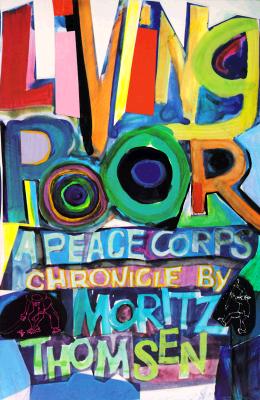
Living Poor is an excellent book. Having spent much of my life in Ecuador I’m probably biased, but there’s no denying the book is superbly written. Quoth Mark Covert, “Moritz Thomsen could well be the finest American writer you’ve never heard of.” The tone of Living Poor alternates between melancholy and cynical humor. The author is at his best when describing his failures. One of my favorite lines in the book recounts his failure to cultivate lettuce in the tropical climate: “The lettuce appeared very tentatively, took one horrified look at the Ecuadorian sun blazing in the sky, and promptly died from shock.”

The book gives vivid descriptions of places, but the best descriptions are of people. The author manages to convey a sense of the lives of the people of Río Verde—the resigned weariness and quiet desperation, the superstitious blend of religion and folklore, the myriad affections and squabbles and jealousies of village life. It’s a touching picture of people in poverty, a picture that could be applied to villages across the world.

Despite the jabs of humor, the prevailing tone of Living Poor is one of cynical resignation. The author’s initial optimism and idealism fade in the face of poverty and misfortune and the poor, ignorant, stubborn villagers he must contend with day after day.

Living Poor is definitely worth reading, particularly by anyone remotely interested in poverty or third-world culture. It’s the sort of book that makes the reader think and laugh and cry. The style is great, but—as its title suggests—the book’s greatest strength is the vivid impression it conveys of what living poor is like.

Oh, one more thing.

the sadness of the rats: (n. phrase) an expression coined by Jorge, a resident of Río Verde, to describe the melancholy that afflicted Moritz Thomsen as he lay in his house at night with only rats for company
18. TMTF Reviews: Jonathan Strange & Mr Norrell

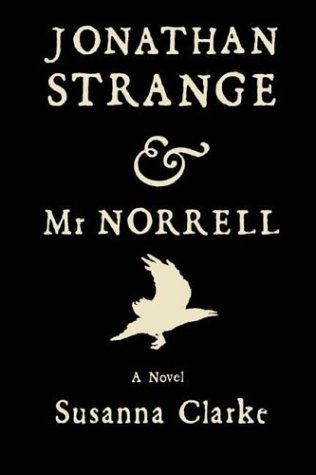
Jonathan Strange & Mr Norrell was first mentioned to me by a cousin who happens to be a Literary Person. He described it as a fantasy novel that was very funny and reminiscent of Dickens. As I listened, I was rapidly working out an equation in my head: Fantasy Novel + Humorous Style + Charles Dickens = Awesome.

I eventually found the novel in a local library. It’s understatement to say Jonathan Strange & Mr Norrell is a large book; it weighs only slightly more than an adult hippopotamus. I began reading, wondering whether such an enormous novel would be worth my time.

It was. Every word of it.

In this day of formulaic fantasies—books with lurid covers and predictable plots and lots of bizarre sex scenes—it was truly delightful to sit down with something truly original and well-written as Jonathan Strange & Mr Norrell. It’s not quite like anything I’ve ever read, yet oddly reminiscent of familiar authors like Charles Dickens and Jane Austen.

The basic premise of the book is that magic was once an accepted part of British history: magicians once lived and worked magic, and none was greater than the mysterious Raven King. The year, however, is 1806 and magic is ancient history—very boring history. Only a few theoretical magicians still discuss and debate the fine points of magical tradition. Then a practical magician, a retiring gentleman called Mr Norrell, is found. He begins a campaign to revive English magic, eventually partnering with a man named Jonathan Strange who shows remarkable aptitude for magic. The novel recounts the return of magic to England, an event involving cold-hearted fairies, dignified gentlemen, rough beggars and, of course, the Raven King.

The sheer ingenuity of the setting is wonderful. The novel beautifully weaves the factual culture and history of nineteenth-century Britain with the fictional history and practice of British magic. The tone of the novel shifts between humor and melancholy: some passages shine with the cheerful drollery of Dickens’s brightest novels; others convey the same haunting sense of desolation as the Brontë sisters’ more discouraging books.

If pressed to place Jonathan Strange & Mr Norrell in a specific genre, I wouldn’t be quite sure where to put it. It’s a comedy of manners—a Gothic novel—an alternative history—to be honest, it defies attempts at categorization. Whatever it is, it’s probably one of the best fantasies of the century so far.

Reading the novel requires a significant investment of time, and some readers may find the humor humorless and the melancholy too melancholy, but I wouldn’t hesitate to recommend Jonathan Strange & Mr Norrell to anyone who likes fantasy fiction or classic British literature, and especially to anyone who likes both. It’s a solid, satisfying and highly imaginative piece of fiction that’s probably destined to become a classic of its genre—whatever the deuce its genre might be.