39. Coffee (and Other Things for Which I’m Thankful)

I’m thankful for coffee. I think there may actually have been three trees in the Garden of Eden—the Tree of the Knowledge of Good and Evil, the Tree of Life and the Coffee Tree—and God in his mercy allowed Adam and Eve to enjoy the Coffee Tree even after they had forfeited their right to the others.

All right, that apocryphal bit of Bible trivia is completely fictitious. Probably. Even so, coffee is a blessing of God and something for which I’m very thankful. It’s not the only thing. There are a lot of things for which I thank God. Since tomorrow is Thanksgiving, this seems like a good time to mention a few of them.

I’m thankful for my friends, who brighten my existence.

I’m thankful for tea, which is every bit as heavenly and delicious as coffee.

I’m thankful for Bethel College and the financial aid that has allowed me to graduate.

I’m thankful for J.R.R. Tolkien, C.S. Lewis, G.K. Chesterton and all the other wonderful authors whose first and middle names are always initialed.

I’m thankful for the daily necessities of life, which God has never failed to provide for me.

I’m thankful for storytelling and creative writing, without which life wouldn’t be one half so interesting.

I’m thankful for humor, without which life wouldn’t be one half so tolerable.

I’m thankful for my family and relatives, who have put up with me patiently for more than twenty-one years.

I’m thankful for a God who makes things right.

For what are you thankful? Let us know in the comments!

38. Packing

Missionaries live by a number of ancient and sacred proverbs. Where God leads me I will follow; what God feeds me I will swallow is one such proverb, inspiring missionaries everywhere to eat fried leaf-cutter ants, roasted guinea pig and other exotic fare. A pocketknife may save a life is another such proverb, prompting many missionaries never to be caught without one.

One of my favorite missionary proverbs, the Packing Proverb, has been very useful to me: I will make it fit! Although I believe in the inerrancy of Scripture, I think Paul must have forgotten to include the art of packing in his lists of spiritual gifts. Being able to pack efficiently and effectively is a gift of God.

Missionaries in particular seem to have been gifted with a spectacular ability to make any item, no matter how large or unwieldy, fit in any piece of luggage. It’s almost like magic—no, more like the bag in Mary Poppins that can hold anything.

Over the past few weeks, I’ve been packing things into suitcases and storage boxes as I prepare for my imminent trip to Uruguay. There’s something fun about fitting things together like pieces in a jigsaw puzzle: the delicate items cocooned in socks and T-shirts to prevent them from breaking, the lighter objects placed on top of the heavier ones to prevent them from being crushed, the things that may be needed during the trip positioned where they’re easily accessible.

It’s almost a pity to unpack baggage after it’s been packed with such care.

However, care is necessary when traveling—especially when traveling internationally. Luggage handlers have little respect for luggage. Bags are dropped, shoved and thrown on top of each other. Fragile items in suitcases are reduced to smaller, more conveniently-sized pieces and distributed lavishly among hardier items. The contents of baggage are creatively rearranged by gravity.

I’m probably making it seem much worse than it is.

All the same, I’m taking no chances. I’d better go buy more socks.

37. Everything I Know about Creativity I Learned from The Legend of Zelda

Today’s post was written by Wes Molebash, blogger and cartoonist extraordinaire. It came at the perfect time, since The Legend of Zelda: Skyward Sword is coming out in a couple of days. Check out his website for more awesome artwork and insights on creativity!

Like most people my age, I grew up playing the Legend of Zelda video game series. I loved every minute of those games, and Ocarina of Time played a defining role in my young adulthood.

Now I like to consider myself a “creative person.” What I mean by this is that I love to create art and I’m always scheming of my next “big” project. Ideas are cheap; art is work, and I’m absolutely in love with the creative process.

That being said, I realized the other day as I was toiling in my basement office that everything I know about creativity was learned from playing the Legend of Zelda video games.

For instance:

It doesn’t matter how small you are or what tools you are using

In several of the Zelda games, Link starts his journey as a little boy who wields a measly wooden sword and a Deku shield. A DEKU shield! No one is afraid of a Deku shield. But he doesn’t let this stop him. He goes straight into his first dungeon and defeats the baddie with his slingshot David-and-Goliath-style. The journey has begun. He’s received his first taste of victory, and he’s off to the next dungeon.

So what does this tell me about the creative process? Simple: It doesn’t matter how skilled you are or how big your platform is or how expensive your tools are, just create! Don’t be hindered by your limited experience or lack of resources. I know famous cartoonists who draw awesome cartoons on three-thousand-dollar computer tablets. I also know a lot of amateur cartoonists who draw awesome cartoons using Ticonderoga No. 2 pencils and Sharpie markers. Take the resources you have and use them to the best of your ability.

Every obstacle has a weak spot—exploit it!

The Legend of Zelda series has been around since the eighties and it continues to follow a familiar formula: go into dungeons, collect maps and compasses and special weapons, and fight seemingly indestructible beasts who all have a glaring Achilles heel. Does the beastie have one huge, rolling eyeball? It’s a safe bet that you’ll want to shoot some arrows into the beast’s ocular cavity. Does the baddie occasionally stop to roar for a prolonged period of time? I’d grab some bombs and make it rain inside that guy’s maw. No matter how big the monster is, his weak point is right there in front of you begging to be struck.

The same holds true with our creative obstacles. They seem impossible to topple, but—the fact is—they’re quite easy to destroy! If I had to guess, I’d say that 99% of our creative obstacles can be toppled by simply CREATING. Are you having a hard time motivating yourself? Get out your tools and create. Do you have some naysayers telling you that you suck at life? Tune them out and create. Are you swimming in a sea of rejection letters from agents and publishers? Take the critiques and criticism with a grain of salt and create.

It really is that simple. Once you get started it’ll be hard to stop. The weak spot of your obstacle is right there staring you in the face. Exploit it.

You’re going to get better

As I said above, when Link starts his journey he is just a little boy with a crappy sword and shield and three hearts in his life meter. However, as he continues his quest he gets better. He collects more weapons. He becomes more resilient. He ages. By the end of the game he’s got the Hyrule Shield, the Master Sword, some rad magic powers, a pair of flippers that help him swim and hold his breath under water, a bunch of sweet weapons in a bag that would be impossible to carry in the real world, and eighteen hearts in his life meter. He finally ends up at Ganon’s door and he’s ready to—as they say in the UFC—“bang.”

The same is true for your creative endeavors. The more you create, the better you’ll get. You’ll also acquire new tools and awesome advice from other creators. Most importantly, you’ll gain experience. No longer will you feel completely daunted by project proposals, pitches, and rejections. It’s all part of the process and you’ll get better and better at those things.

So wipe your brow, keep creating, and—when you need to take a break—dust off your N64, pop in Ocarina of Time, and wander around Hyrule Field for a spell.

What have you learned from video games? Let us know in the comments!

36. About Writing: Community

Along with visual arts—drawing, painting, sculpting and so on—writing is probably one of the loneliest forms of art.

Most art demands the involvement of more than one person. Most music, whether instrumental or choral, requires a group of people. Theatrical productions usually feature multiple performers; even shows with only one actor require a stage crew. Films demand legions of musicians, editors, producers, sound technicians, makeup artists, prop designers, camerapersons and special effects artists.

Writing is different. The craft of writing can be collaborative, but, unlike other forms of art, it doesn’t have to be. It can be as simple as a writer sitting in front of a computer or notebook and putting her thoughts into words. Whole novels can be written without a single piece of advice or criticism from another person.

However, just because writing can be a lonely form of art doesn’t mean it should be.

Two of my favorite authors, J.R.R. Tolkien and C.S. Lewis, were part of a writing group called the Inklings. They met every week in a pub or private room in Oxford, drank beer, smoked pipes, talked about literature and told jokes. Most significantly, certain members of the Inklings read aloud whatever manuscripts they happened to be working on, and other members offered their criticism.

Of course, not all criticism was encouraging. Hugo Dyson once responded to a passage from a manuscript of The Lord of the Rings with, “Oh no, not another f—ing elf!” (Several versions of this quote have been attributed to both Dyson and Tolkien’s son Christopher.) Much of the criticism was positive, however, and famous works such as The Lord of the Rings and Out of the Silent Planet were influenced by the Inklings.

I believe we can learn something from the Inklings. Speaking from personal experience, writing shouldn’t be a solitary craft. Criticism and encouragement from others are invaluable.

We writers tend not to be very good judges of our own work. We tend to make one of two mistakes when evaluating our own writing: we think it’s superb when it’s really not that good, or we think it’s awful when it’s really not that bad. It’s tremendously useful and helpful to receive criticism from other people.

When finding other people to judge our writing, it benefits us to choose people with different skills and interests. Let’s suppose someone writes a young adult novel. The obvious people from whom to seek criticism are young adults—they’re the ones for whom the book is written, after all. However, it will also be helpful to submit the manuscript to other kinds of readers: a fellow writer to point out weak passages, an English teacher to correct grammar mistakes, an experienced reader to check for plot holes.

When I finished The Trials of Lance Eliot, a fantasy novel, I submitted manuscripts to all kinds of people: a high school student, a number of amateur writers, a professional author, numerous college students, several college professors, my elderly grandparents and several others. I received many kinds of criticism, ranging from in-depth literary analysis to superficial proofreading to simple statements of like or dislike—and it was all helpful.

Apart from useful criticism, community offers something writers can never provide for themselves: encouragement.

Pretty much every writer ever has suffered from self-doubt. I can’t count the times I’ve stared at words on my computer screen and thought, “Dash it all, I’m no good at this.” So much of what has kept me going as a writer has been the encouragement I’ve received from my readers.

It’s easy for writers to become fatigued, but a single encouraging remark can go a long way to keep writers motivated. Encouragement and positive criticism reassures writers that, despite their mistakes and faults, they’re doing something right. Their efforts are not a colossal waste of time.

Criticism should always be honest. “An honest answer is like a kiss on the lips,” as the author of Proverbs reminds us. Flattery isn’t helpful to writers. At the same time, it’s beneficial to writers to be encouraged: “An anxious heart weighs a man down, but a kind word cheers him up,” to quote another proverb.

Writers shouldn’t accept all criticism unthinkingly. In the end, they and no others know what sort of work they want to write. However, writers shouldn’t reject any criticism without considering it first. Quoth the author of Proverbs, “Listen to advice and accept instruction, and in the end you will be wise.”

Art comes out of community. Very, very few artists are sufficient unto themselves. Writers are no exception. Almost every writer can benefit from becoming part of a community of readers and writers, receiving useful criticism and being reassured their attempts to write are worth something.

35. A Short, Untidy and Highly Idiosyncratic History of Fantasy

Warning: This post is long and very literary.

I love the genre of fantasy. On one level it provides a literary medium through which writers can explore moral responsibility, the human condition and the existence of the supernatural. On another level it pits heroes against dragons, sorcerers and monsters. What’s not to like?

The development of the fantasy genre fascinates me. This blog post chronicles—in an admittedly cursory and haphazard fashion—the history of fantasy.

Human beings have been making up stories about the supernatural since…well…presumably since they were kicked out of Eden.

These stories fall into several categories. Mythology refers to the traditional stories of a people or nation, usually concerning all-important matters like the accomplishments of deities and the creation of the world. Legends are less grandiose, consisting of stories about extraordinary people or events. Folklore is the collection of tales and superstitions of a particular people or nation, and fairy tales are a subgenre of folklore intended for younger people.

Although stories about the supernatural have been in currency for millennia, the genre we call fantasy didn’t come into being until the nineteenth century. Ancient stories about the supernatural are normally considered precursors to fantasy and placed in one of the categories already mentioned: mythology, legend, folklore or fairy tales.

The modern genre of fantasy is usually defined as the type of fiction in which supernatural phenomena are a primary element of theme, plot or setting. Fantasy is distinguished from the horror genre because it typically avoids dark, macabre themes. Fantasy is also considered separate from science fiction, which uses advanced technology and science (or pseudoscience) as storytelling elements.

There’s some debate about the first author of modern fantasy. As far as I’m concerned, that honor belongs to George MacDonald, a Scottish minister and novelist. MacDonald was a close friend and mentor of Charles Lutwidge Dodgson—better known as Lewis Carroll—who wrote the famous Alice books; MacDonald was also acquainted with Mark Twain, Charles Dickens and other notable authors of his day. He is most famous for his fairy tales and two fantasy novels, Phantastes and Lilith, which would later have a profound effect on authors like C.S. Lewis.

Some decades after George MacDonald’s seminal fantasies, a reclusive professor of Anglo-Saxon was persuaded to finish and publish a bedtime story he had written for his children. That professor was J.R.R. Tolkien, and that story was The Hobbit.

Tolkien had been developing a private mythology for decades, making notes upon thousands of years of fictional history and creating multiple languages. To his own surprise, The Hobbit, which began as a bedtime story, established itself in his private mythology. After he was persuaded to publish The Hobbit, readers clamored for a sequel, and he eventually obliged with The Lord of the Rings—which is, in my humble judgment, the greatest work of fantasy and one of the finest works of fiction ever written. The Lord of the Rings is notable not only for its unprecedented depth, but its use of themes from Norse mythology and Anglo-Saxon folklore.

Around this time, C.S. Lewis published The Chronicles of Narnia, his seven-volume contribution to the fantasy genre. Narnia drew upon earlier children’s literature (such as the works of E. Nesbit) and would later influence J.K. Rowling’s popular Harry Potter books and inspire—provoke is probably a better word—Philip Pullman’s His Dark Materials trilogy. Tolkien, who was a friend of Lewis’s, disliked Narnia: he believed the books were sloppily written and full of inconsistencies.

The fantasy genre rapidly gained popularity midway through the twentieth century, especially in the United States. The Lord of the Rings in particular gathered a huge following during the sixties, exerting a major influence upon other works of literary fantasy, the growing video game industry and the development of fantasy role-playing games.

From the sixties onward, the fantasy genre expanded in two ways.

First, the fantasy genre became more financially lucrative, driving the publication of commercial fantasy—shoddy, formulaic fantasy fiction written for the sole purpose of making money. Well-written fantasy fiction, or literary fantasy, became less common.

Second, the fantasy genre proliferated into dozens of subgenres. There is high fantasy, which creates supernatural worlds; low fantasy, which introduces the supernatural into our own world; magic realism, which combines matter-of-fact narration with surreal details; steampunk fantasy, which incorporates anachronistically old-fashioned technology and culture; sword and sorcery, which emphasizes sensational magic and medieval warfare; and many, many others.

Fantasy continues to flourish. Commercial fantasy is still produced and sold, unfortunately, but occasional works of literary fantasy reassure me there’s still hope for the genre. (Jonathan Strange & Mr Norrell, which TMTF reviewed some weeks ago, is a good example of modern literary fantasy.)

It’s worth pointing out that many of fantasy’s best authors have been Christians: George MacDonald, J.R.R. Tolkien, C.S. Lewis, Madeleine L’Engle and others. Although I’m not sure why, I have a theory: The ideals of Christianity and of fantasy tend to be similar.

Christians believe in the existence a supernatural world that exists alongside the natural world; when the supernatural world intrudes into the natural world, we call it a miracle. Christians also believe in objective morality, the belief that right and wrong are consistent, unchanging realities, and that good is better than evil.

Fantasy usually creates a supernatural world that exists alongside the natural world; when the supernatural world intrudes into the natural world, fantasy labels it magic. Fantasy also typically remains true to the concept of objective morality—good triumphs over evil in fantasy fiction, after all, because good is consistently better than evil.

Christianity and fantasy fiction hold many concepts in common, so I think it’s no coincidence that some of fantasy’s best authors have been Christians. Since fantasy is fictitious, does my theory suggest Christianity is false? Absolutely not! The paradox of fantasy is that it reflects some truths more clearly than realistic fiction.

What do you think about fantasy? Do you have a favorite author or book? Let us know in the comments!

34. About Solidarity

When I was in high school, I had a teacher named Mr. Quiring. He was a dignified, solemn gentleman, like one of the Old Testament patriarchs without a beard, who taught upper-level English classes. It took me a few months to realize that he had a wicked sense of humor, which he expressed in short, intense bursts. He was the teacher who, during a lesson about the infinitive form of verbs, leapt from a chair and shouted, “To infinitives and beyond!

I owe Mr. Quiring a good deal. He was part of my inspiration to study English Education. He introduced me to much of literature. He encouraged me to participate in a writing competition in which I later earned first place, earning a college scholarship and some prize money. (I only competed because Mr. Quiring offered automatic As to any of his students who participated—I never imagined I would actually win the competition!)

Although I knew him for only two years, Mr. Quiring did more than almost anyone else in the world to guide and inspire me.

There was one other way in which Mr. Quiring influenced me. He led a prayer ministry called Solidarity every Thursday that prayed for the persecuted Church: Christians who are mistreated because of their faith in Christ.

When I first heard about Solidarity, I was pretty skeptical. Sure, Christians were tossed to lions and murdered by gladiators nineteen centuries ago, but they’re not persecuted in our modern, civilized age.

Are they?

I began attending Solidarity. Every week, Mr. Quiring would distribute copies of news reports, and we would read—in shocked, saddened silence we would read.

Christians are persecuted.

Christians are mocked, marginalized, robbed, raped, tortured, arrested, imprisoned and killed, simply because they’ve chosen to follow Jesus.

It seemed vague and uninteresting to me at first. True, people are being persecuted halfway across the world. How does that have to do with me?

It took time, but I gradually realized three things.

First, persecuted Christians are real people. They may seem unreal, like characters in novels or extras in movies, but persecuted Christians are living human beings with hopes, fears, plans, dreams and quirks.

Second, the problem of persecution isn’t going to go away if we ignore it. I’m ashamed to say it, but I’m really good at pretending problems don’t exist. They do exist, and something needs to be done about them.

Third, and hardest to accept, Christians are supposed to help each other. Christians in America are supposed to help Christians in the rest of the world. We’re not somehow exempt from this responsibility. We might not be able to go personally to visit imprisoned pastors in China or grieving widows in Somalia, but we can sometimes give money—and we can always pray. Even if we don’t have two pennies to rub together, we can pray for those who are persecuted.

We shouldn’t pray for persecuted Christians to make ourselves feel more righteous or less guilty. We should pray for persecuted Christians because they need our prayers. To be more precise, they need God’s answers to our prayers.

I have another blog, titled Solidarity in memory of Mr. Quiring’s prayer ministry, that posts brief summaries of persecution cases every two weeks, along with links to the news sources and suggestions on how to pray for the victims. Solidarity is meant to be an easy, practical way to stay informed and to pray.

If you’re a follower of Christ, please consider checking out the Solidarity blog and praying for the victims whose cases it reports every two weeks.

God bless you!

33. That Time We Broke Down

This post really ought to be titled That Time We Broke Down at Night in the Rain on a Remote Stretch of the Ecuadorian Coast Notorious for Bandits, but that title was too long.

This is the story of something that happened a few years ago. Every missionary kid has a few stories he or she can’t resist sharing, and this is one of mine. It involved some truckers, a loaded gun, a kindhearted pastor and lots of mosquitoes.

When I graduated from high school in Quito some years ago, my family and I were mere weeks from moving away from Ecuador. I was going to Indiana to begin college; my family was going to Uruguay to work in the city of Montevideo. We decided to make the most of our final weeks in Ecuador by going on a couple of trips.

Our first trip was to the town of Shell Mera in the jungle. Some of my readers may recognize Shell Mera as the town used as a base by Jim Elliot, Nate Saint and the other famous missionaries killed by the Huaorani people in the fifties. We stayed in a cabin some miles out of town and made excursions to our favorite waterfalls, trails and restaurants.

Our second trip was to a camp outside the village of Same on the coast of Ecuador. My grandfather, who spent much of his life as a missionary on the Ecuadorian coast, came along with us to say goodbye to old acquaintances.

We were driving along the coast toward the city of Esmeraldas when our car stopped running. Night had fallen. Rain was falling. It was a decidedly gloomy evening.

My old man took off into the darkness to find someone from whom we could buy or borrow a gallon of gasoline. The rest of us waited in the blazing heat of the car, opening the windows occasionally to let in cool air and mosquitoes.

At length we heard a gunshot come from the direction in which my old man had gone. We immediately began fasting and praying.

My old man returned at last with a gas can, explaining he was able to obtain some gas from a nearby shrimp farmer. We asked about the gunshot. “Oh, he thought I was a bandit,” said my old man. “This area is apparently renowned for bandits.”

We were not comforted.

The gas was not enough to get the car going. We were perplexed, and then our guardian angels arrived in the unlikely form of two grinning truckers. They towed our car to the nearest village and parked us safely in the light of the only street lamp. (There may have been more than one street lamp in the village, but I remember only one.) The truckers took off and we settled down to wait.

At last my old man was able to contact a pastor from Esmeraldas, who arranged for our car to be transported to a mechanic in the city. My parents stayed with the pastor while my grandfather, younger brother and I found lodging in a rickety, old-fashioned hotel.

We spent much of the next day wandering around the city before catching a ride to the camp outside Same. Our car was eventually fixed, and we were able to return to Quito with two or three days to spare before my grandfather and I caught our flight to Indiana.

Our adventure cost us sleep, for we were awake late into the night; money, for we had to pay to have the car fixed; and blood, for we fought a losing battle against the mosquitoes. In the end, however, we gained more than we lost: my family and I had one final adventure together in Ecuador before parting ways and traveling to opposite ends of the earth.

32. Ace Attorney

“What? Video games about a lawyer? You’re not serious.”

Such was my first response to Ace Attorney, a series of games for the Nintendo DS, when I heard about it years ago. I could understand the appeal of video games about a warrior, soldier or pilot who saves kingdom, country or world from sorcerers, armies or aliens—but games about a defense attorney who saves defendants from prosecutors?

Then, a year ago, I actually played Phoenix Wright: Ace Attorney, the first game in the series, and made a most surprising discovery: it was actually kind of awesome.

Ace Attorney Logo

Had the Ace Attorney games tried to replicate every detail of our own justice system, they would undoubtedly have been tedious and boring. Fortunately, the games favor fun over realism. The court system is simplified, making trials much more exciting and easier to follow.

The Ace Attorney games star a goodhearted defense attorney named Phoenix Wright who defends his clients with perseverance, sarcasm, spiky hair and a good deal of luck.

Wright is accompanied by his friend Maya—younger sister of his deceased mentor and voracious consumer of hamburgers—who assists him in his investigations.

The gameplay of the Ace Attorney games consists of two elements. First, Wright visits scenes related to the crime and interacts with the people involved. Although this element requires a little detective work, it’s mostly about gathering information. The second element requires Wright to use the information he’s gathered to prove the innocence of his defendant in court.

Most of Wright’s business in court is cross-examining—a fancy legal term for questioning—witnesses. Cross-examination in the Ace Attorney games is guided by one basic principle: Find the contradiction and expose it with evidence! Almost all witnesses make some mistake in their testimony; Wright’s job is to consider the information he’s gathered, expose the witnesses’ lies and figure out who really committed the crime.

Each case starts slowly, but gets steadily more exciting as more information and evidence is revealed. Finding the contradictions in witnesses’ testimonies is unbelievably satisfying, and it’s exhilarating to unmask the true criminal in each case—especially since it’s sometimes the last person the player suspects.

Two things particularly stand out to me about the Ace Attorney games.

First is that events in the games are exaggerated for dramatic effect: the melodrama of each case is hilarious. When witnesses are exposed as liars, they react as though physically struck. Key witnesses have a habit of barging into court at exactly the right moment to give their testimonies. Perhaps most famously, attorneys in the Ace Attorney games don’t merely say “Objection” when they object to a proceeding in court. They bang their desks and shout—

The second thing that makes the Ace Attorney games so enjoyable is that the characters are wonderful. They remind me of Charles Dickens, whose most delightful characters are more like caricatures: Scrooge and Micawber and Fagin are too ridiculous to be realistic, yet retain just enough truth to be believable. In the same way, the Ace Attorney games are full of exaggerated characters that are too silly to be real—yet they’re believable, likable and memorable. As in Dickens’s novels, major characters are developed carefully and minor characters are never dull or insignificant.

Are the Ace Attorney games worth playing? Odd as it sounds, definitely. It’s ridiculously satisfying to solve cases and save innocent defendants, and the games’ storytelling is excellent.

And really, who can resist shouting “Objection!” into a Nintendo DS microphone and watching guilty witnesses cower in fear?

31. The Art of Blundering Hopefully

I like gloomy characters. Well, I like gloomy fictional characters; gloomy characters aren’t nearly as likable in real life as they are in fiction. There’s something strangely endearing about pessimists and their pessimism, so long as I don’t have to deal with them personally.

Puddleglum from C.S. Lewis’s The Silver Chair is one of my favorites. “Good morning Guests,” he says to the protagonists after they spend the night in his home. “Though when I say good I don’t mean it won’t probably turn to rain or it might be snow, or fog, or thunder. You didn’t get any sleep, I daresay.”

Then there’s Marvin the Paranoid Android from The Hitchhiker’s Guide to the Galaxy by Douglas Adams, and Eeyore from the Winnie-the-Pooh books by A.A. Milne, and Bernard Walton from the Adventures in Odyssey radio series, and a dozen more delightfully depressing characters from all sorts of stories.

The problem with pessimism is that it’s not nearly so pleasant in real life. It’s difficult to put up with pessimists—and it’s much worse to be a pessimist.

Some time ago I realized something important. (I was actually going to write about it weeks ago, but decided not to post too many serious reflections in a row.) What I realized was simple—so simple I couldn’t believe I had overlooked it for so long.

I had become a pessimist. Not a nice, lovable pessimist like Puddleglum or Eeyore, but a genuine, depressed pessimist.

I suspect my long, dark Thursday Afternoon of the Soul, a year and a half of intense depression and anxiety, had conditioned me to expect only the worst. I expected the worst from myself, wrestling with insecurity and self-doubt. I expected the worst from life, living in anxiety of whatever difficulties lay ahead. I expected the worst from God, struggling to believe he could really be as gracious, loving and generous as he claims. Every trial confirmed my belief that life was a dreary business, and every blessing made me suspect there were strings attached.

Since recognizing my tendency toward pessimism, I’ve been working to perfect the fine art of blundering hopefully.

We don’t have to live in perpetual fear of the future. It holds difficulties, true, but it also holds blessings. It’s certainly no good worrying about the difficulties. We can only deal with them as they come. In the meantime our business is to trust God and do our best: believing that his grace is greater than our mistakes, trusting that he will walk with us through our difficulties, holding on to his promise that his love endures forever—to wit, blundering hopefully.

So I’m doing my best not to burden myself with guilt for past mistakes or live in fear of future ones. By faith I blunder onward, trusting that God’s grace is sufficient for me.

God’s grace is sufficient for you too, in case you were wondering.

30. TMTF Reviews: Peter Pan

C.S. Lewis believed a children’s book that is enjoyable only by children is a bad children’s book. Just as a connoisseur of fine food can still enjoy a simple meal of bread and butter, he maintained, so a literary person should still be able to enjoy simple books for children.

I realized some time ago that I’d never read Peter Pan. It’s a classic of children’s literature, so I decided to obtain a copy of the book and mend this serious flaw in my literary education.

Peter Pan tells the story of a girl named Wendy and her brothers John and Michael. Their quiet existence in a London suburb is interrupted by the arrival (through an upstairs window) of an arrogant boy named Peter Pan who has never grown up. Peter offers to take Wendy and her brothers to the Neverland, an island inhabited by pirates and Indians and mermaids, where they can live a jolly life. Oh, did I mention that Peter happened to arrive by flying? Wendy and her brothers follow Peter to the Neverland, only to find the pirates—particularly one Captain Hook—are a good deal nastier than they had expected.

Peter Pan has been tremendously influential since its publication, inspiring a number of films, several prequels and at least one sequel. (I have a suspicion that Ocarina of Time—which features a green-clad boy with a fairy who lives among children who never grow up—was strongly influenced by Peter Pan.) Like Sherlock Holmes, Robinson Crusoe and Count Dracula, Peter Pan has become an archetype.

But never mind all that. Only one question concerns us. Is Peter Pan worth reading?

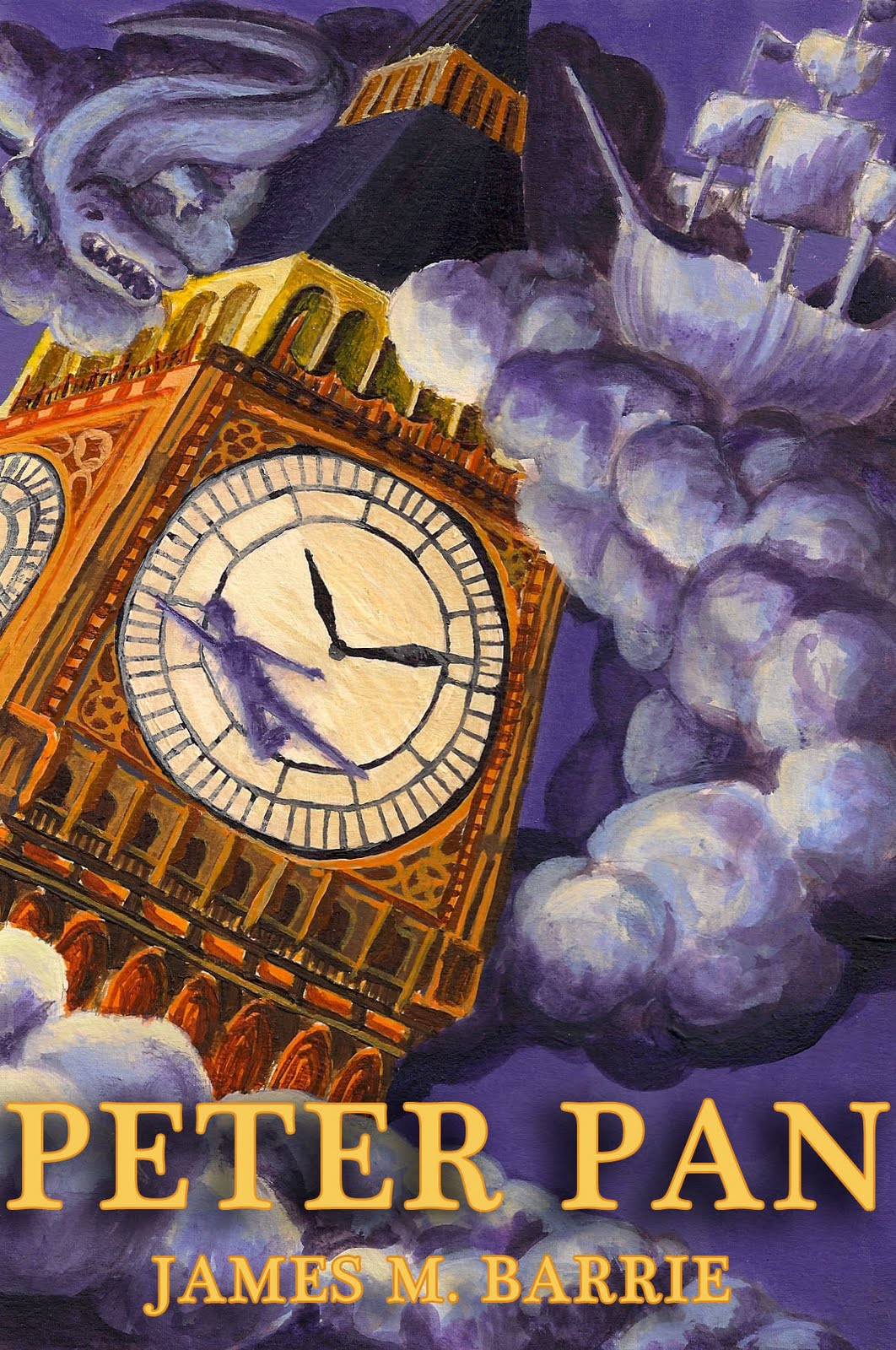
Peter Pan

I was glad to discover that Peter Pan is actually quite a good book. The narration is serious and matter-of-fact, which makes the ludicrous events of the book that much more charming. The style is dry and humorous (in a serious sort of way) and never condescending. One of the things I enjoyed most about the book is that the narrator never talks down to the reader. Like all great writers of children’s literature, the author of Peter Pan mastered the difficult art of respecting his audience.

A literary critic would find in Peter Pan a lively meditation upon the transience of youth and the “gay and innocent and heartless” nature of childhood. A Freudian psychologist would probably find all sorts of awful insinuations about motherhood and sexuality. Most readers, however, will find nothing more profound or disturbing than a fanciful tale that somehow manages to bring together pirates, Indians, mermaids, fairies and a ticking crocodile.

One of my few complaints about the book is that several of the protagonists are, for lack of a more polite term, jerks. The villains aren’t all that bad in comparison. Yes, Captain Hook is a wanton murderer, but I couldn’t help but pity him in his futile quest to conquer his self-doubt and justify himself. I felt very little sympathy for Peter Pan, though. He’s an arrogant, selfish, insensitive git. Tinker Bell is worse: vain, jealous, ungrateful and murderous. Old Tink does redeem herself partway through the book, but she’s never very likable. As much as I enjoyed Peter Pan, I would probably have liked it more if Peter and Tinker Bell hadn’t been such twits.

On the whole, I think Peter Pan is a fine book, a worthy classic of children’s literature that, like Peter himself, is pretty timeless.