57. Final Fantasy

I have a fascination for the fantasy genre. Fantasy provides a unique medium through which to explore themes like redemption and destiny and objective morality. Fantasy also teems with dragons and wizards and heroes. In other words, it’s got pretty much everything.

As I’ve mentioned in a previous post, fantasy has branched out into roughly several million subgenres: high fantasy, low fantasy, dark fantasy, steampunk fantasy, urban fantasy, magic realism, paranormal romance—the list goes on and on and on.

One of my favorite subgenres of fantasy also happens to be a series of video games. I speak, of course, of Final Fantasy.

Fantasy might have a ridiculous number of subgenres, but Final Fantasy doesn’t seem to fit any of them. It basically creates its own.

A good word to describe the Final Fantasy games would be eclectic. The games take many wildly different elements—elements that simply should not make sense in the same story—and somehow weave them together into compelling narratives. Soldiers wielding swords ride motorcycles. Scientists in research facilities study magic and genetic engineering in neighboring laboratories. Heroes are confronted by robots one moment and dragons the next. A hodgepodge of elements from fantasy and science fiction are combined to create worlds that seem quite believable.

I saw worlds, plural, because each Final Fantasy game takes place in an entirely different world. This means each game features a new plot, setting and cast of characters more or less unrelated to any other game in the series. Each game is its own adventure.

There are a few common threads throughout the Final Fantasy series. Reoccurring elements include creatures, names, terminology, plot devices and themes.

The themes of Final Fantasy are noteworthy as being surprisingly deep. The series deals with diverse moral, philosophical and ethical themes: everything from nihilism to environmentalism.

Apart from the fact that the games are fun to play, arguably the best thing about Final Fantasy is the characters. Whether seeking revenge, striving for redemption or grappling with existential angst, the characters of Final Fantasy are usually complex, dynamic and memorable.

The characters are also pretty cool. Consider Cloud Strife, equally renowned for his complex characterization and massive sword. Note also his spiky hair.
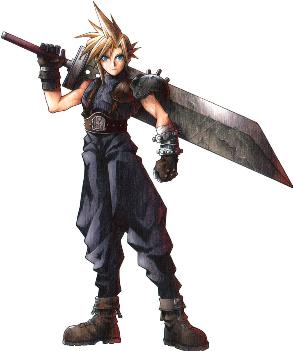
Massive swords tend to be another recurring feature of Final Fantasy games, by the way.

In regard to gameplay, the Final Fantasy games are quite good, though not as inspired as, say, the Legend of Zelda series. Final Fantasy offers massive worlds to explore and endless quests to accomplish, but the RPG-style battles can get a little tedious. It should be noted that the Final Fantasy games have amazing music.

I can hardly resist including one more image, this time a striking portrait that goes a long way to illustrate the essence of Final Fantasy.
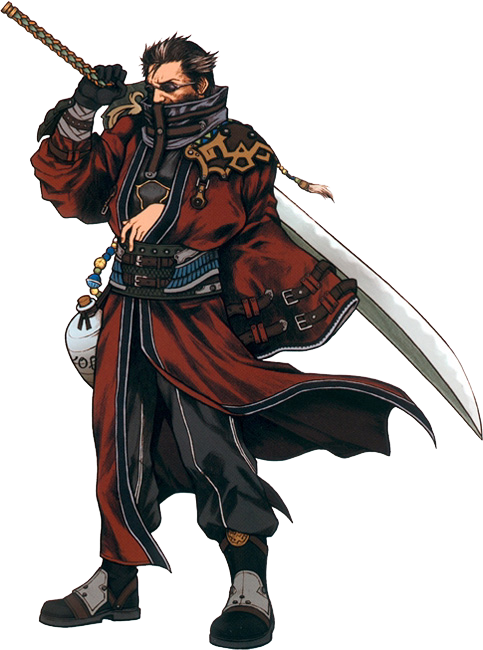
This character represents pretty much everything there is to know about Final Fantasy. His design represents the strangely coherent blend of old and new prevalent through the series, combining stylish sunglasses with clothes that wouldn’t look out of place in feudal Japan. His face hints at deep internal struggles—in his case, unfulfilled promises—typical of Final Fantasy characters. His sword is, of course, improbably large.

Although some critics argue that Final Fantasy has declined in recent years, I argue that it’s still one of the best video game series in existence. It also brings a number of excellent narratives to the fantasy genre: a contribution not to be overlooked.

43. RPG Wisdom

Roleplaying games (more commonly known as RPGs) are hard. Some are notorious for being among the most difficult video games ever. The final battle of Final Fantasy VII has probably provoked more weeping than all of Shakespeare’s tragedies combined. Players of RPGs become exhausted by frequent battles, vexed by perplexing puzzles and frustrated by labyrinthine dungeons.

Yes, RPGs are hard. As a gift to fellow gamers everywhere, my younger brother and I have compiled a list of ten golden rules (not to be confused with platinum rules) for players of RPGs to follow.

(Most of these rules can also be applied to the Legend of Zelda games, even though they aren’t traditional RPGs.)

Without further ado, we are proud to present our RPG wisdom and prevent much weeping and gnashing of teeth among the gamers of Earth.

Save regularly

Nothing devastates a gamer like losing an hour or two of progress when she loses the game unexpectedly or the power goes out. Save regularly. Saving the game frequently does much to save a player from losing her confidence, calm and sanity.

Be wary of characters with shifty eyes

Characters with shifty eyes are not to be trusted. Beware of them.

Explore everywhere

Players often find treasures or golden opportunities in unexpected places. It never hurts to look.

Talk to everyone and read every sign

When my younger brother was growing up and got stuck in a video game, this was almost always my advice to him: “Have you already talked to everyone and read every sign?” Apart from granting access to extra quests, bystanders and signs often point players in the right direction to progress in the game.

Spend money wisely

This profound biblical principle translates beautifully to RPGs. Let us say a player reaches a town, enters the armor shop and finds a shiny silver helmet for sale—a helmet far better than his beat-up old copper helm. He shouldn’t buy it right away unless he really needs it. Items in RPGs become obsolete very quickly. Odds are that the next town the player visits will have a beautiful golden helmet—a far more useful item than the silver helmet—on sale. Even if he sells the silver helmet before buying the golden helmet, the player will probably lose money. Besides, he might find a silver or golden helmet in chest somewhere and keep his money. Unless players happen to be rich, they should use their money sparingly to purchase only what they really need.

Stay away from Tonberries

Tonberries are basically pure evil. Stay away from them. While you’re at it, make sure not to attack any cuccos either.

Do not flee battles unless absolutely necessary

Characters need experience to progress. They earn experience from battles. If they do not fight battles, they do not earn experience; if they do not earn experience, they do not progress. Some battles aren’t worth the effort and some are too risky, but most battles are worth the time it takes to finish them.

Don’t be shy about entering houses unannounced

No RPG character minds the player entering their house and looking through their stuff. The characters controlled by the player are usually legendary heroes of destiny. Legendary heroes of destiny have the right to burst into houses uninvited.

Never fight a boss on a full bladder

Trust me on this one. Use the bathroom before fighting an important boss. Players need all their concentration when fighting difficult boss battles, and a full bladder is exactly the sort of distraction they don’t need.

If a damsel is in distress, save her!

As in real life, good things come to those who help others. In RPGs, players who rescue princesses or mow lawns or find missing children are usually rewarded richly—in addition to being heroic and chivalrous, of course.

This concludes our list of wise and sagacious principles for mastering the deuced difficult games known as RPGs.

Oh, I forgot to mention something—always check behind waterfalls. There’s always good stuff behind waterfalls.

What’s your advice for mastering RPGs? Let us know in the comments!

37. Everything I Know about Creativity I Learned from The Legend of Zelda

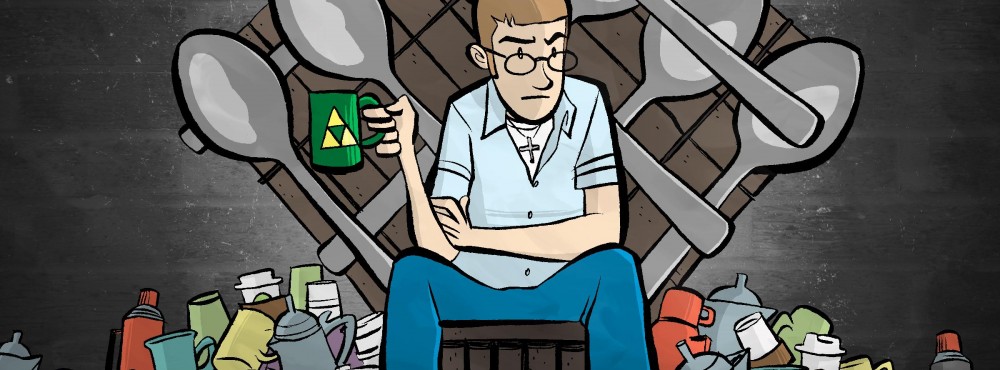
Today’s post was written by Wes Molebash, blogger and cartoonist extraordinaire. It came at the perfect time, since The Legend of Zelda: Skyward Sword is coming out in a couple of days. Check out his website for more awesome artwork and insights on creativity!

Like most people my age, I grew up playing the Legend of Zelda video game series. I loved every minute of those games, and Ocarina of Time played a defining role in my young adulthood.

Now I like to consider myself a “creative person.” What I mean by this is that I love to create art and I’m always scheming of my next “big” project. Ideas are cheap; art is work, and I’m absolutely in love with the creative process.

That being said, I realized the other day as I was toiling in my basement office that everything I know about creativity was learned from playing the Legend of Zelda video games.

For instance:

It doesn’t matter how small you are or what tools you are using

In several of the Zelda games, Link starts his journey as a little boy who wields a measly wooden sword and a Deku shield. A DEKU shield! No one is afraid of a Deku shield. But he doesn’t let this stop him. He goes straight into his first dungeon and defeats the baddie with his slingshot David-and-Goliath-style. The journey has begun. He’s received his first taste of victory, and he’s off to the next dungeon.

So what does this tell me about the creative process? Simple: It doesn’t matter how skilled you are or how big your platform is or how expensive your tools are, just create! Don’t be hindered by your limited experience or lack of resources. I know famous cartoonists who draw awesome cartoons on three-thousand-dollar computer tablets. I also know a lot of amateur cartoonists who draw awesome cartoons using Ticonderoga No. 2 pencils and Sharpie markers. Take the resources you have and use them to the best of your ability.

Every obstacle has a weak spot—exploit it!

The Legend of Zelda series has been around since the eighties and it continues to follow a familiar formula: go into dungeons, collect maps and compasses and special weapons, and fight seemingly indestructible beasts who all have a glaring Achilles heel. Does the beastie have one huge, rolling eyeball? It’s a safe bet that you’ll want to shoot some arrows into the beast’s ocular cavity. Does the baddie occasionally stop to roar for a prolonged period of time? I’d grab some bombs and make it rain inside that guy’s maw. No matter how big the monster is, his weak point is right there in front of you begging to be struck.

The same holds true with our creative obstacles. They seem impossible to topple, but—the fact is—they’re quite easy to destroy! If I had to guess, I’d say that 99% of our creative obstacles can be toppled by simply CREATING. Are you having a hard time motivating yourself? Get out your tools and create. Do you have some naysayers telling you that you suck at life? Tune them out and create. Are you swimming in a sea of rejection letters from agents and publishers? Take the critiques and criticism with a grain of salt and create.

It really is that simple. Once you get started it’ll be hard to stop. The weak spot of your obstacle is right there staring you in the face. Exploit it.

You’re going to get better

As I said above, when Link starts his journey he is just a little boy with a crappy sword and shield and three hearts in his life meter. However, as he continues his quest he gets better. He collects more weapons. He becomes more resilient. He ages. By the end of the game he’s got the Hyrule Shield, the Master Sword, some rad magic powers, a pair of flippers that help him swim and hold his breath under water, a bunch of sweet weapons in a bag that would be impossible to carry in the real world, and eighteen hearts in his life meter. He finally ends up at Ganon’s door and he’s ready to—as they say in the UFC—“bang.”

The same is true for your creative endeavors. The more you create, the better you’ll get. You’ll also acquire new tools and awesome advice from other creators. Most importantly, you’ll gain experience. No longer will you feel completely daunted by project proposals, pitches, and rejections. It’s all part of the process and you’ll get better and better at those things.

So wipe your brow, keep creating, and—when you need to take a break—dust off your N64, pop in Ocarina of Time, and wander around Hyrule Field for a spell.

What have you learned from video games? Let us know in the comments!

32. Ace Attorney

“What? Video games about a lawyer? You’re not serious.”

Such was my first response to Ace Attorney, a series of games for the Nintendo DS, when I heard about it years ago. I could understand the appeal of video games about a warrior, soldier or pilot who saves kingdom, country or world from sorcerers, armies or aliens—but games about a defense attorney who saves defendants from prosecutors?

Then, a year ago, I actually played Phoenix Wright: Ace Attorney, the first game in the series, and made a most surprising discovery: it was actually kind of awesome.

Ace Attorney Logo

Had the Ace Attorney games tried to replicate every detail of our own justice system, they would undoubtedly have been tedious and boring. Fortunately, the games favor fun over realism. The court system is simplified, making trials much more exciting and easier to follow.

The Ace Attorney games star a goodhearted defense attorney named Phoenix Wright who defends his clients with perseverance, sarcasm, spiky hair and a good deal of luck.

Wright is accompanied by his friend Maya—younger sister of his deceased mentor and voracious consumer of hamburgers—who assists him in his investigations.

The gameplay of the Ace Attorney games consists of two elements. First, Wright visits scenes related to the crime and interacts with the people involved. Although this element requires a little detective work, it’s mostly about gathering information. The second element requires Wright to use the information he’s gathered to prove the innocence of his defendant in court.

Most of Wright’s business in court is cross-examining—a fancy legal term for questioning—witnesses. Cross-examination in the Ace Attorney games is guided by one basic principle: Find the contradiction and expose it with evidence! Almost all witnesses make some mistake in their testimony; Wright’s job is to consider the information he’s gathered, expose the witnesses’ lies and figure out who really committed the crime.

Each case starts slowly, but gets steadily more exciting as more information and evidence is revealed. Finding the contradictions in witnesses’ testimonies is unbelievably satisfying, and it’s exhilarating to unmask the true criminal in each case—especially since it’s sometimes the last person the player suspects.

Two things particularly stand out to me about the Ace Attorney games.

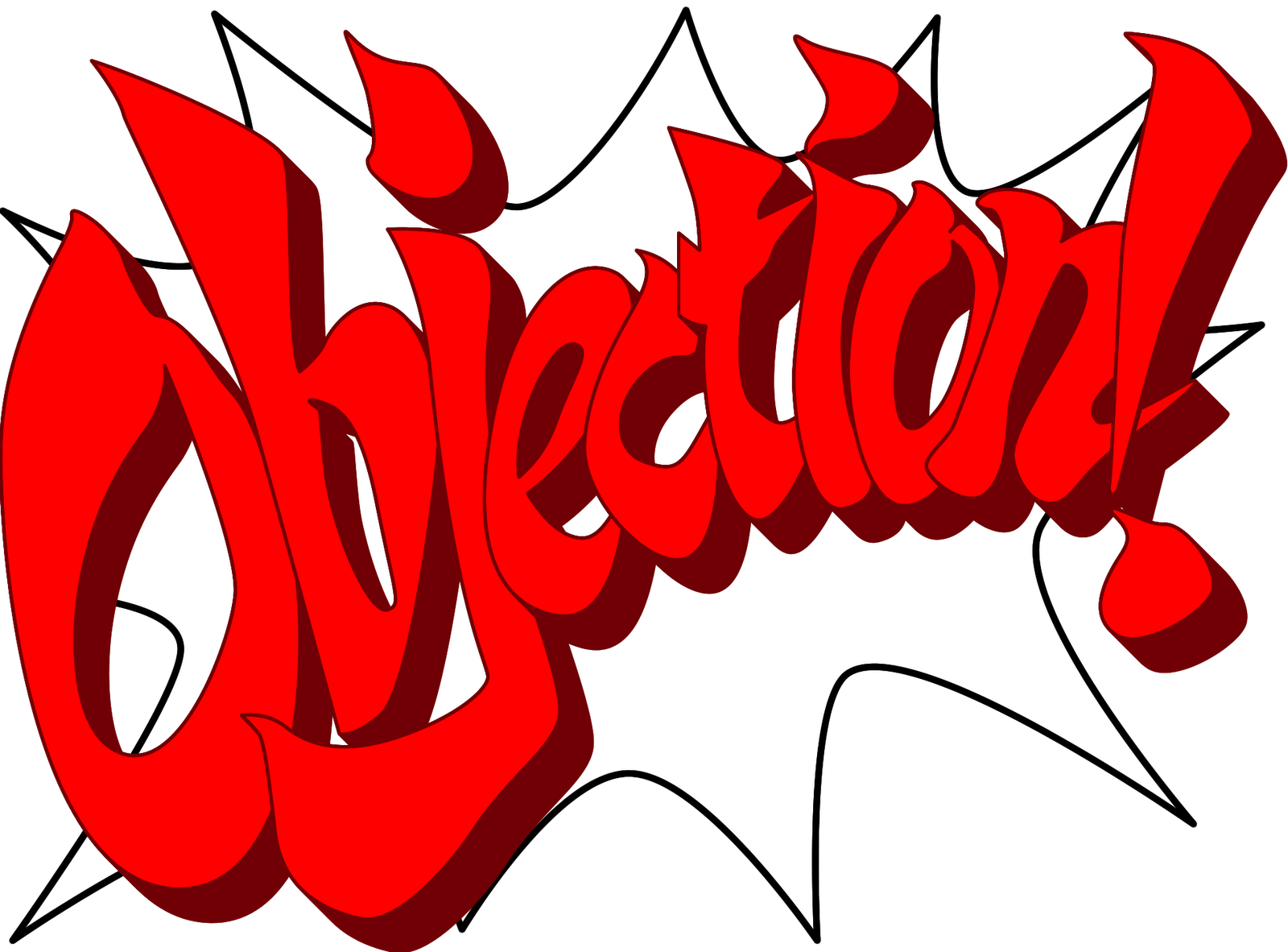
First is that events in the games are exaggerated for dramatic effect: the melodrama of each case is hilarious. When witnesses are exposed as liars, they react as though physically struck. Key witnesses have a habit of barging into court at exactly the right moment to give their testimonies. Perhaps most famously, attorneys in the Ace Attorney games don’t merely say “Objection” when they object to a proceeding in court. They bang their desks and shout—

The second thing that makes the Ace Attorney games so enjoyable is that the characters are wonderful. They remind me of Charles Dickens, whose most delightful characters are more like caricatures: Scrooge and Micawber and Fagin are too ridiculous to be realistic, yet retain just enough truth to be believable. In the same way, the Ace Attorney games are full of exaggerated characters that are too silly to be real—yet they’re believable, likable and memorable. As in Dickens’s novels, major characters are developed carefully and minor characters are never dull or insignificant.

Are the Ace Attorney games worth playing? Odd as it sounds, definitely. It’s ridiculously satisfying to solve cases and save innocent defendants, and the games’ storytelling is excellent.

And really, who can resist shouting “Objection!” into a Nintendo DS microphone and watching guilty witnesses cower in fear?

21. The Legend of Zelda

There’s no way on Earth I can fit my appreciation for The Legend of Zelda in a single post. It requires an effort of heroic proportions, but I’m going to try.

The Legend of Zelda is a series of video games in which a young hero named Link rescues Princess Zelda from the wicked sorcerer Ganon. The basic plot of most games is simple—Link rescues Zelda and defeats Ganon—but each game embellishes it with beautiful settings, delightful characters and unexpected twists. A few Zelda games reject the classic Link-rescues-Zelda formula for something entirely different, shipwrecking Link on an island or forcing him to relive three days over and over in order to save a town from a nihilistic imp. There are numerous incarnations of Link and Zelda throughout the series, but Ganon is always the same character—like Sauron and Voldemort, he’s one of those villains who refuse to die.

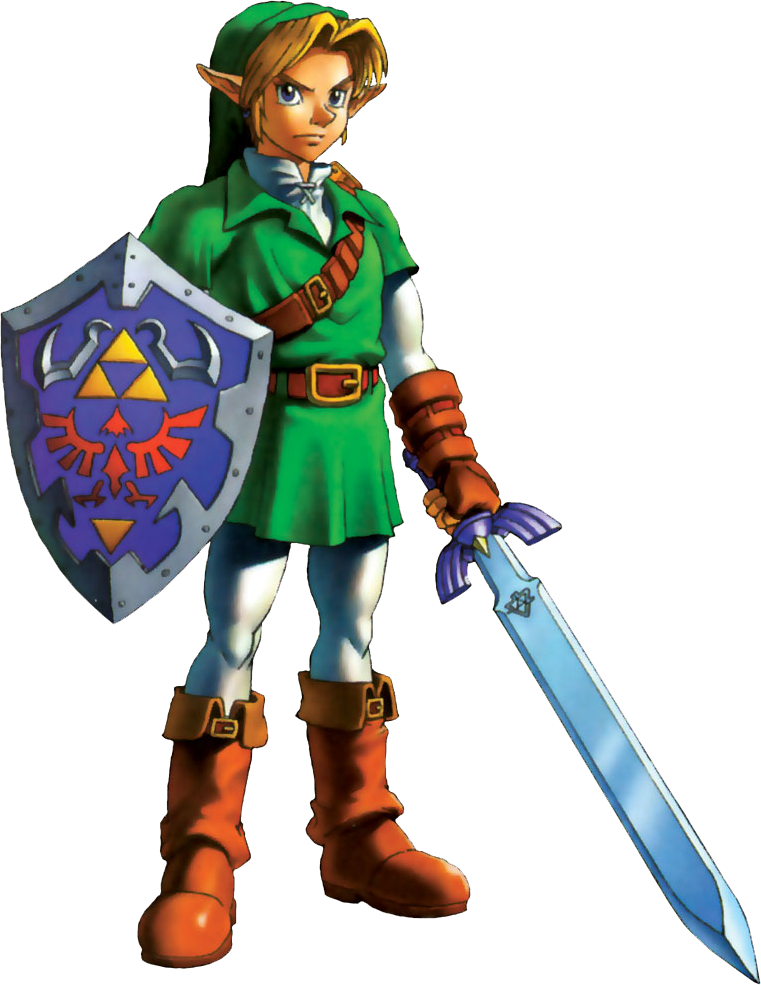
Link isn’t a typical adventurer. First of all, he wears a green tunic, a stocking cap and occasionally a pair of white tights: definitely not standard garments for a mighty hero.

While he uses some of the usual tools and weapons of the adventurer—sword, shield, bow, arrows and so on—he also uses equipment that’s frankly rather strange: boomerang, bug-catching net, bombs, empty bottles, musical instruments and chickens. Well, to be precise, he uses cuccos, the Zelda equivalent of chickens, which can be used to glide through the air after jumping from a ledge.

(By the way: If you ever happen to play a Zelda game, don’t attack the cuccos. Trust me on this one. Bad things happen to players who attack cuccos.)

Link is usually accompanied by a companion: a talkative fairy, a cowardly sea captain, a magical sailboat, a shadow imp or Princess Zelda herself. These companions are helpful for the most part, though some players (myself included) have tried in vain for years to kill Navi, Link’s fairy companion in Ocarina of Time, who shrieks “Hey!” and “Listen!” and “Hello!” and “Watch out!” with irritating frequency.

Ocarina of Time, by the way, is the greatest video game ever. It received almost universally perfect scores upon its release about thirteen years ago. Review compiler websites rank it as the highest-reviewed game ever. It tops pretty much every list ever compiled of the best video games ever made. In fact, the Zelda series is probably the most highly-acclaimed video game series of all time.

There are too many good things about the Zelda series to fit into a short post, so I’ll highlight just a few more.

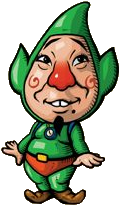
Although Link is a silent protagonist without much personality, the supporting cast and minor characters are typically eccentric, likable and highly memorable. A few of them are also kind of creepy. Mostly this guy.

The gameplay of the series is a balanced blend of exploration, combat and puzzles, with a few minigames thrown in for good measure. The games usually feature important treasures for Link to collect, all of which must be gathered to complete the game. Each treasure lies in the heart of a dungeon full of puzzles, traps, locked doors, keys and monsters. At the end of each dungeon lurks a difficult and terrifying enemy, the boss, for Link to conquer in order to claim the dungeon’s treasure. In between dungeons Link is free to roam the land, interacting with people, exploring, earning money, completing optional quests and barging into private homes to break clay pots.

The music of the Zelda series is beautiful. Music plays in integral role in most of the games; Link often uses magical instruments to progress in his quest. (In Ocarina of Time, the eponymous instrument is a woodwind possessing considerable magical power.)

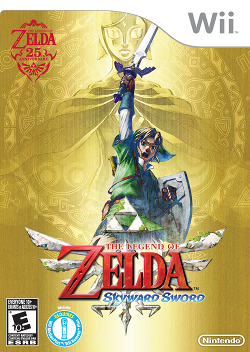
The Legend of Zelda is celebrating its twenty-fifth anniversary this year. This is also the year Skyward Sword, the latest Zelda game, is released.

It comes out on November 20 for the Nintendo Wii. To say I’m excited for its release is a staggering understatement. My younger brother is also awaiting it eagerly. We’ll be sharing the same copy of the game in December, so I’m not sure how we’re going to work out who gets to play it first. My brother owns several machetes and swords, so I might borrow my old man’s cavalry saber and fight my brother for the right to play Skyward Sword first. We’ll see.

My final thoughts about the Zelda series? Play it. If you like video games at all, I can pretty much guarantee you won’t regret it.

19. So, Um… What Do You Think Being a Hero Is All About?

I don’t generally search for profound wisdom in webcomics—especially not webcomics about video games.

Imagine my surprise, then, when I was reading my favorite webcomic way back in March and realized its writer had stumbled upon pretty much the most important lesson ever.

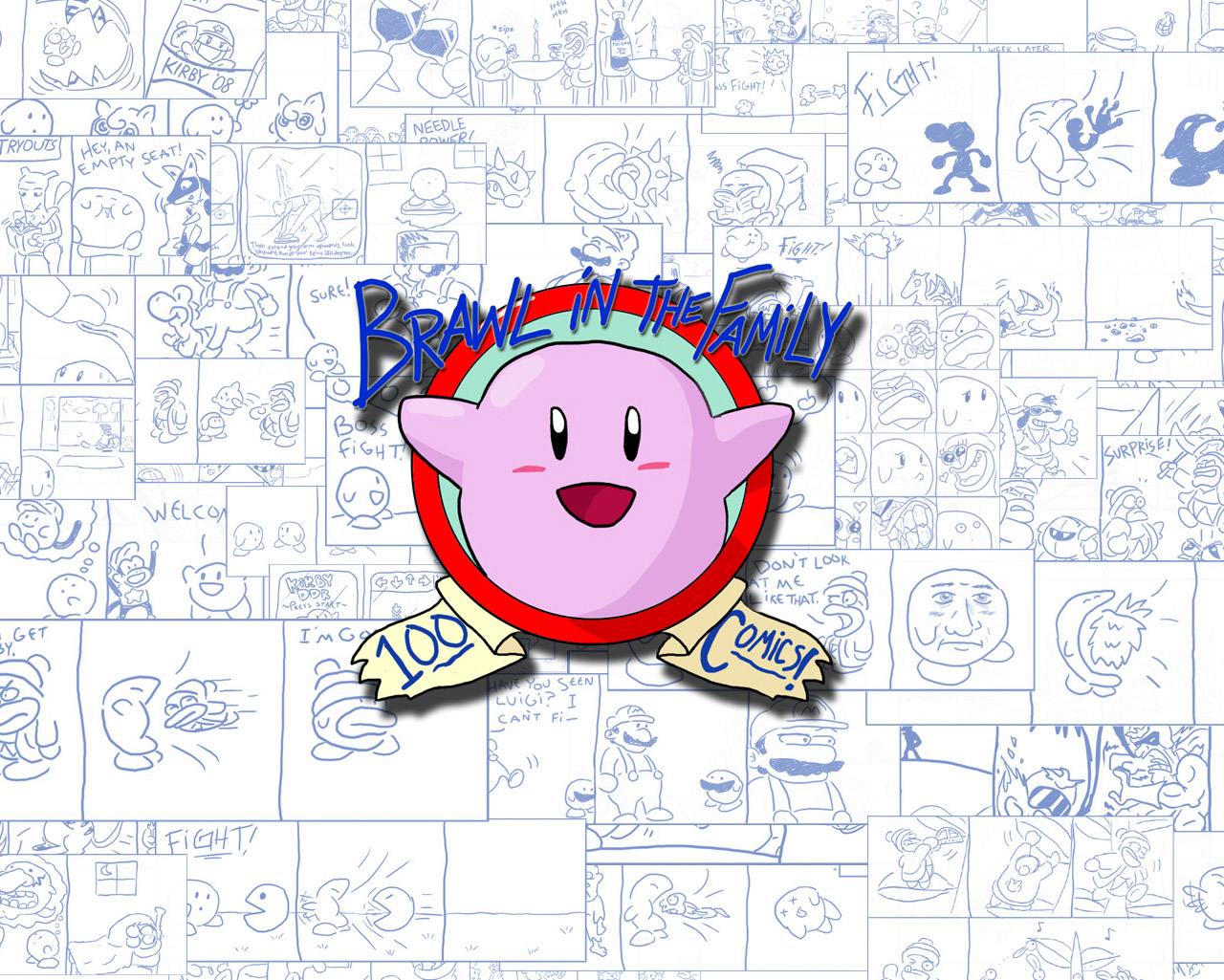
Brawl in the Family is a delightful webcomic by a couple of guys named Matt and Chris. It’s a funny, quirky take on video game characters, and I think it’s pretty awesome.

In one comic, two teachers are asked by their students, “So, um…what do you think being a hero is all about?”

The first teacher, a villain, replies, “Well, to put it simply: ambition.” He adds, “Remember, you are capable of great things.”

The second teacher, a kindly gentleman, replies, “Well, to put it simply: sacrifice.” He adds, “It is not about you. It is about everyone else.”

It is not about you. It is about everyone else.

I happen to be student teaching at the moment, and it’s so easy to become centered on myself. I have to survive the stress of teaching classes and grading papers. I have to keep up with the paperwork for my college’s Education Department. I have to be a good teacher.

It’s also so easy to become self-centered in regard to my writing. I want to become a successful novelist. I want to have a great blog. I want my writing to be excellent.

I is such a little word, but it represents so much. Ambition. Dreams of glory. Delusions of grandeur.

I’m ashamed to say it, but I become self-centered. Then things happen that jerk me back to reality. One of those things happened yesterday.

Yesterday we held parent/teacher conferences at my school. My supervising teacher and I had been assigned to hold conferences with the parents of our MEC students. The MEC students are the at-risk kids, the kids with low grades and behavior problems—the kids in danger of being expelled. For nearly eight hours, my supervising teacher, other teachers and I held conference after conference with the parents and guardians of our students.

Some of these parents and guardians were bright, cheerful and polite. Some were not. One came in with whiskey on her breath. Another came uncomfortably close to exploding into a fit of rage. Almost all of them told us directly or indirectly that they didn’t have much control over their kids, and a few of them maintained an attitude of nonchalance.

They didn’t seem to care that their children were failing classes or causing trouble. One mother was obviously in denial that her son is a borderline sociopath. Another mother cheerfully admitted to being aware of the fact her son smokes marijuana.

It was tragic. It was also very convicting. These are the students with whom I work almost every day—and I get so wrapped up in my plans and ambitions and personal projects that I forget how much my students need a loving, patient, diligent teacher.

It is not about me. It is about everyone else.

Jesus said the same thing when someone asked him about the great commandments—God’s greatest charge to humankind—the ultimate meaning of human life. Jesus replied, “‘Love the Lord your God with all your heart and with all your soul and with all your mind.’ This is the first and greatest commandment. And the second is like it: ‘Love your neighbor as yourself.’”

Webcomics, even webcomics about video games, can impart great wisdom.

It is not about you. It is about everyone else.

15. Video Game Music

I love video game music. As I’ve mentioned previously, video games have an unfortunate (and mostly unmerited) reputation for being lowbrow or even harmful. Video game music is not generally considered to be of much value.

This is sad, since much of the music from video games is absolutely superb.

In addition to the great music in video games, there are thousands of remixes created by musicians who rearrange, reinterpret and reinvent video game melodies.

There are four things I particularly like about video game remixes.

They’re creative

I’ve heard the main theme from Super Mario Bros. remixed as electronica, performed by a string quartet, scatted a cappella and played on a piano. A single song might be interpreted in a hundred different ways. It’s delightful to find a new perspective on a familiar melody—rather like looking at a painting in a museum and recognizing the view out of my own bedroom window.

They cover pretty much every musical genre

I’ve heard at least one song rearranged with bagpipes in the style of traditional Scottish music. Need I say more?

They’re often amazing

Composers of video game music have commented on the surpassing quality of remixes they’ve heard. David Wise and Christopher Tin, among others, have spoken positively about remixes of their music. (Christopher Tin, by the way, won a Grammy for a song he composed for a video game.) I’ve heard many remixes of professional quality, sometimes with vocals or live instruments.

They’re free

Most video game remixes are available for download—legally—for free. Because remixes are based on music owned by video game developers, those who make them aren’t usually able to sell them without breaking copyright law. The alternative is to distribute remixes for free, which is legal and totally awesome.

In order to demonstrate the quality, variety and grandeur of video game music, I’ve decided to give a few examples—or rather, one example remixed in several ways. The remixes are taken from OverClocked Remix, an organization “dedicated to the appreciation and promotion of video game music as an art form.”

First is the original song, “Valley of the Fallen Star” from Final Fantasy VII. The song has sort of a Native American feel to it, with muted percussion providing rhythm and a woodwind carrying the melody.

Next we have “Red XII Redux,” a straightforward rock remix—nothing fancy or extravagant, just a smooth arrangement of the song recorded live.

Moving from laid-back rock to frantic guitar shredding, “Lunatic Moon” combines rock and electronica in a song that practically radiates energy and aggression.

We finish with “Ascension to Cosmo Canyon.” The song is simply beautiful, every bit as peaceful as “Lunatic Moon” was frenetic, with piano and strings leading into a woodwind melody backed by drums and a male chorus. The song is lovely and has a decidedly cinematic feel.

These are just a few examples of how one song can be interpreted in many ways. Video game music is wonderful on its own merits—especially in these days when so many games include music from choirs and live orchestras—and remixes present endless interpretations and reinventions of video game melodies.

Remixes are also free. You can’t beat that!

8. An Unapologetic Apology for Video Games

I like knives. To be honest, I like sharp objects in general: knives, daggers, sabers, katanas, broadswords, machetes, claymores and pretty much every other kind of blade devised by mankind.

(It would be more politically correct to say humankind, but in this case mankind is probably more accurate since men are the ones responsible for most of the blades in the world.)

Used correctly, knives can be useful for everything from peeling oranges to creating works of art. Used incorrectly, knives can kill and hurt and destroy. Knives are inherently neither good nor bad. Whether they’re good or bad depends on how they’re used.

I’ll return to the exciting subject of knives in a moment, but I should mention first that I’m student teaching at a local high school. The other day I glanced through a book for teachers about the problems of apathy and disrespect in the classroom. I was a little disheartened when the book blamed video games for the lethargy of unmotivated students.

Why was I disheartened?

Because it’s often true.

Video games can be addictive. Some are horribly violent. Many are painfully shallow or stupid. Finally, while I’m no expert in psychology, I think the satisfaction of accomplishing goals in video games can become an unhealthy substitute for the satisfaction of accomplishing goals in real life. Why bother working hard at school when you can save—or conquer—the world in a video game?

Video games can definitely be harmful. So can knives. But knives can also be beneficial, and I think video games can be too.

There are two kinds of apologies. First is an expression or remorse or regret. Second is a justification or defense. This post is the second kind of apology.

If you will, consider the following.

It’s not fair to judge an entire medium by a few bad examples

Yes, there are video games like Grand Theft Auto and God of War that glorify violence, profanity and sexual depravity. There are also books and films and songs that are just as bad or even worse. We don’t condemn all books or films or songs because some are bad. Why then do we assume all video games are harmful because some happen to be?

Video games are a unique form of storytelling

I’ve read many books and played many games. To be honest, some of those games are a lot better than some of those books. The Final Fantasy games, for example, consistently provide fantastic settings, clever plots, superb characterization, interesting themes and (in the later titles) good writing and acting.

Some games even give players the freedom to influence the story by their decisions: the player and the storyteller become partners in bringing the story to its conclusion.

Video games have artistic value

There are people—including some game developers—who would challenge this assertion, but I think video games can be a valid form of artistic expression. Graphic design, animation, writing, music and acting are acknowledged to be forms of art.

Video games bring together some or all of these artistic forms and add the unique element of gameplay, the finely-tuned mechanics that allow a player to interact with the game. How is that not artistic?

Video games are fun

‘Nuff said.

Video games can be thought-provoking

Although we expect them to be intellectually vapid, video games can be quite profound. Final Fantasy Tactics Advance, for example, has some fascinating moral dilemmas: Is a harmless illusion better than a painful reality? At what point does a person have the right to make decisions for another person?

The Final Fantasy series deals with all sorts of serious moral, political and ecological themes, and there are many other games that wrestle with issues of equal importance.

Video games bring people together

The stereotypical gamer is a lonely misfit with pale skin and no social experience. However, as is often the case, the stereotype is usually wrong. Most of the gamers I’ve met are cheerful, well-adjusted people. In my own experience, video games have actually strengthened friendships by giving friends something to do together. It’s hard not to enjoy spending time with other people when you’re tossing green shells at each other in Mario Kart or trying to knock each other off the screen in Super Smash Bros.

Is there more to a meaningful friendship than video games? Of course. Can video games be part of a meaningful friendship? Absolutely.

Video games inspire creativity

I’ve seen beautiful artwork inspired by video games and listened to amazing arrangements of video game music. There are many online comics centered on the oddities of games and gaming culture; some of them are really fun to read.

Video games have inspired many creative people to exercise their creativity, and that’s a very good thing.

What are your thoughts? Are video games a good thing? Are they evil? Let us know in the comments!