55. TMTF Reviews: Joy in the Morning

A friend once told me the following story. Several of the most respected writers in the world were asked to compile a list of the one hundred best books ever written. One of these writers supposedly replied, “Well, P.G. Wodehouse wrote ninety-seven books in his lifetime, so it only remains to us to come up with three more books for the list.”

I’m not sure whether this story is true, but it definitely could be. P.G. Wodehouse is one of the funniest writers in the history of writers who are funny. Every time I read one of his books I feel deep admiration, almost reverence, for his effortless command of the English language. I also feel profound envy. I wish I had Wodehouse’s gift for writing.

Admiration and envy, however, are always my secondary responses to books by Wodehouse—my first reaction is invariably amusement, often manifested in raucous laughter.

I recently happened upon a copy of Joy in the Morning, a novel by P.G. Wodehouse. I decided to read it for two reasons. First, it had been a long time since TMTF reviewed a new book. Second, it was a novel by P.G. Wodehouse—’nuff said.
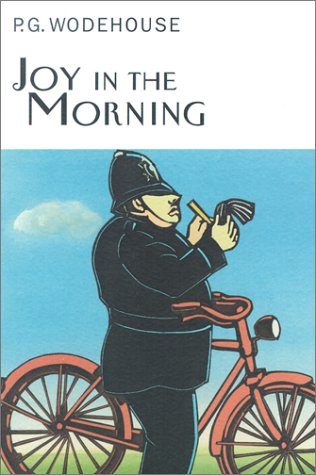
Joy in the Morning is vintage Wodehouse: a character gets into a sticky social situation that gets progressively stickier and stickier, only to be rescued at the last moment by a clever friend or a lucky turn of events.

The novel is the memoir of Bertram “Bertie” Wooster, a London resident who becomes engaged (entirely by mistake) to an domineering lady named Florence. Her previous fiancée views Bertie as a traitorous sneak and expresses a strong desire to pull out his insides and trample on them. A few other dreadful characters—Bertie’s short-tempered Uncle Percy and horrible cousin Edwin, for example—blunder onto the scene to complicate matters further. The whole crisis is overshadowed by the looming threat of Bertie’s Aunt Agatha, described by Bertie as “my tough aunt, the one who eats broken bottles and conducts human sacrifices by the light of the full moon.”

Bertie is trapped in a dreadful mess, and only one person has any hope of rescuing him: his valet, a dignified, philosophical gentleman known only as Jeeves.

Joy in the Morning is predictably Wodehousian. Bertie’s hopeless troubles are solved at the last instant by a clever plan from Jeeves, and happy endings are “distributed in heaping handfuls.” It’s the same old Jeeves-and-Wooster formula with few unexpected surprises—but that’s not a bad thing. If it ain’t broke, don’t fix it, as the saying goes, and Wodehouse’s traditional pattern certainly ain’t broke.

The novel has only one weakness. It would be misleading to call it a fault or defect; it’s more of a quirk or idiosyncrasy. Joy in the Morning is very, very British. Consider this quote from Bertie on the very first page: “I saw no ray of hope. It looked to me as if the blue bird had thrown in the towel and formally ceased to function. And yet here we are, all boomps-a-daisy. Makes one think a bit, that.” For some readers, British slang is delightfully quaint. For other readers, however, it may simply be confusing.

Though some American readers may be puzzled by its Britishness, Joy in the Morning is a superb comic novel, a classic work from one of the greatest humorists ever to have picked up a pen. Together with Sherlock Holmes, Ebenezer Scrooge and other legends of British literature, Jeeves and Wooster are among the best literary characters Britain has ever produced. I strongly recommend Joy in the Morning.
47. Literary Gems

Every now and then while reading I happen to stumble upon a literary gem—a phrase, sentence or paragraph of dazzling literary quality. These are the passages that make me laugh, shudder or simply sit gaping in amazement.

For example, I was reading Titus Groan a few months ago. It’s a pretentiously stylish and relentlessly bleak novel by Mervyn Peake about a gloomy castle called Gormengast and its equally gloomy inhabitants.

In reading about the crumbling maze of weathered stone that comprises Gormengast, I was stunned by this description of a castle tower:

This tower, patched unevenly with black ivy, arose like a mutilated finger from among the fists of knuckled masonry and pointed blasphemously at heaven. At night the owls made of it an echoing throat; by day it stood voiceless and cast its long shadow.

Everything about this literary jewel screams gloomy and depraved. The passage uses evocative words like unevenly, black, mutilated, blasphemously, echoing, voiceless and shadow to give the impression of something erratic, dark, evil, ominous and silent—which pretty much sums up the atmosphere of the novel and most of its characters.

Moving on to something more cheerful, P.G. Wodehouse is one of those rare authors who throw out literary gems with casual abandon—practically every page of Wodehouse’s writing sparkles with brilliant passages.

For example, at a moment when the terrified narrator is trying to act confident:

I laughed lightly. At least, I tried to. As a matter of fact, the thing came out more like a death rattle.

Whether bleak or uplifting, heartbreaking or hilarious, terrifying or comforting, literary gems fill my bookish heart with wonder.

What are your favorite literary gems? Let us know in the comments!

35. A Short, Untidy and Highly Idiosyncratic History of Fantasy

Warning: This post is long and very literary.

I love the genre of fantasy. On one level it provides a literary medium through which writers can explore moral responsibility, the human condition and the existence of the supernatural. On another level it pits heroes against dragons, sorcerers and monsters. What’s not to like?

The development of the fantasy genre fascinates me. This blog post chronicles—in an admittedly cursory and haphazard fashion—the history of fantasy.

Human beings have been making up stories about the supernatural since…well…presumably since they were kicked out of Eden.

These stories fall into several categories. Mythology refers to the traditional stories of a people or nation, usually concerning all-important matters like the accomplishments of deities and the creation of the world. Legends are less grandiose, consisting of stories about extraordinary people or events. Folklore is the collection of tales and superstitions of a particular people or nation, and fairy tales are a subgenre of folklore intended for younger people.

Although stories about the supernatural have been in currency for millennia, the genre we call fantasy didn’t come into being until the nineteenth century. Ancient stories about the supernatural are normally considered precursors to fantasy and placed in one of the categories already mentioned: mythology, legend, folklore or fairy tales.

The modern genre of fantasy is usually defined as the type of fiction in which supernatural phenomena are a primary element of theme, plot or setting. Fantasy is distinguished from the horror genre because it typically avoids dark, macabre themes. Fantasy is also considered separate from science fiction, which uses advanced technology and science (or pseudoscience) as storytelling elements.

There’s some debate about the first author of modern fantasy. As far as I’m concerned, that honor belongs to George MacDonald, a Scottish minister and novelist. MacDonald was a close friend and mentor of Charles Lutwidge Dodgson—better known as Lewis Carroll—who wrote the famous Alice books; MacDonald was also acquainted with Mark Twain, Charles Dickens and other notable authors of his day. He is most famous for his fairy tales and two fantasy novels, Phantastes and Lilith, which would later have a profound effect on authors like C.S. Lewis.

Some decades after George MacDonald’s seminal fantasies, a reclusive professor of Anglo-Saxon was persuaded to finish and publish a bedtime story he had written for his children. That professor was J.R.R. Tolkien, and that story was The Hobbit.

Tolkien had been developing a private mythology for decades, making notes upon thousands of years of fictional history and creating multiple languages. To his own surprise, The Hobbit, which began as a bedtime story, established itself in his private mythology. After he was persuaded to publish The Hobbit, readers clamored for a sequel, and he eventually obliged with The Lord of the Rings—which is, in my humble judgment, the greatest work of fantasy and one of the finest works of fiction ever written. The Lord of the Rings is notable not only for its unprecedented depth, but its use of themes from Norse mythology and Anglo-Saxon folklore.

Around this time, C.S. Lewis published The Chronicles of Narnia, his seven-volume contribution to the fantasy genre. Narnia drew upon earlier children’s literature (such as the works of E. Nesbit) and would later influence J.K. Rowling’s popular Harry Potter books and inspire—provoke is probably a better word—Philip Pullman’s His Dark Materials trilogy. Tolkien, who was a friend of Lewis’s, disliked Narnia: he believed the books were sloppily written and full of inconsistencies.

The fantasy genre rapidly gained popularity midway through the twentieth century, especially in the United States. The Lord of the Rings in particular gathered a huge following during the sixties, exerting a major influence upon other works of literary fantasy, the growing video game industry and the development of fantasy role-playing games.

From the sixties onward, the fantasy genre expanded in two ways.

First, the fantasy genre became more financially lucrative, driving the publication of commercial fantasy—shoddy, formulaic fantasy fiction written for the sole purpose of making money. Well-written fantasy fiction, or literary fantasy, became less common.

Second, the fantasy genre proliferated into dozens of subgenres. There is high fantasy, which creates supernatural worlds; low fantasy, which introduces the supernatural into our own world; magic realism, which combines matter-of-fact narration with surreal details; steampunk fantasy, which incorporates anachronistically old-fashioned technology and culture; sword and sorcery, which emphasizes sensational magic and medieval warfare; and many, many others.

Fantasy continues to flourish. Commercial fantasy is still produced and sold, unfortunately, but occasional works of literary fantasy reassure me there’s still hope for the genre. (Jonathan Strange & Mr Norrell, which TMTF reviewed some weeks ago, is a good example of modern literary fantasy.)

It’s worth pointing out that many of fantasy’s best authors have been Christians: George MacDonald, J.R.R. Tolkien, C.S. Lewis, Madeleine L’Engle and others. Although I’m not sure why, I have a theory: The ideals of Christianity and of fantasy tend to be similar.

Christians believe in the existence a supernatural world that exists alongside the natural world; when the supernatural world intrudes into the natural world, we call it a miracle. Christians also believe in objective morality, the belief that right and wrong are consistent, unchanging realities, and that good is better than evil.

Fantasy usually creates a supernatural world that exists alongside the natural world; when the supernatural world intrudes into the natural world, fantasy labels it magic. Fantasy also typically remains true to the concept of objective morality—good triumphs over evil in fantasy fiction, after all, because good is consistently better than evil.

Christianity and fantasy fiction hold many concepts in common, so I think it’s no coincidence that some of fantasy’s best authors have been Christians. Since fantasy is fictitious, does my theory suggest Christianity is false? Absolutely not! The paradox of fantasy is that it reflects some truths more clearly than realistic fiction.

What do you think about fantasy? Do you have a favorite author or book? Let us know in the comments!

31. The Art of Blundering Hopefully

I like gloomy characters. Well, I like gloomy fictional characters; gloomy characters aren’t nearly as likable in real life as they are in fiction. There’s something strangely endearing about pessimists and their pessimism, so long as I don’t have to deal with them personally.

Puddleglum from C.S. Lewis’s The Silver Chair is one of my favorites. “Good morning Guests,” he says to the protagonists after they spend the night in his home. “Though when I say good I don’t mean it won’t probably turn to rain or it might be snow, or fog, or thunder. You didn’t get any sleep, I daresay.”

Then there’s Marvin the Paranoid Android from The Hitchhiker’s Guide to the Galaxy by Douglas Adams, and Eeyore from the Winnie-the-Pooh books by A.A. Milne, and Bernard Walton from the Adventures in Odyssey radio series, and a dozen more delightfully depressing characters from all sorts of stories.

The problem with pessimism is that it’s not nearly so pleasant in real life. It’s difficult to put up with pessimists—and it’s much worse to be a pessimist.

Some time ago I realized something important. (I was actually going to write about it weeks ago, but decided not to post too many serious reflections in a row.) What I realized was simple—so simple I couldn’t believe I had overlooked it for so long.

I had become a pessimist. Not a nice, lovable pessimist like Puddleglum or Eeyore, but a genuine, depressed pessimist.

I suspect my long, dark Thursday Afternoon of the Soul, a year and a half of intense depression and anxiety, had conditioned me to expect only the worst. I expected the worst from myself, wrestling with insecurity and self-doubt. I expected the worst from life, living in anxiety of whatever difficulties lay ahead. I expected the worst from God, struggling to believe he could really be as gracious, loving and generous as he claims. Every trial confirmed my belief that life was a dreary business, and every blessing made me suspect there were strings attached.

Since recognizing my tendency toward pessimism, I’ve been working to perfect the fine art of blundering hopefully.

We don’t have to live in perpetual fear of the future. It holds difficulties, true, but it also holds blessings. It’s certainly no good worrying about the difficulties. We can only deal with them as they come. In the meantime our business is to trust God and do our best: believing that his grace is greater than our mistakes, trusting that he will walk with us through our difficulties, holding on to his promise that his love endures forever—to wit, blundering hopefully.

So I’m doing my best not to burden myself with guilt for past mistakes or live in fear of future ones. By faith I blunder onward, trusting that God’s grace is sufficient for me.

God’s grace is sufficient for you too, in case you were wondering.

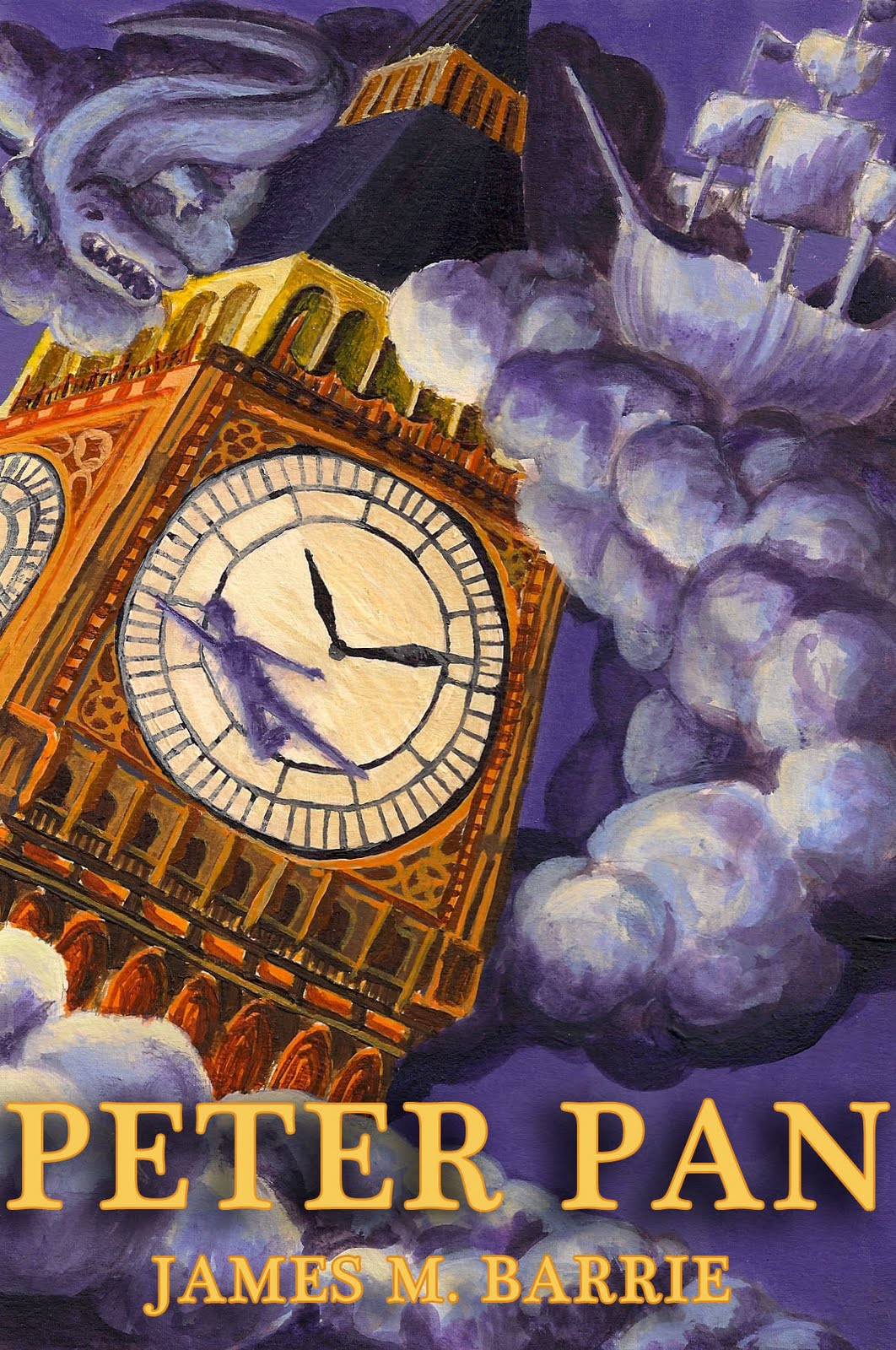
30. TMTF Reviews: Peter Pan

C.S. Lewis believed a children’s book that is enjoyable only by children is a bad children’s book. Just as a connoisseur of fine food can still enjoy a simple meal of bread and butter, he maintained, so a literary person should still be able to enjoy simple books for children.

I realized some time ago that I’d never read Peter Pan. It’s a classic of children’s literature, so I decided to obtain a copy of the book and mend this serious flaw in my literary education.

Peter Pan tells the story of a girl named Wendy and her brothers John and Michael. Their quiet existence in a London suburb is interrupted by the arrival (through an upstairs window) of an arrogant boy named Peter Pan who has never grown up. Peter offers to take Wendy and her brothers to the Neverland, an island inhabited by pirates and Indians and mermaids, where they can live a jolly life. Oh, did I mention that Peter happened to arrive by flying? Wendy and her brothers follow Peter to the Neverland, only to find the pirates—particularly one Captain Hook—are a good deal nastier than they had expected.

Peter Pan has been tremendously influential since its publication, inspiring a number of films, several prequels and at least one sequel. (I have a suspicion that Ocarina of Time—which features a green-clad boy with a fairy who lives among children who never grow up—was strongly influenced by Peter Pan.) Like Sherlock Holmes, Robinson Crusoe and Count Dracula, Peter Pan has become an archetype.

But never mind all that. Only one question concerns us. Is Peter Pan worth reading?

Peter Pan

I was glad to discover that Peter Pan is actually quite a good book. The narration is serious and matter-of-fact, which makes the ludicrous events of the book that much more charming. The style is dry and humorous (in a serious sort of way) and never condescending. One of the things I enjoyed most about the book is that the narrator never talks down to the reader. Like all great writers of children’s literature, the author of Peter Pan mastered the difficult art of respecting his audience.

A literary critic would find in Peter Pan a lively meditation upon the transience of youth and the “gay and innocent and heartless” nature of childhood. A Freudian psychologist would probably find all sorts of awful insinuations about motherhood and sexuality. Most readers, however, will find nothing more profound or disturbing than a fanciful tale that somehow manages to bring together pirates, Indians, mermaids, fairies and a ticking crocodile.

One of my few complaints about the book is that several of the protagonists are, for lack of a more polite term, jerks. The villains aren’t all that bad in comparison. Yes, Captain Hook is a wanton murderer, but I couldn’t help but pity him in his futile quest to conquer his self-doubt and justify himself. I felt very little sympathy for Peter Pan, though. He’s an arrogant, selfish, insensitive git. Tinker Bell is worse: vain, jealous, ungrateful and murderous. Old Tink does redeem herself partway through the book, but she’s never very likable. As much as I enjoyed Peter Pan, I would probably have liked it more if Peter and Tinker Bell hadn’t been such twits.

On the whole, I think Peter Pan is a fine book, a worthy classic of children’s literature that, like Peter himself, is pretty timeless.

28. The Bend in the Road

I really like Anne of Green Gables. Although I don’t usually enjoy sentimental stories about little girls growing up, there’s something about the book that strikes a chord with me. It could be that Anne Shirley (whose first name must never be spelled without the e) and her friend Matthew Cuthbert are delightful characters. It could be that Anne of Green Gables paints a beautiful picture of a simpler time, a time without Facebook or cell phones, when people took time to talk to each other and read books for the fun of it.

Whatever the reason, Anne of Green Gables is a favorite of mine.

One of my favorite moments in the book comes in one of the final chapters. Anne’s future plans, which had seemed so certain, are suddenly thrown into serious question. Rather than give up in despair, Anne decides to regard her misfortune as an adventure: “My future seemed to stretch out before me like a straight road. I thought I could see along it for many a milestone. Now there is a bend in it. I don’t know what lies around the bend, but I’m going to believe that the best does.”

My own plans for Life After College were pretty straightforward until a few months ago. I was going to apply for a job at my old high school in Ecuador, teach English and write novels until retiring and settling in California or Florida. Everything was neatly planned, and I didn’t doubt for a moment that things would work out precisely as I wanted them to.

Then my application to the high school was turned down. My future plans were no longer crystal clear, unless that crystal happened to be an especially foggy variety of quartz. I was discouraged for a little while, but it finally occurred to me that not knowing exactly what the future holds is kind of exciting. Terrifying, yes, but also kind of exciting.

I’ve been student teaching for the last eleven weeks, struggling to survive grading, lesson planning, sleep deprivation, faculty meetings, miscellaneous paperwork and the actual business of standing in front of students and teaching them things. It was like walking through thick fog: it was hard to see far behind or ahead, to think about the past or speculate about the future. Day by day all I could see was the road right in front of me.

Yesterday was my last day of student teaching. I’ve a few weeks of seminars and paperwork and whatnot, but I’m almost done with college. It was a little strange to emerge from the fog of student teaching and realize there’s still a long road ahead of me. Like Anne Shirley’s road, it isn’t straight. There’s a bend in it, and I haven’t the slightest idea of what’s waiting for me beyond it.

But I’m not worried. The Lord has led me this far, and I know he will continue to lead me to wherever he wants me to be. As the old hymn says, ’tis grace that brought me safe thus far and grace will lead me home.

I just hope there are coffee shops along the way.

A note for those who know me personally and are wondering what my immediate plans are: I will be leaving Bethel College toward the end of November and staying with my parents and younger brother in Uruguay. I intend to search for a teaching position in South America, work seriously on a couple of novels, improve my Spanish, drink lots of coffee and spend time with my beloved family.

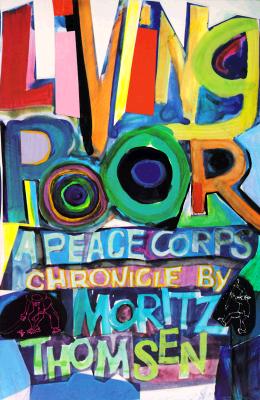
23. TMTF Reviews: Living Poor

About forty-five years ago, a Peace Corps volunteer was deployed to a remote South American village. For those who don’t know, the Peace Corps is a program run by the US government in which volunteers travel to impoverished countries to provide technical assistance. Moritz Thomsen, the author of Living Poor, wound up in a tiny village called Río Verde on the coast of Ecuador. He stayed four years, teaching about agriculture and learning about human nature.

My parents have been nagging me to read Living Poor for years. My grandfather and some of my uncles were personally acquainted with Thomsen and some of the people he describes in the book. A phrase from the book, the sadness of the rats, is used by my family to refer to loneliness or melancholy. Although I prefer fiction to nonfiction as a rule, I decided I should read Living Poor to oblige my family and figure out what exactly the sadness of the rats is supposed to mean.

Living Poor is an excellent book. Having spent much of my life in Ecuador I’m probably biased, but there’s no denying the book is superbly written. Quoth Mark Covert, “Moritz Thomsen could well be the finest American writer you’ve never heard of.” The tone of Living Poor alternates between melancholy and cynical humor. The author is at his best when describing his failures. One of my favorite lines in the book recounts his failure to cultivate lettuce in the tropical climate: “The lettuce appeared very tentatively, took one horrified look at the Ecuadorian sun blazing in the sky, and promptly died from shock.”

The book gives vivid descriptions of places, but the best descriptions are of people. The author manages to convey a sense of the lives of the people of Río Verde—the resigned weariness and quiet desperation, the superstitious blend of religion and folklore, the myriad affections and squabbles and jealousies of village life. It’s a touching picture of people in poverty, a picture that could be applied to villages across the world.

Despite the jabs of humor, the prevailing tone of Living Poor is one of cynical resignation. The author’s initial optimism and idealism fade in the face of poverty and misfortune and the poor, ignorant, stubborn villagers he must contend with day after day.

Living Poor is definitely worth reading, particularly by anyone remotely interested in poverty or third-world culture. It’s the sort of book that makes the reader think and laugh and cry. The style is great, but—as its title suggests—the book’s greatest strength is the vivid impression it conveys of what living poor is like.

Oh, one more thing.

the sadness of the rats: (n. phrase) an expression coined by Jorge, a resident of Río Verde, to describe the melancholy that afflicted Moritz Thomsen as he lay in his house at night with only rats for company

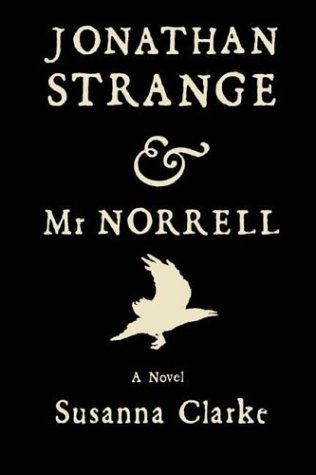
18. TMTF Reviews: Jonathan Strange & Mr Norrell

Jonathan Strange & Mr Norrell was first mentioned to me by a cousin who happens to be a Literary Person. He described it as a fantasy novel that was very funny and reminiscent of Dickens. As I listened, I was rapidly working out an equation in my head: Fantasy Novel + Humorous Style + Charles Dickens = Awesome.

I eventually found the novel in a local library. It’s understatement to say Jonathan Strange & Mr Norrell is a large book; it weighs only slightly more than an adult hippopotamus. I began reading, wondering whether such an enormous novel would be worth my time.

It was. Every word of it.

In this day of formulaic fantasies—books with lurid covers and predictable plots and lots of bizarre sex scenes—it was truly delightful to sit down with something truly original and well-written as Jonathan Strange & Mr Norrell. It’s not quite like anything I’ve ever read, yet oddly reminiscent of familiar authors like Charles Dickens and Jane Austen.

The basic premise of the book is that magic was once an accepted part of British history: magicians once lived and worked magic, and none was greater than the mysterious Raven King. The year, however, is 1806 and magic is ancient history—very boring history. Only a few theoretical magicians still discuss and debate the fine points of magical tradition. Then a practical magician, a retiring gentleman called Mr Norrell, is found. He begins a campaign to revive English magic, eventually partnering with a man named Jonathan Strange who shows remarkable aptitude for magic. The novel recounts the return of magic to England, an event involving cold-hearted fairies, dignified gentlemen, rough beggars and, of course, the Raven King.

The sheer ingenuity of the setting is wonderful. The novel beautifully weaves the factual culture and history of nineteenth-century Britain with the fictional history and practice of British magic. The tone of the novel shifts between humor and melancholy: some passages shine with the cheerful drollery of Dickens’s brightest novels; others convey the same haunting sense of desolation as the Brontë sisters’ more discouraging books.

If pressed to place Jonathan Strange & Mr Norrell in a specific genre, I wouldn’t be quite sure where to put it. It’s a comedy of manners—a Gothic novel—an alternative history—to be honest, it defies attempts at categorization. Whatever it is, it’s probably one of the best fantasies of the century so far.

Reading the novel requires a significant investment of time, and some readers may find the humor humorless and the melancholy too melancholy, but I wouldn’t hesitate to recommend Jonathan Strange & Mr Norrell to anyone who likes fantasy fiction or classic British literature, and especially to anyone who likes both. It’s a solid, satisfying and highly imaginative piece of fiction that’s probably destined to become a classic of its genre—whatever the deuce its genre might be.

6. Five Books that Should Be Made into Movies

Stephen Spielberg and Peter Jackson are currently collaborating on a film adaptation of The Adventures of Tintin, perhaps the greatest graphic novel series ever. Jackson is also adapting The Hobbit, the amazing prequel to The Lord of the Rings, into not one but two movies.

(Fun fact: Andy Serkis, best known for his performance as Gollum, will star in both the Tintin and the Hobbit films as a drunken sea captain and the aforesaid slimy creature, respectively.)

With these excellent books receiving their long-overdue transition to movie screens, I couldn’t help but wonder what other books would make good films. Here are five novels that would make, in my humble and totally biased judgment, amazing movies.

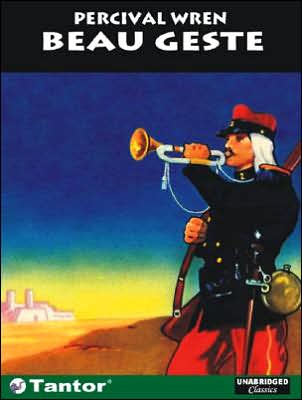
5. Beau Geste by Percival Christopher Wren

If you’ve ever read Peanuts, you may be familiar with Snoopy’s occasional daydream that he’s a member of the French Foreign Legion leading his troop, a line of little yellow birds, through the desert in search of Fort Zinderneuf.

This is a reference to Beau Geste, a classic adventure novel. It tells the story of three brothers who join the French Foreign Legion and embark on a quest involving an inexplicable mystery, a priceless gem, a terrifying battle and two silly Americans. Several film adaptations were made of Beau Geste many years ago, and it’s time for its triumphant return to cinema.

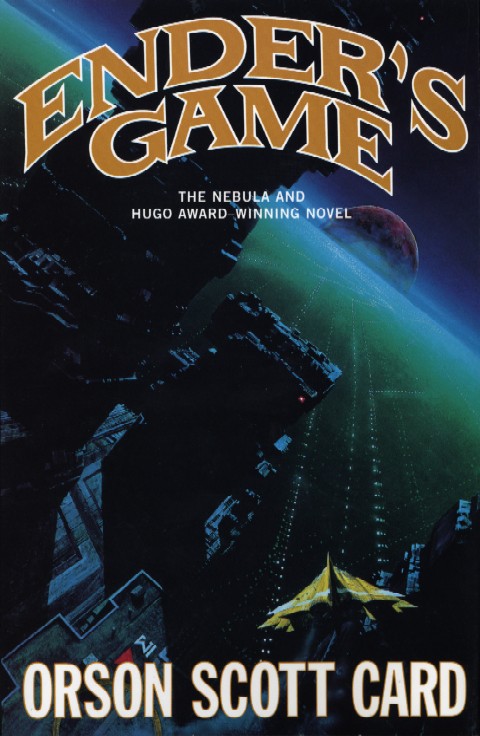
4. Ender’s Game by Orson Scott Card

I keep hearing rumors of an Ender’s Game movie being made, but for years it has stubbornly insisted on not being made. A science fiction masterpiece, Ender’s Game is the story of Andrew “Ender” Wiggin, a child prodigy who’s recruited into Battle School to become a military commander and save humankind from the hostile extraterrestrials called the Buggers.

The movie could incorporate elements from Ender’s Shadow, a companion novel telling the same story from the point of view of the child called Bean, who is more intelligent and sarcastic—and therefore, to my sensibility, more likable—than Ender. An Ender’s Game film would offer epic space battles, great characterization and absolutely no teenage romance.

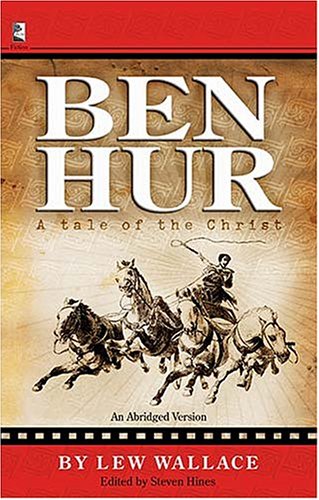
3. Ben-Hur by Lew Wallace

This novel has been adapted into a film at least twice. The first time, it became one of the greatest classics of the silent movie era. The second time, it won eleven Academy Awards. Ben-Hur has sword fighting, political intrigue, a chariot race, a battle at sea and a bitter yet handsome young man whose thirst for vengeance is dramatically conquered by mercy.

Ben-Hur is the tale of a man betrayed by his closest companion and condemned to life as a galley slave. He eventually earns freedom and wealth, and resolves to use them (and his mad chariot-racing skills) to punish his treacherous friend. The novel strives to tell this exciting story in the most boring way possible, but a modern movie adaptation would be epic.

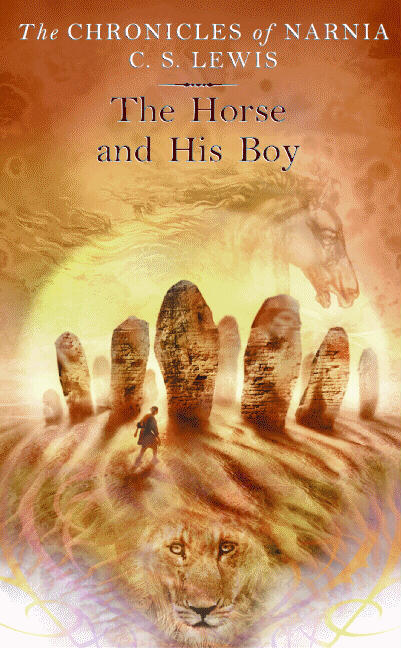
2. The Horse and His Boy by C.S. Lewis

I read a lot of books as a child. Of all the books I read, about only one did I think, “Man, I wish they’d make this into a movie.” That book was The Horse and His Boy, the third book in The Chronicles of Narnia. It’s been my favorite since I first read the Narnia series, and I’m pretty sure I read somewhere that it was also the author’s favorite.

They keep making books from The Chronicles of Narnia into movies, adding gratuitous romances and battles. The Horse and His Boy is the only book in the series that doesn’t need extra romances or battles. There’s already romantic tension between two of the main characters. There’s also a battle, and an exhilarating chase on horseback, and a harrowing journey along a mountain precipice—dash it, it’s been more than a decade since I first read the book and I’m still saying, “Man, I wish they’d make this into a movie.”

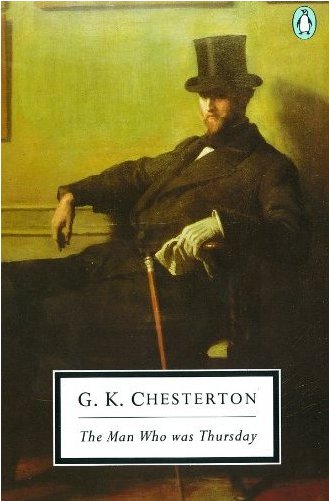
1. The Man Who Was Thursday by G.K. Chesterton

Mystery novels are intriguing, fantasy novels are spellbinding, literary novels are thought-provoking, but no book has ever kept me hooked quite like The Man Who Was Thursday.

The Man Who Was Thursday is the incredible story of a poet-turned-detective who joins a great council of anarchists in order to bring them to justice. The anarchists are named after days of the week; the title refers to the appointment of the detective to the post of Thursday. The scene in which we meet the anarchist council is terrifying. We’re alarmed by Muslim extremists who blow things up for religious reasons, but the anarchists in The Man Who Was Thursday are a good deal more frightening—they blow things up for no reason. The author of the novel also has a fantastic trick of introducing something that seems impossible and terrifying, and later explaining it in an instant with the addition of one simple fact: like someone hitting a switch in a dark room and instantly flooding it with light. Of all the novels that could be made into a really good movie, this is the one I’d most like to see.

What books would you like to see made into movies? Let us know in the comments!

2. Confessions of a Literary Snob

I have a confession to make: I’m a literary snob. This wouldn’t be so bad if my literary judgments were confined to the Twilight books, but my snobbishness goes where even angels fear to tread.

Yes, I’m talking about modern worship music.

It’s Sunday morning. Having quaffed my morning coffee and dressed less shabbily than usual, I’ve come to church to worship God and learn from Scripture. But I look at the bulletin and feel a pang of annoyance.

The first song on the list: “How He Loves Us.”

I stifle a groan. Not “How He Loves Us.” Not again.

The song begins.

“He is jealous for me, love’s like a hurricane, I am a tree bending beneath the weight of his wind and mercy.”

Bending beneath the weight of his wind? What is that even supposed to mean?

“When all of a sudden, I am unaware of these afflictions eclipsed by glory and I realize just how beautiful you are and how great your affections are for me.”

Dash it all, that’s got to be the worst poetry I’ve ever heard.

“So we are his portion and he is our prize, drawn to redemption by the grace in his eyes.”

That’s bad writing, but at least it’s coherent.

“If grace is an ocean we’re all sinking.”

That is not coherent. Drowning in an ocean doesn’t even come close to being an appropriate metaphor for divine grace.

“So heaven meets earth like a sloppy wet kiss and my heart turns violently inside of my chest.”

Something is turning violently inside me, but it’s not my heart. How exactly is heaven like a sloppy wet kiss? I haven’t seen such bad writing since Eoin Colfer likened sparks of magic to “mystical beavers repairing storm damage.”

Then, in a blinding instant, I realize I’m being a literary snob when I ought to be worshiping the Lord God Almighty.

Am I the only Pharisee guilty of literary snobbishness? Does anyone else have something to confess? Let us know in the comments!