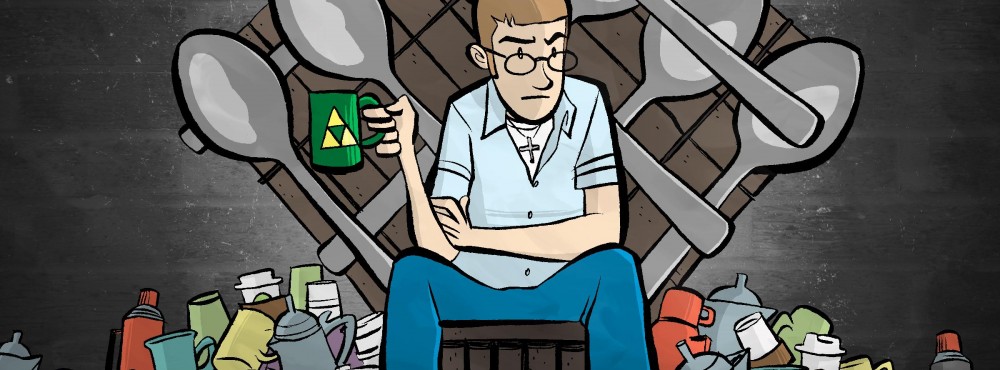
32. Ace Attorney

“What? Video games about a lawyer? You’re not serious.”

Such was my first response to Ace Attorney, a series of games for the Nintendo DS, when I heard about it years ago. I could understand the appeal of video games about a warrior, soldier or pilot who saves kingdom, country or world from sorcerers, armies or aliens—but games about a defense attorney who saves defendants from prosecutors?

Then, a year ago, I actually played Phoenix Wright: Ace Attorney, the first game in the series, and made a most surprising discovery: it was actually kind of awesome.

Ace Attorney Logo

Had the Ace Attorney games tried to replicate every detail of our own justice system, they would undoubtedly have been tedious and boring. Fortunately, the games favor fun over realism. The court system is simplified, making trials much more exciting and easier to follow.

The Ace Attorney games star a goodhearted defense attorney named Phoenix Wright who defends his clients with perseverance, sarcasm, spiky hair and a good deal of luck.

Wright is accompanied by his friend Maya—younger sister of his deceased mentor and voracious consumer of hamburgers—who assists him in his investigations.

The gameplay of the Ace Attorney games consists of two elements. First, Wright visits scenes related to the crime and interacts with the people involved. Although this element requires a little detective work, it’s mostly about gathering information. The second element requires Wright to use the information he’s gathered to prove the innocence of his defendant in court.

Most of Wright’s business in court is cross-examining—a fancy legal term for questioning—witnesses. Cross-examination in the Ace Attorney games is guided by one basic principle: Find the contradiction and expose it with evidence! Almost all witnesses make some mistake in their testimony; Wright’s job is to consider the information he’s gathered, expose the witnesses’ lies and figure out who really committed the crime.

Each case starts slowly, but gets steadily more exciting as more information and evidence is revealed. Finding the contradictions in witnesses’ testimonies is unbelievably satisfying, and it’s exhilarating to unmask the true criminal in each case—especially since it’s sometimes the last person the player suspects.

Two things particularly stand out to me about the Ace Attorney games.

First is that events in the games are exaggerated for dramatic effect: the melodrama of each case is hilarious. When witnesses are exposed as liars, they react as though physically struck. Key witnesses have a habit of barging into court at exactly the right moment to give their testimonies. Perhaps most famously, attorneys in the Ace Attorney games don’t merely say “Objection” when they object to a proceeding in court. They bang their desks and shout—

The second thing that makes the Ace Attorney games so enjoyable is that the characters are wonderful. They remind me of Charles Dickens, whose most delightful characters are more like caricatures: Scrooge and Micawber and Fagin are too ridiculous to be realistic, yet retain just enough truth to be believable. In the same way, the Ace Attorney games are full of exaggerated characters that are too silly to be real—yet they’re believable, likable and memorable. As in Dickens’s novels, major characters are developed carefully and minor characters are never dull or insignificant.

Are the Ace Attorney games worth playing? Odd as it sounds, definitely. It’s ridiculously satisfying to solve cases and save innocent defendants, and the games’ storytelling is excellent.

And really, who can resist shouting “Objection!” into a Nintendo DS microphone and watching guilty witnesses cower in fear?
31. The Art of Blundering Hopefully

I like gloomy characters. Well, I like gloomy fictional characters; gloomy characters aren’t nearly as likable in real life as they are in fiction. There’s something strangely endearing about pessimists and their pessimism, so long as I don’t have to deal with them personally.

Puddleglum from C.S. Lewis’s The Silver Chair is one of my favorites. “Good morning Guests,” he says to the protagonists after they spend the night in his home. “Though when I say good I don’t mean it won’t probably turn to rain or it might be snow, or fog, or thunder. You didn’t get any sleep, I daresay.”

Then there’s Marvin the Paranoid Android from The Hitchhiker’s Guide to the Galaxy by Douglas Adams, and Eeyore from the Winnie-the-Pooh books by A.A. Milne, and Bernard Walton from the Adventures in Odyssey radio series, and a dozen more delightfully depressing characters from all sorts of stories.

The problem with pessimism is that it’s not nearly so pleasant in real life. It’s difficult to put up with pessimists—and it’s much worse to be a pessimist.

Some time ago I realized something important. (I was actually going to write about it weeks ago, but decided not to post too many serious reflections in a row.) What I realized was simple—so simple I couldn’t believe I had overlooked it for so long.

I had become a pessimist. Not a nice, lovable pessimist like Puddleglum or Eeyore, but a genuine, depressed pessimist.

I suspect my long, dark Thursday Afternoon of the Soul, a year and a half of intense depression and anxiety, had conditioned me to expect only the worst. I expected the worst from myself, wrestling with insecurity and self-doubt. I expected the worst from life, living in anxiety of whatever difficulties lay ahead. I expected the worst from God, struggling to believe he could really be as gracious, loving and generous as he claims. Every trial confirmed my belief that life was a dreary business, and every blessing made me suspect there were strings attached.

Since recognizing my tendency toward pessimism, I’ve been working to perfect the fine art of blundering hopefully.

We don’t have to live in perpetual fear of the future. It holds difficulties, true, but it also holds blessings. It’s certainly no good worrying about the difficulties. We can only deal with them as they come. In the meantime our business is to trust God and do our best: believing that his grace is greater than our mistakes, trusting that he will walk with us through our difficulties, holding on to his promise that his love endures forever—to wit, blundering hopefully.

So I’m doing my best not to burden myself with guilt for past mistakes or live in fear of future ones. By faith I blunder onward, trusting that God’s grace is sufficient for me.

God’s grace is sufficient for you too, in case you were wondering.

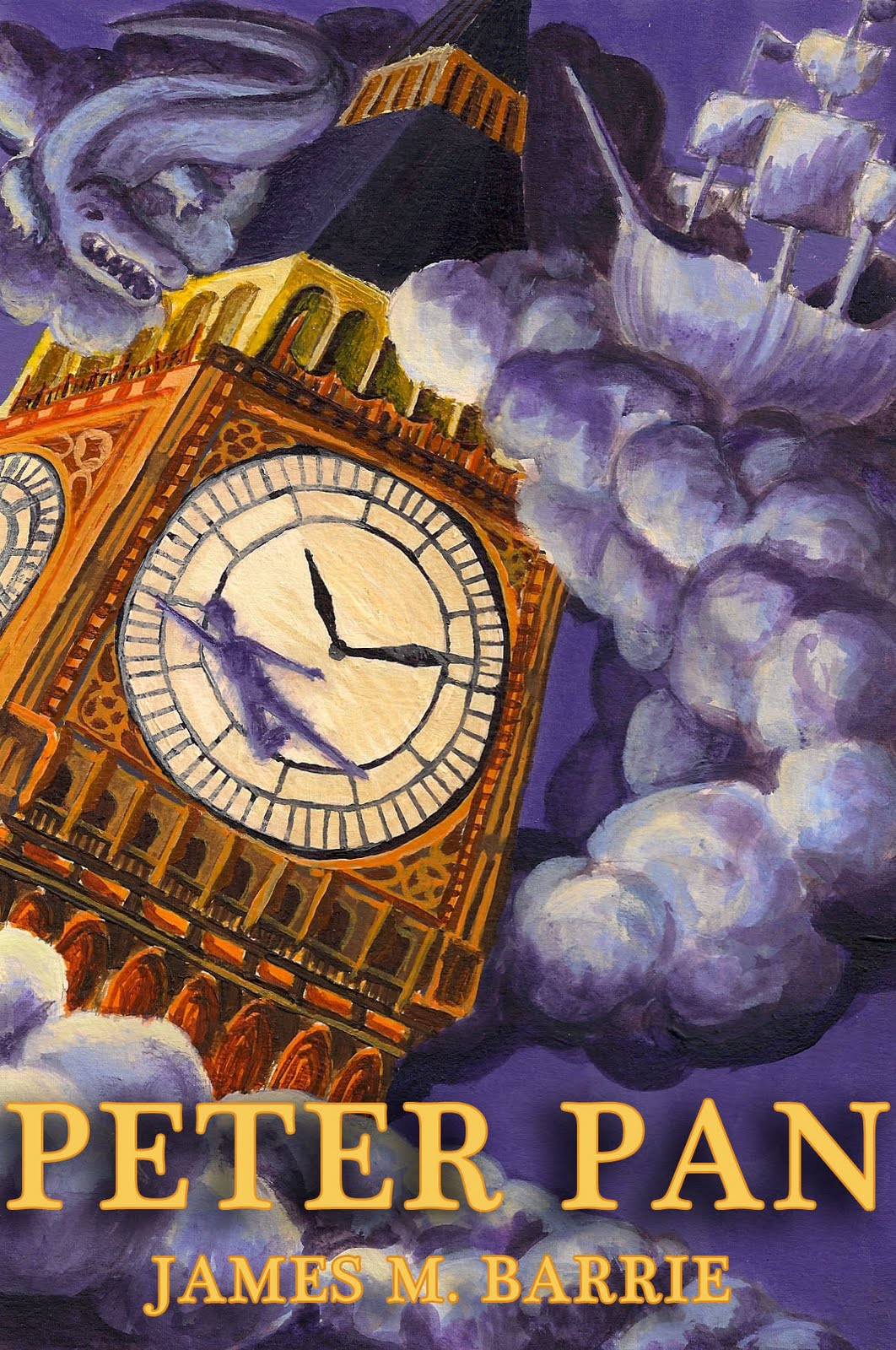
30. TMTF Reviews: Peter Pan

C.S. Lewis believed a children’s book that is enjoyable only by children is a bad children’s book. Just as a connoisseur of fine food can still enjoy a simple meal of bread and butter, he maintained, so a literary person should still be able to enjoy simple books for children.

I realized some time ago that I’d never read Peter Pan. It’s a classic of children’s literature, so I decided to obtain a copy of the book and mend this serious flaw in my literary education.

Peter Pan tells the story of a girl named Wendy and her brothers John and Michael. Their quiet existence in a London suburb is interrupted by the arrival (through an upstairs window) of an arrogant boy named Peter Pan who has never grown up. Peter offers to take Wendy and her brothers to the Neverland, an island inhabited by pirates and Indians and mermaids, where they can live a jolly life. Oh, did I mention that Peter happened to arrive by flying? Wendy and her brothers follow Peter to the Neverland, only to find the pirates—particularly one Captain Hook—are a good deal nastier than they had expected.

Peter Pan has been tremendously influential since its publication, inspiring a number of films, several prequels and at least one sequel. (I have a suspicion that Ocarina of Time—which features a green-clad boy with a fairy who lives among children who never grow up—was strongly influenced by Peter Pan.) Like Sherlock Holmes, Robinson Crusoe and Count Dracula, Peter Pan has become an archetype.

But never mind all that. Only one question concerns us. Is Peter Pan worth reading?

Peter Pan

I was glad to discover that Peter Pan is actually quite a good book. The narration is serious and matter-of-fact, which makes the ludicrous events of the book that much more charming. The style is dry and humorous (in a serious sort of way) and never condescending. One of the things I enjoyed most about the book is that the narrator never talks down to the reader. Like all great writers of children’s literature, the author of Peter Pan mastered the difficult art of respecting his audience.

A literary critic would find in Peter Pan a lively meditation upon the transience of youth and the “gay and innocent and heartless” nature of childhood. A Freudian psychologist would probably find all sorts of awful insinuations about motherhood and sexuality. Most readers, however, will find nothing more profound or disturbing than a fanciful tale that somehow manages to bring together pirates, Indians, mermaids, fairies and a ticking crocodile.

One of my few complaints about the book is that several of the protagonists are, for lack of a more polite term, jerks. The villains aren’t all that bad in comparison. Yes, Captain Hook is a wanton murderer, but I couldn’t help but pity him in his futile quest to conquer his self-doubt and justify himself. I felt very little sympathy for Peter Pan, though. He’s an arrogant, selfish, insensitive git. Tinker Bell is worse: vain, jealous, ungrateful and murderous. Old Tink does redeem herself partway through the book, but she’s never very likable. As much as I enjoyed Peter Pan, I would probably have liked it more if Peter and Tinker Bell hadn’t been such twits.

On the whole, I think Peter Pan is a fine book, a worthy classic of children’s literature that, like Peter himself, is pretty timeless.