19. So, Um… What Do You Think Being a Hero Is All About?

I don’t generally search for profound wisdom in webcomics—especially not webcomics about video games.

Imagine my surprise, then, when I was reading my favorite webcomic way back in March and realized its writer had stumbled upon pretty much the most important lesson ever.
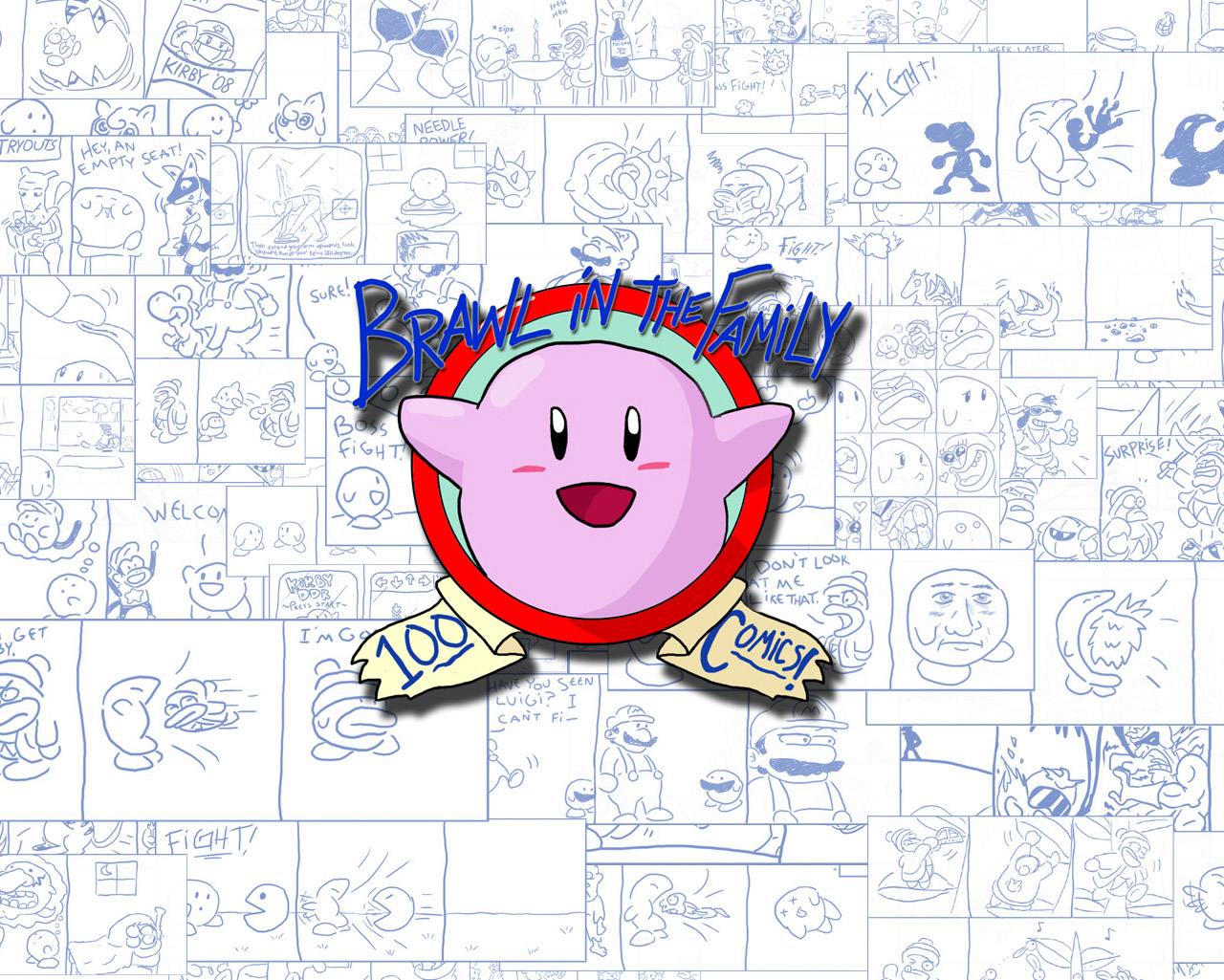
Brawl in the Family is a delightful webcomic by a couple of guys named Matt and Chris. It’s a funny, quirky take on video game characters, and I think it’s pretty awesome.

In one comic, two teachers are asked by their students, “So, um…what do you think being a hero is all about?”

The first teacher, a villain, replies, “Well, to put it simply: ambition.” He adds, “Remember, you are capable of great things.”

The second teacher, a kindly gentleman, replies, “Well, to put it simply: sacrifice.” He adds, “It is not about you. It is about everyone else.”

It is not about you. It is about everyone else.

I happen to be student teaching at the moment, and it’s so easy to become centered on myself. I have to survive the stress of teaching classes and grading papers. I have to keep up with the paperwork for my college’s Education Department. I have to be a good teacher.

It’s also so easy to become self-centered in regard to my writing. I want to become a successful novelist. I want to have a great blog. I want my writing to be excellent.

I is such a little word, but it represents so much. Ambition. Dreams of glory. Delusions of grandeur.

I’m ashamed to say it, but I become self-centered. Then things happen that jerk me back to reality. One of those things happened yesterday.

Yesterday we held parent/teacher conferences at my school. My supervising teacher and I had been assigned to hold conferences with the parents of our MEC students. The MEC students are the at-risk kids, the kids with low grades and behavior problems—the kids in danger of being expelled. For nearly eight hours, my supervising teacher, other teachers and I held conference after conference with the parents and guardians of our students.

Some of these parents and guardians were bright, cheerful and polite. Some were not. One came in with whiskey on her breath. Another came uncomfortably close to exploding into a fit of rage. Almost all of them told us directly or indirectly that they didn’t have much control over their kids, and a few of them maintained an attitude of nonchalance.

They didn’t seem to care that their children were failing classes or causing trouble. One mother was obviously in denial that her son is a borderline sociopath. Another mother cheerfully admitted to being aware of the fact her son smokes marijuana.

It was tragic. It was also very convicting. These are the students with whom I work almost every day—and I get so wrapped up in my plans and ambitions and personal projects that I forget how much my students need a loving, patient, diligent teacher.

It is not about me. It is about everyone else.

Jesus said the same thing when someone asked him about the great commandments—God’s greatest charge to humankind—the ultimate meaning of human life. Jesus replied, “‘Love the Lord your God with all your heart and with all your soul and with all your mind.’ This is the first and greatest commandment. And the second is like it: ‘Love your neighbor as yourself.’”

Webcomics, even webcomics about video games, can impart great wisdom.

It is not about you. It is about everyone else.
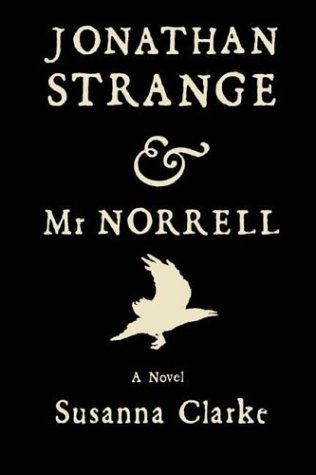
18. TMTF Reviews: Jonathan Strange & Mr Norrell

Jonathan Strange & Mr Norrell was first mentioned to me by a cousin who happens to be a Literary Person. He described it as a fantasy novel that was very funny and reminiscent of Dickens. As I listened, I was rapidly working out an equation in my head: Fantasy Novel + Humorous Style + Charles Dickens = Awesome.

I eventually found the novel in a local library. It’s understatement to say Jonathan Strange & Mr Norrell is a large book; it weighs only slightly more than an adult hippopotamus. I began reading, wondering whether such an enormous novel would be worth my time.

It was. Every word of it.

In this day of formulaic fantasies—books with lurid covers and predictable plots and lots of bizarre sex scenes—it was truly delightful to sit down with something truly original and well-written as Jonathan Strange & Mr Norrell. It’s not quite like anything I’ve ever read, yet oddly reminiscent of familiar authors like Charles Dickens and Jane Austen.

The basic premise of the book is that magic was once an accepted part of British history: magicians once lived and worked magic, and none was greater than the mysterious Raven King. The year, however, is 1806 and magic is ancient history—very boring history. Only a few theoretical magicians still discuss and debate the fine points of magical tradition. Then a practical magician, a retiring gentleman called Mr Norrell, is found. He begins a campaign to revive English magic, eventually partnering with a man named Jonathan Strange who shows remarkable aptitude for magic. The novel recounts the return of magic to England, an event involving cold-hearted fairies, dignified gentlemen, rough beggars and, of course, the Raven King.

The sheer ingenuity of the setting is wonderful. The novel beautifully weaves the factual culture and history of nineteenth-century Britain with the fictional history and practice of British magic. The tone of the novel shifts between humor and melancholy: some passages shine with the cheerful drollery of Dickens’s brightest novels; others convey the same haunting sense of desolation as the Brontë sisters’ more discouraging books.

If pressed to place Jonathan Strange & Mr Norrell in a specific genre, I wouldn’t be quite sure where to put it. It’s a comedy of manners—a Gothic novel—an alternative history—to be honest, it defies attempts at categorization. Whatever it is, it’s probably one of the best fantasies of the century so far.

Reading the novel requires a significant investment of time, and some readers may find the humor humorless and the melancholy too melancholy, but I wouldn’t hesitate to recommend Jonathan Strange & Mr Norrell to anyone who likes fantasy fiction or classic British literature, and especially to anyone who likes both. It’s a solid, satisfying and highly imaginative piece of fiction that’s probably destined to become a classic of its genre—whatever the deuce its genre might be.

17. Rampant and Irresponsible Capitalization

Christians like to capitalize things.

Don’t believe me? Let’s have a bet. Wait, we probably shouldn’t gamble about something related to Christianity. (I’m pretty sure there’s a passage in Hebrews that forbids gambling about religion.) How about I dare you instead of placing a bet? All right, I dare you to go to church next Sunday and see how many Christian words are capitalized.

A lot of people—even some non-Christians—capitalize divine pronouns (pronouns used to refer to God) in order to show reverence or respect. C.S Lewis, a man for whom I have utmost admiration, capitalized divine pronouns. He also capitalized Heaven and Hell because they are places, like London or New York City, and should therefore be capitalized as proper nouns.

C.S. Lewis was consistent in his capitalizations and could give good reasons for them. It seems many people, however, are guilty of rampant and irresponsible capitalization. I may just be cynical, and I’m definitely a literary snob, but it seems sometimes as though American Christians capitalize words related to Christianity just to make them seem holier.

For example, hymns and worship songs never refer to God and his mercy. It’s evidently more holy to capitalize the divine pronoun and refer to God and His mercy. And if we capitalize mercy, which is a divine attribute, it makes the hymn or worship song even holier. I mean, God and His Mercy is clearly holier than God and his mercy, isn’t it?

So sermons are full of Grace, Goodness, Predestination, Prophecy, Agape, Apostles, Epistles, Pre-Millennialism, Mid-Millennialism, Post-Millennialism and the Millennium Falcon. All right, maybe not that last one. At least not in any sermons I’ve heard.

Anyway, there have come to be so many capitalizations that capitalization is becoming meaningless.

If a word is capitalized, there should be a good reason for it. I capitalize Gospel to distinguish the good news of Jesus Christ from the music genre. I capitalize Church to set apart the worldwide community of God’s people from the fancy building down the street. I capitalize Prophets to differentiate between a section of the Old Testament and the plural form of a common noun.

Unlike C.S. Lewis, I don’t capitalize heaven or hell or divine pronouns. There’s absolutely nothing wrong with capitalizing these words, but it doesn’t seem necessary. I don’t think God cares much about capitalization. He cares more about love and obedience and mercy.

Should divine pronouns and spiritual words be capitalized? Should there be more sermons about the Millennium Falcon? Let us know in the comments!